
Gantry vs. No-Shaft Rewinding Metalized Paper Laminating Machines: A Buyer's Comparison Framework
A structural, technical and procurement comparison of the YUEDA YDLM1300B and the ZNFH1300-1400-1500, written for packaging buyers assessing premium board laminating capacity.
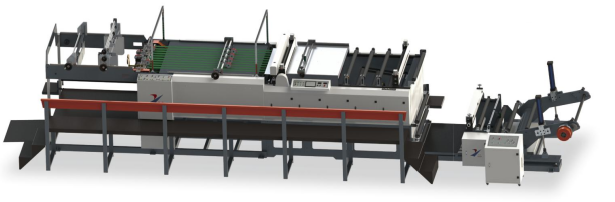
Gantry-type metalized paper laminating machine platform used for high-speed laminating of premium packaging board. Image: YUEDA.
A metalized paper laminating machine decides whether a converter can deliver premium packaging board on schedule, at the surface quality brand owners sign off on, and at a cost per sheet that survives the next round of price negotiation. The YUEDA YDLM1300B and the ZNFH1300-1400-1500 are frequently placed on the same shortlist, and the comparison usually begins with one headline number. That is where it starts to go wrong. In these two machines, the structural configuration — gantry frame versus no-shaft rewinding architecture — sets the floor footprint, the drying path, the roll-handling routine and the substrate window well before any speed figure becomes meaningful.
This article sets out a comparison framework for buyers in the research stage: what each configuration is, what its published specifications actually constrain, how application fit should be judged for wine box, cigarette, cosmetics and tea packaging lines, and how verifiable patents and software copyright certificates can be written into purchase terms and acceptance criteria instead of being left as brochure claims.
Two Machines, Defined Before They Are Compared
Wenzhou Yueda Packaging Machinery Co., Ltd. (YUEDA) is a China-based manufacturer of gold and silver cardboard production equipment — laminating and coating machines, positioning cross-cutting machines and slitting equipment — established in 1998 and located in Longgang, Wenzhou, an industrial cluster known for printing and packaging machinery. The company reports a 4,000 m² manufacturing facility, an annual output of 100 sets of mechanical equipment, and an R&D team of 25 engineers and technicians.
The YDLM1300B is a Gantry Multifunctional Aluminum Metallized Cardboard Laminating (Coating) Machine: a gantry-type laminating and coating integrated machine with a working width of 600–1200 mm and a rated machine speed of 180 m/min. It handles paper from 100–350 g/m², PET film of 0.012–0.014 mm, OPP film of 0.02–0.06 mm and aluminum film of 0.006–0.007 mm.
The ZNFH1300-1400-1500 is an Automatic Aluminum Metallized Cardboard Laminating & Coating Machine with No Shaft Type Rewinding, offered with roller face widths of 1300 mm, 1400 mm or 1500 mm and a running speed of 5–150 m/min. It accepts paper from 40–450 g, aluminum foil of 0.006–0.01 mm and film of 0.01–0.1 mm.
Both are carbon steel machines that combine laminating and coating for metalized cardboard. The difference buyers must weigh is not the basic process but the architecture around it.
Why Frame Configuration Comes First in a Laminating Machine Comparison
Frame geometry is not a cosmetic difference. It determines the floor area and building height the line needs, the length of the web path and therefore the drying residence time, how rolls are loaded and changed, and how much of the investment is tied up in heating rather than in motion.
The YDLM1300B occupies 22,330 × 3,700 × 4,500 mm and has a net weight of 40 tonnes. Its heating tunnel is 15 m long, with an 8.6 m down-length and a maximum tunnel temperature of ≤130 °C. Power is supplied at 380 V ±10%, 50 Hz, with 60 kW of motor power, 216 kW of heating power and 80 kW of working power. The ZNFH1300-1400-1500 measures 21 m × 2.9 m to 3.2 m × 3.2 m depending on the model, specifies a 12.5 m drying path, and lists a total power consumption of 121 kW or 129 kW.
Read together, those figures say something practical: two machines sold into the same packaging segments can require different buildings, different electrical planning and different drying residence times. Comparing them on speed alone discards the parameters that will actually be fixed for the next decade.
Two Architectures, Explained Technically
Gantry-type integrated laminating and coating
On the YDLM1300B, the laminating and coating stations are carried on a gantry frame, and the machine integrates several functions in one platform: water-based lamination of paperboard, four-roller transfer coating for glue application, and anilox roller direct coating for back coating colour. Roll handling is specified in detail: paper unwinding diameter 1500 mm, paper rewinding diameter Φ1600 mm, film unwinding diameter Φ600 mm and peeling-off rewinding diameter Φ600 mm, with 3/6/12 inch cores at unwinding and 3/6 inch cores at rewinding.
No-shaft rewinding laminating and coating
On the ZNFH1300-1400-1500, the distinguishing feature is the winding interface. In shaftless (no-shaft) winding, the roll is supported and driven without a full-length mechanical shaft passing through the core, which removes shaft handling from every roll change. The published figures underline the scale of that interface: unwinding diameter 100–1600 mm, rewinding diameter 100–1600 mm, foil roll diameter 600 mm, and core sizes of 3/6/12 inch at unwinding, 3 inch for foil rewinding and 6/12 inch at rewinding.
Specification Comparison: YDLM1300B vs. ZNFH1300-1400-1500
| Comparison dimension | YDLM1300B (gantry type) | ZNFH1300-1400-1500 (no-shaft rewinding) |
|---|---|---|
| Structural configuration | Gantry-type laminating & coating integrated machine | Automatic laminating & coating machine, no-shaft type rewinding |
| Width | Working width 600–1200 mm | Roller face width 1300 / 1400 / 1500 mm; sheet roll width 600–1200 / 700–1300 / 700–1400 mm |
| Speed | Machine speed 180 m/min; working speed 15–150 m/min | Running speed 5–150 m/min |
| Substrates | Paper 100–350 g/m²; PET 0.012–0.014 mm; OPP 0.02–0.06 mm; aluminum film 0.006–0.007 mm | Paper 40–450 g; aluminum foil 0.006–0.01 mm; film 0.01–0.1 mm |
| Coating / laminating method | Water-based paperboard lamination; four-roller transfer coating; anilox roller direct back coating | Laminating and coating integrated for aluminum metallized cardboard |
| Roll diameters | Paper unwind 1500 mm; paper rewind Φ1600 mm; film unwind Φ600 mm; peeling rewind Φ600 mm | Unwind 100–1600 mm; rewind 100–1600 mm; foil roll Φ600 mm |
| Core sizes | 3/6/12 inch unwind; 3/6 inch rewind | 3/6/12 inch unwind; 3 inch foil rewind; 6/12 inch rewind |
| Drying | Heating tunnel 15 m, ≤130 °C, down-length 8.6 m | Drying path 12.5 m |
| Power | 380 V ±10%, 50 Hz; motors 60 kW; heating 216 kW; working 80 kW | Total power consumption 121 kW or 129 kW |
| Footprint and weight | 22,330 × 3,700 × 4,500 mm; 40 t | 21 m × 2.9–3.2 m × 3.2 m |
| Stated packaging fit | Wine boxes, cigarette packaging, cosmetics packaging, tea packaging | Wine boxes, cigarette paper, cosmetics, tea, disposable waterproof tableware, cake and chewing gum packaging |
Working Width: The Constraint That Cannot Be Re-Specified Later
Width should be derived backwards from the finished product. Start with the die-cut layout for the largest wine box, cigarette carton, cosmetics gift box or tea caddy you intend to produce, add the trim allowance, and check how many sheets per cut the layout yields. Only then compare that requirement against machine width.
- The YDLM1300B works at 600–1200 mm. A format requiring more than 1200 mm across the web cannot be produced on this machine as specified.
- The ZNFH series offers roller face widths of 1300 mm, 1400 mm or 1500 mm with sheet roll widths of 600–1200 mm, 700–1300 mm or 700–1400 mm, giving a wider width window for larger box formats or higher sheet counts per pass.
The trade-off is symmetrical. Buying width beyond what the format needs increases edge trim on every roll, and edge trim is a recurring cost, not a one-off. Buying below the format ceiling is not correctable after installation. For buyers whose product mix spans both narrow cosmetics cartons and wide wine box wraps, the honest answer may be that width becomes the deciding criterion between the two configurations.
Speed: Machine Speed, Working Speed and What Belongs in a Contract
The two machines publish different kinds of numbers. The YDLM1300B is listed with a machine speed of 180 m/min and a working speed of 15–150 m/min. The ZNFH1300-1400-1500 is listed with a running speed of 5–150 m/min. Machine speed is a design ceiling; working or running speed is the operating range. Neither is a throughput guarantee, because commercial output depends on substrate, adhesive, coating weight, drying capacity and how often the line is stopped for roll changes.
Speed figures from other machine categories are not transferable. A solvent-free laminating machine from a different manufacturer is published with a maximum speed of up to 500 m/min, depending on substrate combination, adhesive type and process — a reference that says nothing about metalized board lamination, where water-based lamination and coating behaviour differ materially. Using such a figure as a benchmark in a metalized paper comparison creates a specification the buyer cannot enforce.
The contract-ready version of a speed claim names the conditions: substrate grade and grammage, film or foil type, adhesive system, coating weight, and the test method used to measure output. Without those conditions, a speed figure is a marketing number rather than an acceptance criterion.
Application Fit: Wine Boxes, Cigarettes, Cosmetics and Tea Packaging
Both machines list the same four premium packaging families — wine boxes, cigarette packaging, cosmetics packaging and tea packaging — and the ZNFH series additionally lists disposable waterproof paper tableware, cake and chewing gum packaging. What separates them in practice is the operating regime each application imposes.
| Packaging segment | What the line is being asked to do | Configuration considerations |
|---|---|---|
| Cigarette packaging | Sustained, high-volume laminating and coating with minimal interruption | A ZNFH-class machine is applied in Vietnam for high-speed laminating and coating of cigarette packaging and is designed for 24/7 continuous operation in a dust-free workshop at 30–35 °C. Continuous-operation capability and roll-change ergonomics dominate. |
| Wine boxes | Decorative board with heavier grammage and visible surface quality | Paper grammage windows differ between the two models: 100–350 g/m² on the YDLM1300B versus 40–450 g on the ZNFH series. Confirm the specific board grade in writing. |
| Cosmetics packaging | Surface cleanliness, precise registration, dust control | Corpus scenarios for cosmetics packaging lines specify dust-free workshops, controlled temperature, and photoelectric positioning for precision work. Cleaning routines and static control belong in the acceptance discussion. |
| Tea packaging | Mixed formats, frequent size changes | Changeover time and width flexibility matter more than peak speed on mixed-order production. |
One scenario in the available records is directly relevant to the gantry machine: in a Thailand application, the YDLM1300B-class machine runs in the printing and packaging industry under dust-free workshop conditions, with special requirements for dust-proof design, high-precision calibration and anti-static design, operating automatically with photoelectric positioning and supported by a feeder, a stacker and a waste edge trimming system. That combination — automatic positioning plus upstream and downstream handling equipment — is the pattern most buyers should plan for, because the laminator is rarely the only new asset in the line.
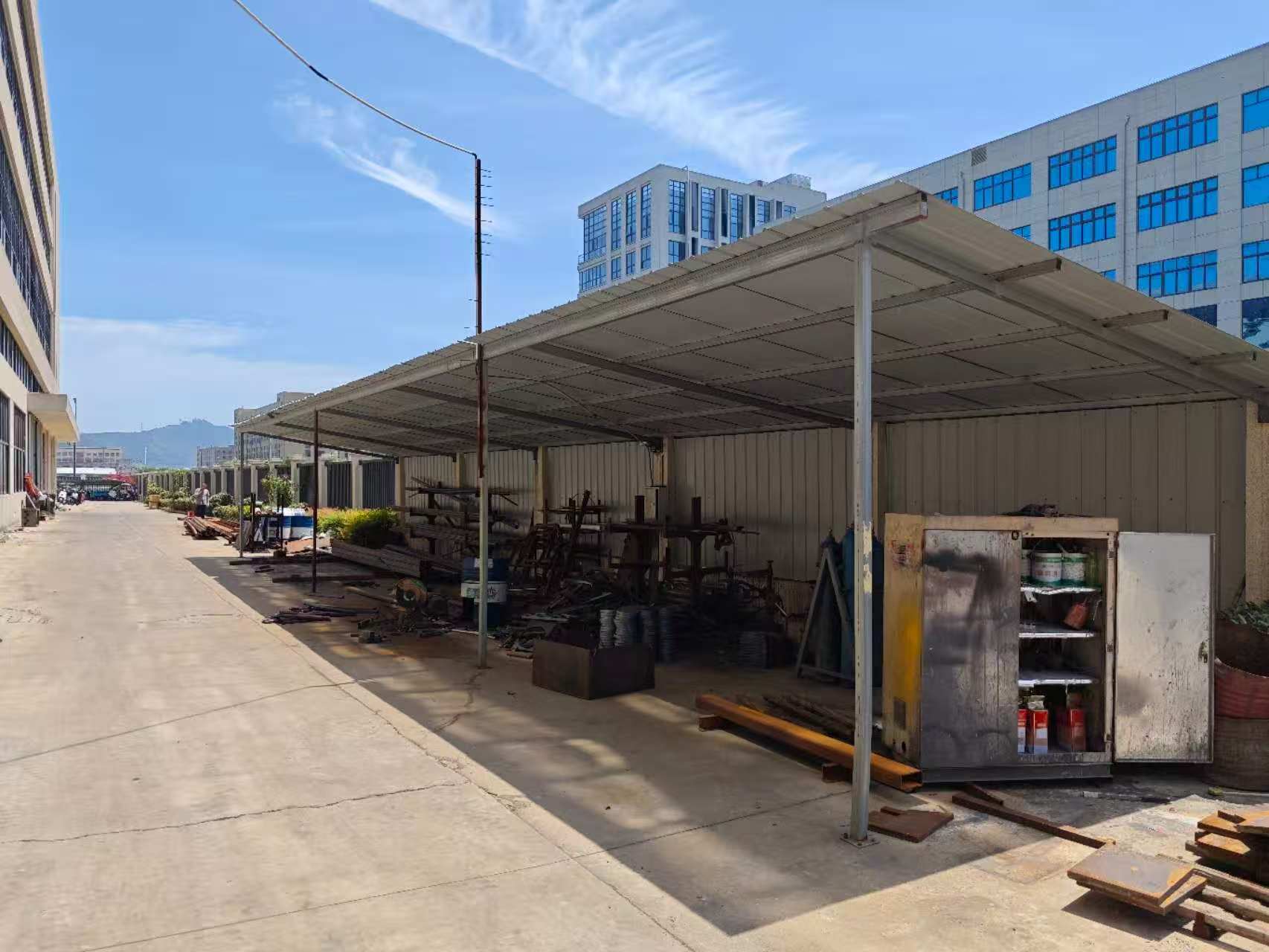
Manufacturing base in Longgang, Wenzhou — an industrial cluster specialised in printing and packaging equipment. Site verification remains a standard step in supplier comparison.
Where Each Configuration Has Real Limits
Limits of the gantry-type platform
- The 600–1200 mm working width is a hard ceiling. Formats requiring 1300 mm or more cannot be produced on the YDLM1300B as specified.
- A 40-tonne machine measuring roughly 22.3 m long and 4.5 m high imposes real demands on foundation, floor loading, ceiling height and lifting equipment during installation.
- Heating power of 216 kW against 80 kW of working power means the drying system, not the drives, dominates utility planning and running-cost models.
- The machine is specified around water-based paperboard lamination, which ties the process window to that adhesive class.
Limits of the no-shaft rewinding platform
- The published running speed band is 5–150 m/min; buyers comparing it against a design ceiling figure from another machine are comparing incompatible metrics.
- Width is fixed at order among 1300 mm, 1400 mm and 1500 mm roller face options. Choosing the narrowest to save capital narrows the future product range permanently.
- Shaftless handling reduces shaft work but concentrates wear and maintenance attention in the chuck and roll-support system, which should appear explicitly in the spare-parts list.
Turning Patents and Software Copyright into Purchase Terms and Acceptance Criteria
Intellectual property documentation is useful to a buyer for one reason: it is checkable. A patent number or a software copyright registration number can be verified against a registry, while a phrase such as “advanced design” cannot. Published supplier information identifies an energy-saving double-layer drying oven on the YDLM1300B covered by patent number ZL 2022 2 1114210.X, and the same source lists the model's working width as 600–1200 mm. That pairing — one verifiable protection claim next to one technical parameter — is the pattern buyers should demand across the whole offer.
Four clauses convert such documentation into procurement leverage:
- Name the protected assemblies. Require the offer to identify which assemblies are patent-protected and to quote the registration numbers. Wear parts and spares for a protected assembly are normally single-sourced from the original manufacturer, so this identification directly shapes the spare-parts and warranty clauses.
- Verify, do not photograph. Confirm each number against the issuing registry, along with its jurisdiction and current legal status. A protected design in one jurisdiction does not automatically cover the buyer's market, and a certificate image in a proposal is not verification.
- Treat control software as a documented deliverable. Ask for the software copyright registration certificate number together with the software version actually installed on the delivered machine, and require a documentation package covering parameter lists, backup and restore procedures, and calibration records. Version mismatch between certificate and machine is a common and avoidable acceptance dispute.
- Anchor the acceptance test to physical conditions. A test protocol should name the substrate grade, grammage, film or foil, adhesive and coating weight, then measure the results that matter to the buyer: running stability, registration behaviour, surface condition and drying temperature control against the published limit of ≤130 °C on the gantry platform.
The limit of this approach should be stated plainly: a patent confirms legal protection for a design element, and a software copyright certificate confirms ownership of a code base. Neither proves that the machine runs faster, cleaner or longer. They are screening tools that make supplier claims verifiable — useful precisely because the rest of the comparison is built on manufacturer-declared numbers.

Control cabinet of an automatic laminating machine with touch-screen operation and real-time production parameter monitoring. Control documentation and software version records should be part of the acceptance package.
A Practical Buyer Scorecard for the Two-Configuration Decision
| Criterion | Question to ask the supplier | Evidence to request |
|---|---|---|
| Process fit | Is lamination and coating integrated in one pass, and which coating methods are used? | Written process description; adhesive and coating type list; sample board in the buyer's own format |
| Width | What is the maximum working width, and which sheet roll widths are standard? | Width range in the offer, matched against the buyer's die layout |
| Substrate window | Which paper grammages, films and foils are qualified? | Substrate qualification list; trial run on the buyer's board grade |
| Speed | At which substrate, adhesive and coating weight is the quoted speed warranted? | Test conditions sheet; witnessed factory acceptance test |
| Drying | What are the tunnel or drying path length and maximum temperature? | Technical annex stating heating tunnel length and temperature limit |
| Utilities | What are the connected and working power figures? | Electrical load schedule against a 380 V ±10%, 50 Hz supply |
| Footprint | What floor area, height and foundation does installation require? | General arrangement drawing; weight and lifting plan |
| Control and documentation | Which controller is used and what software documentation is delivered? | Control specification, software version, parameter list, backup procedure |
| Intellectual property | Which assemblies are protected, and under which numbers? | Patent or software copyright registration numbers, verified against the issuing registry |
| Application references | Where is this configuration running in the target packaging segment? | Reference list; site visit or run-in data where available |
| Acceptance | What defines acceptance, and what happens if the test is not met? | FAT/SAT protocol with pass criteria, retest and remedy clauses |
| Service and spares | What is the lead time for wear parts, and who supports the line locally? | Spare-part list with lead times; service escalation path |
Market Context Behind the Capacity Decision
Two published market figures frame the demand side of this decision, and they should not be mixed. DataM Intelligence places the global metallized paper market at USD 4.85 billion in 2025, driven by tobacco packaging and premium labelling. Future Market Insights estimates the global market for laminating machines — a broader category covering thermal, wet and dry systems — at USD 676.4 million in 2025. The first figure describes the substrate market that creates demand for laminating capacity; the second describes the equipment market itself. They measure different things and cannot be added together or offset against each other.
On the trade side, industrial paper laminating machines are commonly associated with HS heading 8439.30.10. Commercial classification references do not agree on this point, and the correct heading depends on the machine's actual finishing function and on the importing jurisdiction. Buyers preparing landed-cost comparisons should obtain a classification confirmation before quoting duty rather than relying on a supplier's stated code.
Future Outlook
Machines in this class will continue to be sold on declared width and speed. What is changing is the level of proof buyers ask for alongside those numbers, and two forces are driving it.
The first is energy visibility. The YDLM1300B is specified with 60 kW of motor power, 216 kW of heating power and 80 kW of working power; the ZNFH series is specified at 121 kW or 129 kW of total power consumption. Those figures make the split between heating load and working load a legitimate subject for quotation-stage discussion rather than something discovered after commissioning.
The second is documentation. Patents such as ZL 2022 2 1114210.X for an energy-saving double-layer drying oven, and software copyright registration certificates for control platforms, give procurement teams objects that can be checked against public registries. The practical direction is a contract in which width, substrate, grammage, coating weight and speed are each named, tested and signed off — and in which the receiving market's conformity requirements are established before shipment rather than after arrival.
Frequently Asked Questions
What is the main structural difference between a gantry-type and a no-shaft rewinding metalized paper laminating machine?
The gantry-type YDLM1300B carries its laminating and coating stations on an elevated gantry frame and combines water-based paperboard lamination, four-roller transfer glue coating and anilox roller direct back coating on one platform. The ZNFH1300-1400-1500 is defined by its winding interface: rolls are handled without a full-length mechanical shaft, with unwinding and rewinding diameters of 100–1600 mm and core sizes of 3/6/12 inch at unwinding and 6/12 inch at rewinding. Both are laminating and coating integrated machines for metalized cardboard; the difference lies in frame and roll-handling architecture, not in the basic process.
How should working width be matched to a packaging line?
Work backwards from the largest finished format. The YDLM1300B works at 600–1200 mm. The ZNFH series is offered with roller face widths of 1300 mm, 1400 mm or 1500 mm and sheet roll widths of 600–1200 mm, 700–1300 mm or 700–1400 mm. Specifying more width than the die layout requires raises edge trim on every roll, while a width ceiling cannot be raised after installation, so the decision is asymmetric and should be made on the die layout rather than on a preference for larger machines.
Why do the two machines publish different kinds of speed figures?
They are measuring different things. The YDLM1300B is listed with a machine speed of 180 m/min and a working speed of 15–150 m/min; the ZNFH1300-1400-1500 is listed with a running speed of 5–150 m/min. Machine speed is a design ceiling, while running or working speed describes an operating range. Neither guarantees throughput, because output depends on substrate, adhesive, coating weight and drying capacity. For the same reason, a figure published for a different machine category — for example up to 500 m/min for solvent-free laminating equipment — cannot be transferred to metalized board lamination.
Which packaging applications do the two configurations suit?
Both are intended for wine box, cigarette, cosmetics and tea packaging board; the ZNFH series additionally lists disposable waterproof paper tableware, cake and chewing gum packaging. The operating regimes differ. A ZNFH-class machine is applied in Vietnam for high-speed laminating and coating of cigarette packaging in a dust-free workshop at 30–35 °C and is designed for 24/7 continuous operation. The YDLM1300B-class machine is applied in a Thailand dust-free workshop where the stated requirements include dust-proof design, high-precision calibration and anti-static design, with automatic operation using photoelectric positioning and supporting equipment comprising a feeder, a stacker and a waste edge trimming system.
What documentation should appear in purchase terms and acceptance criteria?
Convert claims into checkable deliverables. Published supplier information identifies an energy-saving double-layer drying oven on the YDLM1300B covered by patent number ZL 2022 2 1114210.X, and the same profile lists a working width of 600–1200 mm. In a purchase specification, name the protected assemblies and their registration numbers so warranty and spare-parts clauses reference them; verify each number against the issuing registry for jurisdiction and status; and treat control software the same way by requiring the software copyright registration certificate number, the installed software version and a documentation package covering parameter lists, backup procedures and calibration records. Acceptance criteria should still be anchored to a witnessed test at a stated substrate, grammage, adhesive and coating weight, because a patent or copyright certificate confirms ownership rather than measured output.
What limitations should a buyer accept when comparing these two machines?
The gantry platform has a 1200 mm working width ceiling, weighs 40 tonnes, measures about 22.3 m long by 4.5 m high, and carries 216 kW of heating power against 80 kW of working power. The no-shaft rewinding platform publishes a running speed band of 5–150 m/min and fixes width at order among three roller face options, which permanently narrows the product range if the smallest is chosen. Beyond the machines themselves, the published performance figures for both are manufacturer-declared, and independent factory acceptance data for speed, yield, registration accuracy, noise, uptime or energy consumption is not publicly available, so the comparison should be closed with witnessed tests rather than with catalogue sheets.
Manufacturer technical documentation and the full product brochure for the YUEDA laminating and sheeting range — including the YDLM1300B and the ZNFH1300-1400-1500 — can be reviewed as a downloadable PDF: YUEDA packaging machinery brochure. Additional product information is published at www.yuedamachine.com.
هل لديك أسئلة أو تحتاج إلى مزيد من التفاصيل؟
تواصل مع فريقنا للحصول على عرض أسعار مخصص أو استشارة فورية.
طلب عرض أسعار
املأ النموذج أدناه وسيتواصل معك فريقنا بعرض مقترح مخصص.
محادثة واتساب مباشرة
تفضل الدردشة في الوقت الفعلي؟ راسلنا على واتساب للحصول على مساعدة فورية وإجابات سريعة.
- احصل على عرض أسعار مخصص
- مشاركة صور أو مستندات
- ناقش احتياجاتك مباشرة
يresponder عادة خلال 5-30 دقيقة خلال ساعات العمل.