
Gardenia Yellow: Instant Noodle and Bakery Applications
Gardenia Yellow: Instant Noodle and Bakery Applications
Yellow is one of the most common colors in flour-based foods and one of the hardest to deliver without synthetic dyes. This reference examines how gardenia yellow performs in instant noodles and bakery products, where its technical boundaries sit, and what buyers should verify before specifying it.
Why Yellow Is the Hardest Color to Take Natural
Natural yellow pigments are not scarce. Turmeric, beta-carotene, annatto, lutein, carthamus and gardenia yellow are all commercially available, and several have been used in food for decades. What is scarce is a natural yellow whose stability window matches a specific process.
Every pigment has a boundary. Anthocyanin reds need acidity. Beetroot red is sensitive to heat and to moisture activity. Spirulina blue is limited to a narrow pH band. A yellow that performs in a low-pH beverage may fail in a steamed noodle sheet, and a yellow that survives a hot bake may be the wrong physical form for a fat-continuous filling. Conversion failures in yellow are usually failures of fit, not of pigment quality.
Synthetic yellows sidestep this by being chemically uniform and process-tolerant. They also carry a rising cost that is not measured in price per kilogram: ingredient declarations that retailers and consumers increasingly question, and regulatory positions that differ between markets. For an instant noodle or bakery manufacturer, the practical question is therefore not whether natural colors exist, but which natural yellow survives the process, at the color value required, with documentation the customer's quality team will accept.
What Gardenia Yellow Actually Is
Gardenia yellow is a natural colorant extracted from gardenia fruit, a plant in the Rubiaceae family. Its principal coloring components are carotenoid and crocin. It is supplied in three physical forms: a water-soluble powder, a water-soluble liquid, and an oil-soluble liquid. The pigment dissolves readily in water and in ethanol solution, and it is insoluble in acetone and grease.
That solubility profile explains a design rule that buyers frequently miss. A standard gardenia yellow powder is a water-phase ingredient. In a system where the continuous phase is fat — a compound coating, a fat-based filling, an oil-borne flavor system — the correct input is the oil-soluble liquid grade, not a dispersion of the powder.
Documented performance characteristics of the grade family include:
- Hue stability in aqueous systems across pH 4–10
- Resistance to light and heat, supporting thermal processing
- Strong dyeing ability, so working dosage is low relative to pigment mass
- Optional low-geniposide specification
- Traceable gardenia fruit raw material supply
- Halal, Kosher and vegan-certified options, subject to the scope of each certificate
Color value is expressed as a grade — E30, E60, E100, E300 and E500 — and customized values are available. The grade determines how much material a formula needs to reach a target shade. It is also the most common source of miscommunication in procurement: two quotations described only as gardenia yellow can differ by many times in coloring power at a similar price per kilogram. Color value, not product name, is the number to compare.
Standard grades carry the plant's characteristic gardenia note. Where the application is flavor-sensitive — a clear beverage, a dairy dessert, a delicate crumb — low-odor and low-geniposide specifications should be requested at the sample stage rather than after scale-up.
The Instant Noodle Case: Heat, Water and Repeatability
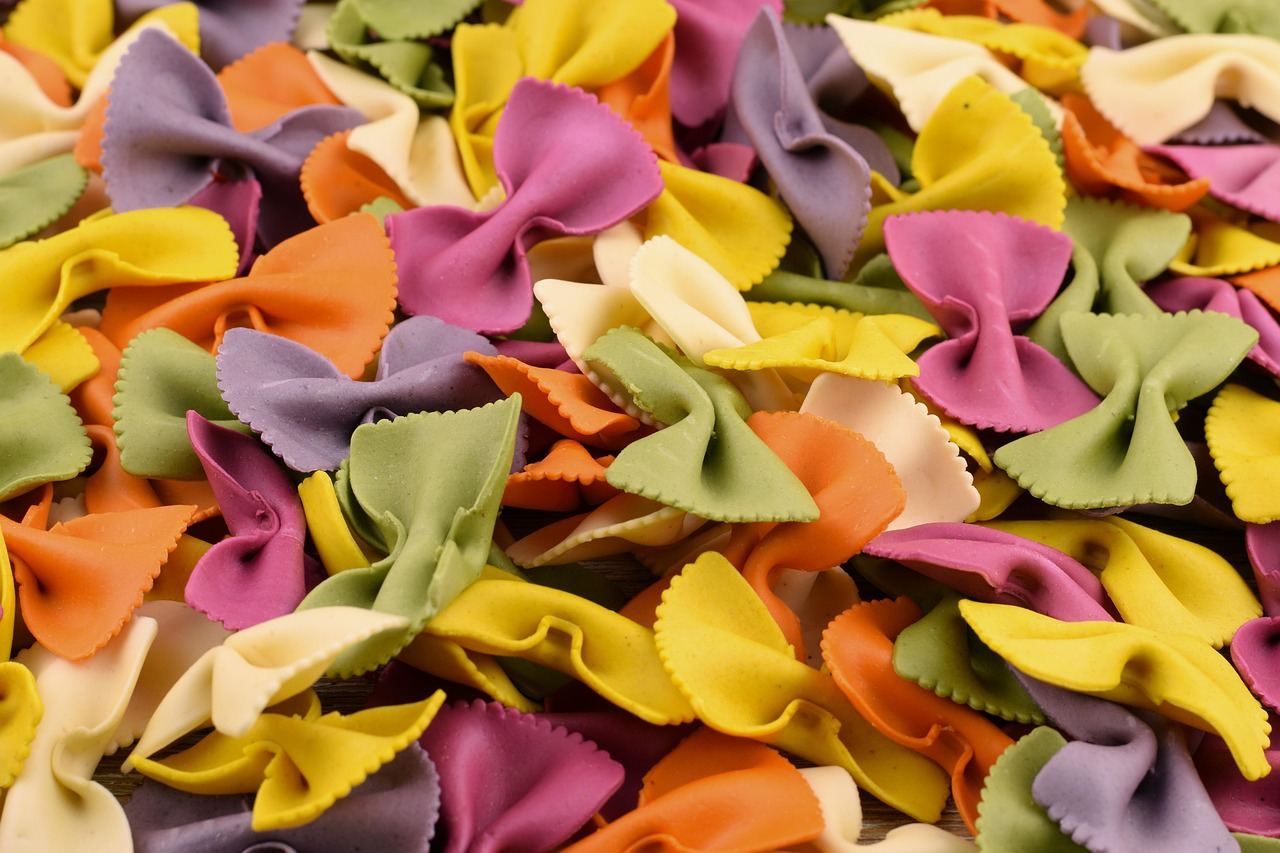
Natural colors in instant meal and flour-based applications: uniform dispersion and heat retention matter more than raw color intensity.
Instant noodle manufacturing is a short but aggressive sequence: mixing and kneading, sheeting, steaming, and then either frying in hot oil or hot-air drying. A colorant used in the dough has to clear three hurdles.
- Water-phase compatibility. The color must disperse evenly through the dough so the sheet is uniform from edge to center, with no streaking after sheeting.
- Thermal retention. Steam and frying heat both attack pigments. Colors that shift or fade at this stage cannot be corrected downstream.
- Batch-to-batch repeatability. Noodle color is a brand signal. A shade that drifts between lots becomes a quality complaint rather than a formulation detail.
Gardenia yellow is a reasonable fit on all three counts. It is water-soluble, so it can be dosed through the mixing water rather than dry-blended into flour, which is the more uniform route. It is documented as resistant to light and heat. And its working pH window of 4–10 spans the mildly acidic to mildly alkaline range typical of dough systems, although formulators should still measure the pH of their own dough, particularly in alkaline noodle styles where the upper end of the window is approached.
Because the pigment is insoluble in grease, the water-soluble powder or liquid is the default form for a noodle sheet. The oil-soluble liquid is intended for fat-continuous systems elsewhere in the plant. Whether any color migrates into the frying oil is a function of the whole recipe and process, and is best confirmed in a pilot fry rather than assumed from a datasheet.
Grade selection drives both cost and control. For a light noodle shade, a mid-range grade is easier to control than a high-color-value grade weighed in very small quantities. Where a high grade such as E300 or E500 is chosen to reduce freight and storage volume, a pre-diluted stock solution prepared under controlled conditions improves weighing accuracy and, in turn, batch-to-batch reproducibility.
Application records for instant meals describe natural colors as compatible with flour-based thermal processing, with color that holds through the shelf life. That is the performance envelope to test against: not only the appearance of the freshly fried block, but its appearance after storage under your own distribution conditions.
The Bakery Case: Crust, Crumb and Sugar Reduction
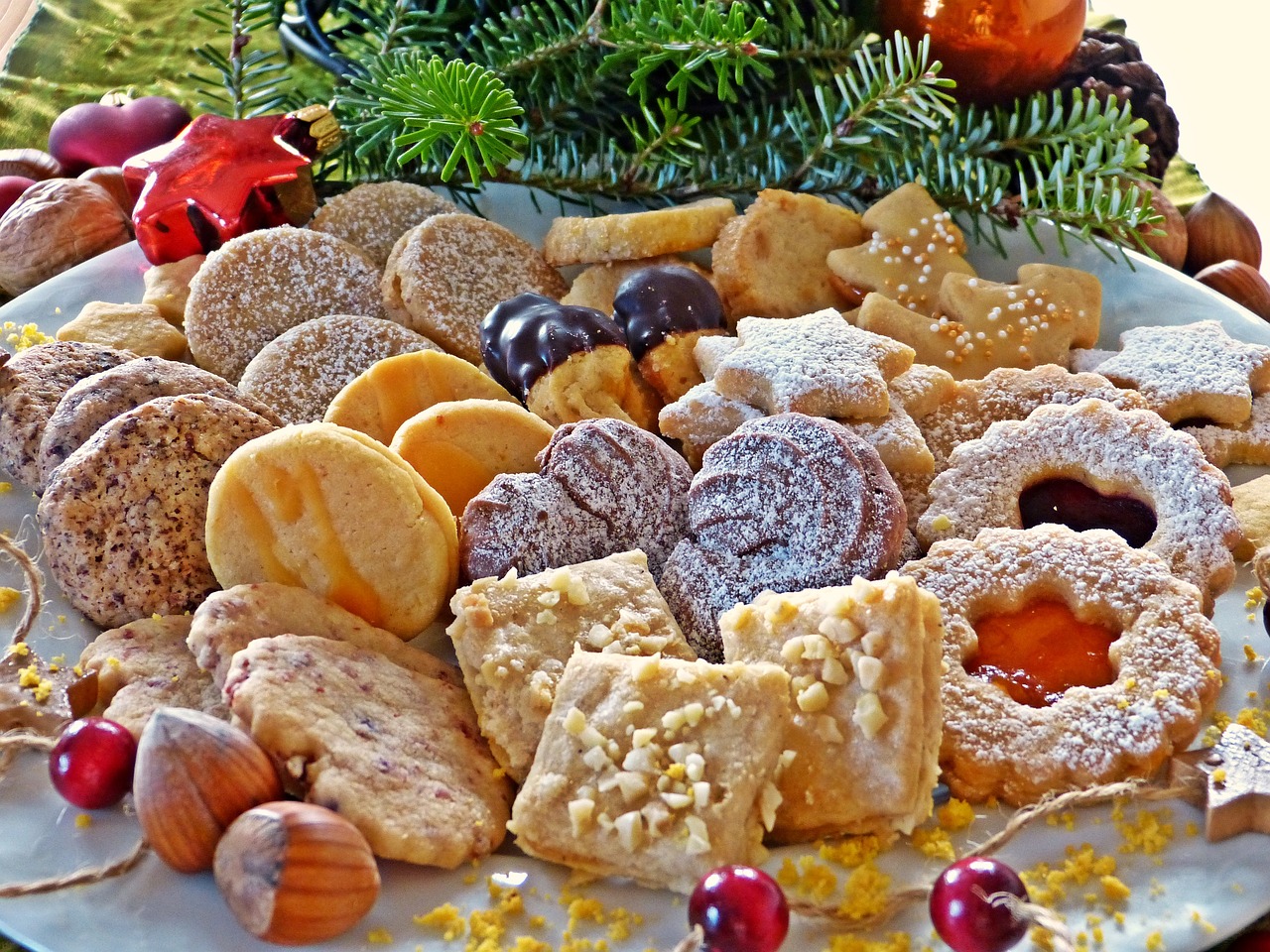
Bakery systems test a pigment on two surfaces at once: the aqueous crumb and the browning crust.
Bakery is a different problem. Water activity is lower, the thermal load is dry rather than steam-based, and the visible surface is often the product's identity. Gardenia yellow is listed for bakery and for baked goods and snacks applications, and it is used in two distinct ways.
- Crumb coloring. The water-soluble powder or liquid is dosed into the dough or batter, where it distributes with the aqueous phase.
- Fat-phase and surface systems. The oil-soluble liquid grade is the appropriate input for compound coatings, fillings and other fat-continuous components.
Heat resistance matters more here than in most categories, because the color must survive the bake without darkening unevenly. Gardenia yellow is documented as heat resistant, with light resistance that supports the packaged shelf life. Two process interactions still need to be managed.
Browning competes with yellow. Crust color is produced by Maillard reactions and caramelization, which run independently of any added pigment. A formulator targeting a pale gold surface and a warm yellow crumb is effectively targeting two different reactions in the same piece of dough, and the two must be tuned together — through sugar type and level, amino acid availability, surface moisture and bake profile — rather than through pigment dosage alone.
Sugar reduction changes the browning baseline. Where a bakery product is being reformulated for lower sugar at the same time as a color conversion, the two changes are not independent. D-Allulose, for example, is a reducing sugar that participates in Maillard chemistry, and its effect is matrix-dependent: formulation experience describes darker results in cookie systems as allulose inclusion rises, and a much lower browning index in some bread systems where reactivity with the available amino acid environment is poor. Formulating color and sugar reduction sequentially, rather than together, tends to produce a second round of color correction.
Measurement discipline helps. Instrumental color measurement, taken at defined points on crumb and crust, converts a subjective shade argument into a specification that both buyer and supplier can work against, and it makes accelerated shelf-life comparisons meaningful.
Comparing Natural Yellow Options
Gardenia yellow is rarely the only candidate on a formulator's list. The table below compares the natural yellow options most often shortlisted for flour-based and beverage applications, using the documented characteristics of each pigment family.
| Pigment | Typical fit | Documented strength | Boundary to plan for |
|---|---|---|---|
| Gardenia yellow | Instant food, bakery, beverages, confectionery, meat, dairy, seasoning | Hue stable at pH 4–10; light and heat resistant; strong dyeing ability | Insoluble in grease, so fat systems need the oil-soluble liquid grade; standard grades carry a gardenia note |
| Turmeric (curcumin) | Bakery, seasoning, beverages, confectionery | Strong thermal stability; bright yellow; improved light-stable version available | Lipophilic in standard form and not water-soluble; water-dispersible grades must be specified |
| Beta-carotene | Bakery, beverages, dairy, cheese, confectionery | Microencapsulation stabilization; stable at pH 2.5–10.0 | Shade spans yellow through orange to red, so it is warmer than a lemon yellow |
| Annatto extract | Dairy, cheese, snacks, beverages | Stable yellow tone across its acidic working range; water-soluble and oil-soluble forms | Hue sits toward the orange end of the yellow range; dosage control affects tone |
| Paprika oleoresin | Meat, seasoning, snacks, egg products | Heat stable at pH 2.5–10.0; oil soluble and odorless | Deep red to orange-red hue, so it is not a lemon yellow substitute |
| Carmine | Confectionery, beverages, fruit preparation | Light and heat stable at pH 4.0–10.0; acid-resistant options available | Cochineal origin, therefore not vegan |
The practical reading: gardenia yellow and turmeric are the two candidates with the strongest thermal case for bakery and instant food, but they fail differently. Turmeric's constraint is solubility — it is lipophilic in standard form, and water-dispersible grades exist but must be specified. Gardenia yellow's constraint is the reverse — it is water-soluble and insoluble in grease, so fat-continuous systems need the oil-soluble liquid grade. Matching the pigment's solubility to the recipe's continuous phase is a faster screening step than running a full trial on every option.
Where Gardenia Yellow Stops: Real Boundaries
A useful supplier conversation includes the cases where the pigment is the wrong answer. The following limits are documented or inherent in the grade family.
- Strongly acidic systems. The documented hue-stability window is pH 4–10. Below that, anthocyanin-based colors are the better-established choices — purple sweet potato at pH 2.0–4.0, and radish red and black carrot at pH 3.0–5.0.
- Fat-continuous systems without the right grade. The powder does not disperse in oil. Specify the oil-soluble liquid.
- Exact synthetic match. A natural yellow is a different chemical entity from a synthetic dye. Shade, tinctorial strength and behavior under light will not match exactly; the target should be reformulated, not copied.
- Cost parity. Natural colorants carry a higher raw material cost than synthetic equivalents. The offsetting value is clean-label positioning and reduced regulatory compliance risk, not a lower purchase price.
- Flavor neutrality in standard grades. The characteristic gardenia note is a feature in some applications and a defect in others. Low-odor grades exist and should be requested at sample stage.
- Market-by-market approval. Permitted use categories and dosage limits differ between jurisdictions. Confirmation with the local authority is the buyer's responsibility, and documentation should be assembled before launch rather than after.
- Storage and light exposure. Natural colors can fade under prolonged high temperature or strong light. Grade selection, packaging and warehouse conditions are part of the specification, not an afterthought.
A Sourcing Checklist for Gardenia Yellow
Because color value, form and specification vary between suppliers under the same product name, procurement should be built around a specification sheet rather than a catalogue entry.
| What to specify | Why it matters | What to ask for |
|---|---|---|
| Color value grade (E30–E500) | Determines dosage, freight volume and dosing accuracy | Certificate of analysis stating color value for the delivered batch |
| Physical form and solubility | Decides the dosing point and whether the grade suits a water or fat phase | Confirmation of water-soluble powder, water-soluble liquid or oil-soluble liquid, plus a solubility check in your matrix |
| Geniposide specification | Some products require a controlled low-geniposide grade | Written specification and the test method used |
| Odor profile | Standard grades carry a gardenia note that can register in delicate systems | Samples of low-odor or deodorized grades for sensory review |
| Stability data | Heat, light and pH behavior decide shelf-life claims | Accelerated stability data plus a trial in the finished product |
| Certification scope | Certificates list named products, not an entire catalogue | Confirmation that the exact grade appears within the Halal, Kosher, vegan or ISO scope |
| Traceability | Gardenia fruit supply and batch history underpin recall readiness | Batch COA and raw material traceability documentation |
| Trial quantities and terms | Evaluation timelines and cash flow | Sample quantity, MOQ, lead time and delivery terms in writing |
Two commercial points are worth confirming early. Minimum order quantities for natural colors are commonly quoted in the 5 kg and 10 kg range, with trial quantities negotiable for project evaluation. Standard lead time is typically 7–15 working days after deposit, subject to stock availability, with FOB, CIF and CFR terms available. Neither figure should be assumed — both should appear in the quotation.
Who Supplies Gardenia Yellow at Industrial Scale
Henan Zhongda Hengyuan Biotechnology Stock Co., Ltd. is a Chinese manufacturer of natural colors, natural sweeteners and plant extracts, founded in 1993 and based in Linying Industrial Park, Luohe City, Henan. The company operates a 200,000 m² facility with approximately 400 employees, including a 110-engineer R&D team, and reports annual output of 100,000 tonnes. Around 50% of production is exported, to the USA, EU, SAM, RUS, SEA, KOR, JPN, MEA and AFR, and the company serves more than 4,000 customers.
Its natural color portfolio spans gardenia yellow and gardenia blue, beetroot red and beetroot concentrate, radish red, purple sweet potato, black carrot concentrate, cabbage red, butterfly pea extract, grape skin red, beta carotene, curcumin, spirulina extract, paprika oleoresin, lycopene, annatto extract, carmine, monascus color, lutein, astaxanthin, calcium carbonate and full-series blended natural colors — a breadth that matters when a single product needs two or three pigments to reach a shade.
Quality documentation includes:
- ISO 9001:2015 certification, certificate No. 00123Q38181R3M/4100, issued by China Quality Certification Centre
- FSSC 22000 certification, certificate No. CQC25FS1000R2M/4100, based on ISO 22000:2018, ISO/TS 22002-1:2009 and the FSSC 22000 additional requirements (version 6.0)
- International Halal certification, certificate No. SSPY-201318-34572, covering 106 listed products
- KOF-K Kosher certification, certificate No. FD5A4-2BT0W, covering the listed products on that certificate
- VeganSu certification, certificate No. E892173R01, covering the products listed on that certificate
Because certificates name specific products rather than an entire catalogue, buyers should confirm that the scope names the exact gardenia yellow grade being purchased — a point that applies to any supplier, not only this one. Factory test reports are issued through a QC center accredited to CNAS, and third-party reports can be arranged on request.
Application support is the other differentiator worth testing during evaluation. Customized color matching, low-geniposide and low-odor specifications, carrier-free versions and alternative carriers such as gum arabic, and on-site technical guidance are all part of the service scope. For US-bound buyers, local shipment from a US warehouse shortens lead time, and export documentation including COA, free sale certificate and Halal and Kosher certificates is available for most destination markets.
Market Trend: Clean Label, Scrutiny and Regulatory Divergence
Several trends are reshaping natural color procurement, and none of them is primarily about color.
Ingredient declaration is now a marketing surface. A label that reads gardenia yellow or vegetable juice for color is doing commercial work that a synthetic dye name cannot. Suppliers now market clean-label suitability, simple declarations and carrier-free options as standard line items in a natural color specification, because these are the terms retailers and brand owners actually negotiate.
Regulatory scrutiny of selected synthetic colorants continues. Where permitted lists narrow, reformulation becomes a compliance project with a deadline rather than a marketing choice. Natural alternatives to specific synthetic yellows and reds are consequently specified by target shade — tartrazine alternative, Sunset Yellow alternative, Allura Red alternative — rather than by pigment name, which puts a premium on suppliers who can match a shade rather than merely sell a pigment.
Approval status diverges sharply between markets. Gardenia blue illustrates the pattern within the same plant family. In the United States it is listed under 21 CFR 73.168 as a color additive exempt from certification, permitted in specified categories such as sport drinks, flavored and enhanced non-carbonated water, fruit drinks and ades, ready-to-drink teas, hard candy and soft candy — but not in ice cream. In the European Union it remains under EFSA review and is not authorized for general food use. A buyer who assumes one global dossier is therefore exposed, and a supplier who can document status market by market becomes materially more valuable. The same discipline applies to gardenia yellow: permitted categories and dosage limits must be confirmed for each destination market.
Supplier consolidation is accelerating. Manufacturers are reducing the number of color suppliers to simplify qualification, documentation and color matching. That favors suppliers with breadth of portfolio, in-house application laboratories and complete certification, and disadvantages single-product traders who cannot support a shade change.
Future Outlook
The direction of travel in natural yellow is toward narrower specifications and wider documentation. Three developments are worth watching.
- Higher color value and carrier-free formats. As formulators push dosage down and labels get shorter, high-color-value grades and carrier-free powders and liquids become the default request rather than an exception.
- Application-specific blends. Single pigments rarely hit a target shade alone. Blended natural color systems, matched to a customer's reference sample and validated in their matrix, are replacing pigment-by-pigment purchasing.
- Documentation depth as a competitive moat. Certificate scope, batch traceability, stability data and market-by-market regulatory status increasingly decide a supplier shortlist, because they determine how quickly a product can launch.
For instant noodle and bakery manufacturers, the practical implication is straightforward. Gardenia yellow is a mature, workable answer to the yellow problem, but it is a specification-driven answer. The buyers who get consistent results are the ones who define color value, form, pH and heat exposure, odor profile and certificate scope before the first purchase order — and who validate the pigment in their own matrix rather than on a datasheet.
Frequently Asked Questions
What is gardenia yellow made from?
Gardenia yellow is a natural colorant extracted from gardenia fruit, a plant in the Rubiaceae family. Its principal coloring components are carotenoid and crocin. It is supplied as a water-soluble powder, a water-soluble liquid and an oil-soluble liquid, dissolves readily in water and ethanol solution, and is insoluble in acetone and grease.
Which food applications is gardenia yellow best suited to?
Documented application categories include bakery, instant food, beverages, confectionery, meat products, dairy and seasoning. Its strongest fit is in aqueous systems processed at moderate to high temperature within a pH range of 4–10, which includes instant noodles and baked goods. Fat-continuous systems require the oil-soluble liquid grade.
How stable is gardenia yellow to heat, light and pH?
The grade family is documented as resistant to light and heat, with hue stability in aqueous conditions across pH 4–10. Stability still depends on the matrix, the process and the packaging: natural colors can fade under prolonged high temperature or strong light, so accelerated stability testing in the finished product is the reliable check.
Can gardenia yellow be supplied without maltodextrin?
Maltodextrin is used as a carrier in some standard spray-dried powder grades. Liquid concentrates and high-purity concentrated powders can be supplied without maltodextrin, and alternative carriers such as gum arabic can be formulated. The full ingredient list, COA and compliance documents should be requested for the specific grade under consideration.
Which certificates should a buyer request for gardenia yellow?
At minimum, the certificates relevant to the destination market and to the specific grade: an ISO 9001 quality management certificate, FSSC 22000 or ISO 22000 food safety certification, Halal and Kosher certificates where required, and vegan documentation where that claim is made. Because certificates list named products, the buyer should verify that the exact grade appears within the scope and should request a batch COA with the shipment.
What are the minimum order quantity and lead time for natural colors?
Minimum order quantities for natural colors are commonly quoted in the 5 kg and 10 kg range, with trial quantities negotiable for project evaluation. Standard lead time is typically 7–15 working days after deposit, subject to stock availability. Both should be confirmed in writing for the specific grade.
Are samples and technical support available?
Free small samples can be provided for testing, together with routine documents such as the product specification sheet, factory COA and qualification certificates. Technical support covers formulation, color matching and process application guidance, and on-site guidance can be arranged. Third-party test documents beyond the routine set should be requested in advance so that they can be coordinated.
Is gardenia yellow a direct replacement for synthetic yellow dyes?
Not in the sense of a one-to-one swap. A natural pigment differs from a synthetic dye in shade, tinctorial strength, solubility and stability behavior, so dosage and often the surrounding formula must be re-validated. Replacement is normally a short formulation project — shade matching, matrix trial and stability check — rather than an ingredient substitution.
Technical enquiries
Henan Zhongda Hengyuan Biotechnology Stock Co., Ltd. — natural colors, natural sweeteners and plant extracts.
Contact: Sarah Zhang · sales02@hazhongda.com · Tel / WhatsApp +86-18135628101
Address: East of Jinger Road, North of Weier Road, Linying Industrial Park, Luohe City, 462600, Henan, China
هل لديك أسئلة أو تحتاج إلى مزيد من التفاصيل؟
تواصل مع فريقنا للحصول على عرض أسعار مخصص أو استشارة فورية.
طلب عرض أسعار
املأ النموذج أدناه وسيتواصل معك فريقنا بعرض مقترح مخصص.
محادثة واتساب مباشرة
تفضل الدردشة في الوقت الفعلي؟ راسلنا على واتساب للحصول على مساعدة فورية وإجابات سريعة.
- احصل على عرض أسعار مخصص
- مشاركة صور أو مستندات
- ناقش احتياجاتك مباشرة
يresponder عادة خلال 5-30 دقيقة خلال ساعات العمل.