
Gas Cylinder Safety Cabinet Compliance: What to Verify
In chemical, semiconductor, and industrial-gas laboratories, a gas cylinder safety cabinet is the interface between the gas inventory and the building's detection, exhaust, and emergency systems. That makes its specification a compliance decision rather than a storage purchase, and it is why cylinder storage belongs in a laboratory furniture qualification review at the same stage as fume hoods, safety cabinets, and emergency hubs, instead of after the exhaust riser has already been fixed.
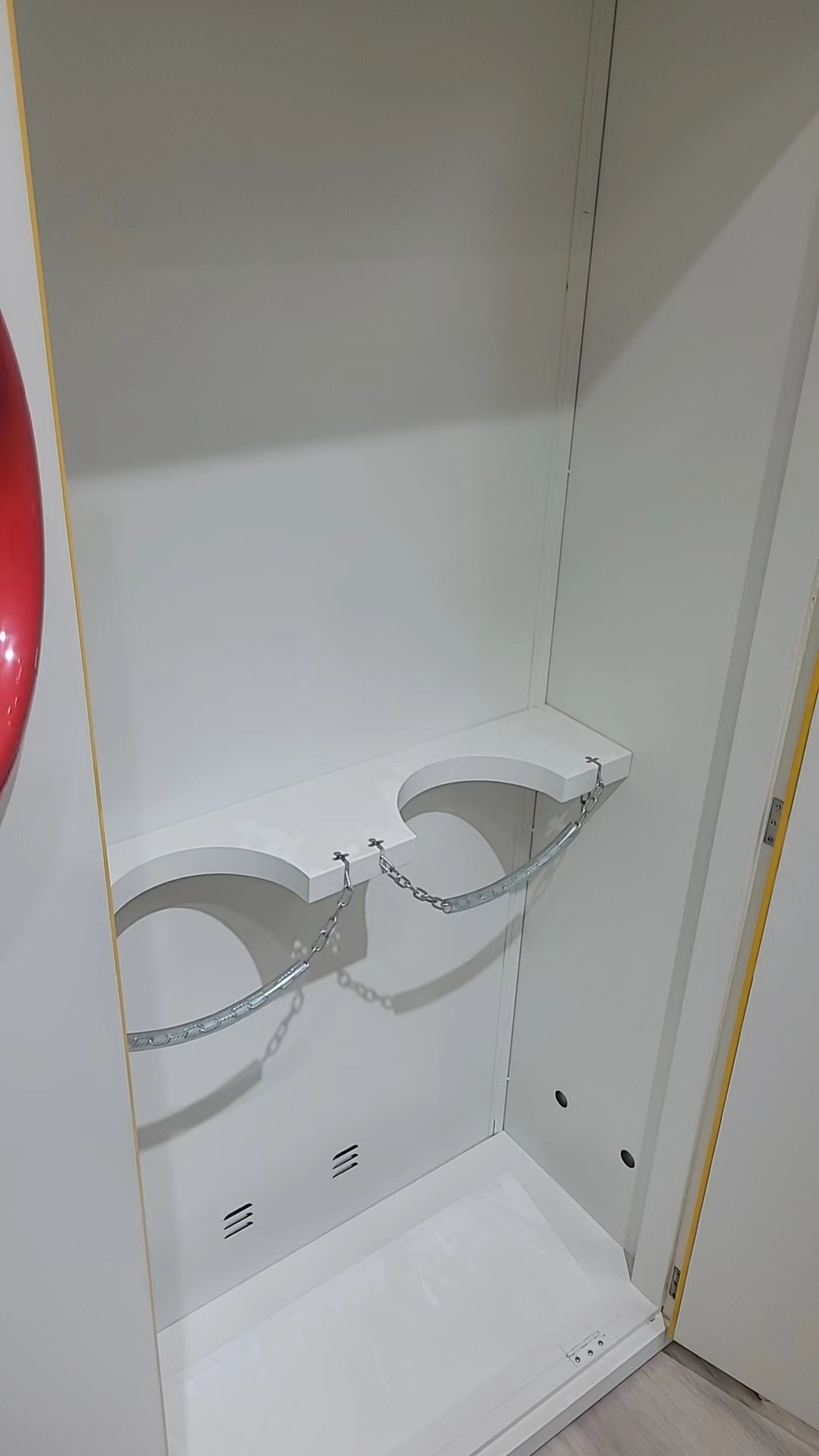
A gas cylinder safety cabinet is fixed laboratory safety infrastructure: enclosure, restraint, and linkage provisions are reviewed together at qualification stage.
A concrete reference point makes the review easier. The gas cylinder safety cabinet EG-S0-CB005 from Guangdong Ever Great Laboratory Equipment Co., Ltd. measures 900 x 450 x 2000 mm, is built from 1.0 mm cold-rolled steel with a powder coating, and is offered in single-, double-, and triple-cylinder configurations. Its specification names five provisions that matter more than the footprint: cylinder-fixing provisions, an anti-tip layout, an automatic purging option, gas-alarm linkage configuration, and alarm/exhaust linkage configuration. Those are the items a buyer should be able to trace inside a submittal.
Where cylinder storage drops out of the qualification process
Laboratory furniture qualification is usually document-driven. Buyers compare drawings, steel gauge, worktop material, load ratings, and, for fume hoods, containment test documentation against recognised benchmarks such as ANSI/ASHRAE 110-2016 (R2025), the American national standard that specifies a quantitative and qualitative test method for evaluating fume containment of laboratory fume hoods, or EN 14175 in European projects.
Cylinder storage rarely receives the same treatment, for two structural reasons. First, cylinder cabinets are frequently specified after the exhaust riser, the gas-detection loop, and the room layout have been frozen, which leaves no reserved exhaust branch or alarm contact for the cabinet's linkage provisions. Second, the term "safety cabinet" is used loosely in the market, so a flammable liquid cabinet, a vented chemical cabinet, and a gas cylinder cabinet can end up compared against the same checklist even though they are governed by different standards and address different hazards.
The opportunity is straightforward. Steel-based construction is already the dominant material pathway in laboratory furniture: metal accounted for a 52.7% revenue share of the material segment in 2025, according to Dataintelo's laboratory furniture market research. Buyers who write cylinder cabinet provisions into the furniture package early are, in practice, closing a compliance gap using documents they are already collecting.
The qualification checklist: seven items to verify
The table below is structured so that each verification item can be answered from a supplier's product data or drawings, then confirmed against site conditions. The reference column states what Ever Great publishes for the EG-S0-CB005 gas cylinder cabinet. It is a starting point for comparison, not a substitute for project-specific engineering.
| Verification item | What the buyer should confirm | Reference point on EG-S0-CB005 |
|---|---|---|
| Enclosure footprint and height | Whether the unit fits the available room depth, door swing, and route to the cylinder store | 900 x 450 x 2000 mm |
| Shell material and finish | Whether the gauge and coating are stated in the submittal rather than assumed | 1.0 mm cold-rolled steel with powder coating |
| Cylinder configuration | Whether the count matches cylinders per gas, not only the total cylinder inventory | Single-, double-, and triple-cylinder options |
| Cylinder restraint | Whether restraint is a designed provision of the unit | Cylinder-fixing provisions |
| Stability | How the unit resists tipping when loaded and how it is fixed to floor or wall | Anti-tip layout |
| Purging | Whether purging is required for the gas classification and how the cycle is triggered | Automatic purging option |
| Alarm and exhaust interface | Whether the room provides a compatible signal and a dedicated exhaust branch | Alarm/exhaust linkage configuration; gas-alarm linkage configuration |
Two notes on reading the table. The entries for cylinder-fixing provisions and anti-tip layout describe how the unit restrains and stabilises the cylinder, which is a different question from how the shell itself is manufactured. And the purging function is listed as an option, which means it must be selected deliberately at order stage rather than assumed as standard.
Alarm, exhaust, and purging linkage: the specification gap buyers underestimate
The linkage language in the specification is precise in one respect and deliberately limited in another. A cabinet configured for gas-alarm linkage and alarm/exhaust linkage is built to receive signals and to be connected to an exhaust path. It does not contain the gas detection sensor or the extraction system itself.
That distinction changes what a buyer has to confirm before delivery:
- Does the room's gas detection panel expose a compatible signal for the cabinet's gas-alarm linkage?
- Is there a dedicated exhaust branch able to hold its design flow while an automatic purge cycle runs?
- Will purging be triggered automatically on an alarm signal, or operated as a manual function?
- If the cylinder cabinet and the room's emergency hub share an alarm loop, has the loop been designed as one system rather than two separate devices?
The fourth point is easy to miss. Ever Great's laboratory safety and emergency hub EG-SF-CB011 is a 900 x 600 x 2000 mm unit in 1.0 mm cold-rolled steel with epoxy powder coating that integrates shower, eyewash, first-aid, and fire-safety storage, and carries a leak-sensing configuration plus alarm integration capability. When a cylinder cabinet and an emergency hub serve the same room, both interfaces belong to the same safety architecture, and the point at which they meet should be defined on a drawing.
How much steel is enough? Reading the 1.0 mm figure correctly
A gauge figure means little without a reference frame, and buyers comparing laboratory furniture submittals should read it against the product family rather than in isolation. Within the same manufacturer's catalogue, the C-frame wall laboratory bench EG-S0-LB003 uses a suspended C-frame in 40 x 60 x 1.8 mm high-carbon steel tube with a 12.7 mm phenolic worktop; the island laboratory bench EG-S0-CB005 uses 1.0-1.2 mm steel with phenolic, ceramic, or epoxy worktop options; and the flammable safety cabinet EG-SF-LB005 is built from 1.2 mm double-wall steel with a 38 mm air barrier and a 51 mm sump.
The gas cylinder cabinet sits inside that range at 1.0 mm cold-rolled steel with a powder coating. The appropriate reading is that this is the enclosure specification for a cylinder cabinet sized at 900 x 450 x 2000 mm, not an indication of load-bearing capacity. Load questions belong to a different part of the submittal: the base and plinth arrangement, the anti-tip layout, and the fixing method to floor or wall. Those should be requested as drawings rather than inferred from the shell gauge.
EN 14470-1 and the standard that does not automatically apply
Fire-resistance language travels fast between product categories. EN 14470-1, the European standard for fire safety storage cabinets for flammable liquids, classifies cabinets as Type 15, 30, 60, or 90 minutes according to the time taken to reach a defined temperature rise, with the temperature increase inside the cabinet not exceeding 180 K or 200 degrees C.
That classification describes flammable liquid safety cabinets. It should not be copied onto a gas cylinder cabinet specification without documentary support. A qualification review should instead ask a narrower question of the supplier: which standard, test report, or certificate is claimed for this specific cylinder cabinet model, and what product scope is written on that document?
Scope discipline matters on the CE side as well. The CE certificate referencing the EN IEC 60079 series (certificate TH2310049-C01-C01, issued by Shenzhen Tian Hai Test Technology Co., Ltd. for the EU market) applies to the Flammable Safety Storage Cabinet, Model FB-03. The EMC Directive 2014/30/EU certificate CKEYS251020088, issued by Guangdong KEYS Testing Technology Co., Ltd. for the EU/EEA market, applies to fume hood models EG-FH01, EG-FH04, EG-FH02, EG-FH03, and EG-FH06. Neither document should be read as an explosion-protection classification for the EG-S0-CB005 gas cylinder cabinet.
Where cylinder cabinets are actually specified
Ever Great lists the gas cylinder safety cabinet's applicable industries as chemical, semiconductor, and industrial-gas laboratories. Those are environments where exhaust architecture is usually continuous: project records for comparable installations describe 24/7 exhaust operation with VAV (variable air volume) or CAV control, matched to equipment such as a centrifugal PP exhaust fan, an acid scrubber tower, ductwork, and an airflow monitor controller.
Buyers can also calibrate expectations for delivery scale from the manufacturer's project history. Delivered laboratory furniture programmes include 105 units for a metallurgical and smelting laboratory project in the Philippines, 255 units for a university and educational research facility in India, 45 units for a food safety and QA/QC laboratory in Australia, 200 units for a clinical diagnostics and healthcare laboratory in China, and 30 units for a chemical enterprise workshop laboratory in Tanzania. These figures describe complete furniture programmes rather than cylinder cabinet quantities; their relevance here is the pattern they establish, namely multi-unit fabrication, site installation support, and documentation that has to accompany a shipment.
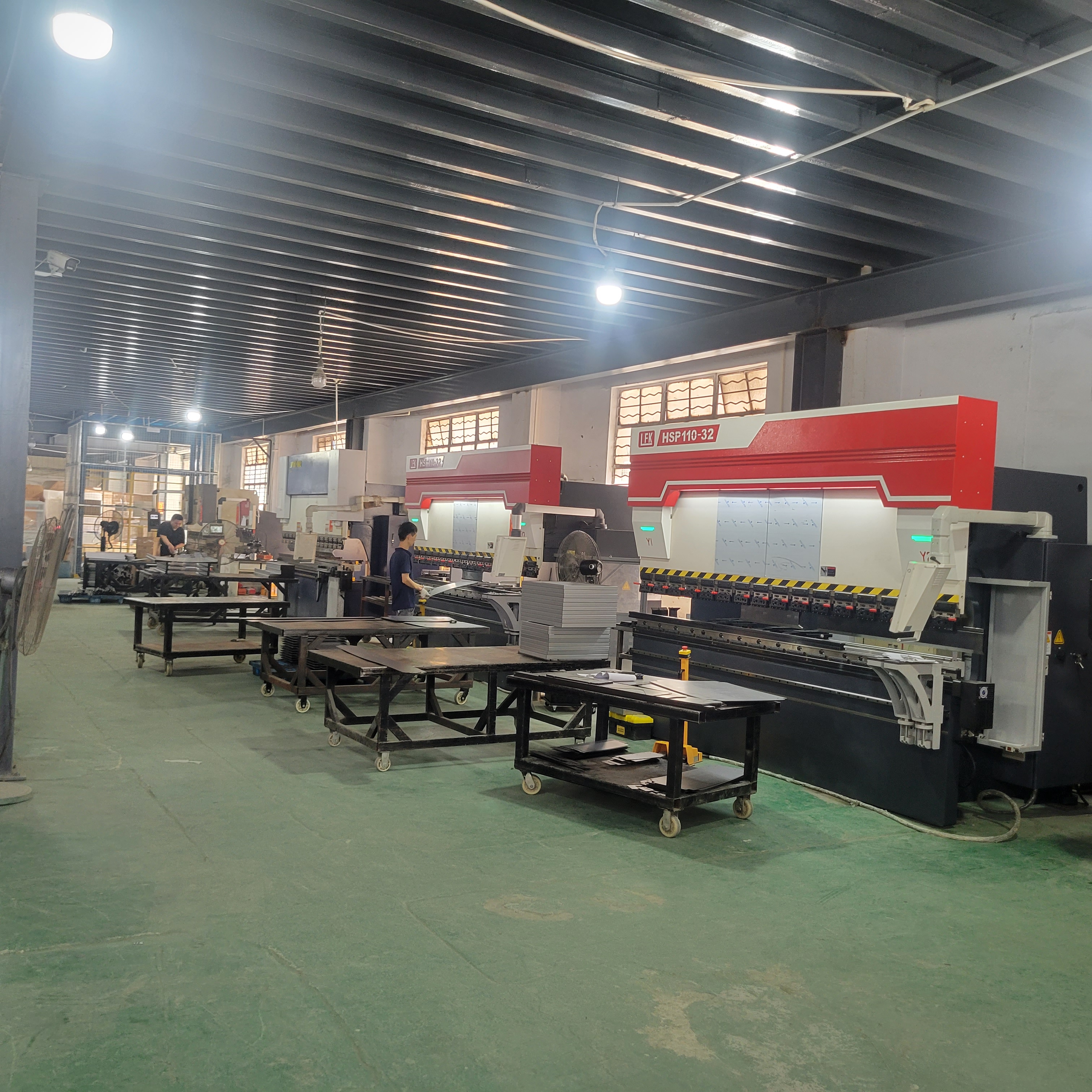
Sheet metal forming for cold-rolled steel laboratory furniture: shell gauge, base construction, and fixing details are verified as separate items in a submittal.
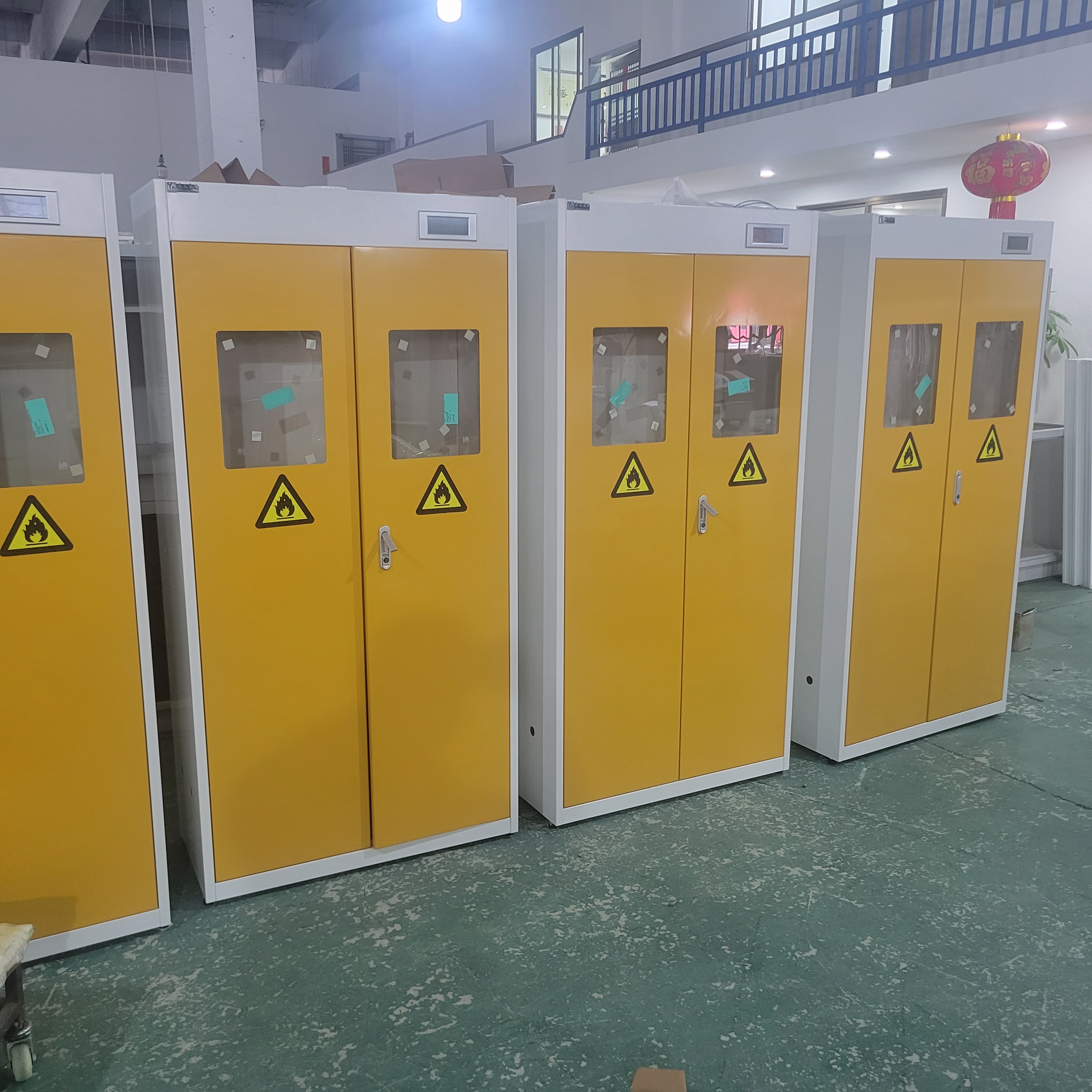
Cylinder cabinet enclosure reference: 900 x 450 x 2000 mm in 1.0 mm cold-rolled steel with powder coating, configured for alarm/exhaust linkage.
Market trend: documentation is moving earlier in the buying cycle
Two data points frame the trend. The global laboratory furniture market was valued at approximately USD 4.8 billion in 2025 and is projected to reach USD 8.1 billion by 2034, according to Dataintelo. On the supply side, China exported over USD 4.15 billion of furniture parts under HS code 940390 in 2024, according to OEC trade data, a category that includes laboratory furniture components.
The caution attached to the first figure is as useful as the figure itself. Published 2025 market size estimates for the same category range widely across research houses, from roughly USD 1.14 billion to USD 4.8 billion, reflecting different definitions of what counts as laboratory furniture. Buyers should read such numbers as scope statements rather than as specification guidance; the definition that governs a tender is the one written into the bill of quantities.
What the trade and market data do support is a practical conclusion: supplier qualification is increasingly cross-border, and the documentation that proves a cylinder cabinet's provisions has to travel with the product.
Comparison with traditional cylinder storage approaches
| Approach | What it provides | What it does not provide |
|---|---|---|
| Cylinder chained to a wall or frame | Basic physical restraint | No enclosure, no defined exhaust connection, no purging provision, no defined alarm interface |
| Generic steel cabinet without cylinder-specific provisions | Enclosure and a lockable volume | No stated cylinder-fixing provisions or anti-tip layout; no defined alarm/exhaust linkage for a cylinder inventory |
| Gas cylinder cabinet with purging system, e.g. EG-S0-CB005 | Cylinder-fixing provisions, anti-tip layout, automatic purging option, gas-alarm linkage and alarm/exhaust linkage configuration | The cabinet does not supply the gas detection sensor or the exhaust system; linkage performance depends on the building services it is connected to |
Three limits should be stated plainly, because together they determine whether this type of cabinet is the right answer for a given room.
- Capacity ceiling. The EG-S0-CB005 is offered in single-, double-, and triple-cylinder configurations at 900 x 450 x 2000 mm. A laboratory holding a larger cylinder inventory across several gases will need multiple units or a different storage arrangement, and the spatial plan should reflect that early.
- Dependence on building systems. Alarm/exhaust linkage and gas-alarm linkage are provisions, and purging is an option. Their performance after commissioning depends on the connected detection and extraction systems. A cabinet cannot compensate for a missing exhaust branch.
- No assumed classification transfer. As noted above, the explosion-protection-related CE certification held in this manufacturer's document set covers the Flammable Safety Storage Cabinet Model FB-03, not the gas cylinder cabinet. Any classification must be requested for the exact model under review.
Future outlook
Qualification of gas-handling infrastructure is shifting from material questions to behaviour questions: not what the cabinet is made of, but what the cabinet does when a cylinder leaks, an exhaust fan trips, or a purge cycle starts. That shift favours specifications that document linkage provisions explicitly, because linkage is exactly what a reviewer can trace on a drawing.
For suppliers, the practical implication is documentation quality. A cylinder cabinet submittal that arrives with its cylinder-fixing provisions, anti-tip layout, purging option, and alarm interface described in the same terms as the order acknowledgement is faster to approve than one that requires a round of clarification. For buyers, the implication is sequencing: cylinder storage should be qualified in the same pass as fume hoods and safety cabinets, while the exhaust and detection design is still open.
Frequently asked questions
What are the dimensions and construction of the gas cylinder safety cabinet EG-S0-CB005?
The EG-S0-CB005 gas cylinder safety cabinet measures 900 x 450 x 2000 mm and is constructed from 1.0 mm cold-rolled steel with a powder coating finish. It is classified as a steel gas cylinder cabinet with a purging system, and it is listed as suitable for chemical, semiconductor, and industrial-gas laboratory environments.
Which cylinder configurations are available, and how should capacity be planned?
The cabinet is offered in single-, double-, and triple-cylinder configurations. Capacity planning should distinguish between the number of cylinders per gas and the total cylinder inventory in the room: a triple-cylinder unit covers one bank, and larger inventories generally require multiple cabinets or a separate storage arrangement. Cylinder-fixing provisions are part of the published specification and should be confirmed as part of the configuration.
What does alarm/exhaust linkage configuration mean in a specification?
It means the cabinet is configured to be connected to the room's exhaust and alarm systems, and it also carries a gas-alarm linkage configuration. The cabinet does not contain the gas detection sensor or the exhaust fan. Before ordering, a buyer should confirm that a compatible signal is available from the gas detection panel, that a dedicated exhaust branch exists, and whether the automatic purging option will be triggered automatically or operated manually.
Does EN 14470-1 apply to gas cylinder safety cabinets?
EN 14470-1 is the European standard for fire safety storage cabinets for flammable liquids, classifying cabinets as Type 15, 30, 60, or 90 minutes based on the time taken to reach a defined internal temperature rise, with the increase inside the cabinet not exceeding 180 K or 200 degrees C. That classification should not be assumed to apply to a gas cylinder cabinet. The recommended procedure is to request the standard, test report, or certificate claimed for the specific cylinder cabinet model and to check the product scope stated on that document.
Which certifications and management systems does the manufacturer hold?
Guangdong Ever Great Laboratory Equipment Co., Ltd. runs ISO 9001, ISO 14001, and ISO 45001 management systems. In its product documentation, fume hood models EG-FH01, EG-FH04, EG-FH02, EG-FH03, and EG-FH06 are certified to the EMC Directive 2014/30/EU under certificate CKEYS251020088, issued by Guangdong KEYS Testing Technology Co., Ltd. for the EU/EEA market, and the Flammable Safety Storage Cabinet Model FB-03 holds CE certificate TH2310049-C01-C01 and RoHS certificate TH2310049-C02-C01, both issued by Shenzhen Tian Hai Test Technology Co., Ltd. for the EU market. Certificate scope should always be checked against the exact model being purchased.
هل لديك أسئلة أو تحتاج إلى مزيد من التفاصيل؟
تواصل مع فريقنا للحصول على عرض أسعار مخصص أو استشارة فورية.
طلب عرض أسعار
املأ النموذج أدناه وسيتواصل معك فريقنا بعرض مقترح مخصص.
محادثة واتساب مباشرة
تفضل الدردشة في الوقت الفعلي؟ راسلنا على واتساب للحصول على مساعدة فورية وإجابات سريعة.
- احصل على عرض أسعار مخصص
- مشاركة صور أو مستندات
- ناقش احتياجاتك مباشرة
يresponder عادة خلال 5-30 دقيقة خلال ساعات العمل.