
Gas Detector Price-Performance: What Buyers Should Compare
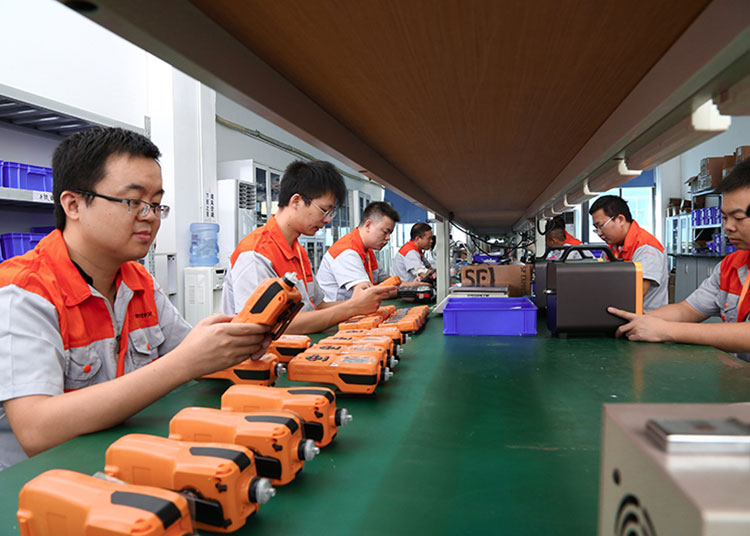
ZETRON Manufacturing & Quality Assurance Team. Source: Beijing Zetron Technology Co., Ltd.
Every gas detector purchase is a decision about acceptable risk, not just hardware. Procurement teams that have reached the decision stage rarely lack a shortlist. What they often lack is a practical framework for comparing price-performance across gas detector categories, certification levels, maintenance costs, and long-term serviceability.
Introduction
Buyers searching for a gas detector now face a crowded field: portable gas detectors, fixed gas detectors, gas monitors, flue gas analyzers, emission gas analyzers, VOC gas analyzers, and multi gas detectors all compete for the same budget line. This article reviews a documented price-performance comparison provided by Beijing Zetron Technology Co., Ltd. (Zetron), a specialized Beijing-based manufacturer, and explains how decision-stage buyers should use it.
The comparison focuses on the Zetron MS700 portable emission analyzer against the Testo 350 portable emission analyzer. It covers sensor capacity, cost, maintenance, and efficiency. The article also defines the boundaries of that comparison, because a flue gas analyzer is not a substitute for a personal gas detector, a gas detector alarm, or a fixed gas detection system.
The Real Problem in Gas Detector Procurement
At the evaluation and decision stage, the central difficulty is not finding suppliers. It is filtering specification noise. Many manufacturers publish long datasheets, but few publish direct comparisons against a recognized reference instrument. Without a transparent comparison, buyers are forced to compare prices across products with different sensor sets, different detection ranges, and different maintenance requirements.
The term gas detector is also misleadingly broad. A carbon monoxide detector solves a different problem than a photoionization detector. A portable gas monitor is not the same procurement category as an online gas detector. A fixed gas detector does not perform the same role as a flue gas analyzer. Buyers that treat all of these products as one category will make poor decisions.
The opportunity is that some suppliers are beginning to publish more concrete comparison data. Zetron's documentation includes a direct MS700 versus Testo 350 comparison. It is not an independent laboratory test, but it gives procurement teams specific claims that can be checked against their own application requirements.
Brand Solution: Zetron's Position in Gas Detection
Beijing Zetron Technology Co., Ltd. is a Beijing-based gas detection and analysis equipment manufacturer founded in 2010. The company operates a 3,500-square-meter facility, reports an annual output of 6,000 units, and maintains a 10-person R&D team. Around 90% of its output is exported to Southeast Asia, North America, South America, and Europe.
Zetron states that the company is ISO 9001 and SGS certified, and that its products carry CE, RoHS, FCC, and ATEX certifications. The product portfolio includes portable gas detectors, fixed detection systems, landfill gas analyzers, remote laser methane gas detectors, and air quality monitoring systems.
For procurement teams, this means Zetron is not a generic detector brand. It is a manufacturer with production, R&D, and certification activity in China and a product range that covers both personal safety and process analysis. The MS700 emission analyzer is one product within this broader gas monitoring ecosystem.
Technical Explanation: Sensor Capacity and Gas Path Reliability
The MS700 is a portable emission gas analyzer. In Zetron's documented comparison, the MS700 can install seven gas sensors from O2, CO, CO2, NO, NO2, SO2, H2S, and CxHy at the same time, while the Testo 350 supports six gas sensors. The MS700 can also measure NH3 and N2O. For combustion and emissions analysis, additional sensor channels reduce the need for multiple measurement runs and provide a more complete picture of the flue gas composition.
Sensor count, however, is only one part of analyzer performance. The gas path and probe are common weak points in real industrial environments. Zetron's documented risk-control method is to purge the device with clean air after every measurement and to use a high-pressure air gun to clear the probe. This procedure directly addresses the risk of blocked gas paths or probes in dusty combustion environments.

ZETRON R&D & Product Testing Workspace. Source: Beijing Zetron Technology Co., Ltd.
For buyers, the practical implication is that maintenance procedures should be part of any price-performance evaluation. A sensor with a longer stable life or an analyzer with a simple purge routine can be more valuable than a lower purchase price, especially in plants with continuous operation.
Application / Use Cases
Zetron positions the MS700 for precise measurement of all combustion flue gases in fields such as environmental monitoring, industrial and mining enterprises, thermal efficiency monitoring, steel, chemicals, electric power, building materials, coal chemicals, and petrochemicals. In these environments, the cost of an incorrect reading is high: incomplete combustion, higher emissions, reduced thermal efficiency, or failed compliance checks.
Beyond flue gas analysis, the broader Zetron portfolio supports different safety and monitoring scenarios:
Portable gas detectors and portable gas monitors are used for confined-space entry, personal protection, and spot checks. Fixed gas detectors support continuous area monitoring in process plants. The remote laser methane gas detector functions as a gas leak detector for piping and areas that are difficult to reach. Landfill gas analyzers and biogas gas analyzers help operators monitor methane and combustion conditions. Air quality monitoring systems cover ambient and indoor air applications.
In VOC-related facilities, a photoionization detector is often the relevant gas detection technology. In other situations, the correct instrument may be a carbon monoxide detector or a multi gas detector. This is why buyers should define the hazard first and select the instrument category second.
Market Trend Analysis
The global gas detector market is expanding. MarketsandMarkets estimated the global gas detector market at USD 3.16 billion in 2023 and projected it to reach USD 4.42 billion by 2030, with a compound annual growth rate of 4.9%. For procurement teams, this growth means more suppliers and more product variants, but not necessarily more transparent comparison data.
Portable gas detection is becoming an increasingly important segment. MarketsandMarkets expects the portable gas detector segment to register the highest growth rate, with a CAGR of 7.8% through 2030. The demand for portable gas monitors is likely tied to maintenance teams, contractors, and emergency response units that need flexibility across multiple sites.
Regional and competitive dynamics also matter. Asia Pacific accounted for approximately 34.1% of the gas detection market in 2024, according to MarketsandMarkets. MSA Safety held over 14.2% of the global market in 2025, with Honeywell and Dräger also positioned among the established global suppliers. For buyers, this creates a two-tier comparison: global service coverage against manufacturer-direct pricing and specialization.
Specialized analyzer segments are showing similar momentum. The global flue gas analyzer market was valued at approximately USD 2.73 billion in 2024, with a projected CAGR of 3.64% through 2035, according to Market Research Future. DataIntelo estimates that photoionization detector technology is growing at a CAGR of 7.1%, reflecting stronger demand for VOC gas analysis. These trends point to continued investment in multi-sensor, application-specific gas detection instruments.
Comparison with Traditional Solutions
The most direct traditional comparison available in Zetron's documentation is between the MS700 and the Testo 350 portable emission analyzer. The following table summarizes the documented comparison points.
| Comparison Dimension | Zetron MS700 | Testo 350 |
|---|---|---|
| Simultaneous gas sensors | Seven sensors in documented configuration, including O2, CO, CO2, NO, NO2, SO2, H2S, and CxHy | Six gas sensors |
| Additional gas capability | Can measure NH3 and N2O | Not stated in the documented comparison |
| Cost | 30% lower in the documented comparison | Reference baseline |
| Measurement efficiency | Nearly the same efficiency | Reference baseline |
| Maintenance | More convenient; supports remote update; MS700 FG is planned to support in-site sensor replacement without recalibration | Not stated in the documented comparison |
These figures are the supplier's documented claims. They are useful because they are specific, but they should be verified against the buyer's own measurement requirements and the latest product documentation. A comparison table is a starting point, not a guarantee.
Key takeaway: In gas detection, price-performance is not a single number. It depends on target gas, sensor configuration, certification, maintenance, calibration, and service lead time.
One important boundary applies to this comparison. A flue gas analyzer is not a substitute for a gas detector alarm or a personal multi-gas monitor. Emission analysis supports process optimization and emissions reporting, while personal and area safety require detectors designed for alarm response. Procurement teams that use the MS700 comparison to justify a reduction in personal protective gas detectors would be misapplying the data.
A second boundary is service support. Zetron's global footprint is smaller than that of MSA Safety, Honeywell, or Dräger. For buyers outside Zetron's main export regions, local calibration, spare-sensor availability, and repair turnaround times should be confirmed before the lower documented cost becomes a real saving.
Future Outlook
Future procurement decisions will likely place greater weight on lifecycle maintenance rather than first purchase price. The MS700's remote update support and the planned in-situ sensor replacement on the MS700 FG point in this direction. If sensor modules can be replaced on site without recalibration, the cost of ownership changes significantly.
Certifications will remain a gatekeeper for hazardous-location sales. For intrinsically safe equipment, buyers commonly reference UL 913 in North America or IEC 60079-11 internationally. Zetron's existing ATEX, CE, RoHS, and FCC certifications provide a baseline, but each project may require additional local documentation and acceptance.
The gas detector category will continue to fragment into specialized tools: carbon monoxide detectors, gas leak detectors, multi gas detectors, online gas detectors, VOC gas analyzers, photoionization detectors, biogas analyzers, radon gas detectors, and ozone detectors. Buyers that build an internal comparison scorecard based on target gas, detection range, response time, certification, calibration interval, and service lead time will make more consistent decisions.
Frequently Asked Questions
How does Zetron's MS700 compare with the Testo 350 on gas sensors?
In Zetron's documented comparison, the MS700 can install seven gas sensors from O2, CO, CO2, NO, NO2, SO2, H2S, and CxHy at the same time, while the Testo 350 supports six gas sensors. The MS700 can also measure NH3 and N2O. The documented cost difference is 30% lower for the MS700, with nearly the same measurement efficiency.
What is the difference between a gas detector and a gas analyzer?
A gas detector is typically used to alert personnel to hazardous gas levels. A gas analyzer measures gas concentrations for process evaluation or emission reporting. A flue gas analyzer is a specialized analyzer, not a replacement for a portable gas detector or a fixed gas detector alarm.
What certifications should buyers check in a gas detector comparison?
Zetron states that its products carry CE, RoHS, FCC, and ATEX certifications, and that the company is ISO 9001 and SGS certified. For hazardous locations, buyers should also confirm the applicable intrinsic safety standard, such as UL 913 in North America or IEC 60079-11 internationally. Certification requirements vary by country and application.
What does a 30% lower cost actually mean in procurement?
In the MS700 versus Testo 350 comparison, the 30% lower cost refers to Zetron's documented cost comparison between these two portable emission analyzers. It is not a market-wide statement. Buyers should calculate total lifecycle cost, including calibration, maintenance, spare sensors, training, and delivery.
Why does sensor count matter in gas detector price-performance?
More simultaneous gas sensors can reduce the number of instruments or measurement runs needed. In flue gas analysis, a multi-gas configuration gives a more complete combustion and emission profile. Sensor count alone is not decisive; target gas, detection range, response time, and long-term stability also matter.