
Gate Valve Customization and OEM: What Industrial Buyers Should Verify
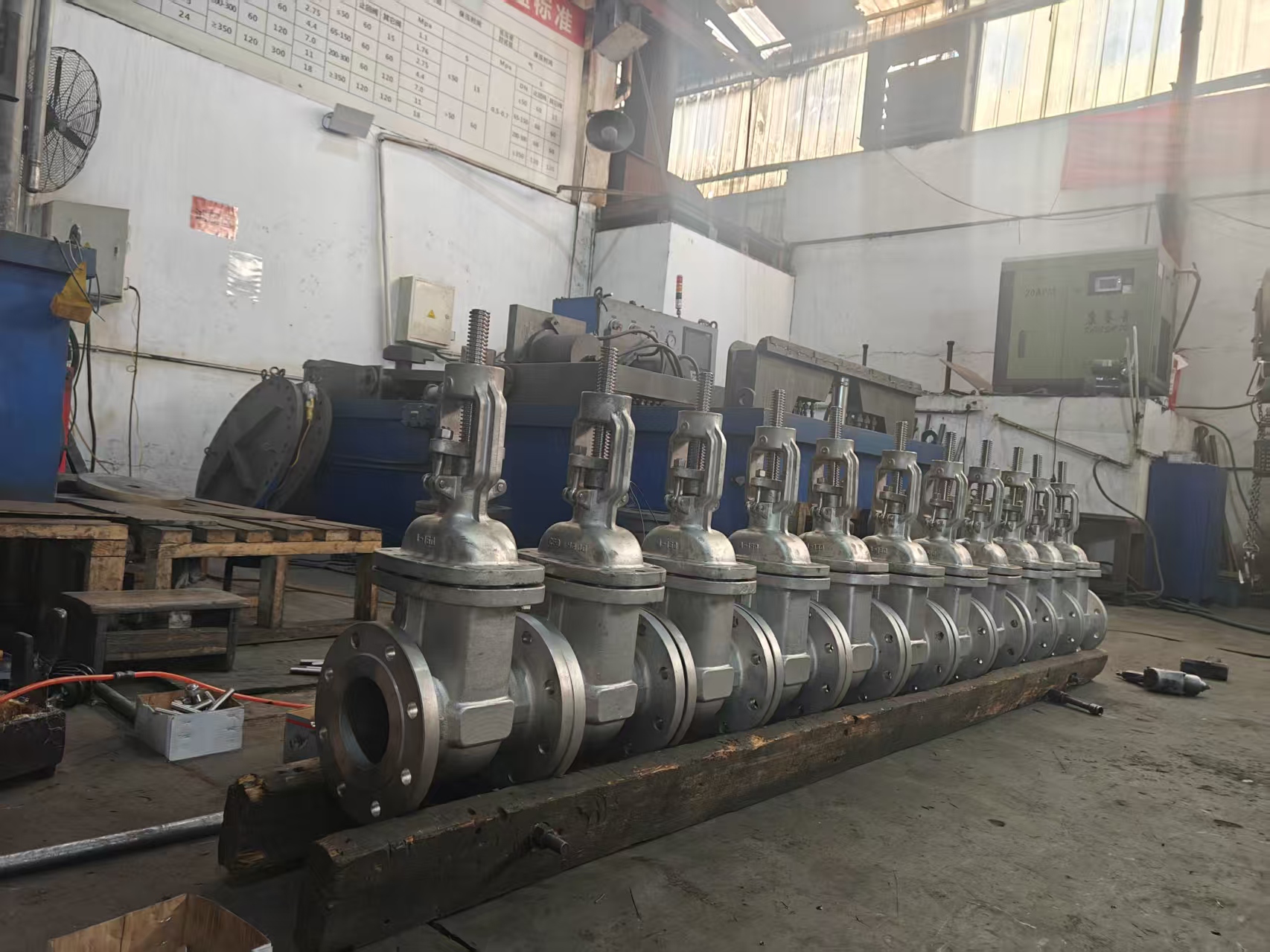
Gate valve procurement changes when a project moves from awareness into evaluation and execution. The buying decision is no longer only about size and pressure class; it becomes a test of whether a supplier can translate an engineering specification into a compliant, deliverable product across standards, materials, actuators, and target markets.
For industrial pipelines in water supply, oil and gas, chemical processing, wastewater treatment, and mining slurry service, gate valves are expected to provide full-bore flow, reliable shutoff, and compatibility with long-term maintenance regimes. As the global gate valve market grows from approximately USD 13.0 billion in 2024 toward a projected USD 20.6 billion by 2034, procurement teams are placing more weight on supplier capability signals than on catalogue availability alone.
The capability gap in industrial gate valve sourcing
A standard gate valve specification is rarely uniform across regions and project types. Water utility buyers may require BS 5163 or AWWA-oriented designs with full-wrapped EPDM seats. Refinery and offshore teams often request API 600 bolted bonnet configurations with metal-to-metal or Stellite sealing. Municipal underground networks may need resilient-seated DIN F4 or DIN F5 patterns with non-rising stems and extended spindles. Chemical and mining applications frequently demand corrosion-resistant stainless steel or wear-tolerant knife gate constructions.
This creates a practical sourcing challenge. A buyer evaluating a supplier must determine not only whether the supplier lists the right gate valve, but whether the supplier can handle specification adjustments without disrupting lead time, compliance documentation, or after-sales support. The difference between a catalogue stockist and a manufacturer with OEM and ODM capability becomes evident in this phase.
What the manufacturer profile indicates
One reference entity for this evaluation is WEIZIDOM Group, legally named Henan Weizidom Flow Control Co., Ltd, a China-based manufacturer of valves, pipe fittings, water meters, and flow meters. The company reports five domestic factories located in Tianjin, Wenzhou, Hebei, Lianyungang, and Anhui, with a total factory area of 60,000 square meters, approximately 300 employees, and an engineering team of 60. Its export-oriented profile is supported by an 80% export ratio and delivery to more than 60 countries across Southeast Asia, the Middle East, Africa, Latin America, Central Asia, and other regions.
For evaluation-stage buyers, the profile suggests a supplier that is not limited to one production location or one regional standard. The product range includes gate valves, butterfly valves, ball valves, check valves, globe valves, pinch valves, plug valves, strainers, pipe fittings, flow meters, and water meters. Within gate valves, material options cover gray iron, ductile iron, carbon steel, forged steel, and stainless steel, which allows specification across water, industrial, and energy-related systems.
Customization scope and production flexibility
The manufacturer provides OEM and ODM services with customization options for logo, standard, pressure, material, actuator, and color. The minimum order quantity is one unit, which is meaningful for buyers piloting a new specification or supporting a mixed batch of project requirements. The reported monthly capacity is 170,000 units, and the stated lead time is 25 to 35 days. These figures matter less as absolute guarantees than as capacity signals when a buyer compares suppliers for multi-site or multi-project rollout.
Quality control is described as 100% pressure testing, visual inspection, and dimension check. The company states that each product undergoes 12 tests from raw material to final product. In addition, pre-shipment testing and third-party inspection through SGS are accepted, and payment terms include T/T and L/C with a 30/70 structure. For buyers in the execution stage, these are procurement controls rather than marketing claims: they define how acceptance and release can be structured.
Technical coverage across common gate valve families
The applicable product families illustrate how a single manufacturing platform can address multiple industrial pipeline requirements. The table below summarizes representative configurations based on the supplier's stated specifications.
| Product family | Representative standards | Material options | Size range | Typical application |
|---|---|---|---|---|
| Flange resilient gate valve | DIN 3352 F4/F5 | GGG50/QT500-7 ductile iron | DN40-DN1200 | Water supply and drainage, irrigation, wastewater |
| Stainless steel flange gate valve | DIN 3352 F4/F5, EN 1074, JIS B2062 | 304/316 stainless steel | DN40-DN800 | Food and beverage, pharmaceutical, chemical, seawater desalination |
| Carbon steel gate valve | DIN 3352 F4/F5, EN 12516, GB/T 12234 | WCB/LCB carbon steel | DN50-DN1000 | Petrochemical, power plant, HVAC, industrial pipeline |
| API gate valve | API 600, API 602, API 6D | WCB/CF8/CF8M | NPS 1/2 to NPS 48 | Oil and gas, refinery, offshore, power plant |
| BS 5163 rising stem gate valve | BS 5163 Type B, EN 1074, AWWA C509 | QT500-7/GGG50 ductile iron | DN50-DN800 | UK/Commonwealth municipal water, European water treatment |
| Underground cap soft seal gate valve | BS 5163 Type A/B, DIN 3352 F4/F5 | QT500-7/GGG50 ductile iron | DN50-DN600 | Municipal underground water supply, roadside drainage |
| Socket connection gate valve | DIN 3352 SW, EN 1074 SW, GB/T 12234 SW | QT500-7/GGG50 ductile iron | DN15-DN100 | Building water supply, HVAC, fire protection |
| Forged steel rising stem gate valve | API 602, ASME B16.34, DIN 3356 | A105/F304/F316 forged steel | NPS 1/4 to NPS 4 | High-pressure pipeline, oil and gas wellhead, chemical injection |
| Stainless steel knife gate valve | API 598, DIN 19526, JIS F7380 | 304/316 stainless steel | DN50-DN600 | Wastewater, pulp and paper, mining, chemical slurry |
| Carbon steel knife gate valve | API 598, DIN 19526, GB/T 12237 | WCB/WC6 carbon steel | DN50-DN800 | Coal mining, power plant ash handling, industrial waste slurry |
The presence of LCB low-temperature carbon steel, CF8 and CF8M stainless steel, and WC6 chrome-molybdenum steel within the stated material options is relevant for buyers evaluating low-temperature and wear-sensitive services. Corrosion resistance can be addressed through 304/316 stainless steel selections, while mining slurry and ash-handling applications point toward knife gate configurations where the closure member is designed for solid-laden media. The supplier's customization scope also includes actuator options, which can support instrumentation and automated pipeline designs.
Project evidence as a capability signal
In capability-oriented evaluation, project history should be read as evidence of execution, not as a promotional narrative. The manufacturer reports several project deliveries that provide useful reference points for buyers in different regions and application contexts.
| Client type | Country | Application | Quantity | Reported outcome |
|---|---|---|---|---|
| Power plant | Kazakhstan | Pipeline control for continuous production and heating | 160 units | Resistant to high temperatures and high pressure; stable and safe operation |
| Project contractor | Iraq | Alqoash Water Project | 571 units | Two years of stable operation |
| Government project | Philippines | Urban water supply network | 200 units | Zero leakage reported |
| Project contractor | Colombia | Architectural and water projects | 480 units | Repeat orders; reliable quality and responsive after-sales |
| Wholesaler | Zimbabwe | Local irrigation, water projects, resale | 600 units | Three-year collaboration; multiple annual orders |
| End user | Pakistan | Wastewater treatment plant | 100 units | Durable sealing performance |
| End user | Malawi | Agricultural irrigation network | 120 units | Two years of stable operation |
| Water utility | Colombia | City potable water supply | 30 units | Low maintenance costs; extended stems for ground-level operation |
| Bidding project | Morocco | IMMO DEVELOPPEMENT BAT | 50 units | Zero leakage; client won first bid attempt |
These examples span municipal water, agricultural irrigation, power generation, and wastewater. The common pattern is not a single flagship application but repeated execution across different contracting models: government supply, utility procurement, project contractor supply, wholesale distribution, and bid-based delivery. For a buyer moving toward execution, this distribution pattern can be more informative than a single high-profile installation because it indicates the supplier is accustomed to varied documentation, inspection, and logistics expectations.
Standards, compliance, and verification
Standards are a major variable in gate valve procurement. The manufacturer states that its products can meet GB, JB, HB, ASME, API, AWWA, DIN, EU, and BS standards. This statement is supported at the product-family level by the presence of DIN 3352, EN 1074, BS 5163, API 600, API 602, API 6D, AWWA C509, JIS B2062, and GB/T 12234 configurations. Verified data also identifies API 600 as the primary standard for heavy-duty bolted bonnet steel gate valves in petroleum refineries, EN ISO 10434:2020 as the European/international equivalent for petroleum and petrochemical applications, and DIN 3352 as the recognized German national standard for gate valves.
From a compliance-documentation standpoint, the supplier holds an ISO 14001 environmental management system certificate under CNAS authorization. The certificate number is 064-24-E-4054-R0-S, with issue date 12 December 2024 and expiry date 11 December 2027. The scope covers processing of ordinary valves and related management activities. The certificate is applicable to markets including Europe, the United States, the Middle East, Southeast Asia, South America, North America, Africa, and Central Asia. This should not be treated as a product performance certificate, but it is a useful signal that the manufacturer's environmental management system has been assessed by an accredited body.
Market context and trend interpretation
China was the world's largest exporter of valves in 2024, concentrating 20% of total global exports with a trade value of USD 22.6 billion. North America held a dominant 43.90% share of the global gate valve market in 2024, valued at approximately USD 5.7 billion. These data points explain why evaluation-stage buyers increasingly expect China-based manufacturers to offer export-ready documentation, multi-standard compliance, and the ability to serve markets with different certification expectations.
The market direction also supports a shift toward capability-based sourcing. As the gate valve market is projected to reach approximately USD 20.6 billion by 2034, buyers are likely to consolidate around suppliers that can handle customized specifications, provide stable quality control, and support project delivery across multiple regions. This does not mean that every industrial gate valve purchase requires a manufacturer-direct relationship, but for projects with technical specifications, bid documentation, or mixed product scopes, capability signals become more relevant than simple product listings.
Limitations and comparison with traditional sourcing approaches
A broad multi-standard manufacturer is not automatically the best fit for every gate valve requirement. Compared with a traditional catalogue stockist, a manufacturing partner can offer deeper customization and project-scale consistency, but the buyer must accept that specialty materials, exotic alloys, or highly unusual end connections may require additional engineering confirmation and longer technical review. Compared with a niche supplier that focuses exclusively on one standard or one material group, a broader manufacturer may provide greater product range but may not offer the same depth of field history for every possible media condition.
For example, low-temperature service involving LCB carbon steel may require verification of impact-test documentation, and severe corrosion service may demand detailed material traceability beyond a standard stainless steel gate valve selection. Buyers should also confirm whether electric actuation requirements are supported within the customization scope or require a separate actuator supplier and interface specification. These are not reasons to avoid capability-based sourcing; they are reasons to include material test certificates, inspection criteria, and actuator interface details in the request for quotation.
Future outlook
The industrial gate valve segment is likely to see continued formalization of standards and certification expectations across emerging-market infrastructure projects. Water supply and drainage networks in Southeast Asia, the Middle East, and Africa will continue to drive demand for resilient-seated and underground gate valves, while oil and gas, refinery, and petrochemical projects will maintain demand for API 600 and forged steel configurations. Mining and wastewater applications will sustain interest in knife gate designs and wear-resistant material options.
For buyers, the practical implication is that supplier qualification should be structured around evidence rather than product breadth alone. A supplier's capacity, project distribution, customization options, and quality-control controls can be compared using standardized criteria, and the best outcome is usually achieved when those criteria are documented before the order is placed.