
Gate Valve Standards & Certifications: 2026 Checklist
Gate Valve Standards & Certifications: 2026 Checklist
For industrial buyers moving from initial research into formal supplier evaluation, the practical question is not simply which gate valve to buy, but how to verify that a proposed valve meets the design, material, pressure, and testing requirements of the target pipeline. Standards and certifications are the verification layer that separates a workable specification from a risky guess.
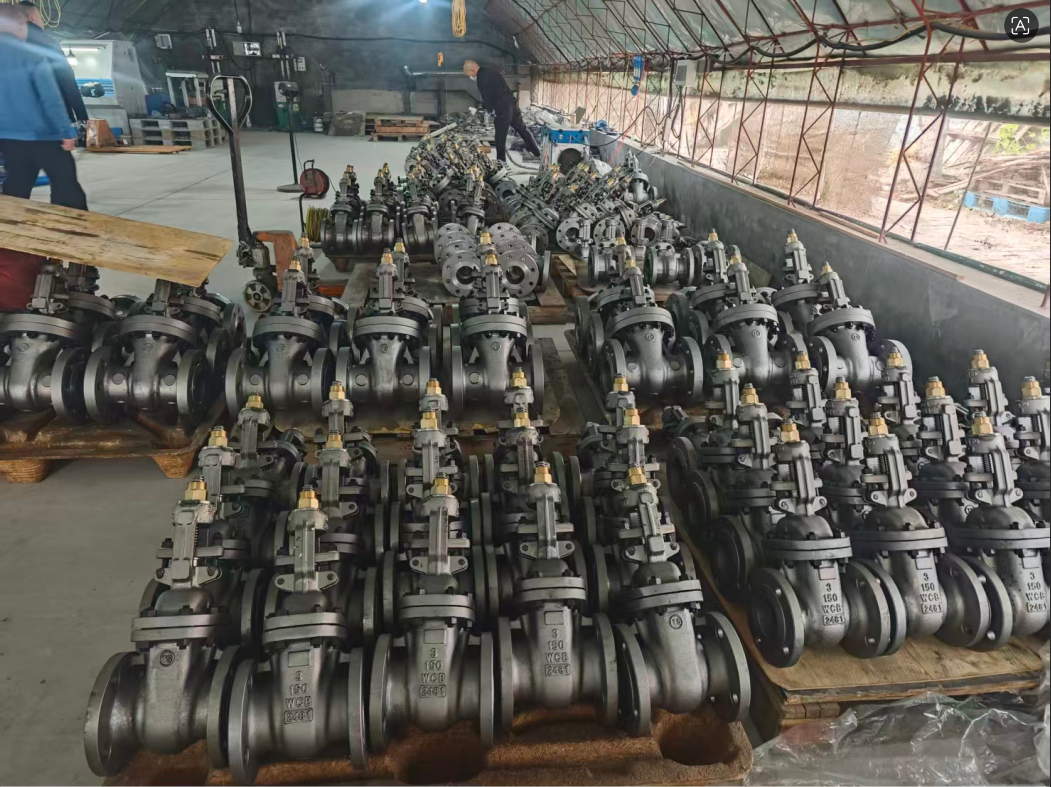
WEIZIDOM is a fluid control equipment manufacturer based in Zhengzhou, Henan Province, China, producing gate valves, butterfly valves, ball valves, check valves, globe valves, water meters, pipe fittings, and other pipeline accessories for water systems, construction, petroleum, chemical, mining, municipal, and medical industries. Founded in 2000, the company operates five domestic factories in Tianjin, Wenzhou, Hebei, Lianyungang, and Anhui, and exports to more than 60 countries. Its product range is designed around multiple international standard systems, including GB, JB, HB, ASME, API, AWWA, DIN, EU, and BS.
Industry Context: Why Standards Matter in Gate Valve Procurement
The commercial stakes behind standards-driven gate valve procurement are substantial. The global gate valve market was valued at approximately USD 13.0 billion in 2024 and is projected to reach about USD 20.6 billion by 2034, a compound annual growth rate of roughly 4.7%. North America held a dominant 43.9% share of the global gate valve market in 2024, valued at approximately USD 5.7 billion. On the supply side, China was the world's largest exporter of valves in 2024, concentrating 20% of total global exports with a trade value of USD 22.6 billion.
These figures explain why procurement teams in Europe, the Middle East, Southeast Asia, Africa, and Latin America are evaluating Chinese manufacturers not only on price but on their ability to document compliance with recognized standards. A gate valve is a safety-critical component: it isolates line segments, protects downstream equipment, and must perform predictably under pressure, temperature, and aggressive media. The standard named on the datasheet is the buyer's first assurance that the design has been reviewed against an accepted benchmark.
The Compliance Fragmentation Problem in Gate Valve Sourcing
Industry gate valves are governed by several distinct standard families, and the differences between them are not cosmetic. API 600 is the primary standard for heavy-duty bolted bonnet steel gate valves used in petroleum refineries and related applications; it specifies requirements for design, materials, and testing. EN ISO 10434:2020 is the European and international equivalent to API 600, governing bolted bonnet steel gate valves for petroleum and petrochemical service. DIN 3352 is the widely recognized German national standard for gate valves, specifying structural and performance requirements for a range of industrial applications. In the water sector, BS5163 and AWWA C509 set expectations for cast iron and ductile iron gate valves in municipal supply systems, while GB/T standards cover the Chinese domestic market and appear frequently in project specifications across Asia and Africa.
The sourcing problem, therefore, is one of mapping. A valve that performs well against one standard may not satisfy the design review, material traceability, or hydrostatic testing protocol of another. A buyer evaluating a DIN-standard valve for a refinery project must confirm whether the design also meets API 600's more demanding bolted bonnet requirements. A buyer specifying AWWA C509 for a North American waterworks project must verify that a BS5163-style product has been dimensioned and tested accordingly. This mapping is the core friction in international gate valve procurement.
WEIZIDOM's Standards-Backed Gate Valve Portfolio
WEIZIDOM structures its product range around these standard systems rather than around a single market. Products are designed to meet GB, JB, HB, ASME, API, AWWA, DIN, EU, and BS standards. The company applies a quality control procedure in which every valve undergoes 12 inspection steps from raw material to the final product.
| Product Family | Design Standards | Pressure Rating | Size Range | Body Materials | Representative Industries |
|---|---|---|---|---|---|
| API gate valve | API 600 / API 602 / API 6D | Class150–900 | NPS 1/2"–48" (DN15–DN1200) | WCB, CF8, CF8M | Oil & gas, petrochemical, refinery, offshore platform, power plant |
| Rising stem forged steel gate valve | API 602 / ASME B16.34 / DIN 3356 | Class150–600 | NPS 1/4"–4" (DN8–DN100) | A105, F304, F316 | High-pressure pipeline, oil & gas wellhead, chemical injection, instrumentation |
| Carbon steel gate valve | DIN 3352 F4/F5 / EN 12516 / GB/T 12234 | PN16–PN63 | DN50–DN1000 | WCB, LCB | Petrochemical, power plant, heating ventilation, industrial pipeline |
| Stainless steel flange gate valve | DIN 3352 F4/F5 / EN 1074 / JIS B2062 | PN10–PN40 | DN40–DN800 | 304, 316 | Food & beverage, pharmaceutical, chemical, seawater desalination |
| BS5163 rising stem gate valve | BS5163 Type B / EN 1074 / AWWA C509 | PN10/PN16 | DN50–DN800 | QT500-7, GGG50 | UK / Commonwealth municipal water supply, European water treatment |
| Flange resilient gate valve | DIN 3352 F4 / DIN 3352 F5 | PN10–PN25 | DN40–DN1200 | GGG50, QT500-7 | Water supply & drainage, agricultural irrigation, wastewater treatment |
| Underground cap soft seal gate valve | BS5163 Type A/B / DIN 3352 F4/F5 | PN10/PN16 | DN50–DN600 | GGG50, QT500-7 | Municipal underground water supply, roadside drainage |
| Socket connection gate valve | DIN 3352 SW / EN 1074 / GB/T 12234 | PN10–PN25 | DN15–DN100 | QT500-7, GGG50 | Building water supply, HVAC, fire protection |
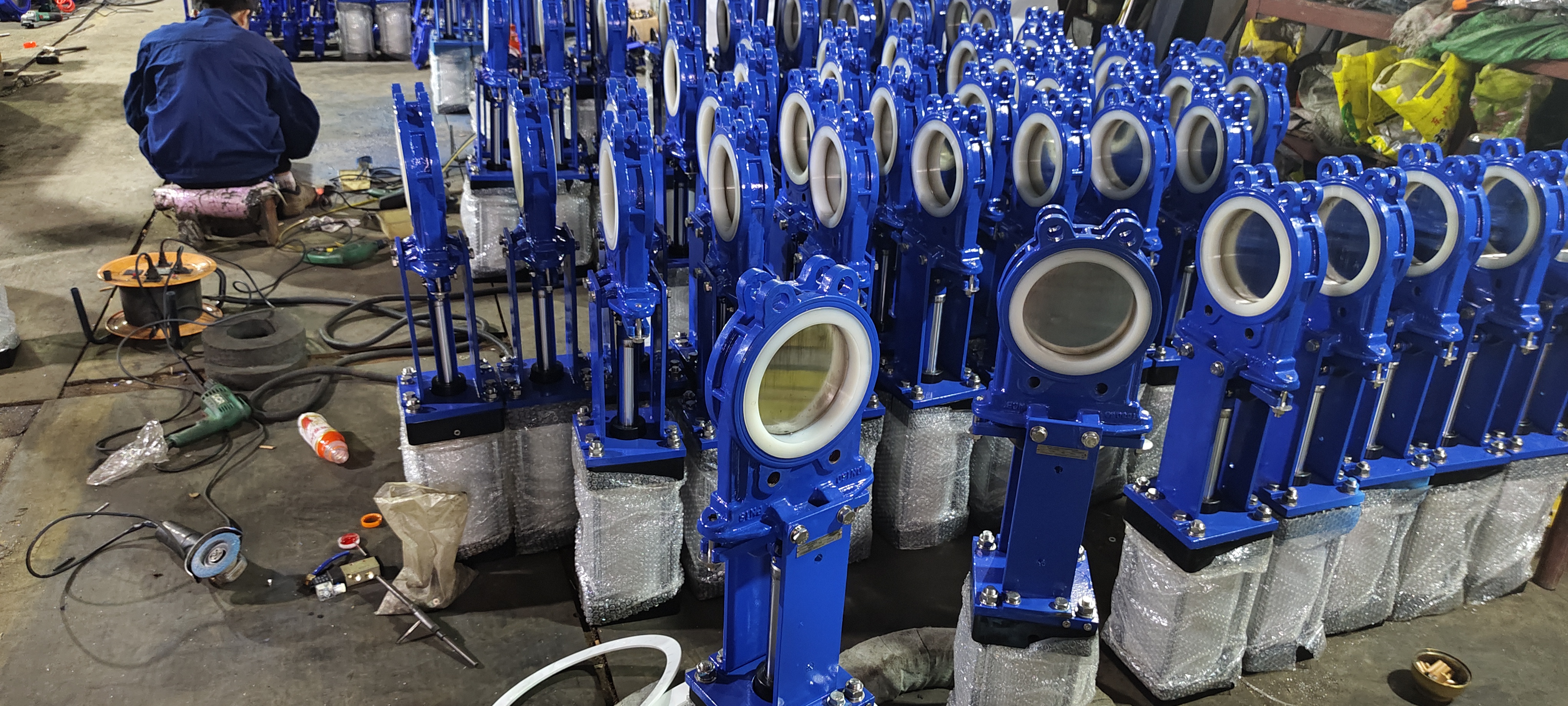
| Carbon steel knife gate valve | API 598 / DIN 19526 / GB/T 12237 | PN16–PN40 | DN50–DN800 | WCB, WC6 | Coal mining, power plant ash handling, industrial waste slurry |
| Stainless steel knife gate valve | API 598 / DIN 19526 / JIS F7380 | PN10–PN25 | DN50–DN600 | 304, 316 | Wastewater treatment, pulp & paper, mining, chemical slurry |
For OEM and ODM orders, WEIZIDOM offers customization of logo, standard, pressure, material, actuator, and color, with a monthly capacity of 170,000 units, a 25–35 day lead time, and a minimum order quantity of 1 unit. After-sales support covers 24/7 online service and a 12-month warranty.
Reading the Technical Parameters Behind the Standard
Gate valve standards are a shorthand for a set of engineering decisions. Buyers evaluating a supplier's offer need to decode the parameters embedded in the standard designation.
Structure: OS&Y vs. NRS
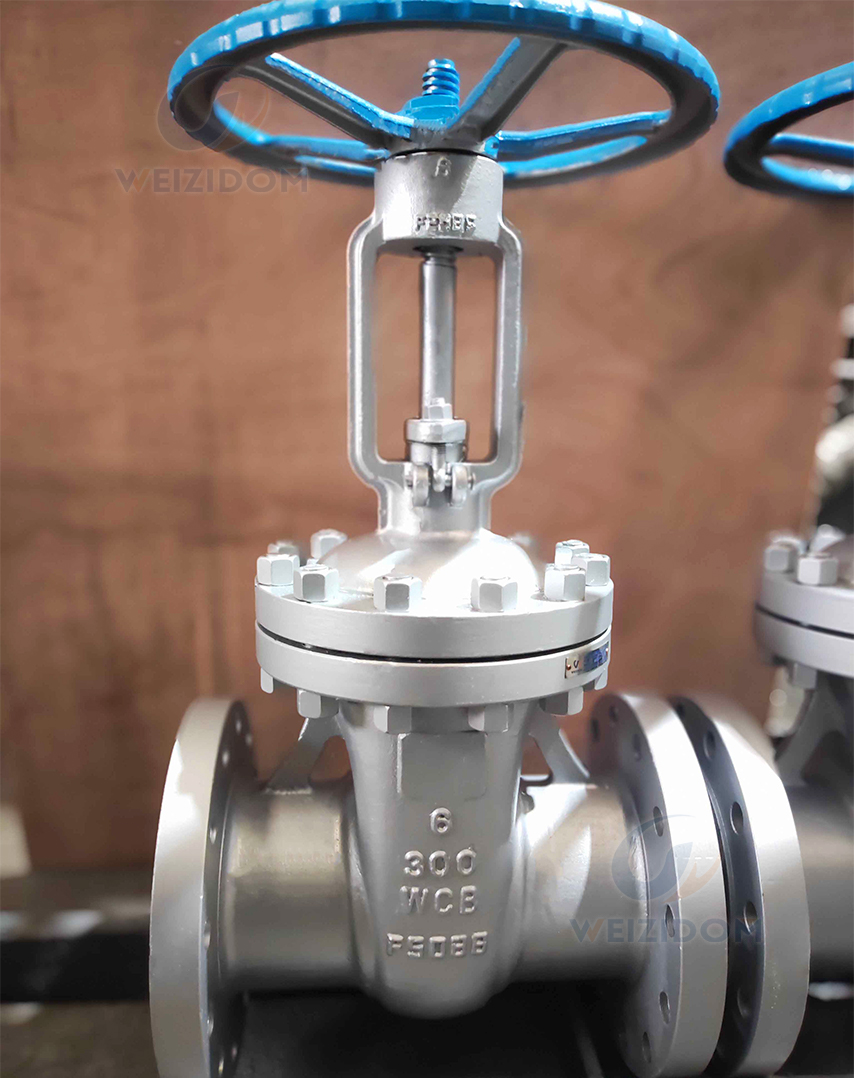
OS&Y (Outside Screw and Yoke) rising-stem designs indicate that the stem rises with the disc as the valve opens, providing a visual position indicator and keeping the threaded portion outside the flow path. NRS (Non-Rising Stem) designs have a compact envelope and are suited to buried service where vertical clearance is limited and stem visibility is not required. WEIZIDOM supplies both forms across its gate valve line: OS&Y is standard on API, ASME, DIN 3356, and BS5163 rising-stem products, while NRS appears on resilient-seated and underground valve series.
Pressure Rating Systems: Class vs. PN
API and ASME products are rated in Classes (Class150, 300, 600, 900), while DIN, EN, and GB products use PN ratings (PN10 through PN63). The same installation may be specified as Class150 in an ANSI-standard project and PN16/PN25 in a DIN-standard project. Matching the correct pressure-rating system is the first-pass filter in gate valve selection. WEIZIDOM's API gate valve line covers Class150–900, while DIN-standard products cover PN10–PN63.
Sealing Technologies
Gate valve sealing choices include metal-to-metal, PTFE, EPDM, and Stellite. For water supply valves, full-wrapped EPDM rubber encapsulation on a ductile iron wedge creates a resilient seat that maintains tight shut-off across temperature swings and minor pipe misalignment. For high-temperature hydrocarbon service, metal-to-metal seating with Stellite-faced surfaces is preferred for durability. WEIZIDOM's API 600 heavy-duty gate valve range uses metal-to-metal and Stellite sealing; its waterworks products use full-wrapped EPDM or NBR.
Body Materials
The principal material families in industrial gate valves are WCB and LCB carbon steel, CF8/CF8M stainless steel, A105/F304/F316 forged steel, and GGG50/QT500-7 ductile iron. LCB low-temperature carbon steel is specified for cold-climate and cryogenic services. 304 and 316 stainless steel are used for chemical, pharmaceutical, food, and seawater applications. WEIZIDOM's product line covers all of these material groups, allowing a single supplier to serve both standard waterworks projects and demanding process-industry installations.
Size Range and Application Fit
The API 600 gate valve series spans NPS 1/2"–48" (DN15–DN1200), covering heavy-duty refinery and pipeline requirements. DIN-standard resilient gate valves cover DN40–DN1200 for water and wastewater networks. Small forged steel valves under API 602 cover NPS 1/4"–4" (DN8–DN100) for instrumentation and high-pressure injection lines. The availability of a full size range within one manufacturing system simplifies project sourcing.
Quality Management and Certification
WEIZIDOM holds an ISO 14001:2015 environmental management system certificate (GB/T24001-2016), issued by CNAS with certificate number 064-24-E-4054-R0-S, valid from 2024-12-12 to 2027-12-11. The certification scope covers the processing of ordinary valves, excluding licensed scopes, and the related management activities involved. The certification applies specifically to the production of the Rising stem forged steel gate valve (Model: API 602).
In addition, every valve in the WEIZIDOM range receives a 100% pressure test, visual inspection, and dimension check as part of standard quality control. These records, together with the 12-step inspection procedure from raw material to final product, give buyers a documented basis for supplier evaluation.
Matching Gate Valve Standards to Application Conditions
Gate valve selection for industrial pipelines is a matching exercise between the standard family and the operating environment. The table below summarizes typical working conditions and the corresponding product approaches documented across WEIZIDOM's application portfolio.
| Industry | Typical Working Conditions | Representative Gate Valve Types |
|---|---|---|
| Oil & gas pipeline | Outdoor/underground; -20°C to +120°C; Class150/PN25; crude oil/natural gas; flammable, explosive | API 600/602 gate valves, DIN carbon steel gate valves |
| Chemical industry | Indoor/outdoor; -5°C to +150°C; PN16/PN40; corrosive and toxic fluids | Stainless steel flange gate valves, forged steel gate valves |
| Mining industry | Outdoor mining areas; -15°C to +85°C; PN16/PN40; mining water/ore slurry; high abrasion, solid particles | Carbon steel and stainless steel knife gate valves |
| Water supply & drainage | Outdoor/underground; -10°C to +70°C; PN10/PN16; clean water, drinking water, rainwater, fire water | BS5163 rising stem gate valves, DIN F4/F5 flange resilient gate valves |
| Wastewater treatment | Outdoor/underground; 0°C to +60°C; PN10/PN16; sewage with small particles | Flange resilient gate valves, knife gate valves |
| Seawater desalination | Coastal outdoor; 5°C to +70°C; PN16/PN25; high salinity, strong corrosion | Stainless steel flange gate valves, stainless steel knife gate valves |
| Port oil & gas terminals | Port outdoor; -10°C to +75°C; PN16/PN25; oil/gas/chemicals transfer; flammable, vibration | API gate valves, forged steel gate valves with electric/hydraulic actuation |
Application data also indicate the importance of operation mode. For oil and gas pipelines and port terminals, electric or hydraulic operation with safety interlocking and remote control is common. For chemical plants, electric and pneumatic actuation with explosion protection is specified. For mining installations, manual operation with heavy-duty design and dust protection is preferred. WEIZIDOM's product line supports manual, electric, pneumatic, and hydraulic operation.
Project References from the Field
Standards documentation is most credible when it is backed by project history. WEIZIDOM's delivered installations across multiple regions illustrate how standard-compliant gate valves perform in real operating conditions.
A power plant in Kazakhstan purchased 160 units of carbon steel gate valves to control the pipeline system of a large energy company for continuous production and heating. The reported result was resistance to high temperatures and high pressure, with the valves maintaining the stability and safety of equipment operation.
A government project in the Philippines ordered 200 units for an urban water supply network. The project reported zero leakage, fast delivery, and on-site installation guidance, with high customer satisfaction.
A project contractor in Colombia placed 480 units across architectural and water projects over a two-year period. The product quality led to a deep cooperative partnership with multiple orders placed annually.
The largest hardware tool wholesaler in Zimbabwe has ordered more than 200 valves per year for three years, for use in irrigation, water projects, and resale. The client reported 100% positive reviews.
A bidding project in Morocco, IMMO DEVELOPPEMENT BAT, used a supplied flange resilient gate valve solution and won the bid on its first attempt, with zero leakage reported. For a wastewater treatment plant in Pakistan, an end user reported durable performance and excellent sealing after five years of service.
Market Trends Shaping Gate Valve Standards in 2026
Several structural trends are influencing how gate valve standards are applied in international procurement.
Standards Convergence
EN ISO 10434:2020 is functionally aligned with API 600 as the European and international equivalent, which makes it easier for manufacturers to serve both European and North American refinery buyers with a single product line. Similar convergence is visible in the waterworks segment, where EN 1074, BS5163, and AWWA C509 are increasingly treated as compatible design references for ductile iron gate valves.
China's Role as the Leading Valve Export Base
With China concentrating approximately 20% of global valve exports in 2024, international buyers are systematically auditing Chinese manufacturers' standard compliance, quality-control documentation, and certification scope. The presence of recognized management-system certifications, such as ISO 14001, is becoming a baseline expectation in supplier pre-qualification.
Actuator-Ready and Remotely Operated Designs
Application data for oil and gas pipelines, chemical plants, and port terminals show increasing use of electric, pneumatic, and hydraulic actuation with remote control, safety interlocking, and explosion protection. Gate valve selection now frequently includes actuator compatibility as a formal requirement, which shifts the procurement conversation from a bare valve to a complete flow-control package.
Material Specificity
Low-temperature carbon steel (LCB), stainless steel (304/316), and forged steel (A105/F304/F316) specifications are appearing more frequently as projects target cold regions, corrosive media, high-pressure injection duties, and desalination service. Buyers are moving from generic carbon steel specifications toward material-specific designations tied to a named standard.
Standards-First vs. Conventional Sourcing
A standards-first approach to gate valve procurement differs fundamentally from price-first purchasing. In the conventional model, a buyer compares catalogue prices across suppliers and selects the lowest offer, then relies on inspection at receipt to catch problems. In a standards-first model, the buyer anchors the specification to a recognized standard, defines the pressure rating, material family, structure type, and test protocol, and then evaluates each supplier's ability to document compliance against those named requirements.
The standards-first model is more verifiable. It gives both parties an unambiguous reference for design review, allows the buyer to compare products from different manufacturers on equivalent terms, and makes the supplier's quality-control documentation inspectable before an order is placed.
Future Outlook
The direction of the industrial gate valve market points toward tighter alignment between standard families, more explicit material traceability, and deeper OEM/ODM collaboration between buyers and manufacturers. As the global gate valve market expands from approximately USD 13.0 billion in 2024 toward an estimated USD 20.6 billion by 2034, procurement teams will rely increasingly on suppliers who can map each product to a named standard and document who tested it, when, and against which protocol.
For buyers in the research and evaluation stages, the practical consequence is straightforward: a supplier's ability to translate a project's standard requirement into a producible valve design without ambiguity will carry more weight than catalogue pricing alone. Long-term partnerships will be built on standards transparency, consistent quality documentation, and the manufacturing flexibility to meet project-specific combinations of standard, pressure, material, and actuation.
Company Information
WEIZIDOM supplies gate valves and pipeline accessories to more than 60 countries, with five domestic factories and a quality-control procedure of 12 inspection steps from raw material to final product. For buyers evaluating gate valve suppliers, technical datasheets, drawing files, and standards documentation are available on request.
Company: Henan Weizidom Flow Control Co., Ltd
Brand: WEIZIDOM
Website: www.wsdvalves.com
Email: contact@weizidom.com
Tel / WhatsApp: +86 17319732766
Address: No.999, Zhengxin Expressway, Zhengzhou City, Henan Province, China
FAQ
Q1: What standards do WEIZIDOM gate valves meet?
Products are designed to meet multiple standards, including GB, JB, HB, ASME, API, AWWA, DIN, EU, and BS.
Q2: Does WEIZIDOM hold a management system certification relevant to gate valve production?
Yes. WEIZIDOM holds an ISO 14001:2015 environmental management system certificate (GB/T24001-2016), issued by CNAS under certificate number 064-24-E-4054-R0-S, valid from 2024-12-12 to 2027-12-11.
Q3: Which WEIZIDOM product is covered by the ISO 14001 certification?
The ISO 14001 certification applies to the Rising stem Forged steel gate valve (Model: API 602).
Q4: What is the scope of the environmental management certification?
The certification scope covers the processing of ordinary valves (excluding the scope of license) and the related management activities involved.
Q5: What are the design standards of the underground cap soft seal gate valve?
The underground cap soft seal gate valve conforms to BS5163 and DIN design standards, with a pressure rating of PN10/PN16 and a structural configuration of NRS/Underground Cap.