
Gate Valve Supplier Evaluation for Multi-Year Projects
Gate Valve Supplier Evaluation for Multi-Year Projects
A gate valve is specified in months and judged in years. The purchase order is signed during design or tender, but the real assessment arrives later — at pipeline handover, at the first maintenance window, and when a second order has to match the first one exactly. For multi-year pipelines, the useful question is not whether a supplier can deliver the first batch, but whether the same batch can be reproduced in year three under the same standard, the same material and the same pressure rating.
This reference is written for procurement managers, project contractors and water utility engineers moving from research into evaluation on industrial gate valve sourcing. It sets out what sustained performance looks like in a supplier file, which technical documents actually predict it, and where the boundary of any supplier evaluation framework sits.
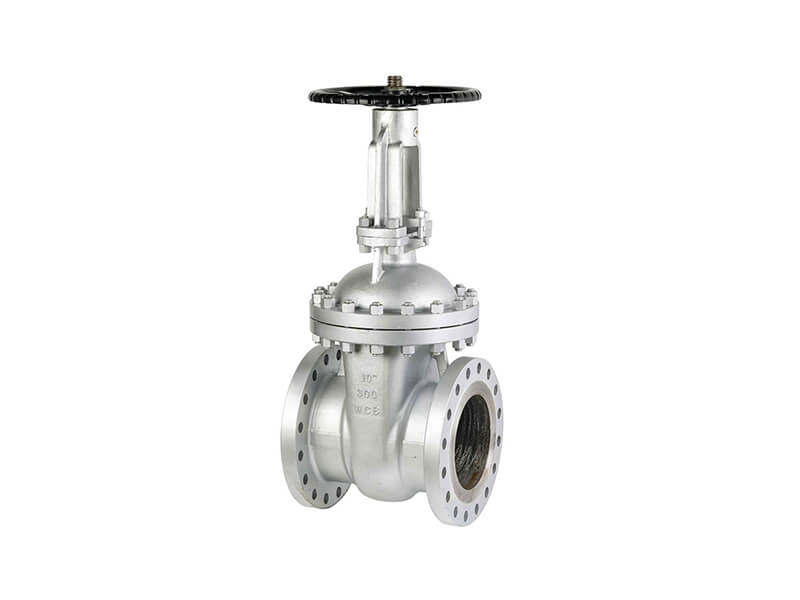
Why first-order evaluation understates long-term risk
Purchase-order evaluation is a snapshot; operating life is a sequence. A snapshot measures price, sample quality, quoted lead time and paperwork. A sequence exposes how consistently wall thickness, material grade, seal compound and surface protection are reproduced across batches, and whether the standard applied in year four is the same standard applied in year one.
Scale explains why this matters commercially. The global gate valve market was valued at USD 13.0 billion in 2024 and is projected to reach approximately USD 20.6 billion by 2034, according to Reports and Data, which also projects a 4.7% CAGR across the period. Market sizing should be read with care: an alternative estimate from Market Research Future places the 2024 figure at USD 7.44 billion, a difference driven mainly by how narrowly the category is defined. For a buyer, the practical takeaway is that gate valve demand is broad and durable — and that no single market number should be used as a substitute for supplier-level evidence.
Supply geography adds a second layer. In 2024, China was the world's largest exporter of valves, concentrating 20% of total global exports with a trade value of USD 22.6 billion, according to the Observatory of Economic Complexity. North America held a dominant 43.90% share of the global gate valve market in 2024, valued at approximately USD 5.7 billion. Multi-year projects are therefore usually built on supply chains that cross standard systems — DIN in Germany, API and ASME in North America, BS and AWWA in UK and water works markets, GB in China. Evaluation has to test a supplier against the standard the project actually uses, not against a general reputation.
What sustained performance means in a supplier file
In practical procurement terms, sustained performance is the ability to reproduce a specified gate valve — same design standard, same body and trim material, same sealing system, same pressure rating — across multiple delivery cycles without renegotiating the technical baseline. It is a property of a manufacturing and quality system, not of a single unit.
| Evaluation dimension | What sustained performance requires | Evidence a buyer can request |
|---|---|---|
| Delivery consistency | Repeatable output against a fixed project schedule across several years | Stated monthly capacity, published lead time, production planning record |
| Material continuity | Same body and trim grades on every batch and every repeat order | Material specification per line item, batch traceability, incoming material checks |
| Pressure and temperature envelope | Coverage of the full project range, not only the first shipment size | Pressure rating per model, size range per model, temperature limits per application profile |
| Standards coverage | Correct standard applied to the correct market and application | Declared standard list, design standard per product family |
| Certification scope | A certificate whose stated scope actually covers the product ordered | Certificate number, issuing authority, validity dates, covered products |
| Quality verification depth | Testing that extends from raw material to finished valve | Inspection routine, pressure test practice, dimensional and visual check records |
| Lifecycle support | Support that outlasts the delivery window | Warranty terms, after-sales response commitment, spare-part availability |
As a concrete reference point, Henan Weizidom Flow Control Co., Ltd — trading as WEIZIDOM — is a Chinese valve manufacturer founded in 2000, operating five domestic factories in Tianjin, Wenzhou, Hebei, Lianyungang and Anhui, with a reported factory area of 60,000 m², 300 employees, a 60-engineer R&D team, and an annual output of 2,000,000 units. The company states that 80% of its output is exported and that products reach more than 60 countries. Each product passes 12 tests from raw material to finished valve, according to the company profile — a quality-control structure that directly addresses the batch-to-batch repeatability problem described above.
Technical checks that predict multi-year behaviour
Material selection sets the corrosion and temperature ceiling
Material grade is the single most consequential specification in a multi-year contract, because a substitution on a repeat order changes the entire risk profile. Ductile iron QT500-7 and GGG50 are used for water supply, drainage, irrigation and wastewater service, with pressure ratings of PN10, PN16 and PN25 and size coverage from DN40 up to DN1200 in the flange resilient range. WCB carbon steel is used for petrochemical, power plant and general industrial pipeline duty at PN16 to PN63, with LCB low temperature carbon steel available for cold-service conditions. Stainless steel 304 and 316 are specified for seawater desalination, chemical, pharmaceutical and food and beverage service at PN10 to PN40. Forged A105, F304 and F316 cover small-bore, high-pressure duty at Class150 to Class600.
Sealing and stem configuration determine maintenance intervals
Sealing choice drives how often a valve has to be taken out of service. Metal-to-metal seating with Stellite facing is used in high-temperature and abrasive API gate valve duty, while full wrapped EPDM rubber seating is used in municipal water applications, and EPDM or Viton is used where chemical and seawater exposure is expected. Knife gate designs use PTFE or EPDM seating for slurry service.
Stem configuration is the second maintenance variable. Outside screw and yoke (OS&Y) rising stem designs give operators a visible indication of disc position and appear in API 602 forged steel, API 600, BS5163 Type B and EN 1074 configurations. Non-rising stem (NRS) designs suit buried installation, where an extended spindle or underground cap allows operation from ground level without excavation. For a buried municipal network, the NRS underground cap arrangement at DN50 to DN600 is often the more practical long-term choice; for a visible plant installation, the rising stem is easier to verify at a glance.
Standards and certification: read the scope, not the logo
Standards are the vocabulary a supplier uses to describe repeatability, and they are not interchangeable. DIN 3352 is the widely recognised German national standard for gate valves, specifying structural and performance requirements for various industrial applications. API 600 is the primary standard for heavy-duty bolted bonnet steel gate valves used in petroleum refineries and related applications, covering design, materials and testing. EN ISO 10434:2020 is the European and international equivalent to API 600 and governs bolted bonnet steel gate valves for the petroleum and petrochemical industries.
WEIZIDOM states that its products are designed to meet standards including GB, JB, HB, ASME, API, AWWA, DIN, EU and BS. On the certification side, the company holds an ISO 14001:2015 environmental management certificate (GB/T24001-2016), issued by CNAS under certificate number 064-24-E-4054-R0-S, valid from 2024-12-12 to 2027-12-11. The certified scope covers the processing of ordinary valves (excluding the scope of licence) and the related management activities involved, and specifically applies to the Rising stem Forged steel gate valve (API 602 model).
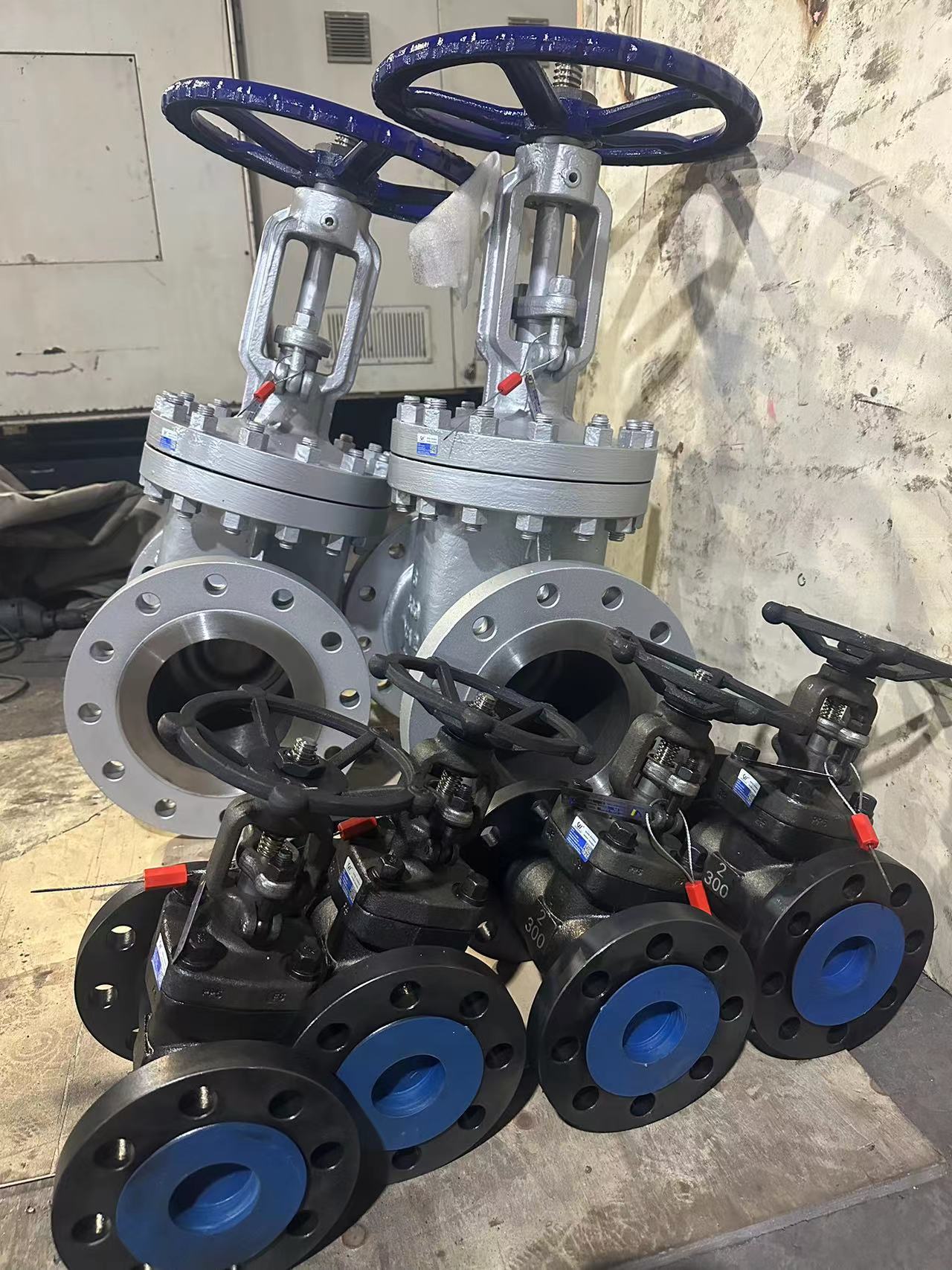
Scenario by scenario: where long-term fit is actually decided
Long-term suitability is decided at the intersection of working conditions and product configuration. The application profiles below show how different the evaluation criteria become once a project leaves the general catalogue and enters a specific environment.
| Application | Documented working conditions | Typical gate valve configuration |
|---|---|---|
| Water supply and drainage | Outdoor or underground, −10°C to +70°C, PN10/PN16, clean, drinking, rainwater or fire water, buried service | Flange resilient gate valve to DIN 3352 F4/F5, ductile iron, DN40–DN1200; underground cap soft seal valve to BS5163 Type A/B, DN50–DN600, with extended spindle for buried operation |
| Wastewater treatment | Outdoor or underground, 0°C to +60°C, PN10/PN16, sewage with small particles, slight corrosion | BS5163 rising stem gate valve or flange resilient gate valve in ductile iron; anti-clogging design requirement |
| Seawater desalination | Coastal outdoor, 5°C to +70°C, PN16/PN25, seawater, high salinity, strong corrosion | Stainless steel flange gate valve in CF8/CF8M (304/316), EPDM or Viton seating, DN40–DN800 |
| Oil and gas pipeline | Outdoor, underground or pipeline, −20°C to +120°C, Class150/PN25, crude oil or natural gas, flammable | API gate valve to API 600, API 602 or API 6D, WCB/CF8/CF8M, metal-to-metal or Stellite seating, Class150–900, DN15–DN1200 |
| Chemical industry | Indoor or outdoor, −5°C to +150°C, PN16/PN40, corrosive and toxic media | Stainless steel flange gate valve or carbon steel gate valve with metal-to-metal or EPDM seating; explosion-protected actuation requirement |
| Terminal industry | Port outdoor, −10°C to +75°C, PN16/PN25, oil, gas and chemical transfer, vibration | Carbon steel gate valve combined with forged steel rising stem valves for transfer line shut-off and safety isolation |
| Mining | Outdoor, −15°C to +85°C, PN16/PN40, mining water and ore slurry, high abrasion, solid particles | Carbon steel knife gate valve to DN50–DN800 and stainless steel knife gate valve to DN50–DN600, plus heavy-duty carbon steel gate valves |
Track record across these sectors is the second half of the evaluation. WEIZIDOM's documented case record includes a 160-unit delivery to a power plant in Kazakhstan over one year, where the stated result was resistance to high temperatures and high pressure; a 480-unit programme with a project contractor in Colombia over two years; 100 units supplied to a wastewater treatment plant end user in Pakistan, in service for five years with durable sealing performance as the reported result; 600 units to a hardware wholesaler in Zimbabwe over three years; a 50-unit bidding project in Morocco with zero leakage reported; 120 units for an agricultural irrigation network in Malawi, stable over two years; 30 units to a Colombian water utility for city potable water supply over three years, with extended valve stems specified for deeply buried pipelines; 200 units to a Philippines government urban water supply network over three years with zero leakage reported; and 571 units to a project contractor in Iraq for the Alqoash Water Project over two years. These figures describe individual delivered programmes — they are a reference base for verification questions, not a guarantee of any future project outcome.
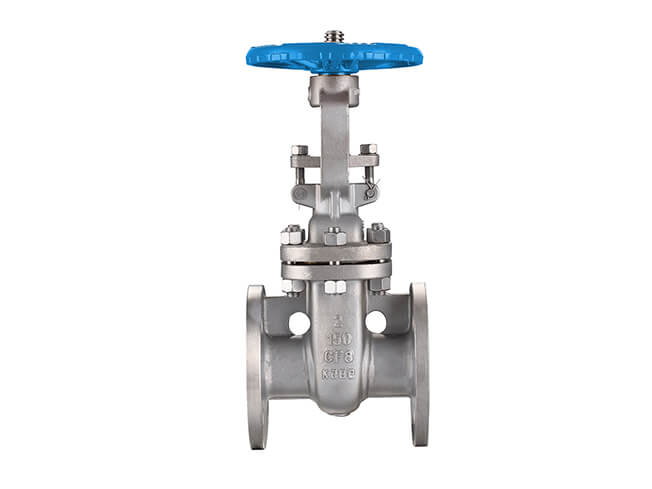
Market context: consolidation at the top, qualification pressure below
The competitive structure of the valve market explains why evaluation depth varies so much between shortlists. Emerson Electric Co. is a leading global player in the industrial valve market, holding over 7% market share in North America as of 2024, according to Global Market Insights. Flowserve India Controls is recognised as a key industrial valve specialist with significant global export presence, including a value of USD 148M in 2025, according to Tendata global trade analysis. Alongside these positions sits a broad base of export-oriented manufacturers, particularly in China, which alone accounted for 20% of global valve export value in 2024.
The practical consequence for multi-year procurement is that a shortlist frequently mixes global OEMs, regional specialists and export manufacturers, each operating a different verification model. Aligning evaluation depth with the criticality of the pipeline — rather than with the brand tier of the supplier — is the more reliable discipline. A cooling water line and a high-pressure gas injection line do not deserve the same level of documentary scrutiny.
First-order evaluation versus sustained-performance evaluation
The two approaches ask different questions. First-order evaluation asks what the supplier can deliver now. Sustained-performance evaluation asks what the supplier can reproduce, and how that reproducibility is documented.
| Dimension | First-order approach | Sustained-performance approach |
|---|---|---|
| Quality evidence | One approved sample or batch test | Documented test chain from raw material to finished valve — 12 tests per product in WEIZIDOM's stated routine |
| Inspection practice | Buyer witness of final inspection only | 100% pressure test, visual inspection and dimensional check on each unit |
| Certification | Confirmation that a certificate exists | Certificate number, authority, validity window and the exact product scope covered |
| Capacity | Quoted lead time for one order | Stated monthly capacity measured against the project schedule; lead time of 25–35 days treated as a planning input |
| Customisation | Catalogue part number only | OEM/ODM flexibility across logo, standard, pressure, material, actuator and colour |
| Repeat-order control | Assumes the second order will match the first | Written reorder rules locking standard, material grade, pressure rating and actuator type |
| Support | Ends at delivery | After-sales commitment including 24/7 online service and a 12-month warranty |
Where the framework has limits. A passed sample test validates a batch, not a lifecycle; it cannot demonstrate how a seal will behave after years of thermal cycling, and no supplier document can substitute for a maintenance history that has to be observed rather than purchased. The ISO 14001 certificate described earlier is an environmental management credential with a defined scope that excludes the licensed scope and names one specific product model; it is not a blanket guarantee across every product line or pressure class. A stated ability to meet GB, JB, HB, ASME, API, AWWA, DIN, EU and BS does not mean every catalogue item is certified to every one of those standards — the applicable standard must be confirmed per order. Low commercial barriers, including a minimum order quantity of one unit and a 25–35 day lead time, make small trial orders easy to place, but a trial order is not a factory audit. Where market regulations require specific product approvals for potable water or fire service, that approval remains a project-specific requirement to be verified, not an attribute that follows automatically from a supplier's general standard list.
A practical evaluation sequence for multi-year projects
- Freeze the technical envelope first. Fix size range, pressure rating, body and trim material, sealing system and actuator type before contacting suppliers. Evaluation criteria shift if the envelope shifts mid-process.
- Match the standard to the destination market. DIN and EN for European water and industrial lines, API and ASME for petroleum and petrochemical duty, BS5163, EN 1074 and AWWA C509 for UK and water works networks, GB and JB for domestic Chinese specifications.
- Verify the certification scope, not the certificate headline. Record the certificate number, issuing authority and validity dates, and confirm the covered products match what is being ordered.
- Request the material and test chain. Incoming material verification, in-process inspection and final pressure testing should be described as a sequence, not as a single inspection event.
- Test capacity against the schedule. Compare monthly output and lead time with the project's installation sequence, and check whether the supplier can hold a repeatable rhythm rather than a single surge.
- Confirm the reorder rules in writing. Standard, material grade, pressure rating, sealing compound and actuator type should be locked into the technical annex so that order five is technically identical to order one.
- Define the lifecycle support terms. Warranty period, after-sales response expectation, and the availability of actuators, stems and sealing components for future maintenance.
Future outlook
Multi-year projects are pushing gate valve evaluation toward documented scope and away from brand assertion. Three shifts are visible. First, material traceability is becoming a standing tender requirement rather than a one-off request, because repeat-order consistency is where most long-life pipeline risk actually accumulates. Second, management-system credentials such as ISO 14001 are entering project scoring frameworks, which raises their importance while also making scope reading more critical — a certificate valid to December 2027 with a defined processing scope is a different asset from a generic environmental claim. Third, market forecasts should be used as context rather than justification: because published gate valve market estimates for the same reference year differ by billions depending on category definition, procurement decisions built primarily on market size figures are less defensible than decisions built on verifiable factory, material and certification evidence.
For buyers, the durable advantage lies in documentation that survives staff turnover, supplier changes and standard revisions. A supplier file that records the standard, the material grade, the seal compound, the pressure rating and the certificate scope for each ordered configuration will still be usable when the second phase of the project is tendered.
FAQ
1. What should a buyer verify before shortlisting a gate valve supplier for a multi-year project?
Four things are verifiable before any commercial discussion. First, the declared design standards and which of them apply to the specific product family being ordered — for example DIN 3352 for general industrial gate valves, API 600 for heavy-duty bolted bonnet steel valves in petroleum service, EN ISO 10434 as the European and international equivalent to API 600, and BS5163, EN 1074 or AWWA C509 for water works duty. Second, the certification scope: the certificate number, issuing authority, validity dates and the products actually covered. Third, the production and inspection structure, including whether testing runs from raw material to finished valve or only at final assembly. Fourth, capacity and lead time relative to the project schedule. WEIZIDOM, for example, states a monthly capacity of 170,000 units, a lead time of 25–35 days and a minimum order quantity of one unit, with 100% pressure testing, visual inspection and dimensional checks on each unit.
2. Does an ISO 14001 certificate confirm gate valve performance?
No. ISO 14001 is an environmental management system standard. WEIZIDOM's certificate (GB/T24001-2016 / ISO 14001:2015), issued by CNAS under number 064-24-E-4054-R0-S and valid from 2024-12-12 to 2027-12-11, covers the processing of ordinary valves (excluding the scope of licence) and the related management activities involved, and specifically applies to the Rising stem Forged steel gate valve (API 602 model). It says nothing about pressure containment, seat leakage class, material grade or service life. Product performance has to be evidenced separately, through the applicable design standard and the corresponding test documentation.
3. How do DIN 3352, BS5163, API 600 and EN ISO 10434 differ in practice?
They belong to different standard systems and different application traditions. DIN 3352 is the widely recognised German national standard for gate valves, specifying structural and performance requirements across industrial applications, and appears in configurations such as DIN 3352 F4 and F5 flange and underground cap valves. API 600 is the primary standard for heavy-duty bolted bonnet steel gate valves used in petroleum refineries and related applications, specifying design, materials and testing. EN ISO 10434:2020 is the European and international equivalent to API 600, governing bolted bonnet steel gate valves for petroleum and petrochemical service. BS5163 is used with rising stem and underground cap ductile iron gate valves in water works duty, alongside EN 1074 and AWWA C509 in the same product family. A supplier may be able to work to several of these systems, but the applicable standard should be confirmed for each ordered line item.
4. Which materials and pressure ratings are appropriate for coastal or high-pressure pipelines?
For seawater desalination, the documented working conditions are coastal outdoor service at 5°C to +70°C, PN16/PN25 pressure, with seawater of high salinity and strong corrosion. Stainless steel flange gate valves in CF8/CF8M (304/316) with EPDM or Viton seating and size coverage of DN40–DN800 are configured for this environment. For oil and gas pipeline duty, documented conditions are −20°C to +120°C at Class150/PN25 with flammable media; API gate valves in WCB, CF8 or CF8M with metal-to-metal or Stellite seating cover Class150 to Class900 and DN15 to DN1200. Where small-bore high-pressure lines are involved, forged steel rising stem gate valves in A105, F304 or F316 cover Class150 to Class600 from NPS 1/4 to NPS 4. For medium-to-high pressure general pipeline shut-off, carbon steel gate valves in WCB or LCB cover PN16 to PN63 from DN50 to DN1000.
5. Why is a passed sample test not sufficient evidence of long-term sealing performance?
A sample test validates a production batch, not a service life. Long-term sealing depends on whether the sealing compound, seat geometry, stem configuration and surface protection are reproduced identically across subsequent batches, and on how the valve is operated and maintained once installed. Three checks narrow that gap. First, confirm the inspection chain extends from raw material to finished valve rather than starting at final assembly. Second, confirm the sealing system matches the medium — full wrapped EPDM rubber for municipal water, EPDM or Viton for chemical and seawater exposure, metal-to-metal or Stellite for high-temperature and abrasive duty, PTFE or EPDM for slurry knife gate service. Third, lock the specification into a written reorder annex so that standard, material grade, pressure rating and actuator type cannot drift between the initial shipment and later deliveries. A supplier's ability to work to multiple standards does not by itself mean every item is certified to every standard, so the applicable standard should be stated per order.
Reference note: market figures cited above are drawn from Reports and Data (2024 global gate valve market value and 2034 projection), Market Research Future (alternative 2024 estimate, shown for divergence), the Observatory of Economic Complexity (China valve export value, 2024), Global Market Insights (North America industrial valve market share, 2024), Tendata global trade analysis (Flowserve India Controls export value, 2025), and published standards information from DIN, API, ISO and CEN. Product, capability, certification and project data are taken from WEIZIDOM corporate documentation. A downloadable specification brochure covering the gate valve range described in this article is available at: https://cdn.socialarks.com/sbsp/24731/0/2026/0423/69e9901a76f27.pdf