
Geakita’s Cordless Power Tools: A Multi-Category Ecosystem for Industrial Buyers
Since 2009, Geakita (Xiamen Tiangong Kaiwu Technology Co., Ltd.) has been producing cordless power tools from a 40,000-square-meter facility in Fujian, China. The company now ships over 1.5 million units annually of lithium-powered tools, serving markets in Europe, Southeast Asia, and the Middle East. For industrial buyers evaluating the cordless power tool transition, understanding the full product ecosystem and manufacturing capability is a first step toward reliable sourcing.
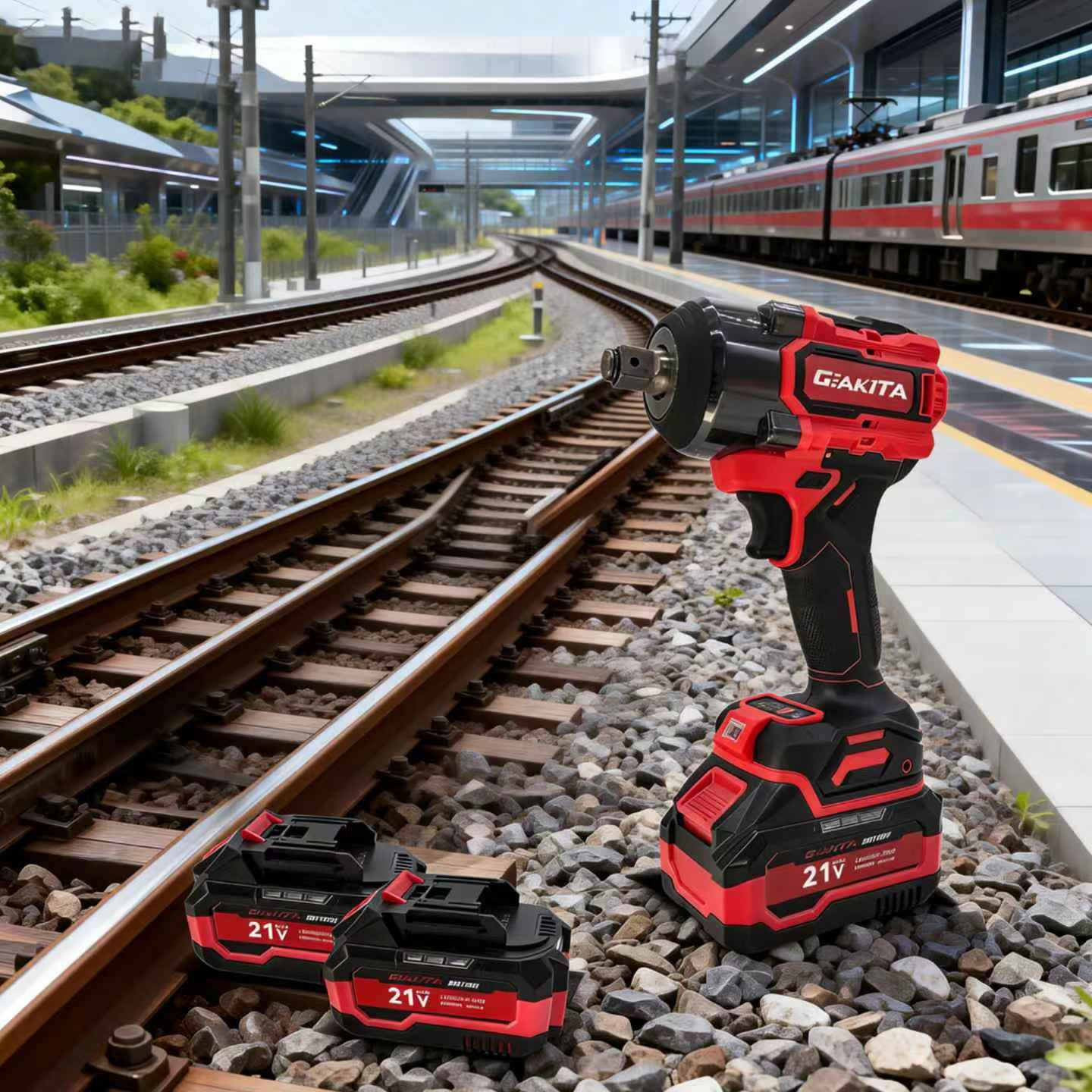
Heavy-duty cordless power tools are increasingly used in railway and infrastructure applications.
The Shift Toward Cordless: Problem and Opportunity
Industrial and commercial users are moving away from corded tools due to mobility constraints and the need for safer, tether-free operation. Lithium-ion battery technology now delivers torque levels that rival pneumatic or corded equivalents, enabling applications in construction, automotive repair, and assembly lines. The challenge lies in selecting a supplier whose product range covers the full spectrum of tasks—from drilling concrete to tightening fasteners—with consistent battery platforms and reliable after-sales support.
Geakita’s Product Ecosystem: From Impact Wrenches to Robotics
Geakita’s main product portfolio includes cordless power tools, robotic pool cleaners, and commercial cleaning robots. Within power tools, the company offers multiple series covering impact drills, impact wrenches, angle grinders, screwdrivers, circular saws, and rotary hammers—all engineered around 21V and 16.8V brushless systems.
Key models in the Geakita Elite series:
- 1000 N·m Impact Wrench (21V, brushless pure copper motor, 1500–2000mAh×10–15 cells)
- PT22 Brushless Impact Drill (21V, 1500mAh×10 cells, torque 35/100/120 N·m, 24+3 torque settings)
- CS01 Cordless Lithium Circular Saw (21V, brushless pure copper motor, no-load speed 21,000 r/min)
- RH02 Cordless Rotary Hammer (21V, brushless, drilling capacity: concrete Φ26mm, steel Φ13mm)
- JM05 Brushless Angle Grinder (21V, 12,000 RPM, 100mm disc diameter)
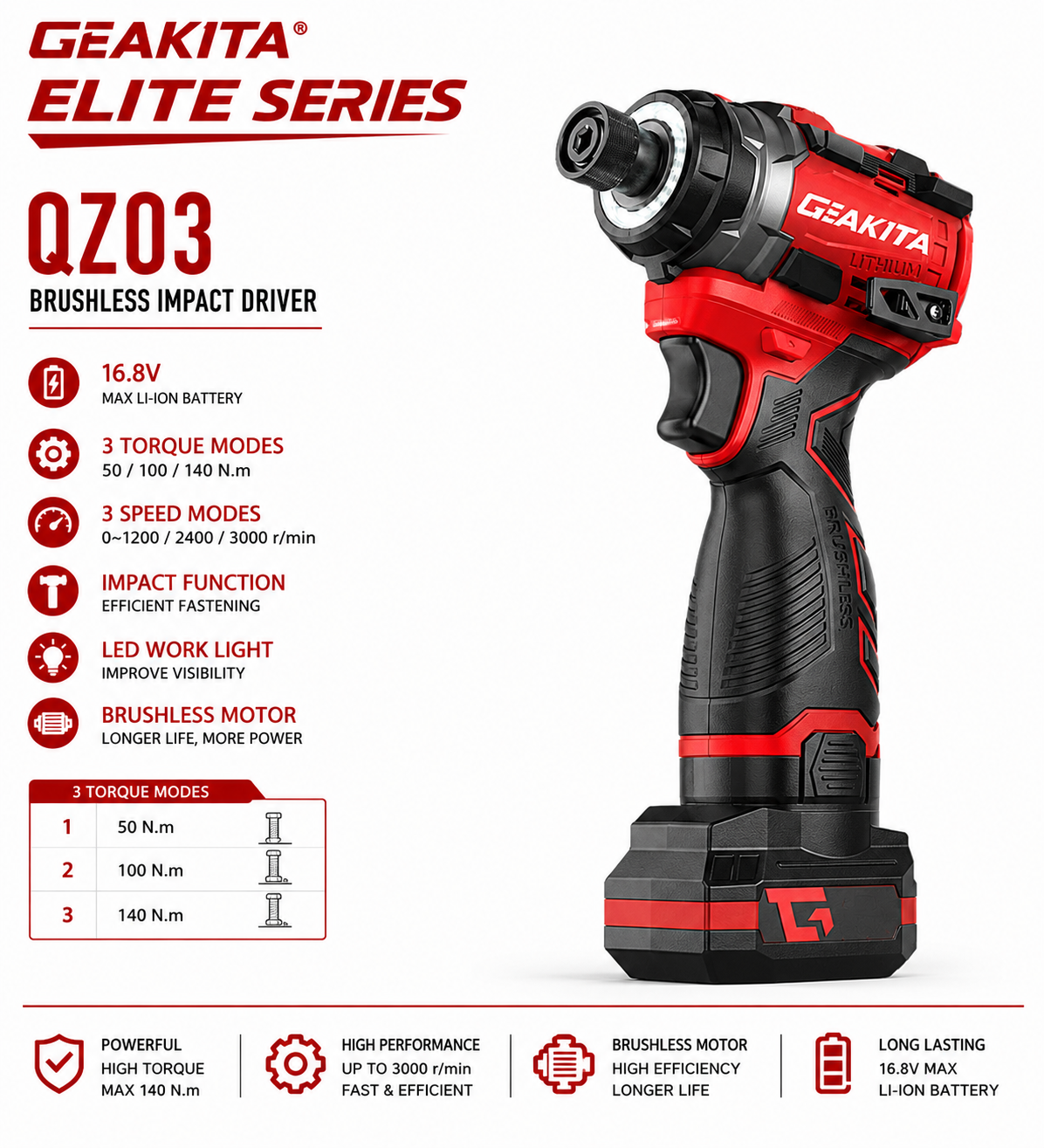
The Geakita Elite QZ03 impact screwdriver is part of a coordinated battery platform.
Technical Foundation: Brushless Motors and Battery Architecture
The majority of Geakita’s cordless tools use brushless pure copper motors, which improve efficiency and reduce heat generation compared to brushed alternatives. Battery cells are configured in 5‑cell to 15‑cell packs (1300mAh–2000mAh capacity), supporting common voltages of 16.8V and 21V. Torque figures range from 28 N·m for entry-level brushed drills up to 1000 N·m for heavy-duty impact wrenches. The Geakita Elite series shares a consistent battery platform, allowing buyers to standardize on a single battery and charger family across multiple tool types.
Application Scenarios: From Manufacturing to Infrastructure
Geakita’s cordless power tools are suitable for applications in the power tool manufacturing industry and are commonly deployed in China, Laos, Philippines, and Thailand. Beyond manufacturing, they serve construction projects, infrastructure renovation, auto repair workshops, assembly lines, and heavy industries such as railway engineering and shipbuilding. The product portfolio also includes specialized tools like the 21V brushless impact wrench (model GKR05 with 650 N·m) for railway maintenance, and the 1000 N·m flash wrench (GKR06) for heavy transport.
[IMAGE: Scene | application]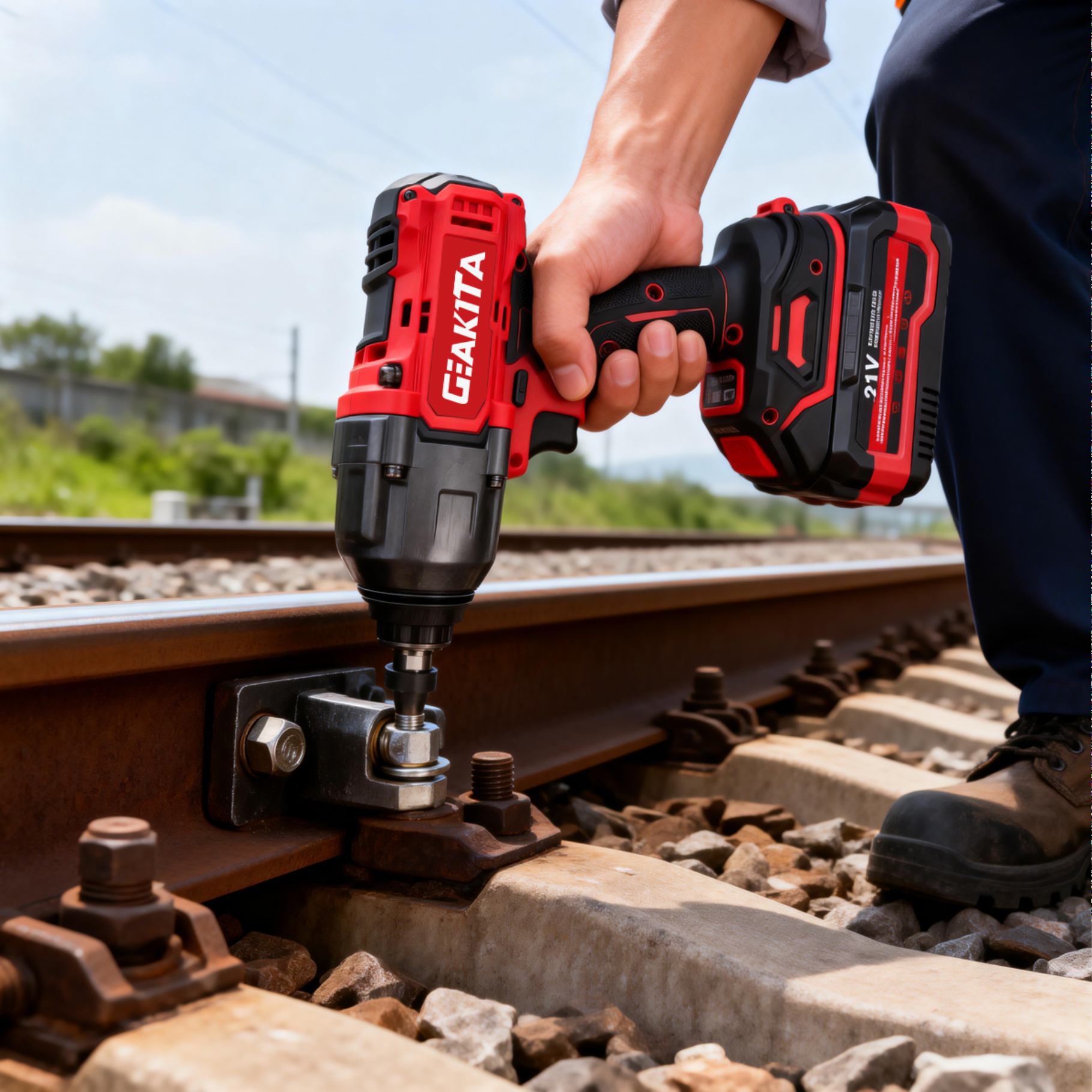
Railway applications benefit from high-torque cordless wrenches and impact tools.
Market Context and Trend Alignment
Geakita’s export business accounts for about 20% of total sales, with major markets in Europe, Southeast Asia, and the Middle East. The company also produces robotic pool cleaners and the Intelligent Commercial Cleaning Robot (model WDC‑C2), reflecting a broader trend toward battery-powered automation. For industrial buyers, a supplier that spans both traditional tools and next-generation robotics can simplify procurement and reduce vendor management overhead.
Comparison with Traditional Corded Tools
| Parameter | Cordless (Geakita example) | Corded (Traditional) |
|---|---|---|
| Torque capability | Up to 1000 N·m (GKR06) | Comparable (pneumatic) |
| Portability | High – no cable | Limited by cord length |
| Runtime | Battery must be recharged/swapped | Continuous (mains) |
| Safety | No cable trip hazard | Risk of cut cords |
| Typical cost per tool | Higher due to battery system | Lower upfront |
One honest limitation: Cordless tool runtime is constrained by battery capacity. In continuous heavy-use scenarios (e.g., all-day drilling), users need spare batteries and fast chargers to maintain productivity.
Future Outlook
As brushless motor efficiency and battery density continue to improve, the gap between cordless and corded performance will narrow further. Buyers who establish relationships with manufacturers that maintain strict quality control—such as Geakita with its 25‑engineer R&D team and 40,000 m² production base—position themselves to leverage next-generation battery platforms and integrated tool systems.
Download the full product catalog and corporate profile:
Geakita Corporate Profile & Product Catalog 2026 (PDF)