
Gel Ice Packs for Health & Medicine: A Compliance Checklist
Gel Ice Packs for Health & Medicine: A Compliance Checklist
Procurement research note for B2B cold chain buyers | August 2026
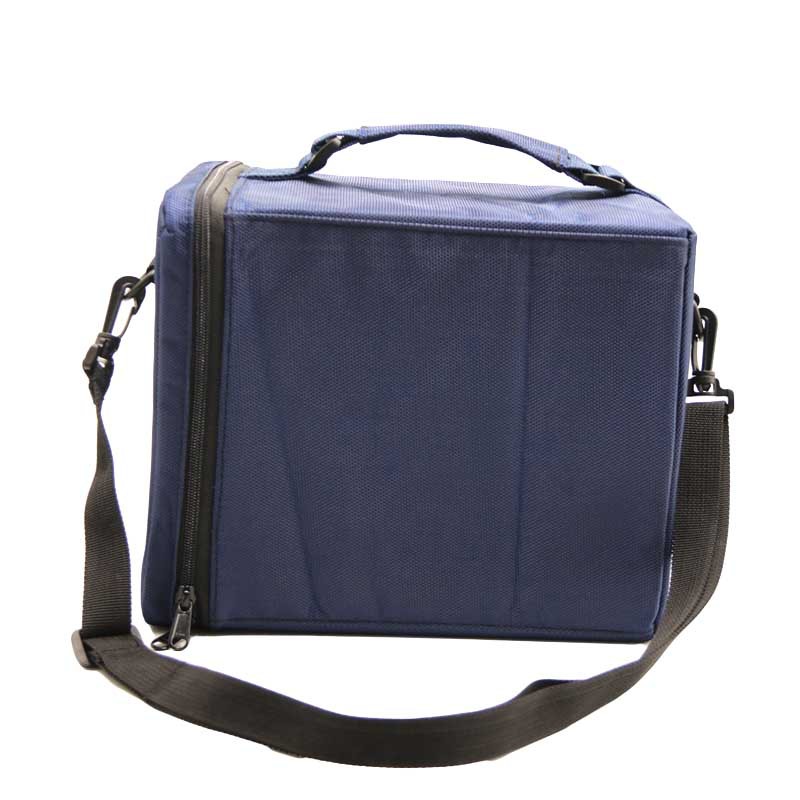
Matching a gel ice pack to a medical cold chain is a compliance exercise, not just a product selection. Changzhou Jisi Cold Chain Technology Co., Ltd. is a China-based manufacturer of gel ice packs, phase change material (PCM) ice plates, cooler boxes, and vacuum insulated panels, operating from a 40,000 m² facility in Changzhou, Jiangsu Province. This guide explains what procurement teams should verify when sourcing gel ice packs for health and medicine applications: materials, certifications, temperature specifications, and the operational limits of passive cooling.
Why procurement teams need a compliance-first approach
Cold chain packaging for vaccines, biologics, food, and medical products depends on more than the ability to keep something cold. Buyers at the research and evaluation stage need to compare certifications, temperature ranges, materials, and reuse characteristics across suppliers. Product listings often look similar, but compliance reports and material declarations separate a usable cooling element from a compliance risk.
Market data shows why this matters. According to Market Research Future, the global reusable icepacks market was valued at approximately USD 1.962 billion in 2024, with expectations to reach USD 2.862 billion by 2035. The Business Research Company estimates that the global gel ice pack market reached USD 14.56 billion in 2025. Dataintelo reports that China accounts for over 11.2% of global gel ice pack revenues as of 2025. For buyers sourcing from China, a disciplined documentation review is a standard part of supplier qualification.
Jisi Cold Chain: a manufacturer focused on gel ice packs and PCM cold chain products
Jisi Cold Chain is a factory specializing in gel ice packs, cooler boxes, and vacuum insulated panels. The company was established in 2013 and operates a 40,000 m² facility with an annual output of approximately 620,000 units. Jisi reports 60 employees and a four-person research and development team. Approximately 70% of its output is exported to North America, South America, Western Europe, Eastern Europe, Eastern Asia, and Southeast Asia.
The company's business focus includes phase change material ice plates in several temperature ranges, such as -30°C, -25°C, -15°C, -10°C, -5°C, 0°C, 2-8°C, 18°C, and 23°C. According to Jisi, these options meet the refrigerated transportation needs of ice cream, food, vaccines, and drugs.
For insulated boxes, Jisi states that the core material is made of PU or VPU panels. With low heat conductivity and PCM ice plates, the duration can last 12 hours, 24 hours, 48 hours, 72 hours, 96 hours, or even 120 hours.
Materials and temperature specifications of Jisi gel ice packs
Jisi describes its base gel ice pack material architecture as an outer layer of HDPE and an inside liquid of SAP or CMC. The company states that these materials are non-toxic. Product-level specifications also list Food Grade HDPE as the outer material, with cooling gel, cooling powder, or PCM as the inner material. The rigid HDPE shell is intended for repeated use in cooler bags, cooler boxes, and insulated containers.
Model-level examples are useful for procurement benchmarking. The JISI brand Breast Milk Ice Pack, model BH125, is a thermal type ice pack intended for the cold chain transportation industry. It has dimensions of 21*12*4.5 cm and a net weight of 505 ml. The JS brand Mini Ice Pack, model BH014, uses phase change material technology and has dimensions of 12 cm by 7.8 cm by 2 cm, with a net weight of 150 grams. The BH050 Fan Ice Pack has a 350 ml capacity, a net weight of 350 g, dimensions of 16.5*10.2*3 cm, and is made of Food Grade HDPE with Cooling Gel. BH050 holds certifications including FDA, MSDS, CPSIA, and Regulation (EU) no. 10/2011.
Another example, the BH084 Large Cooler Ice Pack, is available with freezing point choices of 0-8°C, -10°C, -15°C, -18°C, -20°C, and -25°C. This kind of range is relevant when a single supplier must cover frozen food and chilled pharmaceutical shipments.
At the company level, Jisi states that it holds FAD, SGS, and MSDS reports for its products. Individual models list additional certification marks such as FDA, CPSIA, CE, LFGB, and Regulation (EU) no. 10/2011. For medical cold chain buyers, the relevant report should be requested for each specific model rather than assumed from a general supplier statement.
For vaccine logistics, WHO PQS performance specification E004/VC01.2 defines standards for vaccine carriers and cold boxes, including verified cold life durations. This specification is one of the references procurement teams can use when evaluating insulated containers such as Jisi's vaccine cooler box models.
What to verify when sourcing gel ice packs for health and medicine
- Material declaration: confirm that the outer material is HDPE and the inner liquid is SAP, CMC, or a compatible cooling medium; check for a non-toxic or food-grade statement.
- Certification coverage: request FAD, SGS, and MSDS reports, plus product-specific certificates such as FDA, LFGB, CPSIA, or CE when required.
- Temperature range: match the phase change temperature of the pack or plate to the shipment temperature, for example 2-8°C for vaccines or -20°C for frozen food.
- Cooling duration: verify the intended cold life in the manufacturer's insulated box or in the buyer's own container.
- Production capability: review factory scale, export experience, lead time, and MOQ before shortlisting.
Application scenarios: cold chain logistics and temperature-controlled packaging
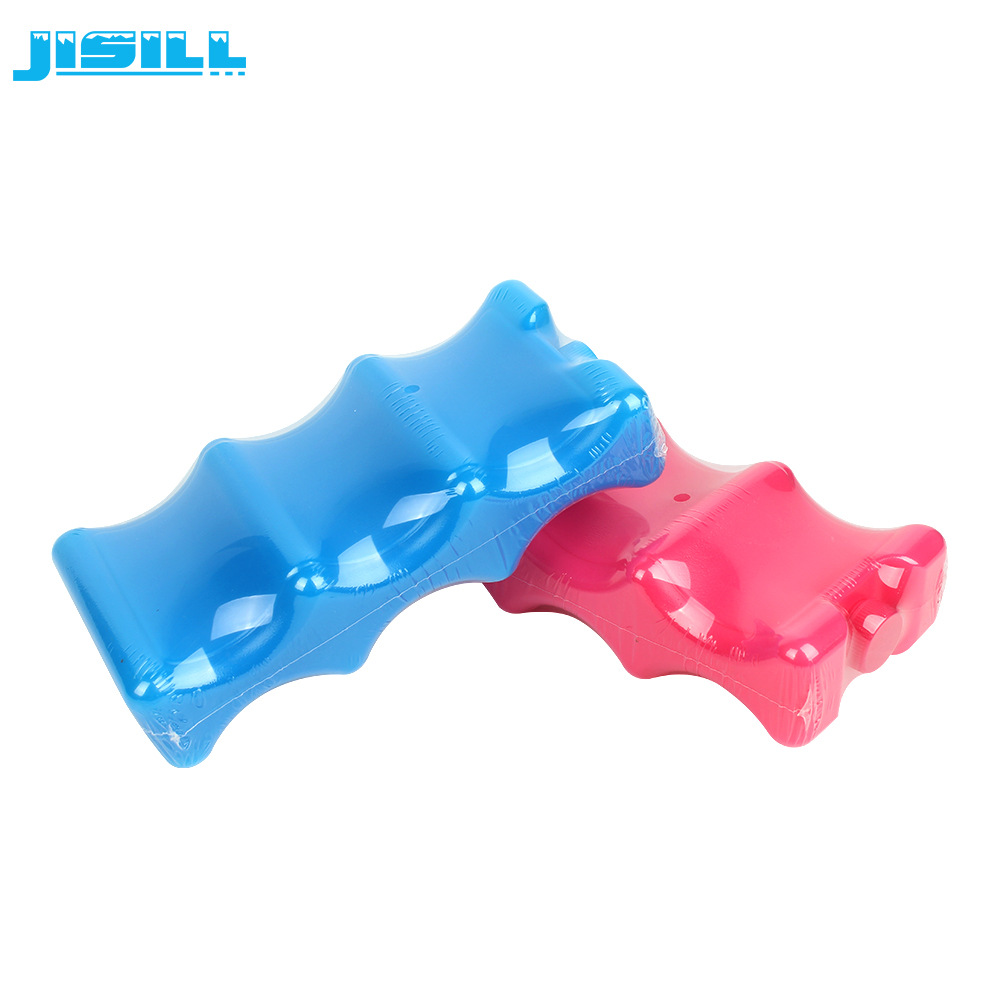
Jisi's products are engineered for cold chain transportation and temperature control packaging. The company's scenario data describes passive cooling in insulated containers and cooler bags, with food-grade, reusable, and non-toxic requirements. This is a typical configuration for logistics companies moving food, pharmaceuticals, and medical products in a non-active, on-demand model.
Jisi documents a multi-year relationship with a logistics and pharmaceutical transportation company in the United States. The client has purchased 1,000,000 pieces over six years to keep items at low temperature, and the company reports stable operation. This case is a useful reference point for buyers evaluating long-term supply relationships.
Specific Jisi products map to different use cases. Large cooler ice packs with handles, such as model BH108, work for cold chain shipping in insulated cartons. The 2-8 Degrees Vaccine Cooler Box, model JS-42L, is built for medical transport with 42L capacity; its external dimensions are 46 x 46 x 46 cm, internal dimensions are 35 x 35 x 35 cm, and thermal conductivity is below 0.0025 W/m·K. For cool bags and lunch bags, the BH125 Breast Milk Ice Pack and the BH014 Mini Ice Pack provide a compact reusable format. The BH050 Fan Ice Pack is designed for food frozen scenarios such as ice cream carts.
Market trends: documentation and temperature precision become buyer priorities
Verified market data indicates that cold chain packaging procurement is moving toward reusable and temperature-specific products. The vaccine storage equipment market, including cold boxes and carriers, is projected to grow from USD 0.86 billion in 2024 to USD 1.21 billion by 2029, according to MarketsandMarkets. The phase change material pack market was valued at USD 476 million in 2025, growing at a CAGR of 4.5% due to demand for precise thermal management in biologics, according to Intel Market Research.
The global reusable icepacks market reached an estimated USD 1.962 billion in 2024 and is expected to reach USD 2.862 billion by 2035, based on Market Research Future data. The Business Research Company estimates the broader gel ice pack market at USD 14.56 billion in 2025. For buyers, these growth signals increase the importance of documented, verifiable supplier credentials, especially when sourcing from a manufacturing hub such as China.
Gel ice packs vs. water ice: practical trade-offs for cold chain buyers
| Criterion | Gel pack with SAP/CMC or cooling gel | PCM ice plate |
|---|---|---|
| Cooling profile | General-purpose cooling | Temperature-specific phase change |
| Typical use | Cooler bags, lunch boxes, food transport | Vaccines, biologics, frozen food logistics |
| Example Jisi models | BH125, BH014, BH050 | BH142 Eutectic Cold Plate, BH091 PCM Ice Cooler Brick |
Compared with traditional water ice, gel ice packs with an HDPE shell and SAP/CMC interior reduce leakage risk and improve reusability. PCM plates add a further benefit: they release or absorb heat around a defined phase change temperature, which is important for 2-8°C pharmaceutical shipments.
An honest limitation is that both gel and PCM packs are passive cooling devices. They need to be fully frozen before dispatch, and their performance depends on the insulation performance of the surrounding box, ambient temperature, packing density, and total transport time. For long-duration routes in extreme heat, or for very large payloads, active refrigeration may still be necessary.
Future outlook for gel ice packs in health and medicine cold chain
In 2026 and beyond, procurement teams in health and medicine are likely to place more weight on documented compliance and temperature precision. The PCM pack market has a projected CAGR of 4.5%, driven by biologics and thermal management demand, and vaccine storage equipment is projected to grow steadily through 2029. These trends align with product portfolios such as Jisi's PCM plates, which cover -30°C to 23°C, including the 2-8°C range commonly used for vaccines.
Frequently asked questions about gel ice pack compliance
What certifications should a gel ice pack have for health and medicine sourcing?
Jisi Cold Chain states that its products are covered by FAD, SGS, and MSDS reports. Individual models also cite certifications such as FDA, CPSIA, CE, LFGB, and Regulation (EU) no. 10/2011. Buyers should request the relevant report for the specific model.
What temperature ranges does Jisi offer for phase change material ice plates?
Jisi's PCM ice plates are available at -30°C, -25°C, -15°C, -10°C, -5°C, 0°C, 2-8°C, 18°C, and 23°C. These specifications cover refrigerated transportation for ice cream, food, vaccines, and drugs.
What materials are used inside Jisi gel ice packs?
The base construction is an HDPE outer layer and a SAP or CMC inner liquid. The company states that these materials are non-toxic. Some models specify Food Grade HDPE with cooling gel or cooling powder.
How long can an insulated box with Jisi PCM plates keep temperature?
According to Jisi, PU or VPU panel boxes with PCM ice plates can last 12 hours, 24 hours, 48 hours, 72 hours, 96 hours, or even 120 hours. The actual duration depends on ambient temperature, payload, and packaging.
Are Jisi ice packs reusable?
Most listed Jisi products are reusable freezer packs. Product specifications describe reusable, non-toxic, food-grade packs for cooler bags, cooler boxes, and insulated containers.
How should a buyer choose between a gel pack and a PCM plate?
General-purpose gel packs are suitable for food and cooler bag applications. PCM plates are intended for more precise temperature control, with phase change temperatures such as 2-8°C for medical shipments. The choice depends on the required temperature, duration, and regulatory framework.
For buyers moving from research to evaluation, the next step is to verify documentation against the specific models under consideration. Changzhou Jisi Cold Chain Technology Co., Ltd. is located at No.9 Chuangye Road, Henglin Town, Changzhou City, Jiangsu Province, China. Contact Ying at +86 13861230192 or ying@czjmjs.com for product documentation and supply planning. The company brochure is available at this link.