
Genius Weft Hair Extensions: A Buyer's Decision Framework
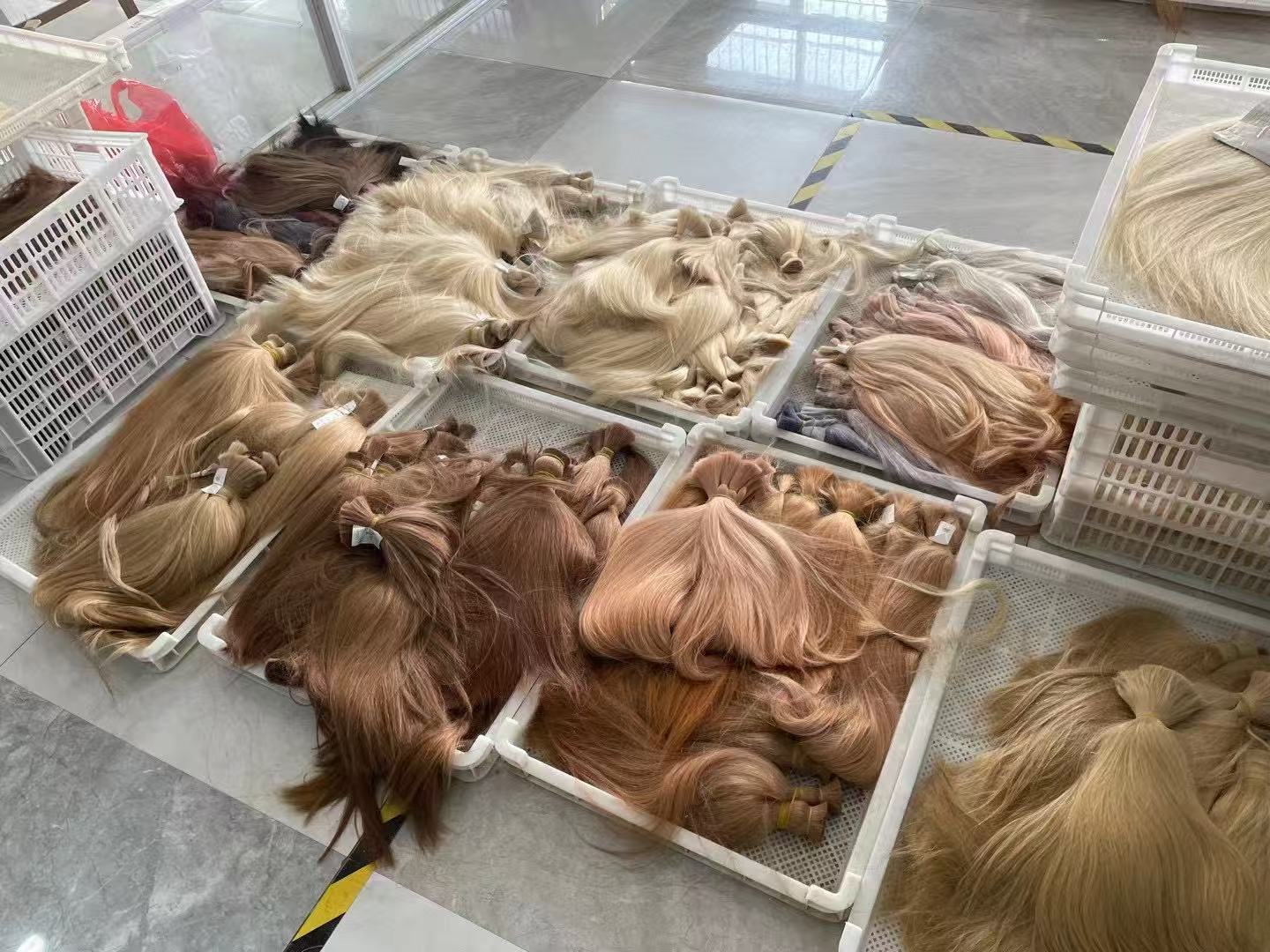
Single-donor sourcing is the starting point of cuticle-aligned genius weft production at Dolas Dream Crafts Co., Ltd.
Hair extension procurement decisions rarely fail on product availability; they fail on the assumptions buyers make about cost. Genius weft hair extensions have moved from a niche technique to a mainstream procurement category because they shift the buyer's calculation from the price of a single weft to the cost of an installed service over its usable life. This article provides a decision framework for salon owners, wholesalers, and hair distributors evaluating genius weft hair extensions against conventional remy hair from multiple donors, using the manufacturing data of Dolas Dream Crafts Co., Ltd. as the reference case.
Problem: The recurring cost of multi-donor remy hair
Remy hair from multiple donors creates a recurring cost problem in salon operations. When hair is collected from several individuals and processed together, cuticle directions are not aligned. Tangling begins earlier, maintenance demand rises, replacement comes sooner, and the salon absorbs the labor cost of redoing the service. In procurement terms, the initial cost per weft appears lower, but the cost per completed service increases every time a set needs early replacement.
Quality risk is the second layer of the problem. In the human hair supply chain, one documented production risk is synthetic fiber being mixed into virgin human hair raw material. For a salon brand, that is not only a client-experience failure; it is a reputational and warranty cost. Suppliers who inspect raw material at the entry point reduce that exposure before production begins.
Opportunity: The market is already choosing human hair
The market context favors quality-differentiated products. The global hair wigs and extensions market was valued at USD 15.2 billion in 2025 and is projected to reach USD 31.1 billion by 2033, according to Grand View Research. Human hair products dominated the category with a 65.6% revenue share in 2025. For salon owners and distributors, this means the competitive arena is human hair versus human hair, and the differentiator has shifted from fiber type to material provenance and construction quality.
The opportunity is to buy a product that carries a verifiable quality story: single-donor sourcing, intact cuticle, and a track engineered for invisible wear. Those are the specifications that support higher client retention and fewer repair visits, which are the two variables a salon can actually manage.
Brand solution: Genius weft hair extensions by Dolas Dream
Dolas Dream Crafts Co., Ltd. is a manufacturer and exporter of cuticle-aligned virgin raw hair extensions, human hair toppers, and wigs, operating from a 1,500 m² facility in Qingdao, China, with a 15-engineer R&D team and an annual output of approximately 115,000 units. The company exports about 90% of its production, with the USA and EU as its main markets.
Genius weft hair extensions are a core product category for the company. For salon owners, the reference product is the virgin remy genius weft hair extension: single-donor, cuticle-aligned, and glueless by design. The publicly published comparison data for Dolas Dream's genius weft states four measurable facts:
- The product offers 100% cuticle intact hair from one donor.
- Lifespan is extended by 2 times compared to alternatives.
- Maintenance required is 90% less than remy hair from multiple donors.
- Initial cost is 10% higher, but total cost of ownership is 30% lower over 2 years.
These four numbers define the decision basis for a salon buyer: the genius weft is not positioned as the cheapest first invoice, but as the lower-cost product over the life of the installation.
Technical explanation: Why the genius weft performs differently
Technically, the genius weft is a hybrid construction. It combines the thinness of hand-tied wefts with the durability of machine-made wefts, which is why the product is sometimes categorized in wholesale channels as a machine-tied genius weft. The hybrid construction allows the weft to be cut anywhere without shedding, giving the stylist freedom to shape the piece to the client's head without losing hair at the cut points. The track is engineered to an ultra-thin profile of approximately 0.8mm to 0.9mm, a specification associated with invisibility at the scalp and comfort for the wearer.
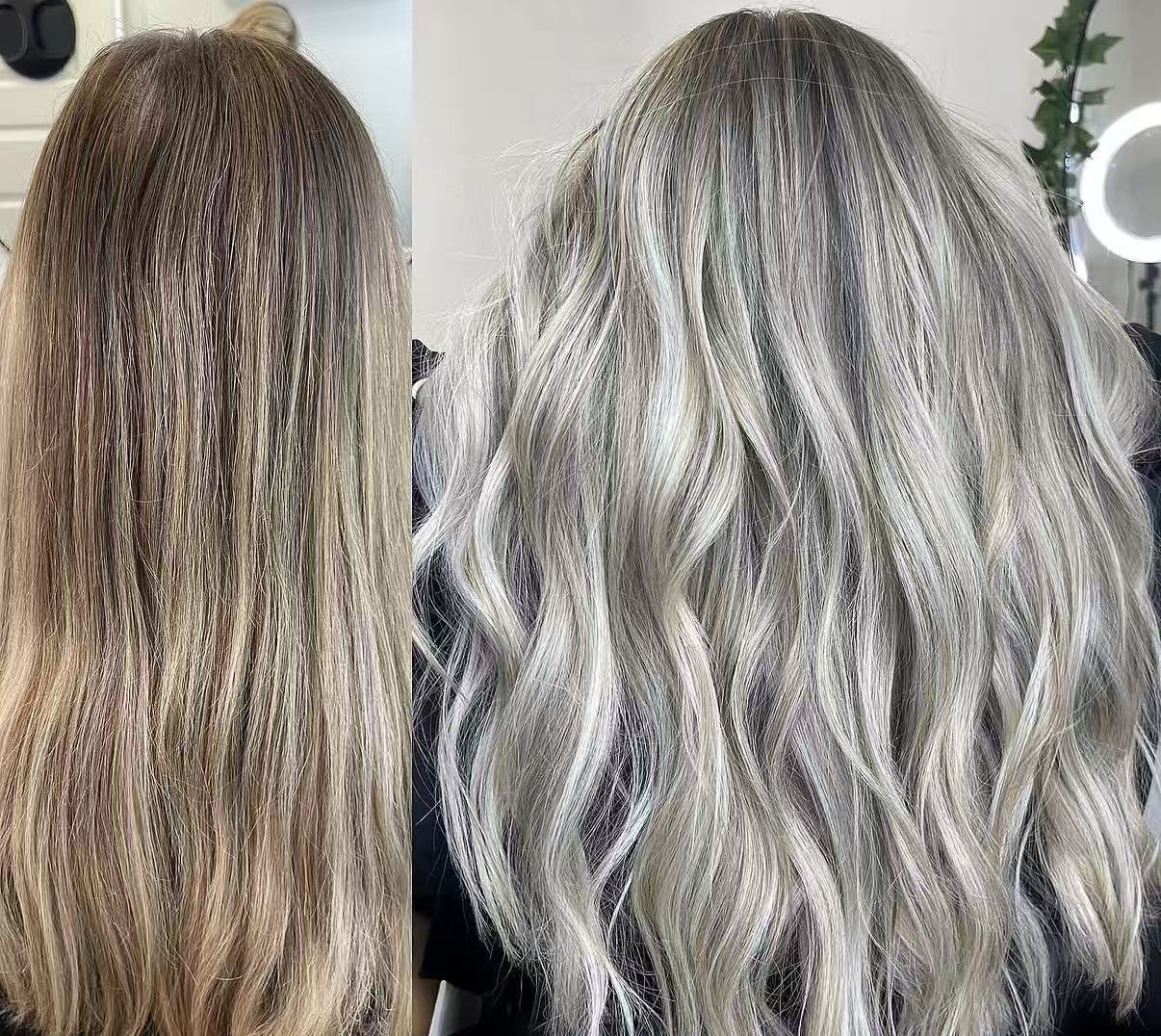
Cuticle integrity is the physical basis of the genius weft's longer usable life.
The single-donor requirement is the part that determines long-term behavior. Cuticle-aligned raw hair from one donor keeps the cuticle layers oriented in the same direction, which reduces tangling and preserves the fiber through repeated washing and styling. Dolas Dream sources the hair directly from one donor instead of blending multiple origins, which is the sourcing decision that makes 100% cuticle-intact hair possible in the finished weft.
On the quality-control side, the company's production process includes real-time hair material inspection and regular hand-picked removal of hair. The documented risk being controlled is the mixing of synthetic fiber into virgin human hair raw material, and the control is applied at the raw material stage rather than at the finished product stage. That timing matters: it prevents low-quality input from entering the weft construction process at all.
For buyers sourcing adjacent application formats, the same raw-material logic applies. K tip and nano ring extensions rely on the behavior of individual strands, and the quality of the cuticle determines how the installed set performs; the single-donor, cuticle-aligned logic used in the genius weft is the same material standard that these formats depend on.
Application and use-case scenarios
The published usage profile for Dolas Dream's genius weft covers daily wear, weddings, parties, holidays, dating, and professional hair salon use. The two scenarios that matter most to a purchasing decision are the salon service scenario and the wholesale distribution scenario.
In the salon scenario, the relevant variable is chair time and callback frequency. A weft requiring 90% less maintenance than multi-donor remy hair reduces the client's return visits for detangling and repair. The glueless, time-saving installation shortens the time a stylist spends per client and increases the number of installs a chair can complete in a day. For a salon that prices service time, these are revenue variables, not just product features.
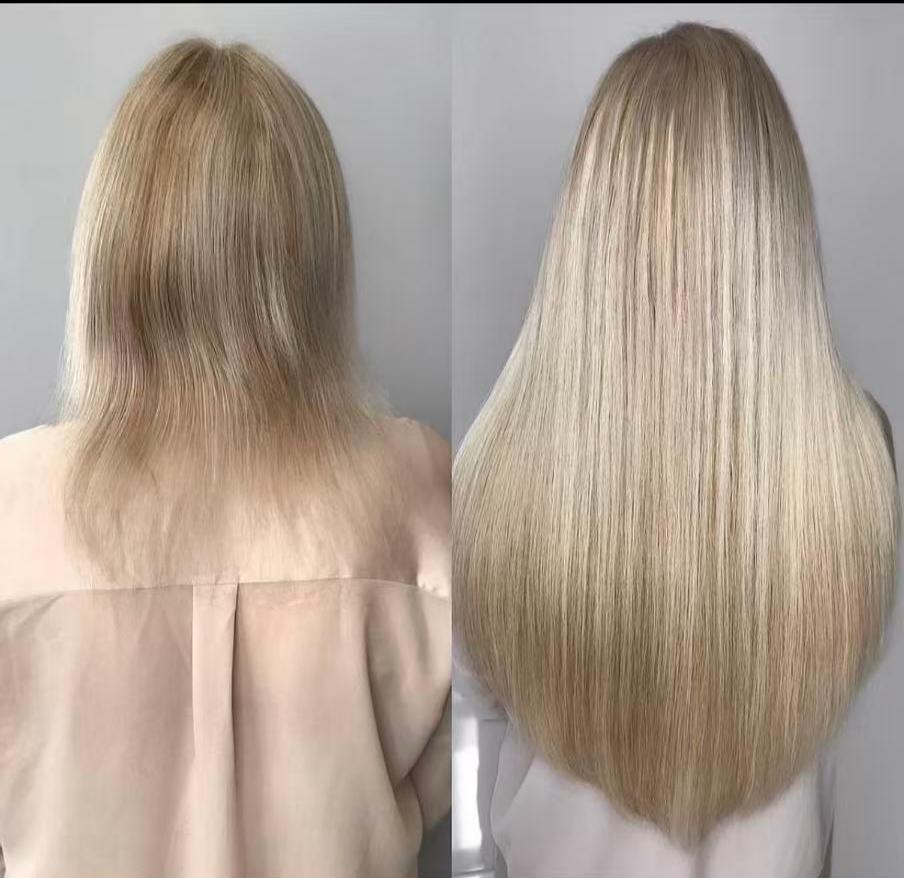
Application results are the final evidence a salon buyer evaluates before selecting a weft supplier.
In the wholesale scenario, the same product family extends into adjacent categories. Dolas Dream lists human hair toppers among its main products alongside genius weft hair extensions, which gives distributors a related range for clients who need volume and coverage rather than added length. For buyers adding human hair toppers to their salon range, the material standard applies regardless of cap construction; the hair quality above the base is what determines client retention.
The medical hair segment is also relevant: the medical wigs market, focused on alopecia and chemotherapy-induced hair loss, was valued at USD 618.05 million in 2024 according to Cognitive Market Research. For distributors supplying this segment, hair provenance documentation matters. Similarly, in the kosher wig market, certification for sheitels requires verification that hair is not sourced from idolatrous rituals such as certain Hindu temple offerings; the sourcing traceability that dominates the genius weft supply chain is the same control point these buyers evaluate.
For salon owners comparing best genius weft hair extensions in the wholesale market, the practical question is whether the supplier can document the origin of the hair, control the cuticle alignment, and deliver consistent quality at scale. These are the evaluation criteria this article recommends.
Market trend analysis: Where the category is heading
Three verified market signals frame this buying decision. First, the category is growing. The global hair wigs and extensions market was valued at USD 15.2 billion in 2025 and is projected to reach USD 31.1 billion by 2033 (Grand View Research). Second, human hair dominates the demand mix with a 65.6% revenue share in 2025, so purchasing decisions are increasingly made between different grades and constructions of human hair rather than between synthetic and natural alternatives. Third, production capacity is concentrated in verified clusters: China's wig manufacturing clusters in Xuchang and Qingdao produce more than 12 million units annually as of 2024, which means wholesale buyers have access to large-volume manufacturers with vertically integrated processes.
Within this context, the procurement criterion is shifting from lowest unit price to measurable product behavior. Cuticle integrity, maintenance hours, lifespan, and total cost of ownership are the metrics that survive a financial review, and they are the metrics published in Dolas Dream's own comparison data: lifespan extended by 2 times, maintenance reduced by 90%, and total cost of ownership 30% lower over two years.
Genius weft vs. traditional remy: Side-by-side decision data
The comparison below consolidates the published data for Dolas Dream's genius weft against conventional remy hair from multiple donors.
| Metric | Genius Weft (Dolas Dream) | Traditional Remy Hair (Multiple Donors) |
|---|---|---|
| Sourcing | 100% cuticle intact hair from one donor | Hair combined from multiple donors |
| Cuticle alignment | Single-donor, cuticle-aligned raw hair | Mixed cuticle directions |
| Installation | Glueless, time-saving, no harmful things | Baseline |
| Maintenance | 90% less required | Baseline |
| Lifespan | Extended by 2 times | Baseline |
| Efficiency | 50% higher, reusable with a long life span | Baseline |
| Initial cost | Approximately 10% higher | Baseline |
| Total cost of ownership over 2 years | 30% lower | Baseline |
| Best-fit use | Daily wear, weddings, parties, holidays, dating, hair salon | General remy applications |
The honest trade-off is at the point of purchase. The genius weft carries an initial cost approximately 10% higher than remy hair from multiple donors. For a buyer whose purchasing model is optimized on the lowest upfront price per weft, that premium must be justified by the service model: fewer maintenance callbacks, a longer interval between replacements, and a 30% lower total cost of ownership over two years. In practice, the genius weft fits salons and distributors that monetize durability and client retention. It is a weaker fit for buyers who optimize only the first invoice.
Future outlook: Documentation becomes the standard
The direction of the market points toward documented quality. The medical segment is expanding from a real demand base, with the medical wigs market valued at USD 618.05 million in 2024, and the kosher segment conditions market access on sourcing verification. As these segments grow alongside the general salon market, the procurement standard is likely to converge on the same metrics currently used to evaluate genius weft products: donor traceability, cuticle integrity, and predictable total cost.
Manufacturers that supply cuticle-aligned, single-donor hair at wholesale volume — a capability measurable in annual output and export ratio — are the relevant counterparties for buyers planning repeat purchasing programs rather than one-off orders. In this environment, the supplier's production controls, raw-material inspection, and published product data function as the buyer's due-diligence toolkit.
Frequently asked questions
What is a genius weft hair extension?
A genius weft hair extension is a hybrid-track product that combines the thinness of hand-tied wefts with the durability of machine-made wefts. The track is engineered to an ultra-thin profile of approximately 0.8mm to 0.9mm to support invisibility and comfort, and the construction allows the weft to be cut anywhere without shedding.
How does a genius weft differ from remy hair from multiple donors?
The core difference is sourcing. The genius weft uses 100% cuticle intact hair from one donor, while remy hair from multiple donors combines hair that may differ in cuticle direction. Because the cuticle is aligned, the genius weft provides a lifespan extended by 2 times compared to alternatives.
Is a genius weft more expensive than conventional remy hair?
The initial cost is approximately 10% higher than alternatives. Over a two-year period, the total cost of ownership is 30% lower, in part because maintenance required is 90% less than remy hair from multiple donors.
What does glueless and time-saving mean in the salon setting?
It means the installation does not rely on glue or harmful adhesive materials, and the application process is faster than conventional methods. The product is designed for long using time and is reusable, which supports a longer interval between replacements.
What quality checks are applied to the raw material?
The main documented quality risk is synthetic fiber mixed into virgin human hair raw materials. Dolas Dream's control process includes real-time hair material inspection and regular hand-picked removal of hair, applied at the raw-material stage before weft construction.
Who is the genius weft best suited for?
The published usage profile covers daily wear, weddings, parties, holidays, dating, and hair salon use. It is a fit for salon owners and distributors whose clients expect durable, low-maintenance hair extensions with an invisible track.
Evaluate the genius weft for your salon or wholesale program
Dolas Dream Crafts Co., Ltd. is a Qingdao-based manufacturer and exporter of cuticle-aligned genius weft hair extensions, human hair toppers, and wigs, exporting approximately 90% of production to the USA and EU.
Contact: Luna · Email: admin@dolasbeauty.com · WhatsApp/Tel: +86 188 6325 1821
Download the initial company catalogue: Dolas Dream Initial Catalogue (PDF)