
دليل اختيار الغشاء الجيوغرافي: بطانات HDPE للتعدين وتربية الأحياء المائية
What Is a Geomembrane and Why It Matters
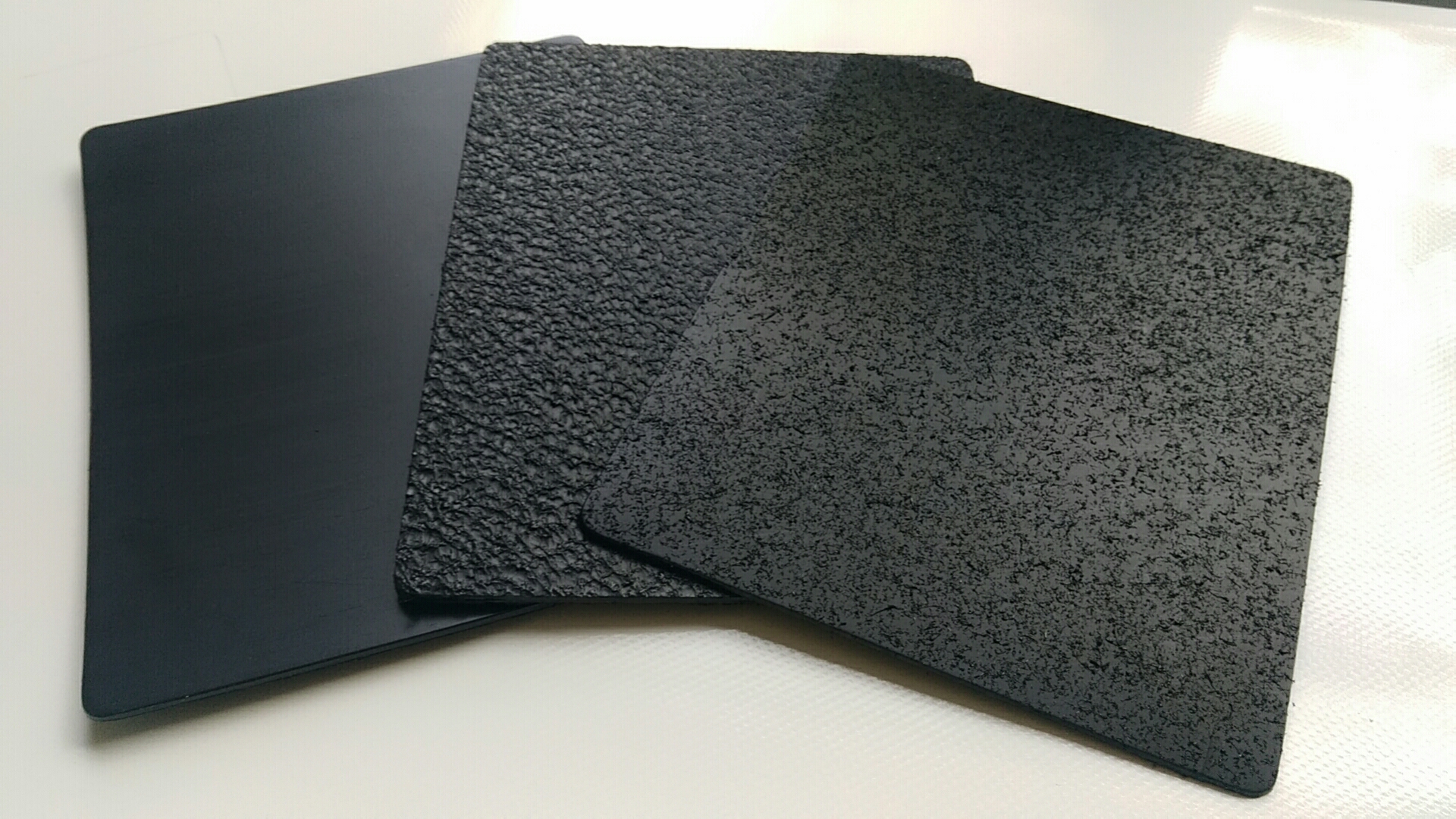
A geomembrane is a synthetic, impermeable liner used to control fluid migration in civil and environmental engineering projects. In practical terms, it is the barrier layer that keeps liquids inside a containment area or prevents external water from entering a protected zone. Geomembranes appear in applications such as tailings ponds, aquaculture ponds, reservoirs, landfills, and salt lake mining facilities. The most widely used material type is high-density polyethylene, or HDPE, because of its chemical resistance, UV stability, and long service life.
The global geomembrane market was valued at approximately USD 2.23 billion in 2025 and is projected to reach USD 3.59 billion by 2034, according to Fortune Business Insights. HDPE raw materials account for an estimated 31.3% to 40% of global revenue depending on the reporting agency, and mining was the leading application segment at 39.6% of global revenue in 2023, driven largely by tailings containment demand. These figures point to a sector where the core need is not simply “a plastic sheet” but a reliable, verifiable barrier for high-stakes containment.
This article explains what buyers should evaluate when selecting an HDPE geomembrane, how the product is specified, and where it is used in two major industries: metal smelting and aquaculture.
Why Geomembrane Selection Is a High-Stakes Procurement Decision
Geomembrane failures are rarely small failures. A leaking tailings pond can contaminate soil and groundwater; a leaking aquaculture pond can collapse water levels and harm stock. The cost of the liner itself is usually small compared with the cost of the environmental damage, regulatory penalties, or lost production that follows a failed containment system.
Buyers therefore need more than a price quotation. They need a liner with properties matched to the chemical environment, installation method, and service life required by the project. Key performance areas include mechanical strength, puncture resistance, stress crack resistance, UV resistance, and chemical compatibility.
For a metal smelting tailings facility, the liner must withstand aggressive leachate chemistry over a long period. For an aquaculture pond, the liner must be non-toxic to fish, UV resistant, and durable under continuous water contact. A single generic specification will not serve both purposes well.
HDPE Geomembrane Specifications: What the Numbers Mean
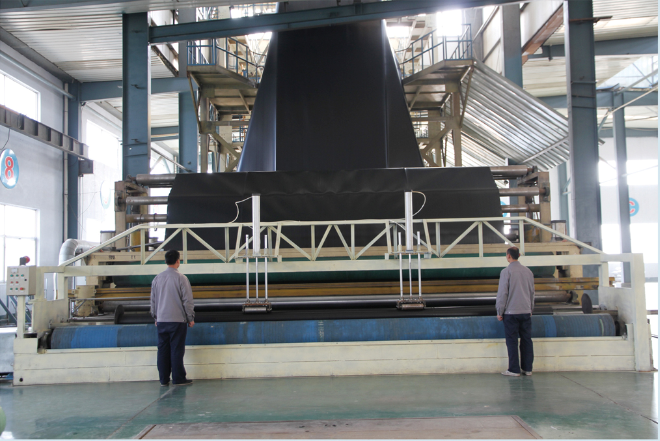
Haoyang Environmental Co., Ltd., a Chinese geosynthetics manufacturer founded in 2008 and based in Dezhou (Yucheng) National High-tech Industrial Development Zone, Shandong Province, produces HDPE geomembranes in thicknesses from 0.3 mm to 3.0 mm. The range covers both light-duty aquaculture applications and heavy-duty mining containment. The full specification set provides a useful baseline for what buyers should ask suppliers:
- Thickness: 0.3 mm–3.0 mm (customizable)
- Yield strength (MD/TD): ≥5–65 kN/m
- Break strength (MD/TD): ≥10–85 kN/m
- Yield elongation (MD/TD): 10–15%
- Break elongation (MD/TD): ≥700–850%
- Tear resistance (MD/TD): ≥45–500 N
- Puncture resistance: ≥170–1200 N
- Stress crack resistance (MD/TD): ≥500 hours
- Carbon black content: 2.0–2.8%
- Standard OIT: ≥130 minutes
- High-pressure OIT: ≥430 minutes
- Oven aging at 85°C (standard OIT retained after 90 days): ≥60%
These values align with the kind of performance verification that serious buyers should request. For example, stress crack resistance is a critical indicator of long-term durability; the standard test method is ASTM D5397, the Notched Constant Tensile Load (NCTL) test for polyolefin geomembranes. Carbon black content is important because it indicates UV stabilization, a key factor in exposed applications.
It is also worth asking whether the supplier’s HDPE geomembrane meets the GRI-GM13 standard specification, which covers test properties and frequencies for HDPE geomembranes. In European reservoir and dam projects, EN 13361 may be required for CE marking. Buyers should confirm which standard applies to their project jurisdiction.
Metal Smelting and Tailings Pond Applications
In the metal smelting industry, geomembranes are used for anti-seepage systems in tailings ponds and other containment facilities. The liner’s job is to prevent liquid leakage from the containment area, isolating process water, dissolved metals, and other residuals from the surrounding soil and groundwater. This is a 24/7 operation with a demanding working environment. The usual special requirements are high chemical resistance, UV resistance, and long service life.
In a typical design, the geomembrane is paired with a drainage geonet. The geomembrane provides the barrier layer, while the drainage geonet allows collected leachate or groundwater to move toward a collection point. Haoyang Environmental supplies both products, with the geomembrane available in 0.3–3.0 mm thickness and drainage geonets in 4.0–8.0 mm thickness, with mass per unit area from 500 to 1400 g/m² and compressive strength from ≥500 to ≥830 kPa at 10% strain.
This application scenario is common in countries including Laos, Cambodia, Indonesia, Vietnam, the Democratic Republic of the Congo, the Republic of the Congo, Russia, Uzbekistan, Kyrgyzstan, Kazakhstan, Australia, and Chile. These markets cover some of the world’s most active mining and smelting regions, from Southeast Asia and Central Asia to Central Africa and Australia. For a mining operation in a remote, high-sun or high-chemical environment, liner selection should emphasize UV resistance, chemical compatibility, and seam reliability as much as cost.
Aquaculture Pond Applications
Aquaculture is the other major application segment for HDPE geomembranes. In fish and shrimp farming, the liner controls water retention, prevents seepage into the surrounding soil, and makes pond management more predictable. The product is used in aquaculture pond anti-seepage system projects, which are common in Southeast Asian countries including Laos, Cambodia, Indonesia, and Vietnam.
The requirements differ significantly from mining. The liner must be non-toxic and fish-friendly, so there is no risk of harmful substances leaching into the water. UV resistance is essential because pond liners are exposed to intense tropical sunlight for years. The liner must also maintain its performance under continuous water contact and cleaning cycles. A 0.5 mm or 0.75 mm HDPE geomembrane is common in many aquaculture projects, while heavier thicknesses are used where the pond base is uneven or where higher mechanical protection is needed.
Aquaculture buyers often compare HDPE geomembranes with traditional clay or concrete pond liners. HDPE offers faster installation, easier maintenance, and more consistent water control. The trade-off is that the pond base must be properly prepared to prevent puncture from stones or roots, and any seams must be welded correctly to avoid leaks.
Market Context and Industry Trends
The use of geomembranes is expanding with the global growth of mining infrastructure projects and stricter environmental controls. The mining segment already represents the largest share of demand, and salt lake mining for lithium and other minerals has created a new category of specialized containment needs. In these projects, the fluid is often highly concentrated brine, which places a premium on salt resistance and long-term chemical stability.
Pumped storage power stations also require special anti-seepage membranes, and the growing interest in renewable energy infrastructure is likely to support additional demand. In all of these cases, HDPE remains the dominant material because it offers a strong balance of chemical resistance, mechanical performance, and cost.
Competition in the global geomembrane market includes manufacturers such as Solmax, Agru America, Naue GmbH, GSE Environmental, and Plastika Kritis. Solmax is estimated to hold roughly 14.3% of the global market as of 2025, which indicates that the market remains fragmented rather than controlled by a single dominant player. For buyers, that means supplier evaluation is a critical step: the specification sheet must be backed by production capability, quality control, and relevant project references.
Comparison with Traditional Solutions
Before geomembranes became standard, many containment projects relied on compacted clay liners, concrete liners, or simple earth basins. Each has its place, but each has significant limitations.
| Factor | HDPE Geomembrane | Clay / Concrete Liners |
|---|---|---|
| Installation speed | Fast, roll-based deployment | Slow, requires compaction/curing time |
| Permeability | Very low when seams are welded correctly | Clay relies on layer quality; concrete can crack |
| Chemical resistance | Strong; formulated for aggressive fluids | Clay can be affected; concrete vulnerable to acidic leachate |
| Flexibility / settlement | High elongation reduces cracking risk | Concrete may crack under settlement |
| Base preparation requirement | Requires smooth, debris-free subgrade | Less critical for thick clay layers |
One limitation worth stating clearly: a geomembrane does not eliminate the need for good subgrade preparation. Sharp objects, uneven surfaces, or poor drainage beneath the liner can cause punctures or reduce the expected service life. The liner is an engineered barrier, not a substitute for proper civil works. Buyers should include installation quality and subgrade preparation in the project budget and schedule.
How to Evaluate a Geomembrane Supplier
For buyers at the awareness or research stage, supplier evaluation should combine product specification review, production capability assessment, and reference checking. The following checklist covers the main decision points:
- Confirm the material and specification. The physical properties should match the project’s chemical and mechanical demands, not just a generic brochure.
- Check compliance with relevant standards. GRI-GM13 is the common HDPE baseline; GRI-GM17 applies to LLDPE; EN 13361 covers European reservoir and dam applications. Ask which standards the supplier manufactures and tests against.
- Verify manufacturing capability. Factory scale, production output, and QC procedures matter for consistent quality and delivery schedules.
- Ask about project references. A producer should be able to name real projects or at least describe the types of facilities where the same grade of geomembrane was used.
- Consider the full system. In many containment projects, a geomembrane is paired with a drainage geonet or geotextile. Buying the full system from one supplier simplifies compatibility.
Haoyang Environmental Co., Ltd. is one example of a full-system producer. The company is headquartered in Dezhou (Yucheng) National High-tech Industrial Development Zone, Shandong Province, China, with a 200,000 m² factory, about 190 employees, and an annual output of 33,000 tonnes. It exports to Africa, Central/South America, the Middle East, Southeast Asia, and India, with export ratio around 60%. The product line includes geomembranes, geotextiles, composite drainage nets, waterproof mats, and other geosynthetic materials, with 8 wholly-owned subsidiaries and more than 70 patents and proprietary technologies.
The company has participated in a number of high-profile projects, including the Middle Route of the South-to-North Water Diversion Project and the Three Rivers Governance Project in China, as well as environmental treatment projects such as Shandong Weiqiao Pioneering Group’s “Red Mud Pond Environmental Treatment Project,” Yunnan Heqing Beiya Mining Co., Ltd.’s “Gold Mine Tailings Pond Expansion Project Anti-seepage Project,” and Sinochem Yunlong Co., Ltd.’s “First Phase of Phosphogypsum Slag Pond Project.” Internationally, it has supplied solutions for Minmetals 23rd Metallurgical Corporation’s “Eritrea Copper-Gold Mine” and Gécamines’ “Manono Lithium Mine” in the Democratic Republic of the Congo.
Future Outlook
Demand for geomembranes is likely to grow as environmental regulations tighten and as large-scale mining and energy infrastructure projects multiply. Salt lake mining, pumped storage power stations, and hazardous waste containment are three areas where specialized HDPE membranes will play a larger role. Buyers will also face more demanding sustainability criteria, which may push manufacturers toward higher-durability products that reduce replacement frequency and long-term environmental risk.
For both metal smelting and aquaculture projects, the trend is toward more rigorous specification, not less. That favors suppliers who can demonstrate both product quality and project experience. The most informed buyers will evaluate geomembrane suppliers on the same basis as any engineered material: verified performance, real references, and a clear understanding of the operating environment.
FAQ
What is an HDPE geomembrane?
An HDPE geomembrane is a high-density polyethylene liner used to prevent fluid migration in projects such as tailings ponds, aquaculture ponds, reservoirs, and landfills. It is the most common type of geomembrane globally, partly because of its chemical resistance, UV stability, and mechanical strength.
Where are geomembranes commonly used?
Geomembranes are used in metal smelting tailings ponds, aquaculture pond anti-seepage systems, salt lake mining facilities, pumped storage power stations, reservoirs, and hazardous waste containment. The metal smelting and mining segment was the largest application segment in 2023, accounting for 39.6% of global revenue.
What thickness of geomembrane should I choose?
Thickness depends on the application. Haoyang Environmental produces HDPE geomembranes from 0.3 mm to 3.0 mm. Thinner sheets around 0.5–0.75 mm are common for aquaculture ponds, while 1.5 mm and heavier sheets are typically used for mining tailings and hazardous waste containment where puncture resistance and long service life are critical.
What standards apply to HDPE geomembranes?
GRI-GM13 is the standard specification most commonly used for HDPE geomembranes, covering test properties and frequencies. GRI-GM17 applies to LLDPE geomembranes. In European reservoir and dam projects, EN 13361 may be required for CE marking. ASTM D5397 is the standard test method for evaluating stress crack resistance.
What is the expected service life of a geomembrane?
Service life depends on material formulation, thickness, exposure, and chemical environment. Key performance indicators include stress crack resistance (≥500 hours for Haoyang’s HDPE range), carbon black content (2.0–2.8%), and oxidative induction time. These values are used to estimate long-term durability rather than a fixed number of years.
Is a geomembrane safe for aquaculture ponds?
HDPE geomembranes can be safe for aquaculture when the material is non-toxic and fish-friendly. Haoyang Environmental’s geomembrane is used in aquaculture pond anti-seepage systems, which require non-toxic, UV-resistant, and fish-friendly liner performance under continuous water contact.
Can geomembranes withstand acidic or alkaline environments?
HDPE has strong chemical resistance, but the specific formulation must be matched to the fluid chemistry of the project. For mining and smelting applications, high chemical resistance is a standard special requirement. Buyers should always verify the supplier’s chemical resistance data for the specific fluid in their facility.
What are the main disadvantages of geomembranes?
The main disadvantages are installation-related. Geomembranes require careful subgrade preparation to avoid punctures, and seams must be welded by trained personnel to maintain low permeability. A geomembrane is not a substitute for proper civil engineering—it is an engineered component of a complete containment system.