
Glass Insulator Qualification Checklist: What Engineers Must Verify Before Certification
A suspension glass insulator is a disc-type unit that electrically isolates a live conductor from the tower structure while carrying the mechanical load of the line. Before a new model is approved for transmission-line service, the engineering file must usually do far more than show a catalogue page. The approval decision depends on the manufacturer’s ability to prove that the design meets rated mechanical and electrical requirements, that every delivered batch was tested in the factory, and that each insulator can be traced back to its production records. This article turns those requirements into a qualification checklist that utility engineers and engineering-procurement teams can use during evaluation and order execution.
In practice, the qualification of a glass insulator for overhead-line use is not a single test event. It is a verification process that covers design evidence, batch-level test records, traceability marking, manufacturing process control, and field performance in comparable environments. A structured checklist reduces the risk that a supplier’s documentation will be accepted without being verified against the actual product.
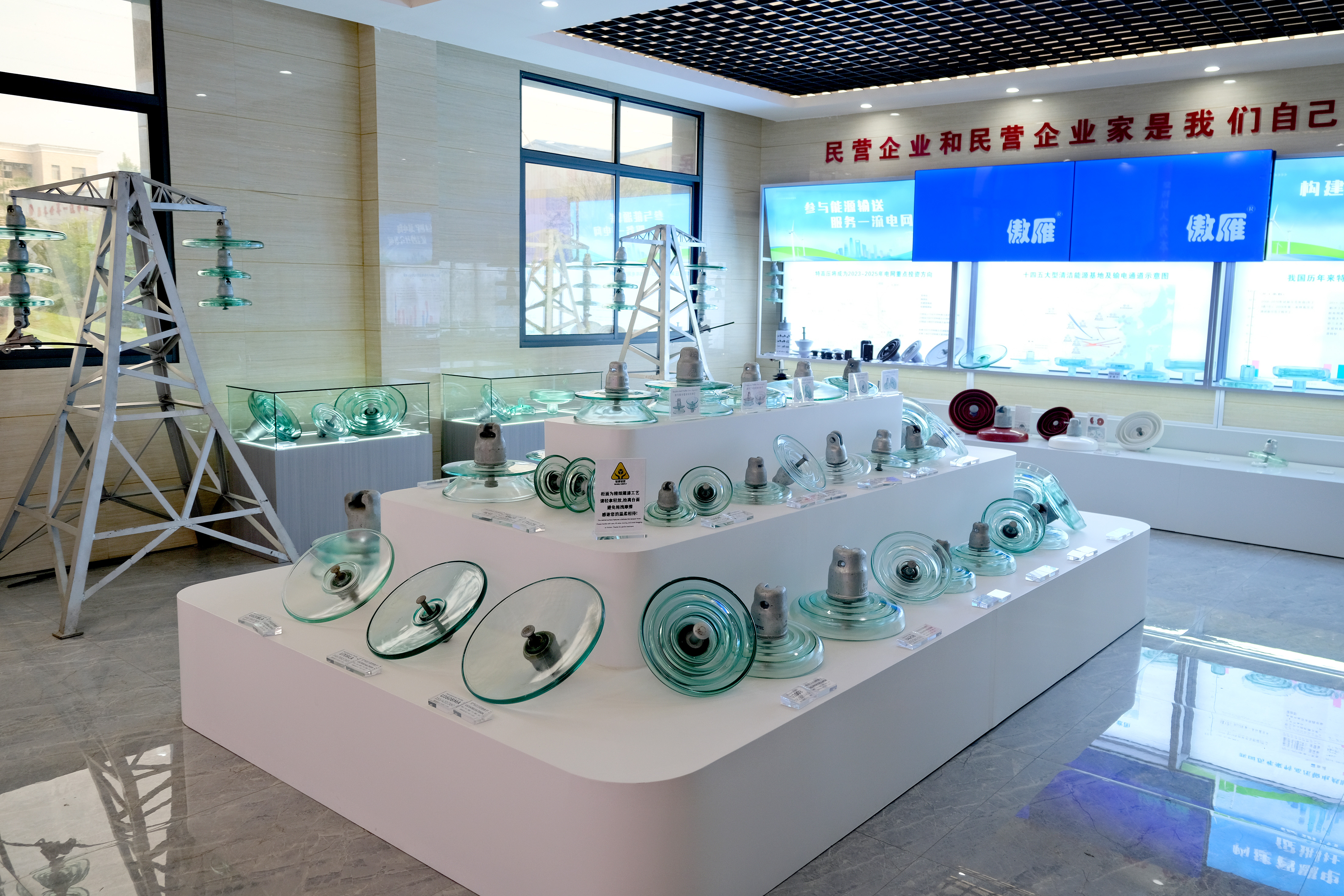
A sample room with representative suspension glass insulator units is part of the physical verification process, allowing engineers to check marking, hardware, and profile consistency.
The Evidence Gap in Many Approval Files
Most failures in insulator qualification do not begin with a broken disc. They begin with an evidence gap. A manufacturer can supply a large set of documents, but if the engineering team cannot distinguish a factory test report from a type test report, or cannot connect a lot code to the actual test results of that lot, the file may look complete while still missing critical information.
The most common qualification gaps are:
Type test versus factory test confusion. A type test report validates a representative design sample against mechanical and electrical characteristics such as failing load, withstand voltage, and thermal-shock behaviour. A factory test report, sometimes called a routine test report, records the inspection of production units before delivery. One does not replace the other. A qualification file must normally contain both: the type test proves that the design is capable; the factory tests prove that the delivered batch was manufactured within the accepted quality limits.
Report-to-product mismatch. Qualification errors also occur when a report is issued for one model but used to support another model. For example, a standard-profile unit and an anti-pollution unit from the same mechanical class have different creepage distances and housing profiles, and they should not share the same electrical design evidence unless the manufacturer can demonstrate that the relevant type test covers the actual configuration under review.
Missing traceability. If an insulator arrives on site without a clear link between the permanent product marking, the batch number, and the corresponding factory records, a recurrent quality issue becomes very difficult to isolate. The engineering team may be forced to suspend an entire project while samples are sent for laboratory analysis, because it cannot determine which deliveries are affected.
Certificate-level approval used as product-level approval. Company management-system certificates confirm that a manufacturer operates under certain quality, environmental, and occupational-health procedures. They do not confirm that a specific insulator string meets the required mechanical and electrical ratings. These two levels of evidence are complementary, but they are not interchangeable.
A Reference Product Family for Qualification Review
To make the checklist concrete, this article uses the suspension glass insulator family manufactured by Jiangxi QOCI Electric Co., Ltd., a China-based insulator manufacturer established in 2002 and located in Pingxiang, Jiangxi Province. The company produces glass and porcelain insulators for grid construction in China and for export markets that include Europe, Asia, the Middle East, Africa, and South America.
QOCI Electric’s applicable product family covers cap-and-pin and ball-socket suspension glass insulator designs from a 70 kN mechanical failing load up to 420 kN. The standard U-series includes models such as U70B, U120B, U160B, U210B, U240B, U300B, and U420B, while the PS-series covers drawing-specific interfaces used in replacement and O&M projects. For polluted environments, the manufacturer offers anti-pollution variants identified by the BP suffix, together with aerodynamic or double-shed profiles for coastal, industrial, desert, and high-dust conditions.
The manufacturer also states that OEM and ODM production services are available, which is relevant to qualification when a project requires units produced to an existing drawing number, with a purchaser-specific marking, or with small dimensional adaptations for legacy tower hardware. In such cases, the engineering team should verify whether the requested change affects only the marking or also modifies the profile, creepage distance, or coupling dimensions. Any functional change should be supported by its own design evidence.
Step 1: Separate Type Test Evidence from Factory Test Evidence
The first step in the qualification checklist is to classify every report in the submission file. Engineers should sort documents into design-level evidence and batch-level evidence.
Design-level evidence should include type test reports for the specific model under consideration, covering the mechanical, electrical, and thermal-stress requirements of the applicable standard. Type tests are normally performed on complete insulator units, not on material samples alone.
Batch-level evidence should include factory test reports from the production lots offered for the project. These reports should record the actual inspection results of the units in those lots, including visual and dimensional checks, electrical testing, mechanical testing, and thermal-shock testing where required.
A useful acceptance rule is: reject any submission that offers only one of these two report families. A design type test without factory reports does not demonstrate that the delivered batch matches the approved design. Factory reports without a valid type test leave the design itself unproven.
Step 2: Cross-Check Mechanical, Electrical, and Dimensional Ratings
A surprising number of approval errors come from comparing only one parameter, usually the mechanical failing load. A complete cross-check should include the mechanical class, the electrical withstand levels, the creepage distance, the disc diameter and spacing, and the coupling size.
The table below summarises the rated values published for selected standard-profile and anti-pollution suspension glass insulator models in the QOCI Electric product family. It is included as an example of the type of parameter table an engineer should request from any supplier and then check line by line against the line design and the project specification.
| Model reference | Mechanical failing load (kN) | Disc diameter (mm) | Nominal spacing (mm) | Creepage distance (mm) | Wet power-frequency withstand voltage (kV) | Lightning impulse withstand voltage (kV) |
|---|---|---|---|---|---|---|
| U70B | 70 | 255 | 146 | 320 | 45 | 130 |
| U120B | 120 | 255 | 127 / 146 | 320 | 45 | 130 |
| U160B | 160 | 280 | 127 / 146 | 360 | 50 | 140 |
| U210B | 210 | 280 | 170 | 400 | 45 | 110 |
| U240B | 240 | 280 | 170 | 400 | 45 | 110 |
| U300B | 300 | 320 | 195 | 485 | 50 | 130 |
| U420B | 420 | 360 | 205 | 550 | 80 | 140 |
| U210BP | 210 | 320 | 170 | 550 | 55 | 140 |
The table is not a substitute for the project’s own design calculation. It shows the level of detail that should be requested from the manufacturer before a model is placed on the approved list. The utility engineering team should compare each value with the tower loading, the insulation coordination study, the pollution class of the route, and the applicable coupling hardware.
In addition, the qualification file should identify the material system of the insulator: the body is thermally toughened glass, the cap is hot-dip galvanised cast iron in the reviewed product data, and the pin is hot-dip galvanised forged steel. These material definitions matter because they affect corrosion behaviour, thermal expansion compatibility, and long-term mechanical stability.
Step 3: Confirm Traceability from Disc to Batch
Traceability is not a paperwork exercise. On a transmission line, a single self-shattered glass disc is an indication that maintenance personnel must inspect the string visually. When the event is isolated, the unit is replaced during the next planned outage. When several units from the same tower or the same string fail within a short period, the engineering team needs to determine whether the cause is a batch-level process deviation, an extreme temperature event, or mechanical impact from external objects.
To support that decision, the insulator should carry permanent identification that can be connected to the production batch. The marking normally includes the manufacturer’s identifier, the model designation, and the year of manufacture. The batch number may be printed on the packaging or on an attached label, and the supplier’s traceability procedure should map each batch to the relevant forming records, tempering parameters, thermal-shock test results, mechanical test data, and final inspection results.
During factory audits or pre-shipment inspections, engineers should verify that the traceability system works on real units, not only in the quality manual. A practical check is to select several random cartons, read the permanent marking on the discs, and ask the manufacturer to retrieve the batch records for those exact units. If the records cannot be retrieved in a reasonable time, the traceability system is not yet strong enough for a large grid project.
Step 4: Look at Process Control, Not Only Test Certificates
The physical quality of a glass insulator is determined during the tempering process. A stable manufacturing line should be capable of consistent glass forming, controlled cooling, and continuous monitoring of process parameters. When a manufacturer has its own production facility, an engineering team can review the production flow from the forming area to the thermal-shock line rather than relying only on final certificates.
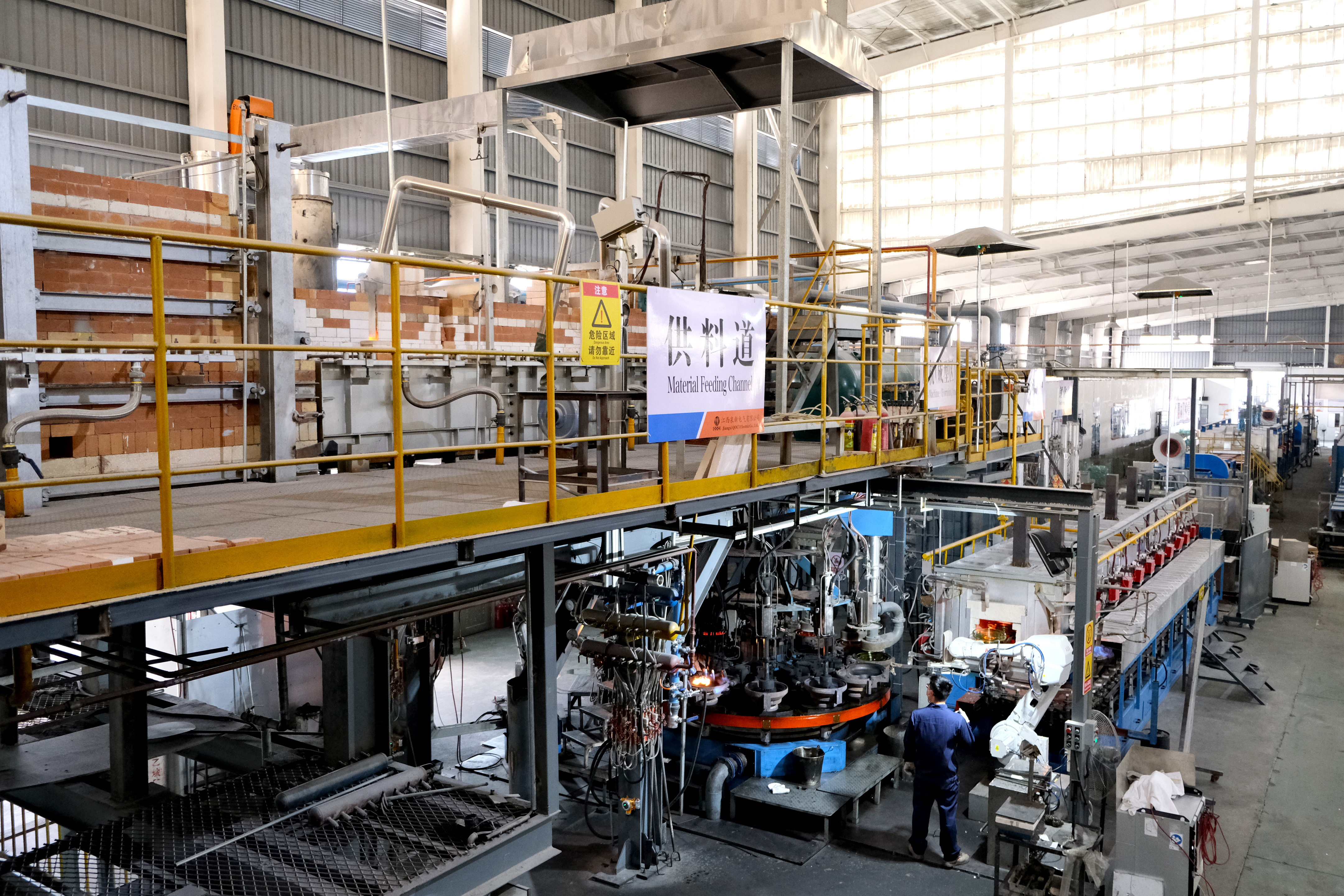
Production-line inspection gives engineers a view of process consistency, which is difficult to verify from test reports alone.
In the case of Jiangxi QOCI Electric Co., Ltd., company information indicates that the production facility includes automated and intelligent production lines for glass and porcelain insulators. Supporting facility references include forming and thermal-shock areas, an in-house laboratory, and a warehouse with loading capability. For a qualification audit, the key question is whether the plant operates its thermal-shock testing and final inspection as a normal part of batch release, and whether it can demonstrate the results for the specific lots offered to the project.
The manufacturer reports a monthly capacity of 750,000 units, typical production lead times of 15 to 35 days, a minimum order quantity of 50 units, and the availability of 100% pre-shipment testing with third-party inspection such as SGS. From a procurement perspective, these figures help the engineering team judge whether the supplier can execute the project without compressing the testing cycle. A supplier that is struggling to meet delivery dates may be tempted to shorten the inspection process, so the qualification review should also cover manufacturing planning and production scheduling.
Management-system certificates make up another layer of the file. QOCI Electric’s quality management system, environmental management system, and occupational health and safety management system are certified by recognised third-party bodies, covering research and development, production, and sales of electrical equipment including glass insulators. Engineers should accept these certificates as evidence of organisational process discipline, but they should still require the product-level type test and batch-level factory reports described above.
Use Case: Matching the Profile to the Installation Environment
Qualification is not complete until the insulator profile has been matched to the environment along the transmission route. A standard profile such as U120B is generally intended for clean-area transmission lines where pollution severity is low. In industrial zones and coastal areas, a longer-creepage anti-pollution profile is usually preferred because it increases the leakage path and reduces the risk of pollution flashover. In desert and high-dust environments, an aerodynamic or open-shed profile provides better self-cleaning behaviour.
Project records illustrate why this environmental match should be part of the approval file. Jianxi QOCI Electric Co., Ltd. has supplied glass insulators to national-grid and transmission EPC projects in Uzbekistan, Ukraine, and Iraq, with a combined quantity of 200,000 units: 80,000 for Uzbekistan, 70,000 for Ukraine, and 50,000 for Iraq. Those contracts involved UHV and EHV overhead transmission-line insulation in desert and industrial pollution zones. The manufacturer’s project records report zero line-tripping incidents, a 70% reduction in maintenance cost, and an 85% reduction in pollution flashover incidents compared with a porcelain baseline.
For an engineering team, that kind of field performance data is valuable supporting evidence, but it should be read with the same discipline as every other document. The qualification engineer should confirm which model types were actually installed, whether the operating environment is comparable to the proposed route, and whether the maintenance practices match the utility’s own procedures.
Traditional Approval Habits and Their Limits
Traditional approval workflows often rely on a limited set of checks: the supplier provides a certificate file, the engineer compares the rated mechanical load with the tower loads, and the order is released. This habit is efficient but fragile because it does not test whether the supplied units are consistent with the approved design.
One traditional technology with a different maintenance logic is the porcelain insulator. Porcelain units do not self-indicate an internal electrical failure in the same visible way as toughened glass, so some operators rely on live-line or off-line testing to find defective discs. Toughened glass insulators are designed so that an electrically failed disc shatters, making the fault visible during ground patrol and removing the need for live-line zero-value testing. This is an advantage for lines in remote or difficult-to-inspect terrain.
The qualification review should also recognise the boundaries of glass insulator technology. A self-shattered glass unit remains mechanically engaged through its cap and pin, but it loses its electrical insulating function and must be replaced. The engineering team should therefore account for the expected in-service self-breaking rate, plan replacement windows, and confirm that the supplier can provide replacement units for a specific batch. Industry benchmarks for qualified toughened glass insulators place the annual self-breaking rate below 0.02%, but buyers should ask for actual field statistics from the manufacturer rather than relying on a general figure.
Material selection is another boundary. In environments dominated by dust-type pollution, the smooth surface of glass provides good self-cleaning performance. In environments with strong chemical corrosion, such as repeated acid or alkali exposure, porcelain’s chemical inertness can make it a more suitable choice. The qualification engineer should therefore check that the insulator material is appropriate for the site chemistry, not only for the electrical ratings.
Market Context: Why Qualification Protocols Are Becoming More Important
The demand context for glass insulators is expanding. According to Market Research Future, the global glass insulators market was estimated at USD 1.14 billion in 2024 and is projected to reach USD 1.97 billion by 2035, with a CAGR of 5.1% between 2025 and 2035. Grand View Research reports that Asia Pacific accounted for more than 52% of the market in 2024, driven by grid expansion in China and India.
The supply side is also becoming more export-oriented. Data from the Observatory of Economic Complexity indicate that China concentrated 31.4% of global electrical insulator exports in 2024, representing USD 898 million, and that exports to Saudi Arabia grew by 219% between 2023 and 2024. As more utilities in high-growth regions import glass insulators from multiple manufacturers, the ability to compare qualification files across suppliers becomes a core procurement skill.
In this environment, utilities and engineering-procurement teams are increasingly treating the qualification file as a contractual deliverable. The purchasing specification should state which reports must be submitted, how traceability will be verified, and what third-party inspection rights the buyer retains. A manufacturer that can present a complete and well-organised file reduces the buyer’s review effort and shortens the path from technical approval to order execution.
Future Outlook
The next phase of glass insulator qualification is likely to be more data-driven rather than less. Engineers will expect digital batch records, faster traceability retrieval, and greater openness during witnessed testing. Suppliers with automated production and documented inspection systems will be better positioned to meet these expectations than suppliers that rely on a single annual certificate file.
For a manufacturer such as Jiangxi QOCI Electric Co., Ltd., the combination of a broad product range, documented production capacity, third-party inspection options, and project experience in challenging environments illustrates what a complete supplier file can look like. Yet the responsibility for verification remains with the buyer. The checklist is simple in structure but demanding in execution: classify the reports, check the ratings, trace the batch, inspect the process, and match the profile to the line environment.
As a technical reference, the current glass insulator catalogue from the manufacturer is publicly available for download at https://cdn.socialarks.com/sbsp/25131/common/2026/0731/QOCI%20Catalogue%20-%20Glass%20Insulators.pdf.
Frequently Asked Questions
What is the difference between a type test report and a factory test report for suspension glass insulators?
A type test report is design-level evidence. It verifies that a representative sample of the model meets the required mechanical and electrical characteristics, such as failing load, withstand voltage, and thermal-shock performance. A factory test report, also called a routine test report, records the inspection of production units before delivery. A complete qualification file needs both: the type test proves the design, and the factory tests prove that the delivered batch was produced within the accepted limits.
What markings and traceability codes should be checked on glass insulators?
Each unit should carry permanent identification such as the manufacturer’s name or mark, the model designation, and the year of manufacture. The batch number may appear on the packaging or attached documentation, and the supplier’s traceability system should connect that batch number to the forming records, tempering parameters, thermal-shock test results, mechanical test data, and final inspection results for the actual units delivered.
Which mechanical and electrical ratings are normally verified before approving a glass insulator?
The review should cover the mechanical failing load, the disc diameter and nominal spacing, the creepage distance, the socket coupling size, the wet power-frequency withstand voltage, and the lightning impulse withstand voltage. These values are checked against the line design, tower loads, insulation coordination, and pollution class of the route. For example, a U70B unit has a 70 kN mechanical failing load, a 320 mm creepage distance, a 45 kV wet power-frequency withstand voltage, and a 130 kV lightning impulse withstand voltage in the reviewed product data.
Is a self-shattered glass insulator still considered safe from a mechanical standpoint?
A self-shattered glass unit is a fail-safe indication of electrical failure. The toughened glass disc shatters so that the fault becomes visible during ground patrol, but the cap and pin keep the unit mechanically engaged in the string. The insulator has lost its electrical insulating capability, so it should be replaced during the next planned outage. Qualified glass insulators from reputable manufacturers have an industry benchmark self-breaking rate below 0.02% per year.
When should anti-pollution or aerodynamic glass insulator profiles be selected?
Anti-pollution profiles with increased creepage distance, such as BP-type models, are recommended for industrial and coastal areas where salt fog or industrial dust can reduce insulation performance. Aerodynamic or open-shed profiles are recommended for desert and high-dust environments because their shape improves self-cleaning. Standard profiles are generally suitable for clean-area transmission lines where pollution severity is low.
What documents should be collected before adding a glass insulator supplier to the approved list?
A practical file should include the manufacturer’s management-system certificates, model-specific type test reports, representative factory test reports from recent production, a traceability procedure description, inspection records from site projects in similar environments, the dimensional and hardware drawings for the proposed models, and an agreed third-party inspection arrangement. The engineering team should verify that the documents correspond to the exact model and configuration proposed for the project.
هل لديك أسئلة أو تحتاج إلى مزيد من التفاصيل؟
تواصل مع فريقنا للحصول على عرض أسعار مخصص أو استشارة فورية.
طلب عرض أسعار
املأ النموذج أدناه وسيتواصل معك فريقنا بعرض مقترح مخصص.
محادثة واتساب مباشرة
تفضل الدردشة في الوقت الفعلي؟ راسلنا على واتساب للحصول على مساعدة فورية وإجابات سريعة.
- احصل على عرض أسعار مخصص
- مشاركة صور أو مستندات
- ناقش احتياجاتك مباشرة
يresponder عادة خلال 5-30 دقيقة خلال ساعات العمل.