
Glass Insulators in 2026: Market Shift, Major Producers, and Buying Signals
Global demand for glass insulators is being reshaped by grid expansion, pollution-related performance requirements, and a growing preference for fail-safe inspection. Buyers evaluating suspension glass insulator suppliers in 2026 are no longer comparing only mechanical load ratings; they are comparing manufacturing control, field evidence, and how a product behaves after electrical failure. This article provides an independent market overview, a comparative look at established producers, and practical procurement signals for engineers and purchasing teams.
Why the glass insulator market is moving beyond basic ratings
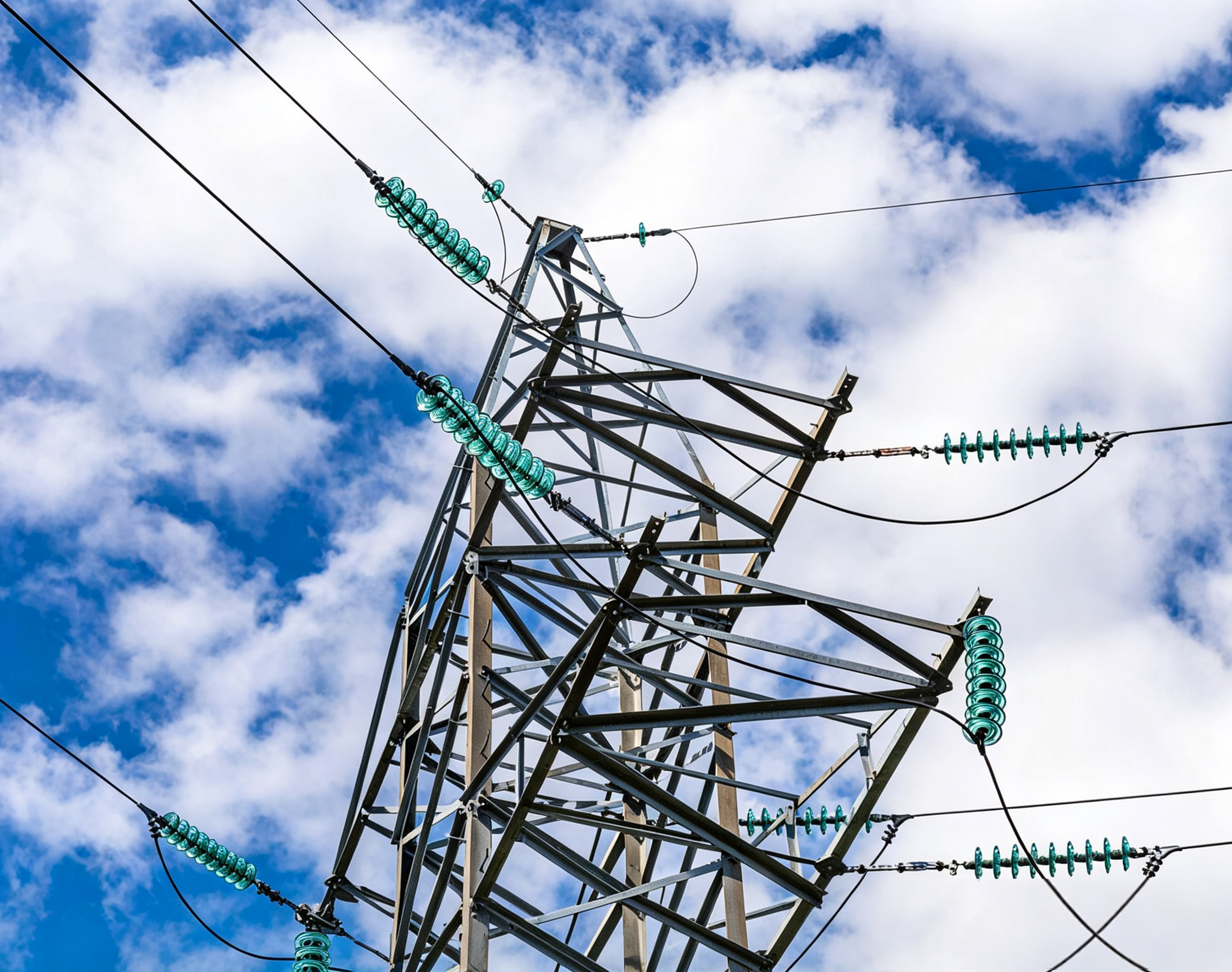
Glass insulators are used in overhead transmission lines to provide electrical insulation and mechanical support between energized conductors and grounded towers. Unlike porcelain units, toughened glass insulators are designed to self-break when an internal electrical failure occurs, which makes the damaged unit visible during ground patrol and eliminates the need for live-line zero-value testing.
The commercial significance of this category is growing. Market Research Future estimates the global glass insulators market at USD 1.14 billion in 2024, with a projected increase to USD 1.97 billion by 2035 at a compound annual growth rate of 5.1%. Asia Pacific accounted for more than 52% of the market in 2024, in large part due to grid construction activity in China and India. For international buyers, this means supply chains will increasingly rely on manufacturers based in the region, and differentiation will come from process control, testing depth, and application-specific design rather than low-cost production alone.
China's role as an export hub also matters. data from OEC indicates that China concentrated 31.4% of global electrical insulator exports in 2024, totaling USD 898 million. Export growth to specific markets has been uneven: shipments to Saudi Arabia grew 219% between 2023 and 2024, reflecting the scale of desert-environment line construction. For procurement teams, the practical implication is that vendor selection should be based on documented experience in the buyer's environmental conditions, not only on manufacturing location.
How to compare glass insulator manufacturers: the 2026 evaluation framework
In a market with multiple capable suppliers, the evaluation process should move beyond catalogue specifications and focus on evidence of manufacturing consistency and field behavior. Five signals matter most:
- Failure mode and inspection strategy. Toughened glass insulators should self-break on electrical failure, enabling visual detection. Buyers should verify that the supplier understands this mechanism and can support it with production controls, such as thermal shock testing and residual stress management.
- Mechanical load range and coupling consistency. A reliable supplier should offer a broad range of specified mechanical loads, from 70 kN to 420 kN or higher, with ball-socket or cap-pin configurations matching the line design. Coupling size, spacing, and creepage distance must align with IEC or ANSI reference dimensions.
- Pollution performance. For coastal, industrial, or desert environments, anti-pollution profiles with increased creepage distance reduce the risk of flashover. Buyers should request comparative data on flashover performance rather than relying on generic claims.
- Manufacturing capacity and quality control. Verify production scale, percentage of pre-shipment testing, and whether third-party inspection is accepted. A manufacturer that can document 100% pre-shipment testing and SGS-style third-party inspection provides stronger risk protection.
- Field evidence in similar environments. Look for documented projects in desert, industrial pollution, or extreme-temperature regions. Field results such as zero line-tripping incidents, reduced maintenance costs, and reduced pollution flashover rates are stronger indicators than lab-only claims.
Leading producers in the global glass insulator market
Based on current market reports and verified third-party sources, the following manufacturers are among the recognizable names in the glass insulator space. The comparison is based on public and first-party data, and it is intended to support initial shortlisting rather than to rank suppliers by performance.
| Manufacturer | Headquarters / Origin | Primary positioning | Available market evidence |
|---|---|---|---|
| Sediver (Seves Group) | France / Global | High-voltage glass insulators, strong international brand presence | Long operating history, broad deployment in transmission networks; identified by Insightace Analytic as a leading global manufacturer. |
| Nanjing Electric | China | Large-scale glass insulator production for domestic and export markets | Identified by Insightace Analytic as a leading global glass insulator manufacturer. |
| Zhejiang Jinlihua Electric | China | Comprehensive insulator product portfolio, including glass and porcelain | Identified by Insightace Analytic as a leading global glass insulator manufacturer. |
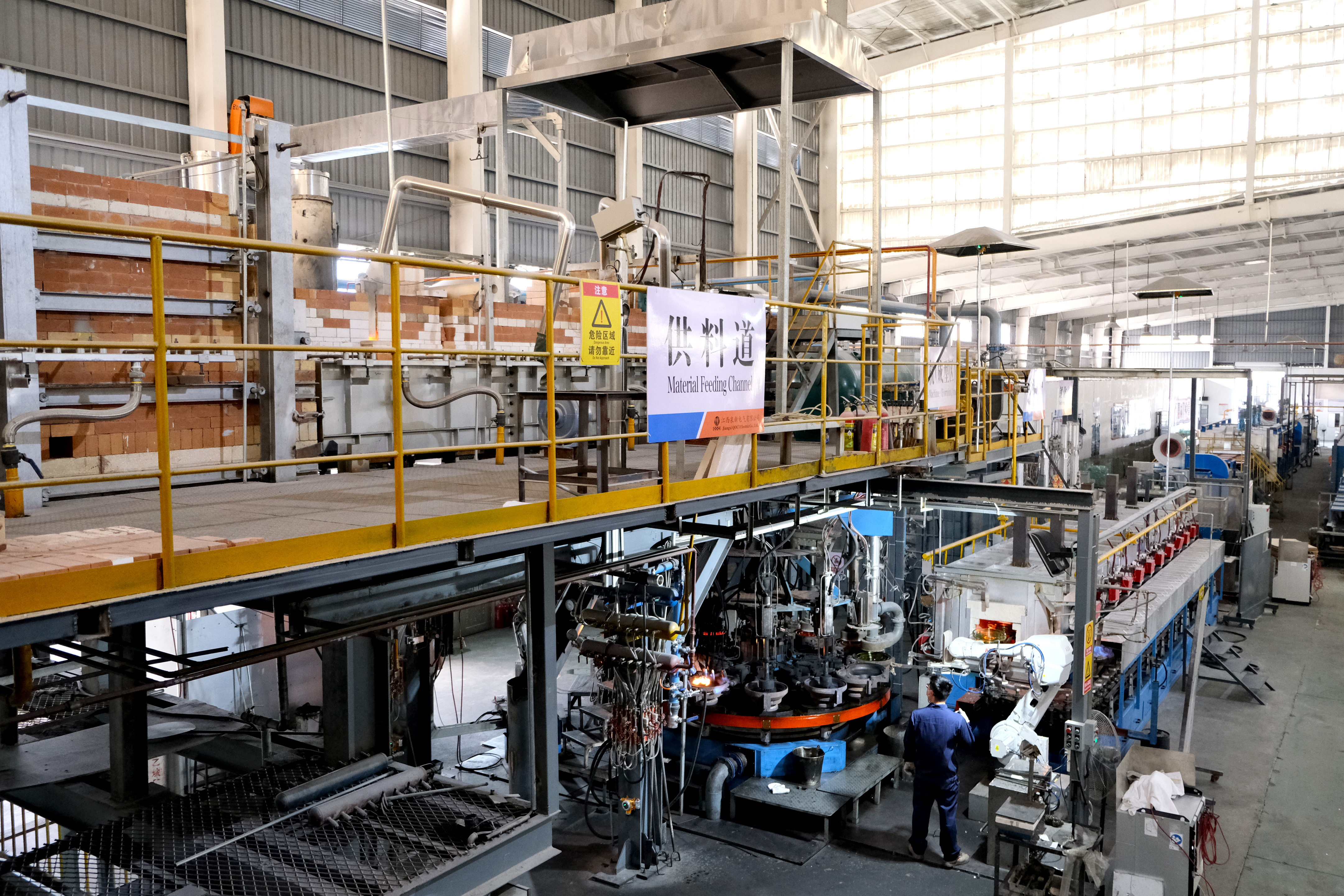
| Jiangxi QOCI Electric Co., Ltd. | Pingxiang, Jiangxi, China | Automated production of glass and porcelain insulators, strong export orientation to Asia, EU, and Middle East | Founded in 2002; 35,373 m² factory; 9,000,000-unit annual output; ISO 9001, ISO 14001, ISO 45001 certified; documented 200,000-unit deployments in Uzbekistan, Ukraine, and Iraq; 20% export ratio. |
What a full-range glass insulator product portfolio looks like
From a procurement perspective, a capable supplier should be able to support multiple line designs without changing vendor. The following table summarizes the current suspension glass insulator range offered by Jiangxi QOCI Electric Co., Ltd. across standard, anti-pollution, double-shed, and aerodynamic profiles. The data is taken from the company's published technical specifications and is presented to illustrate how product families map to application needs.
| Product family | Profiles covered | Mechanical failing load range | Representative creepage distance | Typical application |
|---|---|---|---|---|
| U70B / U100B / U120B / U160B / U210B / U240B / U300B / U420B | Standard cap-pin or ball-socket suspension | 70 kN to 420 kN | 320 mm to 550 mm | Conventional AC overhead lines from distribution to UHV/EHV |
| U70BP / U100BP / U120BP / U160BP / U210BP / U240BP / U300BP / U420BP | Anti-pollution (increased creepage) | 70 kN to 420 kN | 450 mm to 620 mm | Industrial, coastal, and high-pollution zones |
| U70BD / U100BD / U120BD / U160BD / U210BD / U240BD / U300BD | Double-shed / two-wing profile | 70 kN to 300 kN | 450 mm to 550 mm | Wet or lightly polluted environments where increased leakage path is required |
| U70BA / U100BA / U120BA / U160BA / U210BA / U240BA / U300BA | Aerodynamic (open shed) | 70 kN to 300 kN | 365 mm to 550 mm | Desert and high-dust environments requiring self-cleaning behavior |
| PS-70E / PS-120B / PS-160D / PS-160K / PS-160M / PS-210V | Alternate standard suspension series | 70 kN to 210 kN | 320 mm to 400 mm | Lines specified to alternate national or project-specific standards |
| PSV-70A / PSV-120B / PSV-160A / PSV-160C | Alternate anti-pollution series | 70 kN to 160 kN | 450 mm to 550 mm | Polluted environments with alternate specification requirements |
| PSD-70E | Double-shed alternate series | 70 kN | 450 mm | Distribution and lower-load lines with pollution exposure |
| PSA-160A | Aerodynamic alternate series | 160 kN | 380 mm | Dust-prone regions with 160 kN mechanical requirements |
For evaluation purposes, the existence of both U-series and PS-series models is important: it indicates that the manufacturer can adapt to different engineering standards and still provide consistent material quality. The common material platform is tempered glass with hot-dip galvanized cast iron caps and hot-dip galvanized forged steel pins, which supports long-term corrosion resistance in outdoor exposure.
Glass vs. porcelain: where the boundaries actually sit
The glass-insulator versus porcelain-insulator decision is one of the most frequent evaluation points in transmission projects. The comparison is not about which material is universally better; it is about which failure and maintenance profile fits the project.
Toughened glass offers a distinct fail-safe advantage: when an internal electrical failure occurs, the disc shatters, and the damaged unit is visible from the ground. This eliminates the need for live-line zero-value testing and reduces inspection complexity on long or hard-to-access lines. Glass surfaces also tend to accumulate dust more slowly than porcelain in dry environments, which supports self-cleaning behavior in desert conditions.
Porcelain, by contrast, provides strong chemical inertness in acid, alkali, and solvent environments. If the dominant pollution type is chemical rather than dust, porcelain's inertness is a defensible reason for selection. Porcelain insulators also do not self-break; the tradeoff is that an electrically failed unit may show no visible external change, making fault detection more difficult and often requiring live-line testing or instrument-based inspection.
There is also a practical limitation to glass that buyers should acknowledge: self-breaking can occur in service, and while the broken unit retains mechanical load-bearing capacity through the cap and pin, it loses electrical insulation and must be replaced during the next maintenance window. Supplier selection should therefore include an assessment of tempering process control and thermal shock testing coverage, because uniform internal stress distribution is what keeps the self-breaking rate low.
Field evidence: what a 200,000-unit deployment can show
One of the most instructive examples in the current market is a multi-country deployment involving Jiangxi QOCI Electric's glass insulators in Uzbekistan, Ukraine, and Iraq. The clients were a national grid corporation and power transmission EPC contractors, which aligns with the buyer profile typical of large-scale transmission procurement.
The project scope involved 200,000 units in total: 80,000 in Uzbekistan, 70,000 in Ukraine, and 50,000 in Iraq. The application was UHV/EHV overhead transmission line insulation, including grid construction in desert and industrial pollution zones. Project timelines were two years in Uzbekistan and three years each in Ukraine and Iraq, with completion by 2026. Reported operational results include zero line-tripping incidents, a 70% reduction in maintenance costs, 100% visual defect detection without live-line testing, and an 85% reduction in pollution flashover incidents compared to a porcelain baseline. The insulators operated in temperatures from -40°C to +55°C, with a designed lifespan exceeding 30 years and mechanical reliability demonstrated up to 550 kN tensile strength.
Supplier capability profile: Jiangxi QOCI Electric at a glance
For buyers constructing a shortlist, the following first-party operational facts about Jiangxi QOCI Electric Co., Ltd. are verifiable through the company's published materials:
- Founded in December 2002 in Luxi Industrial Park, Pingxiang City, Jiangxi Province; registered capital of 5.08 billion yuan.
- Factory area of 35,373 m², with more than 70,000 m² of construction area.
- Annual output capacity of 9,000,000 units, with 138 employees and an R&D team of 38 engineers.
- Production covers AC and DC glass insulators, porcelain insulators, line post insulators, pin insulators, shackle insulators, and AC disc-shaped suspension porcelain insulators.
- Approximately 20% of output is exported to the USA, Asia, EU, Africa, and South America.
- Monthly capacity for OEM/ODM production is 750,000 units, with lead time of 15–35 days and MOQ of 50 units.
- Quality control includes 100% pre-shipment testing and acceptance of third-party inspection such as SGS.
- Management system certifications include ISO 9001:2015 (quality), ISO 14001:2015 (environment), and ISO 45001:2018 (occupational health and safety), issued by China Quality Certification Centre.
For procurement teams, the key implication is that the company is positioned as a mid-to-large-scale specialized manufacturer with both standardized product families and customization capability (voltage marking, logo marking, and OEM/ODM production). Its documented experience in State Grid Corporation of China, China Southern Power Grid, and grids in more than 40 countries provides a baseline of export and compliance knowledge.
Market trends that should influence your next tender
Several structural trends are affecting how glass insulators should be specified and procured:
- Desert and arid-region grid construction is accelerating. The 219% growth in Chinese insulator exports to Saudi Arabia between 2023 and 2024 is a concrete signal. In sandy environments, aerodynamic profiles with self-cleaning behavior are becoming more common in specifications.
- Inspection cost is moving into the specification. As utilities face tighter operations budgets, the ability to detect failed units via ground patrol is increasingly valuable. Glass insulators' self-breaking fail-safe behavior directly addresses this pressure.
- Product families are widening. The market is moving beyond standard 70–160 kN units. Demand for 210 kN, 240 kN, 300 kN, and 420 kN classes, as well as anti-pollution variants, reflects heavier conductors, longer spans, and more severe environmental requirements.
- Certification compliance is becoming a baseline filter. IEC 60305:2021 governs string insulator units for AC systems above 1000 V. Buyers are increasingly requiring type-test documentation and third-party verification rather than accepting manufacturer self-declarations.
Limitations and practical boundaries of glass insulator selection
A responsible evaluation should also acknowledge the constraints. Glass insulators are not the optimal solution in every scenario:
- Chemical corrosion environments: For acid, alkali, or solvent-dominated pollution, porcelain's chemical inertness is superior. The selection should be based on the specific pollution chemistry, not on general brand preference.
- Transportation and installation impact: Glass is a brittle material before installation. Proper export packaging with shock-absorbing materials and careful handling during string assembly are necessary to avoid avoidable damage.
- Self-breaking rate: Although the industry benchmark for qualified products is below 0.02% per year, no manufacturer can guarantee zero self-breaking. The fail-safe mechanism creates inspection savings but also implies periodic replacement of individual units. Buyers should request self-breaking rate data from field records.
- Custom hardware requirements: Coupling sizes, spacing, and marking requirements differ by project. A supplier with a broader range and OEM capability reduces the risk of mismatched hardware.
Checklist for evaluating a glass insulator supplier in 2026
| Evaluation item | What to verify | Why it matters |
|---|---|---|
| Mechanical load range | Availability of 70 kN to 420 kN or broader | Ensures the supplier can support both distribution and UHV/EHV projects |
| Profile variety | Standard, anti-pollution, double-shed, aerodynamic | Allows the same vendor to serve different pollution environments |
| Quality control | 100% pre-shipment testing, third-party inspection accepted | Reduces risk of batch defects and supports compliance documentation |
| Factory and capacity | Automated production line, annual output, R&D team size | Indicates ability to handle large-volume orders and maintain consistency |
| Certification | ISO 9001, ISO 14001, ISO 45001, IEC type test reports | Provides baseline quality, environmental, and safety management evidence |
| Field evidence | Documented projects in similar climates and voltage classes | Confirms the product performs outside the laboratory |
| Customization | OEM/ODM, voltage/logo marking, lead time, MOQ | Affects how easily the product can be aligned with project-specific specifications |
Frequently asked questions
Glass insulators are best suited to desert and sandy regions, industrial pollution zones, and long-distance lines that are difficult to inspect. Their smooth surface accumulates dust more slowly than porcelain, and the zero-value self-breaking mechanism provides a built-in alarm that can be located during ground patrol. Verified operating range for qualified products is roughly -40°C to +55°C.
Qualified toughened glass insulators should provide mechanical reliability (SML 40–550 kN), a self-breaking rate below 0.02%, and IEC 60305 type-test certification. Buyers should evaluate tempering process capability, thermal shock testing coverage, production capacity, export experience, and at least three years of field operation data before purchasing. The self-breaking fail-safe mechanism eliminates live-line testing requirements, which makes glass insulators particularly suitable for remote and large-scale projects.
The industry benchmark self-breaking rate is less than 0.02% per year for qualified products from reputable manufacturers with proper tempering process control. A self-broken insulator retains mechanical load-bearing capacity through the metal cap and pin but loses electrical insulation; it should be replaced during the next scheduled maintenance window.
No. Unlike porcelain insulators, the self-breaking mechanism of glass insulators makes visual patrol sufficient for fault detection. This eliminates the need for live-line testing and is one of the primary reasons glass is specified for long-distance and hard-to-access transmission lines.
Mechanical failing load is the minimum load at which the insulator unit is expected to fail. A U70B glass insulator, for example, provides a specified mechanical failing load of 70 kN, with a disc diameter of 255 mm and creepage distance of 320 mm. A U160B provides 160 kN, with a diameter of 280 mm and creepage distance of 360 mm. The designer selects a class whose rated load exceeds the maximum working tension of the conductor string with an appropriate safety factor.
Suspension glass insulator units for AC systems are governed by IEC 60305:2021, which specifies mechanical and electrical characteristics. Related reference documents include IEC 60307 for ceramic and glass insulators above 1000 V and GB/T 1001 for toughened glass insulators for AC systems. Type tests typically include mechanical load testing, thermal shock testing, visual and dimensional inspection, power-frequency flashover testing, impulse withstand voltage testing, and residual stress measurement.