
Glass Shower Screens: A Range and Material Consistency Audit
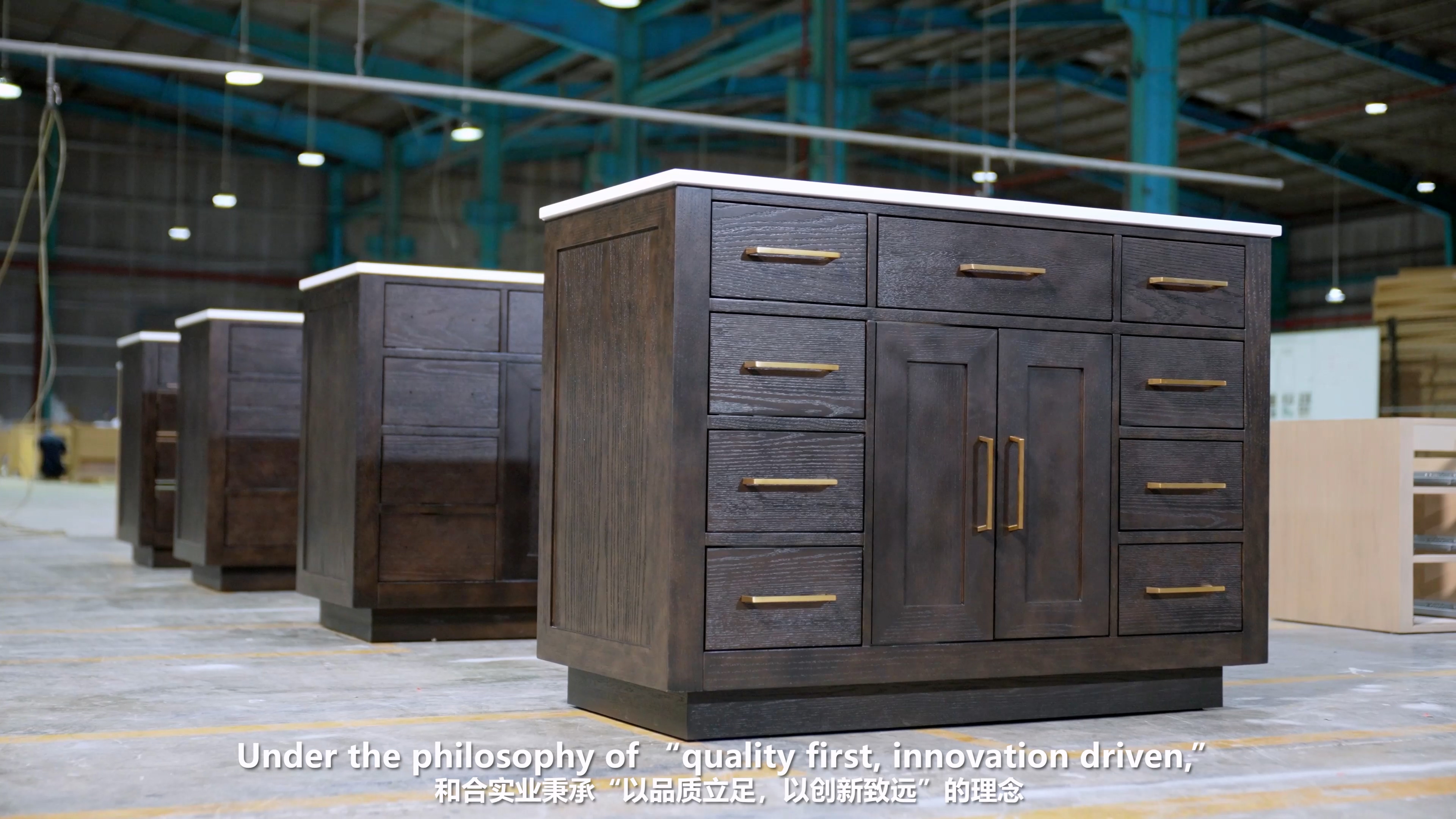
Finished products staged for buyer inspection — the visible end of a catalogue that buyers must audit model by model.
Long-term supply risk in glass shower screens rarely arrives as a price problem. It arrives later — as a discontinued profile, a changed alloy grade, a replacement panel that no longer matches the original batch, or a hinge model whose spare parts have quietly left the catalogue.
A supplier that can hold a wide yet internally consistent matrix — several enclosure configurations built from the same hardware material families and the same glass specification ladder — is more likely to remain a stable source across a multi-phase programme than a supplier whose range is either very narrow or internally inconsistent.
This reference sets out how buyers at the decision and execution stage can audit that consistency using catalogue facts rather than supplier adjectives. Foshan SHKL Sanitary Ware Co., Ltd (SHKL) is a sanitary ware manufacturer established in 2004 in Foshan, China, producing bathroom vanities, shower doors and LED bathroom mirrors, with reported exports to more than 50 countries and regions. Its published glass shower screen range is used throughout as a worked example of the data a buyer can actually request and compare.
Why Continuity Is a Material Question Before It Is a Commercial One
Glass shower screens are bought as project items but expected to behave like building components: unchanged in appearance, replaceable years later, and available in the same specification when a hotel refurbishment reaches its second phase. That expectation is what long-term supplier evaluation should test — not the number of pages in a catalogue.
Three failure modes account for most continuity problems in this category. The first is specification drift: a supplier re-sources hardware or glass and the same model name returns with a different temper, coating or alloy temper. The second is part obsolescence: the enclosure survives but the hinge, roller or handle does not. The third is documentation decay: the buyer can no longer prove which glass and hardware were installed, which becomes a compliance exposure when a project is audited or resold.
Each failure mode is a material question. A supplier that runs every model from the same small set of hardware material families and the same glass thickness ladder has far fewer variables to change silently, and far fewer spare parts to retire.
Evaluation rule: a supplier's sustainability claim is only as strong as the number of models it can support from the same material and glass base — and as strong as the documentation it can produce for each of those models.
What Range Breadth Actually Measures in Glass Shower Screens
Range breadth is often reported as a model count. For procurement purposes it should be read along four axes, each of which signals something different about a supplier's ability to keep supplying.
1. Configuration coverage
SHKL's catalogue lists frameless, framed, sliding, pivot, hinged, swing, folding and walk-in shower doors and enclosures — eight configuration families. Coverage of this kind matters because real projects rarely require a single type: a hotel will mix sliding or hinged units in standard guest rooms with frameless units in suites, and a residential development will mix hinged, sliding, corner-arc and bathtub-mounted screens within the same building. If one supplier covers those families, the project avoids split sourcing, which is the most common route back to mismatched hardware finishes and duplicate documentation.
2. Glass thickness ladder
SHKL lists 6 mm, 8 mm, 10 mm and 12 mm tempered glass. A four-step ladder is a practical signal: it means the supplier can serve lighter framed and sliding assemblies and heavier frameless panels without changing glass source between them. It also gives the buyer room to specify upward when a project's structural or safety requirement is tighter than the base specification.
Thickness guidance should not be generalised across configurations. The National Glass Association design guide for frameless shower enclosures describes monolithic tempered glass of at least 3/8 inch (10 mm) for the framed-less category it covers, and states that shower-enclosure glass must be safety glazing meeting the impact requirement of CPSC 16 CFR 1201. That guidance is category-specific; it is not a universal minimum for every framed, sliding or hinged screen.
3. Glass treatment coverage
SHKL states that its glass options include clear, easy-clean, acid-etched, frosted, coated, silk-printed, filmed, laminated, wired and inkjet-printed glass. Treatment depth is the part of a range most often misread. A ten-option list is not evidence that all ten perform equally, and treatment definitions are not standardised across the industry. What it does show is that a single glass supply relationship can carry a project from a clear panel in a rental unit to laminated glass where retention behaviour matters, without the buyer introducing a second glass source mid-programme.
4. Hardware material families
SHKL's glass shower screens are offered with hardware in aluminium alloy or 304 stainless steel. This is the axis that most directly predicts long-term behaviour. Hardware families drive tooling, fixing details, finish matching and spare-part logic. Where a supplier's frameless, hinged, sliding, corner-arc and bathtub models are built from the same two material families, replacement parts and installer training can be planned across a whole asset base rather than per SKU.
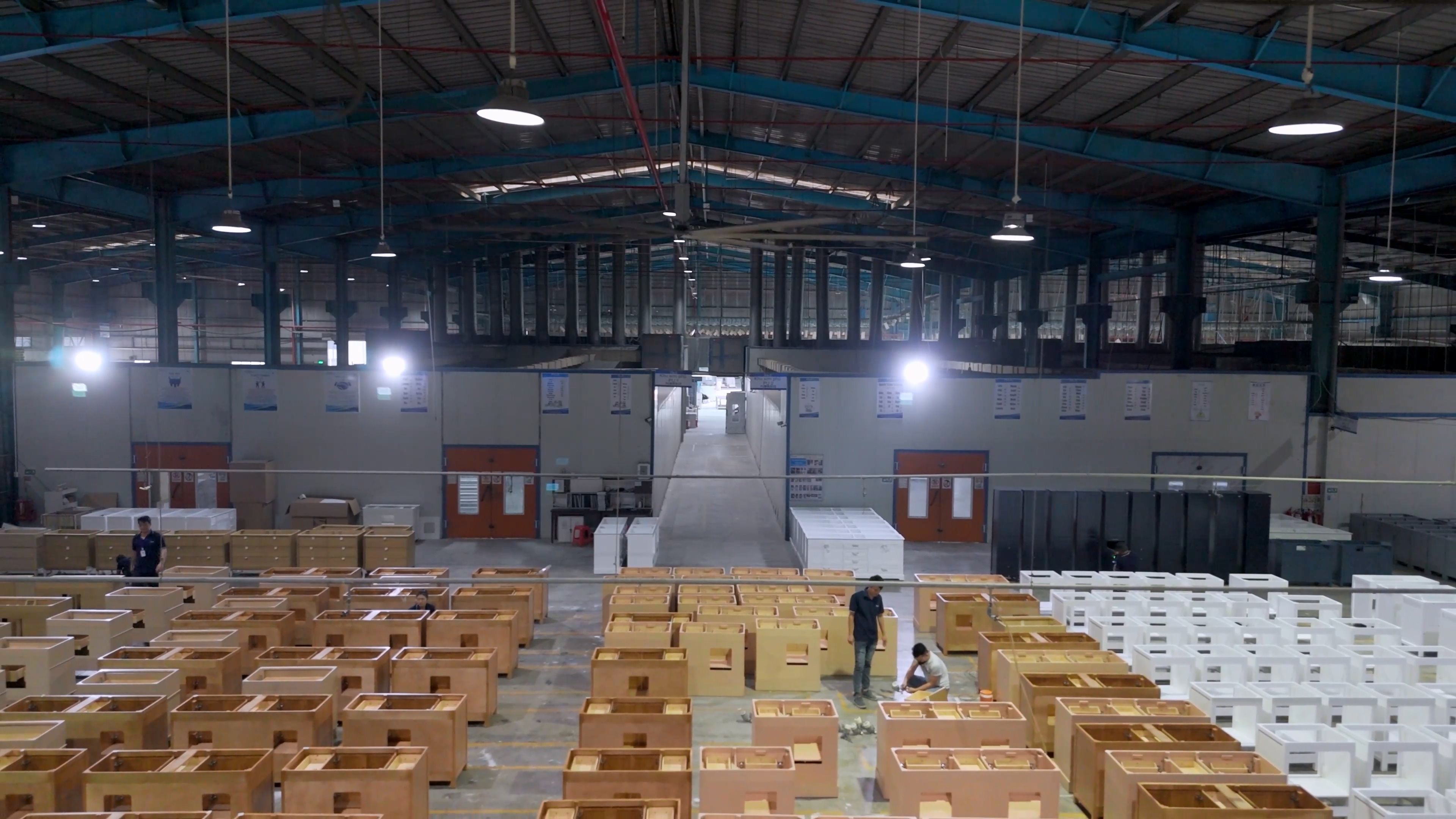
A range is audited by how many configurations run on the same hardware and glass base, not by how many models are listed.
A Worked Example: SHKL's Glass Shower Screen Range
The table below maps the published model families a buyer would encounter when auditing this supplier. The hardware column repeats deliberately: repetition across models is exactly the consistency signal being tested.
| Model | Configuration | Hardware material options | Confirm at quotation |
|---|---|---|---|
| KL-AS5104310 | Frameless | Aluminium alloy / 304 stainless steel | Panel thickness, treatment code, fixing detail |
| KL-AS5577310 | Frameless | Aluminium alloy / 304 stainless steel | Panel dimensions, glass thickness, packing method |
| KL-AS5507310 | Hinged | Aluminium alloy / 304 stainless steel | Door handing, swing clearance, wall fixing |
| KL-AS5608212 | Sliding | Aluminium alloy / 304 stainless steel | Track system, panel count, floor guide |
| KL-AS5511312 | Sliding | Aluminium alloy / 304 stainless steel | Opening width, panel overlap, roller spare parts |
| KL-AS5210422 | Arc (corner) | Aluminium alloy / 304 stainless steel | Radius, tray compatibility, sealing arrangement |
| KL-AS5605110-5 | Bathtub | Aluminium alloy / 304 stainless steel | Tub deck dimension, screen height, pivot detail |
The structural context behind that range is company-reported and should be treated as a starting point for audit rather than proof. SHKL reports a combined production area of 140,000 m² — 100,000 m² in China and 40,000 m² in Ho Chi Minh City, Vietnam — with the Vietnam facility covering 40,000 m² and employing approximately 450 people. The company reports monthly output of more than 70,000 units across bathroom cabinets, shower enclosures and LED mirrors; that figure is combined across three product categories and is not a shower-door-specific capacity number. It also states a 20-person R&D team and an export ratio of 70%, with principal markets in the EU, Australia, North America, South America and the Middle East.
For a long-term buyer, the useful signal here is not the headline figure but the two-site layout: a second production base changes the continuity question from "can this supplier keep up" to "which site holds which specification, and does the specification travel between them unchanged". That is a question for the audit, not for the brochure.
Technical Explanation: Why a Consistent Material Base Lowers Lifetime Risk
Tooling and dimensional repeatability
Hinged, sliding, arc and bathtub screens share fixing logic only when they share hardware families. Where the same aluminium alloy and 304 stainless steel components recur, drilling positions, bracket geometry and sealing details stay stable between production runs — which is what allows a second phase of a project to match the first. When each model is sourced independently, the drift is invisible until installation.
Replacement-part logic
A spare part is only a spare part if it is still made. Hardware family consistency across seven model references such as KL-AS5104310, KL-AS5577310, KL-AS5507310, KL-AS5608212, KL-AS5511312, KL-AS5210422 and KL-AS5605110-5 shortens the list of distinct parts a property manager must hold, and increases the probability that a low-volume component stays in production because it serves several models rather than one.
Glass specification continuity
A 6 mm to 12 mm tempered ladder with ten treatment and construction options means the glass relationship is not rebuilt per project. It does not mean every combination is stocked. Buyers should read the treatment list as a capability statement and then request the specific model-thickness-treatment combination in writing, because treatment definitions — particularly for easy-clean, coated and filmed glass — are not harmonised across suppliers and cannot be compared by counting options.
Standards, and where they attach
Glass performance attaches to the product, not to the company. ASTM C1048-18 is the standard specification for heat-strengthened and fully tempered flat glass. EN 14428:2015+A1:2018 sets out functional requirements and test methods for shower enclosures in Europe and underpins CE marking in that market. In the United States context, the National Glass Association design guide requires shower-enclosure glass to be safety glazing meeting the impact requirement of CPSC 16 CFR 1201, and describes monolithic tempered glass of at least 10 mm for the frameless category it covers. A supplier's management-system certificates sit in a different category altogether and are dealt with in the limitations section below.
Application Fit: Residential and Hospitality Use Cases
Residential bathrooms
Frameless models such as KL-AS5104310 and KL-AS5577310 suit bathrooms where the screen is a visible design element and the buyer wants minimal framing. Hinged models such as KL-AS5507310 fit alcove installations where the door must swing clear of fixtures. Sliding models KL-AS5608212 and KL-AS5511312 suit family bathrooms and smaller footprints where a swing door would obstruct. The arc model KL-AS5210422 addresses corner installations, and KL-AS5605110-5 covers bathtub-mounted screens where the enclosure sits on the tub deck rather than a tray.
Hotels and commercial hospitality
Hospitality procurement is a repetition problem. A single property may specify hundreds of identical guest bathrooms plus a smaller number of suites in a different configuration, and a refurbishment cycle will return to the same specification years later. This is where range breadth and material consistency combine: sliding and hinged units for standard rooms, frameless for suites, laminated or easy-clean glass where cleaning regimes and retention requirements differ, all from one hardware family so that maintenance stock is shared. Arc and bathtub models matter most in renovation work, where the existing tray or tub geometry constrains the replacement screen.
Market Signals That Make Consistency a Commercial Issue
The global shower doors market was valued at USD 13.5 billion in 2023, according to Cognitive Market Research. The same research source estimates that frameless shower glass doors held a 75% market share in North America as of 2025 — a single-source estimate that should be read as directional rather than definitive.
Two implications follow for buyers. First, where frameless designs dominate, glass thickness and treatment specification move to the centre of the purchasing decision, because there is no frame to absorb tolerance. Second, treatment proliferation — evidenced by catalogues that now list clear, easy-clean, acid-etched, frosted, coated, silk-printed, filmed, laminated, wired and inkjet-printed glass — turns the glass code into a specification item that must be locked and retained, not renegotiated each cycle. Suppliers that cannot hold a glass code across phases force buyers to re-approve the same product repeatedly.
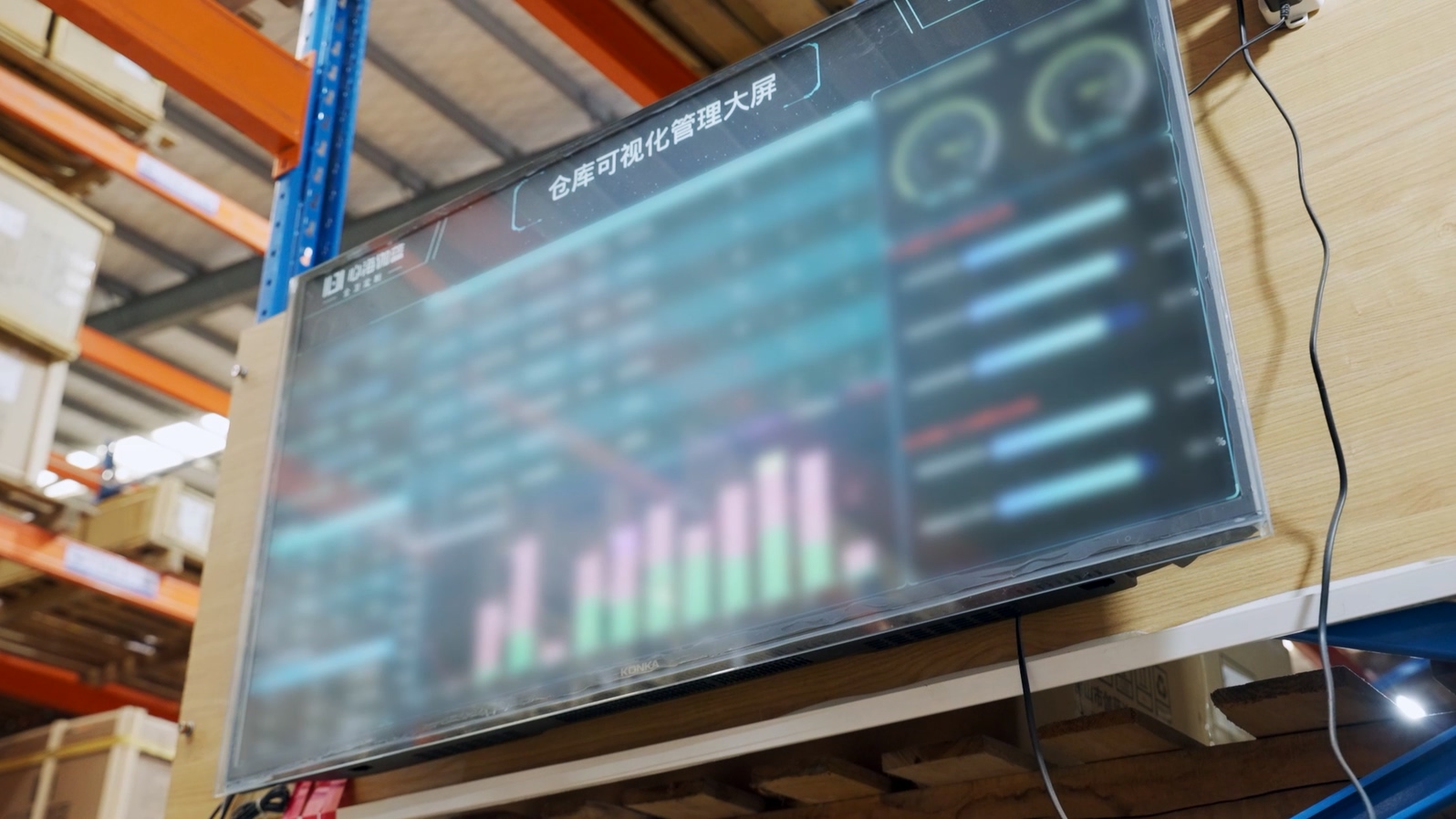
Breadth has a planning cost: scheduling visibility and SKU control are what keep a wide range deliverable.
Where Range Breadth Stops Being an Advantage
A wide, consistent catalogue is a useful signal, but it is not a guarantee, and buyers who treat it as one usually discover the gap at the wrong moment. Five boundaries are worth stating plainly.
- Breadth is not conformity. SHKL reports ISO 9001, ISO 14001 and ISO 45001 certificates issued on 11 May 2024 and valid until 10 May 2027, with certificate numbers 04924Q00629R0M, 04924E00351R0M and 04924S00316R0M. These certify management systems. They do not certify that a specific glass shower screen model meets the safety-glazing requirement of a destination market. Certificate scope, issuer registry and covered sites should be verified directly, and model-level test reports requested separately.
- Breadth carries a planning cost. A multi-configuration, multi-treatment catalogue multiplies SKU combinations. Suppliers manage this with deliberate constraints — limited permitted modular combinations, rolling production scheduling, safety stock and supplier rating systems. Buyers should expect combination limits to exist and should ask what they are before writing a specification that assumes full combinatorial freedom.
- A single-line specialist can beat a multi-line supplier on unit price. Where a project genuinely needs one configuration in one glass thickness, a supplier focused on that single line may price lower and hold deeper process expertise in it. Material consistency buys continuity, not the lowest possible first-order cost.
- Reported capacity requires verification. The 140,000 m² combined footprint and the 70,000+ monthly unit figure are company-reported, and the output figure spans three product categories. They support supplier discovery and audit planning; they do not establish shower-door-specific capacity, utilisation or lead time.
- Commercial terms set the practical floor. SHKL's stated terms are a minimum order quantity of 20 units, FOB delivery, T/T payment and pre-shipment testing as the acceptance criterion. Those terms should be confirmed per order line, and a sample validated, before a specification is locked for repeat phases.
A Six-Step Consistency Audit
The audit below converts the argument into a sequence a procurement team can run before committing to a long-term plan.
| Step | Request | Fails the check if |
|---|---|---|
| 1 | Model-level specification sheet for each configuration in scope | Only a catalogue page exists, with no thickness or hardware grade per model |
| 2 | Hardware material declaration for each model, naming aluminium alloy grade or 304 stainless steel | Grade is described only as "stainless steel" or "alloy" |
| 3 | Glass thickness and treatment code, mapped to each model | Treatment definitions cannot be stated or documented |
| 4 | Model-level test documentation against the destination standard (ASTM C1048, EN 14428, CPSC 16 CFR 1201 impact requirement as applicable) | Only company management-system certificates are offered |
| 5 | Spare-part list and cross-model interchangeability statement | Every model uses a distinct hinge, roller or handle |
| 6 | Sample under the stated acceptance criterion — pre-shipment testing — plus packing validation | Sample is unrepresentative of production or packing is untested |
Future Outlook
Two directions are likely to shape supplier evaluation in this category over the next buying cycles. The first is specification retention: as treatment options multiply, buyers will increasingly score suppliers on their ability to reproduce a locked glass and hardware code years later, not on the width of their option list. The second is documentation discipline — the separation between management-system certification, product conformity and per-model test evidence will become a routine part of supplier qualification rather than a specialist concern.
For multi-site manufacturers, the practical question also shifts. A second production base improves continuity against trade and logistics disruption, but only if specifications, hardware families and glass codes are identical across sites. Buyers evaluating a supplier with production in more than one country should ask which site holds which model, and whether a specification approved against one site will be honoured unchanged by the other.
Frequently Asked Questions
What does material consistency mean when evaluating glass shower screens?
Material consistency means a supplier builds different enclosure configurations from the same hardware material families and the same glass specification ladder, instead of sourcing each model independently. It is assessed from the catalogue: whether listed models share hardware options such as aluminium alloy and 304 stainless steel, and whether the glass thickness and treatment options recur across the range.
Which glass thicknesses and treatments should appear in a supplier's glass shower screen range?
SHKL lists 6 mm, 8 mm, 10 mm and 12 mm tempered glass, and glass options that include clear, easy-clean, acid-etched, frosted, coated, silk-printed, filmed, laminated, wired and inkjet-printed glass. Buyers should confirm which thickness and treatment combinations are actually available per model, because a catalogue-level list does not guarantee that every combination can be supplied at model level.
Why is the hardware material family more useful than a single model specification when judging long-term supply?
Hardware families determine tooling, fixing details, finish matching and spare-part logic across configurations. Where frameless, hinged, sliding, arc and bathtub models are all offered in aluminium alloy or 304 stainless steel, a buyer can plan replacement parts and installer training across a whole asset base instead of per SKU.
How many enclosure configurations should a supplier cover to support a multi-phase building programme?
SHKL's catalogue lists frameless, framed, sliding, pivot, hinged, swing, folding and walk-in shower doors and enclosures — eight configuration families. Coverage at this level matters because a project that needs more than one configuration otherwise requires split sourcing, which reintroduces hardware and finish mismatch and duplicates the documentation set.
Does an ISO certificate prove that a glass shower screen meets destination safety-glazing requirements?
No. ISO 9001, ISO 14001 and ISO 45001 certify management systems, not product conformity. SHKL reports certificates for ISO 9001, ISO 14001 and ISO 45001 issued on 11 May 2024 and valid until 10 May 2027. Glass performance is assessed separately against standards such as ASTM C1048-18 for heat-strengthened and fully tempered flat glass, EN 14428:2015+A1:2018 for shower enclosures in Europe, and the impact requirement of CPSC 16 CFR 1201 referenced in US safety-glazing guidance.
What commercial terms should be settled before committing to a long-term supply plan?
SHKL's stated purchasing terms are a minimum order quantity of 20 units, FOB delivery terms, T/T payment and pre-shipment testing as the acceptance criterion. Buyers should confirm these terms per order line and validate a sample before locking a specification intended to repeat across several phases.
Company reference: Foshan SHKL Sanitary Ware Co., Ltd, established 2004, Foshan, Guangdong, China. A downloadable company brochure is available at SHKL brochure (PDF).
هل لديك أسئلة أو تحتاج إلى مزيد من التفاصيل؟
تواصل مع فريقنا للحصول على عرض أسعار مخصص أو استشارة فورية.
طلب عرض أسعار
املأ النموذج أدناه وسيتواصل معك فريقنا بعرض مقترح مخصص.
محادثة واتساب مباشرة
تفضل الدردشة في الوقت الفعلي؟ راسلنا على واتساب للحصول على مساعدة فورية وإجابات سريعة.
- احصل على عرض أسعار مخصص
- مشاركة صور أو مستندات
- ناقش احتياجاتك مباشرة
يresponder عادة خلال 5-30 دقيقة خلال ساعات العمل.