
Glass vs. Porcelain Insulators: 70B and U70BP/146D Compared for Line Buyers
Glass vs. Porcelain Insulators: What Line Buyers Should Know Before Specifying
For procurement engineers and utility buyers working on overhead power line projects, the choice between glass and porcelain insulators is a practical specification decision with long-term consequences. This guide compares two real, catalog-available products: the 70B glass post line insulator and the U70BP/146D porcelain insulator, both supplied by China Energy and Chemical Industry Co., Ltd.
China Energy and Chemical Industry Co., Ltd. is a power-industry manufacturer established in 2017, headquartered in Zhengzhou, Henan, China. Its product catalog includes polymer, porcelain, and glass insulators, as well as metal fittings and overhead line hardware accessories. The company operates a 30,000 m² facility, employs approximately 100 staff, and has an annual production capacity of 8,000,000 units.
The purpose of this article is not to declare one material universally superior, but to help buyers compare the two products on documented specifications and intended application conditions.
Product Definitions: 70B Glass Insulator and U70BP/146D Porcelain Insulator
70B Glass Post Line Insulator
The 70B is a glass insulator classified as a post line insulator, designed for use in overhead power lines within the electricity industry. It is brown in color. Its key specifications include a creepage distance of 255 mm, a nominal disc diameter of 255 mm, a nominal structural height of 146 mm, a minimum arcing distance of 450 mm, and a rated electromechanical failing load of 70 kN. Its power frequency puncture voltage is 135 kV, dry withstand voltage is 65 kV, wet withstand voltage is 45 kV, and cantilever load is 10 kN.
U70BP/146D Porcelain Insulator
The U70BP/146D is a porcelain insulator intended for the electricity industry, made of porcelain. It has a nominal structural height of 146 mm, a nominal disc diameter of 255 mm, a minimum arcing distance of 450 mm, and a rated electromechanical failing load of 70 kN. The connection structure code is 16.
What the Shared Ratings Mean
Both models share a rated electromechanical failing load of 70 kN, which is an important common denominator for buyers. This means that, from a purely mechanical rating standpoint, both the 70B glass insulator and the U70BP/146D porcelain insulator are designed to fail at the same rated load of 70 kN. Both also share a nominal disc diameter of 255 mm and a structural height of 146 mm.
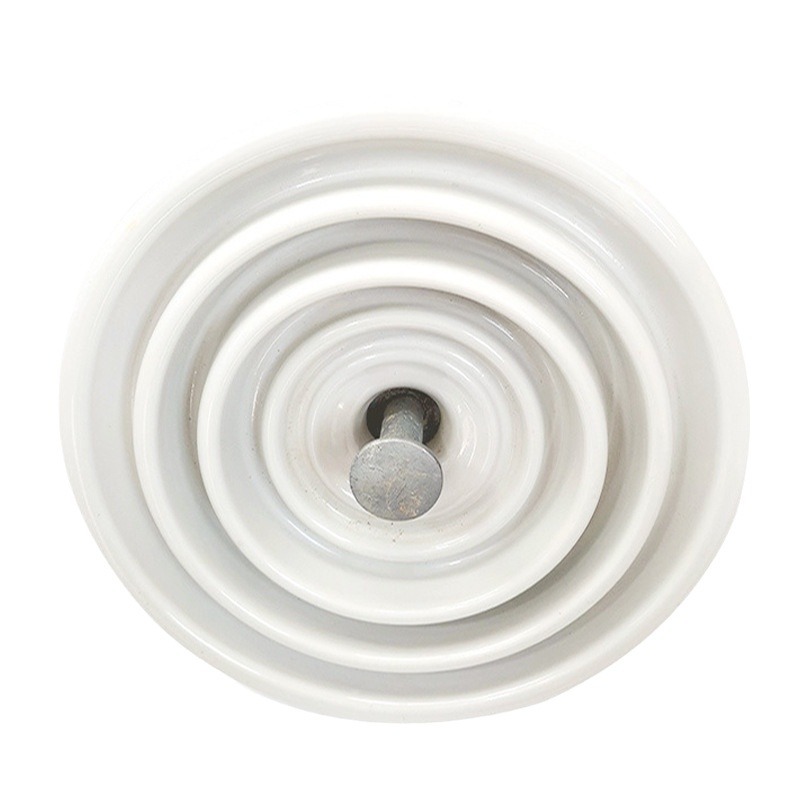
Comparative Specification Table: 70B Glass vs. U70BP/146D Porcelain
| Parameter | 70B Glass Post Line Insulator | U70BP/146D Porcelain Insulator |
|---|---|---|
| Material | Glass | Porcelain |
| Product type | Post line insulator | Porcelain insulator |
| Color | Brown | Not stated |
| Nominal disc diameter | 255 mm | 255 mm |
| Nominal structural height | 146 mm | 146 mm |
| Minimum arcing distance | 450 mm | 450 mm |
| Creepage distance | 255 mm | Not stated |
| Rated electromechanical failing load | 70 kN | 70 kN |
| Cantilever load | 10 kN | Not stated |
| Power frequency puncture voltage | 135 kV | Not stated |
| Power frequency dry withstand voltage | 65 kV | Not stated |
| Power frequency wet withstand voltage | 45 kV | Not stated |
| Connection structure code | 16 | 16 |
Note: "Not stated" means the specification is not available in the catalog data used for this comparison. Buyers should request a full datasheet for the U70BP/146D porcelain insulator to confirm creepage distance, cantilever load, and voltage withstand values.
Material-Level Differences: Glass vs. Porcelain in Overhead Line Service
The material difference between glass and porcelain is the main product-level distinction that buyers should evaluate. Both materials are inorganic dielectrics, but they differ in how they are manufactured, how they behave under electrical and mechanical stress, and how they fail in service.
Glass insulators used in overhead power lines are made from toughened glass. A documented property of the 70B model is its brown color, which is relevant in applications where visual uniformity or specific appearance is required. Glass insulators are generally transparent to light in their natural form, but the 70B is supplied in brown.
Porcelain insulators are made from fired ceramic material. The U70BP/146D is categorized as a porcelain insulator intended for the electricity industry. Porcelain's long history in the electricity industry is widely recognized, and it remains a standard material for many overhead line applications.
Electrical Performance Comparison
For the two models compared here, the 70B glass insulator has documented power frequency withstand values: 65 kV dry, 45 kV wet, and 135 kV puncture voltage. The U70BP/146D porcelain insulator specification given in the catalog does not state these values. This does not mean the porcelain insulator has inferior electrical performance; it means the available data for this comparison is incomplete, and buyers should request the porcelain datasheet to complete their evaluation.
Mechanical Performance Comparison
Both products have a rated electromechanical failing load of 70 kN. The 70B glass insulator also has a documented cantilever load of 10 kN, which is relevant for post line applications where bending forces are present. The U70BP/146D porcelain insulator's cantilever load is not stated in the catalog data used here.
In practical terms, the shared 70 kN rated failing load means that for applications where the primary mechanical requirement is a 70 kN electromechanical failing load, both models meet that threshold.
Application Scenarios: Where Each Product Is Used
Harsh Outdoor and Contaminated Environments
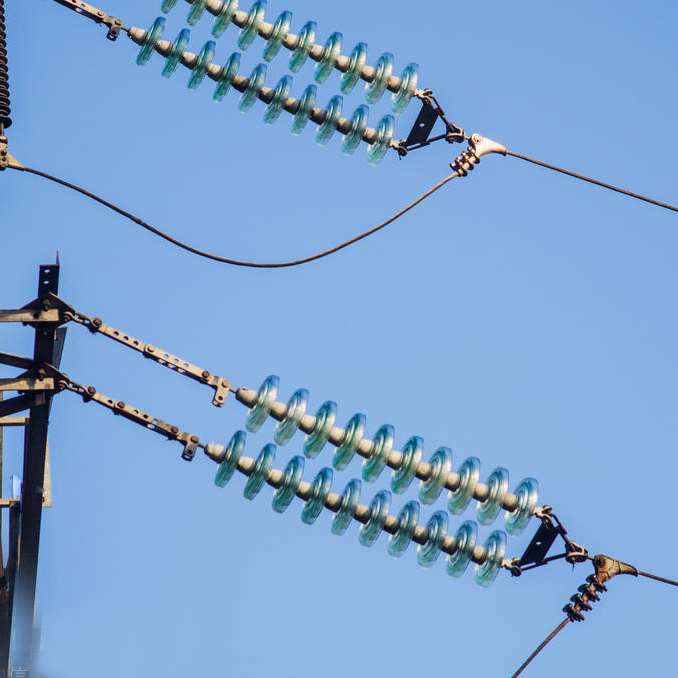
The 70B glass insulator is classified for use in overhead power lines within the electricity industry. Products in this operating category are required to withstand high temperature, high humidity, outdoor harsh climate, UV aging, dust storms causing rapid dust accumulation, wind and sand abrasion of the umbrella skirt surface, and instantaneous impulse overvoltage. These conditions are typical of rural and urban power grid upgrading projects, rail transit electrification projects, high-voltage transmission line projects, substation or converter station projects, and wind power projects.
This does not necessarily mean every glass insulator is suitable for all these conditions; rather, the supporting equipment context described in the catalog places the 70B glass insulator in this class of service.
High Mechanical Strength and 24/7 Continuous Operation
The U70BP/146D porcelain insulator is designed for applications requiring high mechanical strength and high insulation performance, operating in 24/7 continuous mode. This scenario is documented as common in Spain, France, Italy, and Turkey. The porcelain model is also part of the public electrical equipment industry, supporting power transmission and distribution.
Decision Guidance for Procurement Engineers
For buyers evaluating these two products side by side, the following decision logic may be useful. These are selection considerations, not a claim that one product is better than the other.
When the 70B Glass Insulator May Be the More Relevant Choice
- When the project specification requires a glass insulator for overhead power line service.
- When the specification requires a brown insulator body.
- When the application involves high temperature, high humidity, outdoor harsh climate, UV aging, dust storms, or instantaneous impulse overvoltage, and the project fits the operating context documented for this product class.
- When a creepage distance of 255 mm and cantilever load of 10 kN are required values.
When the U70BP/146D Porcelain Insulator May Be the More Relevant Choice
- When the project specification requires a porcelain insulator for the electricity industry.
- When the application demands high mechanical strength and high insulation performance under 24/7 continuous operation.
- When the project is located in regions such as Spain, France, Italy, or Turkey, where this application pattern is documented.
- When the buyer prefers the long-established porcelain material class for overhead line insulation.
Critical Data to Request Before Final Specification
Because the U70BP/146D catalog data does not state creepage distance, cantilever load, or voltage withstand values in the available comparison set, buyers who are choosing between these two specific models should request the complete datasheet for the porcelain insulator before finalizing a specification. The porcelain model does share key dimensional values with the glass model (255 mm disc diameter, 146 mm structural height, 450 mm minimum arcing distance, 70 kN rated failing load, connection code 16), but creepage distance and electrical withstand data are needed for a complete engineering comparison.
Limitations of This Comparison
This comparison is based strictly on the catalog data provided for the 70B and U70BP/146D models. Several important specifications for the porcelain insulator are not stated in the corpus used, including creepage distance, color, cantilever load, puncture voltage, and wet/dry withstand voltages. The absence of these data points does not imply that the porcelain insulator lacks them; it simply means they should be confirmed with the manufacturer before procurement.
This article does not cover polymer or composite insulators, which are a third material class with their own trade-offs. Buyers should evaluate all material options within the context of their specific line design, pollution class, mechanical loading, and maintenance philosophy.
Supplier Background and Verification
China Energy and Chemical Industry Co., Ltd. was established in 2017 and specializes in power industry products, including overhead line hardware fittings and accessories. The company's main product lines include polymer, porcelain, and glass insulators, as well as metal fittings, surge arresters, fuse cutouts, end fittings, and ERP rods. Its manufacturing facility covers 30,000 m², with approximately 100 employees and an annual production capacity of 8,000,000 units. The R&D team consists of 8 engineers. Export business accounts for 95% of total sales, with major markets including Russia, Vietnam, France, Spain, Italy, Türkiye, Brazil, Poland, Indonesia, and Saudi Arabia. OEM and ODM services are available.
The 70B glass insulator and U70BP/146D porcelain insulator are not hypothetical or generic products; they are both part of the company's published catalog for the electricity industry.
Frequently Asked Questions
What is the difference between the 70B glass insulator and the U70BP/146D porcelain insulator?
The 70B is a brown glass post line insulator for overhead power lines, while the U70BP/146D is a porcelain insulator for the electricity industry. Both have a nominal disc diameter of 255 mm, a structural height of 146 mm, a minimum arcing distance of 450 mm, and a rated electromechanical failing load of 70 kN. The 70B has a documented creepage distance of 255 mm, cantilever load of 10 kN, and voltage withstand values of 65 kV dry, 45 kV wet, and 135 kV puncture; these values are not stated in the available catalog data for the U70BP/146D.
What does a 70 kN rated electromechanical failing load mean for line design?
A 70 kN rated electromechanical failing load means the insulator is rated to fail at 70 kN under combined electromechanical loading. For the 70B and U70BP/146D, this is the shared rated failing load value. Buyers should ensure the line's maximum working load remains below this rated value with an appropriate safety factor.
What is the creepage distance of the 70B glass insulator?
The creepage distance of the 70B glass insulator is 255 mm. The creepage distance of the U70BP/146D porcelain insulator is not stated in the catalog data used for this comparison and should be requested from the supplier.
Why is the minimum arcing distance of 450 mm important?
The minimum arcing distance of 450 mm is the documented value for both the 70B glass insulator and the U70BP/146D porcelain insulator. It represents the shortest distance through the air between the two ends of the insulator, which is relevant for switching and lightning impulse performance. Buyers should verify that this distance meets the insulation coordination requirements of their specific line voltage and air clearance design.
What is the 70B glass insulator made of and what color is it?
The 70B is made of glass and has a brown color. It is classified as a post line insulator for overhead power lines in the electricity industry.
What is the U70BP/146D porcelain insulator intended for?
The U70BP/146D is a porcelain insulator intended for the electricity industry. Its documented application context includes high mechanical strength and high insulation performance in 24/7 continuous operation, with this scenario noted in Spain, France, Italy, and Turkey.
Does China Energy and Chemical Industry Co., Ltd. supply both glass and porcelain insulators?
Yes. China Energy and Chemical Industry Co., Ltd.'s main product lines include polymer, porcelain, and glass insulators, as well as metal fittings and overhead line hardware. The 70B glass insulator and the U70BP/146D porcelain insulator are both listed in the company's catalog.
What should a buyer do before choosing between the 70B and U70BP/146D?
A buyer should compare the full datasheets of both models against the project's mechanical, electrical, and environmental requirements. Since the available catalog data for the porcelain model does not specify creepage distance, cantilever load, and voltage withstand values, the buyer should request these values from the supplier before making a final specification decision.
For reference, the company brochure is available at https://cdn.socialarks.com/sbsp/24985/common/2026/0629/2025%20CECI%20catalogue%20of%20polymer%20insulators%20and%20glass%20insulators.pdf.
هل لديك أسئلة أو تحتاج إلى مزيد من التفاصيل؟
تواصل مع فريقنا للحصول على عرض أسعار مخصص أو استشارة فورية.
طلب عرض أسعار
املأ النموذج أدناه وسيتواصل معك فريقنا بعرض مقترح مخصص.
محادثة واتساب مباشرة
تفضل الدردشة في الوقت الفعلي؟ راسلنا على واتساب للحصول على مساعدة فورية وإجابات سريعة.
- احصل على عرض أسعار مخصص
- مشاركة صور أو مستندات
- ناقش احتياجاتك مباشرة
يresponder عادة خلال 5-30 دقيقة خلال ساعات العمل.