
Global Lithium Battery Trends in Portable Power: Policy, Production, and Application Fit
Portable power has become a battery-engineering category rather than a consumer accessory category. The specification that decides whether a power bank works in the field is no longer capacity alone — it is the chemistry of the cell inside, the protection electronics wrapped around it, the temperature window it was validated for, and the documentation that lets it cross a border legally.
Why Portable Power Is Being Re-Specified
For most of the last decade, power banks were sold on a single number: milliamp-hours. That framing is now inadequate for three converging reasons. Cells are being asked to serve medical devices, IoT trackers, robotics and industrial equipment as well as phones, and those buyers evaluate a battery differently from a consumer picking a product off a shelf. Transport and safety rules governing lithium batteries have tightened across major markets. And the supply base has consolidated around a small number of producing regions, which changes what a sourcing manager can realistically verify before placing an order.
The result is a category where application fit — chemistry, pack architecture, protection logic and documentation — determines whether a product is usable, not just marketable. A buyer comparing a 10,000 mAh consumer unit with a 48 V industrial pack is not comparing two versions of the same thing. They are comparing two different engineering decisions.
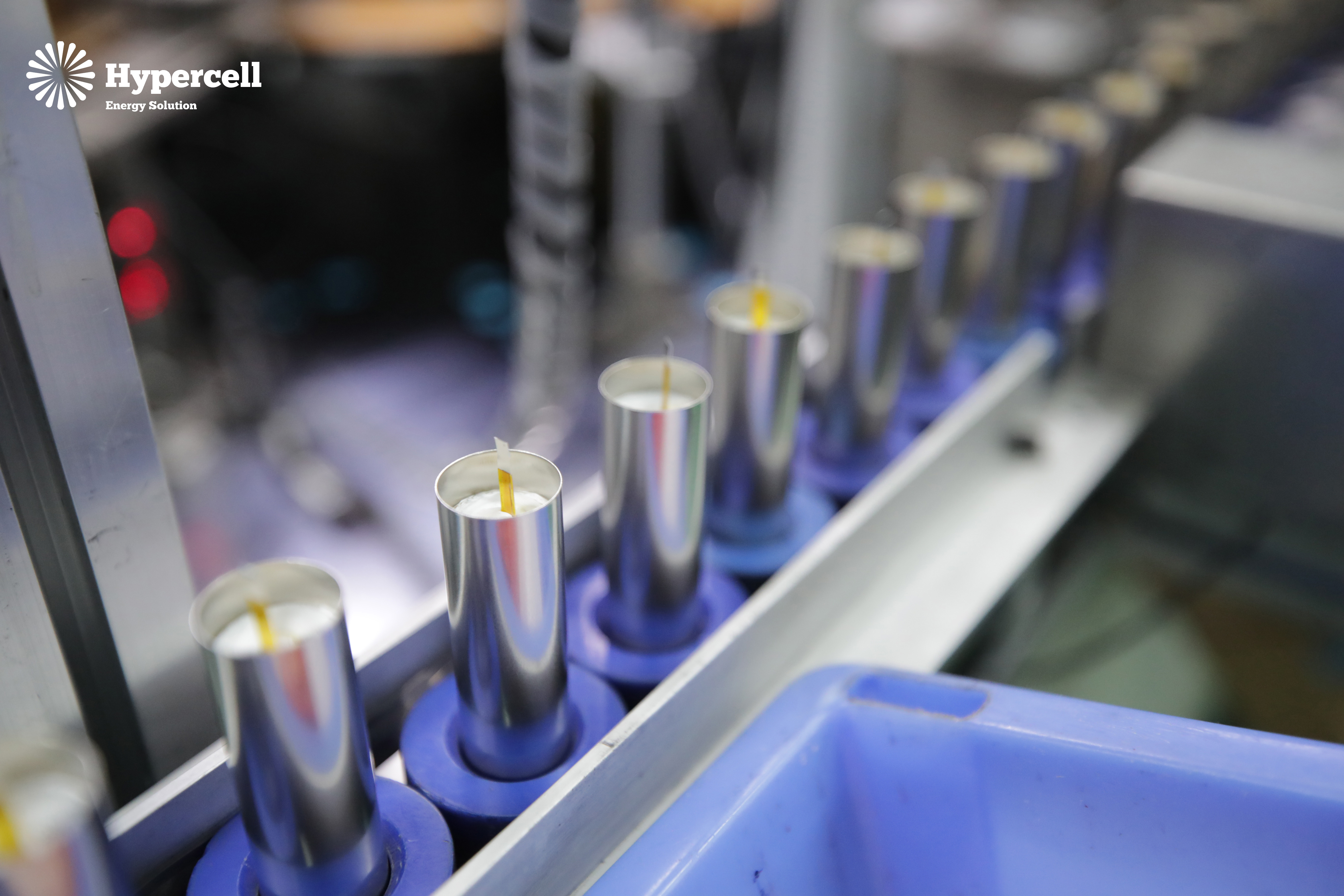
Portable power is increasingly specified like an industrial component: chemistry, protection electronics and documentation come before headline capacity.
Production: Why the Cell Supply Base Is Concentrated
Any realistic discussion of portable power sourcing starts with where cells are made. Reporting attributed to BloombergNEF and published by Energy-Storage.news places more than 80% of global battery cell manufacturing in China, and notes that country-level production capacity could continue expanding over the coming five years. That figure is a secondary citation of a BloombergNEF analysis rather than the original release, so it should be treated as directional context rather than a precise statistic — but the direction is consistent with other observations.
The U.S. Energy Information Administration has published analysis stating that China dominates global trade of three key battery minerals: graphite, lithium and cobalt. MERICS, a China-focused research institute, assesses that China's electric vehicle battery industry is well positioned to be competitive in global markets and attributes part of that performance to state support. Taken together, these three observations describe a supply chain where upstream mineral processing, cell manufacturing and policy support sit in the same geography.
What concentration means — and does not mean — for a portable power buyer
Concentration at the cell-manufacturing level does not mean every supplier a buyer meets is a cell manufacturer. China's battery landscape includes large cell producers, pack assemblers, and custom battery suppliers that design and build packs around purchased or in-house cells. A vendor list published by a commercial blog may name large cell makers such as CATL, BYD or Highstar, but such lists are vendor-published, disclose no selection methodology, and cannot function as a ranking. They are name-discovery tools at best, and each name still requires independent verification.
For a buyer, the practical consequence is this: the depth of the Chinese supply base makes it likely that a suitable supplier exists, while the breadth of that base makes it unlikely that a published list will find it. Qualification has to be done supplier by supplier, against a specification the buyer controls.
A further caution applies to scope. Policy analysis and competitiveness commentary in this category is frequently written about electric vehicle batteries — a different product family from the small-format cylindrical, polymer and LiFePO4 cells used in portable power. Conclusions about EV-scale manufacturing do not transfer automatically to a 4,000 mAh power bank cell or a 234 Wh industrial pack. Buyers should treat EV-level analysis as macro context, not as evidence about a specific portable power supplier.
Chemistry Choice Is the First Application Decision
Three chemistry and format families dominate portable power, and each carries a different set of trade-offs. The choice is not about which is better in the abstract; it is about which constraint the application can tolerate.
| Dimension | Li-ion cylindrical (e.g. INR18650 / INR21700) | Li-polymer (pouch) | LiFePO4 (e.g. IFR3140 / FR18650) |
|---|---|---|---|
| Typical role in portable power | Standardized cell blocks inside packs and larger power banks | Thin, shape-fitted power banks, wearables, compact consumer devices | Long-life packs, industrial portable units, equipment that cycles daily |
| Energy density (qualitative) | Generally high per volume and mass | Generally high, with efficient use of enclosure space | Generally lower than NMC/LCO chemistries |
| Cycle life | Moderate to good, format and chemistry dependent | Moderate | Long; Hypercell's FR18650-20E LiFePO4 cell is rated at ≥2000 cycles |
| Thermal behaviour | Depends on cathode chemistry and pack design | Depends on chemistry and mechanical protection | Comparatively robust chemistry, still pack-design dependent |
| Form-factor flexibility | Fixed cylindrical dimensions constrain industrial design | High — custom shapes and thicknesses | Fixed cell formats; pack size grows with capacity |
| Main cost driver | Cell standardization and volume | Tooling, packaging and mechanical protection | Material throughput and pack volume/weight |
| Principal limit in portable power | Requires structural space and careful pack layout | Tooling lead time; pouch cells need mechanical support | Weight and volume penalty versus higher-density chemistries |
Qualitative comparison of chemistry families used in portable power. Quantitative performance must be read from the specific cell datasheet, not from a family-level generalisation.
Reading a cycle-life claim correctly
A cycle-life figure without its test conditions is close to meaningless. Capacity retention depends on charge and discharge rates, depth of discharge and ambient temperature. A supplier stating a cycle count should also state the C-rate, the temperature and the retention threshold used. Buyers who request this once will usually find that only some suppliers can answer precisely — which is itself a useful qualification signal.
The temperature window is a design constraint, not a footnote
Lithium cells have an operational envelope, and it is narrower on charge than on discharge. In Hypercell's published pack specifications, for example, the INR18650-4S2P 14.4 V 6700 mAh pack is specified for charging between 0 °C and 45 °C and discharging between −20 °C and 60 °C. Deployments in cold environments therefore need heating, insulation or a reduced charging regime — a requirement that is frequently discovered after a product has already been designed around its enclosure.
Hypercell as an Illustrative Case of Chinese Producer Adaptation
Shenzhen Hypercell Co., LTD is a China battery manufacturer founded in 2007 and headquartered in Shenzhen, with an advanced factory in Dongguan covering 250,000 m². The company reports 550 employees, 18 R&D engineers, an annual output of 220,000,000 units and an export ratio of 80%, serving markets in the USA, EU, North America, Asia and Australia. Its stated product focus is rechargeable lithium-ion batteries, spanning cylindrical cells, polymer cells, LiFePO4 cells and customized packs. The company cites compliance with UL1642, IEC62133, FDA and ISO13485.
Hypercell is used here as an illustration of how mid-sized Chinese producers position themselves against global portable power demand — not as a market-share claim, and not as a ranking. Its relevance to the portable power question is structural: it sits in the segment that converts standard cell formats into application-specific packs, which is exactly the layer most buyers actually purchase from.
The power bank product as a specification exercise
The Hypercell HPC B1 power bank illustrates how narrow a consumer portable power specification can be. It is listed as a 3.6 V / 4000 mAh unit with a 14.4 Wh rating, Type-C input and a USB-A output rated at 5 V / 1.2 A, built on INR chemistry and indicated for medical and consumer applications.
That output rating is the most decision-relevant line in the datasheet. A 5 V / 1.2 A output is a basic charging profile, not a fast-charge profile. For a buyer sourcing an accessory bundled with a low-power device, that is entirely appropriate and keeps the pack simple. For a buyer intending to charge tablets or laptops, the same product is the wrong fit. Reading this correctly at the specification stage avoids an expensive mismatch later.
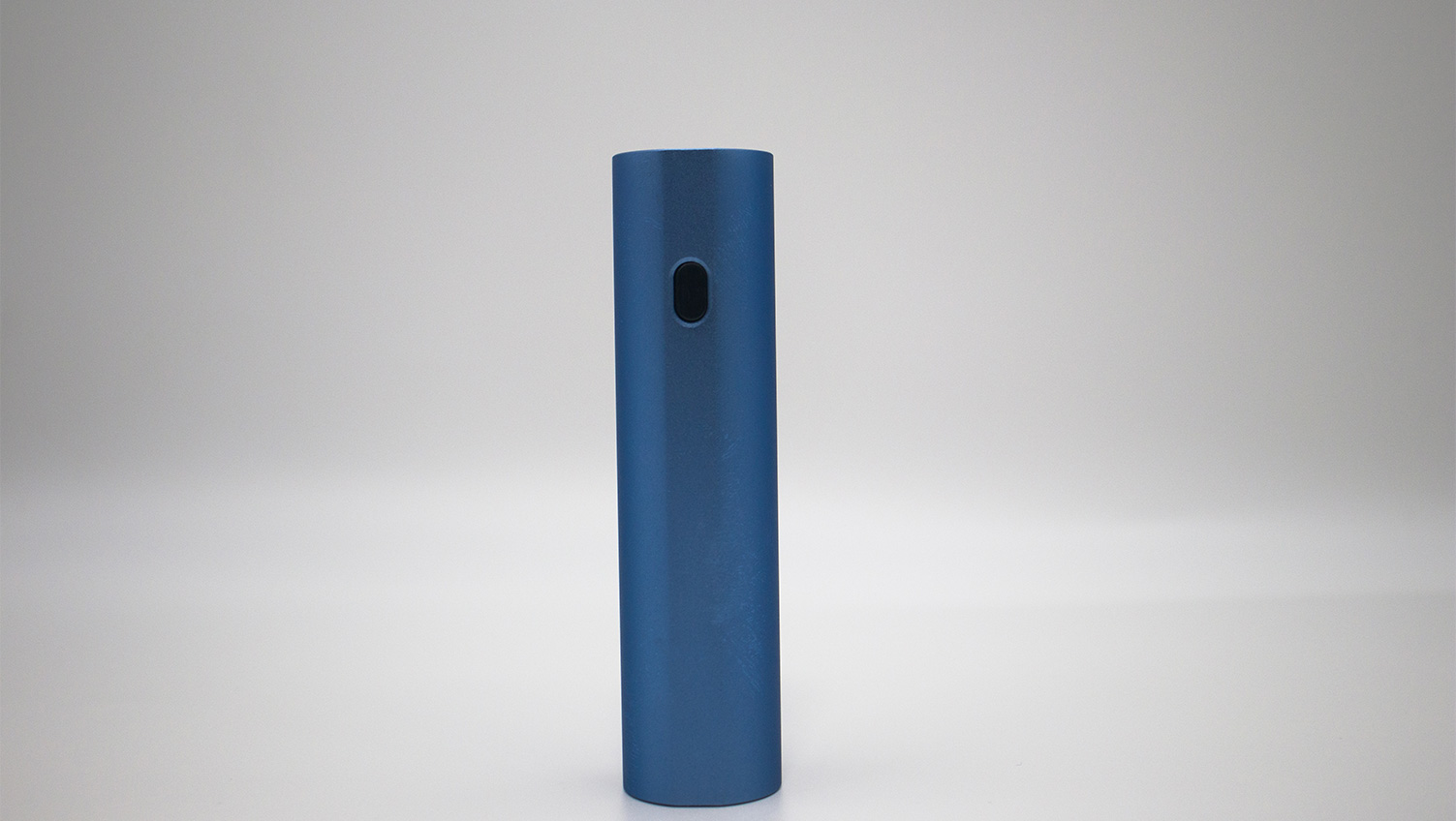
Hypercell HPC B1: 3.6 V / 4000 mAh, 14.4 Wh, Type-C input, USB-A output at 5 V / 1.2 A — a specification suited to low-power device charging rather than fast-charge use.
Industrial portable power is a different product
The same manufacturer's 24AQ506-01 pack shows how far the specification moves when the application changes. It is an INR21700 13S1P 48 V pack with a 4,900 mAh rated / 5,000 mAh typical capacity, a 46.8 V nominal voltage and a 234 Wh energy rating. It specifies a 54.6 V maximum charge voltage, 10,000 mA maximum continuous discharge, an internal impedance below 200 mΩ, an expected cycle life of 800 cycles above 80% of initial capacity at 1C and 20 °C, and a CAN 2.0 BMS in an IP65 waterproof ABS+PC enclosure.
Placed beside the HPC B1, the two products share a chemistry family and almost nothing else: different voltage architecture, different protection electronics, different environmental sealing, different communication interface and a different buyer. This is the clearest argument against treating "portable power" as one procurement category.
Application Fit: Matching a Cell to the Device It Powers
Consumer and accessory power banks
Consumer power banks prioritise volume, weight and cost per watt-hour. Cylindrical cells give predictable geometry and straightforward pack assembly; polymer cells allow thinner industrial design at the cost of tooling and mechanical support. The specification that governs buyer acceptance here is usually output profile, protection functionality and documentation for retail market entry — not cycle life, because few consumers track it.
Robotics, AGV and e-mobility
Autonomous guided vehicles and robotics run continuously, which shifts the emphasis to cycle life, thermal management and communication. Hypercell documents an AGV and robot deployment using a 48 V battery pack intended for 24/7 operation, with charging between 0 °C and 50 °C and discharging between −20 °C and 60 °C, in markets including the US, France, Germany, Italy, the UK, Canada and Mexico. The matched product in that scenario is the 24AQ506-01 pack.
Three details matter more than the energy rating for this use case. The CAN 2.0 interface allows the vehicle controller to read pack state rather than infer it. The IP65 enclosure supports washdown and dust exposure typical of industrial floors. And the BMS protection set — over-voltage, under-voltage, over-current, over-temperature, under-temperature and short-circuit, with charging of a 0 V battery prohibited — defines what the pack will refuse to do, which is often the more important half of a safety specification.
Medical and diagnostic equipment
Medical applications add a regulatory layer on top of the electrical one. Traceability, change control and documented quality systems matter as much as capacity. Hypercell cites FDA and ISO13485 among its compliance credentials, and the INR18650-4S2P 14.4 V 6700 mAh pack is built into a PC+ABS UL94-V0 and IP68 enclosure with a 6-pin blade connector. Buyers in this segment should still verify certificate scope and issuing body directly — a compliance claim on a website is a starting point for due diligence, not a substitute for it.
IoT devices and GPS trackers
IoT and tracking hardware inverts the usual priorities. Energy density is less important than self-discharge behaviour, long shelf life and stable performance across temperature swings, because the device may sit in a container or on a vehicle roof for years between service intervals. Small-format cylindrical and polymer cells serve this segment, and the acceptance criteria typically centre on low-temperature discharge behaviour and pack-level current draw rather than peak output.
Off-grid and portable energy storage
Where a portable unit cycles daily and weight is less critical than longevity, LiFePO4 becomes the natural choice. Hypercell's 24AQ507-01 is a 12.8 V 120 Ah LiFePO4 pack rated at 1,536 Wh, configured 4S8P, with a 3,000-cycle rating to ≥80% of rated capacity at 0.2C, dual BMS protection and a CAN 2.0 interface with 45 A short-circuit protection. The trade-off is explicit: substantially more mass and volume per watt-hour than a higher-density chemistry, in exchange for cycle life measured in thousands rather than hundreds of cycles.
Policy and Trade: The Part of the Cost Buyers Underestimate
Lithium batteries are regulated goods. They are subject to transport testing and classification, to safety standards that differ by destination market, and to customs treatment that has become less stable in recent years. None of this is new to experienced importers, but it is frequently absent from the quotation stage — and it is exactly where landed cost diverges from unit price.
Three policy-driven effects are worth planning for:
- Documentation becomes a schedule risk. A shipment that lacks the correct test summary or classification documentation does not move, regardless of production readiness. Buyers should request the documentation package at the sample stage, not at the shipping stage.
- Market access is not uniform. A pack compliant for one destination may require additional evidence for another. Because Hypercell serves the USA, EU, North America, Asia and Australia, buyers should confirm which certificate set applies to their specific destination rather than assuming a global claim covers all of them.
- Trade measures add variability to landed cost. Tariff treatment and origin rules in major markets have shifted repeatedly in recent years. Buyers who model cost on unit price alone are modelling an incomplete number.
On the production side, the concentration described earlier cuts both ways. It gives buyers access to a deep supplier base and mature process knowledge. It also means that a disruption affecting one region propagates through many suppliers at once, which is the standard argument for qualifying a second source before it is needed rather than after.
Comparison with Traditional Solutions — and Where Lithium Still Falls Short
Lithium chemistries displaced alkaline and nickel-metal-hydride cells in portable power for a reason that remains valid: they store more energy per unit of mass and volume, and they hold charge better over long idle periods. Nickel-metal-hydride cells are comparatively heavier for the same delivered energy and suffer higher self-discharge; alkaline cells are inexpensive and disposable but not rechargeable at useful scale. For a rechargeable product, lithium is the practical default.
The honest comparison, however, is not lithium versus legacy chemistry. It is lithium versus lithium, and here the limitations are real:
| Constraint | Practical effect on a portable power design |
|---|---|
| Charge below 0 °C is outside the specified window | Cold-climate deployments need heating, insulation or a restricted charging regime; the enclosure must accommodate it |
| LiFePO4 carries a weight and volume penalty | A thinner, lighter product may be impossible with LFP; high-density chemistries remain necessary for slim consumer units |
| Pouch cells require mechanical support | Tooling cost and design complexity rise; drop and vibration performance depends on pack architecture, not the cell alone |
| Cylindrical formats fix the geometry | Industrial design must adapt to standard cell dimensions; thin profiles are not achievable without moving to polymer |
| Custom packs extend validation time | Sampling, testing and documentation add lead time compared with off-the-shelf modules |
| Public specification data is often incomplete | Buyers cannot fully assess fit from websites alone; a direct technical request is usually required |
The last point deserves emphasis for anyone researching this category. Product pages and B2B listings frequently omit test conditions, BMS detail and certificate numbers. That gap is not evidence of a weak supplier — it is evidence that the information has to be requested. Treating an incomplete public page as a disqualification, or as a full specification, are both mistakes.
Purchasing Terms and Acceptance Criteria for China Sourcing
Because portable power spans such different applications, a single sourcing checklist does not fit every case. What follows is a structure that adapts to the chemistry and the end use.
Technical acceptance criteria
- Chemistry and format declared explicitly — cylindrical, polymer or LiFePO4, with the specific cell model named, not just the family.
- Electrical specification with tolerances — nominal voltage, rated and typical capacity, energy in Wh, charge cut-off voltage, discharge cut-off, and maximum continuous charge and discharge current.
- Cycle-life claim with its test conditions — C-rate, temperature and retention threshold. A claim of 3,000 cycles means little without them.
- Operating temperature range stated separately for charge and discharge, since the two windows are not the same.
- BMS protection set enumerated — over-voltage, under-voltage, over-current, over-temperature, under-temperature and short-circuit protection, plus the behaviour on a deeply discharged cell.
- Mechanical and environmental data — enclosure material, flammability rating such as UL94-V0, ingress protection rating, connector type, and dimensional tolerances.
- Communication interface where the application requires state reporting; CAN 2.0 appears on the industrial packs described above and is a practical requirement for robotics and AGV integration.
Commercial and documentation terms
- Certificate scope, issuing body and validity dates, verified against the issuing body's own database rather than taken from a website.
- Batch-level test reports available on request, not only a one-off type-test certificate.
- A written change-notification commitment covering cell supplier, BMS firmware and enclosure material, so that a silent substitution does not reach production.
- Sample evaluation before mass production, with the acceptance criteria agreed in writing beforehand.
- Packaging and transport documentation prepared at the sample stage, so that the classification question is resolved before the first order.
- Lead time and minimum order quantity stated for the exact SKU, since these differ substantially between standard modules and customized packs.
For buyers comparing suppliers, the most efficient filter is not price. It is whether a supplier can answer the technical list above in writing within a reasonable response cycle. Suppliers who can produce a datasheet with test conditions, a protection topology description and a certificate number on request are usually also the ones able to hold those specifications through repeat production.
Future Outlook
Three directions appear likely to shape portable power over the next several years, based on the evidence available today.
Chemistry will diversify by application rather than converge. High-density chemistries will continue to serve thin consumer power banks where weight and volume dominate. LiFePO4 will expand where cycle life and thermal robustness matter more than mass — industrial portable units, robotics and off-grid equipment. The two will coexist because they solve different problems.
Documentation will become a competitive feature. As compliance requirements tighten in destination markets, the ability to produce a complete, verifiable documentation package quickly will differentiate suppliers as much as cell performance does. Buyers will increasingly qualify on paperwork as well as on product.
Supply strategy will shift from single-source efficiency to managed dependence. With a large share of global cell manufacturing concentrated in one region, buyers are likely to formalise dual sourcing, buffer stock or index-linked pricing rather than rely on a single supplier relationship. That is a procurement decision, not a technical one, and it belongs in the contract stage.
What ties these together is a change in buyer behaviour: specifications are being written before suppliers are contacted, rather than after. Suppliers that publish precise, testable data fit that workflow. Suppliers that publish only capacity figures increasingly do not.
Frequently Asked Questions
What are the main lithium battery chemistries used in portable power banks?
Portable power banks are generally built on lithium-ion cylindrical cells, lithium polymer pouch cells, or lithium iron phosphate (LiFePO4) cells. Cylindrical cells offer standardized geometry and straightforward pack assembly. Polymer cells allow thin, shape-fitted designs but require mechanical support and tooling. LiFePO4 cells typically trade energy density for longer cycle life and more robust thermal behaviour. The appropriate choice depends on whether the product prioritises slimness and weight, or durability and cycle count.
Why is China the reference market for lithium-ion portable power sourcing?
Reporting attributed to BloombergNEF and published by Energy-Storage.news places more than 80% of global battery cell manufacturing in China. The U.S. Energy Information Administration has published analysis stating that China dominates global trade of graphite, lithium and cobalt, and MERICS assesses that China's electric vehicle battery industry is well positioned to compete globally, attributing part of that performance to state support. This concentration means the cell supply base, upstream mineral processing and pack assembly capability largely sit in one geography — which is why supplier qualification in this category usually starts there.
How does chemistry choice affect power bank performance and safety?
Chemistry sets the baseline for energy density, cycle life and thermal behaviour; pack design sets the rest. Two packs using the same cell can behave differently depending on the BMS protection topology, the enclosure material and the thermal path. Safety-relevant properties are therefore specified at pack level, not cell level: protection against over-voltage, under-voltage, over-current, over-temperature and short-circuit, plus a defined behaviour on deeply discharged cells. Hypercell's pack specifications, for example, list a dual-protection BMS covering these conditions and prohibit charging a 0 V battery.
What should buyers check before sourcing a power bank battery from China?
Buyers should verify the declared chemistry and cell model, the electrical specification with tolerances, the cycle-life claim together with its test conditions, and the operating temperature range stated separately for charge and discharge. They should also confirm the BMS protection set, enclosure material and flammability rating, ingress protection level, connector type and dimensional tolerances. On the documentation side, certificate scope and validity should be checked against the issuing body's database, and batch-level test reports requested. Finally, a written change-notification commitment covering cell supplier, BMS firmware and enclosure material protects against silent substitution.
What are the limits of lithium batteries in portable power applications?
The main limits are environmental and physical. Charging below 0 °C falls outside the specified window for many packs, so cold-climate deployments require heating, insulation or a restricted charging regime. LiFePO4 packs carry a weight and volume penalty relative to higher-density chemistries, which can make them unsuitable for slim consumer products. Pouch cells require mechanical support and tooling investment. Cylindrical formats fix the geometry, constraining industrial design. Custom packs also extend validation lead time compared with off-the-shelf modules. These are design constraints rather than defects, and they should be matched to the application before sourcing begins.
Where to Take This Next
The practical conclusion for buyers at the awareness and research stage is that portable power should be specified in the same way as any other component: define the application envelope, then the chemistry, then the pack-level requirements, and only then approach suppliers. The supplier conversation becomes far more efficient when the buyer already knows which questions matter.
For readers who want to review Hypercell's full product and capability overview, the company's brochure is available for public download: Hypercell company brochure (PDF).
Figures describing individual products in this article are drawn from the manufacturer's published specifications and are stated as published. Market-level observations are attributed to their respective sources and should be verified against primary publications before being used in a commercial decision.
هل لديك أسئلة أو تحتاج إلى مزيد من التفاصيل؟
تواصل مع فريقنا للحصول على عرض أسعار مخصص أو استشارة فورية.
طلب عرض أسعار
املأ النموذج أدناه وسيتواصل معك فريقنا بعرض مقترح مخصص.
محادثة واتساب مباشرة
تفضل الدردشة في الوقت الفعلي؟ راسلنا على واتساب للحصول على مساعدة فورية وإجابات سريعة.
- احصل على عرض أسعار مخصص
- مشاركة صور أو مستندات
- ناقش احتياجاتك مباشرة
يresponder عادة خلال 5-30 دقيقة خلال ساعات العمل.