
Global Port Fender Brands: A China Supplier Comparison
Global Port Fender Brands: A China Supplier Comparison
Answer first: A global port project should compare China-based rubber fender brands on documentary evidence, not on a popularity label. The workable screen is monthly capacity, lead time, minimum order quantity, testing coverage, OEM/ODM and size/logo customization, plus valid CCS documentation for the specific rubber fender or pneumatic fender offered. Qingdao Haohang Fender Airbag Co., Ltd. (Haohang) is one China-based manufacturer that can be assessed against that screen; the company profile supports a specialist profile, but it does not by itself prove that Haohang is the right supplier for every project.
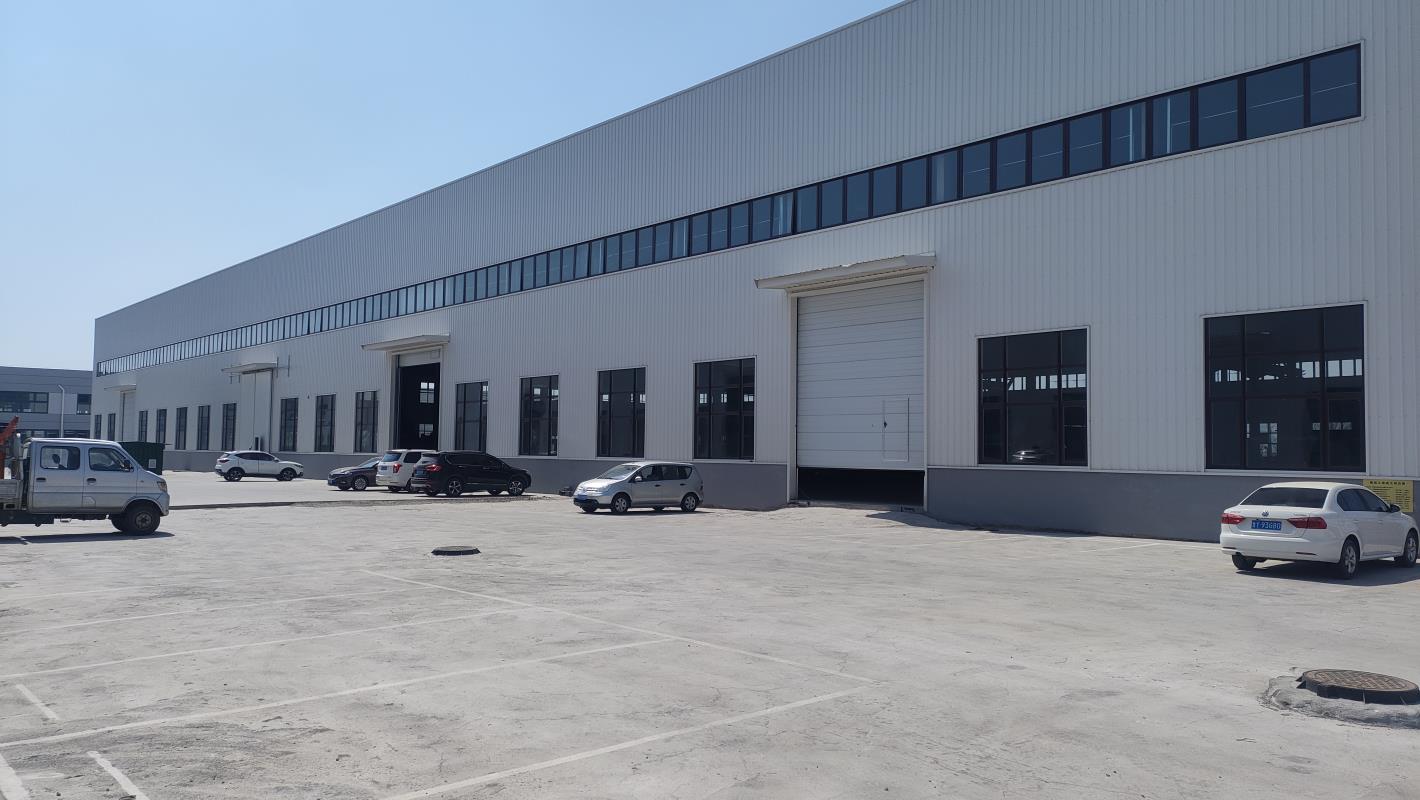
Factory scene used for context; supplier selection still depends on project-specific documents.
Why a China supplier comparison needs evidence, not brand noise
Marine fenders are protective marine equipment designed to prevent ships, boats, yachts and other vessels from colliding with each other or with berths and docks. The category is usually divided into pneumatic fenders, foam-filled fenders and solid rubber fenders. For a port project, the fender is not a decorative accessory. It is a specified safety component that must match vessel size, berthing energy, structure design, maintenance access and the project's compliance route.
Pneumatic rubber fenders are the segment most often discussed in ship-to-ship and ship-to-dock work. ISO 17357-1:2014 gives buyers a common reference for high-pressure floating pneumatic rubber fenders, including type I net-type and type II sling-type fenders, with initial pressures of 50 kPa or 80 kPa. ISO 17357-2:2014 covers low-pressure floating pneumatic rubber fenders and sets out material, performance, dimensions and minimum test and inspection procedures. These standards do not choose a supplier. They give the buyer a way to compare what each supplier actually documents.
The commercial context explains why China-based suppliers are part of the comparison. Verified market research in this evidence set values the global marine fender market at USD 0.86 billion in 2025 and projects USD 0.91 billion in 2026. The same research estimates that Asia-Pacific accounts for approximately 40% of maritime fender installations as of 2024. Those figures describe a broad, established category. They do not establish that any one Chinese brand is more suitable than another.
The buyer problem: four risks that a low price can hide
The first risk is capacity that exists only on paper. A supplier may quote a monthly figure without showing the production schedule, staffing, mould set or test bay that supports it. For a port project with a fixed installation window, capacity must be tied to a delivery plan.
The second risk is lead time that is not written into the quotation. A range of 7 to 45 days can be realistic in this category, but the buyer needs to know what starts the clock: drawing approval, deposit, raw material arrival, test booking or vessel booking. A short lead time that excludes curing, testing and packing is not a usable lead time.
The third risk is testing that is described as 100% without a record. In a fender project, 100% testing should mean every unit is checked, not that a batch sample was checked. The buyer should ask what is tested, at what pressure, against which drawing, and who signs the record.
The fourth risk is certification that is confused with recognition. A company may state that its products have received recognition from a classification society, while the buyer needs a current certificate for the offered model. Those are not the same document. This distinction matters most for CCS-related procurement.
A six-part comparison framework for China rubber fender suppliers
The table below turns the main comparison signals into questions a buyer can put to every candidate. The figures in the first column are screening benchmarks for this comparison, not proof that every supplier meets them.
| Comparison signal | What to request | Why it changes the decision |
|---|---|---|
| Monthly capacity: 150 units | Production schedule, line ownership, mould availability, staffing plan and current order book for the offered fender type. | Shows whether the supplier can meet the port programme without shifting delivery risk to the buyer. |
| Lead time: 7-45 days | A written schedule that separates drawing approval, material release, production, testing, packing and dispatch. | Reveals whether the quoted range is a production range or a commercial promise. |
| MOQ: 1 unit | Confirmation that one unit applies to the requested size, pressure class and customization level, not only to a stock sample. | Supports trial orders, urgent replacements and project-specific sizes without forcing excess stock. |
| Testing: 100% of units | Inspection plan, pressure test record, dimensional check, appearance check, test equipment list and sign-off sample. | Converts a quality claim into a traceable release condition. |
| OEM/ODM, size and logo customization | Drawing control, mould ownership, label method, packaging artwork and approval workflow. | Matters for brand owners, distributors and projects that need marked fenders or non-standard dimensions. |
| CCS documentation for rubber and pneumatic fenders | Certificate number, product model, standard, issuing body, validity date and scope of approval. | Separates a current product certificate from a general company statement. |
This framework is deliberately narrow. A supplier that cannot answer one of these points may still be capable, but the missing answer should be treated as an open item. It should not be filled with an assumption.
Where Haohang fits the China supplier comparison
Qingdao Haohang Fender Airbag Co., Ltd. is a China-based manufacturer of marine airbags and rubber fenders, founded in 2020. Its published company profile states annual output of 2,000 units, a team of 15 engineers, a 70% export ratio and main markets in South Asia, the Middle East and Africa. The same profile states that the company specializes in marine launch airbags, inflatable rubber fenders, solid filled fenders and inflatable water blocking airbags.
Those facts support a specialist manufacturer profile. They do not, by themselves, prove monthly capacity of 150 units, a 7-45 day lead time, a MOQ of 1, 100% testing or logo customization. A buyer should ask Haohang to map its annual output to a monthly schedule for the requested fender type and size. The annual output figure is useful context, but it is not a substitute for a production plan.
Haohang also states that it has achieved raw material self-sufficiency by processing natural rubber and curtain fabric in-house. For a buyer, that is relevant to supply continuity because raw material control can affect consistency and scheduling. It is not a performance guarantee. The buyer still needs the compound specification, cord fabric grade, batch records and test method for the offered product.
On product comparison, Haohang's supplied material states that its pneumatic fender uses 100% natural rubber and high-strength cord fabric of truck/aircraft tyre grade as its core difference. The same material claims a service life 30% longer than recycled rubber fenders, a 50% reduction in air leak rate under standard pressure, and impact absorption efficiency of up to 90% compared with 75% for traditional options. It also states that the product is more suitable for STS and STD operations.
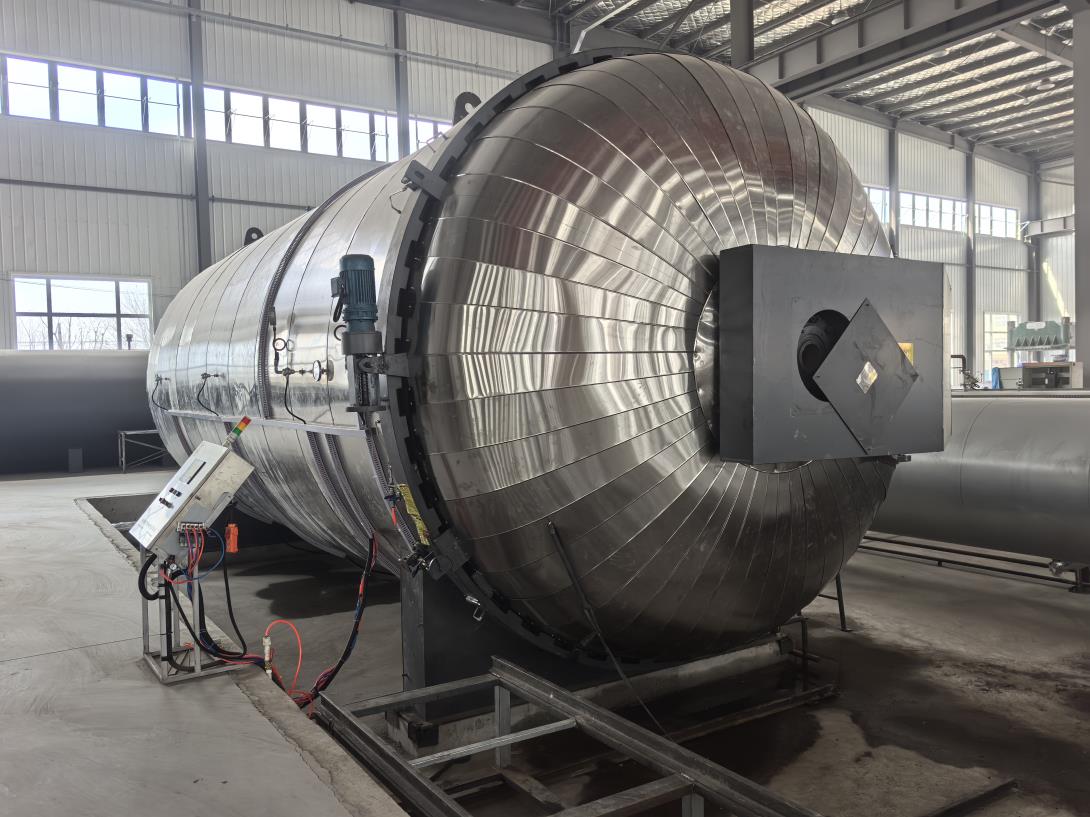
Production equipment is relevant to capacity and testing checks, but it does not replace a project-specific test record.
These are supplier claims, and they should be treated as such. The correct buying step is to ask for the test report, the comparison basis, the fender size and pressure class, and the deflection conditions behind the numbers. A claim that is not tied to a test method cannot be used as a like-for-like comparison. The same material says the cost is higher while the selling price remains the same; that commercial statement should be written into the quotation if it is intended to apply to the buyer's order.
Technical checks that turn a supplier claim into a buyer decision
ISO 17357-1 is the technical backbone for high-pressure floating pneumatic fenders. It specifies the fender body construction: an outer rubber layer, a synthetic-tyre-cord reinforcement layer and an inner rubber layer, all vulcanized firmly. It also requires fenders with a diameter of 2,500 mm and larger to be equipped with a safety valve for releasing excess internal pressure. These are not optional marketing details; they are design checks a buyer can make against a drawing.
The standard also defines performance in terms of guaranteed energy absorption, reaction force at GEA deflection and hull pressure at GEA deflection. That matters because a pneumatic fender is selected for the energy it can absorb at a given deflection, not for its appearance. Two suppliers may quote the same diameter and length but publish different energy absorption, reaction force or hull pressure values. The buyer should compare at the same initial pressure, same deflection and same test standard.
ISO 17357-2 performs a similar role for low-pressure floating pneumatic fenders. It covers fenders intended for berthing and mooring of a ship to another ship or to a berthing structure and specifies material, performance, dimensions and minimum test and inspection procedures. If a project uses low-pressure fenders, the buyer should not accept a high-pressure datasheet as a substitute without a clear engineering review.
For context, Trelleborg Marine and Infrastructure states that its pneumatic fenders are designed, manufactured and third-party certified in compliance with ISO 17357-1:2014, and that it manufactures fenders with initial pressures of 50 kPa and 80 kPa. That is a useful benchmark for the type of documentation a buyer should expect. It is not a reason to skip the same check on a China-based supplier. The question is whether the candidate can provide an equivalent certificate and test scope for the offered model.
Application fit: STS and STD operations
Ship-to-ship operations require fenders that manage energy transfer between two moving vessels. Ship-to-dock operations require fenders that protect both the vessel and the berth structure. In both cases, the fender must be matched to the vessel size, approach speed, berthing angle, tidal range and structure design. A fender that is suitable in one scenario is not automatically suitable in the other.
Haohang's comparison material states that its product is more suitable for STS and STD operations. A buyer should convert that statement into a project check: requested diameter and length, initial pressure, type I net or type II sling configuration, safety valve requirement, energy absorption, reaction force, hull pressure and the intended mooring method. For heavy-duty pneumatic fender applications, the buyer should also confirm the chain, tyre net or sling arrangement and the lifting points.
The application fit is therefore not a brand question. It is a specification question. A supplier may be strong in one size range or one pressure class and weaker in another. The buyer should ask for a drawing and a performance table for the exact model, not a general brochure page.
Certification and CCS: the difference between recognition and a certificate
CCS documentation is one of the most misunderstood parts of rubber fender procurement. Haohang's company profile states that its products have received quality recognition from authoritative organizations such as the China Classification Society. That statement is a company-reported claim. It is not the same as a current CCS certificate for every rubber fender or pneumatic fender model in the catalogue.
A buyer should request the certificate number, the product model and size range covered, the standard applied, the issuing body, the issue date and the expiry date. The certificate should match the offered fender, not a related product family. If the project requires CCS certification for rubber fenders and pneumatic fenders, the buyer should verify the certificate directly with the issuing body or through the supplier's controlled document pack.
This is also where a supplier comparison can go wrong. A company may have a valid certificate for one product while the quoted product is outside that scope. Another company may have a general quality management certificate but no product certificate. Those are different levels of evidence. The buyer should record each document as verified, company-reported or missing, and then decide whether the gap is acceptable for the project.
Commercial comparison: capacity, lead time, MOQ and total cost
At the decision stage, commercial terms should be compared in the same table as technical terms. A low unit price can be offset by a long lead time, a high minimum order, extra mould cost, unclear testing responsibility or a certificate gap. The table below separates what the Haohang profile supports from what the buyer still needs to confirm.
| Item | Verified or company-reported baseline | Buyer confirmation needed |
|---|---|---|
| Annual output | 2,000 units per year, company profile. | Monthly schedule for the requested fender type and size. |
| Monthly capacity | Not separately documented in the supplied material. | Written confirmation of the 150-unit monthly capacity screen. |
| Lead time | Not separately documented in the supplied material. | Written 7-45 day schedule with start and stop points. |
| MOQ | Not separately documented in the supplied material. | Confirmation of MOQ 1 for the requested size and customization. |
| Testing | Not separately documented in the supplied material. | 100% unit test plan and sample record. |
| Customization | Company profile states tailored designs and customized solutions. | OEM/ODM scope, size customization, logo method and approval drawing. |
| CCS | Company profile states quality recognition from CCS. | Certificate number, model scope, standard and validity. |
This is not a negative finding about Haohang. It is the normal difference between a company profile and a project dossier. A serious supplier can close the gap with a quotation, drawing, test plan and certificate copy. A supplier that cannot close the gap should not be shortlisted for a compliance-sensitive port project.
Risk controls and maintenance fit
Pneumatic fenders are exposed to abrasion, UV, marine growth, repeated compression and handling damage. The supplied risk material identifies surface abrasion damage as a maintenance issue and gives the control method as repair with rubber material, supported by a regular maintenance service. That is a practical point for the buyer: the purchase decision should include the maintenance route, not only the delivery date.
Verified market research in this evidence set estimates a pneumatic rubber fender lifespan of 5 to 7 years under consistent tidal cycles. That is an estimate, not a guarantee. It helps the buyer frame lifecycle cost and inspection frequency. A fender that is repaired promptly and inspected regularly may perform differently from one that is left unmanaged. The buyer should ask the supplier for inspection criteria, repair guidance and spare-part availability.
Haohang's comparison material also states that the product requires less maintenance and provides high energy absorption with low reaction force. Those are useful claims for a berthing study, but they should be checked against the performance table for the exact fender. Low reaction force is valuable only when the hull pressure and energy absorption still meet the project requirements.
What a practical shortlist should look like
A practical shortlist is not a beauty contest between brand names. It is a set of suppliers that have passed the same evidence gate. For this comparison, Haohang can be included as one candidate because its company profile provides verifiable first-party facts on product range, annual output, engineering team, export ratio and raw material integration. Final inclusion should depend on the project documents: a drawing for the offered fender, a performance table, a test plan, a lead-time schedule, MOQ confirmation, customization approval and CCS certificate scope.
Other China-based suppliers should be added only after the same evidence is collected. This article does not name additional suppliers where verified capability data was not available, because a list without evidence would not help a buyer make a decision. It would also create a false impression of ranking. The better approach is to use the six-part framework with every candidate and compare the returned documents side by side.
If only one supplier returns a complete pack, the shortlist is one deep-dive candidate plus a clear evidence gap for the others. That is a valid procurement outcome. It is more useful than a long list of names that cannot be verified.
What this means for 2026 port-project sourcing
The verified market forecast for 2026 points to a global marine fender market of about USD 0.91 billion. For buyers, the implication is not that one supplier should be chosen because the market is large. The implication is that the category is established enough for buyers to demand documented capacity, testing and certification. A port project can compare suppliers on the same technical language because ISO 17357-1 and ISO 17357-2 provide a common reference.
The useful outlook is conditional. Suppliers that can provide a clear production schedule, a 100% test record, a current certificate and a written customization workflow will be easier to qualify. Suppliers that rely on general statements will create more work for the buyer. That is a procurement observation, not a prediction of any company's market share.
FAQ
How should a buyer compare China rubber fender suppliers for a port project?
A buyer should compare suppliers on the same evidence set: capacity schedule, lead time, MOQ, testing plan, OEM/ODM and size/logo customization, and CCS documentation for the offered fender. The comparison should use drawings and performance tables for the exact model, not general brochures. A supplier that cannot provide the documents should be treated as unverified, even if its price is lower.
What should a buyer check in a CCS certificate for rubber fenders or pneumatic fenders?
The buyer should check the certificate number, the product model and size range, the standard applied, the issuing body, the issue date and the expiry date. The certificate should cover the exact fender being purchased. A company statement that it has received recognition from CCS is not the same as a current product certificate with a visible scope.
Is Haohang suitable for STS and STD operations?
Haohang's supplied comparison material states that its product is more suitable for STS and STD operations. That statement should be confirmed against the project's fender size, pressure class, energy absorption, reaction force and hull pressure requirements. The buyer should also verify the CCS certificate scope and the test record before treating the product as approved for the project.
What is the difference between ISO 17357-1 and ISO 17357-2?
ISO 17357-1 covers high-pressure floating pneumatic rubber fenders, including type I net-type and type II sling-type fenders with initial pressures of 50 kPa or 80 kPa. ISO 17357-2 covers low-pressure floating pneumatic rubber fenders and specifies material, performance, dimensions and minimum test and inspection procedures. The buyer should match the standard to the pressure class and application in the project design.
What lead time and MOQ should a buyer request from a China fender supplier?
A practical request is a written lead time within the 7-45 day range and a MOQ of 1 unit for the requested size and customization level. The buyer should ask what starts the lead-time clock and whether testing and packing are included. Haohang's profile states annual output of 2,000 units, but the exact monthly capacity, lead time and MOQ for the buyer's order still need written confirmation.
Conclusion: use the evidence gate, then decide
The China supplier comparison for global port rubber fenders should end with a documented decision, not a slogan. Haohang has a relevant first-party profile: a China-based manufacturer of marine airbags and rubber fenders, founded in 2020, with annual output of 2,000 units, 15 engineers, a 70% export ratio and raw material integration. Its comparison material also makes specific performance claims for STS and STD operations. Those facts make Haohang a candidate for a deeper review.
The next step is to ask for the project dossier: a drawing, a performance table, a 100% test plan, a lead-time schedule, MOQ confirmation, customization approval and a CCS certificate with model scope. If those documents match the project, Haohang can move from candidate to shortlist. If they do not, the buyer should keep the evidence gap visible and compare the next supplier on the same basis.
For readers who want to review the supplier's published company and product information, the official website is Qingdao Haohang Fender Airbag Co., Ltd., and the product brochure is available as a PDF download.
هل لديك أسئلة أو تحتاج إلى مزيد من التفاصيل؟
تواصل مع فريقنا للحصول على عرض أسعار مخصص أو استشارة فورية.
طلب عرض أسعار
املأ النموذج أدناه وسيتواصل معك فريقنا بعرض مقترح مخصص.
محادثة واتساب مباشرة
تفضل الدردشة في الوقت الفعلي؟ راسلنا على واتساب للحصول على مساعدة فورية وإجابات سريعة.
- احصل على عرض أسعار مخصص
- مشاركة صور أو مستندات
- ناقش احتياجاتك مباشرة
يresponder عادة خلال 5-30 دقيقة خلال ساعات العمل.