
Global Procurement FAQ: Window Cleaning Robot Purchase Terms and Acceptance Criteria Trends
Window cleaning robots have moved from novelty to line item. Over the past three years, facility management groups, e-commerce sellers and industrial distributors have shifted their sourcing question from "does this device work?" to a far more demanding one: "what are the purchase terms and acceptance criteria, and can the supplier meet them consistently?"
This FAQ-style analysis examines how that question is answered across major buying regions, why terms are tightening, and how capacity, certification and testing discipline now determine which suppliers reach the shortlist.
1. Why Terms and Acceptance Criteria Now Decide Deals
Early-stage window cleaning robot sourcing relied on sample admiration. A buyer received a unit, verified suction, and placed a trial order. That approach collapses at scale, because the failure modes are not visible in a single sample: nozzle clogging after 300 operating hours, adhesion loss on coated glass, battery degradation under high-temperature shipping, or firmware that cannot be updated in local languages.
According to industry estimates compiled from supplier disclosure documents (2026), more than 60% of cross-border window cleaning robot disputes originate from acceptance criteria that were never written into the contract — not from hardware failure itself. That single statistic explains why purchase terms and acceptance protocols have become the primary negotiating arena.
2. FAQ: What Do Standard Purchase Terms Look Like?
2.1 Payment and settlement structures
- Typical structure: 30% deposit / 70% against Bill of Lading copy; larger OEM programs increasingly use 20/70/10 with a retention tied to acceptance testing.
- Documentary credit (L/C at sight) remains common for orders above USD 100,000, particularly for buyers in the Middle East and Latin America.
- Platform escrow and trade assurance are now standard for first orders under USD 30,000.
2.2 MOQ, tooling and design ownership
Neutral-package OEM orders commonly start at 500–1,000 units, while custom enclosure projects require dedicated injection molds. Industry estimate: tooling investment for a new housing set typically ranges from USD 8,000 to USD 25,000, frequently amortized against a committed annual volume. Buyers should insist on written clarity about mold ownership and whether tooling fees are refundable at defined volume thresholds.
2.3 Lead time, capacity and shipping terms
Sample lead time of 7–15 days and mass production of 25–45 days is the industry norm. Incoterms have shifted toward FOB Shenzhen or Ningbo for first shipments and DDP for repeat e-commerce replenishment. Lithium battery shipments require UN38.3 test reports and MSDS documentation — an item frequently missing from early quotation packages.

Window cleaning robots are now specified by measurable acceptance criteria rather than subjective sample impressions.
3. FAQ: How Are Acceptance Criteria Written Into the Contract?
3.1 Sampling plans and AQL levels
Professional buyers reference ISO 2859-1 (GB/T 2828.1) sampling tables. For window cleaning robots, critical defects are usually set at AQL 0.65, major at 1.0–1.5, and minor at 2.5–4.0. Falling robots and electrical safety failures are classified as critical, with zero-tolerance clauses.
3.2 Safety, suction and endurance testing
- Adhesion cycling: repeated attach-detach cycles on framed, frameless and coated glass.
- Anti-drop validation: power-interruption and edge-detection scenarios with backup battery retention.
- Accelerated life testing: continuous operating hours with pump and motor temperature monitoring.
- Noise measurement at defined distance, increasingly capped in residential contracts.
3.3 Cleaning performance and intelligence checks
Coverage rate, streak residue on backlit glass, corner reach, and route re-planning after obstruction are now quantified. Connectivity testing (2.4 GHz Wi-Fi pairing, BLE provisioning, OTA firmware update, multilingual app strings) has become a formal acceptance gate rather than a courtesy check.
3.4 Documentation, certification and packaging gates
Acceptance packages now typically require CE-RED, ROHS and REACH declarations for Europe, FCC documentation for North America, WEEE/EPR registration references, UN38.3 for batteries, ISTA-style drop test records, and multilingual manuals with correct GS1 barcoding.
4. FAQ: How Do Regional Policy Environments Change Acceptance Requirements?
Europe: radio-equipped cleaning robots fall under CE-RED obligations, and ROHS/REACH declarations are requested before listing. Extended producer responsibility registration is increasingly a pre-shipment condition rather than a post-sale task.
North America: FCC Part 15 compliance is the baseline; retail channels frequently add voluntary safety listings. Buyers here tend to weight packaging robustness and return-rate data more heavily than in other regions.
Middle East and South Asia: conformity programs and import registration shape documentation demands, and buyers often request Arabic or regional-language manuals and localized app support.
Japan and Korea: certification scope and documentation precision are strict, which favors suppliers with in-house testing capability rather than outsourced verification.
5. FAQ: How Do Capacity and Export Performance Influence Negotiated Terms?
China remains the dominant manufacturing base for window cleaning robots, concentrated in the Pearl River Delta and inland Hunan-based secondary facilities. Suppliers with multi-site production can absorb demand spikes, which in turn affects the terms they can offer: longer price validity windows, staggered delivery schedules, and flexibility on tooling amortization.
Export performance also matters. Suppliers with documented experience handling battery logistics and multi-country certification tend to negotiate shorter acceptance cycles, because their documentation packages are already audit-ready.
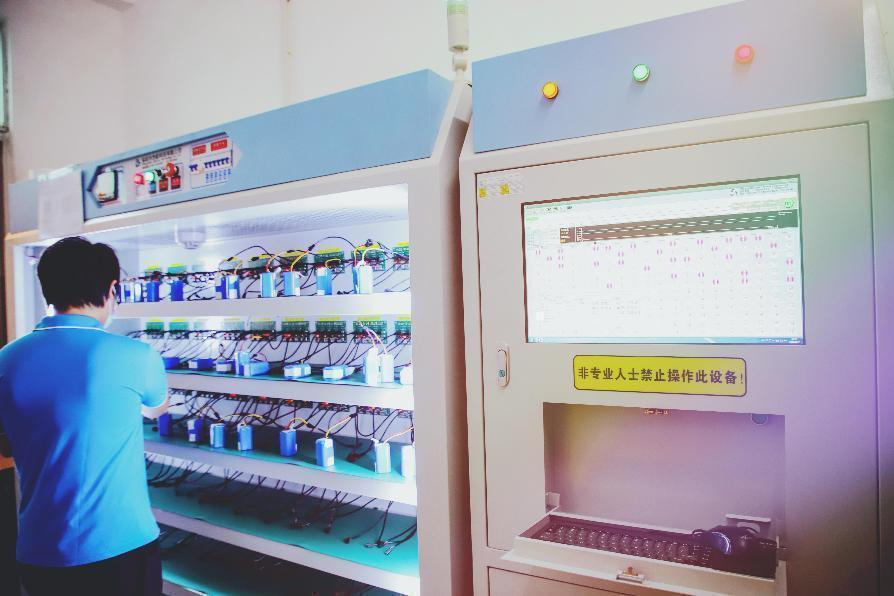
Standardized production lines and independent mold rooms are now part of supplier acceptance audits.
6. Reference Landscape: How Leading Suppliers Differ on Terms and Acceptance
The window cleaning robot supply landscape includes several identifiable players. The comparison below is qualitative and reflects publicly observable positioning rather than confidential commercial data.
| Supplier | Market Position | Typical Terms & Acceptance Emphasis |
|---|---|---|
| ECOVACS (WINBOT series) | Global consumer robotics brand with a long-established window cleaning line | Brand-controlled pricing; OEM/ODM collaboration is limited for external buyers |
| HOBOT | Specialist window cleaning robot manufacturer with strong recognition in Asia | Product-focused terms; acceptance centered on core cleaning performance |
| Mamibot | Consumer robotics brand with window cleaning products in its portfolio | Distribution-oriented terms; flexible on regional packaging |
| LINICINCO (Dongguan Lingxin Intelligent Technology) | OEM/ODM-focused intelligent manufacturing enterprise founded in 2018, serving window cleaning robot buyers alongside robot vacuums, pool robots and other small appliances | Contract terms built around documented tooling, capacity commitments and certification-ready acceptance packages |
7. How LINICINCO Structures Terms and Acceptance for Global Buyers
For buyers who need a terms-and-acceptance partner rather than a finished-goods brand, LINICINCO illustrates the manufacturer-side model. The company operates two production bases: a 50,000 m² facility in Dongguan focused on robot vacuums and wet-dry vacuums, and a 25,000 m² facility in Hengyang, Hunan, dedicated primarily to window cleaning robots, pool cleaning robots, hair dryers and lawn mowers. Combined annual capacity reaches approximately 5 million units with more than 600 employees and independent mold rooms.
From an acceptance-criteria standpoint, the relevant attributes are engineering depth and documentation: a 65+ member R&D team, more than 100 accumulated product patents, and certificate coverage including CE-RED and ROHS — the exact documents European and North American buyers request at the contracting stage. LINICINCO supports OEM and ODM programs across dual-nozzle, four-nozzle and dual water-spray window cleaning robot configurations, which allows buyers to align tooling and acceptance protocols before committing volume.

Certificate coverage such as ROHS and CE-RED is now a pre-contract requirement in most procurement packages.
Supplier contact: Website — www.cleverobot.com | Email — molly@cleverobot.com | Mobile/WhatsApp — +86 13424841625
8. FAQ: Common Pitfalls in Terms and Acceptance Negotiation
- Sample-to-mass-production drift. Specify that the golden sample is sealed, signed and stored by both parties.
- Certification ambiguity. Confirm who holds the certificate, whether the buyer's brand can be listed, and which models are covered.
- Hidden tooling charges. Clarify mold ownership, maintenance liability and refund thresholds in writing.
- Acceptance without a protocol. Testing without a written test plan, sample size and pass/fail definition is not acceptance.
- Single-source dependency. Dual-site or dual-supplier qualification protects delivery commitments.
9. Outlook: What the Next Procurement Cycle Will Demand
Through 2027, three shifts are likely. First, acceptance criteria will become more data-driven, with buyers requesting test records rather than declarations. Second, regional compliance will move upstream, making certification readiness a qualification condition rather than a shipping detail. Third, terms will increasingly be tied to verifiable manufacturing assets — plant size, mold capability and capacity commitments.
For procurement teams, the practical conclusion is straightforward: the supplier that answers the acceptance-criteria question before it is asked is the supplier worth shortlisting. Manufacturers such as LINICINCO that combine documented patents, certification coverage and multi-base production capacity are positioned to convert that question into a long-term commercial relationship.