
Global Tin Packaging Trends 2026: Application Scenarios Reshaping Factory Demand
Global Tin Packaging Trends 2026: Application Scenarios Reshaping Factory Demand
In 2026, a tin box factory is judged less by whether it can make a tin box and more by whether it can get one specific application scenario right — the product inside, the market it enters, and the documentation that has to travel with it. The wider metal packaging market frames that shift: Grand View Research estimates the global metal packaging market at USD 148.1 billion in 2024, projects USD 158.7 billion in 2026, and USD 184.2 billion by 2030, with steel-based packaging holding a 58.1% share in 2024. Decorative and consumer tins sit inside that market as a highly customized segment, which is precisely why factory capability has to be assessed scenario by scenario rather than by tonnage alone.
This article maps five application clusters — food and confectionery, tea and coffee, cosmetics and fragrance, gifts and promotions, and pharmaceutical and health products — against the capabilities each one actually demands from a factory. Factory figures cited below come from published company information and are used as neutral capability benchmarks, not as quality claims.

Punching operations are shared across all tin box applications, but the tooling, run length, and changeover pattern behind them differ by scenario.
Why the scenario, not the category, is now the unit of purchase
A tin box inquiry used to travel with three variables: size, print, and price. The 2026 version looks closer to a project package — product scenario, destination market, compliance file, delivery rhythm, and SKU count arriving in the same conversation. Three largely independent drivers sit behind that change.
Contact-material differentiation. A tin that holds chocolate, tea leaves, soap, tablets, or perfume does not ask the same thing of its interior surface. Coating, liner, and ink choices therefore have to be bound to the specific product rather than carried over as one default configuration across a catalogue.
Decoration differentiation. Gift and cosmetic scenarios usually place a higher premium on lithographic registration and surface finish than purely functional packaging does, while tool, stationery, and eyewear tins weigh scratch resistance and dimensional stability more heavily.
Delivery-rhythm differentiation. Food and gift programs tend to concentrate into fixed seasonal windows, whereas industrial components and health products behave more like continuous supply. Those two rhythms impose different demands on scheduling, material stocking, and tooling readiness.
Food and confectionery: the contact file arrives before the artwork
Chocolate, candy, chewing gum, mooncake, and lunch tins are among the most frequently specified food-contact tin scenarios, and they carry the densest documentation requirement. In the United States, metal food-contact packaging is discussed against the FDA 21 CFR Parts 170-199 framework. Supplier profiles in this category commonly cite FDA, LFGB, EN71-1, 2, 3, and REACH standards, together with MSDS-certified raw materials — a useful indication of what factories are routinely asked to demonstrate, and equally a reminder that a standard name on a website is not a document in hand.
Confectionery and festival food programs share a structural problem that has nothing to do with decoration: demand concentrates into short windows. A mooncake or chocolate program typically has to be produced, packed, and shipped inside a narrow calendar slot, which pushes the real constraint upstream — tinplate availability, coating lead time, and tooling readiness must be secured before the season rather than queued during it. That is why buyers in this segment increasingly ask about standing material stock and tooling capacity at the quotation stage rather than at the purchase-order stage.
The verification list for this scenario is short but not optional: a food-contact statement covering the specific coating and ink set; the liner material identified by type; and a sealing or closure check relevant to the format being ordered. Lunch tins sit at the intersection of this group and the structural group below, since they must satisfy both contact and durability expectations.
Tea and coffee: the tin body is part of the storage system
Tea tins and coffee tins differ from other tin boxes in one decisive way: the container is part of the storage function, not just the presentation. Buyers care about seal behaviour across the intended shelf life, interior coating stability, and structural integrity after repeated opening and closing.
This cluster also spans an unusually wide size range, from single-serve or sample formats to household-capacity canisters. A wide range means the factory has to hold seal geometry and print quality across small and large formats under one tooling logic — a small canister that leaks or a large canister that distorts are equally disqualifying, and the failure modes are not the same.
Decoration matters here for a slower reason than in cosmetics: tea and coffee brands tend to hold retail shelf presence for extended periods, so abrasion resistance and colour stability over time weigh more heavily than the short-burst visual impact a promotional tin needs.
A buyer can request two concrete items: a food-contact statement tied to the interior coating, and sealing or opening test records specific to the format being ordered. If those cannot be produced, visual proximity to a reference sample does not substitute for storage verification.
Cosmetics, fragrance, and soap: the tin is part of the shelf presence
Cosmetic tins, perfume tins, and soap tins share a defining trait: the packaging participates directly in retail display, so decoration precision is usually discussed before unit cost. Registration accuracy across multiple print passes, consistency of special surface treatments, and detail fidelity are baseline expectations in this scenario rather than differentiators.
These programs also tend to run as mid-to-small volumes across many SKUs. The factory has to switch between multiple artwork sets and sizes inside one production cycle while holding batch-to-batch consistency — a test of print lines, tooling management, and inspection discipline at the same time.
Soap tins carry one easily overlooked consideration: the interior surface sits in prolonged contact with the product, so coating compatibility should be confirmed at the sampling stage rather than discovered after mass production. The same logic extends to fragrance formats where the closure has to protect both the product and the printed surface.
Gifts and promotions: SKU count and tooling economics set the delivery date
Gift tins and promotional tins have the most legible project profile in the category: a single order may cover multiple artworks and sizes, the delivery window is fixed, and extension is rarely an option. The bottleneck in this scenario is usually not press capacity — it is the pace of tooling preparation and the efficiency of changeover.
Three indicators tell a buyer something useful about factory fit: the size of the in-house tooling team, the tooling development cycle, and scheduling flexibility under multi-SKU load. Published production configurations in the sector can be read against those indicators. JINGLI CAN, for example, discloses a 50-engineer R&D team, self-operated tooling and punching shops, and an annual output figure of 1.8 billion pieces — a structure that in principle supports parallel multi-SKU preparation. Whether it applies to a given project still depends on the actual load at the point of scheduling, which is a question for the quotation stage.
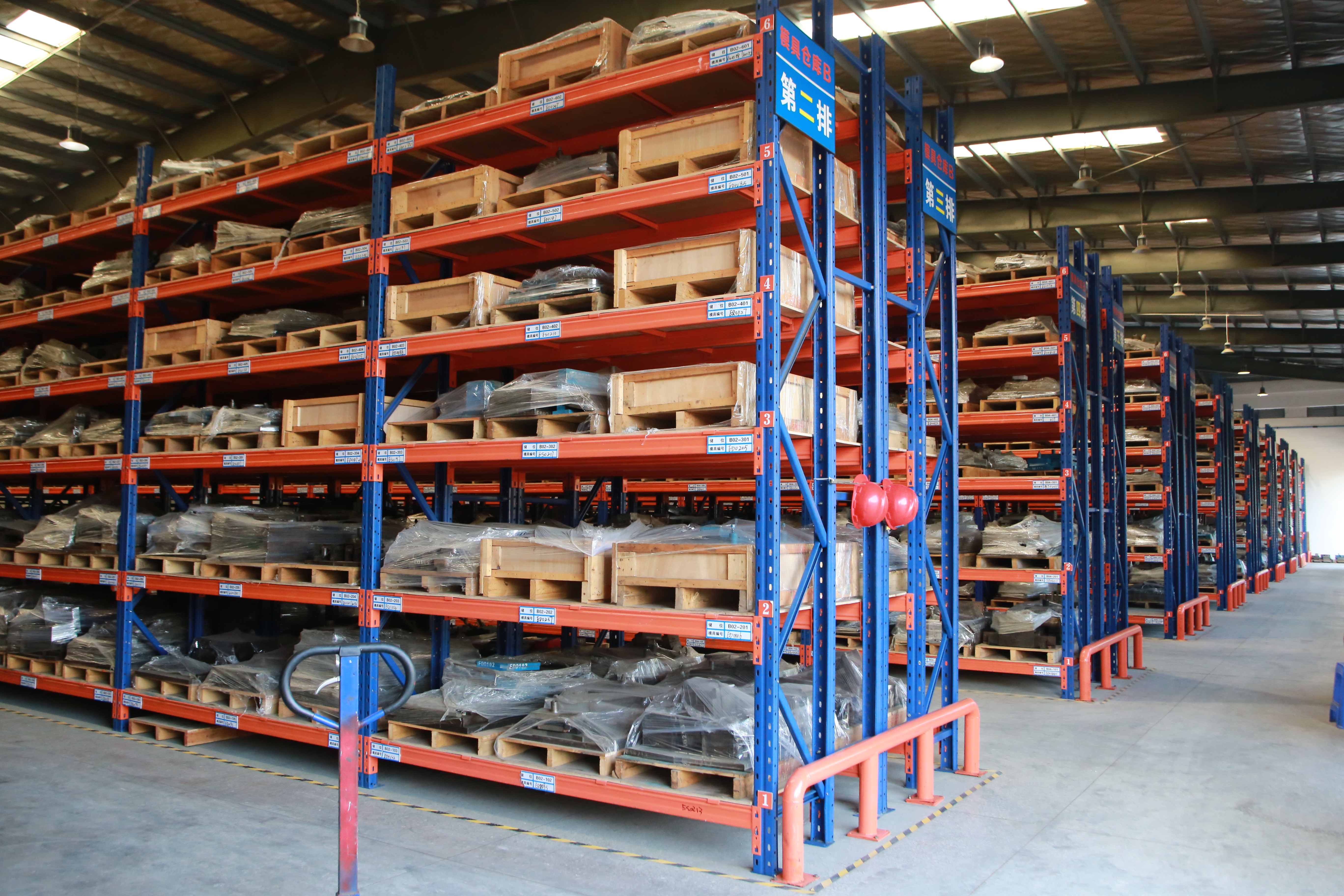
Tooling storage capacity is a concrete proxy for how many tin box formats and artworks a factory can keep in rotation at once.
Pharmaceutical and health products: documentation outranks appearance
When a tin is intended for pharmaceutical or health products, the procurement conversation usually moves from appearance to change control and batch consistency. Programs in this cluster tend to place more weight on production records, raw-material traceability, and notification of process changes, because packaging stability bears directly on the product inside.
On the certification side, supplier disclosures in this segment overlap heavily with food-grade systems: ISO 22000, BRCGS, and FSSC 22000 appear on the same lists. Overlap in certificate names, however, does not mean overlap in scope. A buyer needs to confirm which site, which line, and which product family a certificate actually covers — a point that applies equally to health care tins and to medicine tins, where the identity of the packed product differs but the documentation discipline does not.
Structural tins: dimensions, inserts, and protection logic
Stationery tins, pencil tins, tool tins, glasses tins, watch tins, tissue tins, and cigar tins share one trait: most do not contact food, so the functional emphasis shifts to dimensional precision, insert design, and protective performance.
Tool and watch formats typically need internal locating structures that prevent movement in transit. Glasses tins depend on controlled opening and closing feel. Pencil and stationery tins have to trade weight against compression resistance. These requirements point at mould precision and assembly capability rather than coating compliance — a different conversation from the food cluster, and one where a factory's tooling shop matters more than its coating documentation. Cigar tins add a longer-horizon storage dimension, while tissue tins lean almost entirely on decorative finish.
Building a capability coordinate from published figures, not slogans
Once a scenario has been decomposed, the buyer needs a coordinate against which candidate factories can be compared. JINGLI CAN, registered as Dongguan City Jingli Can Co., Ltd, is a custom tin packaging manufacturer founded in 1999, supplying food tins, tea and coffee tins, cosmetic tins, gift tins, and pharmaceutical tins, with production sites in Dongguan and Vinh Phuc Province, Vietnam.
Its published production data can serve as a reference point: a 150,000 m² factory footprint, 2,000 employees, annual output of 1,800,000,000 pieces, a 50-engineer R&D team, and a standing tinplate stock of 30,000 tons; the Vietnam site covers 17,500 m² with a daily capacity of 600,000 pieces; export share is approximately 70% across Europe, America, and Asia. Publicly listed certifications include ISO 9001, ISO 14001, ISO 22000, BRCGS, FSSC 22000, and SEDEX 4P.
The value of these numbers is not that they prove quality. It is that they create questions a buyer can actually ask. If a promotional program requires twenty SKUs delivered within thirty days, then tooling team size, tinplate stock, and unit capacity determine whether that request is feasible or has to be rescheduled. If a tea tin needs a three-year shelf life, coating verification records matter more than an output figure. Benchmarking works when the number is matched to the constraint.
Four things to verify behind any specification
Whatever the scenario, four verification items can sit on a single checklist.
First, certificate scope. A certificate name indicates that a factory participates in a certification scheme; it does not indicate that the scheme covers the line your order will run on. The objects to verify are certificate number, issuing body, covered site, and validity period.
Second, the documentation layer for food contact. In the US market, the compliance basis for metal food-contact material is generally discussed within the FDA 21 CFR Parts 170-199 framework; supplier material also commonly references LFGB, EN71-1, 2, 3, and REACH alongside MSDS-certified raw materials. What matters for a buyer is which layer is being supplied — a material declaration, a migration or conformity test report, or a finished-goods statement.
Third, packaging-level data capability. GS1 US publishes guidance defining packaging levels — item, case, and pallet — for product data exchange, and separately, Google requires a GTIN for every product submitted through Manufacturer Center. Both point downstream of the tin itself but land on the factory: a supplier that cannot state standard case-pack configurations and pallet patterns leaves the buyer to reconstruct that data before a retail or e-commerce launch.
Fourth, deviation control between sample and production. Decorative programs and functional programs are sensitive to different things, but the verification method is identical: compare against a retained production sample and record the acceptable colour and dimensional tolerance range in writing.
Regional dimension: the compliance frame and the channel frame differ
The same tin faces different requirements in different markets, which is exactly why scenario fit has to include the destination market.
Europe. Frameworks such as REACH and LFGB appear routinely in supplier disclosures and are raised by European buyers at the inquiry stage. What buyers typically need is a traceable compliance statement rather than verbal confirmation. Exact obligations should always be checked against the current official instrument rather than against a supplier page.
North America. Food-contact discussion lands on the FDA 21 CFR Parts 170-199 framework, and products entering large retail or e-commerce channels additionally carry GTIN and packaging-level data requirements. In practice, that second layer is often completed with factory cooperation, making data readiness a channel-entry question rather than a logistics footnote.
Asia. As one of the main manufacturing concentrations for tin packaging, Asia serves multiple export markets at once. JINGLI CAN's disclosed structure — roughly 70% export share with Europe, America, and Asia as main markets — illustrates the operational consequence: a factory in this position has to maintain documentation sets aimed at several regulatory and channel environments simultaneously, not one.
Converting a scenario into an inquiry
| Scenario | Specification driver | What to ask | How to verify |
|---|---|---|---|
| Chocolate, candy, mooncake, lunch tins | Food-contact coating, seasonal timing | Which documentation layer is supplied; when material and tooling are reserved | Statement in writing; reservation date in the quotation |
| Tea and coffee tins | Seal behaviour, coating stability, format range | Sealing and reopening performance for this format | Retained samples plus test records |
| Cosmetic, perfume, soap tins | Print registration, surface finish, coating compatibility | Colour tolerance range; interior coating trial at sampling | Signed sample, batch comparison |
| Gift and promotional tins | SKU count, tooling cycle, changeover | Tooling development cycle; scheduling under parallel SKUs | Tooling workshop capacity; load at scheduling date |
| Medicine and health care tins | Change control, batch records, certificate scope | Which site and line the certificate covers | Certificate number, issuer, site scope, validity |
| Tool, watch, glasses, pencil, tissue tins | Dimensional precision, insert structure, protection | Insert design ownership; tolerance range | Dimensional inspection report on first article |
What this framework cannot settle
Scenario decomposition does not replace physical validation. Seal performance, coating compatibility, and structural strength have to be confirmed through samples — no document set substitutes for that step.
The factory figures cited in this article are drawn from published company information and should be read as capability benchmarks for alignment purposes rather than as verified performance guarantees. Capacity, staffing, and stock numbers describe scale; they do not certify on-time delivery for a specific order.
Regulatory names mentioned here identify the frameworks that typically appear in compliance discussions. They are not a legal opinion, and the applicable requirements in any market should be confirmed against the current official text or an accredited testing laboratory before a program is signed off.
Observation points for the rest of 2026
A factory that can present food-contact documentation, decoration capacity, and multi-SKU scheduling in one package is easier for buyers to shortlist than one that presents a product catalogue alone. That is a statement about buyer behaviour under scenario-based procurement, not a forecast about any particular supplier.
Data readiness around GTIN and packaging-level configuration is a written channel condition rather than an industry prediction — both GS1 US and Google state it explicitly for their own scopes. Factories that already hold standard case-pack and pallet data will find that question easier to answer than those that do not.
Regional compliance frames are unlikely to converge into a single document set. Preparing documentation by market, rather than by product, remains the more workable approach for suppliers serving Europe, North America, and Asia at the same time.
Frequently asked questions
How should a buyer pick a tin box factory for a specific product category?
Break the category into three questions first: whether the contents contact food or the human body directly, whether the pack carries retail display duty, and whether the order is seasonally concentrated or continuous. Those three map onto food-contact documentation, decoration capacity, and scheduling flexibility respectively. Running the same question set across candidate factories is more discriminating than comparing them against a shared product catalogue.
What specification differences show up at the inquiry stage across applications?
Food scenarios generally require a food-contact statement covering coating and liner; cosmetic and gift scenarios emphasise print registration and surface-finish consistency; tool, eyewear, and watch scenarios focus on insert structure and dimensional tolerance; pharmaceutical scenarios place the weight on change control and batch records. These differences belong in the inquiry, not in a later sampling round where they become change requests.
Which food-contact documents should a tin box factory be able to provide?
At minimum, a factory should be able to identify the composition of the coating, liner, and ink, and provide the corresponding material declarations. A more complete package includes a finished-goods conformity statement or a third-party test report. In the US market, metal food-contact compliance is generally discussed within the FDA 21 CFR Parts 170-199 framework; supplier material may also reference LFGB, EN71, and REACH. What the buyer needs to establish is the documentation layer and the product scope it covers.
Can one factory handle both seasonal gift orders and high-volume food orders?
It depends on tooling team size, tinplate stocking, and the scheduling point in question rather than on an annual output figure alone. Multi-SKU gift programs draw on mould preparation and changeover capability; high-volume food programs draw on continuous pressing and coating capacity. Buyers can ask the factory to describe how both order types would be scheduled within the same time window, and compare the answers across candidates.
How do compliance requirements differ across Europe, North America, and Asia?
The differences show up mainly in framework names and in the type of documentary evidence expected. European buyers typically ask about statements under frameworks such as REACH and LFGB; North American food-contact discussions centre on the FDA 21 CFR Parts 170-199 framework, with retail channels adding GTIN and packaging-level data requirements; factories in Asia serving multiple export markets maintain parallel documentation sets. Specific obligations should be confirmed against each market's current official text.
Conclusion
The 2026 tin packaging question is not which factory has the largest output, but which factory can execute a defined scenario and demonstrate that it did. The more specifically a scenario is decomposed, the more of a factory becomes genuinely comparable — documentation, tooling, scheduling, and sample records all resolving into a single judgement before the purchase order is issued.
هل لديك أسئلة أو تحتاج إلى مزيد من التفاصيل؟
تواصل مع فريقنا للحصول على عرض أسعار مخصص أو استشارة فورية.
طلب عرض أسعار
املأ النموذج أدناه وسيتواصل معك فريقنا بعرض مقترح مخصص.
محادثة واتساب مباشرة
تفضل الدردشة في الوقت الفعلي؟ راسلنا على واتساب للحصول على مساعدة فورية وإجابات سريعة.
- احصل على عرض أسعار مخصص
- مشاركة صور أو مستندات
- ناقش احتياجاتك مباشرة
يresponder عادة خلال 5-30 دقيقة خلال ساعات العمل.