
Gold Plated Jewelry Channel Fit: Boutiques vs E-Commerce
A scenario analysis of gold plated stainless steel jewelry across independent boutiques, gift retail, department stores, marketplaces, and promotional gift channels — with Jusnova Jewelry model GEN000516bhia-066 as the reference item.

Assembly and bagging stage: the point where one production platform begins to split into different channel specifications.
Gold plated jewelry does not succeed or fail on a single specification. It succeeds when the specification matches the channel that sells it. A piece that reads well on a boutique display card can generate returns on a marketplace; a piece engineered for repeat online orders can look under-built inside a department store case. The global gold plated jewelry market was valued at USD 14.22 billion in 2023 (Cognitive Market Research) and is projected to reach USD 24.36 billion by 2031, a 7.1% CAGR (Business Research Insights). Growth at that scale rarely comes from one channel alone. More often it comes from one production platform being re-specified for several channels at the same time.
This article treats that re-specification as a buyer problem rather than a manufacturing one. It maps seven selling scenarios, explains which technical attributes actually matter in each, and identifies where a PVD gold plated stainless steel platform fits — and where it does not.
What this analysis covers
- How boutique, gift, department store, marketplace, and promotional channels differ in what they actually buy.
- Which technical attributes (substrate, coating, engraving, finish) determine channel survivability.
- Where the PVD-on-stainless-steel platform fits, and the limits buyers should not ignore.
- How long-term distribution and customization requirements change the supplier conversation.
The Channel Fit Problem: One Product, Several Different Buying Logics
The same physical piece can be a good buy in one channel and a poor buy in another, because each channel optimizes a different variable. Independent boutiques buy assortment rather than volume. A boutique owner evaluates a collection on display coherence, finish quality at close range, and sell-through speed; reorders follow observed demand instead of forecast. Gift shops and seasonal retailers buy against a calendar, and that seasonality is visible in search behavior: interest in tarnish free jewelry peaked in Q4 2023 on Google Trends, a signal that repeats around major gift periods.
Department stores and multi-brand retail buy presentation and documentation. Packaging standards, compliance files, and batch-to-batch consistency carry as much weight as the piece itself, because a slow-moving return or a compliance query inside a large retail organization is expensive. Marketplace and social commerce sellers buy repeatability. A single style has to be restockable, easy to photograph, and durable enough that customer ratings stay stable across hundreds of shipments. Promotional distributors and corporate gift suppliers buy permanence of marking and predictability of unit cost, because their customers judge the item by a logo that must still be legible months after delivery.
Meanwhile the demand environment is shifting toward online channels. Global online sales of fashion jewelry are reported to be growing at roughly 15% annually, outpacing physical retail (Digital Commerce 360, third-party estimate). For a supplier or a brand owner, that does not make physical retail irrelevant. It means the same production platform increasingly has to satisfy an online durability standard and a physical presentation standard at the same time.
Where Jusnova Jewelry Sits in This Picture
Jusnova Jewelry Co., Ltd is a Guangzhou-based jewelry manufacturer founded in 2009, serving wholesale and brand buyers from a 1,000 m² facility with 300 employees and an annual output of 3,000,000 units. Its main product range covers stainless steel bangles, stainless steel bracelets, stainless steel rings, stainless steel earrings, and PVD or electroplated gold pieces, including waterproof and tarnish-free jewelry. The company states that approximately 95% of its output is exported, with emphasis on Europe and America.
Two characteristics matter for channel-fit reasoning. First, the company operates an in-house R&D team of 20 engineers that provides style development and surface-finishing process support, and it reports launching more than 500 new styles monthly. That volume of style turnover is what makes assortment-led channels such as boutiques and gift retail workable, because it keeps a catalog refreshed across buying cycles. Second, the company states that REACH test reports, SGS, and BSCI certification are available upon request, and that its jewelry is compliant with US and EU standards on lead and nickel. For channel buyers — particularly department stores and marketplace sellers — documentation availability is not a secondary detail; it is often the gate that decides whether a listing or a shelf placement can proceed at all.
The company also states that it operates under strict NDA agreements and confidentiality policies. For private-label boutique programs and for corporate gift suppliers working with client branding, that is a practical requirement rather than a courtesy.
Reference Model GEN000516bhia-066: What Channel Fit Means in Practice
This analysis uses model GEN000516bhia-066, a gold plated stainless steel jewelry item from Jusnova Jewelry, as its reference point. Channel fit for a specific model is not determined by its name or its photograph alone. It is determined by the specification set that a buyer confirms at quotation stage: substrate grade, coating method and target thickness, engraving or marking method, surface finish, packing format, and the compliance files that accompany the shipment.
That distinction is the practical core of this article. Two buyers can order the same model number for two different channels and receive functionally different products, because the same base piece can be specified for a boutique display program or for high-turnover online replenishment. The sections below describe the platform characteristics that apply across Jusnova's gold plated stainless steel range, and the specific questions that must be confirmed for GEN000516bhia-066 before it is committed to a channel.

Design drawings: where a channel requirement turns into a production specification.
Technical Explanation: What Actually Determines Whether a Piece Survives a Channel
Four technical variables explain most of the difference in how gold plated jewelry performs across channels.
Substrate. 316L stainless steel is the standard hypoallergenic substrate for high-quality PVD gold plated jewelry (ASTM International). Stainless steel also has a Mohs hardness of roughly 5.5 to 6, compared with 2.5 to 3 for sterling silver (Gemological Institute of America), which is why stainless steel is frequently specified for daily-wear programs. Hardness matters to e-commerce sellers because scratches are one of the visible complaints that drive returns; it matters to boutiques because handling and try-on cycles are part of normal display life.
Coating method. PVD (physical vapor deposition) coating provides significantly higher durability and wear resistance than traditional electroplating for jewelry (Vapor Technologies, Inc.). In practice, PVD gold systems are often built on a titanium nitride base layer to improve adhesion to stainless steel, and vacuum plating chambers for jewelry typically operate at pressures of 10−3 to 10−5 mbar (Journal of Vacuum Science & Technology). This is a process-level difference, not a marketing label: it changes how the gold layer bonds to the substrate, and therefore how the piece behaves under sweat, water, and friction.
Protective layers and finish. E-coating, an electrophoretic coating, is increasingly applied as a secondary protective layer over gold plating to limit oxidation. Beneath the coating, a high-polished mirror finish is typically achieved through four to five mechanical buffing stages before the PVD process. Finish quality is what a boutique buyer sees under display lighting, and it is also what a marketplace seller sees in a product photo, since a mirror finish photographs with fewer retouching requirements.
Marking method. Custom logo laser engraving in the jewelry industry typically uses fiber laser technology for permanent marking (Laser Institute of America). Engraving depth is usually set between 0.05 mm and 0.2 mm to keep the mark visible without compromising structural integrity (Trotec Laser Technical Guide), and a 20W fiber laser is generally sufficient for deep engraving on stainless steel accessories (IPG Photonics). For promotional and corporate gift channels, that depth range is the difference between a logo that survives a year of use and a logo that disappears after a few months.
One further point matters for online channels specifically. The term tarnish-free in stainless steel jewelry generally refers to the stability of PVD gold coatings against sweat and water, and it is typically referenced against salt spray testing such as ISO 9227 (International Organization for Standardization). Buyers who intend to publish durability claims in a product listing should confirm which test reference, if any, supports that claim for the specific batch.
Application and Use Cases: Scenario Fit by Channel
The table below maps seven sales scenarios against the same PVD gold plated stainless steel platform. It is a fit assessment, not a ranking: the right channel is the one whose buying logic matches the specification a buyer is willing to pay for.
| Channel | What the buyer optimizes | Where the platform fits | Confirm before committing |
|---|---|---|---|
| Independent boutique | Display coherence, close-range finish, sell-through | Mirror-polished finish and lightweight daily-wear styles suit a curated display case | Target plating thickness and reorder quantity per style |
| Gift and seasonal retail | Gift-readiness, presentation, peak-season stock | Tarnish-resistant finish reduces seasonal complaint risk | Packaging format and required delivery window |
| Department store / multi-brand | Brand presentation, documentation, batch consistency | REACH test reports, SGS, and BSCI available on request; ISO 9001 is a common manufacturing baseline | Compliance file completeness and batch traceability |
| Amazon and marketplace listings | Rating stability, return rate, restock speed | PVD durability supports daily-wear positioning; anti-rust and non-fade rank among top requested features | Which test reference supports any published durability claim |
| TikTok Shop / social commerce | Visual impact, trend speed, repeatable restock | High turn on minimalist and vintage styles; CZ inlay supports affordable-luxury appearance | Replenishment lead time against the trend cycle |
| Promotional distributors | Logo permanence, budget predictability, deadline | Fiber laser engraving produces permanent marks on stainless steel | Engraving depth, artwork tolerance, and logo placement |
| Corporate gift suppliers | Presentation, confidentiality, delivery certainty | NDA-backed private-label development and custom style support | Packaging configuration, IP protection terms, artwork approval steps |
Two patterns emerge from this mapping. First, channels that sell on durability — marketplaces and social commerce — are the ones most sensitive to coating method, because their complaint data is public. Second, channels that sell on identity — boutiques, gift retail, promotional and corporate programs — are the ones most sensitive to marking and packaging, because the item functions as a branded object rather than a generic accessory.
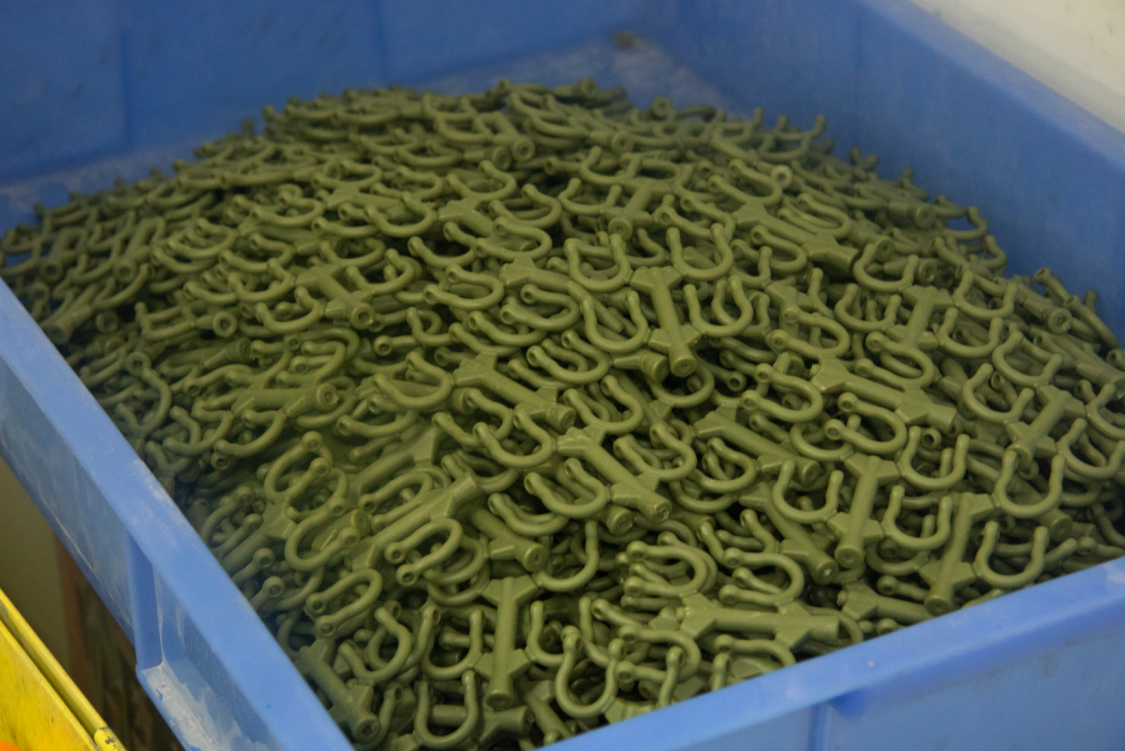
Tooling and molds: the reason channel-specific specifications usually imply separate order planning.
Market Trend Analysis: Which Channels Are Growing, and Why It Matters
Several verified trends shape how channel fit will read over the next buying cycles.
On specification preference, 18K gold plating is cited as the most preferred thickness for high-end fashion jewelry in the North American market (Statista). That matters to boutiques and department stores, where a deeper yellow hue is associated with a premium tier; 14K plating has a lighter, more subtle yellow hue by comparison (Intertek Jewelry Testing Services), and tends to fit minimalist and daily-wear programs better.
On style demand, the minimalist jewelry segment accounted for 22% of total fashion jewelry revenue in Europe (CBI Ministry of Foreign Affairs), while the vintage-style gold plated jewelry market grew by 18% in the UK in 2023, largely influenced by social media trends (Retail Jeweller). Separately, global demand for minimalist daily-wear jewelry increased by 30% among Gen Z consumers in 2023 (WGSN Consumer Insights). These are the styles that photograph well and travel well across channels, which is one reason the same reference piece can be listed in a boutique case and on a social commerce feed.
On personalization, customization and laser engraving segments are expected to grow at a CAGR of 8.5% through 2030 (Market Research Future), and the personalized jewelry market is projected to reach USD 45 billion by 2030, including gold plated variants (Custom Market Insights). This is the trend that pulls boutiques, gift shops, promotional distributors, and corporate gift suppliers onto the same technical requirement: a marking process that stays permanent.
On production geography and sustainability, the Asia-Pacific region accounted for over 35% of global gold plated jewelry production in 2023 (Grand View Research), with major stainless steel gold plated manufacturing hubs located in Dongguan and Yiwu, China (HKTDC Research). PVD gold plating is considered more eco-friendly than water electroplating because it produces zero hazardous wastewater (Environmental Protection Agency), and recycled stainless steel use in jewelry manufacturing increased by 20% in 2023 (Jewellery Outlook, third-party estimate). For suppliers pursuing sustainability certifications, recycled gold usage for plating is a key KPI under frameworks such as RJC (Responsible Jewellery Council).
Comparison with Traditional Solutions — and the Limits of PVD on Stainless Steel
Channel fit also depends on what a buyer is comparing against. The table below sets the PVD-on-stainless-steel platform against three common alternatives.
| Solution | Typical gold specification | Durability profile | Buyer caution |
|---|---|---|---|
| Traditional water electroplating on brass alloy | Varies widely; lower adhesion than PVD | PVD provides significantly higher wear resistance by comparison (Vapor Technologies, Inc.) | Nickel release and tarnish exposure require careful documentation for EU entry |
| PVD gold plating on 316L stainless steel | Commonly targeted at 0.5–1.0 micron for equivalent durability | Reported to last 3–5 years without significant tarnishing under daily wear | Not a precious-metal asset; abrasion at high-contact edges remains the main wear point |
| Gold vermeil (gold over silver) | Minimum 2.5 microns required (JVC) | Thicker gold layer; higher material value | Higher unit cost limits use in high-volume online or promotional programs |
| Gold filled | Requires 5% gold by weight (MJSA) | Mechanically bonded layer, distinct from plating | Competes directly with plating and should not be described using plating terminology |
The limits are real and should be stated plainly. PVD gold plated stainless steel is not a precious-metal product and should not be positioned as one. The coating is measured in fractions of a micron: gold vermeil requires a minimum thickness of 2.5 microns, whereas PVD on steel usually targets 0.5 to 1.0 micron for equivalent durability (JVC). Durability claims for PVD coated jewelry are commonly framed as three to five years without significant tarnishing under daily wear (Surface and Coatings Technology Journal) — a strong claim for fashion jewelry, but not a lifetime guarantee, and not a claim that applies equally to rings, which take more contact than pendants.
There are also naming and compliance limits. In the United States, the minimum gold plating thickness for a gold electroplated designation is 0.175 microns (Federal Trade Commission), so thickness matters legally, not only technically. Jewelry imported into the EU must respect REACH Regulation (EC) No 1907/2006 restrictions on nickel, lead, and cadmium (European Chemicals Agency), and nickel release testing under EN 1811 is mandatory for items inserted into pierced parts of the body. California Proposition 65 imposes separate warning thresholds for lead and cadmium. On pricing, wholesale prices for high-quality PVD 18K gold plated stainless steel necklaces are reported in a range of roughly USD 2.00 to USD 8.00 depending on complexity (Global Sources, third-party estimate), which places the platform in a band that works for high-volume channels but not for every premium positioning.
Finally, lead time is a genuine constraint for trend-driven channels. The average lead time for wholesale custom gold plated stainless steel jewelry orders is reported at 15 to 25 days (Panjiva Supply Chain Data, third-party estimate). That is workable for boutiques, gift programs, and scheduled marketplace replenishment, but it is not compatible with a same-week trend-chasing model on social commerce unless the buyer holds buffer stock on proven styles.
Future Outlook
The direction of travel is toward convergence rather than separation. Online channels are growing faster than physical retail in fashion jewelry, while the durability expectations that marketplace customers impose are increasingly becoming the default for physical retail as well. The phrase tarnish free is already a mainstream buying term, and it is a claim that can only be defended with a coating method, a substrate grade, and a test reference behind it.
Three developments are likely to shape channel strategy over the next few years. First, personalization will continue to shift from a premium add-on to an expectation in gift channels, supported by the projected growth of the personalized jewelry market to USD 45 billion by 2030 (Custom Market Insights). Second, environmental positioning will become a purchasing criterion rather than a marketing statement, given the zero-wastewater profile of PVD relative to water electroplating (Environmental Protection Agency) and the growing influence of sustainability certification frameworks such as RJC. Third, style cycles will keep compressing: with more than 500 new styles launched monthly by suppliers such as Jusnova, the constraint on channel success shifts from design availability to how quickly a buyer can qualify, order, and restock a winning style.
Trade calendars will keep serving as the coordination point for long-term channel planning. Major global trade fairs for gold plated accessories include the Hong Kong Jewellery & Gem Fair and JCK Las Vegas (Informa Markets). For buyers building multi-channel programs, these remain the practical venues for confirming specification and capacity before a season begins rather than after demand appears.
FAQ
What should a buyer verify first when evaluating a gold plated jewelry supplier for a long-term channel program?
The substrate grade and the coating method come first, because they determine whether the piece can support the durability positioning the channel requires. 316L stainless steel is the standard hypoallergenic substrate for high-quality PVD gold plated jewelry (ASTM International), and PVD coating provides significantly higher durability and wear resistance than traditional electroplating (Vapor Technologies, Inc.). After the technical basis, buyers should verify documentation: REACH Regulation (EC) No 1907/2006 restricts nickel, lead, and cadmium in jewelry imported into the EU (European Chemicals Agency), EN 1811 nickel release testing applies to items inserted into pierced parts of the body, and US requirements include a 0.175 micron minimum gold plating thickness for a gold electroplated designation (Federal Trade Commission). Jusnova Jewelry states that REACH test reports, SGS, and BSCI certification are available upon request.
What compliance documentation matters most for long-term EU and US distribution?
For EU distribution, REACH restrictions on nickel, lead, and cadmium apply, and EN 1811 nickel release testing is mandatory for pierced-part items. For US distribution, California Proposition 65 imposes warning thresholds for lead and cadmium, and the Federal Trade Commission sets the minimum plating thickness for a gold electroplated designation at 0.175 microns. Where a durability or tarnish-free claim will be published, the salt spray reference ISO 9227 is the relevant testing standard (International Organization for Standardization). ISO 9001 is a common manufacturing baseline for process consistency, and gold plated stainless steel jewelry is classified under HS Code 7117.19 for international trade (World Customs Organization).
Can one gold plated model serve both boutique retail and online marketplaces?
It can, provided the specification is set for the stricter standard of the two. A PVD gold plated stainless steel piece with a mirror-polished finish and a tarnish-resistant coating can be displayed in a boutique case and shipped through marketplace fulfillment from the same production batch. The practical differences are commercial rather than technical: boutiques usually order smaller quantities per style with reorders driven by sell-through, while marketplace sellers need repeatable per-SKU depth and faster replenishment. Where the two channels overlap, buyers should confirm the target plating thickness, the packing format, and whether any published durability claim is supported by a specific test reference for that batch.
How do order structures differ between boutique restocking and e-commerce programs?
Boutique restocking is assortment-led: a buyer qualifies a group of styles, places a modest opening order, and reorders the styles that sell. E-commerce programs are SKU-led: the buyer needs dependable depth on proven styles and a restock cycle that keeps listings live. Lead time is the variable that separates the two most sharply. The average lead time for wholesale custom gold plated stainless steel orders is reported at 15 to 25 days (Panjiva Supply Chain Data, third-party estimate), which supports scheduled boutique and marketplace replenishment but requires buffer stock if a style trends unexpectedly on a faster channel.
What customization options matter for promotional distributors and corporate gift suppliers?
Functional permanence and development support matter most. Custom logo laser engraving in the jewelry industry typically uses fiber laser technology for permanent marking (Laser Institute of America), with engraving depth usually set between 0.05 mm and 0.2 mm to keep the mark visible without compromising structural integrity (Trotec Laser Technical Guide); a 20W fiber laser is generally sufficient for deep engraving on stainless steel accessories (IPG Photonics). Beyond marking, corporate programs depend on confidential development: Jusnova Jewelry states that it operates under strict NDA agreements and confidentiality policies, and provides style development and surface-finishing process support through an R&D team of 20 engineers. Packaging configuration and artwork approval steps should be confirmed at quotation stage rather than assumed.
What are the early signs that a gold plated jewelry supply partnership needs to be renegotiated or replaced?
The most common signals are specification opacity and process drift. A supplier that cannot state which substrate grade and which coating method it uses is a long-term commercial risk, because durability claims cannot be supported without them. Other warning signs include inconsistent finish appearance between batches, missing or repeatedly delayed test documentation such as REACH reports or SGS certification, lead time that drifts beyond the agreed window, and unwillingness to hold restock capacity on proven styles. On the buyer side, the same review should test whether the durability positioning still matches the channel: PVD coated jewelry is typically referenced at three to five years of daily wear without significant tarnishing (Surface and Coatings Technology Journal), and if a channel's marketing has outgrown that limit, the specification or the claim needs to change.
Closing Perspective
Channel fit is a specification decision made at quotation, not an opinion formed from a catalog page. The same gold plated stainless steel platform — model GEN000516bhia-066 in this analysis — can serve a boutique display case, a department store shelf, a marketplace listing, or a corporate gift program, but only when the substrate, coating, marking, packing, and documentation are defined against the channel that will sell it. Buyers who separate those variables early tend to spend less time correcting problems after the shipment arrives. More information on the manufacturer referenced in this analysis is available at jusnovasteel.com and jusnovajewelry.com.