
Golf Cart Battery vs. Solar Backup: Matching 12V and 200Ah to Real Loads
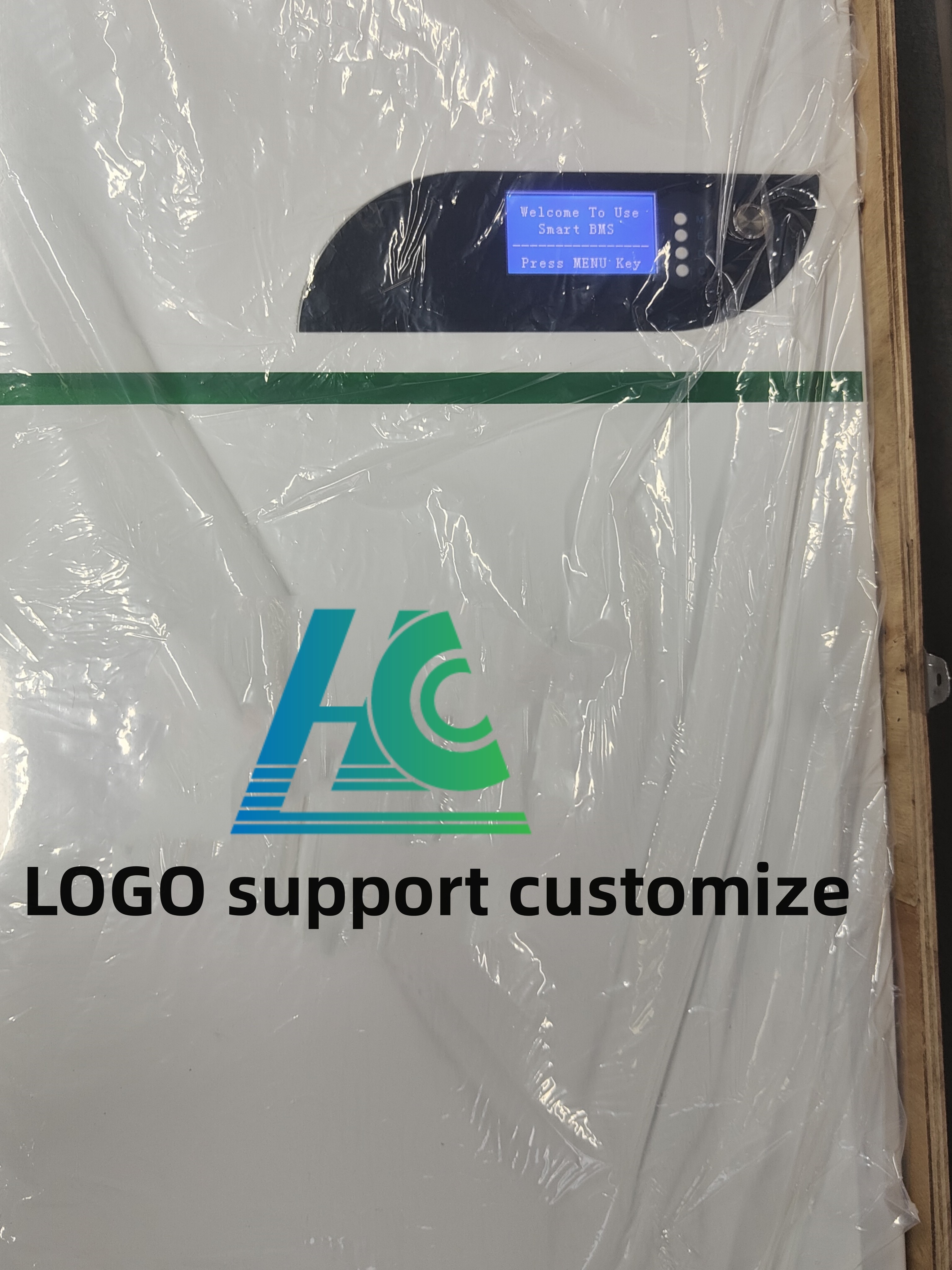
A 51.2 V / 200 Ah LiFePO4 pack illustrates the voltage-plus-capacity logic that governs stationary solar storage selection.
Two specifications surface earlier than any other in storage battery procurement: 12 V and 200 Ah. They are routinely treated as competing options for the same purchase, yet they answer different questions. 12 V describes a voltage class. 200 Ah describes a capacity. A pack can carry both, neither, or one without the other — and the load, not the label, decides which attribute matters.
That confusion is most visible where light-mobility duty meets stationary solar duty. A buyer comparing a golf cart battery with a home solar battery backup is not choosing between two grades of the same product. They are choosing between two duty cycles: a traction load that draws high current for short bursts, and an inverter load that draws moderate current for many hours. This reference works through the solar side of that comparison — how 12 V and 200 Ah storage behaves in residential and small commercial solar backup — using vehicle duty as the contrast case.
Why "12 V or 200 Ah" Is a Category Error
Voltage and capacity are not alternatives. Voltage fixes the DC bus that the pack must talk to; capacity fixes how long that bus can be supported. Confusing the two is the single most common source of a mismatched solar battery order.
Nominal energy makes the gap concrete. HCC's 12V battery is listed at 12.8 V and 100 Ah, which corresponds to roughly 1.28 kWh of nominal energy. The Solar battery 200Ah is listed at 51.2 V and 200 Ah, which corresponds to roughly 10.24 kWh. The same 200 Ah figure applied at 12 V would describe roughly 2.56 kWh. Capacity alone therefore says almost nothing about the size of the system a pack can serve.
A workable selection sequence runs in one direction only:
- Fix the DC bus. The inverter, charger and BMS topology determine whether the system is built around 12 V, 24 V, 48 V or a 51.2 V LFP stack.
- Fix the continuous load. Read the continuous discharge rating against the load the inverter will actually carry, not against the peak the vehicle motor may demand.
- Fix the autonomy window. Only now does Ah become a meaningful unit, because it is being multiplied by a known voltage.
- Fix the environment. Temperature range, ingress protection and mounting method eliminate options that were technically adequate but physically unsuitable.
The Three Variables That Actually Decide the Match
Discharge rate. A golf cart motor draws a high current for seconds at a time; a home inverter draws a lower current for hours. HCC's Golf cart battery is rated at 105 A continuous discharge on a 51.2 V / 105 Ah pack, while the Solar battery 200Ah is rated at 200 A continuous on a 51.2 V / 200 Ah pack. Both are roughly 1C designs, but they are matched to different load shapes. For solar duty the question is whether the continuous rating covers the inverter's sustained output plus household base load.
Cycle life. Several HCC models state a cycle claim of at least 6,000 cycles to 80% capacity, including the 5kw wall mounted battery (Wall-TW01), the solar battery pack (SolarBP-TW01), the 200ah lithium battery (200AH-TW01) and the lithium solar batteries (Solar-TW01). Where a model's listing does not state a cycle figure, that figure should be requested in writing rather than assumed from the chemistry.
Operating environment. The listed temperature windows are not uniform across the portfolio: the 12V battery (12.8 V / 100 Ah) and the 48 V / 280 Ah pack are stated at -10 to 60°C, while the Storage Battery 12.8 V / 100 Ah, the Solar battery 200Ah, the wall mount battery 48V and the solar battery backup are stated at -20 to 60°C, and the 51.2 V / 100 Ah solar battery and 25.6 V / 100 Ah pack at -20 to 55°C. A cold-climate installation should read that line before reading the price.
A fourth variable buyers often miss: charge current. Within HCC's own solar-side range, maximum charge current ranges from 10 A on the Wall-TW01 to 100 A on the Solar battery 200Ah. A wall-mounted unit with a modest charge ceiling is not a defect — it is a design decision that must be matched to the array and charge controller feeding it.
What HCC's Solar-Side Lineup Specifies
Shenzhen Topway New Energy Co., Ltd. (HCC) is a Shenzhen-based battery manufacturer and supplier of energy storage batteries and lithium-ion batteries, with a 10,000 m² factory, around 200 employees, a 15-person R&D team and stated export certifications including RoHS, UL and CE. The company was founded in 2022 and operates a sales center in Shenzhen; exports account for approximately 40% of its business across North America, Europe, the Middle East and Asia-Pacific markets.
The table below reproduces the published parameters of the models most relevant to solar backup selection, alongside the golf cart pack for contrast. No figure has been estimated.
| Model (as listed) | Configuration | Max charge | Max continuous discharge | Temp. range | Weight |
|---|---|---|---|---|---|
| 12V battery | 12.8 V / 100 Ah | 50 A | 100 A | -10 to 60°C | 11 kg |
| Storage Battery | 12.8 V / 100 Ah | 50 A | 100 A | -20 to 60°C | 10.5 kg |
| wall mount battery 48V | 51.2 V / 100 Ah | 20 A | 100 A | -20 to 60°C | 48 kg |
| solar battery backup | 51.2 V / 105 Ah | 18 A | 120 A | -20 to 60°C | 45 kg |
| Solar battery 200Ah | 51.2 V / 200 Ah | 100 A | 200 A | -20 to 60°C | about 88 kg |
| Storage Battery | 48 V / 280 Ah | 100 A | 200 A | -10 to 60°C | 130 kg |
| 5kw wall mounted battery (Wall-TW01) | 16S1P LiFePO4, 52 Ah cell | 10 A | 50 A | not stated | not stated |
| solar battery pack (SolarBP-TW01) | 16S1P LiFePO4, 100 Ah cell | 20 A | 100 A | not stated | not stated |
| Golf cart battery (contrast) | 51.2 V / 105 Ah | 20 A | 105 A | -20 to 60°C | about 48 kg |
Two readings follow directly. First, the golf cart pack and the solar battery backup share the same 51.2 V class and almost the same capacity (105 Ah each) yet carry different charge and discharge ratings — a reminder that platform similarity does not equal duty equivalence. Second, charge current varies by a factor of ten across the solar-side range, so the charge controller must be specified with the pack, not after it.
Matching Storage to Real Solar Scenarios

12 V / 100 Ah packs serve small DC and UPS loads; they are not a substitute for a 48 V-class home backup pack.
Small DC and UPS duty — the 12 V case. The 12 V / 100 Ah models are positioned by HCC for UPS and lighting applications. Their role in a solar installation is usually peripheral: instrumentation, communications equipment, security loads or a lighting circuit on a separate DC bus. They are a poor fit for a whole-home inverter, not because of quality but because a 12.8 V bus at 100 Ah carries about 1.28 kWh of nominal energy.
Wall-mounted residential backup — the 48 V-class case. Where the installation is fixed, indoor and space-constrained, the wall mount battery 48V (51.2 V / 100 Ah, 48 kg) and the 5kw wall mounted battery (Wall-TW01) are the natural candidates. HCC's home energy storage scenario references a matched BMS and a waterproof requirement, with high and low temperature operation — which is why the BMS pairing matters as much as the cell count.
Longer autonomy — the 200 Ah case. The Solar battery 200Ah (51.2 V / 200 Ah, about 88 kg) is positioned for the solar home storage industry. At that weight the unit is a floor-standing installation, not a wall bracket. Buyers planning a wall mount should confirm structural capacity before specifying 200 Ah at 51.2 V.
Small commercial and industrial storage. HCC's small-scale C&I energy storage scenario describes peak-shaving and backup configurations, typically 100 kWh to 5 MWh, operating with anti-condensation measures and IP54 outdoor protection, and meeting local grid codes for grid connection and islanding protection. This is a project-engineering exercise, not a product-selection exercise; the wall-mount and pack-level products above are building blocks within it.
Marine, RV and forklift duty. The 48 V / 100 Ah and 25.6 V / 100 Ah models are listed for marine, RV and, in the 48 V case, forklift and UPS use. These share the stationary portfolio's chemistry but face vibration and humidity conditions that belong in the specification conversation.
Where the golf cart battery diverges. HCC positions its Golf cart battery for complex road surfaces in rain-resistant outdoor conditions, with a metal housing and waterproof requirement. The pack powers the vehicle's motor and electrical systems. That is a traction duty cycle: high current, repeated partial discharge, vibration, and an enclosure expected to survive weather. A solar backup pack sits indoors, cycles deeply on a daily schedule, and is judged on autonomy rather than torque.
Market Signals Buyers Should Weigh
The two categories are growing, but at different rates and for different reasons. Grand View Research estimates the global Battery Energy Storage System market at approximately USD 13.2 billion in 2025, projected to reach USD 99.7 billion by 2033, with lithium-ion chemistry holding 53.5% of the total in 2025. Mordor Intelligence and Strategic Market Research put the global golf cart battery market at USD 1.49 billion in 2024, with lithium-ion types at 47.18% of that segment.
Concentration at the top of the stationary market is also visible in third-party tracking: Wood Mackenzie recorded Tesla at a 15% share of the global BESS integrator market in 2024, with Sungrow close behind at 14%. For a buyer, that concentration has a practical consequence — integrator scale is not the same as cell-and-pack supply, and the supplier who assembles a 200 Ah solar pack may be neither of those names.
Chemistry is not static either. Precedence Research projects the sodium-ion battery market expanding at an 18.84% CAGR from 2026 to 2035, reaching USD 7.81 billion. Sodium-ion is relevant to stationary storage specifically because stationary duty tolerates the trade-offs that mobility duty does not. It is a trend to track, not yet a reason to defer a 2026 specification.
Single 48 V Pack vs. Series-Stacked 12 V Blocks — and Where Each Stops Working
The traditional approach to a 48 V solar bank is four 12 V blocks in series, each with its own monitoring. It remains a legitimate architecture: blocks can be replaced individually, sourced locally and carried by one person. HCC's 12 V / 100 Ah models weigh 10.5 to 11 kg, against 45 to 88 kg for the wall-mount and 200 Ah packs.
The limitation is balance. In a series string, the weakest block sets string capacity, and block-level divergence accumulates over cycles. A single 51.2 V pack with an integrated BMS addresses that by monitoring at cell group level — which is why HCC's home storage scenario lists the BMS as matched equipment rather than an accessory.
The single-pack approach has its own boundaries, and they should be stated plainly:
- Charge current ceilings are lower on some wall-mount models. The Wall-TW01 lists a 10 A maximum charge current and the wall mount battery 48V lists 20 A, against 50 A on the 12 V models and 100 A on the Solar battery 200Ah. A large array paired with a low charge ceiling will recharge slowly; verify the pairing rather than assuming the pack will absorb whatever the array produces.
- Weight constrains placement. At about 88 kg for the 51.2 V / 200 Ah pack and 130 kg for the 48 V / 280 Ah pack, floor-standing or rack mounting is required.
- Temperature floors differ. Models listed at -10°C are not interchangeable with models listed at -20°C in an unheated outbuilding.
- Field serviceability is coarser. A single sealed pack cannot be repaired block by block; replacement is at pack level.
None of these is a reason to avoid 48 V-class storage. They are reasons to specify charge current, mounting and temperature alongside capacity, which is exactly the sequence most buyers skip.
Future Outlook
Three developments will shape solar battery procurement over the next several years. The first is certification literacy: IEC 62619:2022 is the current international safety standard for lithium-ion batteries in industrial and stationary applications, covering thermal runaway and BMS verification, while UL 1973 is the primary North American standard for stationary batteries in solar and UPS duty, and UN 38.3 governs transport with eight defined tests. Buyers comparing packs should ask which of these apply to the exact model, not to the brand.
The second is chemistry diversification. Sodium-ion's projected expansion gives stationary storage a second option whose economics rest on different raw-material exposure; lithium iron phosphate remains the working chemistry across HCC's storage line.
The third is architectural. As wall-mounted formats mature, the purchasing question shifts from "how many Ah" to "what charge current, what BMS, what thermal envelope" — a shift that favours buyers who arrive with a load profile rather than a capacity figure.
FAQ
Is a golf cart battery the same product as a solar battery backup?
Not by design, even when the platform looks similar. HCC's Golf cart battery is a 51.2 V / 105 Ah LiFePO4 pack rated at 20 A charge and 105 A continuous discharge, positioned for vehicle drivetrains in rain-resistant outdoor conditions with a metal housing. The solar battery backup is a 51.2 V / 105 Ah pack rated at 18 A charge and 120 A discharge, positioned for industrial UPS duty. The Solar battery 200Ah is a separate 51.2 V / 200 Ah pack rated at 100 A charge and 200 A discharge, positioned for solar home storage.
Does voltage or capacity matter more when choosing solar storage?
Voltage is decided first because it must match the inverter and charger DC bus. Capacity then sets stored energy. At 12.8 V, a 100 Ah pack carries roughly 1.28 kWh of nominal energy; at 51.2 V, a 200 Ah pack carries roughly 10.24 kWh. The same 200 Ah rating at 12 V would describe roughly 2.56 kWh, so the Ah figure alone does not indicate system size.
How does discharge rate change the selection?
Continuous discharge rating must cover the load the inverter carries, not the load a motor draws momentarily. HCC's 12 V / 100 Ah models are rated 100 A continuous, the solar battery backup 120 A, the wall mount battery 48V 100 A, the Solar battery 200Ah 200 A, and the Wall-TW01 50 A. A sustained load above the stated continuous rating requires a different pack or a different configuration.
What cycle life is stated for these packs?
HCC lists at least 6,000 cycles to 80% capacity for the 5kw wall mounted battery (Wall-TW01), the solar battery pack (SolarBP-TW01), the 200ah lithium battery (200AH-TW01) and the lithium solar batteries (Solar-TW01). For models whose listings do not state a cycle figure, the figure should be requested in writing before comparison, since cycle claims are not transferable across models even within one portfolio.
When is a wall mount battery 48V the right choice over a 12 V setup?
A wall-mounted 51.2 V pack suits fixed indoor residential installations where the inverter is already a 48 V-class unit, space is limited, and the charge source matches the pack's charge ceiling — 20 A on the wall mount battery 48V and 10 A on the Wall-TW01. A 12 V arrangement remains appropriate for separate small DC buses such as UPS and lighting loads, where a 12.8 V / 100 Ah pack at 10.5 to 11 kg can be handled and replaced individually.
Which certifications should be verified on a solar energy storage battery?
IEC 62619:2022 covers safety for lithium-ion batteries in industrial and stationary applications, including thermal runaway and BMS verification. UL 1973 is the primary North American standard for stationary batteries in solar and UPS duty. UN 38.3 is mandatory for transport and requires eight defined tests. HCC states that related products have passed RoHS, UL and CE export certifications; the applicable certificate should be confirmed against the specific model being purchased.
Summary
The 12 V and 200 Ah labels describe two different properties, and the golf cart battery comparison only becomes useful once that is settled. For solar buyers, the workable order is DC bus, then continuous discharge, then autonomy, then environment — with charge current checked against the array before the order is placed. Capacity is the last number to fix, not the first.
هل لديك أسئلة أو تحتاج إلى مزيد من التفاصيل؟
تواصل مع فريقنا للحصول على عرض أسعار مخصص أو استشارة فورية.
طلب عرض أسعار
املأ النموذج أدناه وسيتواصل معك فريقنا بعرض مقترح مخصص.
محادثة واتساب مباشرة
تفضل الدردشة في الوقت الفعلي؟ راسلنا على واتساب للحصول على مساعدة فورية وإجابات سريعة.
- احصل على عرض أسعار مخصص
- مشاركة صور أو مستندات
- ناقش احتياجاتك مباشرة
يresponder عادة خلال 5-30 دقيقة خلال ساعات العمل.