
Golf Umbrella Long-Term Supplier Evaluation: Material Continuity for Model 01-06 Programs
Golf Umbrella Long-Term Supplier Evaluation: Material Continuity for Model 01-06 Programs
Repeat golf umbrella orders rarely fail on the first shipment. They fail on the third, when a canopy returns in a slightly different shade, a rib feels different in the hand, or a printed logo comes back a half-tone off. For buyers running Model 01-06 programs, long-term supplier evaluation is therefore a question of material continuity: whether the same 190T pongee canopy, black fiberglass frame and shaft, EVA handle, PP top and tips, and automatic open action can be held constant across production runs, order sizes and seasons. A one-off price comparison answers a different question, for a single delivery.
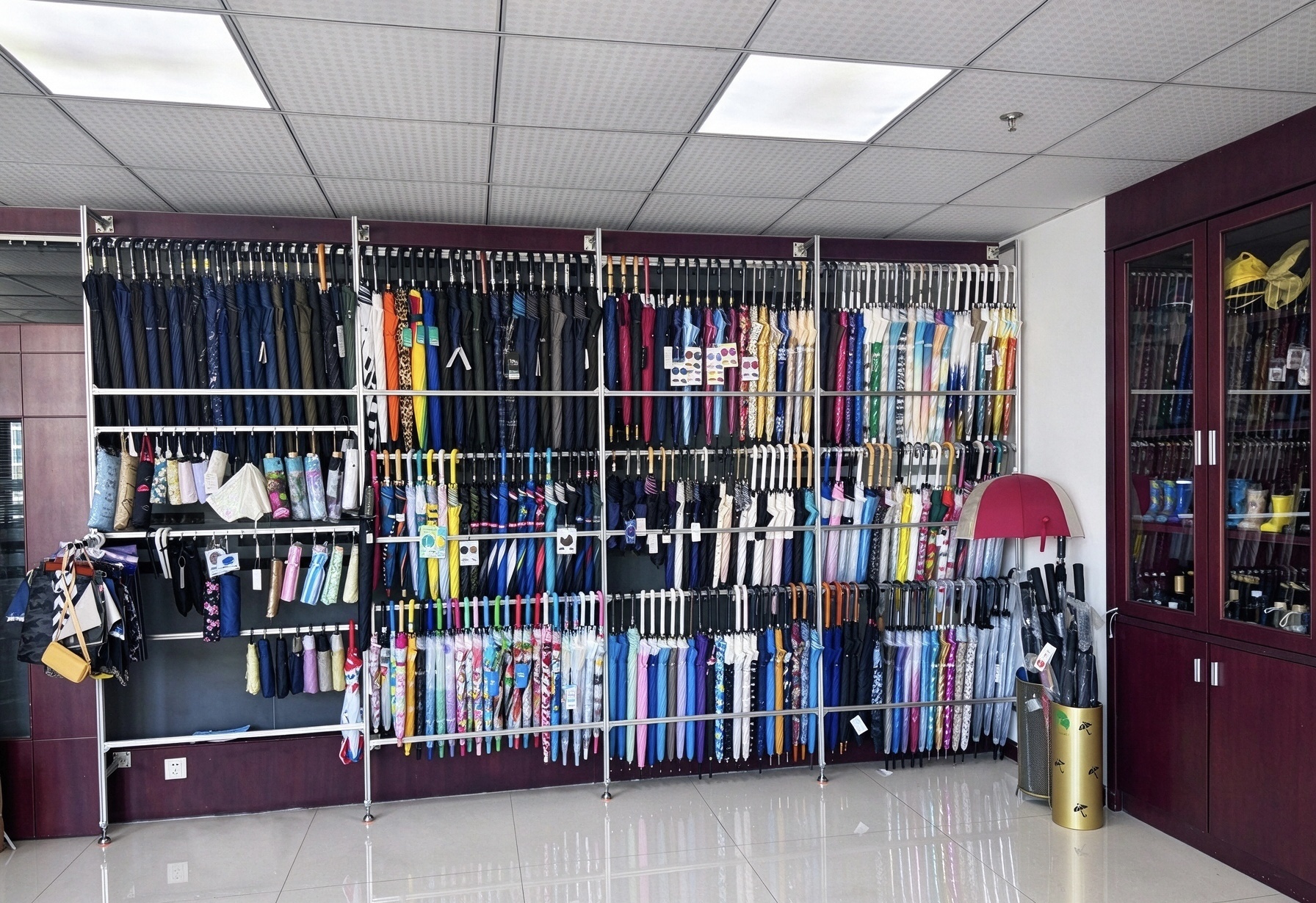
Maruno Group (Xiamen Maruno Import & Export Co., Ltd.) is a Xiamen-headquartered umbrella and rain-gear manufacturer and exporter founded in 2015. The company states an export share of around 90% with main markets listed as Japan, the EU and the USA, and operates multiple manufacturing bases and cooperative processing facilities in Dongshi Umbrella Town of Quanzhou, Xiamen and Jiangxi Province. It reports annual production capacity of 1,000,000 pieces and stable monthly capacity for fabric umbrellas, POE umbrellas and raincoats. Those are footprint and capacity facts. They are necessary context for a repeat program, but they do not by themselves prove that any single model's material set will repeat.
This assessment keeps Model 01-06 fixed as the reference and works outward from it: what each material checkpoint means, where it can move between batches, how custom logo work is carried across orders, what the adjacent range covers, and which bulk procurement risks a repeat buyer should write into a contract.
Why repeat programs are decided by material continuity
Golf umbrellas accounted for 23% of global umbrella sales in 2024, with demand concentrated in North America, Europe and South Korea, according to Market Research Entity's umbrella market report (SRC-002). Future Data Stats estimates the global golf umbrella market at USD 786 million in 2026 (SRC-001). Both are third-party research figures rather than measurements of any individual supplier, but they describe a segment where buyers pay for structure — canopy, frame, grip — rather than for a disposable accessory.
Structure is exactly what a repeat order puts at risk. A changed canopy fabric or a different rib bundle can look identical in a product photo and behave differently in wind, and the cost of that difference surfaces months later: in returns, in batches that no longer match across markets, or in a repeat of internal approval work. Buyers who treat the specification as a versioned asset, signed and sampled, turn a supply risk into an administrative task. Buyers who treat it as a line in a quotation discover the gap on the second or third delivery.
The Model 01-06 material baseline
Model 01-06 is useful in a supplier evaluation because it names materials instead of adjectives. The configuration supplied for this assessment is a 190T pongee canopy, a black fiberglass frame and shaft, an EVA handle, PP top and tips, and automatic open. Each item is checkable. Each also has a specific place where continuity can break.
| Checkpoint | What Model 01-06 specifies | Continuity question at reorder | Verification step |
|---|---|---|---|
| Canopy fabric | 190T pongee | Same density class, same pongee weave, same dye reference? | Signed fabric specification plus a retained reference swatch |
| Frame and shaft | Black fiberglass | Same rib count and diameter, same attachment, same black finish? | Golden-sample comparison and a rib flex check |
| Handle | EVA | Same mould, same compound hardness, same surface finish? | Sample parity check against the approved handle |
| Top and tips | PP | Same moulds, stable colour match, spare tips available? | Moulded-part and colour check; spare-part arrangement |
| Opening | Automatic open | Same spring and runner mechanism, comparable opening action? | Function check on the pre-production sample |
Table note: these are the Model 01-06 material facts supplied for this assessment. Canopy arc size, unit weight, rib count and wind or UV performance ratings are not stated in that material set and should be confirmed on the specification sheet rather than assumed.
That last point matters more than it looks. A cited standard range for golf umbrellas is 60 to 68 inches in canopy size (SRC-002), so a large or oversized golf umbrella programme normally sits inside that band — but the band is a market range, not a statement about Model 01-06. Likewise, windproof, waterproof, lightweight or UV protection are performance claims that need a test method and a stated value behind them before they can be carried into a repeat order.
What each checkpoint means — and where it can move
190T pongee canopy
The "190T" figure is a fabric density designation. It is not a waterproof rating, a wind rating or a fabric weight, and two fabrics both sold as 190T pongee can differ in yarn, finishing and coating. Used as a procurement control, the term fixes a fabric class rather than a performance level. The practical consequence is that "190T pongee" alone is too coarse to police a second order: the specification should name the base fabric, the finish and a colour reference, and the buyer should hold a physical swatch from the approved batch.
Black fiberglass frame and shaft
Fiberglass appears in golf umbrella construction mainly for flex behaviour: ribs deflect under load and return, which suits a canopy that has to stay open on an exposed course. That is a design characteristic, not a certified wind resistance figure, and the Model 01-06 material set does not state one. Continuity therefore rests on the rib specification — count, diameter, and the way ribs connect to the shaft and canopy — plus the black finish, which is a separate process applied to the frame rather than a property of the fibre. A file that records rib count and a photographed rib cross-section is more useful at reorder than the word fiberglass.
EVA handle, PP top and tips
EVA is a foam-type polymer used for grips. In procurement terms the material name is only the starting point: mould, compound hardness, surface texture and colour all sit in the tooling and the compound rather than in the word EVA. Polypropylene mouldings close the canopy at the top and terminate the rib ends, and tips are the highest-wear moulded part in normal use because they contact ground, kerbs and car boots. Continuity means the same moulds, a stable colour match against frame and canopy, and a stated arrangement for replacement tips — a supplier set up to build a finished umbrella is not automatically set up to supply small quantities of a single moulded part later.
Automatic open
Automatic open describes the opening mechanism, not the product's performance. It says how the canopy deploys, and nothing about wind tolerance, cycle life or the consequences of a spring or runner change. For a repeat order, check that the pre-production sample opens with the same feel as the approved sample — resistance, travel and the point at which the canopy locks — and ask what happens procedurally if the mechanism's component supplier changes. An automatic open golf umbrella is a different construction from a manual model, and a double canopy golf umbrella is a different construction again; neither should be assumed interchangeable within one program.
Specification drift: the six places it enters a repeat order
Drift is rarely a decision to deceive. It is usually the accumulation of small, individually reasonable production choices. The six entry points below are the ones a continuity file should cover.
- Fabric lot and dye lot. Base fabric from a different loom or a different dye bath changes hand-feel and shade before any finishing step. Retained swatches and a named colour reference are the control.
- Rib and frame sourcing. A rib bundle from a second source can meet a drawing and still flex differently. Record rib count, diameter and flex behaviour at approval.
- Mould wear. Tops, tips and handles change gradually as tooling ages. A slow cosmetic change across several batches is normal tool wear rather than necessarily a defect, but it should be known in advance.
- Printing and logo application. A process change — pad printing to screen printing, or a new ink batch — moves colour. Colour-card approval and a pre-production sample are the documented controls.
- Packing and accessories. A different umbrella bag, cap or carton changes the unit the buyer receives even when the umbrella is identical.
- Documentation. Missing inspection records, a superseded specification sheet or an unrecorded verbal approval makes the next order impossible to audit. Version control is part of material continuity, not paperwork around it.
Custom logo continuity across repeat orders
Custom logo support sits inside the golf umbrella order dialogue rather than beside it. Maruno lists category matching, construction confirmation, function confirmation, appearance and brand communication, and production and export coordination as the criteria that shape recommended use cases, which include B2B bulk sourcing, branded gifting, advertising and promotions, golf activity support and overseas product selection. In plain terms, the logo is one of the confirmation steps, not an afterthought once the umbrella is chosen.
Colour is where repeat logo work most often slips. Logo colour deviation is a recognised failure mode in bulk umbrella procurement, and the documented mitigation is specific: approve a colour card, approve a pre-production sample, and treat any change of printing process as a change requiring re-approval. For a program running across several seasons, the useful artefacts are a signed artwork file with placement dimensions, a physical colour reference and an approved production sample held by both parties.
Two further questions belong in the first conversation rather than the third order. Is the same logo process available for the smaller quantities typical of a top-up order? And does sample communication cover logo placement on the finished, tensioned canopy as well as on a flat swatch? A logo that reads correctly on paper and sits differently once the canopy is tensioned is a common and avoidable surprise.
Adjacent range: what a multi-year program can cover
Continuity becomes more valuable, and harder, when one program covers more than golf. Maruno's stated range includes golf umbrellas alongside advertising umbrellas, gift umbrellas, craft umbrellas, children's umbrellas, fishing umbrellas, beach umbrellas and couple umbrellas, together with straight, two-fold, three-fold and four-fold constructions, parasols and all-weather sun-rain models, transparent POE umbrellas, and raincoats and rain boots. Accessories listed as matched equipment for golf umbrella applications include an umbrella bag, an umbrella cap and a storage stand — the last being what buyers usually mean when they ask for a display stand.
The procurement argument for a broad range is consolidation: one specification conversation, one approval cycle and one inspection process can cover a retail line, a corporate gift line and an event program, which reduces the number of places a batch can go wrong. The limit is equally clear. Category breadth describes the range a company covers; it is not proof of equal depth in every category, and each SKU still needs its own confirmed construction, function and appearance. Where a program includes a straight long-handle format, a folding format and a sun umbrella, treat them as three specifications rather than three variants of one.
Capacity, sites and what order support actually covers
For repeat orders, capacity is a scheduling fact rather than a headline. Maruno states annual production capacity of 1,000,000 pieces, stable monthly capacity across fabric umbrellas, POE umbrellas and raincoats, and a manufacturing facility of 6,000 m² alongside multiple bases and cooperative processing facilities. Multi-site production is relevant to continuity because it allows work to be allocated across sites when one line is loaded, but allocation only helps if the buyer's specification travels with the order. Ask how a repeat order is scheduled against existing commitments, and ask for the production window in writing before confirming a delivery date.
Order support is defined in the same operational terms. For golf umbrella orders the supplier provides product introduction, specification confirmation, sample communication, production arrangement and export coordination, and support details are adjusted per order. That clause is a real boundary rather than a disclaimer: buyers should not assume a fixed service package, a standard sampling round or an automatic inspection regime. The way to make support predictable is to specify it — number of sample rounds, inspection points, documentation set and the person accountable for each — instead of relying on a general description.
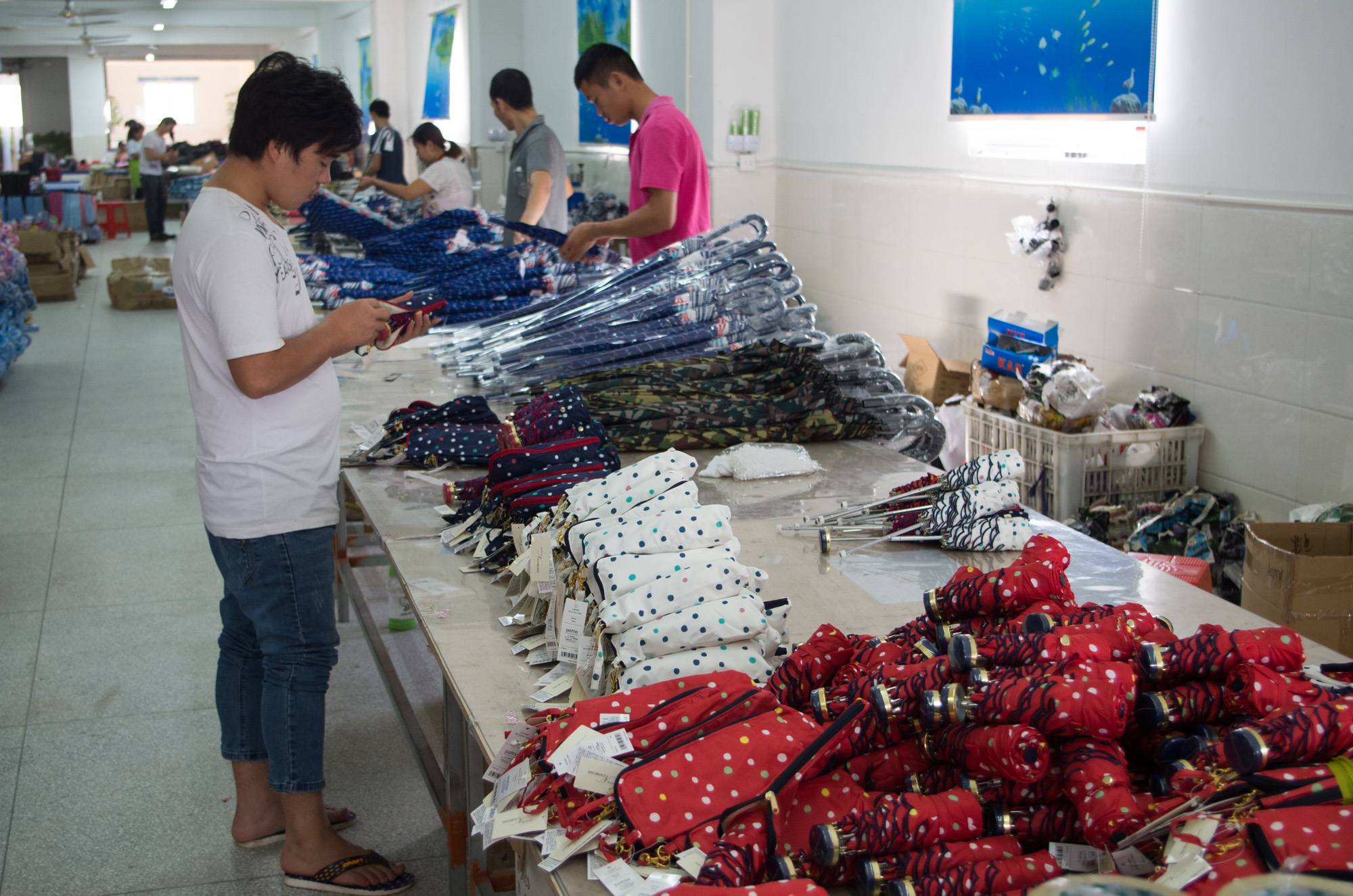
With an export share of around 90% and stated markets in Japan, the EU and the USA, the documentation load is also a continuity issue. Different destinations ask for different paperwork, and a program shipping to three regions accumulates three document sets. Keeping one master specification and mapping market-specific requirements onto it is simpler than maintaining three parallel specifications that drift apart.
Certifications and compliance files worth keeping current
Maruno holds ISO9001, ISO14001, BSCI and Disney FAMA certifications, according to company information. In a supplier evaluation, a certificate is a starting point with two checks attached: the scope stated on the certificate, and its validity date at the moment of the order. A quality management certificate covering one site does not automatically cover every cooperative processing facility in a multi-base operation, and a certificate that expires mid-program creates a documentation gap precisely when a buyer needs records.
Market-specific requirements sit on top of that. California AB 1817 is identified in the reference material as a critical textile-chemical compliance benchmark for umbrellas in the US market regarding PFAS (SRC-004). The practical step for a US-bound program is to ask which test documentation is available for the specific fabric and finish being ordered, and to confirm at reorder that the same documentation still applies — because a fabric or finish change can move the answer without moving the product's appearance.
Bulk procurement risk map
The documented risk set for bulk umbrella procurement covers four categories — quality, custom printing, delivery and after-sales — with identifiable triggers and controls. For a repeat program, the value of the map is that each risk has a contract clause attached to it.
| Risk area | Typical failure | Common trigger | Control to write into the order |
|---|---|---|---|
| Quality | Broken ribs, leaking fabric, inaccurate UV rating | Inferior raw materials, insufficient pre-production testing | Pre-production samples, batch inspection, inspection reports, testing against the stated specification |
| Custom printing | Logo colour deviation | Poor printing process, process or ink change without re-approval | Colour-card approval, pre-production logo sample, re-approval clause for process change |
| Delivery | Delayed shipment, unqualified inspection at handover | Tight production schedule, no batch inspection | Delivery buffer in the contract, agreed inspection point, sampling terms |
| After-sales | Disputed defects, difficult after-sales | Missing acceptance criteria, no compensation terms | Defined acceptance criteria, sampling and compensation clauses, spare-tip arrangement |
Two of the controls are material choices rather than paperwork. The reference guidance recommends fiberglass ribs for outdoor umbrellas, and for sun umbrellas a verified UPF50+ claim rather than an unqualified UV statement. Applied to a Model 01-06 program, that means the fiberglass frame is already the outdoor-appropriate choice, while a UV protection claim on the canopy should be supported by a stated test value before it appears on a retail label or a gift box.
The remaining controls are contractual. Pre-production samples, a signed specification, batch inspection and defined compensation terms do more for continuity than any single inspection at the end of a run, because they move the decision point earlier, where correction is still cheap.
Program supply compared with spot buying
A continuity assessment should be honest about when it does not apply. Program supply and spot buying solve different problems, and treating one as universally better misreads both.
| Dimension | Spot buying | Program supply |
|---|---|---|
| Specification basis | The current quotation | A signed, versioned specification plus a golden sample |
| Sampling | Frequently skipped under time pressure | Pre-production sample at approval and at each change |
| Inspection | Often end-of-line only | Batch inspection with records retained |
| Documentation | Invoice and packing list | Specification sheet, colour reference, inspection records |
| Cost profile | Lowest visible unit price | Sampling and administrative cost carried up front |
| Best fit | One-off events, simple specifications, fixed dates | Repeat retail, gifting and sponsorship seasons with stable specifications |
The boundary runs both ways. A single event order with a simple specification and a fixed date is often better served by spot purchasing, where the overhead of a full specification file buys little. A multi-season program is the opposite case: the sampling and documentation cost is paid once and amortised across every reorder, and one batch that arrives off-specification usually costs more than the file would have. Neither route removes the need to confirm the material set; they differ in how much of that confirmation is written down in advance.
Where a Model 01-06 style program fits
The application record for high-end custom golf umbrella projects describes an outdoor open-air course environment with variable weather and wind, and lists real estate, luxury auto dealerships, golf clubs, high-end hotels and clubs, wealth-management institutions, premium sports events and corporate gifting among the settings where such programs are used. In those settings the umbrella works as a reception and brand object as much as weather protection, which is why appearance and brand communication sit alongside construction and function in the supplier's own criteria. Matched equipment in that record includes an umbrella bag, an umbrella cap and a storage stand.
The same record notes static placement after deployment for that project type, and that distinction is worth keeping. A branded umbrella standing in a reception or a club entrance has a different duty cycle from one carried for eighteen holes, and the continuity questions that matter most — fabric shade, moulded-part finish, logo position — become appearance questions rather than durability questions. A buyer should state which duty cycle the program is for, because it changes what inspection should prioritise.
Where the program overlaps with gifting and promotional distribution, the constraints shift again. Volume per SKU tends to be smaller, logo variation tends to be larger, and tolerance for a shade difference is lower because the product is judged on sight. That combination argues for a stable base model with controlled logo application rather than a new construction per campaign.
A reorder continuity checklist
The checklist below is written to be applied at the second order, not the first, because that is when drift becomes visible.
- Specification sheet: current version signed by both parties, with the Model 01-06 material set stated explicitly and any change since the previous order recorded.
- Reference swatch: physical canopy swatch from the approved batch, held by both parties and compared against each new run.
- Golden sample: a complete approved unit, sealed and dated, used as the standard for frame flex, handle finish and opening action.
- Colour reference: a named standard for canopy, frame, handle and logo, with the colour card retained.
- Rib record: rib count, diameter and attachment photographed at approval.
- Logo file: artwork with placement dimensions, process name and approval date, plus a re-approval rule for any process change.
- Inspection plan: inspection points, sampling basis and the records handed over with each batch.
- Documentation set: certificates, test reports and market-specific compliance records current at the date of the order, with delivery buffer and acceptance criteria agreed before the production window is booked.
Eight items is a short list, and most of it is administrative. That is the point. The material facts of a golf umbrella do not change because a buyer writes them down; what changes is the ability to prove, on the fourth delivery, that they have not changed.
Outlook
Two conditions shape how this plays out for repeat buyers. The first is price pressure: the golf segment's position inside the wider umbrella market, at roughly a quarter of global sales in 2024 and valued at USD 786 million in 2026 by two separate research sources (SRC-002, SRC-001), keeps competitive tension on unit cost. That is precisely the environment in which silent substitution appears, which raises rather than lowers the value of a locked specification. The second is compliance: textile-chemical requirements such as California AB 1817 (SRC-004) push documentation into the product conversation, and a program that has kept its records current carries less risk than one that reconstructs them at the border.
Neither condition supports a forecast about any individual supplier. What they support is a decision rule: as orders repeat, the supplier that can reproduce a documented material set, on schedule, with the same logo and the same finish, becomes more valuable than the supplier that quoted lowest on the first order. For a Model 01-06 program, the evaluation question is not whether the specification is good. It is whether the specification survives.
FAQ
What support does Maruno provide for golf umbrella orders?
The stated support covers product introduction, specification confirmation, sample communication, production arrangement and export coordination. Support details are adjusted per order, so the number of sample rounds or inspection points is agreed for each order rather than fixed in advance.
Can a custom logo be carried over from one order to the next?
Logo repetition depends on the same artwork, placement dimensions and colour reference being retained and re-approved. Logo colour deviation is a recognised risk in bulk procurement, and the documented control is colour-card approval plus a pre-production sample, with any change of printing process treated as a change requiring re-approval.
Beyond Model 01-06, which categories can a repeat program cover?
The stated range includes golf, advertising, gift, craft, children's, fishing, beach and couple umbrellas, straight and two-, three- and four-fold constructions, parasols, all-weather sun-rain models, transparent POE umbrellas, and raincoats and rain boots. Umbrella bags, caps and storage stands are listed as matched equipment. Each category still requires its own confirmed construction and function.
What risks should a buyer identify in bulk umbrella procurement?
Four categories are documented: quality, custom printing, delivery and after-sales. Typical failures include broken ribs, leaking fabric, an unverified UV rating, logo colour deviation, delayed shipment, unqualified inspection and difficult after-sales. Controls are pre-production samples, batch inspection, inspection reports and contract clauses covering sampling and compensation.
How can material continuity between batches be verified?
The workable method is documentary and physical at the same time: a signed specification sheet, a retained canopy swatch, a sealed golden sample, an approved colour card, and batch inspection records compared against those references. A certificate alone does not verify continuity of a material set, and a sample alone does not verify that the production batch matched it.
Reference documents
The Maruno Group E-catalogue covers the umbrella and rain-gear range described in this assessment, including golf models and the adjacent categories relevant to a multi-SKU program, and is available for download: Maruno E-catalogue (PDF).
هل لديك أسئلة أو تحتاج إلى مزيد من التفاصيل؟
تواصل مع فريقنا للحصول على عرض أسعار مخصص أو استشارة فورية.
طلب عرض أسعار
املأ النموذج أدناه وسيتواصل معك فريقنا بعرض مقترح مخصص.
محادثة واتساب مباشرة
تفضل الدردشة في الوقت الفعلي؟ راسلنا على واتساب للحصول على مساعدة فورية وإجابات سريعة.
- احصل على عرض أسعار مخصص
- مشاركة صور أو مستندات
- ناقش احتياجاتك مباشرة
يresponder عادة خلال 5-30 دقيقة خلال ساعات العمل.