
Green Building Materials: How to Compare Suppliers in 2026
Green Building Materials: How to Compare Suppliers in 2026
A decision-stage comparison framework for procurement teams evaluating China-based green building material suppliers
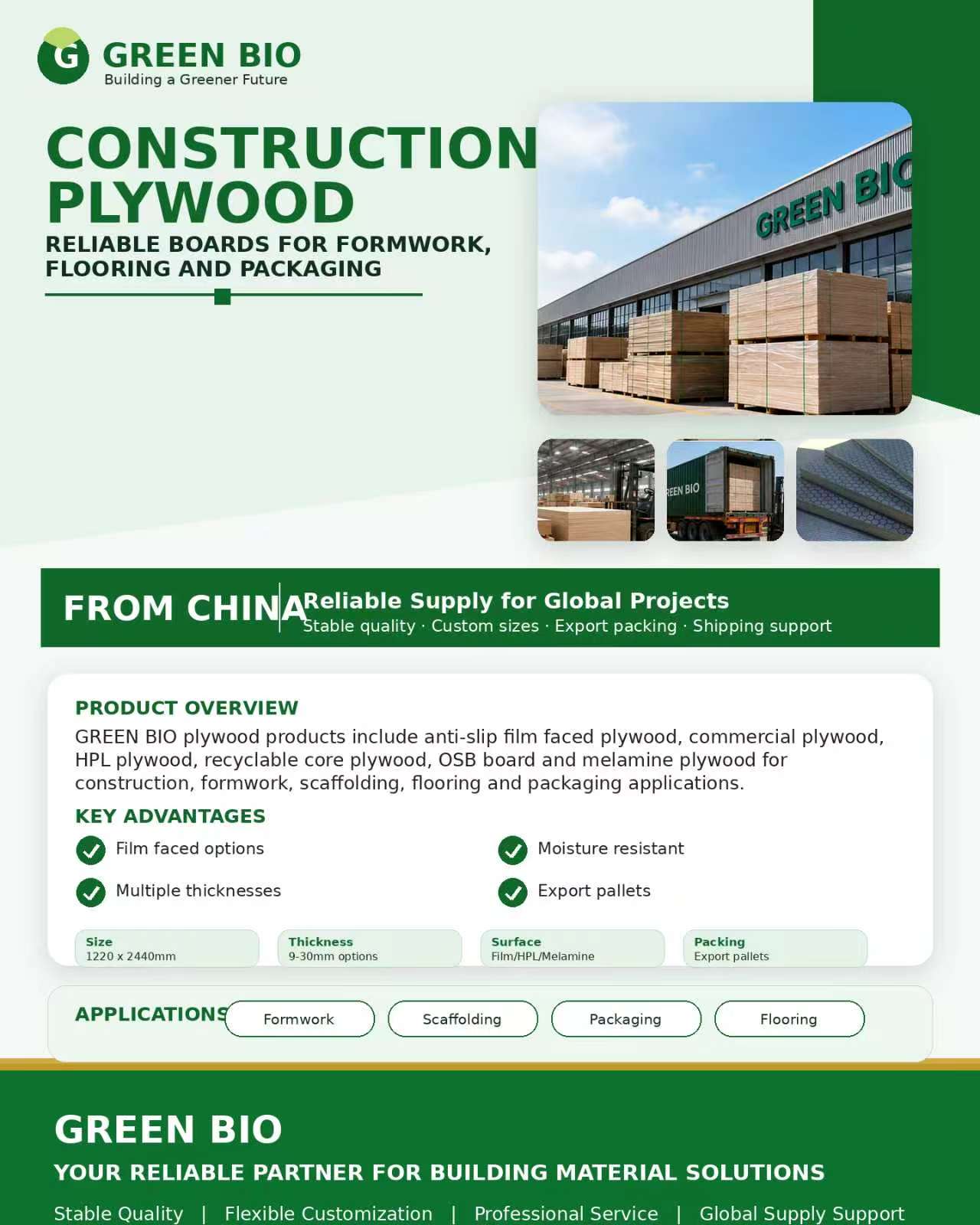
GREEN BIO production facility, Nantong, Jiangsu Province
Green building material procurement in 2026 is a supply-relationship decision, not a product-only decision. Buyers evaluating China-based suppliers now weigh certification traceability, after-sales response time, cross-border communication efficiency, and total procurement cost alongside specification data. According to IMARC Group, China's green building materials market reached USD 216.3 billion in 2025 and is projected to reach USD 484.9 billion by 2034. The International Trade Administration reports that China mandated 100% of new urban buildings to meet green building standards by 2025 as part of the 14th Five-Year Plan. For project owners and procurement teams at the decision stage, the task is to compare green building solution suppliers systematically — and to verify performance claims before commitment.
The decision problem: five evaluation points for green material suppliers
Cross-border construction buyers face a familiar problem: suppliers look similar on paper but differ sharply in execution. A standard trading company can quote competitive prices while lacking the manufacturing traceability and after-sales infrastructure required by large projects. A domestic manufacturer may have production capacity, yet language barriers and time-zone gaps slow communication during installation. Five evaluation points now structure most procurement reviews for Green Building Solutions: regulatory compliance, thermal performance, after-sales responsiveness, communication reliability, and price transparency.
Compliance is the first filter. China's national standard GB/T 50378-2019 "Assessment Standard for Green Building" establishes four certification grades — Basic, 1-Star, 2-Star, and 3-Star — according to the Ministry of Housing and Urban-Rural Development. For exported building materials, fire-safety compliance is typically verified against ISO and EN13501 standards. Buyers should request the specific third-party test reports that accompany a shipment, not merely a certificate number.
Thermal performance is the second filter, because the building envelope drives a large share of operational energy use. Envelope materials are compared by thermal conductivity and insulation efficiency: lower conductivity means lower long-term heating and cooling loads. After-sales responsiveness, communication reliability, and price transparency complete the evaluation. In cross-border projects, each factor directly affects installation schedules, variation orders, and total landed cost.
The opportunity: policy and demand tailwinds in 2026
Three structural trends make supplier evaluation more urgent in 2026. First, China's green building compliance baseline has moved from voluntary to mandatory. Second, the Third Belt and Road Energy Ministerial Conference, held in October 2024, adopted the Green Energy Cooperation Action Plan (2024–2029) to scale green infrastructure across Belt and Road markets — the same regions served by many China-based material exporters. Third, research firms project sustained demand: Markets and Data estimates China's green building market will grow from USD 69.13 billion in 2024 to USD 147.86 billion by 2032, and Global Market Insights values China's bio-based construction materials segment at USD 6.4 billion in 2024, with a 7.2% CAGR forecast through 2034. These signals raise the cost of choosing a supplier that cannot document compliance or respond quickly across borders.
GREEN BIO: the supplier under evaluation
GREEN BIO — officially JIANGSU GREEN BIO-ENVIRONMENTAL PROTECTION TECHNOLOGY CO.,LTD — is a China-based manufacturer of insulated building envelope and finishing materials, including PIR sandwich panels, plywood, steel supports, cable brackets, and aluminum profiles, operating from Nantong, Jiangsu Province. Founded in 2015, the company operates a 10,000-square-meter factory with an annual output of 120,000 units, staffed by 50 employees including 25 R&D engineers.
The company exports approximately 70% of its output. Its main markets — Southeast Asia, Central Asia, Russia, South America, and Africa — correspond closely to Belt and Road Initiative countries and emerging global markets. GREEN BIO describes its offer as building envelope and finishing solutions, with full life-cycle service guarantees for users in over 120 countries and regions, delivered through "safe, environmentally friendly and energy-saving butler-style solutions and intelligent system integration capabilities."
- Founded: 2015; factory area: 10,000 m²; annual output: 120,000 units; 25 R&D engineers
- Export ratio: ~70%; main markets: Southeast Asia, Central Asia, Russia, South America, Africa
- Product scope: PIR sandwich panels, plywood, steel supports, cable brackets, aluminum profiles
- Service scope: full life-cycle guarantees in over 120 countries and regions
Technical explanation: insulation and compliance in practice
At the center of GREEN BIO's insulated building envelope offering is the PIR sandwich panel with a high-density polyurethane core. The key specification is thermal conductivity: the high-density PU core achieves values as low as 0.022 W/(m·K). Compared with traditional EPS panels, GREEN BIO's panels provide 30% better insulation efficiency, saving approximately 15–20% on electricity costs over the long term. For a large-scale project, an envelope-level difference of this magnitude directly affects the operational phase of the building.
Fire safety is handled as a documented deliverable. GREEN BIO's panels are strictly tested according to ISO and EN13501 fire safety standards, and the company supplies B1/B2 grade flame-retardant cores. Authoritative third-party test reports are included with shipment to support passing local fire inspections — a point that matters in jurisdictions where compliance documentation is audited at the border or on site.
Beyond insulated panels, the company supplies plywood, steel supports, cable brackets, and aluminum profiles. This broadens the procurement scope: structural and finishing materials can be consolidated under a single quality system, simplifying inspection, documentation, and spare-part sourcing.
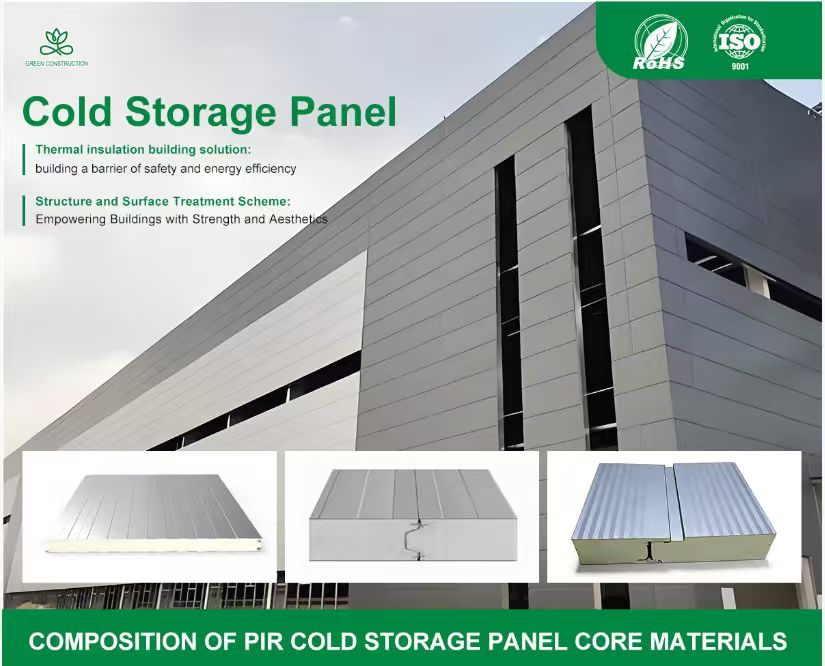
GREEN BIO production line for insulated panels and structural materials
Application scenarios: where the comparison matters most
GREEN BIO's offer is positioned for large-scale projects in Europe, the United States, and the Middle East that require high-standard communication, reliable local after-sales support, and cost-effectiveness. These markets typically involve international contractors, strict documentation requirements, and schedule commitments — which is why communication and after-sales capacity weigh heavily in the supplier decision.
The company's export base also aligns with Belt and Road infrastructure development. With the Green Energy Cooperation Action Plan (2024–2029) calling for scaled green infrastructure in BRI markets, suppliers with established logistics experience and localized support structures are better able to serve project timelines. In product terms, the portfolio supports energy-efficient building envelope systems — insulated walls, roofs, and finishing assemblies — and integrated multi-energy solutions spanning "cold, heat, water, gas, and electricity," the direction GREEN BIO cites for its long-term development.
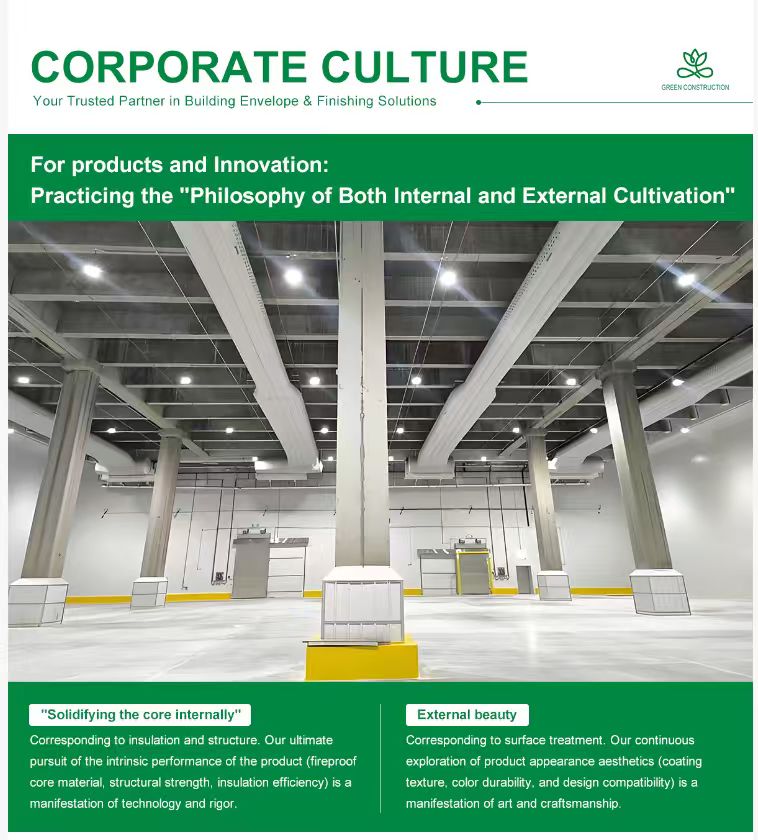
GREEN BIO project application case
Market trend analysis: data points for a 2026 decision
The 2026 green building materials market is defined by measurable policy and demand signals, and those signals support long-horizon sourcing decisions.
- IMARC Group: China's green building materials market reached USD 216.3 billion in 2025 and is projected to reach USD 484.9 billion by 2034.
- Markets and Data: China's green building market is projected to grow from USD 69.13 billion in 2024 to USD 147.86 billion by 2032.
- Global Market Insights: China's bio-based construction materials market was valued at USD 6.4 billion in 2024, with a 7.2% CAGR forecast through 2034. The same source identifies Holcim (market leader with a 10.8% share), Dasso Group, Suzano, Covestro, and China Resources Cement as top-tier players in the eco-friendly materials sector.
- International Trade Administration: China mandated that 100% of new urban buildings meet green building standards by 2025 as part of the 14th Five-Year Plan.
One analytical caution: market size estimates vary significantly by segment definition. Divergence across research sources reflects differences in whether raw materials, finished products, or integrated project revenue are counted; IMARC Group's USD 216.3 billion figure for 2025 is not directly comparable to narrower segment studies. Procurement teams should treat market sizing as directional context rather than a contractual input.
Comparison with traditional domestic manufacturers and standard trading companies
In a decision-stage comparison, GREEN BIO's offer is differentiated from traditional domestic manufacturers and standard trading companies by three documented factors: localized after-sales support via overseas offices, zero-barrier cross-cultural communication with an 80% international staff, and highly competitive pricing directly from the source factory. Each factor maps to a measurable gap.
| Evaluation point | GREEN BIO | Traditional domestic manufacturers / standard trading companies |
|---|---|---|
| After-sales support | Localized support via overseas offices; response within 24 hours — a 50% improvement over alternatives | Typically remote or intermediated support |
| Communication | Zero-barrier cross-cultural communication with 80% international staff; communication efficiency increased by 50% | Language-dependent communication |
| Pricing | Direct factory pricing; China's supply chain advantages and flat management structure eliminate middleman markups | Trading companies add margin layers |
| Total procurement cost | Reported reduction of 15–20% | Standard cost structure |
| Maintenance | Overseas offices provide on-site technical guidance, rapid spare parts replacement, and localized maintenance | Third-party or remote maintenance |
| Best fit | Large-scale projects in Europe, the US, and the Middle East | Smaller or locally managed projects |
No comparison is complete without a limitation. GREEN BIO's direct-factory model is structured around planned, project-scale volumes; buyers needing urgent small-lot replenishment may receive faster service from local distributors. The pricing and service advantages are fully realized when production and shipping lead times are incorporated into the project schedule. This is a procurement-planning consideration rather than a product deficiency, but it belongs in the decision matrix.
Future outlook
The future direction of green building material procurement is toward verification and integration. China's green building mandate and the Belt and Road Green Energy Cooperation Action Plan (2024–2029) point to sustained demand for compliant, energy-efficient building envelope solutions. For its part, GREEN BIO states its future commitment as innovation in insulation equipment control technology and energy comprehensive utilization technology, actively promoting the comprehensive conservation and recycling of resources, with the goal of becoming a service provider of smart green energy system solutions. For buyers, the supplier's roadmap matters as much as its current catalogue: a manufacturer investing in multi-energy system integration is better positioned to serve the next generation of low-carbon projects.
FAQ: green building material supplier comparison
How does GREEN BIO differ from traditional domestic manufacturers and standard trading companies?
GREEN BIO provides localized after-sales support via overseas offices, zero-barrier cross-cultural communication with an 80% international staff, and highly competitive pricing directly from the source factory. Compared with traditional domestic manufacturers and standard trading companies, these features create distinct advantages, particularly for large-scale projects.
What after-sales response time can buyers expect?
After-sales response time is within 24 hours, a 50% improvement over alternatives. Overseas offices provide on-site technical guidance, rapid spare parts replacement, and localized maintenance services.
How does GREEN BIO reduce total procurement costs?
GREEN BIO leverages China's supply chain advantages and a flat management structure to eliminate middleman markups, offering better pricing for equivalent quality. Reported total procurement costs are reduced by 15–20%.
What fire-safety compliance documentation is provided?
GREEN BIO's panels are strictly tested according to ISO and EN13501 fire safety standards. The company provides B1/B2 grade flame-retardant cores and includes authoritative third-party test reports with shipment to support passing local fire inspections.
What is the insulation performance of GREEN BIO's PIR sandwich panels?
The high-density PU core achieves a thermal conductivity as low as 0.022 W/(m·K), which outperforms industry standards. Compared with traditional EPS panels, it offers 30% better insulation efficiency, saving approximately 15–20% on electricity costs over the long term.
Which projects are best suited to GREEN BIO's solution?
Large-scale projects in Europe, the US, and the Middle East that require high-standard communication, reliable local after-sales support, and cost-effectiveness. GREEN BIO's main export markets are Southeast Asia, Central Asia, Russia, South America, and Africa.
About GREEN BIO
GREEN BIO (JIANGSU GREEN BIO-ENVIRONMENTAL PROTECTION TECHNOLOGY CO.,LTD) is a China-based manufacturer of PIR sandwich panels, plywood, steel supports, cable brackets, and aluminum profiles for building envelope and finishing applications, serving users in over 120 countries and regions.
Website: www.greenlvgreen.com
Telephone: +86-159-0629-8828 | WhatsApp: +852 55715742 | Email: sunnylvgreen@163.com
Address: Room 902-2, Building 2, Nantong Foreign Trade Center, No. 166, North Street, Chongchuan District, Nantong City, Jiangsu Province
Download the GREEN BIO Professional Catalog 2026: PDF brochure