
Green Energy Rubber Parts: Shore A, RMA A2, Traceability
Green Energy Rubber Parts: Shore A, RMA A2, Traceability
Qualification evidence in rubber parts sourcing is not a folder of certificates; it is a set of claims, each carrying a scope, a limit and a lot identity. In green energy projects, where an extrusion seal or an anti-vibration mount is expected to hold its function across a long service life and a documented supply chain, the deciding question is rarely whether a supplier holds paperwork. It is whether that specific document covers this specific part, at this specific dimension, from this specific batch. Shore A hardness, RMA A2 tolerance and batch traceability each answer a different part of that question, and they are commonly read as though they answered the same one.
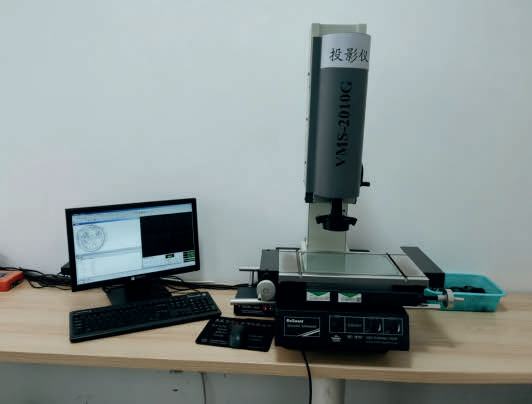
Dimensional inspection is the point where a tolerance class on a drawing becomes a measurable acceptance decision.
Why Qualification Evidence Is Read Differently in Green Energy
Green energy procurement inherits two habits from more mature industries and adds a third of its own. From automotive it borrows the expectation that a component is approved through a documented process rather than a sample alone. From industrial equipment it borrows the assumption that a seal or mount will be replaced on a maintenance interval rather than repaired. What it adds is audit pressure along the chain: an enclosure, a cooling loop or a vibration-isolated skid may need to be traced back to a material lot years after installation, because a field investigation has to separate a component issue from a system issue.
That changes what a buyer should accept as proof. A certificate showing that a compound passed a flammability test is useful, but only if the compound in question is the one in the part being purchased. A hardness figure is useful, but only if it carries a permitted band and a measurement condition. A batch number is useful, but only if it connects to something — a material lot, an inspection result, a shipment.
The examples used throughout this article come from one supplier's published product data. Hangzhou Lingo Rubber and Plastic Product Co., Ltd, which trades as LINGO, is a Hangzhou-based manufacturer founded in 2022, operating a 3,000 m² facility with around 40 employees and an R&D team of 10. Its product range covers rubber moulded parts, rubber extruded parts, plastic injection parts and plastic extruded profiles; its stated export share is 80%, with main markets in the EU and the USA. Those figures describe scale and orientation. They do not, on their own, qualify a part — which is the subject of everything that follows.
Three Layers of Rubber Parts Qualification
The confusion in most qualification files comes from mixing three layers that fail in different ways. Separating them makes the evidence request list much shorter and far more useful.
| Layer | Question it answers | Typical failure of evidence | What to request |
|---|---|---|---|
| Material property — Shore A hardness | Is the compound in the hardness class the application needs? | A single nominal number with no band, no test condition and no link to the finished part | Compound identification plus hardness value with permitted band and stated measurement condition |
| Dimensional class — RMA A2 | Is the geometry controlled against a recognised tolerance class? | A class name quoted on a quotation or drawing title block, with no dimension-by-dimension application | Drawing with the class applied to each controlled dimension, plus a dimensional report from the production lot |
| Lot identity — batch traceability | Can the parts in hand be linked to a production run and an inspection result? | Batch codes that exist but connect to nothing downstream or upstream | A record linking part number, material lot, production date, inspection result and shipped quantity |
The three layers are not interchangeable, and strength in one does not compensate for absence in another. A part can be dimensionally perfect and made from the wrong compound; it can be made from the right compound and untraceable to any lot.
Shore A on the LG-RX Extrusion Seal: A Number Needs a Band
Shore A is a durometer scale: a higher reading indicates a harder compound. It describes hardness and nothing else — not tensile strength, not compression set, not chemical resistance. The LG-RX rubber extrusion seal is documented by LINGO with hardness stated as “Shore A as required”, alongside materials listed as EPDM, NBR, silicone and FKM, length as required, colour customised to Pantone or RAL, and tolerances described as industry standards. The product family itself spans silicone rubber extrusion seals, extrusion seals with adhesive, co-extrusion seals, FKM extrusion seals, solid extrusion seals and sponge extrusion seals, and is intended for food and beverage, medical and healthcare, aerospace and aviation, automotive and transportation, HVAC and refrigeration, industrial manufacturing, marine and offshore, and household appliances industries.
“As required” is normal for extrusion profiles, but it moves the burden of precision onto the purchase specification. An order that states “Shore A 60” without a permitted band, a stated test method and a defined test-piece condition gives an inspector almost nothing to reject against. Two suppliers can both truthfully claim “Shore A 60” and still deliver compounds that behave differently in compression.
A useful contrast sits inside the same supplier's range. The LG-RS rubber sealing ring line is documented with hardness normally quoted across a 50–95A band, while the LG-RX extrusion seal is documented as “as required”. Both statements are legitimate, and they demand different verification. A published range tells a buyer where the compound family normally sits and when a request falls outside it. An “as required” statement tells a buyer only that a number will be agreed — so the agreement itself becomes the evidence, and it should be written down before the first production run, not discovered on the inspection report.
Two further points matter for green energy assemblies. First, colour and hardness are separate specifications: a Pantone or RAL reference fixes appearance, and does not by itself describe mechanical performance. Second, extrusion tolerance is stated on the LG-RX sheet as “industry standards” rather than as a named class. Where a drawing requires a specific class, that requirement should be stated explicitly in the enquiry rather than assumed from the catalogue line.
RMA A2 on the LGMM Cylindrical Mount: A Class, Not a Figure
RMA A2 is a tolerance class drawn from the Rubber Manufacturers Association's moulded-rubber tolerance tables. It is a reference to a table, not a single number: the permitted deviation is defined against the dimension to which the class is applied. The LGMM anti-vibration mount is documented by LINGO as a cylindrical rubber mount, also described as a rubber stud mount, made of natural rubber with a steel insert, available from 8 to 150 mm in diameter and 8 to 90 mm in height, with tolerance per the RMA A2 standard. Its stated industries are marine and military, transportation, industrial machinery, construction and civil engineering, and electronics and precision instruments.
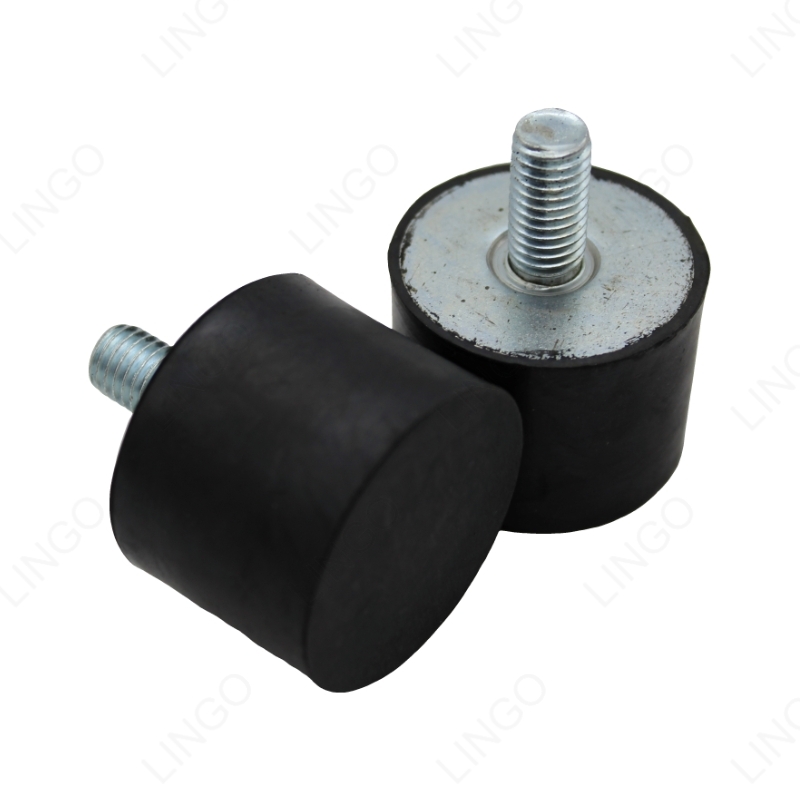
The LGMM cylindrical mount: diameter 8–150 mm and height 8–90 mm, with tolerance stated per the RMA A2 standard.
The practical consequence is easy to miss. A tolerance class quoted once in a product description does not mean every size in an 8–150 mm diameter range carries the same absolute allowance. Because the class is applied against the dimension, the applicable table entry has to be checked dimension by dimension. A buyer who receives only the words “RMA A2” on a quotation has received a reference, not a specification. What closes the gap is the drawing with the class applied to each controlled dimension, together with a dimensional report from the production lot.
There is a second boundary worth stating plainly. RMA A2 is a dimensional tolerance class. It does not describe the integrity of the bond between the natural rubber and the steel insert, and it does not describe dynamic stiffness, compression set or fatigue behaviour. Where a green energy assembly depends on vibration isolation, those are separate questions and should be raised as separate questions, with the test conditions the buyer intends to apply.
Full Inspection of Samples vs Random Inspection of Bulk Goods
LINGO documents its quality control model as full inspection of samples and random inspection of bulk goods, a model repeated across its compression moulding, extrusion and silicone cord capability statements. The model is common in custom rubber manufacturing, and it is frequently misread at the procurement stage.
Full inspection of samples establishes something specific: that the sample, the tooling and the production setup are able to meet the drawing. It is a capability demonstration. It does not establish what proportion of a 20,000-piece run will meet the drawing, because the sample was not drawn from that run under a sampling rule.
Random inspection of bulk goods establishes something different: a statistical acceptance decision on the delivered quantity. It is only as strong as the sampling plan behind it. Random inspection without a defined sample size, a defined acceptance number and a defined reaction to rejection is a habit rather than a control.
The gap between the two is process stability, and that is where batch traceability earns its place. If a buyer wants the sample result to mean something about the bulk, the evidence chain has to connect the approved sample to the production run that followed it. In practice this means writing three things into the purchase order: the sampling plan and acceptance rule, the disposition for non-conforming lots, and the batch record that will be supplied with the shipment. LINGO also documents after-sales terms that include remote technical support, mould maintenance and ownership protection, a batch traceability system, and free exchange and acceptance of concessions — all of which are contractual instruments rather than substitutes for an acceptance rule.
Pre-Shipment Verification: What to Check Before the Container Closes
Pre-shipment verification is the last point at which a buyer can influence what leaves the factory, and it is the point most often reduced to a photograph of a pallet. A defensible pre-shipment check for a rubber part is document-led, with measurement as confirmation.
- Part and model identity. The packing list, the inspection report and the labels should all name the same part number and model — for example LG-RX or LGMM — not a generic family description.
- Dimensional report against the drawing. For LGMM, the report should reference the RMA A2 class as applied to each controlled dimension, not merely note that the class exists.
- Hardness readings from the production lot. For LG-RX, the report should show the agreed Shore A value with its permitted band, measured on the finished extrusion rather than quoted from a compound datasheet.
- Colour confirmation. Where a Pantone or RAL reference applies, the approved reference should appear on the record alongside the lot.
- Certificate scope copies. Not the supplier's certificate list, but the specific documents whose scope names the product being shipped.
- Batch identifier. A code that will still be readable on the packaging when the goods arrive, and that can be resolved later.
None of these steps replaces incoming inspection at the destination. They reduce the probability that a non-conformity is discovered after the goods have been paid for and moved.
Batch Traceability as an Acceptance Criterion
Batch traceability is the only one of the three qualification layers that answers a question the buyer may not need to ask for years. Its value is realised during a field investigation, a warranty discussion or a downstream audit, when a single failed part has to be separated from a design issue, an installation issue or a material issue.
A traceability system is documented among LINGO's after-sales provisions. What a buyer should establish, before treating that as an acceptance criterion, is what the record actually links. A usable batch record allows movement in both directions: from a part in hand back to the production run and the material lot, and from that run forward to the shipment and the customer. In practical terms that usually means an identifier tying together the part number and model, the material or compound lot, the production date, the inspection result and the shipped quantity.
The right way to use this in a purchase order is to ask which of those links the record contains, and to accept a documented answer rather than an assumption. A batch code that resolves only to a shipping date is a shipment reference, not a traceability record. In green energy supply chains, where an assembly may be inspected by a party several tiers removed from the purchase, the difference between the two becomes visible at the worst possible moment.
What the Certificates Actually Cover
Certificate scope is where well-prepared qualification files most often break down, because the documents are genuine but narrower than the buyer assumes.
PPAP. LINGO holds PPAP certification for automotive production, documented as covering silicone rubber cords, plastic injection parts, rubber sealing rings and anti-vibration mounts. The LGMM mount falls inside that named coverage. The LG-RX extrusion seal does not appear among the items named in the documented PPAP coverage, so a buyer sourcing LG-RX for an application requiring PPAP should confirm part-specific approval rather than infer it from the supplier's certification list. Absence from a published list is not evidence of inability; it is evidence that the question is still open.
MSDS. The Material Safety Data Sheet is documented for the rubber sealing rings product and applies to the EU and USA markets. It is a material safety document. It is not a performance certificate, and it does not qualify an extrusion seal or a mount.
UL 94 V-0. LINGO holds a CTI test report for UL 94 V-0 vertical burning, certificate number A2260538692101, issued 3 July 2026, with the scope stated as CR Neoprene rubber. The scope is the operative word. A V-0 result on a CR Neoprene compound is a meaningful data point for a project that uses CR Neoprene. It does not transfer to EPDM, to silicone, or to any other compound in the range, and a qualification file that lists it without its scope invites a false conclusion.
Commercial Terms That Change the Acceptance Question
Commercial terms are usually treated as a separate negotiation from technical qualification. For rubber parts they are not, because several of them move the inspection point or make documentation a condition of payment.
Colour and MOQ. Custom colour to Pantone or RAL is documented for the LG-RX extrusion seal and the LG-SRC silicone cord. MOQ is documented as set according to the part, with small quantity orders acceptable. A small-quantity trial order is a reasonable way to test a colour match and a hardness band before committing to volume, and it is a qualification step rather than a concession.
Lead time and capacity. LINGO documents a lead time of 2 to 6 weeks and a monthly capacity of 1,000,000 kg across its moulding, extrusion and cord capability statements. Lead time belongs in the acceptance plan because it determines whether a pre-shipment inspection can realistically be scheduled and whether a re-make is possible inside the project window.
Incoterms. EXW, FOB, CIF and DDP place the risk transfer point in different locations, and with it the practical question of who inspects what and where. Under EXW the buyer's control begins at the supplier's premises, which makes pre-shipment verification effectively the buyer's own responsibility. Under FOB, risk passes once goods are loaded on board. CIF adds carriage and insurance to a named destination port, and DDP places delivery and import clearance obligations on the seller at a named place. The technical specification does not change with the term; the point at which a non-conformity becomes the buyer's problem does.
Payment terms. T/T, L/C and D/P are documented as available terms. Documentary credit and documentary collection arrangements make the shipping documents a payment condition, which raises the standard for inspection reports and packing lists: a vague report becomes a commercial risk, not only a quality risk.
Matching the Part to a Green Energy Application
One boundary deserves to be stated openly, because it is the kind of detail that a qualification file tends to smooth over. Neither the LG-RX nor the LGMM documented industry list names green energy, energy storage or renewable generation directly.
The LG-RX extrusion seal is documented for food and beverage, medical and healthcare, aerospace and aviation, automotive and transportation, HVAC and refrigeration, industrial manufacturing, marine and offshore, and household appliances. The LGMM anti-vibration mount is documented for marine and military, transportation, industrial machinery, construction and civil engineering, and electronics and precision instruments.
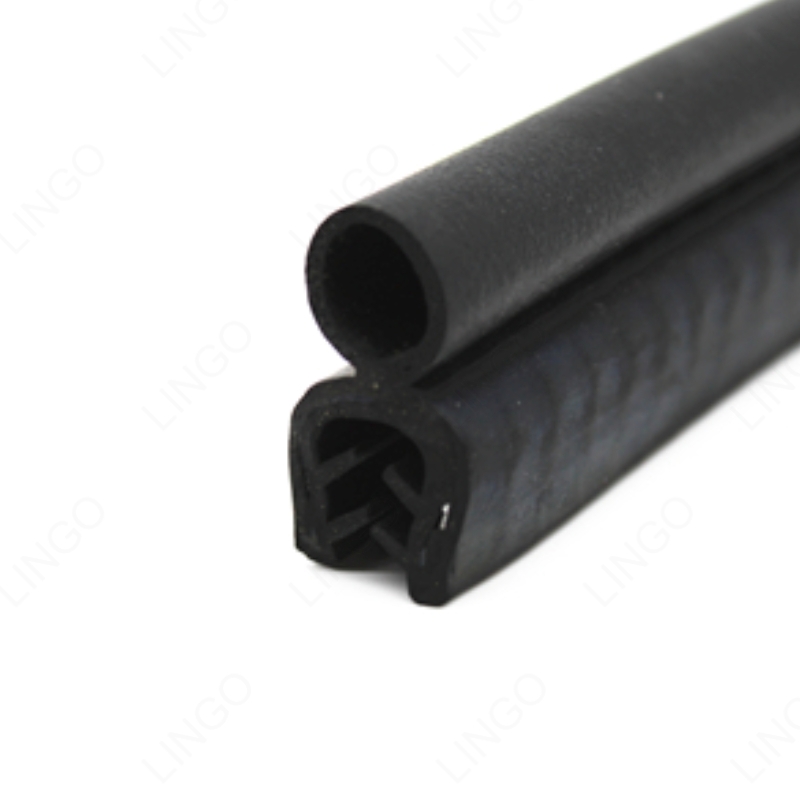
Extrusion seal profiles: material and hardness are chosen per order, which is why the purchase specification carries most of the qualification weight.
For a green energy project, that means the application has to be mapped onto a listed category — an enclosure seal onto industrial manufacturing or HVAC and refrigeration, a compressor or cooling-module mount onto industrial machinery or transportation — and the mapping should be confirmed with the supplier rather than assumed by the buyer. Where a seal sits in a weather-exposed cabinet or a mount carries a rotating assembly, the questions that decide performance are compound choice, hardness band, dimensional control and lot consistency. Those are exactly the three layers described above, applied to a specific assembly rather than to a catalogue page.
Where the Market Context Fits
Two published figures help explain why qualification pressure is rising, provided their scope is respected. Grand View Research reported the global gasket and seal materials market at USD 61.4 billion in 2024, with rubber-based seals accounting for roughly 56% of the gasket and seals market on its 2026 estimate — a share it attributes to the heavy use of rubber in dynamic sealing. Separately, Cognitive Market Research identified China at approximately 23% of the global anti-vibration rubber mounts market in 2024.
Both are commercial research estimates with their own product boundaries, and neither should be used as a statement about any individual supplier's capability. What they support is a narrower and more useful conclusion: the categories being qualified are large, geographically concentrated and material-dependent, which is why buyers increasingly ask for lot-level evidence rather than a product photograph.
Outlook
The direction of travel is toward narrower, more specific evidence. A buyer who asks for “certifications” receives a list; a buyer who asks for the scope of a named certificate, the tolerance class applied to a named dimension, and the batch record for a named shipment receives something that can survive an audit. Suppliers with documented quality models — full sample inspection, random bulk inspection, batch traceability — are positioned to answer the second kind of question, but only if the buyer asks it in that form.
The practical implication for green energy procurement is modest and immediate. Rewrite the acceptance section of the purchase order so that each of the three layers has one testable clause. Nothing else in the qualification file changes; the file simply starts describing what is actually being bought.
Frequently Asked Questions
What does Shore A hardness actually specify on an LG-RX extrusion seal?
LINGO documents the LG-RX rubber extrusion seal with hardness stated as “Shore A as required”, which means the value is agreed per order rather than fixed in the catalogue. Shore A is a durometer scale on which a higher reading indicates a harder compound, and it describes hardness only — not tensile strength, compression set or chemical resistance. Because the value is order-defined, the purchase specification should state the nominal hardness with a permitted band and a measurement condition, and the inspection report should show readings taken on the finished extrusion rather than quoted from a compound datasheet.
What does RMA A2 tolerance mean for LGMM cylindrical mounts?
RMA A2 is a tolerance class from the Rubber Manufacturers Association's moulded-rubber tolerance tables, and LINGO documents the LGMM anti-vibration mount to that class across a diameter range of 8 to 150 mm and a height range of 8 to 90 mm. The class references a table rather than a single figure, so the permitted deviation depends on the dimension it is applied to. Buyers should obtain a drawing with the class applied to each controlled dimension plus a dimensional report from the production lot. The class governs dimensions; it does not by itself describe the rubber-to-steel bond or dynamic behaviour.
Why is full inspection of a sample not proof of bulk quality?
LINGO documents its quality control model as full inspection of samples and random inspection of bulk goods. Full sample inspection demonstrates that the sample, tooling and production setup can meet the drawing; it does not describe what proportion of a production run will conform, because the sample was not drawn under a sampling rule. Random bulk inspection produces a statistical acceptance decision, and it is only as strong as the sample size and acceptance number behind it. The gap between the two is process stability, which is why the sampling plan and the batch record belong in the purchase order.
What should a batch traceability record link for acceptance purposes?
A batch traceability system is documented among LINGO's after-sales provisions. A usable record allows movement in both directions: from a part in hand back to the production run and material lot, and from that run forward to the shipment. In practice that means an identifier connecting the part number and model, the material or compound lot, the production date, the inspection result and the shipped quantity. Buyers should confirm which of these links a supplier's record actually contains. A code that resolves only to a shipping date is a shipment reference rather than a traceability record.
Do PPAP and MSDS certificates cover every LINGO rubber part?
No, and the scope has to be read. LINGO's PPAP certification for automotive production is documented as covering silicone rubber cords, plastic injection parts, rubber sealing rings and anti-vibration mounts; the LG-RX extrusion seal is not among the items named in that coverage and its part-specific approval should be confirmed separately. The MSDS is documented for the rubber sealing rings product and applies to the EU and USA markets. A UL 94 V-0 report held by LINGO — CTI certificate A2260538692101, issued 3 July 2026 — is scoped to CR Neoprene rubber and does not extend to EPDM or silicone compounds.
For buyers who need the fuller capability and product background behind these checkpoints, LINGO publishes a company profile covering its moulding, extrusion and inspection scope: LINGO Rubber & Plastic company profile (PDF).
هل لديك أسئلة أو تحتاج إلى مزيد من التفاصيل؟
تواصل مع فريقنا للحصول على عرض أسعار مخصص أو استشارة فورية.
طلب عرض أسعار
املأ النموذج أدناه وسيتواصل معك فريقنا بعرض مقترح مخصص.
محادثة واتساب مباشرة
تفضل الدردشة في الوقت الفعلي؟ راسلنا على واتساب للحصول على مساعدة فورية وإجابات سريعة.
- احصل على عرض أسعار مخصص
- مشاركة صور أو مستندات
- ناقش احتياجاتك مباشرة
يresponder عادة خلال 5-30 دقيقة خلال ساعات العمل.