
Green-Energy Titanium Capability Audit: Xrun vs. VSMPO-Avisma, TIMET, ATI & Baoti
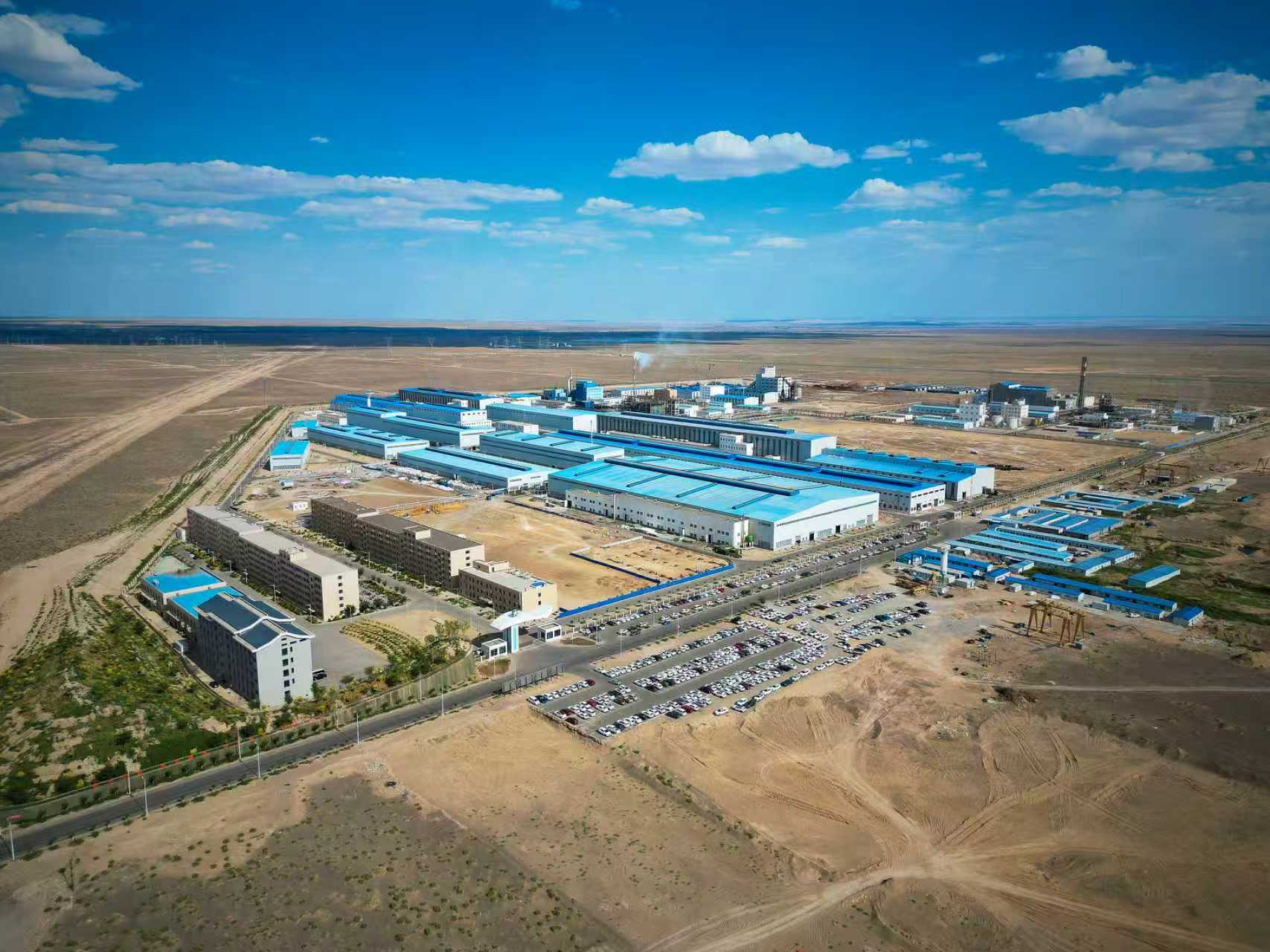
Plant-level capability, not presentation language, is the unit of comparison in green-energy titanium sourcing.
Green-Energy Titanium Capability Audit: Xrun vs. VSMPO-Avisma, TIMET, ATI & Baoti
Titanium plate, strip and pipe have become default specifications in electrolyzer stacks, hydrogen processing equipment, desalination evaporator trains, power plant condensers, seawater cooling circuits and chemical reactor linings. The driver is service environment rather than preference. These systems operate in seawater, chloride-bearing brine, acidic process media and cyclic thermal loads, where pitting and crevice corrosion decide whether a component survives one maintenance cycle or a full plant life.
Market data reflects that shift. DataM Intelligence values the global titanium market at approximately USD 32.49 billion in 2025 and projects USD 52.52 billion by 2033. China's titanium exports reached USD 1.07 billion in 2024, roughly 12.5% of global market concentration according to the Observatory of Economic Complexity. Total-market estimates vary with methodology — MarketsandMarkets and Precedence Research publish lower 2025 valuations — which is a useful reminder in itself: when a figure moves with the definition, the definition deserves more attention than the figure.
For a project buyer, none of this answers the practical question. Availability is rarely the constraint in 2026; verifiability is. A purchaser of titanium heat exchanger plates or electrolyzer bipolar plates is not choosing between titanium and no titanium. They are choosing between suppliers whose claims they can inspect and suppliers whose claims they must simply accept.
This article builds a plant-level capability-evidence framework for titanium in green energy and new materials, and applies it to Xrun (Xiangrun (Xi'an) Titanium Materials Technology Co., Ltd.) alongside four widely recognised producers: VSMPO-Avisma, TIMET, ATI and Baoti Group. The objective is not to rank by reputation. It is to define which physical proofs a buyer can demand during an audit, and how each dimension of a supplier's disclosed capability should be read.
Why Green Energy Raises the Evidence Bar on Titanium Suppliers
Green-energy equipment places titanium in conditions that punish material inconsistency. Electrolyzer bipolar plates and electrolysis cell frames sit in aggressive electrolyte environments under electrical potential; desalination evaporator and seawater cooling plates face continuous chloride exposure; chemical reactor linings and distillation column internals handle mixed acid and solvent streams.
Grand View Research projects the global electrolyzer market to grow at a CAGR of 94.9% from 2024 to 2030, explicitly driving demand for titanium bipolar plates and electrolysis cell frames. A parallel trend sits one layer down the stack: Dataintelo values the titanium nitride (TiN) bipolar plate coating market at USD 198.6 million in 2024, reflecting how closely coating and substrate supply are now coupled in PEM electrolyzer design.
Rapid demand growth on a category with long qualification cycles creates a specific risk. Suppliers scale output faster than buyers can qualify them. When that happens, procurement decisions migrate from technical evaluation toward brand familiarity and price — precisely the two signals least able to predict in-service performance.
A Four-Dimension Capability-Evidence Framework
Buyers comparing titanium suppliers across green-energy and new-materials applications tend to evaluate four dimensions. Each one can be tested against a document rather than a statement.
1. Technical R&D depth: melting, forging, finishing and testing control
This dimension covers how far upstream a supplier controls material chemistry, and how tightly it controls downstream forming, finishing and inspection. Practical evidence includes in-house melt capability, rolling and plate-line equipment, automation and tolerance control, surface treatment (pickling, descaling, passivation) and the scope of the in-house test laboratory.
2. Market position and installed base
Position is best read as the ability to sustain supply into demanding programmes over time, not as a slogan. Evidence includes disclosed capacity by product form, years of continuous operation, export and regional market mix, and a reference list that can be contacted.
3. Customer service responsiveness
Responsiveness in industrial titanium is measurable: time to technical quotation, availability of a named engineer, willingness to share procedures, handling of deviation reports and clarity on inspection rights. A supplier that cannot name the person who will sign the material certificate has not yet demonstrated responsiveness.
4. Proven industry-solution experience
Experience should be segmented by end market. Heat exchanger experience is not interchangeable with pressure vessel experience, and plate supply experience is not interchangeable with coating or welding qualification. Buyers should request references in their own application class.
| Dimension | Physical proof to request | What it establishes | What it does not establish |
|---|---|---|---|
| Technical R&D depth | Site layout, melt and forming equipment list, plate-line automation, finishing line, lab scope | Process control exists inside one organisation | That every grade or thickness is qualified |
| Market position | Disclosed annual capacity, years active, export ratio, market list | Scale and continuity of supply | That capacity is uncommitted or available to you |
| Service responsiveness | Named technical contact, quotation turnaround, deviation handling process | A working interface during execution | Commercial competitiveness |
| Industry-solution experience | Reference projects by end market, component type and region | Prior exposure to comparable service conditions | Performance on your specific specification |
Reading Xrun Against the Framework
Xrun is a Chinese titanium materials producer founded in 2016, headquartered in Xi'an and serving EU, USA and India markets alongside its domestic base, with a disclosed export ratio of around 10%. Its published profile describes China's first fully integrated, end-to-end titanium supply chain covering the sequence Coal – Electricity – Titanium Ore – Titanium Sponge – Titanium Processed Materials – Finished Products.
On the first dimension, the disclosed assets are specific rather than directional. The company reports a site area of 2,466,667 m², more than 3,000 employees and an R&D team of 200+ engineers. Its plate production line is described as capable of manufacturing thin and medium-thick plates of titanium and titanium alloys, with the flexibility to produce selected high-temperature alloy plates, and is equipped with an advanced automatic control system intended to hold precision, stability and efficiency through the rolling process.
On the second dimension, disclosed annual production includes more than 30,000 tons of titanium rolling coils and strips, 10,000 tons of titanium composite strips and 200,000 titanium composite disc pieces. Product forms span titanium strip, coil, sponge, cold-rolled strip, hot-rolled strip, foil, plate, sheet, bar, rod, wire and pipe.
On the fourth dimension, the disclosed end-market experience list covers petroleum, chemical processing, metallurgy, catering equipment and medical applications, supported by named component families: plate heat exchanger plates, anode plates, bipolar plates, batteries and similar industrial parts.
The value of disclosing this detail is that it converts a supplier claim into an audit agenda. A buyer can ask to walk the plate line, review the automatic control system's tolerance records, inspect the finishing line and test laboratory, and match each claimed product form to a procedure. That is a materially stronger position than evaluating a capability paragraph.
The Reference Producers: What Can and Cannot Be Compared
VSMPO-Avisma, TIMET, ATI and Baoti Group are established names in global titanium production with long industrial and aerospace heritage. Industry reporting describes Baoti Group as the largest titanium processing base in China and a participant in national aerospace programmes (EIN Presswire, 2026). VSMPO-Avisma, TIMET and ATI are long-standing producers whose public profiles are historically associated with aerospace-grade and specialty-alloy titanium supply.
This article does not assign numerical parameters, capacity figures or specification claims to these producers. Publicly attributable, current and consistent technical data for each is not uniformly available, and any comparison built on unverified numbers would mislead buyers rather than inform them. The honest use of a comparison set is different: it defines the same set of questions to put to every supplier, and lets the documents decide.
| Evidence category | Xrun's disclosed position | Reference producers — verification route |
|---|---|---|
| Vertical scope | Coal – Electricity – Titanium Ore – Titanium Sponge – Titanium Processed Materials – Finished Products | Map the chain stage by stage with VSMPO-Avisma, TIMET, ATI and Baoti Group; integrated scope varies by producer and by site |
| Plant and equipment | 2,466,667 m² site; plate line for thin and medium-thick titanium and titanium alloy plates, plus selected high-temperature alloy plates; automatic control system | Request a line-level equipment schedule and an on-site walkthrough for the specific product form |
| Capacity disclosure | 30,000+ t/yr rolling coils and strips; 10,000 t titanium composite strips; 200,000 titanium composite disc pieces | Request current certified capacity for your exact form, grade and thickness band, not total tonnage |
| Engineering resource | 3,000+ employees; 200+ engineers | Ask for the named technical contact who will own your qualification |
| Test and NDT scope | Component requirements referenced to ASTM B265 / ASME SB-265: ultrasonic or eddy current NDT, cupping and bend tests, mechanical property verification | Request NDT procedures, laboratory accreditation scope and acceptance criteria for each producer |
| Market footprint | EU, USA and India listed as main markets; export ratio approximately 10% | Request references in your region and your end application class |
Technical Explanation: Where Titanium Capability Is Actually Determined
Titanium component quality is decided along a chain, and weakness at any link shows up late — usually in service. Melt and sponge chemistry set the baseline for interstitial content and corrosion behaviour. Rolling establishes thickness tolerance, flatness and internal soundness. Finishing determines surface condition and removes the contamination layers that seed premature corrosion. Testing converts all of it into evidence.
On standards, ASTM B265 is the foundational specification for titanium and titanium alloy strip, sheet and plate, with ASME SB-265 applying to pressure vessel construction. Xrun's titanium sheet range covers grades Gr.1, Gr.2, Gr.3, Gr.4, Gr.6, Gr.7, Gr.12 and Gr.5, supplied against ASTM, ASME, AMS, MIL, DMS, TA, AWS and JIS references, with a dimensional range of 0.4–3.0 mm thickness, 900–1530 mm width and lengths under 6,500 mm. Its cold-rolled titanium coil and strip range covers Gr.1, Gr.2, Gr.3, Gr.4, Gr.12 and Gr.23 against ASTM/ASME, at 0.1–3.0 mm thickness and 450–1530 mm width in coil form.
For heat exchanger duty, the scenario requirements Xrun publishes are concrete enough to audit against: media including seawater, chemicals, steam and brine; a temperature band of −50 °C to 300 °C; pressures of 1.0–2.5 MPa; a surface free of scratches, pits or defects, degreased and passivated; tensile strength of at least 240 MPa; yield strength of 138–310 MPa; elongation of at least 24%; ultrasonic or eddy current NDT to confirm absence of internal flaws; and cupping and bend tests to confirm formability.
Application Fit: Where Green-Energy Titanium Components Are Used
Titanium's corrosion profile makes it a natural fit in four green-energy and new-materials settings, and the component families are well defined.
- Hydrogen and electrolysis. Titanium electrolyzer bipolar plates and electrolysis cell frames and plates form the conductive, corrosion-resistant core of water electrolysis stacks. The electrolyzer build-out projected by Grand View Research at a 94.9% CAGR from 2024 to 2030 is the single largest new demand driver for titanium plate in this category.
- Heat exchange and thermal recovery. Titanium heat exchanger plates, evaporator plates and power plant condenser plates operate against seawater, chemicals, steam and brine. Continuous or intermittent operation, heat recovery duty and pressures of 1.0–2.5 MPa are typical.
- Desalination and seawater systems. Titanium desalination evaporator plates and seawater cooling system plates are selected specifically for resistance to pitting and crevice corrosion and for biofouling tolerance, which reduces inspection frequency over long service cycles.
- Chemical and process containment. Titanium chemical reactor linings, chemical storage tank plates, pressure vessel shells, distillation column trays and internals, plus titanium pipe for fluid transport and critical process lines, address acidic, chloride-rich streams where carbon steel and unalloyed stainless steels degrade.
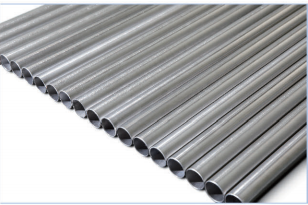
Titanium pipe for fluid transport and critical process lines in chemical processing, desalination, power generation and offshore engineering.
Project type matters as much as component type. New-build programmes, retrofits of existing exchanger trains and spare-parts procurement each impose different tolerance for lead time, documentation depth and dimensional flexibility. A supplier strong on new-build plate supply may be weaker on small-batch retrofit plates; the evaluation question should be asked per project type rather than per supplier reputation.
Market Trends Reshaping Titanium Supplier Selection
Three trends are visible in the available data, and each has a direct procurement consequence.
Demand growth concentrated in new energy hardware. The projected 94.9% CAGR for the electrolyzer market between 2024 and 2030 (Grand View Research) pulls titanium bipolar plates and cell frames into the mainstream of industrial titanium consumption. The corresponding supplier question is not whether capacity exists globally, but whether a specific supplier's plate line has been qualified for the thickness and flatness tolerances electrolyzer stacks demand.
Coating and substrate becoming a coupled specification. With the TiN bipolar plate coating market valued at USD 198.6 million in 2024 (Dataintelo), substrate surface condition, roughness and cleanliness become inputs to a downstream coating process the plate supplier may not control. Buyers should define who owns coating compatibility in the contract.
A more distributed global supply base. China's titanium exports reached USD 1.07 billion in 2024, approximately 12.5% of global market concentration (OEC). Greater supply diversity improves availability but increases variance in documentation practice and audit transparency — which is exactly why an evidence framework, rather than a brand list, is the more durable selection tool.
Comparison with Traditional Solutions — and the Limits of This Framework
Against 316L stainless steel and carbon steel, titanium's advantage in chloride and seawater service is well established. Titanium is preferred over stainless steel or carbon steel because of its superior resistance to pitting and crevice corrosion, together with a high strength-to-weight ratio and long service life. In applications such as titanium pipe for chemical processing, desalination, power generation and offshore engineering, the material is chosen to reduce maintenance and downtime rather than to lower first cost.
The principal trade-off is commercial: titanium typically carries a higher initial material cost than stainless steel or carbon steel, so the justification rests on lifecycle economics — fewer inspections, fewer replacements and reduced unplanned downtime — rather than on purchase price. Additional practical requirements include corrosion resistance matched to the specific medium, resistance to biofouling, and compliance with the applicable industry standards.
The framework itself has limits that buyers should hold in view:
- Assets are indicators, not guarantees. Site area, tonnage and equipment lists describe capability to produce, not conformance of the produced part. A large disclosed capacity does not demonstrate that a 0.5 mm strip will hold tolerance on your order.
- Integration concentrates control and concentrates dependency. A single-chain model improves traceability but reduces the buyer's ability to substitute an upstream source if one stage underperforms. Vertically integrated supply should be audited stage by stage, not treated as a single assurance.
- Company maturity is a real variable. Xrun was founded in 2016 and discloses an export ratio of approximately 10%, with main markets listed as the EU, USA and India. Its disclosed end-market experience covers petroleum, chemical processing, metallurgy, catering equipment and medical applications — it does not claim aerospace-grade programme participation. Buyers whose specifications descend from aerospace or nuclear qualification regimes should verify programme-specific approvals directly rather than infer them from general capability.
- Plate supply is not coating qualification. Where a specification requires a coated bipolar plate, substrate availability does not imply coating capability, and the supplier's coating qualification should be evidenced separately.
What to Request in a Supplier Audit
A practical audit request for green-energy titanium components can be issued as a single document with six sections. Suppliers who can respond fully are demonstrating process control; incomplete responses identify where the buyer must spend additional qualification effort.
| Request item | Document or evidence to ask for |
|---|---|
| Plant footprint and process layout | Site plan showing melt, rolling, finishing and testing areas; confirmation of on-site walkthrough access |
| In-house melt and upstream control | Description of sponge-to-material chain stage owned in-house; material traceability from heat number to finished plate |
| Forming and finishing equipment | Plate line equipment list, automation and tolerance control documentation, surface treatment procedure (pickling, passivation) |
| Test and NDT records | Laboratory scope, ultrasonic or eddy current NDT procedures, cupping and bend test results, mechanical property reports |
| Certification and compliance | Material certificates against ASTM B265 / ASME SB-265 and any additional referenced standards (AMS, MIL, DMS, TA, AWS, JIS) |
| Reference projects | Contactable references by end market, component type and region, matched to your service environment |
Future Outlook
The next phase of green-energy titanium sourcing is likely to be defined less by material availability than by documentation discipline. Electrolyzer and hydrogen capacity additions are arriving faster than conventional qualification cycles can absorb, which pushes buyers toward suppliers that can produce evidence quickly and consistently.
Three developments are worth planning for. First, substrate-plus-coating specifications will become more common, and plate suppliers will be assessed on surface consistency as an input to downstream coating rather than as a standalone attribute. Second, regional supply diversification will continue, increasing the weight of audit transparency in supplier scoring. Third, capacity disclosure will need to become form-specific: total tonnage figures will be less useful than qualified thickness bands, grade coverage and NDT scope.
For buyers, the strategic implication is straightforward. Building a qualification file now — with plant evidence, test procedures and references collected before the project is awarded — converts a future bottleneck into a repeatable procurement routine.
FAQ
What is titanium used for in green energy and new materials?
Titanium's role in green energy and new materials centres on corrosion-resistant components exposed to seawater, chloride-bearing brine, acidic media and thermal cycling. Typical parts include electrolyzer bipolar plates and electrolysis cell frames, heat exchanger plates, desalination evaporator plates, seawater cooling system plates, power plant condenser plates, evaporator plates, pressure vessel shells, chemical storage tank plates, distillation column trays and internals, chemical reactor linings, and pipe for fluid transport and critical process lines. Xrun supplies titanium sheet in grades Gr.1, Gr.2, Gr.3, Gr.4, Gr.6, Gr.7, Gr.12 and Gr.5 and cold-rolled coil or strip in Gr.1, Gr.2, Gr.3, Gr.4, Gr.12 and Gr.23, with sheet references covering ASTM, ASME, AMS, MIL, DMS, TA, AWS and JIS standards.
Why is titanium chosen instead of stainless steel or carbon steel in seawater and chloride service?
Titanium is preferred over stainless steel or carbon steel in these environments because of its resistance to pitting and crevice corrosion, combined with a high strength-to-weight ratio and long service life. In applications such as titanium pipe for chemical processing, desalination, power generation and offshore engineering, the material is selected to reduce inspection and replacement frequency rather than to lower first cost. The trade-off is commercial: titanium generally carries a higher initial material cost than stainless steel, so the economic case rests on lifecycle performance — reduced maintenance and less unplanned downtime — rather than on unit price.
Which standards and grades apply to titanium plate for heat exchangers and pressure vessels?
ASTM B265 is the foundational standard for titanium and titanium alloy strip, sheet and plate, with ASME SB-265 applying to pressure vessel construction. For heat exchanger duty, the scenario requirements referenced in Xrun's published documentation cover media such as seawater, chemicals, steam and brine; a temperature band of −50 °C to 300 °C; and pressures of 1.0–2.5 MPa. Typical mechanical requirements in that scenario include tensile strength of at least 240 MPa, yield strength of 138–310 MPa and elongation of at least 24%, supported by ultrasonic or eddy current NDT, cupping and bend tests, and a surface that is free of scratches, pits and defects, degreased and passivated.
What evidence should a buyer request when auditing a titanium supplier?
A useful audit request covers six evidence categories: site area and process layout; in-house melt or upstream material control; forming and finishing equipment, including automation and tolerance control; in-house testing and NDT procedures; certification records and material traceability; and verifiable reference projects in a comparable application. Each category should be tied to a document — a site plan, equipment list, NDT procedure, test report, material certificate or contactable reference — rather than to a verbal statement. Requests that cannot be answered with a document indicate where additional qualification effort will be required.
How does a vertically integrated titanium supplier differ from a non-integrated one?
A vertically integrated supplier controls more of the chain from raw material to finished product. Xrun's disclosed model covers the sequence Coal – Electricity – Titanium Ore – Titanium Sponge – Titanium Processed Materials – Finished Products, with disclosed annual production of more than 30,000 tons of titanium rolling coils and strips, 10,000 tons of titanium composite strips and 200,000 titanium composite disc pieces. A non-integrated supplier typically purchases upstream material and concentrates on downstream processing. Integration concentrates traceability and lead-time control within one organisation, but it also means an audit must verify each stage separately rather than assuming that integration itself guarantees quality at every step.
What can a capacity-based comparison between titanium suppliers not tell you?
Capacity figures describe potential output, not conformance. A high tonnage figure does not indicate whether a supplier can hold thickness tolerance on thin strip, whether its NDT coverage matches the criticality of the component, or whether it has qualified the specific grade and product form a project requires. Capacity is also not comparable between suppliers unless product form, grade mix and measurement basis are identical. For green-energy components, capacity should be read together with test scope, certification records and references in comparable service environments, not instead of them.
Xrun's technical documentation, including product brochures covering titanium plate, coil, strip and pipe specifications, is available for download: Xrun titanium materials brochure (PDF). Company information: tixrun.com.
Sources referenced in this article: DataM Intelligence (global titanium market value, 2025 and 2033 projection); OEC Observatory of Economic Complexity (China titanium export value, 2024); Grand View Research (electrolyzer market CAGR, 2024–2030); ASTM International (ASTM B265 / ASME SB-265); Dataintelo (TiN bipolar plate coating market, 2024); EIN Presswire (Baoti Group and Xrun capacity and integration reporting, 2026); Xrun published company and product documentation.