
Grinding Wheel Safety Standards: Max Speed and Ring Tests
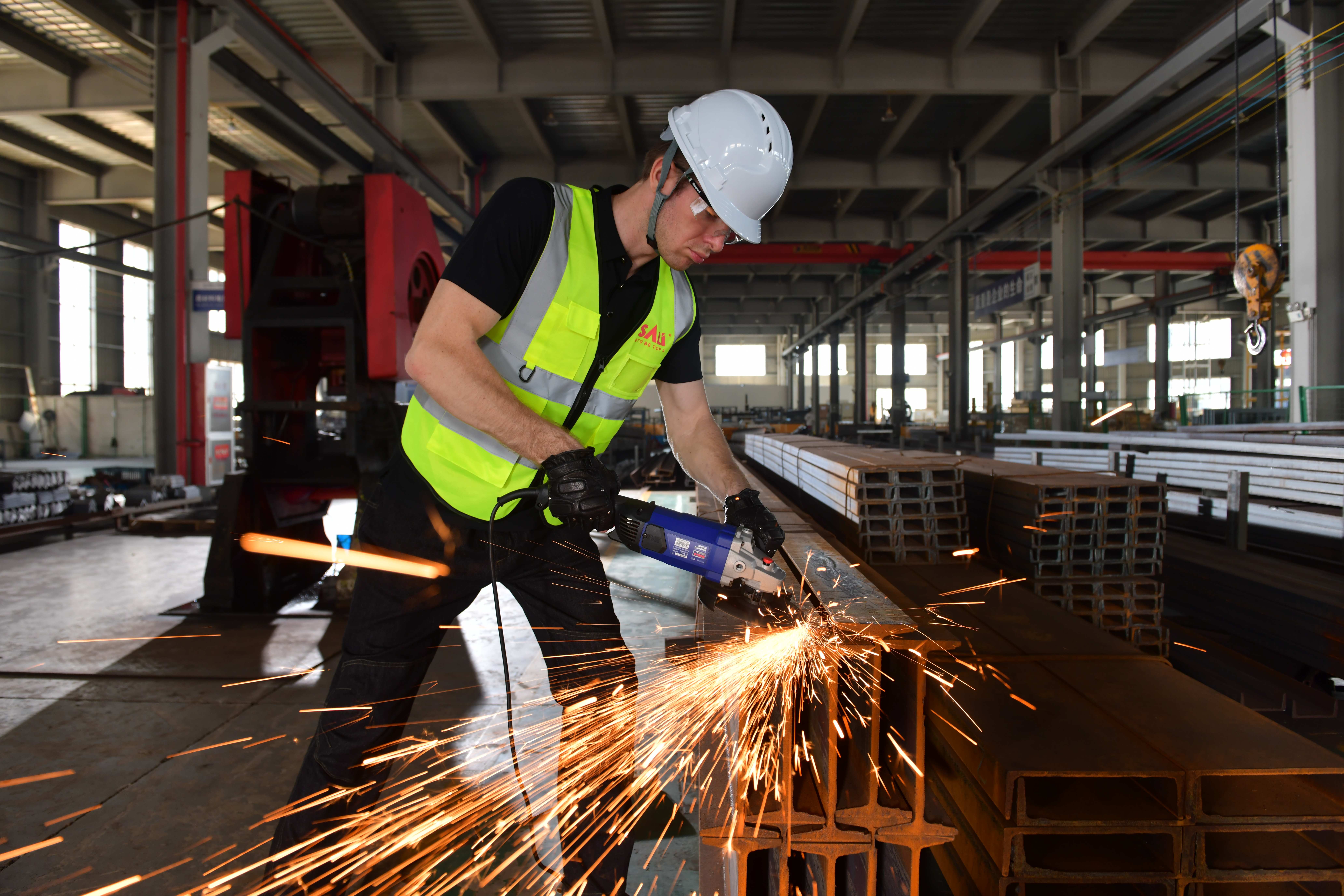
Compliance failures in bonded abrasives are rarely caused by the abrasive grain. They are caused by two numbers printed on the wheel and by the checks an operator skips before mounting it. For buyers sourcing metal grinding discs into fabrication, construction or industrial MRO programmes, qualification therefore rests on three verifiable items: the Maximum Operating Speed printed on the label, the ring test required for vitreous wheels, and the mechanical protection built into the machine — a guard covering at least 180° and flanges covering at least one-third of the wheel diameter.
The commercial weight behind that checklist is significant. The global grinding wheels market was estimated at USD 7.12 billion in 2025 (Mordor Intelligence), and metalworking accounted for 47.2% of metal abrasives revenue in the same year (Grand View Research). Asia-Pacific held the largest regional share, at approximately 41.3%–42.7% in 2025. In a category of that scale, safety documentation is a shortlisting filter rather than a formality.
The Two Speed Numbers Buyers Keep Mixing Up
Two different speed figures govern every grinding operation, and conflating them is the most common sourcing and setup error.
- The wheel's Maximum Operating Speed (MOS) — printed on the wheel label and expressed either in m/s surface speed or in RPM.
- The tool's maximum rated speed — stamped on the nameplate of the angle grinder.
The governing rule is one-directional: the grinder's maximum rated speed must be below the MOS printed on the wheel. Equipment rotation speed must strictly remain within the Maximum Operating Speed specified on the wheel label; the MOS must exceed the tool's maximum rated RPM, never merely match it. A wheel that is technically undamaged can still be the wrong wheel for a given machine.
Surface speed is the underlying measure. A grinding wheel removes material through high-speed primary rotation, with surface speeds typically between 30 and 80 m/s. SALI metal grinding discs are certified compliant with EN 12413 and MPA safety standards and are rated for high-speed operation up to 80 m/s (13,300 RPM). That 13,300 RPM figure corresponds to the 115 mm size, and because surface speed depends on diameter, the same m/s rating resolves to a lower spindle speed on larger formats such as the 180 mm (7 inch) or 230 mm (9 inch) wheels. The printed label figure — not a general rule of thumb — must therefore govern every mounting decision, across 100 mm, 115 mm, 125 mm, 180 mm and 230 mm formats.
The Ring Test: Scope, Method and the Exception Buyers Must Know
A ring test is a pre-use crack inspection for vitreous wheels. The wheel is tapped and the tone is assessed: a clear ring indicates a sound wheel, while a dull sound indicates a hidden crack, and a dull-sounding wheel must never be used. The test exists because a vitreous wheel can carry internal damage that is invisible from the surface, and a cracked wheel can fail under centrifugal load.
The scope of the requirement is narrower than many sourcing documents assume. The ring test applies to vitreous wheels. SALI metal grinding discs use a resinoid bond with aluminium oxide grain, specified as A24Q4 BF and A30Q4 BF, so ring testing is not the applicable pre-use check for them. For resinoid bonded discs, the pre-operation gate is visual inspection for cracks, chips, bends and moisture damage, combined with a check of the expiry date and the speed match against the label.
Guard, Flanges and Dry Run: The Mounting Rules
Machine hardware determines how much energy a failure releases toward the operator. Four mounting requirements sit at the centre of the standard.
- Guard coverage: the safety guard must cover at least 180° and must never be removed. The open side should face away from the operator.
- Flange coverage: mounting requires balanced, undamaged flanges that cover at least one-third of the wheel's diameter, fitted with soft paper or rubber blotters for even pressure distribution.
- Dry run: run the fitted wheel empty with the guard in place for 1–3 minutes before starting work, standing clear of the rotation plane.
- Power isolation: disconnect the tool or remove the battery pack before changing or adjusting a wheel.
PPE and Operating Practice for Metal Grinding
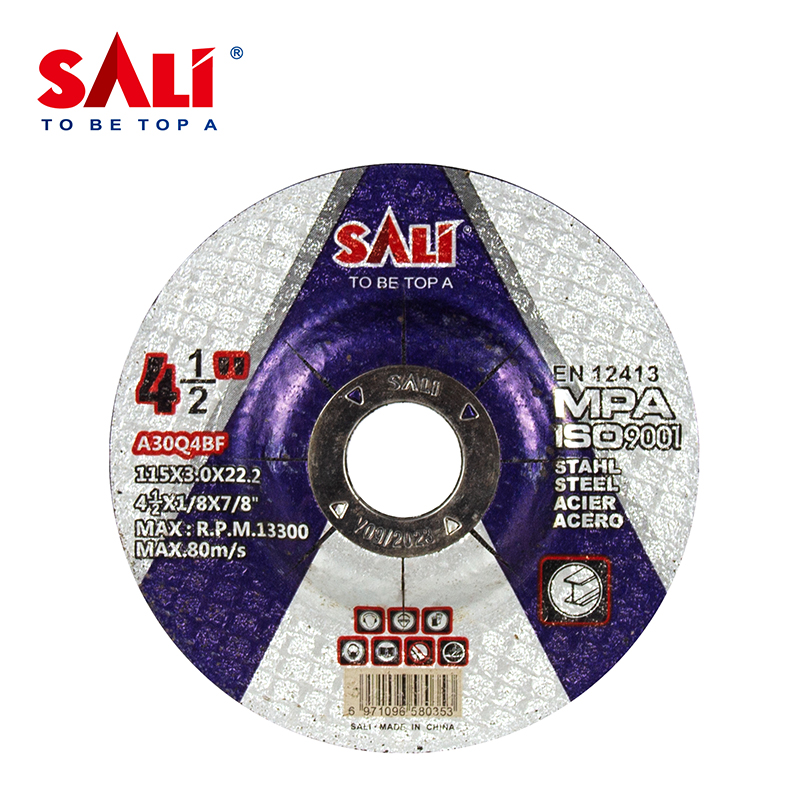
Personal protection is specified equipment, not a preference. Operators should always wear impact-rated face shields, safety glasses, dust masks and hearing protection. Where dry grinding generates abrasive particles and metal fines, continuous local exhaust ventilation with a minimum hood velocity of 1.5 to 2.5 m/s is required to prevent dangerous accumulation.
Technique is equally prescribed. On portable grinders, maintain a grinding angle of 15° to 30° and stand off to the side, outside the direct burst line. Never use thin cut-off wheels for side grinding, and never use grinding wheels for deep cutting. Avoid excessive pressure, which causes heat build-up and raises the risk of wheel fracturing. Standard wheels should also not be used on soft metals such as aluminium or copper, or on wood and plastic, because loading can cause violent wheel burst.
Working environment and coolant handling
Grinding wheels operate best at temperatures between 15°C and 25°C with 50% to 60% relative humidity; extreme temperatures and excessive humidity weaken the bonding agents and compromise structural integrity. When liquid coolants are used, maintaining a fluid pH between 7 and 9 prevents chemical erosion of the bond, and after wet operation the wheel must spin empty for 3 to 5 minutes to purge fluid and prevent unbalancing.
Under normal cutting conditions, a bonded grinding wheel relies on a self-sharpening mechanism: as abrasive grains dull and grinding resistance rises, mechanical stress fractures the dull grain or the surrounding bond, exposing fresh sharp edges. Depth-of-cut infeed is typically set between 0.005 and 0.05 mm per pass, with longitudinal and crossfeed movements covering the workpiece length and width.
What to Verify in a Supplier's Compliance File
For buyers at the research and evaluation stage, the practical question is which documents and label data to request before a purchase order. EN 12413:2019 remains the active European standard specifying safety requirements for bonded abrasive products, published by CEN, and it is the reference point that most international purchasing specifications converge on.
| Verification item | What compliant supply shows | Why it matters to the buyer |
|---|---|---|
| Speed marking | Maximum Operating Speed printed on every disc, alongside dimensions and grain/bond code | Allows a documented speed match against each grinder in the fleet |
| Standards marking | EN 12413 and MPA marks on the disc and packaging | Connects the SKU to a recognised bonded-abrasive safety standard |
| Reinforcement | Fiber net quantity of 2 pcs or 3 pcs, and disc type T27 or T42 | Reinforcement and shape must match the intended operation and guard |
| Batch testing | Full batch inspection in an in-house lab; 100% test approach | Ring testing and speed checks cannot substitute for production-level testing |
| Traceability | Quality traceability system, with remote camera access for client lab inspection | Lets the buyer verify testing rather than accept a certificate at face value |
| Trade classification | HS Code 6804.22 for grinding wheels of agglomerated abrasives | Standardises customs and landed-cost comparison between origins |
ZHEJIANG SALI ABRASIVE TECHNOLOGY CO., LTD., the manufacturer behind the SALI Tools brand, was founded in 2003 and launched the SALI brand in 2010. The company holds dual ISO 9001/14001 certification and states that its products carry MPA and EN 12413 certifications, supported by a quality traceability system and an in-house testing laboratory where clients can request remote camera access to monitor batch testing in real time.
Scenario Fit: Where Speed and Ring Checks Carry the Most Risk
Metal grinding discs of this class are used in steel construction and infrastructure, metal fabrication and machinery manufacturing, welding and repair engineering, pipeline and oil/gas work, automotive manufacturing and repair, shipbuilding and offshore engineering, and general hardware maintenance. Structural steel and building construction, pipeline and energy infrastructure, and rail transit and heavy equipment manufacturing are among the project types where weld seam smoothing, deburring, edge chamfering and mill scale removal concentrate the highest number of grinder hours per site.
Supply scale matters here. A grinding wheel used in steel construction and infrastructure is consumed continuously across a project rather than in single units. One Middle East project recorded in SALI's customer references involved a quantity of 10 million pieces, completed within five years for fabrication and on-site processing, and reached stable operation results. In Central Asia, a wholesaler has used SALI products for more than nine years, and by 2024 its sales volume had increased 21 times compared with its first year as a SALI agent in 2018. High-volume sites are where a single labelling or reinforcement inconsistency scales into a fleet-wide safety exposure.
Comparison: What Each Pre-Use Check Can and Cannot Prove
Buyers evaluating a supplier's safety claims often treat all inspection steps as equivalent. They are not. Each control has a defined purpose and a defined blind spot, and the honest comparison is one of coverage rather than of strength.
| Check | Applies to | What it detects | What it cannot prove |
|---|---|---|---|
| Ring test (tap and listen) | Vitreous wheels | Hidden internal cracks; a dull tone means the wheel must be rejected | Bond strength, burst speed, or accuracy of the printed speed rating |
| Visual inspection | All bonded discs, including resinoid metal grinding discs | Cracks, chips, bends, moisture damage and expired bonding agents | Internal cracks in a vitreous wheel that the surface does not reveal |
| Speed match against the label | All wheels and all machines | Whether tool RPM stays below the wheel's Maximum Operating Speed | The wheel's actual burst margin, which is a manufacturing parameter |
| Manufacturer batch testing | Production lots supplied to the buyer | Batch-level performance and burst behaviour under test-lab conditions | Damage caused after dispatch by storage, handling or mounting errors |
Limitations Buyers Should Plan Around
Three constraints are worth building into a purchasing plan rather than discovering after delivery.
- Resinoid discs are moisture-sensitive. They should be stored in a cool, dry area, off the floor, at humidity below 60% and temperatures between 10°C and 30°C. Under standard conditions SALI resin discs retain optimal performance for three years, so long-storage stock and transhipment delays directly affect usable life.
- A ring test is not a universal control. It cannot be applied to resinoid bonded grinding discs as evidence of integrity, and no pre-use check replaces the manufacturer's production testing or the operator's visual inspection.
- Custom orders carry lead-time and cost structure. OEM and ODM production runs at 30 to 45 days from design confirmation to final delivery, and sample fees for new clients are deducted from the first bulk order rather than waived upfront.
Future Outlook
As bonded abrasive capacity concentrates in Asia-Pacific, which held roughly 41.3%–42.7% of global revenue in 2025, compliance documentation becomes the practical differentiator between suppliers offering visually identical discs. Metalworking's 47.2% share of metal abrasives revenue indicates that demand pressure will continue to sit in steel and fabrication applications, where guard geometry, flange coverage and speed matching are audited rather than assumed.
The direction of travel is toward auditable evidence: printed EN 12413 and MPA markings, batch-level test records, and remote or on-site verification of lab testing. Buyers who move the ring test, the speed match, the 180° guard requirement and the one-third flange rule into their supplier qualification checklist early will find that the rest of the technical comparison becomes substantially simpler.
FAQ
How do I confirm that a grinding wheel's maximum operating speed matches my angle grinder?
Compare the Maximum Operating Speed printed on the wheel label with the maximum rated speed on the grinder's nameplate. The equipment rotation speed must strictly remain within the Maximum Operating Speed specified on the wheel label, meaning the tool's maximum rated RPM must stay below the wheel's MOS. Surface speeds for grinding typically run between 30 and 80 m/s; SALI metal grinding discs are rated for operation up to 80 m/s, which corresponds to 13,300 RPM at the 115 mm size and to lower spindle speeds at larger diameters such as 180 mm and 230 mm.
Does a resinoid bonded metal grinding disc require a ring test before use?
The ring test requirement applies to vitreous wheels, where tapping and listening for a clear tone reveals hidden cracks and a dull-sounding wheel must be discarded. SALI metal grinding discs use a resinoid bond with aluminium oxide grain, specified as A24Q4 BF and A30Q4 BF, so the applicable pre-use checks for them are visual inspection for cracks, chips, bends or moisture damage, verification of the expiry date, and the speed match. A ring test detects cracks only and does not verify bond strength or the accuracy of the printed speed rating.
What guard and flange configuration is required when mounting a grinding wheel?
Mounting requires a safety guard covering at least 180° that is never removed, positioned with the open side facing away from the operator. Flanges must be matching and undamaged and must cover at least one-third of the wheel's diameter, fitted with soft paper or rubber blotters for even pressure distribution. Power must be disconnected before changing a wheel, and the fitted wheel should be run empty with the guard in place for 1–3 minutes while the operator stands clear of the rotation plane.
What PPE is required for metal grinding with an angle grinder?
Required protection includes impact-rated face shields, safety glasses, dust masks and hearing protection. Operators should maintain a grinding angle of 15° to 30°, stand off to the side outside the direct burst line, avoid excessive pressure that causes heat build-up, and never use thin cut-off wheels for side grinding. Where dry grinding is performed, continuous local exhaust ventilation with a minimum hood velocity of 1.5 to 2.5 m/s is required to control dust and metal fines.
How should resin bonded grinding discs be stored, and do they expire?
Resin-bonded discs are moisture-sensitive and should be stored in a cool, dry area off the floor, at relative humidity below 60% and temperatures between 10°C and 30°C. Under standard conditions SALI resin discs retain optimal performance for three years. Grinding wheels operate best between 15°C and 25°C with 50% to 60% relative humidity, because extreme temperature and excessive humidity weaken the bonding agents; expired wheels should never be used, since aged bonding agents increase the risk of wheel burst.
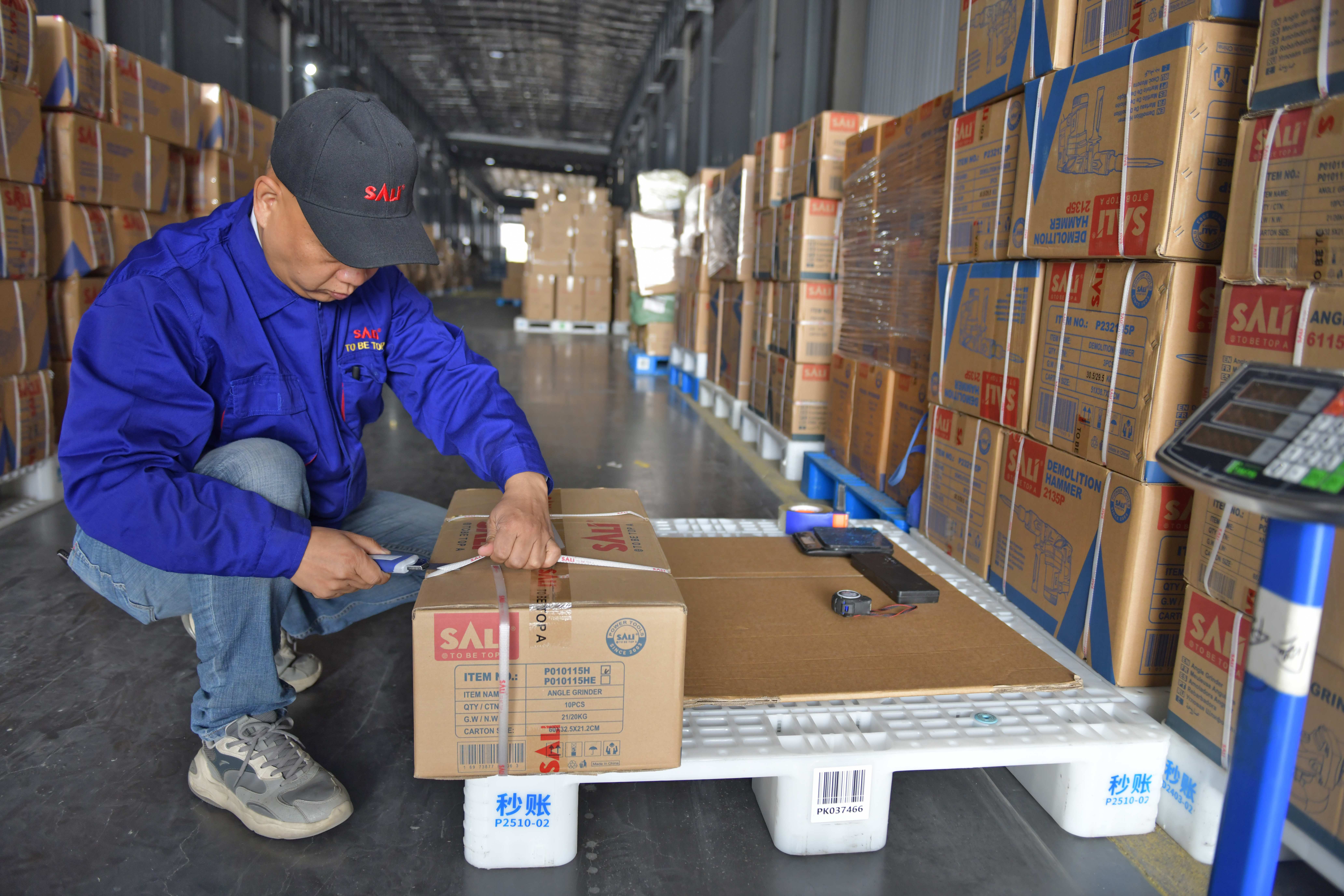
The full range of SALI cutting, grinding and surface-preparation products, including technical data and packaging information, is summarised in the SALI Tools Brand Product Catalog.