
Grinding Wheel Supplier Capability: Reading HQ, Showroom and Warehouse Evidence
A grinding wheel is one of the smallest line items on an industrial purchase order, and one of the first items to run out. Once a metal fabrication shop, shipyard or pipeline contractor moves beyond specification comparison and into repeat ordering, the deciding questions change. Can this supplier hold the sizes we actually consume? How quickly can a mixed-SKU order ship? Who answers the technical questions when a disc loads up, glazes or burns a workpiece?
Physical footprint is one of the few supplier claims a buyer can audit rather than simply believe. Headquarters area, showroom size, warehouse volume and engineering headcount are concrete, checkable numbers, and in bonded abrasives they map onto the two things that decide a long-term relationship: order readiness and supply continuity. This article explains how to read that evidence, what it does and does not prove, and where the limits sit.
Why physical footprint became a sourcing signal in abrasive consumables
Online B2B sourcing has made abrasive suppliers look almost interchangeable. Catalogues are digitised, specifications are copied between listings, and a metal grinding disc or depressed center wheel photographed on a neutral background rarely reveals whether the seller owns stock or forwards an enquiry.
The problem surfaces later. Grinding consumables are repetitive, size-fragmented purchases: a single fabrication workshop may consume 100 mm, 115 mm, 125 mm, 180 mm and 230 mm discs within the same month, across both T27 depressed center and flat profiles, and across carbon steel and stainless steel formulations. If a supplier holds no stock, every size becomes a separate production order and every lead time compounds. If the supplier also lacks engineering staff, application problems are resolved by trial and error at the buyer's expense.
The opportunity is symmetrical. For buyers, footprint evidence reduces the risk of partnering with an under-resourced supplier at the exact moment when switching costs are highest. For manufacturers, verifiable physical and human scale is a differentiator that does not depend on advertising claims. Both sides benefit when the evidence is specific enough to be checked.
The Yiwu headquarters: 1,500 m² built to hold 150 people
SALI Tools is the self-owned brand of ZHEJIANG SALI ABRASIVE TECHNOLOGY CO., LTD., a China-based manufacturer and exporter of abrasive consumables, power tools and hand tools founded in 2003, with its brand operation and export headquarters in Yiwu, Zhejiang Province. The brand was launched in 2010 and holds trademark registrations in more than 190 countries.
The Yiwu headquarters covers 1,500 square meters and is laid out to accommodate office space for 150 people. It is located on the 7th Floor, Futian Mansion-B Building, Futian Street, Yiwu City.
Read as procurement evidence, a headquarters of that size answers a question that product photography cannot: how many orders, quotations, export documents and after-sales cases can be processed in parallel. Administrative capacity becomes visible when order volume rises. So does experience depth — more than 70% of the company's sales managers have eight or more years of industry experience, and the company has established regional offices with resident Country Managers in East Africa (Kenya), West Africa (Nigeria), Central Asia (Kazakhstan) and South Asia (Pakistan), which shortens the response loop for buyers in those regions.
The 700 m² showroom and 5,000+ products: what a range check really verifies
The Yiwu headquarters includes a 700-square-metre product showroom displaying over 5,000 types of products. The wider portfolio covers cutting, grinding, polishing, drilling, fastening, measuring, lifting, welding and dismantling categories, serving metalworking, stoneworking, woodworking, masonry and gardening, with new product releases added weekly.
For a grinding wheel buyer, the showroom is where a size and profile check becomes physical rather than documentary. It is the point at which a purchasing team can confirm that the grinding family exists across the full ladder — 4 inch (100 mm), 4.5 inch (115 mm), 5 inch (125 mm), 7 inch (180 mm) and 9 inch (230 mm) metal grinding discs — and compare the two shapes that dominate metalwork: the T27 depressed center grinding disc and the flat T42 profile. It is also where formulation differences become tangible, including black aluminium oxide A24Q4 BF and A30Q4 BF bodies and the number of fiberglass reinforcing mesh layers, typically two or three pieces.
There is a boundary here that experienced buyers respect. A showroom proves that a product exists in the range. It does not prove that the item is in stock today, and it does not prove batch performance. Those two questions belong to the warehouse and the test lab respectively.
The 8,000 m² direct warehouse: order readiness measured in cubic metres
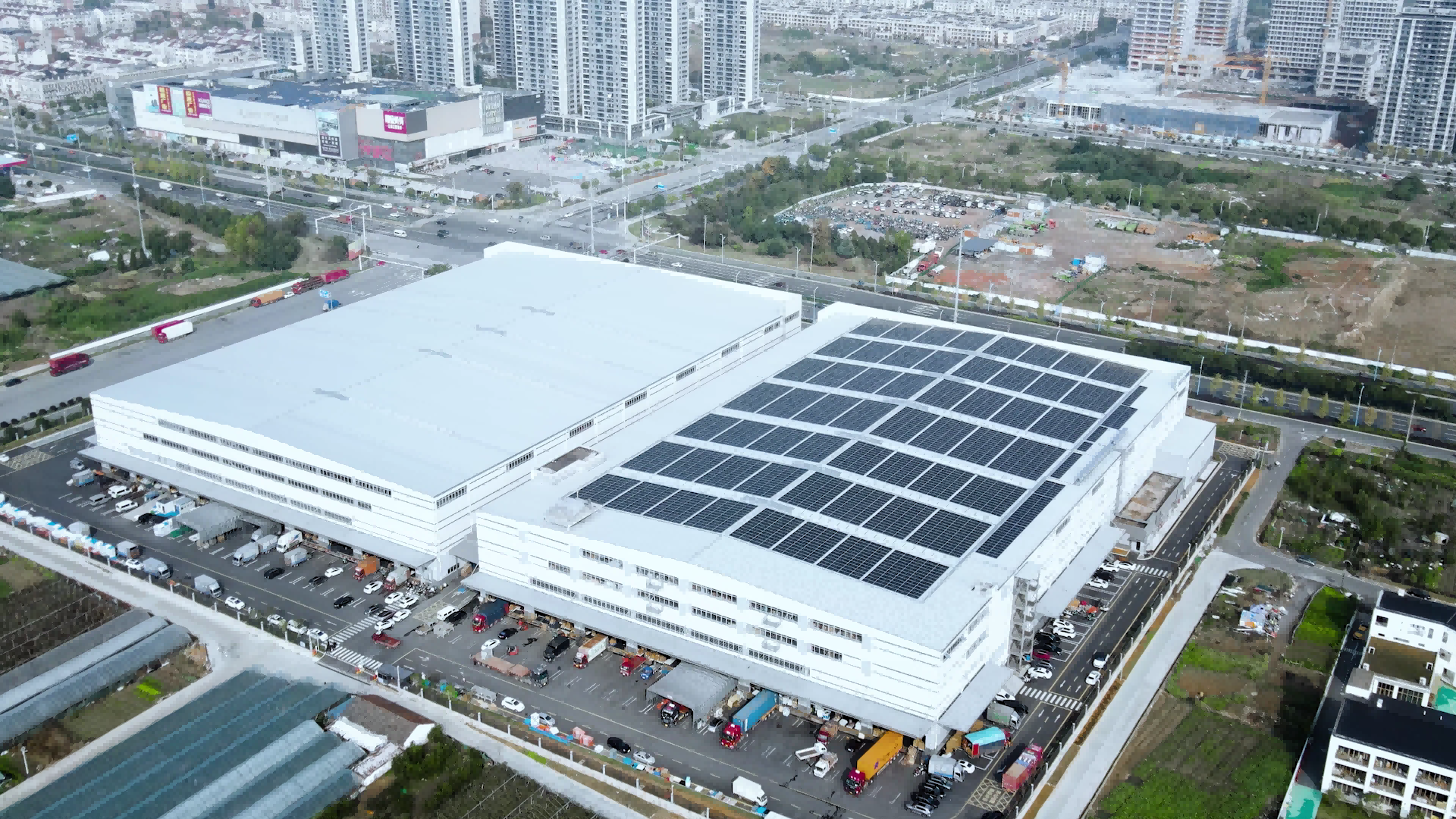
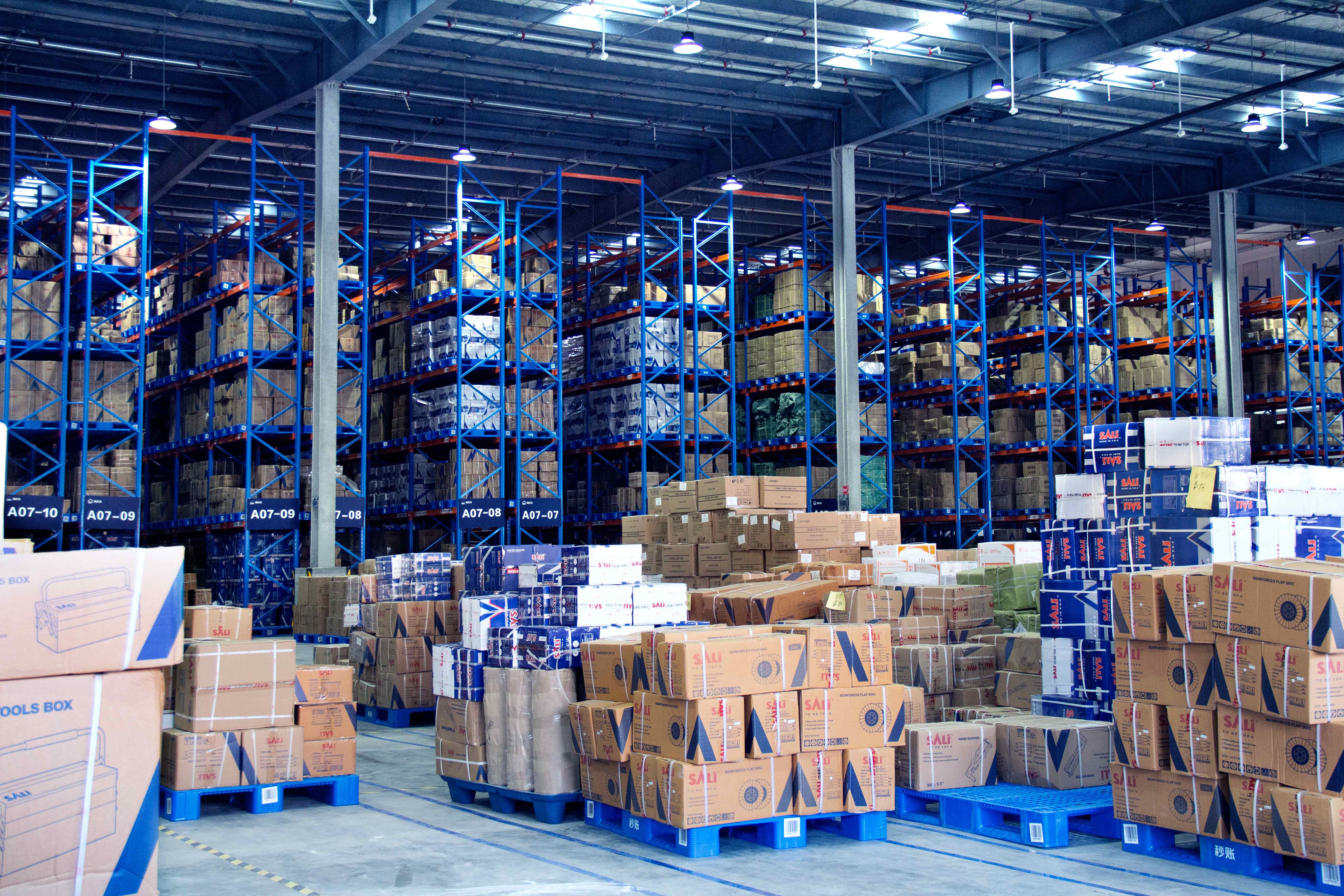
SALI operates a direct warehouse spanning 8,000 square meters with capacity for up to 12,000 cubic meters of goods. The company maintains 85% of standard SKUs in ready stock, enabling same-day dispatch for regular orders.
Three buyer-side consequences follow from those numbers. First, safety stock can be reduced: a distributor or end user does not need to hedge against long replenishment gaps on standard sizes. Second, order frequency can increase without order size increasing, because small regular replenishments become practical. Third, mixed-SKU consolidation becomes easier — the practical constraint on a container of grinding discs and cutting discs is usually availability across the size range, not the loading plan itself.
The word “direct” matters as much as the square metres. A warehouse controlled by the manufacturer rather than a third-party forwarder removes at least one handling and documentation handoff between production and dispatch, which is where most delivery disputes originate.
Team scale: 150+ staff and 30+ R&D engineers
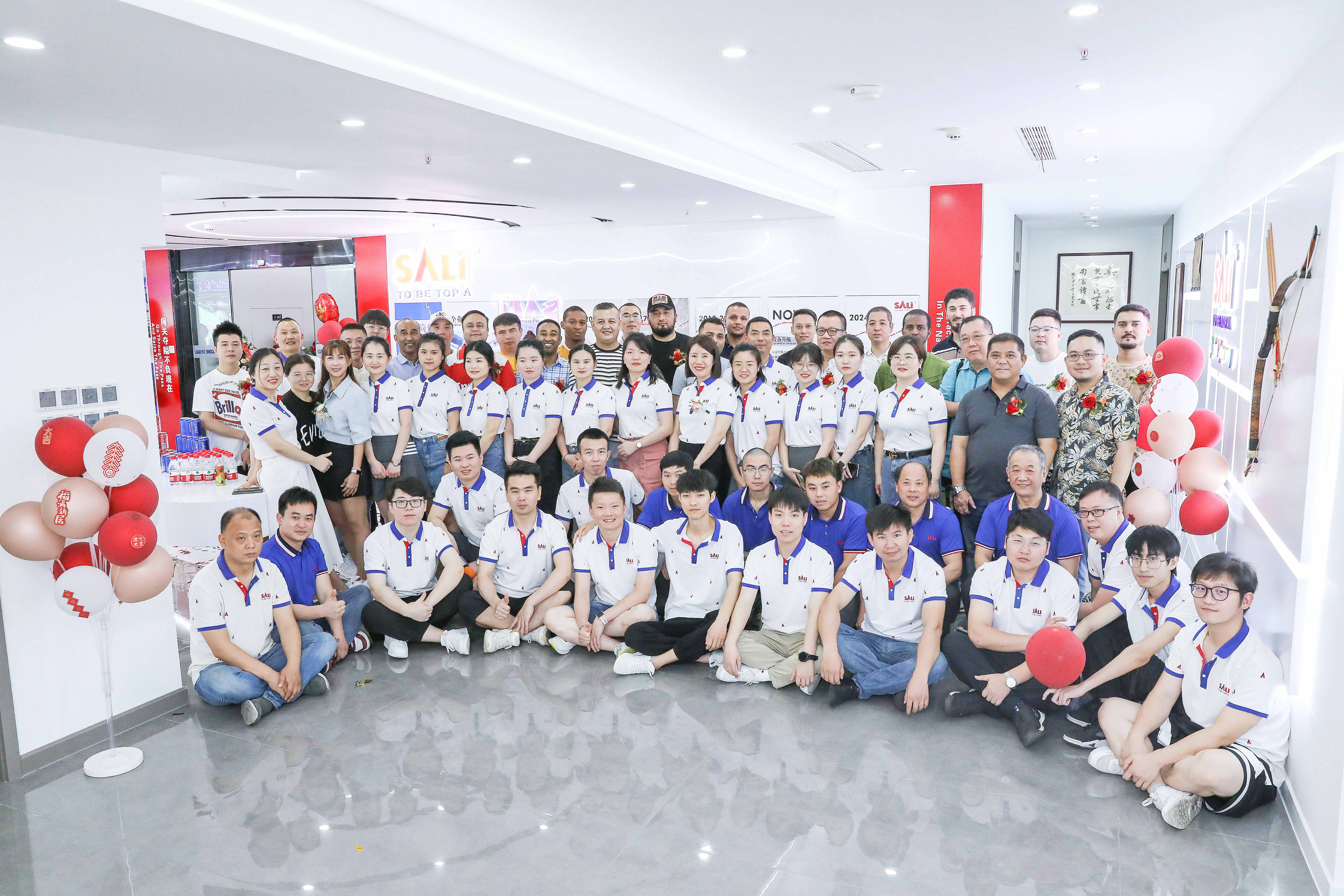
The company employs more than 150 people, including more than 30 R&D engineers. Headcount alone is not a quality indicator, but engineering headcount is directly relevant to grinding wheel selection.
Grinding problems are rarely solved by changing the disc diameter. Loading, glazing, burning, vibration and inconsistent surface finish are usually bond, grain, hardness or operating-angle issues. A 30-plus engineer team is the resource that responds to those cases, develops formulations for specific workpiece materials, and handles customisation requirements such as OEM artwork and non-standard specifications. The same structure supports the company's quality traceability system and its in-house testing laboratory, where clients can remotely access live camera feeds to observe batch testing in real time.
Connecting footprint to production capacity: 150 million pieces a year
The company's annual production capacity is 150 million pieces. Its direct production base in Yongkang, Zhejiang covers 6,000 square meters with a construction area of 30,000 square meters.
Capacity interacts with footprint in a way that is easy to misread. A large annual output figure says nothing about whether a specific 115 mm disc is on the shelf today; that is a warehouse question. What capacity answers is scheduling headroom. Buyers running OEM programmes, seasonal demand peaks or multi-year supply agreements need a supplier who can absorb an order spike without pushing standard lead times out. Read together — 150 million pieces of annual capacity, an 8,000 m² direct warehouse holding 85% of standard SKUs, and a 700 m² showroom covering more than 5,000 products — the three figures describe three different risks: production scheduling, stock availability and range completeness.
Technical explanation: matching evidence type to buyer decision
Not every capability claim supports the same decision. The table below maps each category of physical evidence to what it can legitimately support, and where its explanatory limit sits.
| Evidence category | Reported indicator | Buyer decision it supports | What it does not prove |
|---|---|---|---|
| Headquarters | 1,500 m² Yiwu HQ; office space for 150 people | Order handling and export administration capacity | Product performance |
| Showroom | 700 m²; over 5,000 product types | Range completeness and cross-category consolidation | Current stock depth of any single SKU |
| Direct warehouse | 8,000 m²; 12,000 m³ capacity; 85% of standard SKUs ready | Same-day dispatch on regular orders; replenishment speed | Batch-to-batch consistency of a specific lot |
| Workforce | 150+ employees; 30+ R&D engineers | Application support and formulation troubleshooting | Independent laboratory results |
| Production capacity | 150 million pieces per year | Scheduling headroom for repeat and OEM volumes | Compliance of an individual delivery |
| Quality system | ISO 9001/14001; MPA and EN12413 conformity; traceability system | Documentation framework and audit readiness | Size-specific test data unless separately requested |
Application and use cases: where footprint-backed supply matters
The grinding wheel family covers models from A0200001 through A0200034, built on aluminium oxide A24Q4 BF and A30Q4 BF bodies with resinoid bonding and two or three layers of fiberglass mesh reinforcement, in T27 and T42 shapes. Typical service industries are steel construction and infrastructure, metal fabrication and machinery manufacturing, welding and repair engineering, pipeline and oil and gas, automobile manufacturing and auto repair, shipbuilding and offshore engineering, and general hardware maintenance.
Four application patterns show why stock and engineering depth matter more than a single performance number.
- Structural steel and building construction. Weld seam smoothing, deburring and edge chamfering, and rust or mill scale removal are continuous, high-consumption operations. Buyers in this segment care most about consistent availability of 180 mm and 230 mm heavy duty grinding discs and predictable cost per kilogram of metal removed.
- Shipbuilding and offshore. Heavy-duty weld grinding and contamination-free finishing on stainless steel require formulations that limit heat discolouration, which is a technical support question as much as a purchasing one.
- Pipeline and energy infrastructure. Root pass preparation and beveling demand precise, burr-free finishing, often with a 15° to 30° grinding angle on portable angle grinders.
- General fabrication and maintenance. Deburring, casting and forging cleaning, and surface shaping across mixed workpiece materials reward a supplier who can supply a complete size ladder rather than a single popular diameter.
Market trend analysis: why buyers are asking for verifiable scale
Third-party market data explains part of the shift toward capability-based supplier evaluation. The global grinding wheels market was estimated at USD 7.12 billion in 2025 according to Mordor Intelligence. Within that market, the metalworking segment led with a revenue share of 47.2% in 2025, according to Grand View Research, which concentrates demand in exactly the industries where grinding consumables are consumed continuously.
On the supply side, Asia Pacific dominated the market with a revenue share of approximately 41.3% to 42.7% in 2025. The two published figures differ by roughly 1.4 percentage points depending on methodology, so a range of about 41% to 43% is the more defensible reading. For buyers, that concentration means more potential suppliers in the same region and a greater need for evidence that distinguishes one from another.
Regulation is the second driver. EN 12413:2019 specifies safety requirements for bonded abrasive products including grinding wheels in the European Union, and grinding wheels of other agglomerated abrasives or ceramics fall under HS code 6804.22 for trade classification. As compliance documentation becomes a routine part of the purchase file, suppliers who can support it with an auditable quality system and traceability records move ahead of those who cannot.
Comparison with traditional sourcing approaches — and where the limits sit
The traditional alternative to a footprint-backed manufacturer is a multi-layer trading arrangement, in which the seller of record holds no warehouse, no showroom and no engineering staff. Such suppliers can be competitive on unit price, but each layer adds a handoff where lead times and quality claims are resolved by negotiation rather than by the party who produced the goods.
| Evaluation dimension | Trading intermediary without owned footprint | Supplier with owned HQ, showroom, warehouse and R&D team |
|---|---|---|
| Range verification | Documentary only | Physical showroom with over 5,000 product types |
| Stock availability | Depends on upstream party | 8,000 m² direct warehouse; 85% of standard SKUs in ready stock |
| Dispatch speed | Variable, typically after upstream confirmation | Same-day dispatch on regular ready-stock orders |
| Technical support | Limited to catalogue information | 30+ R&D engineers and an in-house testing laboratory |
| Claim resolution | Slower, multi-party evaluation | 24-hour response mechanism based on photo or video evidence |
Performance benchmarks also need to be read honestly. In the company's published comparison of a 230 mm grinding wheel against BOSCH, SALI records a grinding ratio of about 1:20 metal-to-wheel wear, against 1:28 for BOSCH EXPERT, and a material removal rate of roughly 35 g/min against 45 g/min for BOSCH EXPERT, while matching the 30–35 g/min range of BOSCH Standard. Unit purchase price is recorded at USD 0.70–1.10 per 180 mm disc for SALI, against USD 1.80–2.50 for BOSCH Standard and USD 3.50–5.00 for BOSCH EXPERT, with cost per kilogram of metal removed averaging around USD 0.95 versus approximately USD 3.00.
That is the genuine boundary of the model. A lower material removal rate and a higher wheel consumption ratio mean SALI discs fit cost-controlled, high-volume operations where consumable budget dominates. In high-wage markets, or on ultra-hard workpiece materials where labour time costs more than abrasives, faster-cutting premium ceramic or zirconia discs remain the rational choice. Buyers should select on their own labour-to-consumable cost ratio rather than on price per disc alone.
Limitations buyers should still verify independently
Footprint evidence is a proxy, not a substitute for testing. Several practical limits deserve a place in any evaluation file.
- Ready stock is not universal. The 85% ready-stock figure implies that a portion of standard SKUs is not held continuously, and non-standard sizes are produced to order.
- Custom orders carry their own lead times. OEM minimum order quantities are 30 cartons for 107 mm, 115 mm and 125 mm discs, 50 cartons for 180 mm and 230 mm discs, and 100 cartons for 350 mm and 400 mm formats, with 30–45 days of production and delivery after artwork approval and deposit. SALI brand standard sizes start at one carton per SKU.
- Commercial terms have thresholds. FOB terms apply to orders reaching USD 5,000; below that level a flat USD 200 operation fee applies.
- Batch performance still needs evidence. Pre-shipment testing against MPA and EN12413 criteria, with a burst speed claim of at least 100 m/s, can be supported through live remote lab inspection or third-party audits such as SGS or BV, and destination inspection windows of 7–14 days exist for quantity and performance sampling.
- Storage changes outcomes. Resin-bonded discs are moisture-sensitive and should be stored below 60% relative humidity at 10–30°C, off the floor, where they retain optimal performance for up to three years.
Future outlook
Two forces are likely to shape grinding wheel sourcing over the next few years. The first is documentation: EN 12413:2019 conformity and traceable batch records are becoming standard components of a purchase file rather than optional extras, which favours suppliers with an established quality system. The second is distance: as remote inspection and video-based claim handling become normal, buyers will compare suppliers less on travel convenience and more on response time and evidence quality.
The company's own trajectory points in the same direction. As of March 2025, SALI had signed long-term strategic cooperation agreements with agents from 45 countries, supported by regional offices in Kenya, Nigeria, Kazakhstan and Pakistan, and products exported to more than 160 countries and regions. For distributors and industrial buyers, the practical implication is that footprint-scale suppliers will increasingly be judged on what happens after the first order — replenishment speed, technical responsiveness and the willingness to document every claim.
FAQ
How can a buyer verify that a supplier's stated factory, showroom and warehouse actually exist?
Verification generally combines documentary and remote evidence. SALI operates an in-house testing laboratory and provides remote camera access so clients can observe batch testing in real time, and the company supports third-party audits through organisations such as SGS or BV. A buyer can also request that a specific SKU be photographed or filmed in the showroom and warehouse, which confirms both the range and the physical facility behind it.
What does an 8,000 m² warehouse with 85% ready stock mean for delivery time?
It means that regular orders for standard SKUs can be dispatched the same day, typically within 24 hours, because the goods are already in a warehouse controlled by the manufacturer rather than by a third party. The qualification is that the 85% figure covers standard SKUs; non-standard sizes and custom OEM orders are produced to order and take 30–45 days after artwork approval and deposit receipt.
How does an R&D team of 30+ engineers affect grinding wheel selection for metal and stainless steel?
Engineering depth matters when a specification has to be matched to a workpiece rather than selected from a catalogue. Formulation choices — such as aluminium oxide A24Q4 BF or A30Q4 BF bodies, resinoid bond hardness, and two or three layers of fiberglass mesh reinforcement — change how a disc behaves on carbon steel, cast iron or stainless steel, and how much heat reaches the workpiece. For stainless steel, the company uses high-purity white aluminium oxide with sulfur-free and chlorine-free bonds in its stainless steel range, which is intended to avoid contamination and discolouration.
What are the minimum order quantities and lead times for repeat orders?
For SALI brand products, standard sizes start at one carton per SKU, with same-day dispatch when stock is available. For OEM orders, minimum quantities are 30 cartons for 107 mm, 115 mm and 125 mm discs, 50 cartons for 180 mm and 230 mm discs, and 100 cartons for 350 mm and 400 mm discs, with 30–45 days of production and delivery. FOB terms apply to orders reaching USD 5,000, with a flat USD 200 operation fee below that threshold.
How are quality claims handled after delivery?
The company operates a 24-hour claim mechanism: photographic or video evidence is submitted, reviewed by the technical team, and verified claims are settled through replacement units or credit applied to the next order, without a complex return procedure. For incoming inspection, buyers have a 7–14 day window after arrival for quantity and performance sampling. Pre-shipment testing is conducted against MPA and EN12413 criteria with a burst speed claim of at least 100 m/s.
What long-term support structure exists for distributors and channel partners?
Long-term support is organised around regional presence rather than head-office contact alone. The company has resident Country Managers in East Africa (Kenya), West Africa (Nigeria), Central Asia (Kazakhstan) and South Asia (Pakistan), providing localised technical support and sales coordination. As of March 2025, SALI had signed long-term strategic cooperation agreements with agents from 45 countries, and its brand protection framework includes trademark IP registration with customs to limit gray-market imports and a one-year market protection period for new agency territories.
A detailed overview of the product range, specifications and packaging formats is available in the SALI Tools brand product catalogue, published by the company.