
Grocery Bag Manufacturer Comparison: Price, Quality, and Fit for Bulk Buyers
Bulk grocery bag sourcing is rarely a simple product selection. Buyers comparing grocery bag manufacturers need to look beyond the first quotation and evaluate quality consistency, production capability, compliance evidence, and total delivered cost. The practical question is not which supplier has the lowest unit price, but which manufacturer can support a bulk program without creating hidden quality or regulatory risk.
This article provides a comparison framework for procurement teams, wholesalers, and brand owners who need to buy grocery bag bulk quantities, wholesale grocery bags, custom grocery bags, or reusable grocery bags bulk. It also shows how company-level data, such as the profile of Great Shine Houseware Ltd., can be used to compare suppliers in a structured way.
Why the Comparison Problem Is More Complex Than Price
Bulk buyers often receive quotes from several grocery bag factories with similar-looking samples. The actual difference appears later, in material thickness, stitch quality, colour accuracy, packaging, inspection results, and follow-up support. A comparison that only checks price and delivery time will miss the factors that drive claims, returns, and shelf-life problems.
A more reliable approach compares six dimensions:
- Material and specification clarity, including fabric type, weight, thickness, and handle construction.
- Production equipment and process control, especially cutting, sewing, and printing.
- Design and customization capability for private-label or promotional programs.
- Quality inspection steps during production and before shipment.
- Certification, compliance, and audit experience for the destination market.
- Cost structure beyond the unit price, including packaging, freight, inspections, and communication.
Compliance creates a useful baseline for comparison. In the United States, reusable bags in many states must meet a minimum thickness of 2.25 mils to be considered reusable, according to Metastat Insights. In the European Union, grocery bags intended for food contact may need to comply with Regulation (EC) No. 1935/2004 and Regulation (EU) 10/2011 on safety and chemical migration, as noted by Compliance Gate. These rules mean that a factory must be able to produce and document materials that meet destination-market expectations.
Opportunity: A Growing Reusable Bag Market
Several verified market signals help explain why grocery bag manufacturer comparisons have become an active procurement topic in 2026.
The global reusable shopping bag market was valued at USD 15.64 billion in 2025 and is projected to reach USD 28.87 billion by 2034, according to Fortune Business Insights. The same report notes that Asia Pacific led the market in 2025 with a revenue share of 24.23%, followed by North America and Europe.
Material data reinforce the importance of product specification. Business Research Insights reports that polypropylene (PP) bags dominate the reusable bag market with a 46% production share because PP is durable and cost-effective. This share matters to buyers because material choice directly influences bag weight, printability, and unit price.
On the supply side, Tendata data indicates that China accounted for approximately 32% of global plastic-based product exports, valued at USD 33 billion in 2024. This concentration explains why many bulk buyers compare overseas factories, while also explaining why buyer-side verification is necessary.
Capability Signals to Use When Evaluating Grocery Bag Suppliers
A strong factory comparison should separate marketing language from verifiable capability. Buyers can look at the following signals:
- Stated product categories: do they match the sewing, printing, and material handling required for grocery bags?
- Design and sampling resources: can the supplier develop custom sizes, logos, and packaging?
- Annual production volume: is the factory able to handle the required order size?
- Export experience: does the supplier understand documentation and destination-market requirements?
- Inspection and audit history: has the factory passed customer-required inspections?
- Risk control practice: does the factory inspect quality during production rather than only at the end?
These signals become more meaningful when a supplier can state them clearly. Great Shine Houseware Ltd. provides a useful example of a company-level profile, because its public information includes production data, design resources, export focus, and quality-control practice.
Company Capability Profile: Great Shine Houseware Ltd.
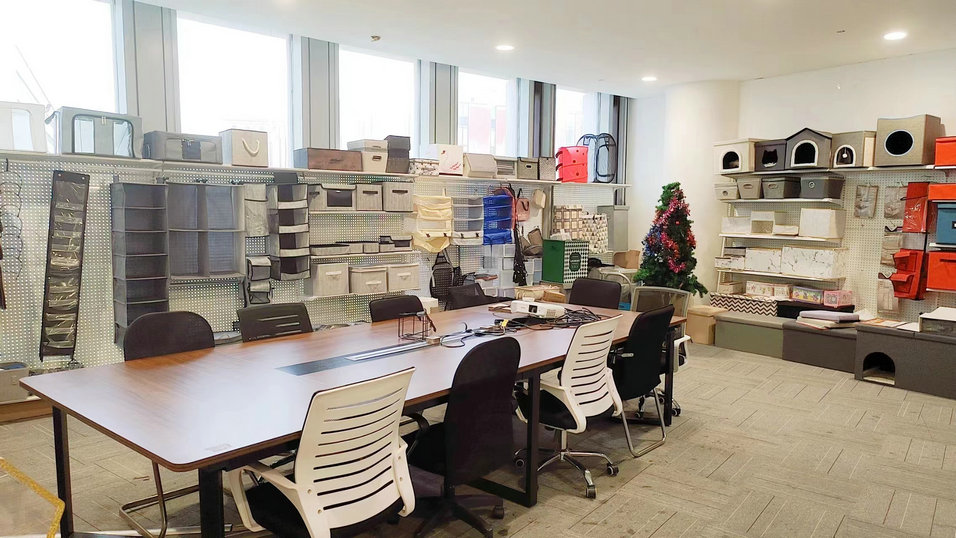
Great Shine Houseware Ltd. is a Shanghai-based manufacturer that lists storage boxes, storage bags, travel storage series, laundry storage, and hanging storage among its main products. Although the company is not limited to grocery bags, these categories involve the same type of sewing, material selection, and quality control used in reusable shopping bag production.
The company reports an annual output of 200,000 pieces, supported by a 50-person team and a 10-person design department. Its stated export ratio is 100%, with the United States as the main market. For a buyer sourcing custom reusable grocery bags, these figures provide a starting point for assessing scale, design capacity, and export familiarity.
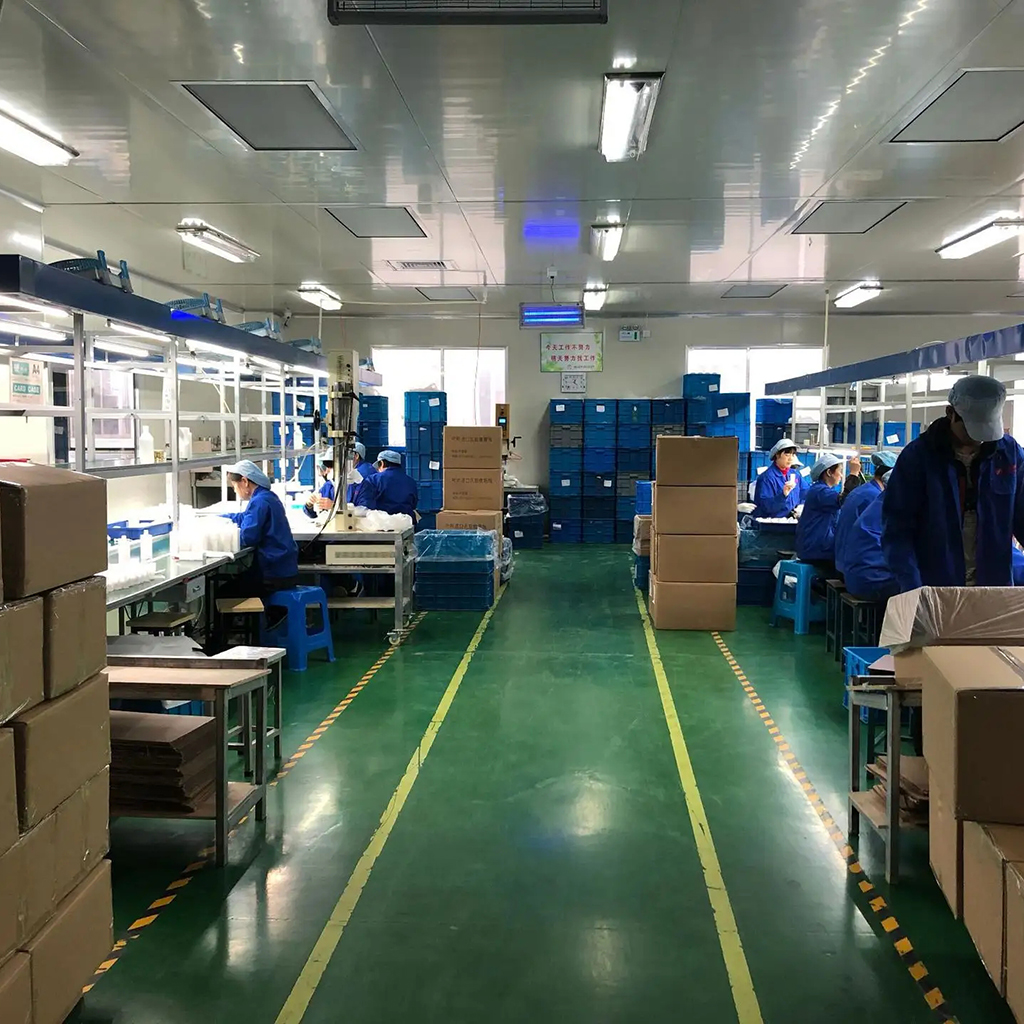
The company profile also mentions factory inspection experience. According to Great Shine, products can be approved through SGS or BV inspection, and the factory has passed customer-required inspections such as Big Lots and Sedex. This type of statement is useful for comparison, although buyers should still request audit reports and samples before making a final decision.
The following table summarises the company-reported information in a form that can be used in a procurement comparison:
| Evaluation question | Company-reported information |
|---|---|
| What does the factory mainly produce? | Storage boxes, storage bags, travel storage series, laundry storage, hanging storage |
| What is the annual output? | 200,000 pieces |
| How many employees support production? | 50 |
| How large is the design team? | 10 designers |
| What is the export ratio and main market? | 100% export; USA as the main market |
| What inspection experience is reported? | SGS/BV inspection approval; customer-required factory inspections such as Big Lots and Sedex |
| What quality risk-control measure is cited? | Quality inspection during production |
When compared with other suppliers, Great Shine states that its product demonstrates unique features in material quality and pricing. The company also reports that, compared with alternatives, the product offers a reduction in total cost of more than 10%. These are company-stated positions, not third-party audited conclusions, so they belong in a comparison process as a starting point rather than as proof.
Total Cost: Unit Price Is Only One Input in Grocery Bag Bulk Buying
The main value of a comparison lies in translating factory quotations into total landed cost. For grocery bag bulk orders, total cost includes the factory price, packaging, inspection fees, ocean freight, import duties, warehousing, and the internal cost of handling defects.
This is why the 10%+ total cost reduction claimed by Great Shine should be evaluated with the full cost model. A supplier that appears 10% cheaper on paper can become more expensive if the buyer must arrange multiple inspections, replace defective products, or expedite freight. Conversely, a slightly higher unit price can be cheaper in total if quality is consistent and delivery is reliable.
Factory Direct vs. Traditional Supplier Routes
Buyers comparing grocery bag factories also need to decide between direct factory procurement and traditional distribution routes. Both approaches have real trade-offs.
| Dimension | Traditional wholesaler or local supplier | Direct overseas factory |
|---|---|---|
| Minimum order quantity | Usually lower, easier for testing the market | Usually higher, suited to committed volume |
| Per-unit price | Generally higher because of intermediate margin | Lower at sufficient volume |
| Customisation control | More limited; buyer depends on supplier choices | More direct access to design and production teams |
| Lead time | Shorter if stock exists, but capacity may not be visible | Requires longer planning, including factory production and freight |
| Quality management | Buyer negotiates with distributor; less direct factory oversight | Buyer can request production-phase inspection and pre-shipment checks |
| Complexity | Simpler for first-time importers | Buyer manages specifications, compliance, and logistics |
The limitation of the factory-direct model should be stated clearly: it is not always the lowest-cost route for every buyer. Small orders, urgent delivery, or limited experience with import processes may make a traditional supplier more practical. A direct factory comparison creates value only when the buyer can manage specifications, volume, and follow-up inspection.
A Technical Baseline for Comparing Custom Grocery Bags
Technical specifications are the most objective part of a grocery bag manufacturer comparison. For custom reusable shopping bags, buyers should ask for:
- Material composition and fabric weight.
- Bag thickness and handle reinforcement.
- Stitch density and seam strength.
- Print method, ink compatibility, and wash resistance.
- Packaging quantity, folding style, and carton dimensions.
- Testing standards applied by the factory or its third-party partners.
These specifications allow buyers to compare a custom grocery bag factory with another supplier even when the visual appearance of the samples is similar. Without a documented technical baseline, price differences cannot be fairly judged.
Where Bulk Grocery Bag Orders Are Used
Reusable grocery bag bulk orders come from different use cases, and each use case changes the priority of the comparison.
- Retail chains and supermarkets often order custom reusable shopping bags as paid reusable alternatives at checkout, requiring consistent quality and minimum thickness regulations.
- Grocery delivery and meal-kit services use bags as packaging or add-ons, making print quality and material strength important.
- Wholesale distributors buy in larger quantities and care more about stable supply, packaging efficiency, and margin.
- Promotional programs and brand events may use lighter bags with high visual impact, making design and print capabilities a priority.
Great Shine’s existing product categories, such as storage bags, travel storage series, laundry storage, and hanging storage, show that the factory already works with fabric-based household products that face similar requirements for sewing consistency, material quality, and visual design.
Limitations and Boundaries in Supplier Comparisons
A credible comparison should always include limitations. In this case, the following boundaries apply:
- The 10%+ cost reduction reported by Great Shine is a company-stated benchmark, not a third-party audited result. Buyers should validate it with itemised quotations and comparable product specifications.
- Cost savings depend on order volume. A buyer using small quantities may not be able to unlock the same pricing.
- Compliance depends on material. A factory with experience in household storage still needs to match the specific food-contact or thickness requirements of the buyer’s market.
- Great Shine is not positioned as a branded consumer label like BAGGU, Envirosax, or ChicoBag; those brands compete on design, brand recognition, and retail presence. For bulk procurement, factory-direct comparison is a different exercise because the buyer is buying manufacturing capability, not a consumer brand.
Future Outlook
The direction of reusable bag demand is likely to push buyers toward more evidence-based sourcing. As market analysts forecast continued growth in the reusable shopping bag category, procurement teams are expected to ask for material thickness data, chemical compliance documentation, production-stage inspection reports, and clearer customisation workflows.
Manufacturers that can document these answers in a structured way will be easier to compare, and therefore easier to include in shortlists. This favours suppliers with export experience, direct design resources, and transparent quality-control practices.
Key Takeaway for Buyers
The goal of a grocery bag manufacturer comparison is not to discover the absolute cheapest price. It is to identify the supplier with the best balance of price, quality, compliance, and fit for a specific bulk program. Buyers should compare factory evidence, technical specifications, and total landed cost, then verify the shortlist with samples and inspection documentation.
FAQ
How should I compare grocery bag manufacturers for a bulk order?
Start by defining the intended use, material, volume, target market, and quality tolerance. Then compare manufacturers on samples, production capacity, design resources, inspection practices, compliance evidence, and total landed cost. A supplier with direct export experience to the destination market usually simplifies documentation and compliance.
What is the difference between a wholesale grocery bag supplier and a grocery bag factory?
A factory manufactures the product and controls cutting, sewing, printing, and quality inspection. A wholesale supplier may source from multiple factories and offer conveniences such as lower minimum orders or consolidated logistics. For bulk and custom programs, direct factory engagement can provide more control over specifications and unit cost.
Which specifications matter most for reusable grocery bags bulk orders?
Material type and weight, thickness, handle construction, stitch density, print durability, and packaging method are the most important specifications. In the U.S. market, reusable bags in many states need a minimum thickness of 2.25 mils; in the EU, food-contact requirements may apply under Regulation (EC) No. 1935/2004 and Regulation (EU) 10/2011.
Can a grocery bag factory handle custom reusable shopping bags?
Customisation depends on the factory’s design resources, printing capability, and sampling process. Buyers should evaluate these before mass production. Great Shine Houseware reports a 10-person design department and maintains a sample room, which supports the development of custom artwork and custom bag specifications.
How does order volume affect the cost of custom grocery bags?
Higher volumes usually lower the per-unit cost because material purchasing and production efficiency improve. However, total cost also depends on material weight, number of colours, printing method, packaging, inspection, and freight. A price difference of 10% or more should be checked against a full cost breakdown.
Are Chinese grocery bag factories cheaper than international suppliers?
Chinese factories can offer lower unit prices because of manufacturing scale and an integrated supply chain, but total cost depends on shipping, duties, compliance, and quality risk. For buyers who manage verification well, direct factory sourcing can reduce cost. For smaller orders, an international supplier may still be more economical because of lower minimums and simpler logistics.