
Grocery Bag Manufacturer Scenario Fit: Retail, Travel and Laundry
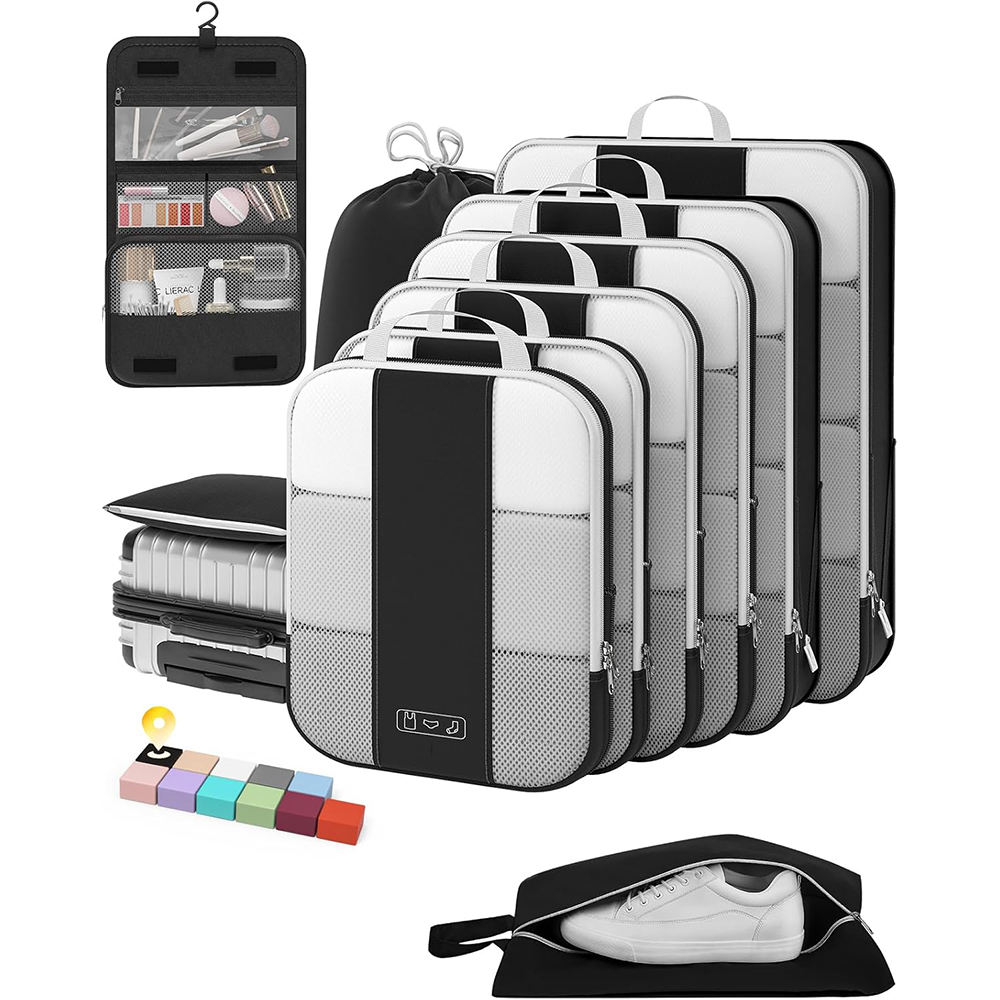
Travel storage packing cube set with zipper closure, foldable construction and soft handle — the travel-organisation end of a multi-scenario bag program.
The global reusable shopping bag market was valued at USD 15.64 billion in 2025 and is projected to reach USD 28.87 billion by 2034, according to Fortune Business Insights. Asia Pacific held a 24.23% revenue share in 2025, ahead of North America and Europe. The growth is well documented; less discussed is what it has done to the sourcing brief. Inquiries that once read reusable grocery bag, quantity, logo now bundle checkout carry, travel organisation, laundry transport and hanging storage into a single supplier conversation — four end uses that share a category name but almost nothing at the construction level.
Scenario-fit sourcing is the practice of matching a manufacturer's verified product lines, materials and closures to the physical job each bag has to do, instead of treating bag as one specification. For a grocery bag manufacturer, that distinction decides whether a program runs through one production relationship or four.
Why a Generic Category Brief Produces the Wrong Bag
A buyer who requests reusable bags receives a quotation for a single construction. That construction is then stretched across scenarios it was not designed for, and the mismatch surfaces at the point of use rather than in the sample room. Three failures recur often enough to plan around.
Closure and handle mismatch. Retail carry depends on handle attachment and repeated loading cycles; travel organisation depends on a zipper closure and internal segmentation. A specification written for one is not a specification for the other, even when the outer dimensions look similar.
Material mismatch. A polyester packing cube, a 600D Oxford travel pouch and a coated tote behave differently under abrasion, washing and folding. Material selection is a scenario decision before it becomes a cost decision.
Compliance mismatch. Bags intended for food contact in the European Union are governed by Regulation (EC) No. 1935/2004 and Regulation (EU) 10/2011, which address safety and chemical migration. In the United States, reusable bags must meet a minimum thickness of 2.25 mils to be treated as reusable in many states such as California, according to Metastat Insights. A bag designed for travel storage does not automatically carry the documentation a grocery program needs.
The opportunity sits on the other side of the same problem. When one supplier can answer per scenario, the buyer consolidates purchase orders, compliance files and quality gates instead of coordinating them across three or four vendors — provided the supplier can demonstrate depth in each scenario rather than a catalogue of similar-looking items.
Great Shine Houseware Ltd.: Entity Baseline for a Scenario Assessment
Great Shine Houseware Ltd. is a Shanghai-based manufacturer of home storage items, founded in 2013 and holding 11 years of industry experience. Company data records a factory footprint listed at 10,000 square metres, 50 employees and a stated annual output of 200,000 pieces, with research and development supported by a team of 10 professionals. The portfolio covers five lines: Storage Boxes, Storage Bags, Travel Storage Series, Laundry Storage and Hanging Storage. The company exports 100% of its output and lists the United States as its main market; its public site is greatshine07.com.
Two claims sit alongside that baseline and should be read as supplier-reported rather than third-party granted. The company states that products can be submitted for SGS and BV approval, and that it has passed customer-required factory inspections. Both are validated at the audit stage of procurement, not at the quotation stage.
Application data for this storage-and-organisation category places typical use in the houseware industry, with the scenario commonly seen in the United States, Germany, Canada, Italy, South Korea and Japan. The same data lists luggage as matched equipment and records eco-friendly materials, washability and durability as special requirements — three constraints that map directly onto the travel and laundry scenarios discussed below. For a grocery bag buyer, the relevant question is not the product list itself but which line a given brief actually belongs to.
Mapping Product Lines to End-Use Scenarios
The five lines are not substitutes for each other. Deciding which line a brief belongs to is the first step that prevents a reworked sample.
| End-use scenario | Dominant construction requirement | Line matched in company data |
|---|---|---|
| Retail carry and checkout | Foldable body, handle attachment strength, repeated load cycles, destination-market food-contact documentation | Storage Bags |
| Travel organisation | Zipper closure, internal segmentation, low unit weight, foldability | Travel Storage Series |
| Laundry transport | Larger volume, washable materials, durable seams | Laundry Storage |
| Hanging storage | Vertical, space-efficient use with stable structure | Hanging Storage |
| Static home organisation | Rigid or stackable containment | Storage Boxes |
The mapping is a starting point, not a guarantee. Moving a brief from carried retail use to travel use is a re-specification exercise: new drawings, new material callout, new weight target. A supplier that answers both scenarios with one existing stock item has not read the brief.
Product-Level Evidence: Two Verified Specifications
Specification discipline is easier to judge from documented models than from category claims. Two items in the Great Shine travel storage range carry concrete parameters.
| Attribute | Verified specification |
|---|---|
| Model | GS-MB-001 |
| Product type | Travel Makeup Bag (Travel Storage Series) |
| Dimensions | 20 x 15 x 8 cm |
| Weight | 0.2 kg |
| Closure | Zipper |
| Style | Foldable |
| Pattern | Geometric |
| Materials | 600D Oxford fabric, canvas, eco-friendly TPU, PVC, custom fabric available |
| Customization scope | Full OEM/ODM |
| Application industry | Travel storage |
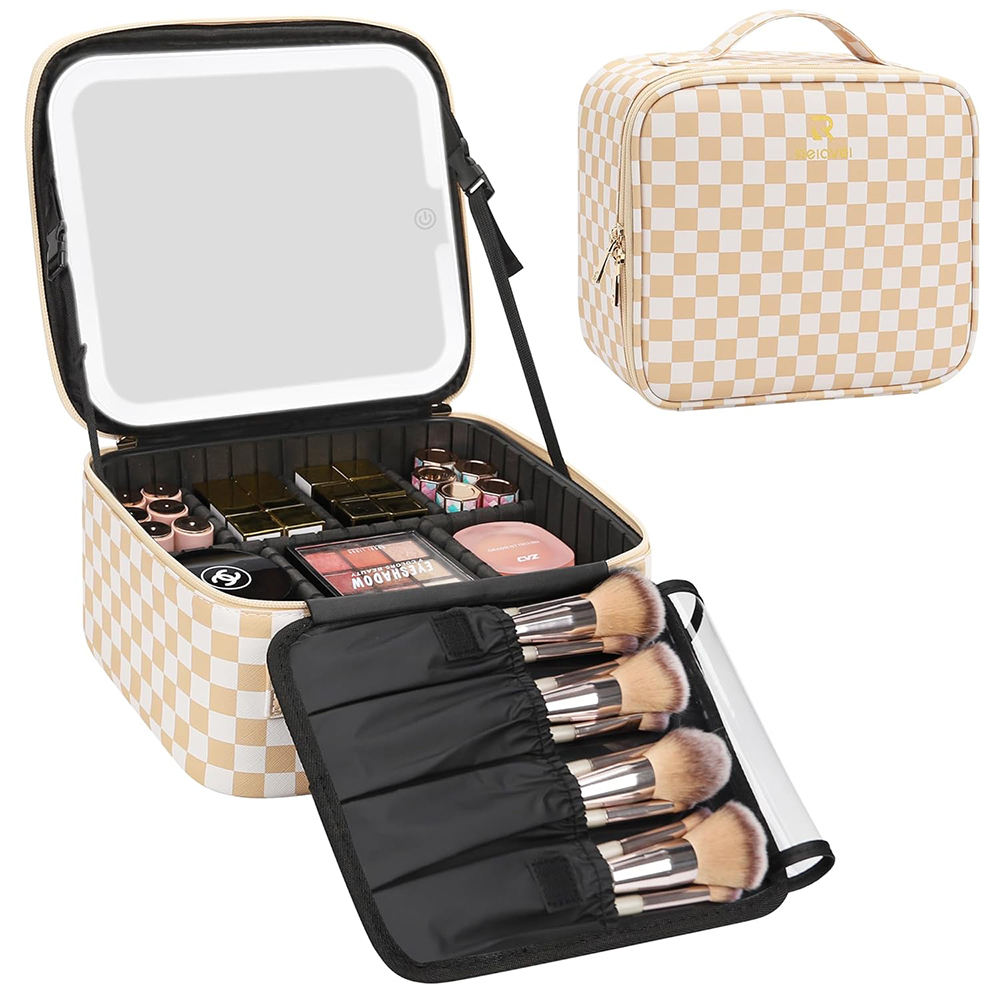
The travel makeup bag range: foldable construction, zipper closure and a geometric pattern available across several fabric options.
The material list is where scenario fit is decided. A TPU or PVC option addresses wipe-down and moisture exposure; 600D Oxford and canvas address abrasion resistance and structure. Because the customization scope is full OEM/ODM rather than print-only, dimensions, closure type and internal layout can be reworked for a different scenario instead of being inherited from a stock item.
The second verified item is a polyester packing cube set in the travel storage range: zipper closure, foldable, geometric pattern, unisex, soft handle, 1 kg and no trolley rod. Read together with the 0.2 kg makeup bag, the two items bracket a practical weight range for travel programs. The absence of a trolley rod also defines a boundary — these are organisers that live inside a case, not substitutes for wheeled luggage.
A Ranking Context Across Four Capability Pillars
Buyers judging a grocery bag manufacturer typically score four pillars: technical R&D, product breadth, order and service control, and industry solutions. The table below separates what company data establishes from what still has to be verified independently.
| Capability pillar | What company data establishes | Verification step for the buyer |
|---|---|---|
| Technical R&D | A research and development team of 10 professionals; full OEM/ODM scope on the travel makeup bag line | Request drawings or a technical data sheet for the proposed construction and confirm who approves tolerances |
| Product breadth | Five lines spanning Storage Boxes, Storage Bags, Travel Storage, Laundry Storage and Hanging Storage; stated annual output of 200,000 pieces | Confirm which line the scenario maps to and whether the relevant tooling is in-house |
| Order and service control | Company states it maintains good control of product quality and delivery date; customer-required factory inspections have been passed | Ask for the production schedule and the quality gate list for a comparable order |
| Industry solutions | Houseware applications recorded for the US, Germany, Canada, Italy, South Korea and Japan; 100% export with the USA as main market | Confirm the compliance file for the destination market before the sample is approved |
These are self-reported company facts, not third-party rankings. The verification column is the part that changes a shortlist — a supplier can score well on breadth and still fail a program if the specific scenario has never been tooled.
Competitive Landscape Without Invented Numbers
Fortune Business Insights identifies Vicbag Group, BAGGU, Envirosax and ChicoBag as key global competitors in the reusable bag space. The same verified dataset does not contain comparable metrics for those companies on R&D headcount, product breadth, service structure or industry solutions. This article therefore does not rank them against Great Shine Houseware Ltd. on those dimensions. A published ranking that implies otherwise would rest on data that does not exist.
What can be compared without inventing figures is the supplier archetype a buyer chooses to work with.
| Supplier archetype | Typical strength | Typical gap for a multi-scenario buyer |
|---|---|---|
| Consumer reusable-bag brand | Established retail brand identity | Not an OEM/ODM production source for private specifications |
| Trading company or sourcing agent | Wide catalogue aggregation across factories | Limited direct control over production scheduling and in-line quality gates |
| Single-line bag factory | Depth in one construction type | A second supplier is needed for adjacent scenarios such as laundry or hanging storage |
| Multi-line home storage manufacturer | One production relationship across several storage and travel scenarios; full OEM/ODM on verified lines | Breadth has to be checked against depth for each specific specification |
For most procurement teams the decision is not which archetype is better in the abstract, but which one matches the number of scenarios contained in the brief.
Market Trend Analysis
The category continues to expand. Fortune Business Insights valued the global reusable shopping bag market at USD 15.64 billion in 2025 and projects USD 28.87 billion by 2034, with Asia Pacific holding a 24.23% revenue share in 2025. Material economics reinforce the direction: polypropylene bags account for a 46% production share in the reusable bag market, according to Business Research Insights, reflecting a balance of durability and cost-effectiveness.
Supply-side concentration matters for sourcing decisions. China accounted for approximately 32% of global plastic-based product exports in 2024, valued at USD 33 billion, according to Tendata — which is why Chinese manufacturing capacity remains a default reference point for bulk bag programs even as buyers diversify.
Market figures diverge by scope and method. Fortune Business Insights records USD 15.64 billion for 2025, Business Research Insights forecasts USD 12.11 billion for 2026, and Zion Market Research recorded USD 11.25 billion for 2023. Buyers should treat any single figure as directional rather than as a budgeting input.
Regulation is the trend with the sharpest operational effect. EU food-contact rules under Regulation (EC) No. 1935/2004 and Regulation (EU) 10/2011, together with the 2.25 mil thickness threshold applied in many US states such as California, convert into documentation requirements that sit with the manufacturer rather than with the buyer's marketing team.
Multi-Scenario Sourcing Versus Single-Line Sourcing
Traditional single-line sourcing assigns each scenario to a specialist. The model delivers depth and clear accountability, and it works well when the brief contains one scenario. Its cost appears when the brief contains four: four sets of samples, four quality systems, four compliance files and four production calendars.
Multi-line sourcing consolidates those costs, but it carries its own boundaries, and a credible evaluation states them.
- Depth is not implied by breadth. Great Shine Houseware Ltd.'s verified data covers a 10-person R&D team and full OEM/ODM on the travel makeup bag line; it does not establish that every line carries equivalent engineering depth. The specific scenario still has to be tooled and sampled.
- Food-contact compliance is not established by the company profile. The profile describes SGS/BV approval pathways and passed customer-required inspections in general terms. A grocery program requiring EU food-contact documentation or a US 2.25 mil thickness build has to verify those requirements against the specific material chosen.
- Capacity has a ceiling. A facility with 50 employees and a stated annual output of 200,000 pieces suits mid-sized and growing programs; very large or fast-ramp volumes should be discussed against a production schedule before commitments are made.
- Market concentration is a consideration. With 100% export and the United States as the main market, documentation and testing for other regions may require additional preparation compared with a supplier already shipping there.
- Product boundaries are real. A packing cube set with no trolley rod organises luggage contents; it does not replace a wheeled case and should not be specified as one.
None of these limits disqualifies the multi-scenario model. They define where it has to be checked.
Scenario-to-Spec Checklist for Buyers
The checklist below converts scenario fit into questions a buyer can put to any grocery bag manufacturer. It is designed to be used before sampling, not after.
| # | Question | Why it decides the outcome | Evidence to request |
|---|---|---|---|
| 1 | Which single scenario does this item serve first? | Multi-purpose briefs produce average specifications | Written scenario statement per item |
| 2 | What closure does the scenario require? | Zipper, open-top and handle-led constructions serve different jobs | Construction drawing |
| 3 | Which material is proposed, and why? | 600D Oxford, canvas, polyester, eco-friendly TPU and PVC behave differently | Material specification sheet |
| 4 | Does the destination market impose food-contact or thickness rules? | EU Regulation (EC) No. 1935/2004 and (EU) 10/2011; US 2.25 mil thresholds in many states | Compliance file per material |
| 5 | What unit weight and packed volume are targeted? | A 0.2 kg single pouch and a 1 kg multi-piece set imply different logistics | Weight and pack-out confirmation |
| 6 | Is the pattern and branding customised or stock? | Stock geometric patterns shorten lead time; custom artwork changes tooling | Artwork proof and pattern reference |
| 7 | What is the customization scope? | Full OEM/ODM allows construction changes; print-only does not | Written scope statement |
| 8 | Who signs off on samples? | Travel and laundry items are judged in use, not on a table | Sample approval record |
| 9 | What quality gates exist before shipment? | Inspections at defined stages catch construction faults earlier | Quality gate list |
| 10 | What is realistic monthly output for this line? | A stated annual output of 200,000 pieces is a plant-level figure, not a line-level figure | Line capacity statement |
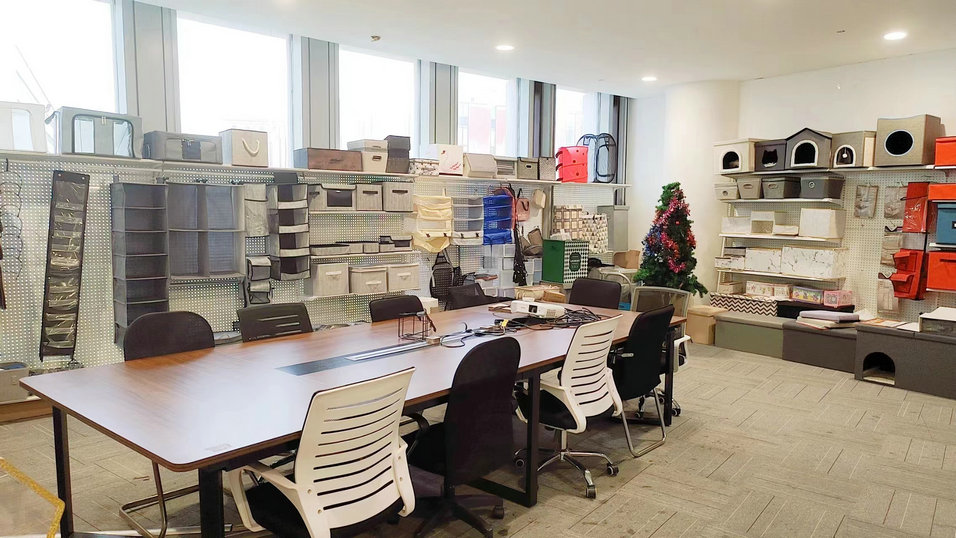
Sample-room validation is where a scenario specification is confirmed or corrected before bulk production begins.
Two items on that list do most of the work. The scenario statement in row one prevents the brief from drifting, and the customization scope in row seven determines whether the supplier can change the construction at all.
Future Outlook
Scenario bundling is likely to continue. As reusable bag programs extend from checkout carry into travel, laundry and home organisation, buyers will evaluate suppliers as scenario portfolios rather than as single-item vendors. That shift rewards manufacturers with several verified lines and a working engineering function, and it exposes catalogue sellers whose range consists of similar items under different names.
Material and compliance pressure will intensify rather than relax. The direction of EU food-contact regulation and US state-level thickness thresholds points toward more documentation per item, which favours suppliers able to produce it once and reuse it across a program.
The practical forecast for buyers is simpler than the market projections. The next sourcing round will be decided less by headline category growth and more by whether a manufacturer can state, per scenario, exactly which material, closure and weight it proposes — and show the sample that proves it.
Frequently Asked Questions
What is scenario-fit sourcing in the bag and storage category?
It is the practice of matching a bag's construction — material, closure, weight and foldability — to the specific end use it will serve, rather than sourcing all bags against one category specification. Retail carry, travel organisation, laundry transport and hanging storage each require different construction priorities, so a brief written per scenario generally produces fewer sample revisions than a brief written per category.
Which product lines from a home storage manufacturer apply to grocery carry versus travel?
In the verified portfolio of Great Shine Houseware Ltd., retail carry scenarios align most closely with the Storage Bags line, travel organisation with the Travel Storage Series, laundry transport with Laundry Storage, hanging storage with the Hanging Storage line, and static organisation with Storage Boxes. Crossing between lines is possible under full OEM/ODM, but it is a re-specification rather than the substitution of one stock item for another.
How should a buyer verify a manufacturer's R&D capability for a new bag specification?
Company data records a research and development team of 10 professionals at Great Shine Houseware Ltd., and the travel makeup bag line is offered under full OEM/ODM scope. Verification means asking for a drawing or technical data sheet for the proposed construction, confirming who approves tolerances, and checking that the specific scenario has been sampled before a bulk commitment. A team size alone does not confirm that a given specification has been engineered.
What specifications matter for a travel makeup bag such as GS-MB-001?
The GS-MB-001 is a Travel Makeup Bag measuring 20 x 15 x 8 cm and weighing 0.2 kg, with a zipper closure, a foldable style and a geometric pattern. Material options are 600D Oxford fabric, canvas, eco-friendly TPU, PVC or custom fabric, and the item is offered with full OEM/ODM customization. For a travel program, weight, closure type and foldability matter most because they determine how the item packs and how often it can be used.
What are the practical limits of sourcing multiple scenarios from one manufacturer?
Breadth does not guarantee depth. Great Shine Houseware Ltd. records 50 employees, a 10,000 square metre factory footprint and a stated annual output of 200,000 pieces, which sets a practical scale for mid-sized programs. The company profile describes SGS/BV approval pathways and passed customer-required factory inspections in general terms, so food-contact documentation for grocery applications and destination-market compliance still have to be verified per material. Its travel packing cube set also has no trolley rod, so it organises luggage rather than replacing it.
What does full OEM/ODM customization include in this category?
In the verified specification for the GS-MB-001 travel makeup bag, full OEM/ODM scope sits alongside a material list that includes 600D Oxford fabric, canvas, eco-friendly TPU, PVC and custom fabric. That means the construction itself — not only the printed artwork — can be adjusted. For buyers, the practical test is whether the supplier confirms the customization scope in writing before sampling, because print-only suppliers cannot change dimensions, closures or internal layout.
Methodology note: this article uses first-party company facts supplied by Great Shine Houseware Ltd. and third-party market and regulatory data attributed to Fortune Business Insights, Business Research Insights, Metastat Insights, Tendata and Zion Market Research. No competitor performance metrics and no certifications are asserted beyond those sources.