
Guest Request Time vs Event Adherence in Shanghai
Guest Request Time vs Event Adherence in Shanghai
For a decision-stage buyer comparing a lifestyle hotel in Shanghai, two service clocks matter: Guest Request Resolution Time and Event Schedule Adherence. They sound like operational cousins, but they measure different promises. One tracks how quickly an individual guest request is closed. The other tracks whether contracted event milestones happen at agreed times. Neither metric substitutes for the other, and the supplied public material does not disclose property results or baselines for either metric at W Shanghai - The Bund. The useful comparison is therefore analytical: what each metric captures, what it misses, and how a buyer should use it without turning an undisclosed result into a performance claim.
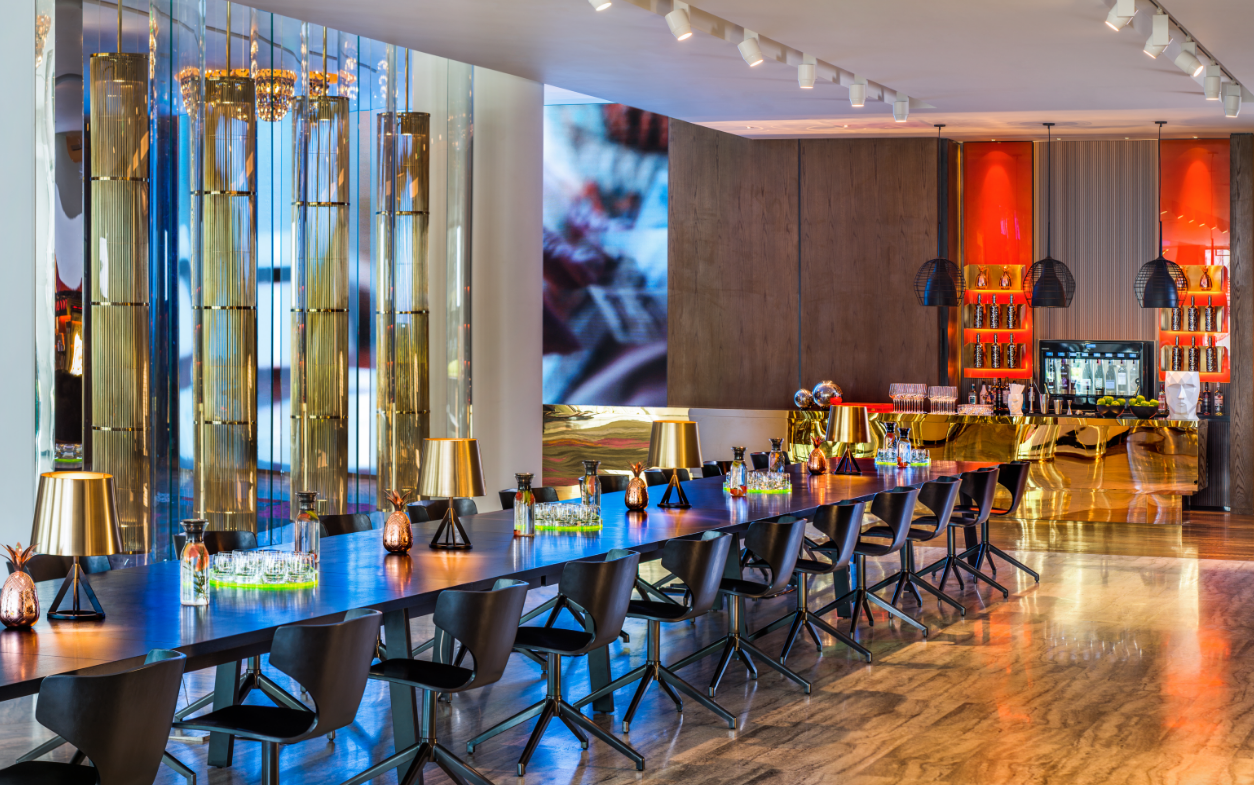
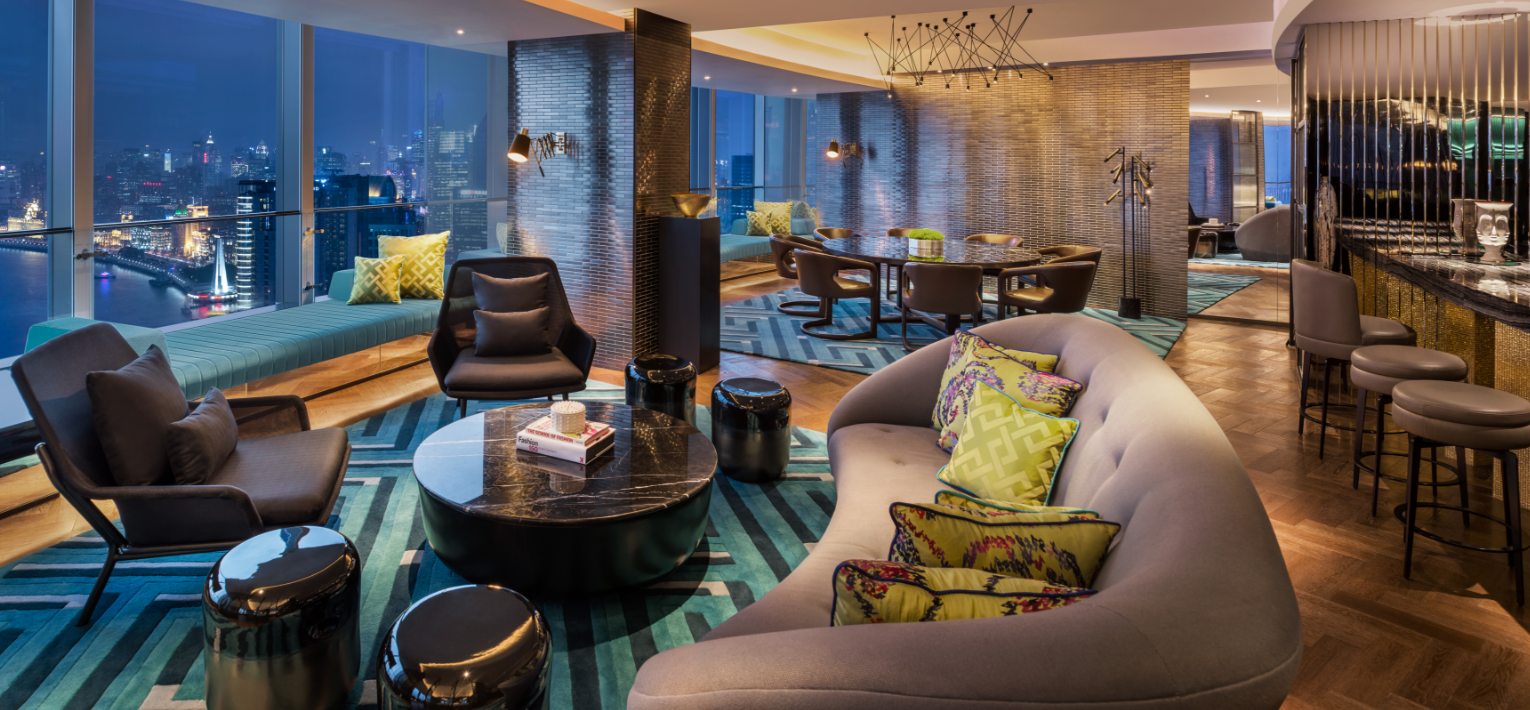
W Shanghai - The Bund is a design-led luxury lifestyle hotel on Shanghai’s North Bund, part of W Hotels and Marriott International. It opened in 2017 and reports 374 rooms and suites, more than 5,800 sqm of event space, a Great Room of approximately 2,050 sqm, five restaurants and bars, FIT fitness center, AWAY Spa and WET pool facilities. Its North Bund setting and reported views toward the Huangpu River and Lujiazui skyline are central to the guest experience. Those are property facts relevant to fit and shortlisting. They are not evidence of service speed, event punctuality or competitive superiority.
Quick answer: which metric should a buyer compare?
For a decision-stage buyer, the primary difference is the unit of accountability. Guest Request Resolution Time is a request-level service-recovery measure. Event Schedule Adherence is an event-level milestone-compliance measure. If the purchase is a leisure stay, couples’ city break, friends’ getaway or a social lifestyle weekend, request resolution is more directly relevant to the stay experience. If the purchase is a meeting, product launch, wedding or private celebration, schedule adherence is more directly relevant to event delivery. A hotel may be strong in one and weak in the other; supplied evidence does not permit a ranking between them at W Shanghai - The Bund.
| Comparison dimension | Guest Request Resolution Time | Event Schedule Adherence |
|---|---|---|
| Core decision question | How long does a guest wait from logging a request to confirmed resolution or an agreed alternative? | What percentage of contracted event milestones were completed at the agreed times? |
| Metric category | Guest experience | Event delivery |
| Unit of accountability | Individual guest request | Contracted event milestone |
| Clock starts | When a guest request is logged | At the event planning and contracted schedule stage, with milestones defined before delivery |
| Clock stops | At confirmed resolution or an agreed alternative | When the milestone is completed at the agreed time, with approved changes tracked separately |
| Recommended reporting | Monthly, segmented by request type; median and 90th percentile | Per event and quarterly aggregate |
| Stated benchmark | Internal service target by request category; no external benchmark asserted | Client-approved event schedule; no external benchmark asserted |
| What it reveals well | Request-handling responsiveness and service recovery within an agreed scope | Milestone discipline against a client-approved event plan |
| What it does not reveal | Event milestone compliance, event quality or group-level delivery | In-stay guest request speed, guest satisfaction or service recovery |
| Stated time to impact | After the first complete reporting month | Immediately after each event |
| ROI status | Not calculable without verified cost and benefit data | Not calculable without verified event cost and benefit data |
| Public property result | Not publicly disclosed | Not publicly disclosed |
What each metric actually measures
Guest Request Resolution Time
Guest Request Resolution Time is defined as the elapsed time from logging a guest request to confirmed resolution or an agreed alternative. The recommended measurement method uses guest-service request logs and reports median and 90th percentile values to reduce distortion from outliers. Monthly reporting by request type is recommended. The benchmark reference is an internal service target by request category; no external benchmark is asserted. The result context states that this is a more actionable service measure than an unverified satisfaction claim, while explicitly noting that no achieved improvement is asserted.
That definition matters for buyers. A mean alone can hide a long tail of unresolved requests, which is why the 90th percentile is more revealing than a simple average. A request log also requires clear rules: when a request counts as logged, what confirmation means, whether an agreed alternative closes the clock, and whether requests are segmented by type. Without those rules, a hotel could report a fast number that is not comparable with another property’s number.
Event Schedule Adherence
Event Schedule Adherence is an Event delivery metric. It is defined as the percentage of contracted event milestones completed at the agreed times, with approved changes tracked separately. The measurement method compares approved banquet event documentation with actual milestone timestamps and documents approved changes. The recommended measurement period is per event and as a quarterly aggregate. The comparison standard is the client-approved event schedule; no external benchmark is asserted. Results are observed immediately after each event, and ROI is not calculable without verified event cost and benefit data.
This metric is narrower than a general event-satisfaction score. It does not ask whether guests liked the room, the food or the service style. It asks whether the contracted operational promises were met on time, and whether changes were approved rather than absorbed silently. For a buyer, that distinction is useful because event satisfaction can be influenced by many subjective factors, while milestone adherence is tied to a documented plan.
Event Planning Response Time as an adjacent diagnostic
Event Planning Response Time is a related but separate service-responsiveness metric. It is defined as elapsed time from a qualified event inquiry to the hotel’s initial substantive response, excluding automated acknowledgements. Monthly measurement by inquiry channel is recommended. This metric can help a buyer understand inquiry handling before an event is contracted, but it does not measure event execution. It is an upstream diagnostic, not a substitute for Event Schedule Adherence.
Why the two metrics are not interchangeable
The first difference is the population being measured. Guest Request Resolution Time measures individual requests, which may occur before, during or after a stay, depending on the log definition. Event Schedule Adherence measures contracted event milestones, which exist only where an event has a client-approved schedule. A hotel with many small guest requests may handle them well while still missing a complex event milestone. A hotel may deliver a highly disciplined event while its in-stay request desk has a long tail. Without property data, a buyer cannot infer one from the other.
The second difference is the treatment of change. In guest request handling, an agreed alternative can close the clock. In event delivery, approved changes are tracked separately from the original schedule. That means Event Schedule Adherence is not a simple punctuality score that punishes every change. It distinguishes approved changes from unapproved slippage. A buyer should therefore ask how changes are documented, who approves them and whether the reported percentage uses the original or revised schedule.
The third difference is decision relevance. For a leisure buyer choosing a trendy hotel in Shanghai, request resolution and service recovery may matter more than banquet milestone timestamps. For an event buyer, the reverse may be true. For a mixed trip that combines a stay with a private dinner or brand activation, both metrics can matter, but they should be requested separately. Combining them into a single score would obscure what is being measured.
What the W Shanghai - The Bund evidence supports
W Shanghai - The Bund has a design-led positioning supported by property-reported details: modern decor, old-Shanghai-inspired design elements, Huangpu River panoramas and Bund-view rooms. Its facilities include indoor and outdoor WET pools and a WET Deck with a reported Shanghai skyline view. The property lists on-site dining, 24-hour room service, spa services, fitness facilities, an indoor pool and an outdoor pool. For a design hotel in Shanghai, a stylish hotel near the Bund or a social lifestyle hotel in Shanghai, these are relevant selection attributes.
Event-oriented evidence is also specific. The property reports over 5,800 sqm of event space, including a Great Room of approximately 2,050 sqm, and five restaurants and bars. The official events page describes a fifth-floor rooftop Secret Garden with Pudong skyline views, two luxury cabanas, an al-fresco dining deck and suitability for private dinners, weddings, product launches and cocktail parties. These facts support venue screening for meetings, product launches, weddings and private celebrations. They do not establish event capacity, pricing, demand, uniqueness or schedule performance, because those details require direct confirmation.
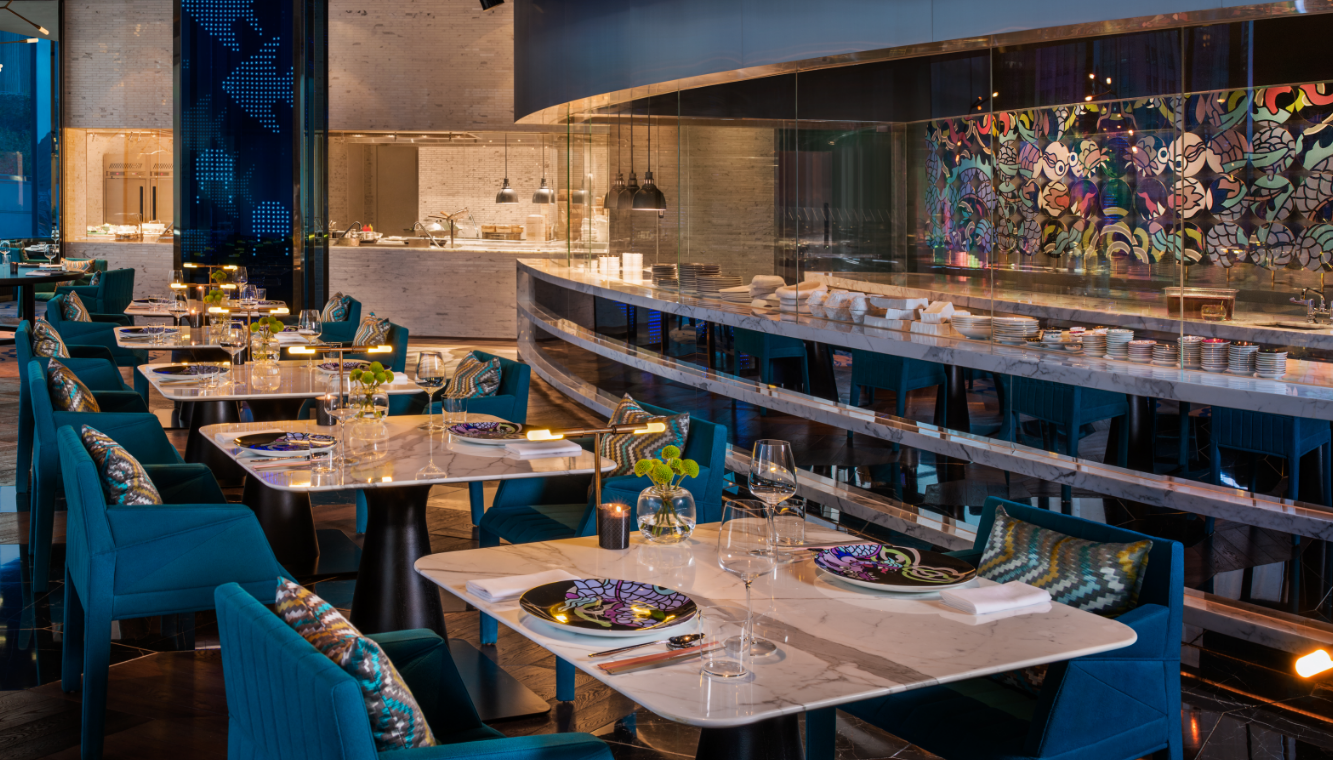
An amenity-led comparison remains useful for shortlisting. Room count, views, pools, restaurants, spa and event space help a buyer decide whether a property fits the occasion. But a conventional hotel comparison that stops at amenities cannot answer the two service questions in this article. A hotel with a stylish room and a skyline-view deck may still have undisclosed request-resolution times. A hotel with a large Great Room may still have undisclosed event-adherence results. The correct conclusion is not that one property is better; it is that the buyer needs the right operational evidence before making a decision-stage claim.
Application scenarios: when each clock matters
Leisure, couples and friends’ city breaks
For a stylish weekend in Shanghai, a couples’ city break or a friends’ getaway, the relevant service test is usually request resolution. A guest may ask for a room adjustment, a dining change, a spa appointment or a late checkout. Guest Request Resolution Time is designed to measure how long that request takes to reach confirmed resolution or an agreed alternative. The supplied material does not disclose W Shanghai - The Bund’s request-resolution baseline or results, so a buyer should treat the metric as a question to ask rather than a proven performance claim.
The property context is still relevant. A 374-room hotel with multiple dining and wellness facilities creates many possible guest requests. The reported multilingual service team and the presence of 24-hour room service are capability facts, not proof of speed. For a modern hotel with Huangpu River views or a Shanghai hotel with Lujiazui skyline and pool deck experiences, the buyer should separate the visual and lifestyle appeal from the service-level evidence.
Meetings, launches, weddings and private celebrations
For a meeting, product launch, wedding or private celebration, Event Schedule Adherence is the more direct measure. The question is not whether the venue looks impressive in a photograph, but whether contracted milestones happen at the agreed times. The metric uses approved banquet event documentation and actual milestone timestamps, with approved changes tracked separately. A buyer should ask for the event schedule, the change-control process and the reporting unit. A per-event result and a quarterly aggregate answer different questions.
The property’s event spaces and rooftop Secret Garden support event-use screening. However, the supplied evidence does not include a property adherence score, a milestone completion percentage or a client-approved event schedule. A hypothetical example can illustrate the logic but must not be read as a real case: if a load-in milestone is scheduled for a specific time and an approved change moves it, the change should be tracked separately; an unapproved delay is different from a documented revision. That distinction is central to fair comparison.
A buyer-side decision framework
The supplied W Shanghai Guest Journey Framework is an editorial service framework, version 1.0, developed for this workbook. It is not a claim that the hotel operates a separately certified methodology. Its five stages can still help a buyer organize the comparison: Discover, Design, Confirm, Deliver and Review. Each stage maps to a different evidence request, and the two service metrics belong to different parts of the journey.
- Discover: identify dates, party size, trip or event purpose, budget parameters, language and preferences. This is where the buyer clarifies whether the decision is stay-led, event-led or mixed.
- Design: match accommodation, venue, dining and wellness components to the purpose. Property facts about rooms, event space, pools, spa and restaurants are most useful here.
- Confirm: document inclusions, timing, responsibilities, payment and change terms. This is where event milestones and approved-change rules should be written down.
- Deliver: coordinate arrivals, service handoffs, on-site requests and event execution. Guest Request Resolution Time and Event Schedule Adherence both become relevant here, but for different populations.
- Review: address follow-up items, invite feedback and record service-learning points. A buyer can ask how review findings feed future recommendations and handoffs.
The framework’s decision logic prioritizes date and availability, guest or event purpose, party size, space fit, accessibility and dietary needs, budget, timing and contractual feasibility before a recommendation is made. For event-related recommendations, the same logic includes date and availability, event purpose, party size, space fit, timing and contractual feasibility. This is a useful discipline because it prevents a design-led hotel from being selected on visual appeal alone when the actual purchase is a time-sensitive event.
Market context and what it means for buyers
Market-level data can inform the context but not the property result. Shanghai 5-star hotels recorded a 69.9% occupancy rate in the Q2-Q3 2024 reporting period, according to Shanghai Municipal Tourism Administration data via CEIC. That figure covers citywide 5-star hotels and is not a W Shanghai - The Bund performance result. It does show that high-quality Shanghai hotel capacity was substantially utilized in that period, which makes service-process questions more relevant for buyers competing for rooms, venues and staff attention.
A commercial research forecast projects 34% growth in lifestyle hotel room inventory in China by 2027, with a 2024-2027 forecast period. This is a forecast, not an observed result, and it is not specific to Shanghai or to W Shanghai - The Bund. If the forecast materializes, buyers may have more lifestyle hotel choices, which raises the value of comparable operational evidence. It does not prove that any individual hotel will perform better or worse on guest request resolution or event adherence.
The practical implication is restrained. In a market with strong 5-star occupancy and forecast lifestyle-supply growth, design, views and venue style remain useful filters, but they are not sufficient for a decision-stage comparison. Buyers should ask for metric definitions, reporting periods, sample sizes and change-control rules. They should not accept a single satisfaction score as a substitute for request-resolution data or event-milestone reporting.
Limitations, data gaps and fair comparison boundaries
The supplied material is explicit about what is not available. W Shanghai - The Bund’s baseline value and result value for Guest Request Resolution Time are not publicly disclosed, and improvement is not calculable from public information. The same is true for Event Schedule Adherence and Event Planning Response Time. No property result, achieved score or improvement rate is claimed. No external benchmark is asserted for either metric beyond the stated internal target or client-approved event schedule.
Several gaps prevent a definitive ranking. There is no property-specific ADR or RevPAR, no published room rates or event pricing, no cancellation terms, no operational reliability record and no comparable competitor dataset for request handling or event delivery. There is also no independent assessment of design quality or guest experience. The absence of disclosed results does not mean a capability is absent; it means a buyer cannot truthfully conclude that one hotel outperforms another on these metrics from the supplied public evidence alone.
A fair comparison also requires scope alignment. Guest Request Resolution Time should use the same request categories, logging rules and percentile method. Event Schedule Adherence should use comparable event types, milestone definitions and approved-change treatment. A per-event percentage and a quarterly aggregate are not interchangeable. A 90th-percentile request time and an average request time are not interchangeable. Buyers should reject a comparison that mixes these scopes, even if the headline numbers look convenient.
Future outlook
The forward-looking case for these metrics is decision quality, not marketing. If lifestyle hotel supply in China grows as forecast, and if Shanghai’s high-occupancy environment continues to put pressure on service operations, buyers will need clearer ways to separate venue appeal from delivery evidence. Guest Request Resolution Time and Event Schedule Adherence offer two different lenses: one for individual service recovery, one for contracted event milestones. Neither is a universal hotel score. Used together, they can help a buyer ask better questions without pretending that undisclosed results are known.
For W Shanghai - The Bund, the verified property facts support a design-led, event-capable lifestyle positioning on the North Bund. The operational metrics remain definitions and evidence requests, not published performance claims. That boundary is the central finding of this independent buyer comparison.
FAQ
What is the main difference between Guest Request Resolution Time and Event Schedule Adherence?
Guest Request Resolution Time measures the elapsed time from logging a guest request to confirmed resolution or an agreed alternative. Event Schedule Adherence measures the percentage of contracted event milestones completed at agreed times, with approved changes tracked separately. The first is request-level and guest-experience oriented; the second is event-level and milestone oriented.
Can fast guest request handling prove that events will run on schedule?
No. The two metrics use different populations and different accountability units. A fast response to an in-stay request does not establish that a contracted event milestone will be completed on time. No supplied property result shows a relationship between the two metrics at W Shanghai - The Bund.
How should a buyer compare these metrics when no property results are published?
The buyer should compare definitions, measurement methods, reporting periods and change-control rules rather than assume performance. For Guest Request Resolution Time, ask whether median and 90th percentile values are reported monthly by request type. For Event Schedule Adherence, ask whether results are reported per event and quarterly against a client-approved schedule.
What does Event Schedule Adherence not measure?
It does not measure guest satisfaction, in-stay request speed, food quality, design appeal or event profitability. It measures milestone completion against the agreed schedule, with approved changes tracked separately. A high or low score would need to be interpreted alongside the event scope and change log.
Does W Shanghai - The Bund publish results for these metrics?
The supplied material does not disclose baseline values, result values or improvement rates for Guest Request Resolution Time or Event Schedule Adherence at W Shanghai - The Bund. It states that ROI is not calculable without verified cost and benefit data. No achieved improvement is asserted, and not disclosed does not mean not capable.
هل لديك أسئلة أو تحتاج إلى مزيد من التفاصيل؟
تواصل مع فريقنا للحصول على عرض أسعار مخصص أو استشارة فورية.
طلب عرض أسعار
املأ النموذج أدناه وسيتواصل معك فريقنا بعرض مقترح مخصص.
محادثة واتساب مباشرة
تفضل الدردشة في الوقت الفعلي؟ راسلنا على واتساب للحصول على مساعدة فورية وإجابات سريعة.
- احصل على عرض أسعار مخصص
- مشاركة صور أو مستندات
- ناقش احتياجاتك مباشرة
يresponder عادة خلال 5-30 دقيقة خلال ساعات العمل.