
HDPE Sheet Mats for Landscaping and Outdoor Events: Scenario Fit and Selection
HDPE Sheet Mats for Landscaping and Outdoor Events: Scenario Fit and Selection
For landscaping work and outdoor events, a ground protection mat needs to provide a temporary route or working surface without making routine setup and relocation unnecessarily difficult. HDPE ground protection mats can fit projects centered on pedestrian access, lawn protection, light vehicle movement and temporary surfaces. Their suitability still depends on site conditions and expected loading: HDPE is not automatically the right choice for heavy machinery or other high-load work.
Why temporary ground protection matters in these settings
Landscaping projects and outdoor events often need temporary paths, access routes or work areas over grass and other sensitive ground. People may need to walk across the site, while equipment or vehicles may need to reach designated areas. Without a protective temporary surface, repeated access can expose the underlying ground to traffic and site activity. A ground protection mat provides a defined surface intended to protect grass, soil and other ground surfaces while supporting temporary access.
The useful question is not simply whether a mat is described as a Ground Protection Mat. Buyers need to match the product to the actual use: who or what will travel over it, the condition of the ground, the coverage required, and how the panels will be moved, connected and reused. A pedestrian route across a lawn and a route carrying heavy equipment are different duties, even if both are temporary.
For light-duty landscaping and event planning, HDPE is worth evaluating when straightforward handling and a temporary protective surface are priorities. If the project involves heavy machinery, high point loads or demanding access conditions, a heavier-duty material or configuration may be more appropriate. The material name alone does not establish a safe working load.
Where HDPE mats fit—and where the boundary lies
HDPE ground protection mats are used for temporary access and surface protection, including landscaping and event-related applications. The product information for Shandong Yaxu New Materials Co., Ltd. lists HDPE mats for pedestrian access and other vehicle and equipment applications, and describes them as reusable and easy to install, relocate and store. For a light-duty project, these characteristics can make HDPE a practical material to assess when panels must be placed and handled as the work area changes.
HDPE mats are lightweight and easy to handle compared with heavier-duty alternatives, and the supplied product guidance positions them as a lower-initial-cost option than UHMWPE. That distinction can matter when a project needs temporary coverage rather than a mat system intended for very heavy traffic. The appropriate comparison is still application-specific: initial purchase cost is only one consideration, while loading, ground conditions, reuse and handling requirements affect selection too.
The boundary is important. The product data lists HDPE Ground Protection Mats in a thickness range of 5–40 mm and an approximate load-capacity range of 0.3–60 tons, depending on thickness and application conditions. These figures describe a broad product range, not a guaranteed rating for any particular installation. For heavier-duty access, the same product information lists UHMWPE mats in a thicker range and for higher-load applications. It gives approximate load capacity of 80–150 tons depending on thickness and ground conditions. Those figures should not be treated as a direct one-to-one comparison because the listed standard sizes and thickness ranges also differ.
In practical terms, an HDPE Sheet mat may suit pedestrian routes, lawn protection, temporary event walkways and carefully assessed movement of light vehicles. UHMWPE should be considered when the project requirements move toward heavier machinery or higher loads. If the project includes cranes, heavy equipment or concentrated support loads, do not treat a light-duty landscaping mat as a substitute for a separately designed heavy-duty ground protection system or outrigger support pad.
A selection framework for landscaping and events
Start with the job the temporary surface must perform, then specify the mat around that job. Shandong Yaxu New Materials Co., Ltd. supplies Ground Protection Mats and supports customization of dimensions, thickness, surface pattern, color and connection method. Its listed OEM/ODM capabilities also include custom length and width, surface finishes, connection systems and machining options, subject to the product and manufacturing requirements.
| Selection point | What to establish | Why it matters |
|---|---|---|
| Use and traffic | Pedestrians, landscaping activity, event access or light vehicles; identify any heavier equipment separately. | The expected traffic and load help determine whether HDPE is suitable or a heavier-duty option needs review. |
| Ground and coverage | Grass, soft or wet ground, uneven areas, route width and total area to cover. | Ground conditions and layout affect how mats are placed and how the surface performs in the intended setting. |
| Size and thickness | Required panel dimensions and thickness, considered against the actual use and site conditions. | The listed HDPE range is broad; thickness alone does not determine suitability or load capacity. |
| Surface design | Flat, textured, anti-slip or another agreed pattern. | Surface choice should be considered in relation to the intended access and site conditions. |
| Connections and handling | Whether panels need a connection system, and how they will be installed, relocated and stored. | Connections can matter when multiple panels form a continuous temporary route or surface. |
1. Match size to the route or work area
The listed HDPE mat size is 1220 × 2440 mm, while customized dimensions are also available. A standard panel may be convenient where it suits the site layout. For narrower walkways, irregular lawn areas or a defined event access route, buyers can ask whether a different length or width is feasible. Map the intended coverage before requesting a quote: route length and width, turning or crossing areas, and any places where panels must meet existing paths or surfaces.
Size is not just a purchasing detail. It affects the number of panels required, how they will be handled and how the temporary surface is assembled. If a drawing is available, use it to communicate the layout rather than relying on a general description of the site.
2. Treat thickness as a project decision, not a shortcut
The listed HDPE thickness range is 5–40 mm. The product data also gives an approximate load-capacity range of 0.3–60 tons, dependent on thickness and application conditions. These ranges do not mean that any panel in the range can carry any stated load. The specific mat design, ground condition and intended traffic matter. For that reason, do not choose a thickness by copying a specification from a different project or by assuming that thickness alone proves capacity.
For an event walkway or landscaping route, first clarify whether the surface is for pedestrians only or will also carry vehicles. Describe the ground and expected use when asking for a recommendation. Where a vehicle or equipment load is involved, request confirmation that the proposed mat configuration is appropriate for those actual conditions.
3. Choose a surface pattern for the planned use
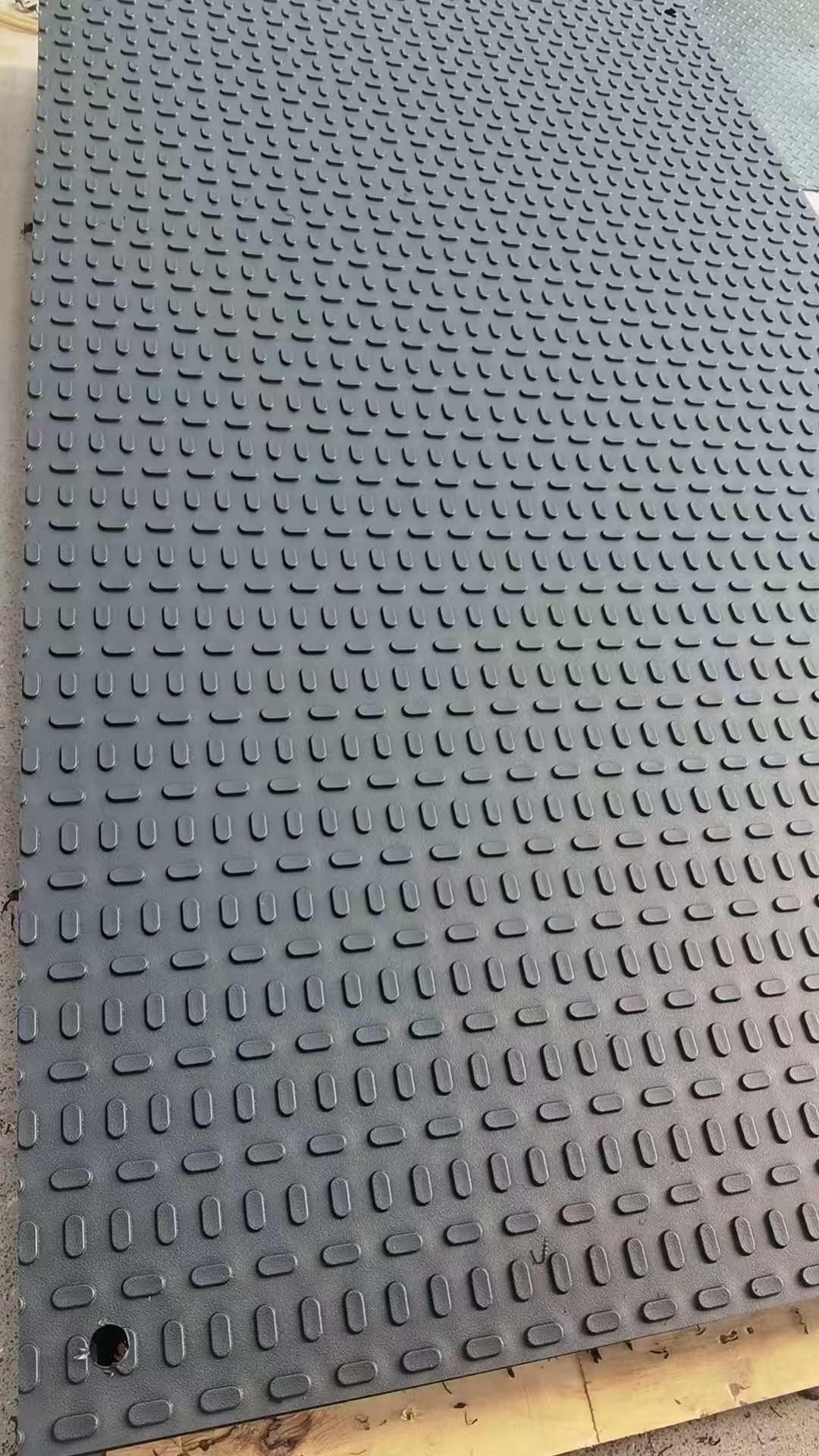
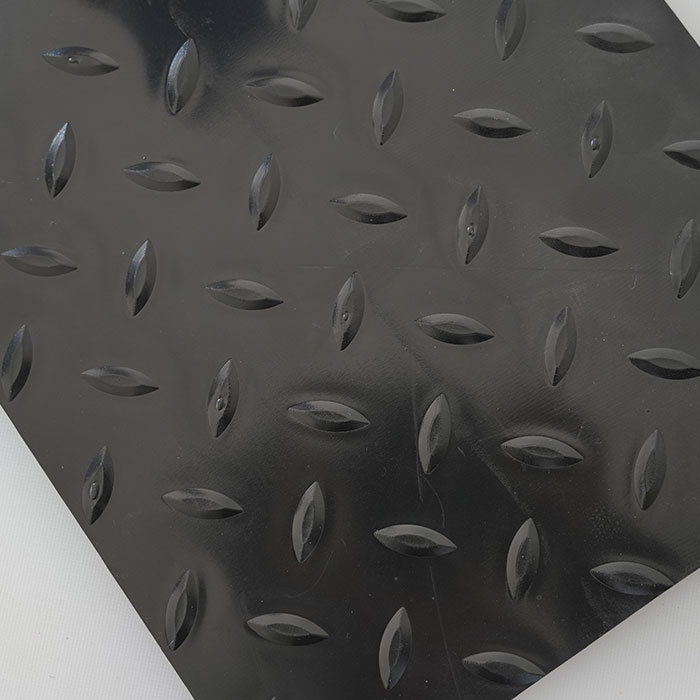
Ground Protection Mats are listed with flat, anti-slip, textured or customized surface options. The right surface should be chosen with the route conditions and intended traffic in mind. For example, buyers can explain whether the route is primarily pedestrian, whether it is exposed to wet or soft ground, and whether vehicles will pass over it. The available facts establish surface options, but do not specify a universal pattern that is best for every landscaping or event setting.
4. Decide whether panels need connectors
A connection method is available as a customization option. It may be relevant when several mats must form a longer access route or a larger temporary surface. Before specifying connectors, define the panel arrangement and how the assembled surface will be installed and moved. Buyers should confirm the connection details for the selected mat rather than assuming that all patterns or sizes use the same system.
HDPE and UHMWPE: select by duty, not by label
HDPE and UHMWPE are both used for ground protection mats, but the product information assigns them different application ranges. HDPE is positioned for a broad set of access and ground protection uses, including pedestrian access and landscaping-related applications. UHMWPE is listed for heavy machinery access, crane access, ultra-heavy equipment and high-load temporary roads. The supplied guidance describes HDPE as the lower-initial-cost option and UHMWPE as the option for heavier-duty requirements.
This is a selection boundary, not a claim that one material is universally superior. For an outdoor event with pedestrian routes and lawn protection as the main needs, HDPE may be the more relevant material to evaluate. Where heavier vehicles or machinery are part of the plan, the buyer should provide the actual loads and ground conditions and review whether a UHMWPE mat or another suitable heavy-duty arrangement is needed. A product name such as Temporary Road Mat or Heavy Duty Ground Protection Mat does not replace checking the intended duty.
Traditional practice can also be considered against the project need: leaving grass or soil without a temporary protective surface does not provide the same protective function as a mat-based access route. At the same time, mats are not a cure-all for every ground condition. Load capacity varies with the product configuration and application conditions, and a temporary panel system should not be treated as an engineered foundation or as proof that an unsuitable route is safe.
What the supplier information means for project evaluation
Shandong Yaxu New Materials Co., Ltd. is a China-based manufacturer of HDPE Sheets, UHMWPE Sheets, Ground Protection Mats and Crane Outrigger Pads. The company information describes in-house sheet production and custom fabrication; the capabilities unit lists OEM/ODM customization for dimensions, thickness, color, surface and connection systems. For a buyer comparing options, this means the discussion can include both a standard mat configuration and project-specific dimensions or surface details. It does not, by itself, confirm that a proposed mat is suitable for a particular site load.
A useful evaluation should therefore keep three questions separate. First, can the supplier provide the required material and product format? Second, can the mat be configured to match the layout and handling requirements? Third, is the proposed specification supported for the actual site conditions and expected traffic? Clear answers to the first two questions do not replace the load and site review in the third.
Available product information gives standard HDPE mat dimensions, thickness and a broad load-capacity range, along with surface and color options. The capability information adds that size, thickness, surface and connection method can be customized. Buyers should ask which details apply to the specific item being quoted and whether the specification is standard or customized. If the project includes mixed uses, such as pedestrians plus vehicles, describe each use rather than submitting only an overall project label such as “event access.”
What to include in an HDPE mat quotation request
A quotation request should make the intended product and delivery requirements clear enough to review. For these ground protection mats, include:
- Required size: panel length and width, or the dimensions of the area or route to cover.
- Thickness: the requested thickness, if already specified, and the planned application.
- Quantity: the number of mats required for the project.
- Surface design: flat, textured, anti-slip or a requested customized pattern.
- Destination country: the delivery destination needed for quotation planning.
Also explain whether the use is pedestrian access, landscaping, an outdoor event, or light vehicle access; describe the ground and whether a connection system is required. If exact dimensions or a layout are important, provide a drawing or reference information. The more clearly the application and requested configuration are described, the easier it is to assess whether the proposed HDPE mat matches the project brief. If the site involves heavy equipment, high point loads or other demanding conditions, identify those requirements explicitly instead of assuming that a general light-duty quotation covers them.
Industry and procurement outlook
The product and capability information points to a practical procurement pattern for temporary ground protection: buyers can specify material, size, thickness, surface and connection method around a particular application. For landscaping and events, that makes scenario definition important. An access path for pedestrians, a route across a lawn and a surface that also carries vehicles should not be treated as interchangeable requirements.
As projects use reusable temporary surfaces across different layouts, customization and ease of relocation can be relevant evaluation criteria. The supplied information describes Ground Protection Mats as reusable and easy to install, relocate and store, and lists custom dimensions and connection methods. These are product characteristics rather than proof of a particular environmental outcome or service life. Buyers should still evaluate handling, storage, reuse plans and site suitability against their own project needs.
The future decision point is likely to remain scenario fit: identify the ground, traffic and coverage first; then choose the material and configuration. HDPE is a candidate for light-duty landscaping and outdoor-event uses where its handling and initial-cost profile fit. UHMWPE is the more relevant product category in the supplied range when the required duty becomes substantially heavier. Neither selection should be made from a material name alone.
FAQ
When are HDPE ground protection mats suitable for landscaping or outdoor events?
HDPE Ground Protection Mats can be considered when a project needs temporary pedestrian access, lawn or soil protection, or a temporary surface for a light-duty application. Confirm the ground conditions and all expected traffic before selecting a specification; heavier equipment may require a heavier-duty option.
How should buyers choose mat size and thickness?
Start with the route or area to cover, the ground conditions and the expected traffic. HDPE mat options are listed at 1220 × 2440 mm and 5–40 mm thick, with customized dimensions available. Thickness alone does not establish suitability or load capacity, so the specific application must also be reviewed.
What surface and connection options should be considered?
Listed surface options include flat, anti-slip, textured and customized designs. A connection system is also available as a customization option. Choose based on the intended route and panel layout, and confirm the details for the proposed mat configuration.
What information is needed for a ground mat quotation?
Provide the required size, thickness, quantity, surface design and destination country. Include the application, ground conditions, expected traffic and whether a connection system or customized dimensions are required so the requested configuration can be reviewed.
When should a buyer consider UHMWPE instead of HDPE?
The supplied product information positions UHMWPE Ground Protection Mats for heavier-duty applications such as heavy machinery access, crane access and high-load temporary roads. Consider the material only after assessing the actual load, ground conditions and mat configuration; the listed load ranges are dependent on product thickness and application conditions.
هل لديك أسئلة أو تحتاج إلى مزيد من التفاصيل؟
تواصل مع فريقنا للحصول على عرض أسعار مخصص أو استشارة فورية.
طلب عرض أسعار
املأ النموذج أدناه وسيتواصل معك فريقنا بعرض مقترح مخصص.
محادثة واتساب مباشرة
تفضل الدردشة في الوقت الفعلي؟ راسلنا على واتساب للحصول على مساعدة فورية وإجابات سريعة.
- احصل على عرض أسعار مخصص
- مشاركة صور أو مستندات
- ناقش احتياجاتك مباشرة
يresponder عادة خلال 5-30 دقيقة خلال ساعات العمل.