
HOWO TX Procurement FAQ: Terms, Acceptance and Spec Checks
HOWO TX Procurement FAQ: Terms, Acceptance and Spec Checks

A HOWO TX order is only as strong as the documents behind it. Three records decide whether the truck that reaches the port matches the site it was bought for: the purchasing terms in the offer, the acceptance criteria in the inspection plan, and the specification trail that ties one chassis number to one model code. This reference sets out all three for the ZZ3257V3847GB1 6x4 dump truck, the ZZ3317V386GB1 8x4 dump truck and the ZZ1257V464GB1 water tanker, at the point where a distributor moves from evaluation into execution.
The reference is written for buyers assessing the HOWO TX range for resale or fleet use, and for the colleagues who have to sign the inspection report afterwards. Commercial and quality terms quoted here come from the export terms published by QINGONG, formally Jinan Qingong International Trade Co., Ltd., a Jinan-based heavy truck exporter established in 2008 and an official exporter of SINOTRUK vehicles. The purpose of the article is not to recommend one configuration over another but to make each order checkable before the production slot is booked.
Where a HOWO TX order usually goes wrong
Three gaps account for most of the friction between a distributor purchase order and the truck that arrives at the port, and none of them is a manufacturing defect.
- Model-code drift. A purchase order cites a familiar model name while the specification sheet carries a longer or shorter designation. HOWO TX documentation already records one such case: the model designation is listed as ZZ3257V3847GB1, while the specification lists the model as ZZ3257V384GB1. Neither string is wrong on its own; the risk is a contract that never states which one controls the shipment.
- Body and tank assumptions. Cargo body structure and tank volume are configuration items, so a verbal understanding of a volume range is not a specification until it appears on an approved drawing linked to the purchase order.
- Acceptance without a record. A pre-shipment test that produces no signed checklist leaves the buyer without an evidence trail if a component is questioned after delivery.
Each gap closes with paperwork rather than with a different truck. That is why procurement terms, acceptance criteria and specification traceability belong in a single document set instead of three separate email threads.
The three configurations in one view
All three vehicles covered here are specified with the WD615.47 engine rated at 371 HP and the HW19710 transmission. What separates them is drive configuration and body type, which is also where the procurement differences sit.
| Model and code | Drive configuration | Engine / transmission | Body or tank | Reference figures | Design-intent fit |
|---|---|---|---|---|---|
| SINOTRUK HOWO TX 6x4 DUMP TRUCK ZZ3257V3847GB1 | 6x4 dump truck | WD615.47, 371 HP; HW19710 | Dump cargo box | 40-ton rated load; 25–30 CBM cargo volume | High-temperature, heavy-load and desert road conditions |
| SINOTRUK HOWO TX 8x4 DUMP TRUCK ZZ3317V386GB1 | 8x4 dump truck | WD615.47, 371 HP; HW19710 | Dump cargo box | 40-ton rated load; 25–30 CBM cargo volume | Mining rough terrain and humid tropical environments |
| SINOTRUK HOWO TX WATER TANKER TRUCK ZZ1257V464GB1 | Tanker configuration | WD615.47, 371 HP; HW19710 | Water tank | 20,000 L–25,000 L water capacity | Water supply duty, with tank volume set at order |
These are reference figures for the named HOWO TX configurations. The approved specification sheet attached to the purchase order remains the controlling document for the unit being bought, including final rated load, cargo box dimensions and tank volume.
Two of these values are ranges rather than single numbers, and the gap inside a range is precisely where a purchase order needs a written decision. A distributor who accepts 25–30 CBM as a description instead of a figure is buying an assumption.
Purchasing terms: what belongs in the written offer
Purchasing terms answer a narrow question: under what commercial conditions does the supplier commit to build and ship. For HOWO TX orders the published terms cover four items, and each of them changes the buyer workload rather than only the price.
Minimum order, delivery terms and payment
- Minimum order quantity: one unit, with bulk orders preferred. A single-unit order supports a first evaluation shipment and does not, by itself, change how the configuration is processed.
- Delivery terms: FOB, CIF, DDU or DDP. The choice shifts cost and responsibility between buyer and seller, most noticeably on import clearance and inland delivery, so the term belongs on the same page as the price rather than in a later exchange.
- Payment: TT and L/C, with flexible installment solutions available to long-term partners. A distributor financing a multi-unit fleet should settle which structure applies before the production slot is reserved, because payment structure and slot timing are negotiated together in practice.
Lead time, capacity and customization
In-stock units are quoted for immediate shipment, while customized orders run 30–45 days. Customization covers engine power, drive system, cargo body structure, tank volume, logo branding and color painting, which means a non-standard dump body or tank shell is a schedule item and not a cosmetic add-on.
Monthly production capacity is 1,500–3,000 units, varying by model mix. For a distributor planning a programme rather than a single purchase, that range is the basis for sequencing: a first batch of standard units and a later batch of configured units rarely share a delivery window, and mixing them in one purchase order obscures which units are at risk of delay.
Acceptance criteria: what the pre-shipment test should contain
The published acceptance criterion for these orders is a pre-shipment test, supported by 100% pre-shipment inspection and optional third-party inspection by SGS or BV. That is the frame. The content of the test is what the buyer writes into it, and a frame without content is where disputes begin.
A workable acceptance plan separates three layers. Document checks confirm that the purchase order, the invoice, the approved specification sheet and the chassis record describe the same vehicle. Physical checks confirm that the assembled unit matches those documents. Record-keeping converts both into evidence that survives staff changes on either side.
The physical layer deserves the most attention because it covers the components that are easiest to substitute quietly. Body and tank materials determine how the unit behaves under abrasive loads or long-term water duty. Cabin equipment affects operator acceptance at resale and the resale specification itself. Tires are a routine substitution point and a real cost line in a 6x4 or 8x4 quotation. Fuel tank capacity and mounting affect range planning and chassis clearance. Cargo volume or tank capacity decides whether the business case that justified the purchase survives delivery.
A six-line acceptance checklist
| Check area | What to verify | Why it matters at acceptance |
|---|---|---|
| Model and specification traceability | Model designation, specification sheet version, chassis number, engine and transmission identification consistent across order, invoice and inspection record | Prevents a designation difference such as ZZ3257V3847GB1 against ZZ3257V384GB1 from turning into a wrong-unit delivery |
| Materials and structure | Cargo box or tank shell material and thickness against the approved drawing; weld quality; paint system and coverage | Sets the wear life of the part that carries the load or holds the water |
| Cabin equipment | Instrumentation, controls, seating, mirrors and lighting set against the ordered specification | Affects driver acceptance, resale position and later complaints that are hard to trace |
| Tires | Size, quantity, spare and marking against the ordered configuration | Tires are a frequent and costly point of silent substitution |
| Fuel tank | Capacity and mounting as specified for the ordered configuration | Drives range planning on long haul routes and clearance on rough terrain |
| Body or tank volume | Measured cargo box dimensions and volume within the 25–30 CBM reference range, or tank capacity within 20,000–25,000 L | Volume and payload assumptions underpin the buyer's whole commercial case |
Specification traceability: one chassis, one model code
Traceability is the least visible part of procurement and the part that decides disputes. The record should connect three identifiers on one page: the model designation used on the purchase order, the specification sheet version approved by the buyer, and the chassis or vehicle identification number of the unit actually built.
HOWO TX documentation supplies a concrete reason to insist on this discipline. One dump truck record states that the model designation is ZZ3257V3847GB1 while the specification lists the model as ZZ3257V384GB1. A buyer who receives both strings without guidance may treat them as interchangeable. A buyer who fixes one as the controlling designation on the purchase order, records the specification version beside it, and requires the inspection report to quote both, removes the ambiguity from the contract instead of discovering it at the port.
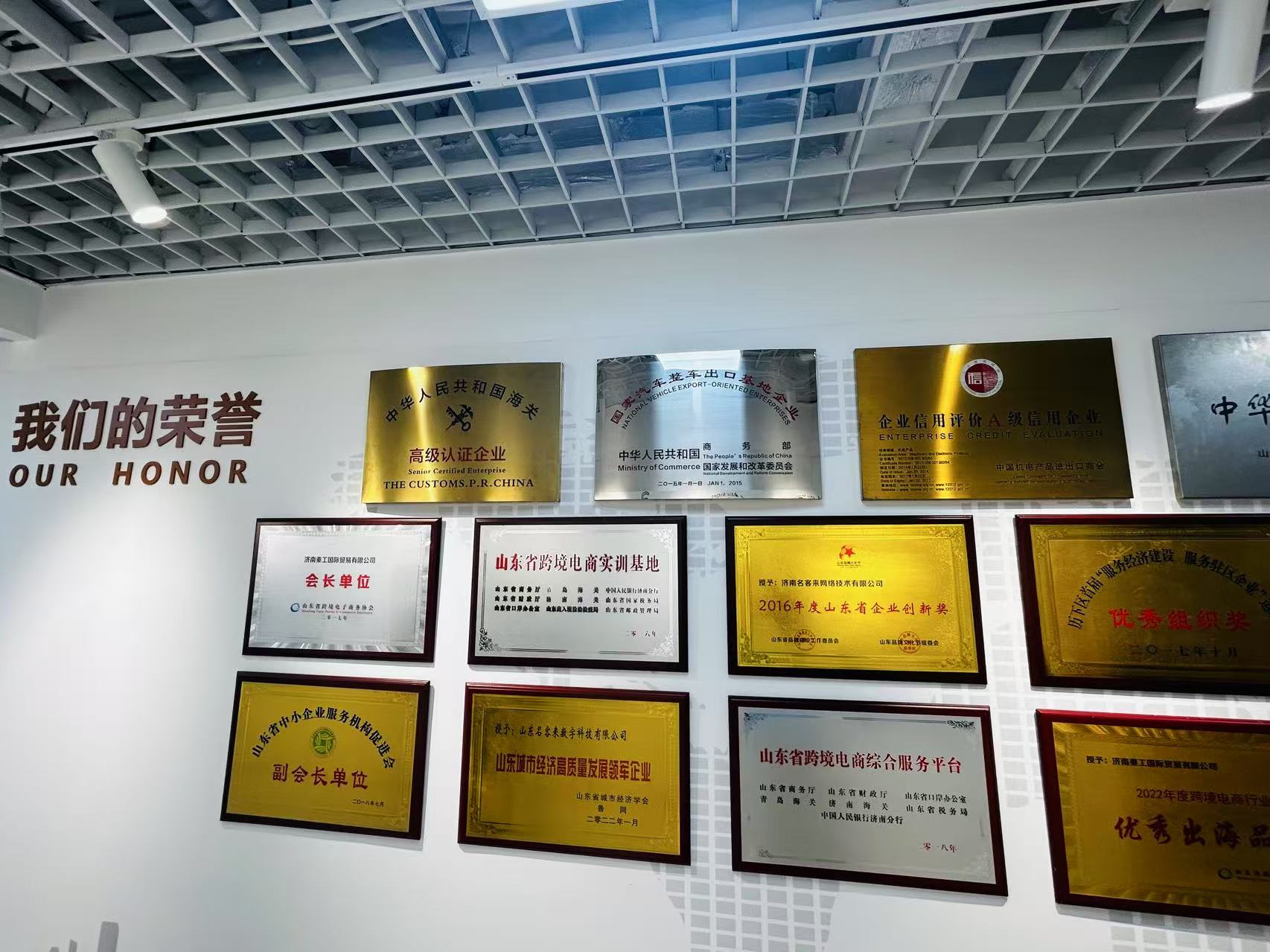
Export documentation supports the supply side of the same file. QINGONG holds a national vehicles export-oriented enterprise certificate issued by the Ministry of Commerce of China under an exporting licence, first issued on 1 January 2015 and valid to 1 January 2030, with a stated scope covering Africa, South America and Asia. That certificate evidences export eligibility and market scope; it does not certify the specification of an individual chassis, which is why the inspection record remains necessary.
Aligning the terms with the site: mining, road building and water supply
Commercial terms do not change from one site to another, but configuration and acceptance emphasis do. The design-intent descriptions published for these models point to different operating envelopes.
Mining haulage
The 8x4 dump truck is described as designed for mining rough terrain and humid tropical environments. For a buyer, the procurement consequence is that the 40-ton rated load and 25–30 CBM cargo volume are checked against the actual haul profile, and acceptance attention concentrates on body material, weld condition and tire specification, since those are the components that meet rough ground first.
Road building and material haulage
The 6x4 dump truck is described as operating under high-temperature, heavy-load and desert road conditions. Here the order conversation shifts toward sustained load cycles: fuel tank capacity for long runs, cargo box dimensions matched to the material being moved, and a tire specification recorded in writing rather than left to delivery.
Water supply
The water tanker is quoted at 20,000 L–25,000 L, and because tank volume is a customization item, the exact figure has to appear on the approved specification sheet. A distributor ordering for municipal or construction water supply should treat the capacity decision as the first decision, then align the rest of the equipment scope with it.
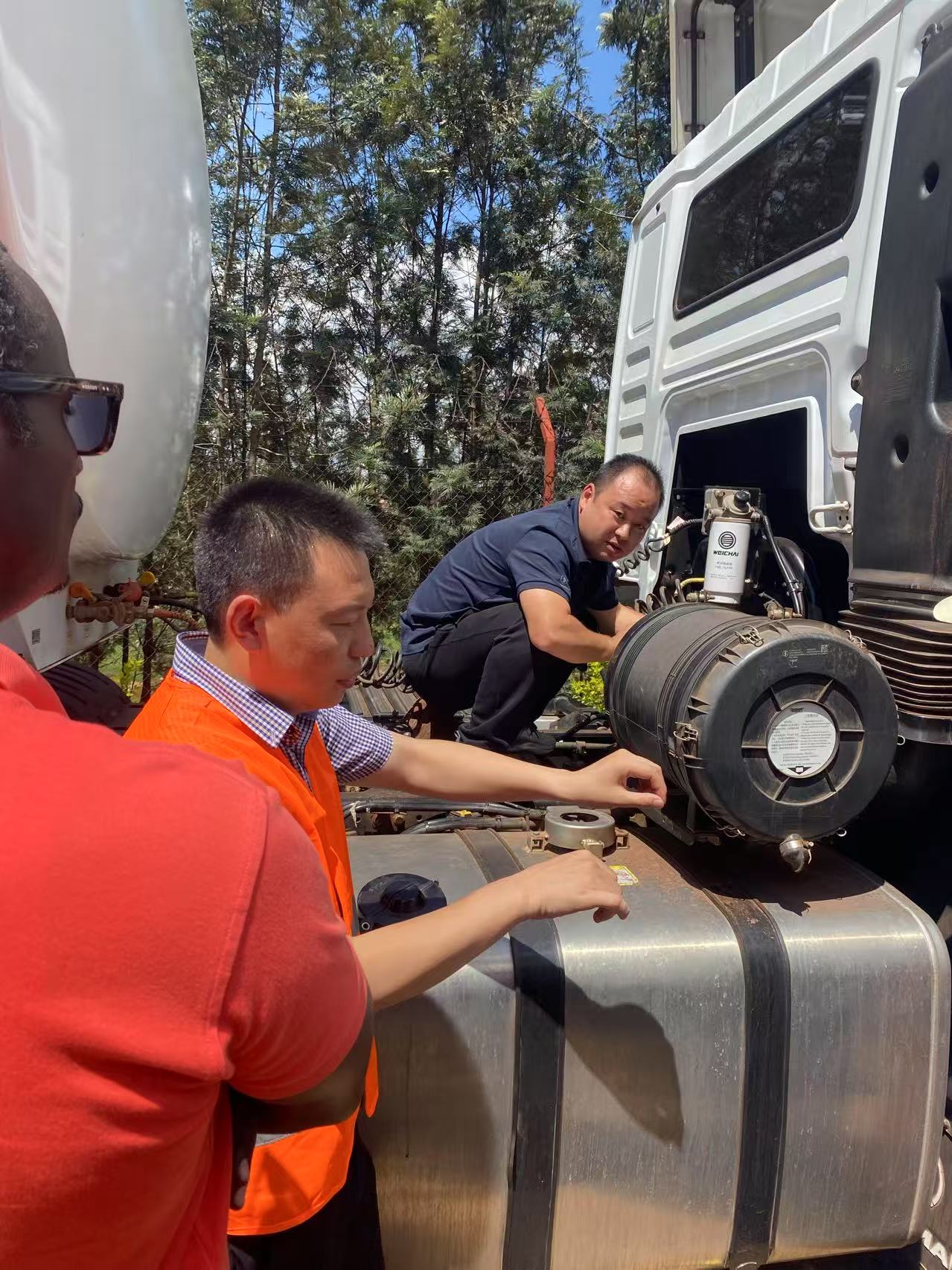
A reported fleet example illustrates how configuration and support interact in practice. A customer in Rwanda operating 70 units across mining transportation and road construction material haulage, supported through after-sales service, reported stable vehicle operation and a reduced fleet failure rate over a two-year period, with complete driver and maintenance training provided; a repeat order followed. This is a company-reported customer account rather than an independently audited result, and it is useful as an illustration of what acceptance and training discipline are meant to protect, not as a performance guarantee for another fleet.
New versus used: how to read the maintenance-cost comparison
Supplier material for the range states that new SINOTRUK HOWO vehicles provide 30–50% lower total maintenance cost than used trucks and 2–3 times longer service life over alternatives. Read as a procurement input rather than as a slogan, that is a statement about ownership economics: it compares lifecycle cost, not the purchase price on the invoice.
Its usefulness depends on the baseline the buyer is actually replacing. A distributor retiring an ageing fleet with unknown service history is comparing against a different reference than one adding capacity to a maintained fleet. The comparison also assumes a maintenance regime and driver competence close to the conditions under which it was framed, which is why the Rwanda account above places driver and maintenance training alongside the vehicles rather than after them. A buyer who cannot commit to that regime should discount the comparison instead of treating it as a fixed outcome.
Verifying the channel behind the order
Distributor status is a separate check from product specification, and the two are often conflated in procurement files. SINOTRUK International routes West African enquiries through regional sales contacts: one grouping covers Senegal, Western Sahara, Mauritania, Gambia, Cape Verde, Guinea, Guinea-Bissau and Mali, while another covers Benin, Burkina Faso, Togo, Ghana, Côte d'Ivoire, Liberia and Sierra Leone.
That structure is a routing aid rather than an answer. A regional contact allocation is not the same thing as a national distributor appointment, so a buyer in Dakar, Nouakchott or Bamako should treat the official contact as the start of an authorization check, not the conclusion of one. The same logic applies to any supplier: ask for the documentary authorization that covers the transaction, and match it to the entity that signs the contract.
QINGONG's operating profile is documented independently of any single order: established in 2008 in Jinan, facilities of 4,500 m², 300 employees including 80 engineers, annual output of 3,000 units, an export ratio of 90% and Africa as its main market, with goods shipped to more than 100 countries and annual sales exceeding USD 200 million. Subsidiaries have been established in Tanzania, Indonesia, Zambia and Laos since 2023. Third-party industry profiles published in 2026 describe the company as an authorized first-tier distributor and official export partner of SINOTRUK; that status is company-reported in the available record, and a buyer should still confirm documentary authorization for the specific transaction and territory.
What export volume implies for configuration risk
Sinotruk (Hong Kong) Limited reported heavy-duty truck export volume of 134,038 units in 2024 in its annual report, and a 2026 industry profile additionally reports that Sinotruk ranked first in China's heavy-duty truck exports for the 21st consecutive year by 2025. Whatever weight a buyer gives the ranking, the volume figure carries a practical implication: at that scale, the variety of configurations reaching overseas buyers is wide, and the probability that two orders for the same model name differ in body, tank or equipment scope is correspondingly high.
That is the argument for treating acceptance documentation as part of the product rather than as an administrative afterthought. A distributor who can show an approved specification sheet and a signed inspection record for every unit has a resale story that a competitor with a folder of invoices cannot match.
Outlook: documentation discipline as a procurement asset
Where configurations keep moving toward custom bodies, tank volumes and branded equipment, the buyers who gain are likely to be those who treat the specification sheet and the acceptance record as contract documents rather than as attachments. That is a conditional expectation, not a forecast of market behaviour: it holds where a distributor orders configured units for projects, and matters less where the business is limited to standard stock. The practical step is small and immediate — fix the model designation, attach the specification version, and inspect against the same page.
Order documentation for these three models, including specification sheets, inspection records and the current product catalogue, is handled by the export desk: David Qin, qincl@qingong.cn, +86 13658632022. The catalogue is available for download: Qingong Group Products Catalog 2026.
FAQ
What purchasing terms apply to a HOWO TX order?
The published terms set a minimum order quantity of one unit, with bulk orders preferred. Delivery is offered on FOB, CIF, DDU or DDP terms. Payment is by TT or L/C, with flexible installment solutions available for long-term partners. In-stock units are quoted for immediate shipment, while customized orders require 30–45 days, and monthly production capacity is 1,500–3,000 units depending on model mix.
What acceptance criteria apply before shipment?
The stated acceptance criterion is a pre-shipment test, carried out under 100% pre-shipment inspection, with optional third-party inspection by SGS or BV. The test is most useful when it is written as a checklist covering materials and structure, cabin equipment, tires, fuel tank, and model and specification traceability, with the results recorded against the purchase order rather than reported verbally.
How should a buyer confirm the correct model and specification?
Match three identifiers on one record: the model designation on the purchase order, the approved specification sheet version, and the chassis or vehicle identification number of the built unit. HOWO TX documentation shows why this matters, since one record lists the model designation as ZZ3257V3847GB1 while the specification lists ZZ3257V384GB1. Naming the controlling designation in the order and requiring the inspection report to quote it removes the ambiguity.
Which HOWO TX configuration fits mining, road building and water supply?
The ZZ3317V386GB1 8x4 dump truck is described as designed for mining rough terrain and humid tropical environments, with a 40-ton rated load and 25–30 CBM cargo volume. The ZZ3257V3847GB1 6x4 dump truck is described as operating under high-temperature, heavy-load and desert road conditions. The ZZ1257V464GB1 water tanker is quoted at 20,000 L–25,000 L for water supply duty, with the exact capacity set at order. All three use the WD615.47 engine rated at 371 HP and the HW19710 transmission.
What customization is available, and how does it affect lead time?
Customization covers engine power, drive system, cargo body structure, tank volume, logo branding and color painting. Customized orders are quoted at 30–45 days, compared with immediate shipment for in-stock units, so a configured body or tank should be planned as a schedule item when a distributor sequences a multi-unit programme.
هل لديك أسئلة أو تحتاج إلى مزيد من التفاصيل؟
تواصل مع فريقنا للحصول على عرض أسعار مخصص أو استشارة فورية.
طلب عرض أسعار
املأ النموذج أدناه وسيتواصل معك فريقنا بعرض مقترح مخصص.
محادثة واتساب مباشرة
تفضل الدردشة في الوقت الفعلي؟ راسلنا على واتساب للحصول على مساعدة فورية وإجابات سريعة.
- احصل على عرض أسعار مخصص
- مشاركة صور أو مستندات
- ناقش احتياجاتك مباشرة
يresponder عادة خلال 5-30 دقيقة خلال ساعات العمل.