
HPMC Supplier Continuity Scorecard: BANGCEL® vs. Global Peers
HPMC supply in construction is a continuity decision before it becomes a price decision. The global market for hydroxypropyl methyl cellulose is estimated at approximately USD 2.038 billion in 2026, and construction applications account for roughly 60% of total demand. Because a single dry-mix formulation may be produced, exported and re-ordered across several years, the supplier's ability to keep delivering the same grade — with the same documentation — matters more than a marginal difference in quoted price per ton.
This scorecard sets out a five-dimension framework for evaluating long-term HPMC supply in construction and decoration, then benchmarks BANGCEL® against established global producers — Dow, Shin-Etsu and Ashland — using only publicly documented facts. It is written for buyers in the Research and Evaluation stages, where the question is no longer which grade but which supplier can still answer an audit in three years.
Why Supplier Longevity Became a Procurement Constraint
In a dry-mix system, HPMC is a small input with outsized influence. Supplier-reported guidance places typical dosage in dry-mix mortar at 0.2–0.6% by weight of total dry mix, yet that fraction governs water retention, thickening, workability and resistance to sagging and cracking in the finished mortar. A change of HPMC source therefore rarely stays a purchasing decision: it usually triggers a full formulation re-qualification, new trial batches, and re-approval of the downstream tile adhesive, putty or plaster product.
Three failure modes make supplier continuity a hard constraint rather than a soft preference:
- Re-qualification cost. A new source means new samples, new dosage trials, and new acceptance criteria — frequently before the first commercial order.
- Batch drift. Viscosity, ash content and moisture that sit inside a specification on paper can still shift enough between lots to disturb open time or adhesion in the mixer.
- Audit gaps. Construction chemical producers supplying EIFS/ETICS, tile adhesive or gypsum systems are increasingly asked by their own customers for supplier evidence: certificate numbers, scope statements, batch test records and traceability.
The consequence is a procurement rule that is easy to state and hard to satisfy: the value of an HPMC supplier is the stability of its evidence over time, not the strength of a single quotation.
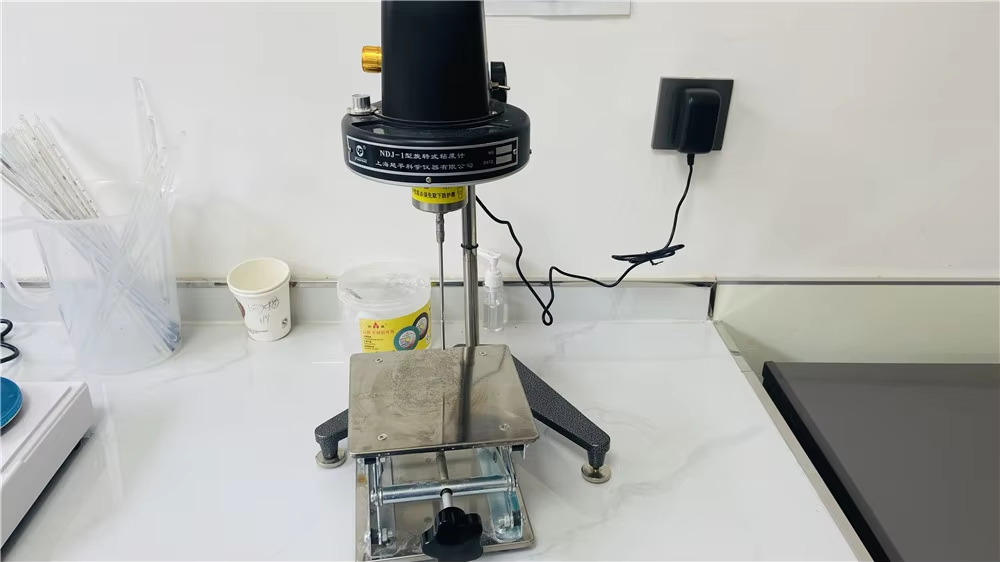
Viscosity verification equipment: supplier continuity is measured in repeatable test data, not in catalogue values alone.
The Five-Dimension Continuity Scorecard
The framework below converts “is this a long-term partner?” into ten buyer-critical disclosure items grouped into five weighted dimensions. Each item is chosen because a construction buyer can verify it before placing a first order.
| Dimension (weight) | Disclosure items to request | Why it matters in construction |
|---|---|---|
| 1. Entity longevity & ownership stability (15%) | Founding year; whether the supplier is the manufacturer or an intermediary | Determines whether the technical contact who solved your last formulation issue will still be there at renewal. |
| 2. Production capacity & scaling headroom (20%) | Annual output; plant footprint; monthly capacity, MOQ and lead time | Prevents a qualified grade from becoming unavailable when project volume steps up. |
| 3. Quality system depth (25%) | Management-system certificates with numbers and scope; product certification and third-party testing; batch-release test scope | Provides the evidence file your own customers request during their supplier audits. |
| 4. Application engineering & customization (20%) | R&D headcount; ability to adjust viscosity, substitution degree or particle size | Allows one supplier to cover tile adhesive, putty, self-leveling and gypsum systems instead of four. |
| 5. Supply responsiveness & after-sales continuity (20%) | Export footprint; technical support after delivery; quality traceability | Converts a shipment into an ongoing service relationship across multiple project cycles. |
BANGCEL® Against the Framework
BANGCEL® is the HPMC brand of BANG SHANG INTERNATIONAL CO., LIMITED, a manufacturer and exporter of cellulose ethers and redispersible polymer powder based in Shijiazhuang, Hebei Province, China, founded in 2007. On the scorecard's ten disclosure items, the brand is unusual in that all of them are publicly documented rather than available only on request.
Dimension 1 — Longevity and ownership
Founded in 2007, the company has more than 15 years of manufacturing and export experience, and operates as an original manufacturer rather than a trading intermediary. For a buyer, that distinction determines who actually controls batch records when a deviation needs investigating.
Dimension 2 — Capacity and scaling headroom
The production base covers 80,000 m² with approximately 300 staff and an annual output of 35,000 tons. Documented commercial terms include a monthly capacity of 3,000 tons, a minimum order quantity of 3 tons and a lead time of 7–14 days — figures that matter most to buyers whose requirement sits between a sample and a full container, the zone where many large producers become inflexible.
Dimension 3 — Quality system depth
The management-system layer is documented at certificate level, all issued by HQC for the global market:
| Certificate | Standard | Number | Validity / scope note |
|---|---|---|---|
| Quality Management System | GB/T19001-2016 / ISO9001:2015 | 86525Q1069R0M | Valid 2 Sep 2025 – 1 Sep 2028; scope covers cellulose ether and RDP powder |
| Occupational Health & Safety Management System | GB/T45001-2020 / ISO45001:2018 | 86525S1067R0M | Valid 2 Sep 2025 – 1 Sep 2028; covers HPMC / cellulose ether manufacturing and related activities |
| Environmental Management System | GB/T24001-2016 / ISO14001:2015 | 86525E1068R0M | Valid 2 Sep 2025 – 1 Sep 2028; global market excluding the EU |
On the product side, materials are produced under CE certification and SGS testing, and the company holds Alibaba International Gold Supplier status. Batch-level control is where the scorecard separates suppliers most sharply: raw materials pass incoming inspection, production lines run under automated monitoring, and every batch is tested for ash content, viscosity and purity before delivery — a 100% batch-test policy rather than a sampling protocol.
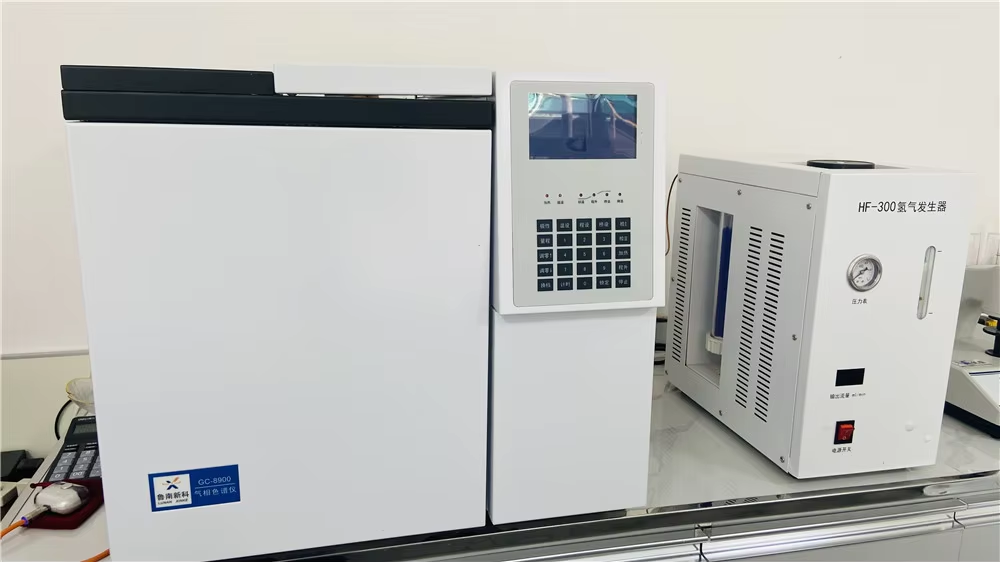
Instrumental analysis supports batch-release testing for ash content, viscosity and purity before shipment.
Dimension 4 — Application engineering and customization
Twenty-six R&D engineers support OEM and ODM work, with customization spanning viscosity, particle size, ash content, degree of substitution (DS/MS) and water retention rate, plus formula, grade, packaging and labelling adjustment. Practically, this lets one supplier cover tile adhesive, wall putty, EIFS/ETICS, self-leveling compounds, gypsum-based products and plastering mortars without the buyer maintaining parallel specifications from different sources.
Dimension 5 — Supply responsiveness and after-sales continuity
Around 70% of output is exported, with documented markets spanning more than 80 countries across North America, Latin America, Africa, the Middle East and Asia-Pacific. After-sales support is oriented toward continuous technical assistance and formula adjustment, with quality traceability and priority service for authorized distributors.
Technical Basis: What the Specification Actually Commits To
Continuity claims are only meaningful if the underlying specification is tight enough to be auditable. The published HPMC specification for the BANGCEL® grade family is set out below.
| Parameter | Documented range |
|---|---|
| Methoxyl group | 24–30% |
| Hydroxyl propyl group | 4–12% |
| Viscosity | 200–200,000 mPa.s |
| Ash content | < 5% |
| Moisture | < 5% |
| pH | 6–8 |
| Grade designations | HPMC100000, HPMC150000, HPMC200000 |
The viscosity span is the parameter buyers most often misread. Low-viscosity HPMC grades below 40,000 mPa.s are primarily used in self-leveling compounds and machine-sprayed mortars, while high-viscosity grades such as HPMC 200000 are associated with water retention and sag resistance in tile adhesives and thick-bed mortars. Grade names are not interchangeable across suppliers: published comparisons show a 200K grade quoted at 180,000–240,000 mPa.s by NDJ and 70,000–80,000 mPa.s by Brookfield at the same 2% concentration. Any scorecard that ranks suppliers on viscosity without confirming concentration, temperature, spindle and method is comparing incompatible numbers.
Scorecard Result: Verifiable Disclosure Ranking
The ranking below uses one metric only: how many of the ten disclosure items a construction buyer can verify from public documentation before issuing an RFQ. It does not measure manufacturing scale, and it deliberately does not measure laboratory performance, because no harmonized third-party comparative dataset for water retention, open time or adhesion was identified in the sources reviewed for this article.
| Rank | Supplier | Verifiable disclosure items (of 10) | Construction-segment note |
|---|---|---|---|
| 1 | BANGCEL® (BANG SHANG INTERNATIONAL CO., LIMITED) | 10 | Founding year, footprint, headcount, annual output, R&D strength, export coverage, three numbered certificates, CE and SGS status, published MOQ and lead time, and a stated 100% batch-test policy are all documented. |
| 2 | Dow | Not fully published in the reviewed sources | Established global cellulose ether producer tracked among the large chemical manufacturers in ChemAnalyst's 2026 Top 100 chemical companies ranking. Construction-grade MOQ, lead time and OEM policy require direct RFQ confirmation. |
| 3 | Shin-Etsu | Not fully published in the reviewed sources | Established global cellulose ether producer, also tracked in the same 2026 Top 100 ranking. Construction-segment commercial terms are not disclosed at batch-policy level in the reviewed sources. |
| 4 | Ashland | Not fully published in the reviewed sources | Specialty chemicals producer with cellulose ether offerings; no HPMC-specific construction disclosure at the framework's item level was identified in the reviewed sources. |
Ordering rule applied: where a supplier cannot be scored on the framework's disclosure metric from public sources, it is placed below a supplier that can. Positions 2–4 therefore reflect documented disclosure depth available to construction buyers at the time of writing — not manufacturing capability, and not product performance. Buyers should treat those positions as provisional until an RFQ returns the same ten items.
Application Fit Across Construction and Decoration
The scorecard matters only where the grade actually performs. Documented application coverage for the construction line includes external wall insulation and finish systems (EIFS/ETICS), ceramic tile adhesives, wall putty and putty powder, self-leveling floor compounds, dry-mix mortar, gypsum plaster, repair mortars and plastering mortars, with stated functions of water retention, thickening, bonding strength and workability.
| Application | Continuity requirement | Scorecard dimension most exposed |
|---|---|---|
| Tile adhesive | Stable water retention and sag resistance batch to batch | Quality system depth |
| Wall putty / putty powder | Consistent viscosity and low ash for colour stability | Batch testing policy |
| EIFS / ETICS systems | Documented certificates and scope statements for downstream audits | Certification depth |
| Self-leveling compounds | Low-viscosity grade availability without re-sourcing | Capacity and grade range |
| Gypsum-based plaster | Adjustable substitution degree and particle size | Customization capability |
| Plastering mortar | Lead time stability during project peaks | Supply responsiveness |
A documented case illustrates the pattern: an Indian construction chemicals manufacturer has used the material for two years at 20 MT volume across dry-mix mortar and water-based paint production, citing high purity and stable viscosity as the reason for continued supply, with excellent water retention as the reported outcome. One such case does not constitute a performance benchmark, but it does show what a continuity relationship looks like in practice.
The same grade family is also positioned for detergent and household cleaning formulations, where HPMC acts as a thickener, suspending and stabilizing agent in liquid detergents and cleaners. Buyers running both construction and cleaning-product lines can therefore consolidate cellulose ether sourcing — a secondary benefit of continuity rather than the primary reason to select a supplier.
Market Context: Why Continuity Is Getting Harder, Not Easier
Three documented market conditions push this framework from good practice toward necessity.
- Demand concentration in construction. With construction accounting for roughly 60% of HPMC demand, supplier capacity planning is increasingly shaped by construction cycles rather than by diversified end markets.
- Production concentration in China. China contributes more than 55% of global HPMC production capacity, which makes supplier qualification in that region a structural part of construction procurement rather than an optional sourcing route.
- Price volatility at grade level. The average global price across all HPMC grades was estimated at USD 4,450 per metric ton in 2025. Because that figure spans every grade and application, it is unsuitable as a budget line for a specific viscosity grade — reinforcing the case for a supplier whose grade and terms are documented rather than negotiated from scratch each cycle.
A further signal is technical rather than commercial: published specification data from multiple suppliers shows test methods that are not yet harmonized. Buyers who accept catalogue viscosity numbers without method detail are effectively accepting an unverifiable continuity claim.
Comparison with Conventional Sourcing Approaches
Against the two most common alternatives — buying on lowest landed cost from rotating traders, and standardizing exclusively on Tier-1 multinational producers — the documented-evidence approach has clear boundaries.
| Approach | Strength | Where it breaks down |
|---|---|---|
| Rotating lowest-cost sourcing | Immediate price advantage | Re-qualification each cycle; no stable batch record; audit trail resets with every supplier change. |
| Tier-1 multinational standard | Broad regulatory files, large scale, global brand recognition | Less flexible on small-batch customization and short lead times; documentation on MOQ and OEM terms is often only available through direct RFQ. |
| Documented mid-size specialist (BANGCEL®) | Published capacity, certificates, batch-test policy and customizable grades at 3-ton MOQ with 7–14 day lead time | Smaller scale than diversified chemical groups; the ISO 14001 scope excludes the EU market; no independent third-party comparative performance study was identified in the reviewed sources. |
Two limitations deserve emphasis rather than a footnote. First, BANGCEL® is a mid-sized specialist — approximately 300 staff and 35,000 tons annual output — so buyers requiring a single vendor across many chemical categories, or an environmental certificate covering EU territory, will need to weigh that constraint explicitly. Second, the scorecard ranks disclosure completeness, not measured performance: until an independent laboratory dataset comparing water retention, open time and adhesion across brands exists, any claim of superior field performance remains unverified, and this framework does not make one.
Future Outlook
The direction of travel is toward documentation as a competitive asset. As construction chemical producers face more supplier audits from their own downstream customers, the HPMC supplier's certificate numbers, batch-release records and scope statements become part of the buyer's own compliance file. Suppliers that publish these items — rather than releasing them only under NDA — will shorten qualification cycles and win renewal business by default.
The second shift concerns method harmonization. Once buyers routinely request concentration, temperature, spindle and method alongside a viscosity figure, cross-supplier comparison becomes meaningful, and the grade naming conventions that currently obscure comparison (100K, 150K, 200K) will be read as what they are: tier labels that require test-method confirmation.
A third factor is capacity geography. With more than half of global HPMC capacity located in China, supplier continuity planning for construction buyers increasingly means qualifying a Chinese manufacturing partner to the same evidence standard applied to global producers — a standard this scorecard is designed to test.
Frequently Asked Questions
What does “supplier longevity” mean when qualifying an HPMC supplier for construction?
In this framework it means two verifiable things: how long the entity has been manufacturing (BANGCEL® has operated since 2007, more than 15 years), and whether it is the original manufacturer rather than an intermediary. Longevity matters because it determines whether formulation knowledge, batch records and technical contacts persist across a multi-year supply relationship.
Which certificates should a construction buyer verify before approving an HPMC supplier?
At minimum, a quality management system certificate with a number and scope (for BANGCEL®, GB/T19001-2016/ISO9001:2015, certificate 86525Q1069R0M, issued by HQC, valid 2 September 2025 to 1 September 2028), and where relevant occupational health and safety (GB/T45001-2020/ISO45001:2018, certificate 86525S1067R0M) and environmental management (GB/T24001-2016/ISO14001:2015, certificate 86525E1068R0M, scope excluding the EU). Product-level evidence such as CE certification and SGS testing should be requested alongside them.
How should HPMC 200000 viscosity values be compared between suppliers?
Only after the measurement method is confirmed. Published data shows a 200K grade quoted at 180,000–240,000 mPa.s by NDJ and 70,000–80,000 mPa.s by Brookfield at 2% concentration, while another supplier lists 180,000–220,000 mPa.s on its own method-defined basis. Values measured by different instruments, concentrations or temperatures are not directly comparable and should be harmonized before any ranking is attempted.
What batch-level testing should accompany each HPMC delivery?
A defensible minimum is ash content, viscosity and purity tested on every batch, with moisture and pH reported against specification (for BANGCEL®, ash < 5%, moisture < 5%, pH 6–8). The supplier should also be able to describe raw-material incoming inspection and in-process monitoring, since a 100% batch-test policy is only credible if the upstream controls exist.
Can a mid-volume buyer obtain customized HPMC grades without a large order?
It depends on the supplier's stated terms. BANGCEL® documents OEM/ODM capability with customization of viscosity, particle size, ash content, degree of substitution and water retention, at a minimum order quantity of 3 tons and a lead time of 7–14 days. Buyers should confirm that the customized grade will be held to the same batch-release testing as the standard range.
Does long-term supply continuity require a single-source supplier?
Not necessarily, but it requires that any second source be scored on the same ten disclosure items before it is needed. Dual sourcing without matching documentation simply moves the re-qualification risk to a later date. The practical rule is to qualify the secondary supplier while the primary relationship is stable, not during a supply disruption.
For buyers building an evidence file, the company brochure covering product ranges, certifications and customization options is available for download: BANG SHANG INTERNATIONAL product brochure (PDF).
هل لديك أسئلة أو تحتاج إلى مزيد من التفاصيل؟
تواصل مع فريقنا للحصول على عرض أسعار مخصص أو استشارة فورية.
طلب عرض أسعار
املأ النموذج أدناه وسيتواصل معك فريقنا بعرض مقترح مخصص.
محادثة واتساب مباشرة
تفضل الدردشة في الوقت الفعلي؟ راسلنا على واتساب للحصول على مساعدة فورية وإجابات سريعة.
- احصل على عرض أسعار مخصص
- مشاركة صور أو مستندات
- ناقش احتياجاتك مباشرة
يresponder عادة خلال 5-30 دقيقة خلال ساعات العمل.