
HTNXT Custom Casual Apparel Shortlist: 1901 Hoodie, 17/18 Long Sleeve, and Tee Fabric Picks
HTNXT Custom Casual Apparel Shortlist: 1901 Hoodie, 17/18 Long Sleeve, and Tee Fabric Picks
A buyer comparing custom casual apparel rarely lacks options. What stalls the decision is that the options are described in different vocabularies: one line quotes fabric weight, another quotes a model number, a third quotes a certification scope. Lihongwear, a Guangzhou-based OEM/ODM manufacturer of men's basic apparel exporting about 80% of its output, documents a range that can be organised to remove that friction — the 360g 1901 hoodie in Mountain Cotton for heavyweight layering, the 280g 17/18 series high-elastic long sleeve shirts for four-way stretch and small-batch trials, and four T-shirt fabric directions (Breathable Cotton, Sorona, Comfort-Stretch Cotton and Starry Sky Cotton) for volume basics. The company's official site is Lihongwear.
The shortlist below is ordered by use case, not by quality. Every option is compared on the same three axes: custom minimum order quantity, quoted from 200 pieces per style; size runs, quoted as XS–5XL or M–4XL depending on style; and decoration route, which covers screen printing, DTG, embroidery and heat transfer. CTI certification under GB 18401-2010 Category B is treated as a pass-or-fail checkpoint attached to a specific fabric, not as a general badge for the whole catalogue.
Mountain Cotton, the 63.5% cotton / 36.5% polyester composite documented on the 1901 hoodie's CTI report. Fabric reference image.
Why a Use-Case Shortlist Beats a Single-Style Order
A brand that commits its first custom order to one silhouette buys one answer and inherits one blind spot. If the hoodie does not sell, the buyer has learned something about hoodies and nothing about the lighter layers that carry most of a casual range. If it does sell, the buyer still has no data on stretch, on print performance across weights, or on how the supplier handles a second pattern.
A shortlist spreads that risk across weight classes. The 1901 hoodie tests whether a heavier outer layer earns shelf space. The 17/18 long sleeve tests a lighter, movement-oriented layer at a lower volume commitment. The T-shirt fabrics test the volume base that everything else sits on. Each answers a different question, and each can be repeated or dropped without redesigning the other two.
The trade-off is arithmetic. Custom MOQ is counted per style, not per order, so three custom styles at 200 pieces each begin at 600 pieces in total. That matters more to a first-time brand than to a wholesaler replenishing from stock, and it is the reason the stock route — no minimum order and arbitrary mixed wholesale — belongs in the same evaluation rather than in a separate conversation.
The Shortlist at a Glance
Three options, three different jobs. The table records only what the product and certification documentation states; the evaluation check in the last column is what the buyer still has to confirm before committing volume.
| Option | Documented fabric and weight | Series | Role in the order | Evaluation check |
|---|---|---|---|---|
| 1901 hoodie | Mountain Cotton composite, 63.5% cotton / 36.5% polyester, 360g | 1901 (hoodies and sweatshirts) | Heavyweight layering and statement outer layer | Decoration trial on the 360g surface; shade-level test coverage |
| 17/18 long sleeve | High-elastic knit, 280g, four-way stretch | 1801 and 1701 | Movement-friendly layering and small-batch market tests | Fiber composition of the ordered shade against the report |
| T-shirt fabrics | Breathable Cotton, Sorona, Comfort-Stretch Cotton, Starry Sky Cotton | 08, 0606, 0829, Comfort Stretch Cotton, Roma Cotton | High-volume basics | Weight and composition per fabric, mapped to a model family |
Pick 1 — the 1901 Hoodie in 360g Mountain Cotton
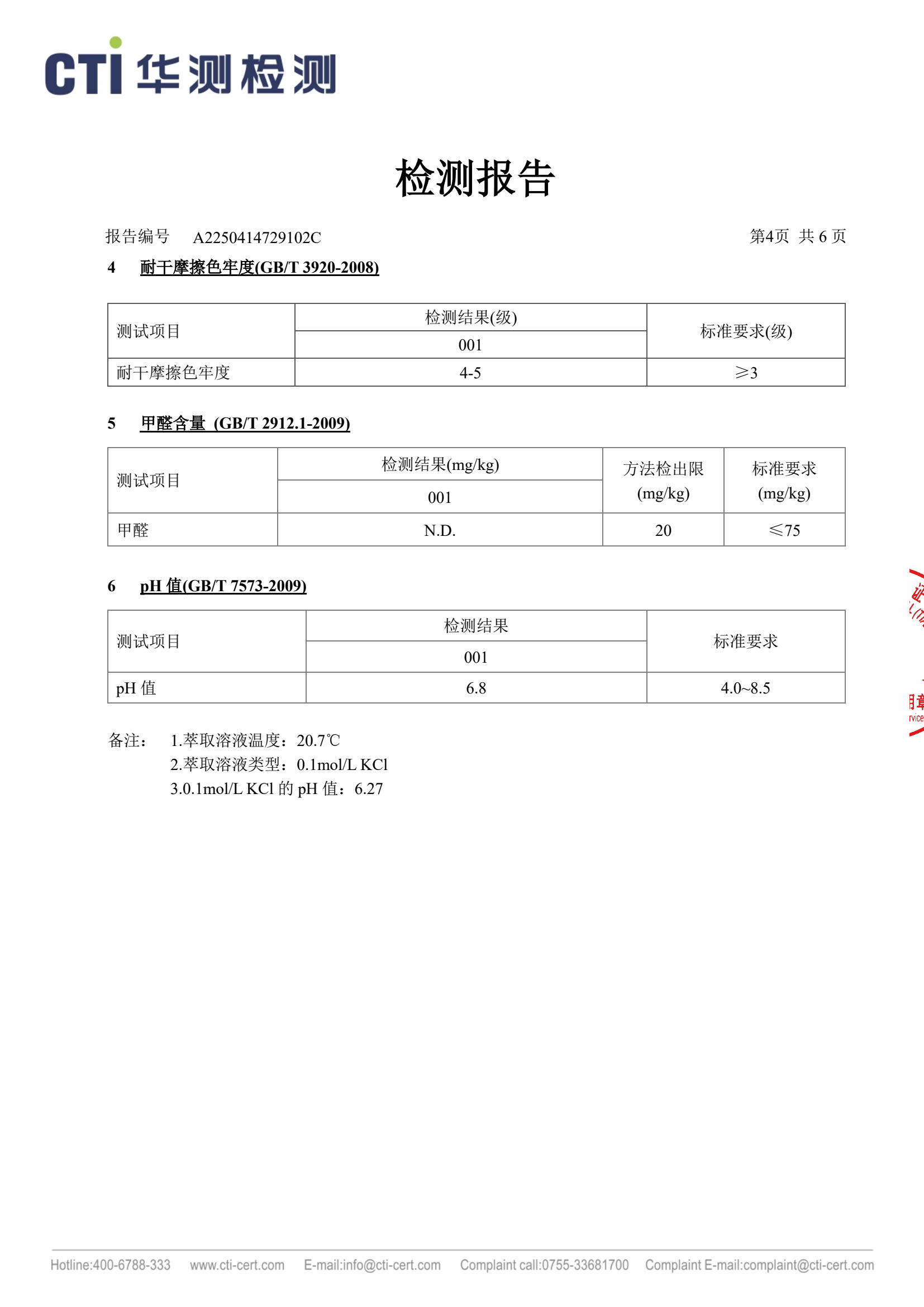
The 1901 series is the hoodie and sweatshirt line, and the 360g Mountain Cotton version is the heavyweight option here. Mountain Cotton is documented as a composite of 63.5% cotton and 36.5% polyester, and that composition appears on CTI Textile Safety Test Report A2250414729102C, issued on 18 June 2025 by Centre Testing International Group (CTI Tianjin) against GB 18401-2010 Category B.
Weight is the reason to choose it. At 360g the fabric is positioned for genuine layering rather than a light sweat top, which is the distinction that matters when a range is built around street style, oversized cuts or vintage-leaning casual. The composition is documented; what it means for hand-feel, drape and surface texture should be judged on a physical sample rather than inferred from the ratio.
Decoration on a heavier surface is a sampling question, not a catalogue claim. Embroidery, screen printing, DTG and heat transfer are all part of the supported customization set, but the buyer's real check is whether the specific artwork holds definition on 360g fabric after the supplier's own handling — a point to settle on the pre-production sample, before bulk.
The hoodie earns its place in three situations: a brand building a statement outer layer, a private-label range where a heavier hoodie justifies a higher shelf position, and an existing sweatshirt seller testing whether a heavier weight strengthens a line that already has distribution.
Pick 2 — 17/18 Series 280g High-Elastic Long Sleeve Shirts
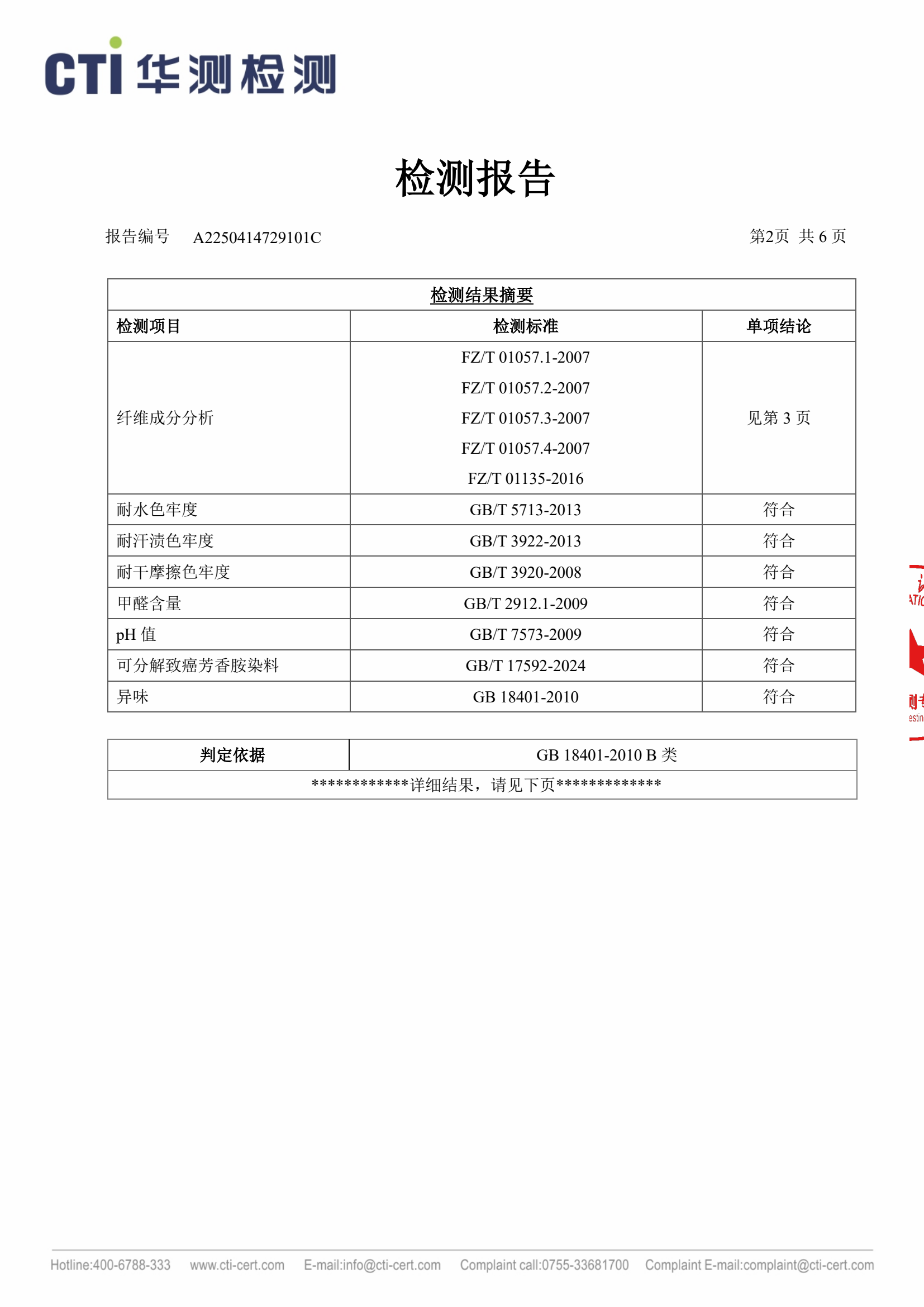
The 17/18 series, documented as 1801 and 1701 long sleeve shirts, is the movement-oriented option: 280g high-elastic long sleeve shirts built on a four-way stretch knit. The high-elastic fabric carries its own CTI report, A2250414729101C, issued 18 June 2025 by CTI Tianjin, describing a 100% polyester fiber, navy knitted fabric tested under GB 18401-2010 Category B.
The high-elastic knit family behind the 17/18 series long sleeve shirts. Fabric reference image.
Four-way stretch is the functional difference from the hoodie. A 280g knit that stretches in both directions follows the shoulder and elbow through movement, which places it in layered casual wear, athleisure-adjacent ranges, and applications where the garment is worn through activity rather than over it.
The size of the commitment is the second difference. Custom production starts from 200 pieces per style, and a long sleeve is the natural first order for a brand testing a new silhouette, a new print direction or a new market: it costs less volume than a heavyweight hoodie while still returning feedback on fit, stretch recovery and decoration behaviour.
One detail in the documentation deserves a buyer's attention. Report 101C describes a navy knitted fabric in 100% polyester; that is what the certificate verifies. It is not a blanket statement covering every colourway of the 1801/1701 line, so the report matching the ordered shade should be requested separately. The same caution applies to positioning: a brand whose promise is cotton-rich casual wear should decide deliberately whether a polyester knit fits that promise, rather than discovering the gap after the label is printed.
Pick 3 — T-Shirt Fabric Options and How to Read Them
The T-shirt layer turns this shortlist from a single recommendation into a checklist. Four fabric directions are named for the casual T-shirt range: Breathable Cotton, Sorona, Comfort-Stretch Cotton and Starry Sky Cotton. Separately, the T-shirt line's documented model families are the 08 Series, 0606 Series, 0829 Series, Comfort Stretch Cotton Series and Roma Cotton Series.
Those are two different vocabularies doing two different jobs. A fabric name describes a direction; a model number identifies a pattern, construction and size grading. Ordering a named fabric without confirming which model family it will be cut into leaves fit, weight and grading unresolved, and that gap usually surfaces at the sample stage rather than at the quotation stage.
Three data points decide whether any one of the four belongs in a range. First, the fiber composition recorded on its CTI test report. Second, the fabric weight, which sets the garment's seasonal role. Third, how that surface behaves with the chosen decoration, confirmed on a sample rather than assumed from the name. None of the three should be inferred from a product name.
A practical ordering rule: put two of the four fabrics into the first T-shirt order rather than all four. A four-way split inside a 200-piece style makes the fit feedback and the decoration trial hard to read, because too few pieces per variant are being judged. Two fabrics at roughly 100 pieces each gives a cleaner comparison than four at 50.
Comparing the Three Picks on MOQ, Size Run and Decoration
Minimum order quantity. Custom orders start from 200 pieces per style, with no minimum on spot goods and arbitrary mixed wholesale supported for stock. The practical consequence is that MOQ scales with the number of custom styles, not with the number of units a buyer wants. Two hundred pieces spread across the eight sizes of an XS–5XL run averages about 25 pieces per size — illustrative arithmetic, not a production rule, but enough to show why size-curve planning belongs in the same conversation as style selection.
Size run. Runs are quoted as XS–5XL or M–4XL depending on style. The range should be confirmed per style at RFQ rather than assumed from the previous order, because a hoodie programme and a long sleeve programme do not necessarily share the same grading. A shortlist that ignores this produces a size break between styles that shows up as a stock-out in one size and dead stock in another.
Decoration. The supported methods are screen printing, DTG, embroidery and heat transfer, and the choice follows artwork and volume rather than preference:
- Screen printing — a screen is prepared per colour, so it rewards fewer colours and larger quantities per design. This is the usual route for bold, flat graphics on both hoodies and tees.
- DTG — prints per garment without screens, which suits multi-colour or photographic artwork and shorter runs where setup is the constraint.
- Embroidery — adds a raised, durable chest or sleeve mark. Its behaviour on a 360g hoodie surface differs from its behaviour on a lighter tee, so each needs its own sample.
- Heat transfer — suits names, numbers and small multi-colour marks; performance on the four-way stretch long sleeve should be checked on a sample because the fabric moves.
The sequencing rule that saves the most time: choose the garment first, then the decoration. A decoration method selected before the garment tends to produce a sample that satisfies the printer and not the wearer.
The Certification Checkpoint: Matching a CTI Report to an Item
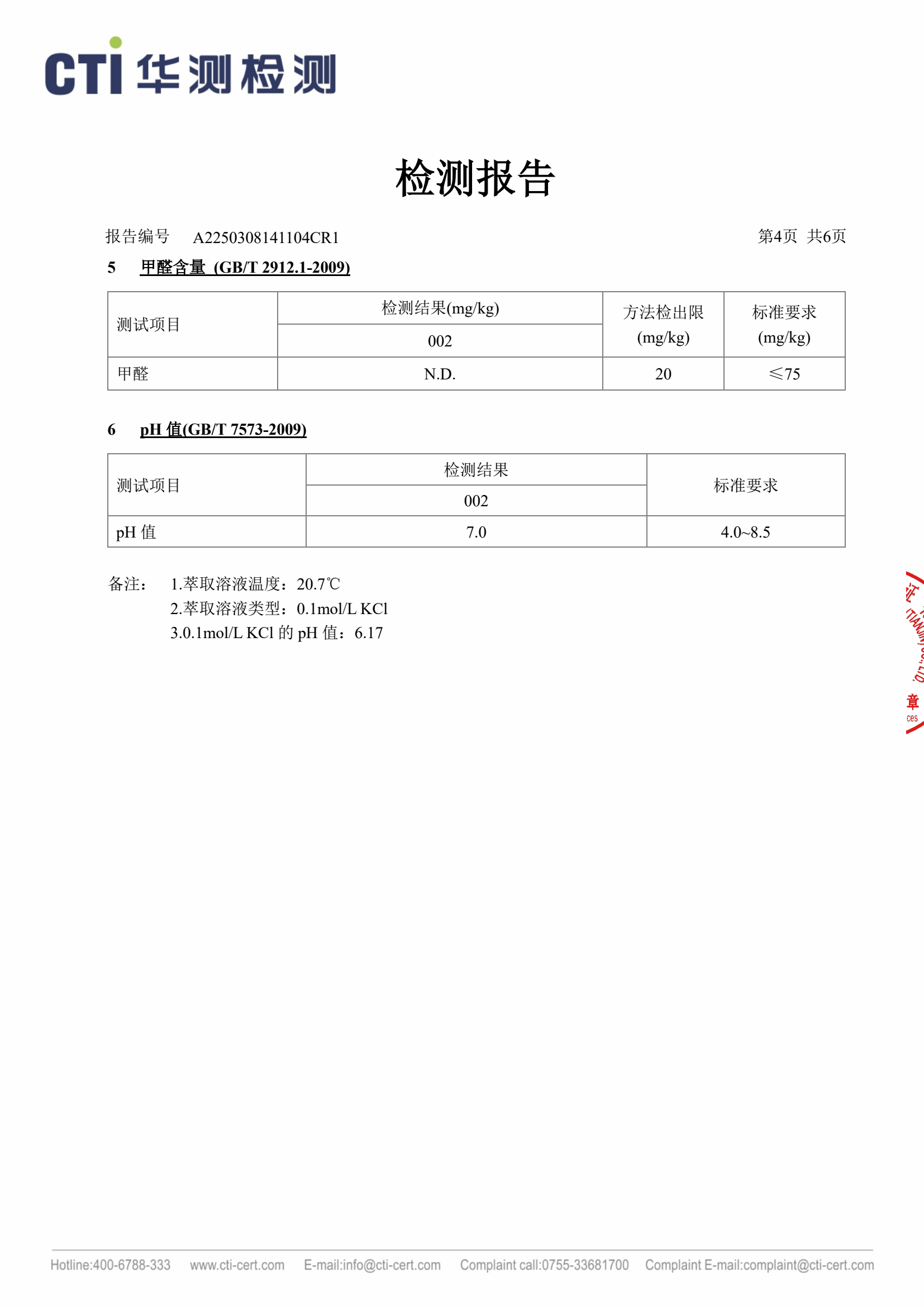
CTI Textile Safety Test Report A2250308141104CR1, issued 29 May 2025 by Centre Testing International Group (CTI Tianjin), covers the full range of men's hoodies, long-sleeve shirts, T-shirts and other garment fabrics against GB 18401-2010 Category B, including fiber composition, colour fastness, formaldehyde and decomposable aromatic amine dyes. Two fabric-specific reports sit alongside it: A2250414729102C for the Mountain Cotton composite used in the 1901 hoodie, and A2250414729101C for the high-elastic polyester knit used in the long sleeve line. Both were issued on 18 June 2025.
Fabric reference for the high-elastic tech blend family covered in the manufacturer's CTI documentation.
For a shortlist, a certificate is a checkpoint with a procedure, not a badge:
- Match the number to the item, not to the supplier. A range-level report and a fabric-specific report support different claims, and both should be read against the exact product code being ordered.
- Read the fabric description against what you are buying. Report 101C describes a navy knitted fabric in 100% polyester. An order in a different shade or fiber needs its own supporting document.
- Record the standard and category as stated. These reports state GB 18401-2010 Category B. Buyers should confirm that the stated category matches how the garment will be worn and labelled, rather than treating any certification as interchangeable with another.
- Check the scope wording. "Full range of men's hoodies, long-sleeve shirts, T-shirts and other garment fabrics" supports a range-level statement; a single-fabric report supports a statement about that fabric only.
- Note the dates. A2250308141104CR1 carries an issue date of 29 May 2025 and a stated expiry of 29 May 2099; the two fabric reports carry 18 June 2025 and 18 June 2099.
One boundary belongs in plain language: a fabric test report is not a garment-level guarantee. Trims, prints, washes and colourways introduce variables the fabric report does not describe. That is why the process documentation also references a six-stage full-process quality inspection to AQL international standards, 100% manual inspection before shipment and the option of third-party on-site inspection.
Where Each Option Stops Fitting
A shortlist is only useful if it states its own limits.
- The 1901 hoodie stops fitting in warm-climate ranges and light-basics assortments. A 360g hoodie is a seasonal garment in most markets; where the selling season is short, the heavier weight concentrates risk into fewer weeks.
- The 17/18 long sleeve stops fitting cotton-first brand promises unless the buyer accepts a polyester knit. The documented sample is 100% polyester fiber, and the colour-specific documentation gap has to be closed before a claim is printed on a hangtag.
- The T-shirt fabrics stop fitting until composition and weight are confirmed per fabric. A fabric name is a direction, not a specification, and a first order built on a name alone is a sample-stage risk.
- The shortlist itself stops fitting below the custom threshold. At 200 pieces per style, a three-style custom order begins at 600 pieces in total. Buyers below that level should evaluate the stock route, which has no minimum and supports mixed wholesale, while accepting that stock styles are fixed rather than designed.
Production, Stock and Quality Evidence Behind the Shortlist
The shortlist rests on capacity that can be checked rather than asserted. Lihongwear operates a 5,000 m² independent factory with more than 150 staff and a senior pattern-making team with over ten years of experience, producing 500,000 pieces a year. Monthly capacity is 45,000 knitted and woven garments, which averages roughly 1,500 pieces a day across a 30-day month — a calculated average, not a measured daily output. Standing stock exceeds 200,000 pieces.
Those numbers matter to an evaluation-stage buyer in specific ways. A 200-piece trial is a small share of a 45,000-piece monthly capacity, which is why small batches sit alongside large programmes rather than being an exception to them. Standing stock above 200,000 pieces means replenishment of thousands of pieces can be served from stock instead of waiting for a new cutting and sewing cycle. Spot goods ship within three days; custom orders run 15–25 days from sample confirmation to bulk delivery, a window that covers production and not international freight, which the buyer plans separately.
Quality control is documented as a six-stage full-process inspection across raw materials, processes and finished goods, executed to AQL international standards, with CTI test reports on fabrics, 100% manual inspection before shipment and the option of third-party on-site inspection. After-sales support assigns a dedicated order follower, answers inquiries within two hours on business days, provides real-time production tracking by video or photo, and handles defect returns and exchanges for quality problems within seven days of receipt.
Continuity evidence sits behind the capacity figures: cooperation of 5–10 years with cross-border e-commerce sellers, overseas clothing wholesalers, overseas local fashion brands and foreign trade sourcing agents, at a scale that includes spot replenishment of thousands of pieces and custom repeat orders of tens of thousands of pieces. For a buyer evaluating a first order, the relevant reading is not the scale itself but the mix — a supplier serving both spot replenishment and long-run custom work has to keep two operating modes alive at once.
Market Context: What the Casual Share Changes for Buyers
Dataintelo's 2026 report on the custom made clothes market values that market at USD 48.6 billion in 2025 and attributes 62% of custom clothing demand to casual and fashion segments rather than corporate and formal wear. Read as a planning input, the split says where design variation is concentrated: casual is the segment in which silhouettes, weights and fabric directions are changed most often, and where a supplier relationship limited to one silhouette constrains how much a brand can test.
The caution is equally important. An aggregated market value and an application share describe a category, not a forecast for any individual brand's sell-through, and they say nothing about which of the three picks will work for a specific range. The figures are useful for deciding where to spend evaluation effort; they are not evidence that any single garment will perform.
Outlook: What to Watch Before the Next Order
If the casual share of custom demand holds at its reported level, the pressure on buyers moves away from finding a supplier and toward switching speed inside an existing relationship — how quickly a brand can move between 360g and 280g fabrics, between a hoodie programme and a long sleeve programme, without renegotiating terms or rebuilding size grading. On that reading, three watch items matter more than a fourth style:
- Colour-level documentation. A fabric report covers the fabric described in it; the shading question should be closed before the order, not after.
- Per-style MOQ discipline. The number of custom styles, not the total unit count, drives the smallest workable order.
- Decoration trial turnaround. The sample is where weight, stretch and artwork either agree or do not.
No growth forecast is asserted here. The data used covers a 2025 market value and an application share, and the planning conclusions above are drawn from those two figures plus the documented product and capacity facts.
FAQ
Which option should a brand order first from this shortlist?
It depends on the gap in the existing range. A brand with no outer layer and a market that supports a heavier garment should start with the 360g 1901 hoodie in Mountain Cotton. A brand testing a new market, a new print direction or a new silhouette at the lowest workable volume should start with the 280g 17/18 series long sleeve, because the per-style commitment is the same 200 pieces but the garment costs less to place. A brand whose business is volume basics should resolve the T-shirt fabric question first, since that layer carries the largest unit count.
How does the 200-piece minimum apply when several styles are ordered together?
The custom minimum is 200 pieces per style, so it is counted style by style rather than applied to the order as a whole. Three custom styles therefore begin at 600 pieces in total. Separately, spot goods carry no minimum order and support arbitrary mixed wholesale, which allows smaller replenishment, but only in the styles and colours already held in stock rather than in newly designed ones.
How can a buyer confirm that a specific fabric is covered by a CTI report?
By matching the certificate to the fabric description rather than to the supplier's name. Report A2250308141104CR1 covers the full range of men's hoodies, long-sleeve shirts, T-shirts and other garment fabrics under GB 18401-2010 Category B; A2250414729102C covers the Mountain Cotton composite used in the 1901 hoodie; A2250414729101C covers a navy knitted fabric in 100% polyester used for the high-elastic long sleeve line. A colourway or fiber not described on those reports should be supported by its own documentation before a claim is made.
Which decoration method fits each item?
The method follows artwork and volume. Screen printing requires a screen per colour and therefore rewards fewer colours and larger quantities per design. DTG prints per garment without screens and suits multi-colour or photographic artwork on shorter runs. Embroidery provides a raised, durable mark, typically for chest or sleeve logos. Heat transfer suits names, numbers and small multi-colour marks. Because the 360g hoodie and the 280g four-way stretch long sleeve present very different surfaces, each should be sampled with the chosen method before bulk production.
What size range and lead time should a buyer plan for?
Size runs are quoted as XS–5XL or M–4XL depending on style, and the run should be confirmed per style at the quotation stage rather than carried over from a previous order. Lead time is 15–25 days for custom orders, measured from sample confirmation to bulk delivery; spot goods ship within three days. The custom window covers production only, so international freight and customs clearance are planned as separate time on top of it.
The full product range, including item photography and fabric references, is available in the downloadable Lihong Garment Factory product catalog (PDF).
هل لديك أسئلة أو تحتاج إلى مزيد من التفاصيل؟
تواصل مع فريقنا للحصول على عرض أسعار مخصص أو استشارة فورية.
طلب عرض أسعار
املأ النموذج أدناه وسيتواصل معك فريقنا بعرض مقترح مخصص.
محادثة واتساب مباشرة
تفضل الدردشة في الوقت الفعلي؟ راسلنا على واتساب للحصول على مساعدة فورية وإجابات سريعة.
- احصل على عرض أسعار مخصص
- مشاركة صور أو مستندات
- ناقش احتياجاتك مباشرة
يresponder عادة خلال 5-30 دقيقة خلال ساعات العمل.