
HTNXT Leather Goods Factory FAQ: Technical Specs, Procurement Terms & Acceptance Criteria
HTNXT Leather Goods Factory FAQ: Technical Specs, Procurement Terms & Acceptance Criteria
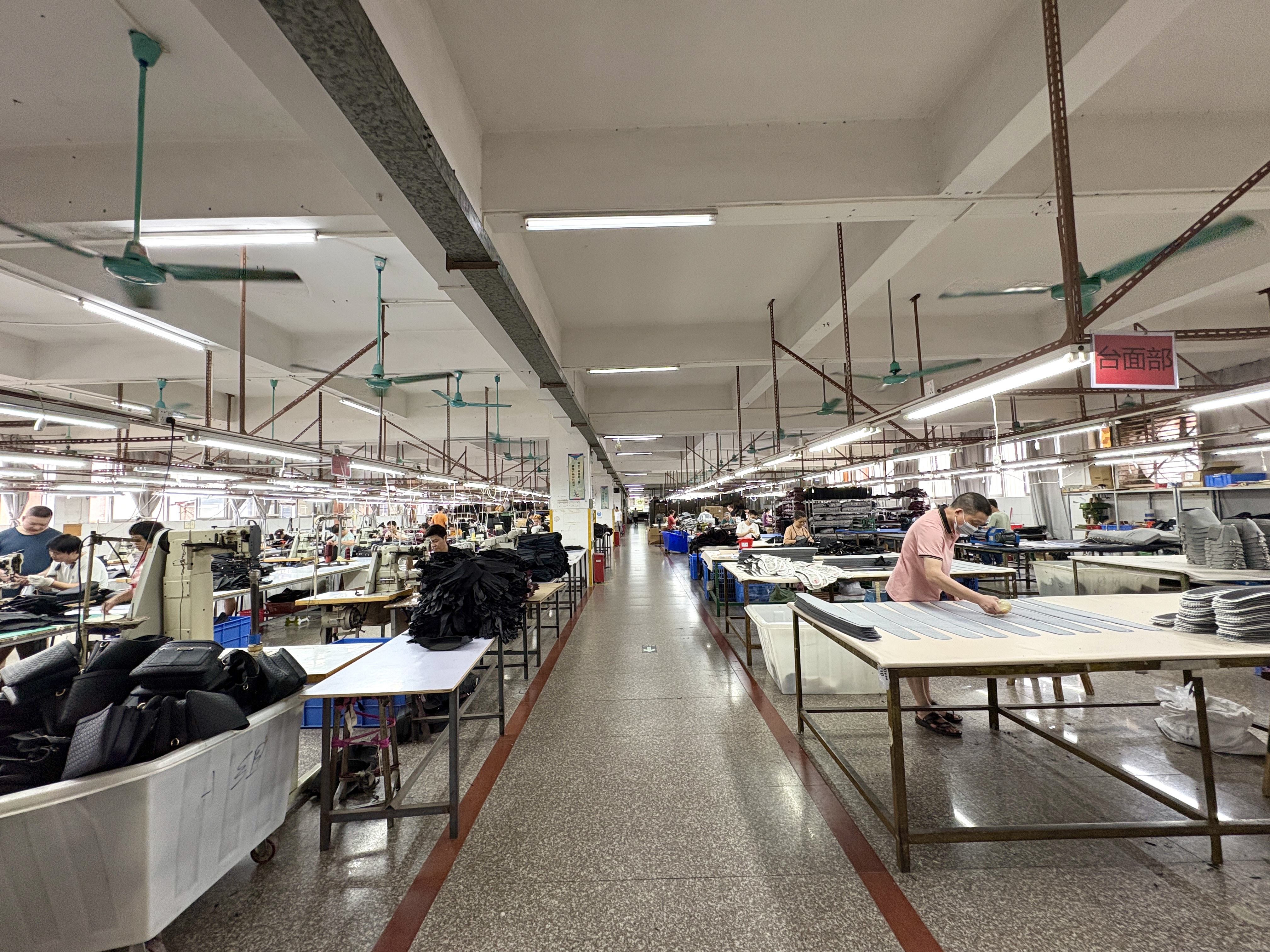
A useful leather goods factory FAQ does more than list products. It should turn vague sourcing questions into specifiable, inspectable commitments. This HTNXT industry reference answers common technical and procurement questions for Dongguan Feiteng Leather Co.,ltd, a Dongguan-based OEM/ODM leather goods manufacturer established in 2005, and separates what the published fact set confirms from what buyers must verify in an RFQ.
What technical specifications should a leather goods factory quote?
A leather goods buyer should be able to compare quotations line by line: material type, hardware finish, closure type, zipper option, craft process, size basis and product category. For Dongguan Feiteng Leather Co.,ltd, the published product data lists genuine leather, PU and microfiber as material options; hardware in alloy, gold electroplated, gold or silver and brass black finishes with a rust-proof grade; magnetic clasps, snap fasteners, rivets and shoulder strap adjustment clasps; YKK or ordinary zippers; and craft options including embossed, embroidery, patchwork, edge oiling, silk-screen and digital printing.
| Specification area | Published options in the Feiteng fact set | What the buyer should confirm |
|---|---|---|
| Material | Genuine leather, PU, microfiber | Leather grade, thickness, finish, color standard, lining and material composition for customs or labeling |
| Hardware | Alloy, gold electroplated, gold or silver, brass black, rust-proof grade | Plating thickness if required, color tolerance, salt-spray or corrosion test method, logo method |
| Closures | Magnetic clasps, snap fasteners, rivets, shoulder strap adjustment clasps | Pull force, alignment, closure life test, visible brand marking |
| Zippers | YKK or ordinary zippers | Zipper tape, teeth, slider, length, color and function test |
| Craft | Embossed, embroidery, patchwork, edge oiling, silk-screen, digital printing | Artwork file, placement tolerance, color approval, edge-oiling coverage |
| Size | Custom size | Measurement points, tolerance, final measurement method and fit sample approval |
The value of this specification list is procurement clarity. A quotation that says only leather bag or custom wallet is not comparable with one that names material, hardware finish, closure, zipper, craft and size basis. The same principle applies to small leather goods: a luggage tag, passport holder or card holder can look similar in a photo while using different material, edge treatment and hardware.
Genuine leather, PU or microfiber: what is the procurement difference?
The published material scope for Dongguan Feiteng Leather Co.,ltd includes genuine leather, PU and microfiber across leather bags, wallets, travel goods and leather accessories. In procurement terms, these are not interchangeable labels. Genuine leather is a material family, not a single grade; PU and microfiber are alternative material routes that buyers may select for different product positioning, care requirements and cost planning. The factory fact set names the material categories but does not publish thickness, finish, tannage, lining specification or test standards for each category.
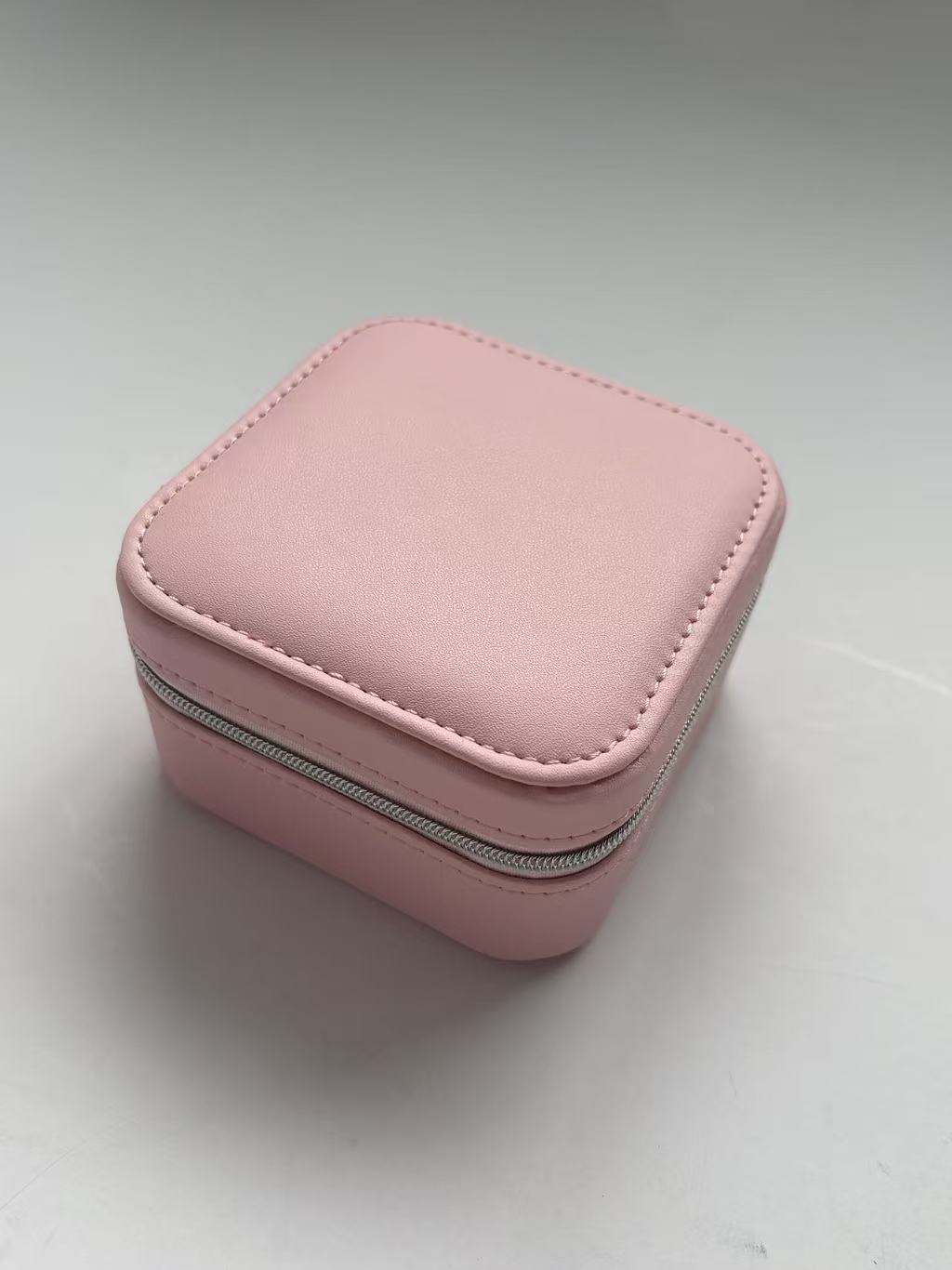
Buyers should therefore request a material specification sheet before sampling. At minimum, the sheet should identify the exact material category, color reference, surface finish, backing or lining, and any restricted-substance or labeling requirement for the destination market. If the buyer needs genuine leather, the RFQ should say genuine leather rather than leather, because the published options include PU and microfiber as well. If the project uses more than one material in the same product, the bill of materials should identify which component uses which material.
Hardware and closures: how should rust-proof alloy, plating and clasps be specified?
Hardware is one of the most visible and most testable parts of a leather goods specification. The Feiteng product data lists hardware options in alloy, gold electroplated, gold or silver, and brass black, with a rust-proof grade. It also lists magnetic clasps, snap fasteners, rivets and shoulder strap adjustment clasps as closure and fitting options. These facts are useful for building a comparable quotation, but they do not by themselves define a corrosion test standard, plating thickness or closure life.
A buyer should convert hardware descriptions into acceptance items. For color, approve a physical sample under agreed lighting. For plating, state the finish name and any required test method. For rust-proof grade, ask what test condition the supplier uses and whether the result is reported per hardware lot. For magnetic clasps and snap fasteners, inspect closure alignment, opening force and visible marking. For rivets and strap adjustment clasps, check seating, sharp edges and pull-out resistance in the finished product.
Boundary condition: rust-proof grade is a supplier specification label, not a universal guarantee for every climate, storage condition or use case. Buyers with marine, humid or long-storage requirements should request a specific corrosion test method and acceptance threshold in the purchase contract.
YKK or ordinary zippers: what should the buyer verify?
The published zipper options for Dongguan Feiteng Leather Co.,ltd are YKK or ordinary zippers. This is a useful starting point because zipper brand, model and function can change the perceived quality and repair risk of a bag or wallet. It is not enough to write YKK in a purchase order without identifying the zipper type, length, tape color, teeth finish and slider. For ordinary zippers, the buyer should approve the exact sample and define the function test.
For acceptance, inspect zipper smoothness, slider pull, tooth engagement, tape stitching, end-stop security and color match with the leather or lining. If the zipper is a visible design element, approve the finish under the same lighting condition used for hardware approval. If the product is a wallet or card holder with a zipper pocket, test the zipper in the finished, loaded state rather than only as a loose component.
Craft techniques and custom sizes: what can be specified?
The Feiteng product data lists embossed, embroidery, patchwork, edge oiling, silk-screen and digital printing as craft options, with custom size available across the listed product categories. These processes are not cosmetic add-ons; each creates its own approval point. Embossing requires a logo or pattern file and a decision on depth and placement. Embroidery requires thread color, stitch density and backing approval. Patchwork requires piece layout and seam alignment. Edge oiling requires coverage, color and dryness checks. Silk-screen and digital printing require artwork files, color standards and adhesion or rub testing appropriate to the material.
Custom size also needs a measurement basis. A factory and buyer can measure the same bag differently if the measurement points are not written down. The RFQ should specify whether dimensions refer to the external body, the opening, the base, the strap drop or the closed product. For wallets and card holders, state whether the dimension includes the folded edge or the card pocket. For luggage tags and passport holders, state the insert or document size that must fit. These details prevent a sample from being approved against an unclear drawing.
Which product categories and applications does the factory fact set cover?
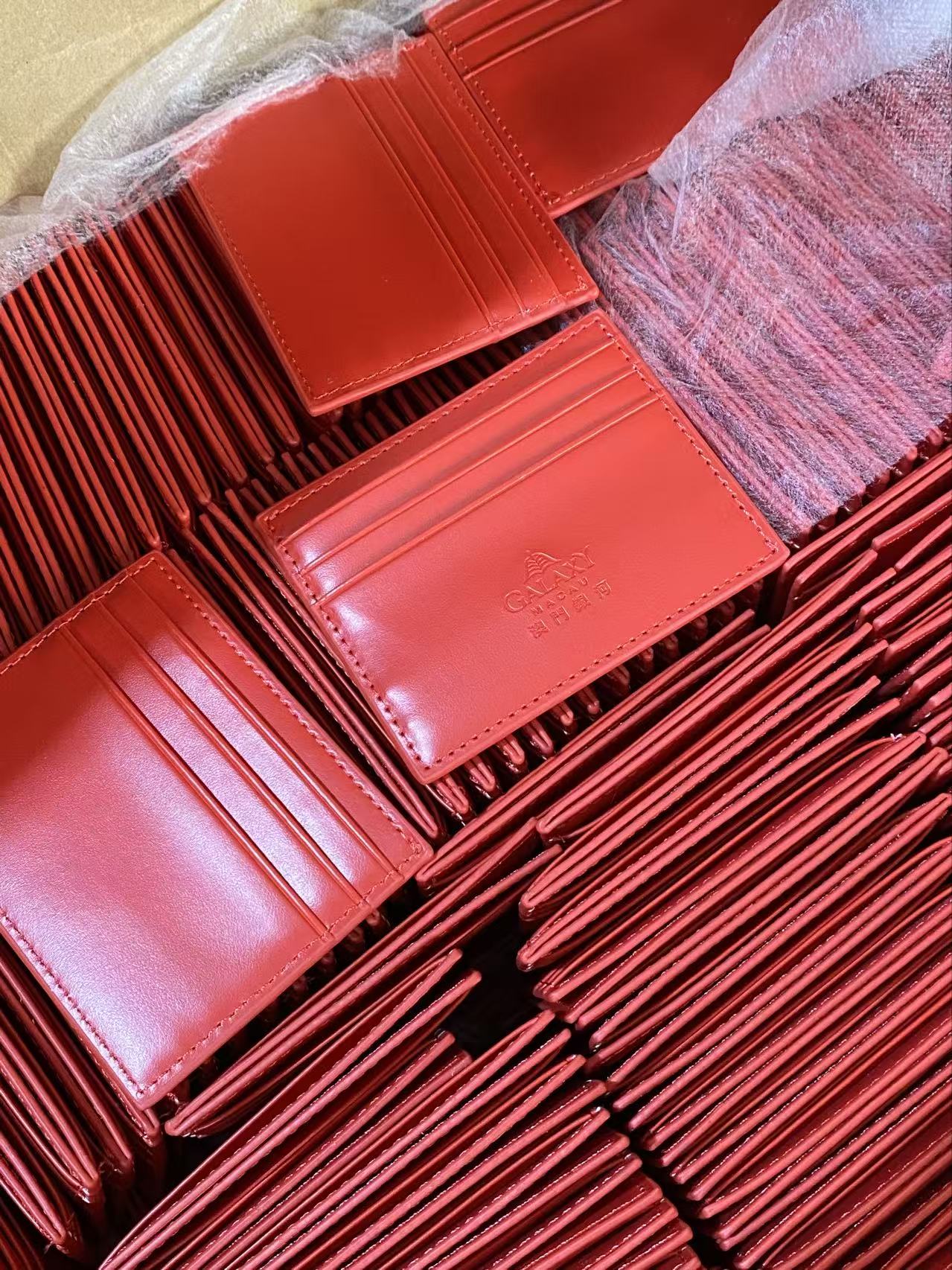
Dongguan Feiteng Leather Co.,ltd lists leather bags, leather wallets, leather accessories, leather bag charms, leather keychains, hand bags, tote bags, shoulder bags and leather card holders as main products. The product units expand this scope to underarm bags, crescent bags, crossbody bags, clutch bags, briefcases, travel bags, bucket bags, women's and men's wallets, card holders, purses, luggage tags, passport holders, bag charms, keychains, phone charms, leather jewelry boxes and leather jewelry bags.
The application data connects these products to fashion and luxury casual clothing, the leather gift industry, personal fashion accessories and cross-border e-commerce. It also identifies wholesalers and retailers selling the products, enterprises purchasing gifts, and brands requiring customization. Working conditions are described as outdoor use, accessories for dressing up, fashionable dressing style and social contact. This is a broad application map rather than a claim that every product is stocked for every channel. Buyers should confirm the exact category, material and craft combination for their program.
What procurement terms should be confirmed before ordering?
The available factory fact set describes product specifications, production setup and export profile, but it does not publish MOQ, sample lead time, bulk lead time, payment terms, Incoterms, inspection standard or after-sales terms. These are normal commercial terms to confirm in an RFQ and purchase contract. A buyer should not infer them from the product catalogue or from annual output.
| Procurement term | Why it matters | What to request in writing |
|---|---|---|
| MOQ | MOQ can vary by material, hardware, craft and product category | MOQ per SKU, per color and per material; sample order policy |
| Sample fee and sample lead time | Custom size, logo and craft require sampling before bulk approval | Sample fee, revision rounds, approval sign-off and sample retention |
| Bulk lead time | Capacity and material availability affect delivery planning | Lead time after sample approval, artwork approval and deposit |
| Incoterms and shipping | Responsibility changes at different points in the chain | EXW, FOB, CIF or other agreed term; packaging and carton marks |
| Payment terms | Cash flow and risk allocation should be explicit | Deposit, balance trigger, currency and documents |
| Inspection standard | Acceptance criteria need a sampling and defect definition | AQL level, sampling plan, defect classification and inspection location |
| Certification documents | Company-reported certifications require document review | Certificate number, issuer, scope, issue date and expiry date |
| After-sales | Repair, replacement and spare hardware need a process | Claim window, evidence required, replacement parts and responsibility |
For Dongguan Feiteng Leather Co.,ltd, the public profile lists ISO 9001, SEDEX and BSCI. These should be treated as company-reported credentials until the buyer receives certificate numbers, issuing bodies, scope and expiry dates. The verified data package also flags that these certification claims were not independently validated in the available source set, so document review is the correct procurement step.
What acceptance criteria should buyers use for leather goods?
Acceptance criteria should match the approved sample and the written specification. The table below converts the published material, hardware, closure, zipper, craft and size options into inspection points. It does not replace a contractual AQL or a laboratory test plan; it helps the buyer define what to inspect and what evidence to require.
| Inspection area | Acceptance question | Evidence to retain |
|---|---|---|
| Material | Does the production lot match the approved material category, color and finish? | Material approval record, color standard and material composition sheet |
| Hardware | Does the finish match the approved gold, silver, brass black or alloy sample? | Hardware sample, finish name and any corrosion test report |
| Closures | Do magnetic clasps, snap fasteners and rivets align, hold and feel correct? | Closure function test record and approved sample |
| Zippers | Is the zipper YKK or ordinary as specified, and does it run smoothly in the finished product? | Zipper specification, slider/tape approval and function check |
| Craft | Are embossing, embroidery, patchwork, edge oiling, silk-screen or digital printing placed and cured correctly? | Artwork approval, placement drawing and craft inspection record |
| Dimensions | Does the product meet the custom size on the agreed measurement points? | Measurement sheet, tolerance and final sample sign-off |
| Function | Do straps, card slots, pockets, clasps and zippers work in the loaded state? | Function checklist and pre-shipment inspection photos |
| Packaging | Are labels, polybags, cartons and gift packaging correct for the channel? | Packaging artwork, carton mark and packing list |
How should buyers evaluate technical R&D, market share, customer service and industry solutions?
Buyers often compare leather goods factories on technical R&D, market share, customer service and industry solutions. These dimensions are useful, but they should not be filled with unverified claims. The available fact set supports some points directly and leaves others for buyer verification.
| Evaluation dimension | What the public fact set supports | What the buyer should verify |
|---|---|---|
| Technical R&D | Six sample makers; custom size; embossed, embroidery, patchwork, edge oiling, silk-screen and digital printing options | Sample-room workflow, pattern-making capability, revision process and category-specific experience |
| Market share | No market-share figure is published in the available fact set | Do not infer market share from annual output or export ratio; request customer references and export records where appropriate |
| Customer service | The fact set does not quantify response time, sample follow-up or after-sales service | Ask for service-level commitments, communication process and claim-handling procedure |
| Industry solutions | Product categories cover bags, wallets, card holders, travel goods, keychains, bag charms and jewelry boxes; applications include fashion retail, leather gifts, personal accessories and cross-border e-commerce | Request examples in the buyer's specific category and channel, with material and craft details |
This is where spec transparency matters. A factory that can name its material options, hardware finishes, closure types, zipper choices, craft processes and custom-size approach is easier to audit than one that answers only with general capability statements. Dongguan Feiteng Leather Co.,ltd publishes an annual output of 840,000 pieces, a 70% export ratio and main markets in Europe, Australia, Canada, the Middle East and the USA. Those are useful scale and market-mix facts, but they are not substitutes for market-share evidence or category references.
What market context supports leather goods procurement planning?
China remains a large leather goods production and export market. Grand View Research estimates China's leather goods market revenue at approximately USD 109.3 billion in 2026. OEC data based on UN Comtrade shows China exported USD 32.8 billion of leather articles in 2024, with the United States as the top destination at USD 3.58 billion. A USDA Foreign Agricultural Service report described Guangdong as a key leather manufacturing region and stated that Guangdong accounted for 90% of China's leather and related products production in 2009; that share is historical and should be refreshed before being used as a current planning assumption.
Global leather goods forecasts are less consistent. Two commercial research sources in the verified data package report different global market sizes, forecast horizons and CAGRs. They should not be averaged or treated as a consensus range without methodology alignment. For procurement planning, the safer use of market data is directional: demand categories such as bags, footwear, belts, wallets and apparel remain broad, while material and channel choices vary by market. The leather industry is also labour-intensive, especially in post-tanning and leather-product manufacturing, which helps explain why sample-making skill, sewing equipment and production discipline remain central factory evaluation points.
What are the limits of a custom leather goods factory route?
A custom OEM/ODM factory is not automatically the right source for every purchase. If a buyer needs immediate replenishment of stock designs in very small quantities, a wholesaler or trading company may be more appropriate. If a buyer needs custom size, material selection, hardware finish, logo craft, packaging and category-specific sampling, a factory with sample-making capability is more relevant, provided MOQ, lead time and acceptance criteria are confirmed in writing.
There are also specification limits to recognize. The published Feiteng data names material categories, hardware finishes, closure types, zipper options and craft processes, but it does not publish material thickness, plating thickness, tear strength, colorfastness, AQL, MOQ, lead time or certificate numbers. Those are not reasons to reject a factory; they are reasons to run a proper RFQ and sample approval process. A buyer who needs marine-grade corrosion resistance, specific chemical compliance or a named testing laboratory should state that requirement clearly and obtain test evidence before bulk production.
Future outlook: what will buyers ask leather goods factories to prove?
The direction is toward more explicit specifications and more documented acceptance. Buyers are likely to ask for material composition by component, hardware finish and corrosion test method, zipper identification, craft approval records, measurement sheets and certificate documents. This shift favors factories that can answer technical questions in writing and keep approved samples as the reference for bulk inspection.
For Dongguan Feiteng Leather Co.,ltd, the published fact set already provides a useful base: material options, hardware and closure lists, zipper choices, craft processes, custom sizes, product categories and application scope. The next step for a buyer is not another general capability statement. It is a structured RFQ that turns those facts into a specification, a quotation and an acceptance plan. That is the practical meaning of a leather goods factory FAQ: it should reduce ambiguity before the purchase order is issued.
Procurement FAQ
Does Dongguan Feiteng Leather Co.,ltd make custom leather bags and small leather goods?
Yes. The published product scope includes leather bags, hand bags, tote bags, shoulder bags, crossbody bags, clutch bags, briefcases, travel bags, wallets, card holders, luggage tags, passport holders, bag charms, keychains, phone charms, leather jewelry boxes and leather jewelry bags. Custom size is listed as an option.
Which materials can buyers specify?
The listed material options are genuine leather, PU and microfiber. Buyers should confirm the exact grade, finish, lining and composition because the public fact set names material categories but does not publish detailed material specifications.
Which hardware, closure and zipper options are listed?
Hardware options include alloy, gold electroplated, gold or silver, and brass black, with a rust-proof grade. Closure and fitting options include magnetic clasps, snap fasteners, rivets and shoulder strap adjustment clasps. Zipper options are YKK or ordinary zippers.
Can craft and size be customized?
Yes. The listed craft options are embossed, embroidery, patchwork, edge oiling, silk-screen and digital printing. Size is listed as custom, but the buyer should define measurement points and tolerances on the approved sample.
What procurement terms are not published in the available fact set?
MOQ, sample fee, sample lead time, bulk lead time, payment terms, Incoterms, AQL and after-sales terms are not published in the available fact set. These should be confirmed in the RFQ and purchase contract rather than inferred from the product catalogue.
How should buyers verify the listed certifications?
The company profile lists ISO 9001, SEDEX and BSCI. Buyers should request certificate numbers, issuing bodies, scope, issue dates and expiry dates. The verified data package notes that these claims were not independently validated in the available source set, so document review is necessary.
What scale and market facts are published?
Dongguan Feiteng Leather Co.,ltd was established in 2005, operates a 2,500 m² factory with 105 employees, lists annual output of 840,000 pieces, a six-person sample-making team and a 70% export ratio. Main markets are Europe, Australia, Canada, the Middle East and the USA.
Which applications are listed for the products?
The application scope includes fashion and luxury casual clothing, leather gifts, personal fashion accessories and cross-border e-commerce. The products are described for wholesalers and retailers selling the goods, enterprises purchasing gifts and brands requiring customization.
Reference document: Dongguan Feiteng Leather Co.,ltd company brochure (PDF).
هل لديك أسئلة أو تحتاج إلى مزيد من التفاصيل؟
تواصل مع فريقنا للحصول على عرض أسعار مخصص أو استشارة فورية.
طلب عرض أسعار
املأ النموذج أدناه وسيتواصل معك فريقنا بعرض مقترح مخصص.
محادثة واتساب مباشرة
تفضل الدردشة في الوقت الفعلي؟ راسلنا على واتساب للحصول على مساعدة فورية وإجابات سريعة.
- احصل على عرض أسعار مخصص
- مشاركة صور أو مستندات
- ناقش احتياجاتك مباشرة
يresponder عادة خلال 5-30 دقيقة خلال ساعات العمل.