
HTV Silicone Rubber for Insulators: Buyer Questions Answered
A composite insulator is a material decision before it is a hardware decision. The visible product is a fiberglass-reinforced plastic (FRP) core wrapped in a polymer housing with molded weather sheds, but the part that governs outdoor behavior is the housing compound. It determines whether rainwater beads and rolls off or forms a continuous wet film, whether a contaminated surface develops a conductive track, and whether a shed profile survives years of ultraviolet exposure, thermal cycling and mechanical load.
You do not need a polymer chemistry background to buy this material well, but you do need to separate three questions that are frequently mixed together: what class of rubber is actually being offered, what the individual specification values promise, and what documentation proves that a delivered batch matches the sample that was approved. The sections below work through those questions in the order they normally arise during technical and procurement evaluation, using the documented profile of YK-3160, an electrical insulation grade compound from Yakows Technology (Dongguan) Co., Ltd., as the worked example.
Why HTV Silicone Rubber Is Used for Composite Insulators
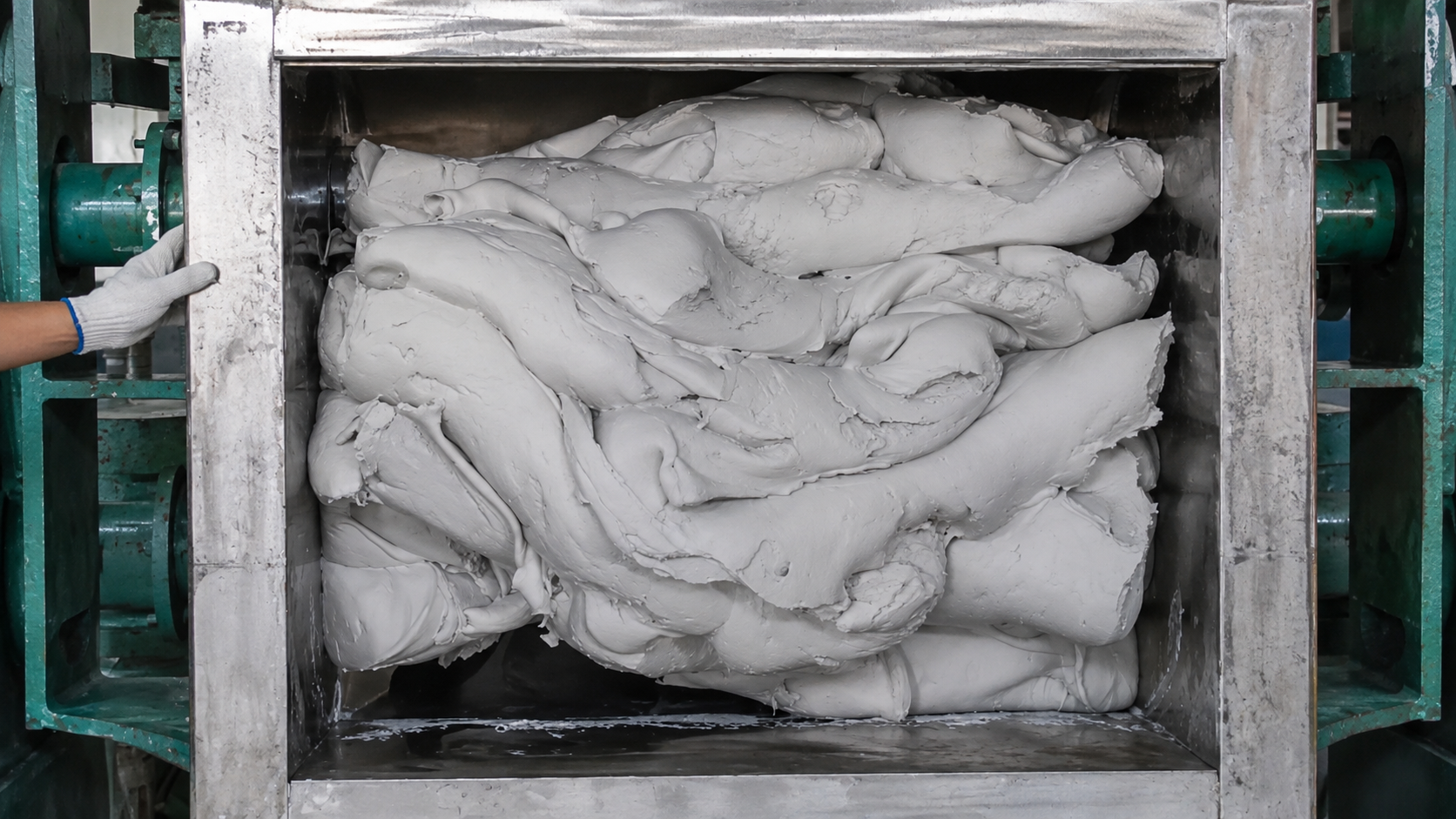
HTV silicone rubber — high-temperature vulcanized silicone rubber, also called high-consistency rubber (HCR) — is a solid, gum-like silicone compound that is mixed with reinforcing fillers and functional additives and then heat-cured into its final shape. It is used for composite insulator housings because one material has to deliver four functions simultaneously: electrical insulation, water repellency, resistance to surface tracking and erosion, and outdoor aging stability.
Silicone rubber's silicon–oxygen backbone is inherently stable against heat and ultraviolet radiation, and its surface chemistry lets water bead rather than sheet. That second property is the one that matters most in polluted or coastal service, because tracking needs a continuous wet film to form before leakage current can concentrate and degrade the surface. A hydrophobic housing interrupts that process at the surface level rather than relying on a coating applied after manufacture.
YK-3160 belongs to this class. It is a high-performance electrical insulation grade silicone rubber, classified as HTV Silicone Rubber for Composite Insulators, and is made from a high-consistency silicone rubber (HTV/HCR) compound formulated with reinforcing fillers and functional additives for outdoor electrical insulation. It is specifically formulated for composite insulator housings and sheds and designed for use in composite insulator manufacturing and outdoor high-voltage insulation components. Its intended industry is electric power transmission and distribution.
The Procurement Problem: One Category Name, Very Different Evidence
The practical difficulty in this category is that the label "HTV silicone rubber" describes a material family, not a grade. Two compounds can carry the same category description and still differ in hardness, filler loading, curing system, flame-retardant behavior and tracking resistance. When those differences are not on paper, buyers end up comparing prices for material that is not the same material.
The market context makes this worse rather than better. Market size estimates for silicone rubber diverge widely between research bodies — for one 2025 measurement window, published global figures range from roughly USD 5.7 billion to over USD 14 billion depending on whether primary forms, secondary forms or narrow elastomer categories are counted. Rather than treating any single figure as definitive, buyers are better served by treating market size as directional and shifting their attention to what is verifiable: grade-level property data, batch-level test records and third-party reports.
Decision rule: a compound becomes comparable only when its grade-level values, its test methods and its batch documentation are visible. Without those, price comparison is not a comparison.
What YK-3160 Specifies, and What Those Values Mean
YK-3160's documented profile gives buyers a concrete envelope to evaluate rather than a general product description. The values below are the grade's published parameters, and each one answers a different question about service behavior.
| Property | Documented value |
|---|---|
| Hardness | 65 ± 5 Shore A |
| Specific gravity | 1.46 ± 0.03 g/cm³ |
| Elongation | ≥ 220% |
| Tensile strength | ≥ 5.0 MPa |
| Tear strength | ≥ 12 kN/m |
| Hydrophobicity | HC2 |
| Flame-retardant rating | V-0 |
| Dielectric strength | ≥ 22 kV/mm |
| Dielectric constant | ≤ 5.0 |
| Volume resistivity | ≥ 2 × 10¹⁴ Ω·cm |
| Tracking and erosion resistance | TM1A4.5, ≤ 2.5 mm |
| Dielectric loss tangent | ≤ 4.0 × 10⁻² |
| UV aging resistance | Pass |
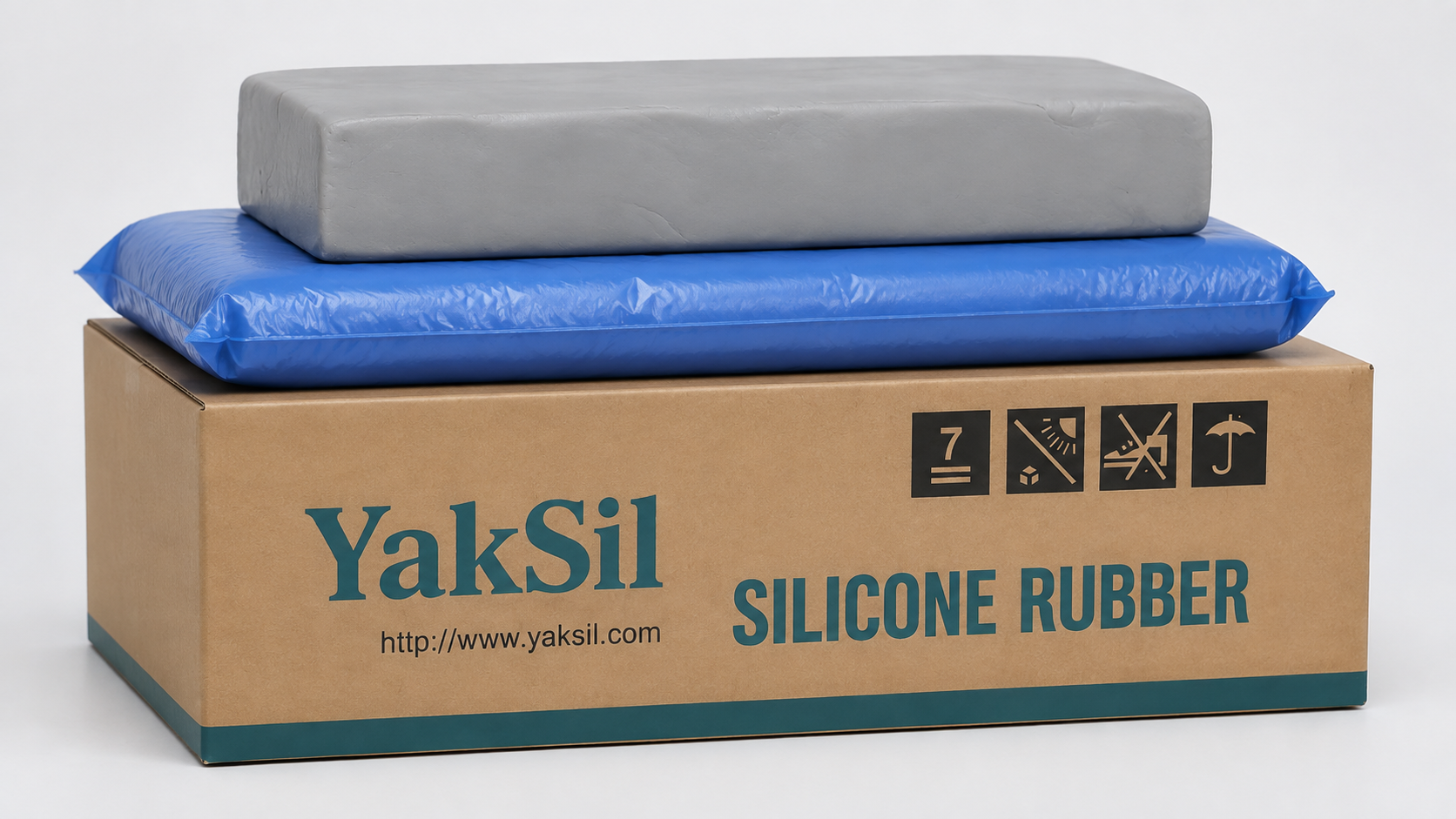
The material description behind these values is a high-consistency silicone rubber (HTV/HCR) compound formulated with reinforcing fillers and functional additives for outdoor electrical insulation. In practice, the filler system is what converts base silicone into an insulation grade — and it is also the source of the trade-offs discussed next.
Dielectric Constant, Tracking Resistance and the Trade-offs Behind Them
The single most misunderstood figure on this datasheet is the dielectric constant of ≤ 5.0. It is a ceiling, not a target. A lower dielectric constant generally reduces capacitive charging current and dielectric loss in an insulation body, which is why designers pay attention to it. But the fillers that raise tracking resistance, mechanical strength and flame retardancy also tend to raise the dielectric constant and hardness of the cured rubber. A compound specified as ≤ 5.0 is therefore the result of balancing electrical, mechanical and fire-performance requirements on the same formulation — and a buyer who optimizes for one number in isolation is likely to weaken another.
The dielectric loss tangent of ≤ 4.0 × 10⁻² belongs to the same logic. Under alternating voltage, a higher loss tangent means more energy converted to heat inside the insulation, so the ceiling protects against progressive self-heating in continuous service. Volume resistivity of ≥ 2 × 10¹⁴ Ω·cm and dielectric strength of ≥ 22 kV/mm describe the bulk insulation behavior: how strongly the material resists leakage current through its volume and how much field it can withstand before breakdown.
Tracking and erosion resistance — documented as TM1A4.5 with erosion depth of ≤ 2.5 mm — addresses the surface rather than the bulk. Tracking is the formation of conductive carbonized paths across a contaminated, wetted surface; erosion is the physical loss of material that accompanies it. Both values matter because a compound can perform well on one and less well on the other. Erosion depth is the more direct indicator of how much material the surface loses under severe electrical and environmental stress, and it feeds directly into how long a housing can remain serviceable in polluted environments.
Hydrophobicity HC2 supports the same reliability picture from a different angle. It describes the compound's water-repellent surface state, which limits the formation of the continuous wet films that tracking requires. UV aging resistance, documented as "Pass," covers the outdoor exposure dimension: shed profiles must retain their shape and surface properties under long-term solar radiation, and an insulation grade is formulated for that condition rather than for indoor use.
Which Test Reports and Documents Actually Matter
A compound cannot be approved on the strength of a single certificate. A workable evidence file is usually assembled from five document types, each covering a different layer of risk.
| Document | What it establishes | Where its authority ends |
|---|---|---|
| Technical Data Sheet (TDS) | Grade-level property values and design intent | Describes the grade, not the delivered batch |
| Typical COA | Expected values for standard production of the grade | Not lot-specific |
| Batch COA | Traceability of the material actually shipped | Covers only the tests listed on that document |
| Third-party test reports | Independent verification of specific characteristics such as tracking and erosion, UV aging or flame retardancy | Valid only within the report's stated test conditions and scope |
| Quality management certificate (ISO 9001) | Standardized manufacturing and process control | System-level; it does not certify product performance |
Yakows Technology documents its grades at this level. The company's quality management system is certified to ISO 9001, and grade-specific documents — TDS, SDS, Typical COA, batch COA and applicable third-party test reports — can be provided to support customer evaluation and product approval. For grades intended for food-contact use, applicable documentation includes US FDA 21 CFR 177.2600 supporting test documentation, LFGB test reports and REACH compliance documentation, depending on the intended application.
Standard-level context belongs in the same file. Composite polymer silicone rubber tension insulators must adhere to international standard IEC 61109 for safety and environmental performance, and published data on silicone rubber for insulators reports 5,000-hour accelerated aging tests conducted under IEC 61109 and IEC 62217. The important boundary is that these are insulator-level requirements: material test data supports qualification, it does not replace type testing of the finished unit.
Where the Material Goes: Application and Processing Conditions
The application profile for this grade is outdoor high-voltage insulation. In composite insulator manufacturing, the compound forms the insulating housing and weather sheds around the FRP core, providing electrical insulation, hydrophobicity, tracking and erosion resistance, and protection against moisture and outdoor aging. It also serves surge arresters and other outdoor high-voltage insulation components in power transmission and distribution.
The operating environment defines the specification. These components run continuously outdoors under high voltage with UV exposure, rain, humidity, pollution, temperature cycling and, in some locations, coastal salt or industrial contamination. Because the material is heat-cured and then placed in permanent service, the properties it leaves the factory with are the properties it will largely keep.
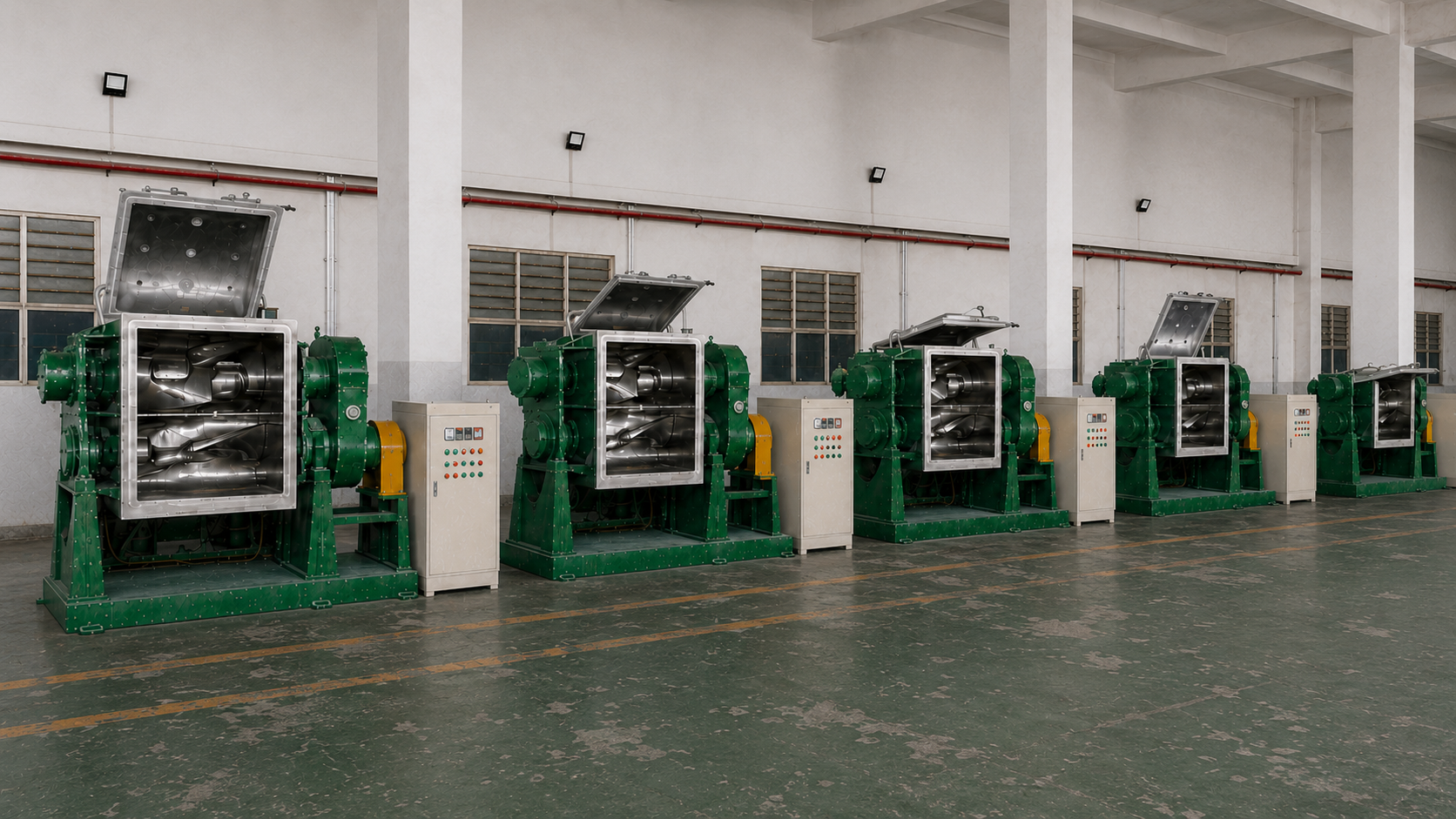
Processing runs on standard equipment for solid silicone rubber: silicone rubber injection or compression molding machines, a two-roll mill, composite insulator molds, and curing and temperature-control systems. The interface with the FRP core is handled separately through core surface treatment and a primer system, and electrical and mechanical test equipment closes the loop on finished parts. The compound's processing characteristics are designed to support consistent molding of complex weather-shed profiles, and hardness, color, curing system and selected performance characteristics can be adjusted according to customer requirements.
Market Trends Shaping Supply and Buying Behavior
Supply-side conditions in silicone rubber have been expanding rather than tightening. China's silicone monomer production capacity reached 6.89 million tons in 2024, a 21.09% year-on-year increase, according to Zhuochuang Information data published via IOTA. Global silicone trade stood at USD 8.51 billion in 2024, with China as the second-largest exporter at USD 1.53 billion, per the Observatory of Economic Complexity.
Within the elastomer market, HTV materials remain the dominant volume segment. The global silicone rubber market was valued at USD 5.7 billion in 2025, with HTV silicone rubber holding a 45.2% market share, according to Vertex AI Search data. Solid HTV silicone rubber accounted for 58.3% of the total HTV segment in 2025, per Dataintelo. Liquid silicone rubber (LSR), by contrast, captured 48.1% of the silicone elastomers market in 2025, primarily for precision medical and automotive parts.
Investment signals point in the same direction. Wacker Chemie AG reported silicone sales of EUR 2.81 billion in 2024, a 2.3% increase driven by high-performance specialty products, and Dow Inc. announced a USD 100 million investment to expand specialty silicone manufacturing in China, the US and Japan through 2027. Demand for insulation-related materials is also forecast to grow: the silicone rubber insulation coatings market is projected to reach USD 4.12 billion by 2035 at a CAGR of 5.73%, according to Market Research Future.
The interpretation for buyers is not that material is scarce. It is that capacity growth shifts the differentiator from availability to consistency — whether a supplier can hold a formulation, document each batch and keep a multi-year program supplied without re-qualification. That is a documentation and process question, not a price question.
Composite Polymer vs Ceramic and Glass: What Actually Changes
Ceramic and glass insulators are inorganic and have a long service record, but they are heavy, brittle under impact, and their surfaces are not inherently water-repellent, which is why silicone rubber insulation coatings remain an active market segment — a segment forecast to reach USD 4.12 billion by 2035. Composite polymer insulators take a different route: the housing itself is the hydrophobic material rather than a coating applied over an inorganic body, which also reduces weight and improves handling during installation. The trade-off is that the housing is organic and therefore subject to aging, so its tracking, erosion and UV performance must be documented rather than assumed.
Even a well-specified HTV compound has boundaries that buyers should state openly in their evaluation:
The core-to-housing interface is a system risk, not a compound property. Adhesion depends on FRP surface treatment and the primer system as much as on the rubber, and no material datasheet can certify that interface. Reliability at that boundary is demonstrated at the finished-insulator level, which is where IEC 61109 conformity is assessed.
Filler loading forces trade-offs. Raising flame retardancy to a V-0 rating and improving tracking resistance generally raises dielectric constant and hardness, because fillers influence both. A compound optimized aggressively for one property may concede ground on another — which is why the ceiling of ≤ 5.0 on dielectric constant should be read together with the tracking result, not separately.
Hardness must match the molding route. This grade is documented at 65 ± 5 Shore A, which suits molded housings and weather sheds. It is not a universal profile for every compression-molded silicone part; other applications use different hardness points, and a grade formulated for food-contact compression molding — such as a 50 Shore A food-contact compound — is a different product with a different purpose.
Future Outlook
Grid investment, higher-voltage transmission and the replacement of aging insulator populations keep demand for outdoor insulation materials steady rather than cyclical. Several directions look likely to shape how buyers evaluate compounds over the next several years.
First, documentation is becoming part of the specification. As monomer and compound capacity grows, suppliers compete less on whether material exists and more on whether a grade can be reproduced batch after batch with records that survive an audit. Buyers who build a documentation checklist now will find supplier comparison faster later.
Second, long-term performance evidence will carry more weight than short-term pass/fail results. Accelerated aging programs conducted under IEC 61109 and IEC 62217, including published 5,000-hour tests on silicone rubber for insulators, are the kind of evidence that speaks to a multi-decade asset rather than to a purchase order.
Third, application differentiation will continue. LSR's strength is precision and automation in medical and automotive parts, while HTV/HCR compounds remain the practical route for large molded housings and complex shed geometries. Buyers should expect the two families to serve different insulator and component designs rather than converge.
FAQ
What is HTV silicone rubber for composite insulators?
HTV silicone rubber is a high-temperature vulcanized, high-consistency (HTV/HCR) silicone compound that is mixed with reinforcing fillers and functional additives and then heat-cured into shape. In composite insulators, it forms the housing and weather sheds around the FRP core. YK-3160 is an example: a high-performance electrical insulation grade silicone rubber classified as HTV Silicone Rubber for Composite Insulators, designed for composite insulator manufacturing and outdoor high-voltage insulation components in the electric power transmission and distribution industry.
Why is silicone rubber used for insulator housings instead of ceramic or glass?
Silicone rubber housings are inherently hydrophobic, so water tends to bead rather than form the continuous wet films that allow tracking to develop, and the material is lighter and less brittle than ceramic or glass. The trade-off is that a polymer housing is organic and ages outdoors, so its tracking and erosion resistance, hydrophobicity and UV aging performance must be documented. Silicone rubber insulation coatings remain a separate and growing segment — projected to reach USD 4.12 billion by 2035 at a CAGR of 5.73% according to Market Research Future — which shows composite housings complement rather than replace inorganic insulator bodies.
What does a dielectric constant of ≤ 5.0 mean for insulator reliability?
It is a ceiling on the grade's dielectric constant, meaning the material must stay at or below that value. A lower dielectric constant generally reduces capacitive charging current and dielectric loss, but the fillers that improve tracking resistance and flame retardancy tend to raise dielectric constant and hardness. The specification value therefore represents a balance across electrical, mechanical and fire performance rather than an isolated target, and it should be read alongside the dielectric loss tangent (≤ 4.0 × 10⁻²) and volume resistivity (≥ 2 × 10¹⁴ Ω·cm).
How should tracking and erosion resistance results be interpreted?
YK-3160 documents tracking and erosion resistance as TM1A4.5 with erosion depth of ≤ 2.5 mm. Tracking describes conductive carbonized paths forming on a contaminated, wetted surface; erosion describes the material lost as that process occurs. Because a compound can perform differently on each, the erosion depth is a useful indicator of how much housing material is consumed under severe electrical and environmental stress. Hydrophobicity (HC2) and UV aging resistance (documented as Pass) support the same surface-reliability picture.
Which test reports should be requested before approving a compound?
Buyers typically assemble five layers: a TDS for grade-level property values; a Typical COA for expected values; a batch COA for traceability of the delivered lot; third-party test reports for specific characteristics such as tracking and erosion, UV aging or flame retardancy; and a quality management certificate such as ISO 9001, which covers process control rather than product performance. Yakows Technology can provide TDS, SDS, Typical COA, batch COA and applicable third-party test reports to support evaluation. Insulator-level conformity, such as IEC 61109, is assessed on the finished unit.
Is LSR or HTV/HCR the better choice for composite insulators?
They serve different manufacturing models. Liquid silicone rubber captured 48.1% of the silicone elastomers market in 2025, primarily for precision medical and automotive parts, according to published market data. HTV silicone rubber held a 45.2% share of the global silicone rubber market in 2025, and solid HTV accounted for 58.3% of the HTV segment, consistent with large molded parts. For housings and complex weather-shed profiles produced by compression or injection molding, HTV/HCR compounds such as YK-3160 are the practical route; LSR suits high-precision, smaller components.
How does a supplier's production capacity relate to procurement risk?
Capacity indicates whether a supplier can carry a program from trial order through volume production without changing source. Yakows Technology operates a 5,000 m² facility in Dongguan, China, with monthly production capacity of approximately 400,000 to 1,000,000 kg and annual capacity of 4,800,000 to 12,000,000 kg. The company reports that approximately 70% of its products are supplied to overseas markets including Southeast Asia, the Middle East, Eastern Europe, Latin America and North America. Capacity figures describe scale; batch-to-batch consistency records describe reliability, and both should be reviewed.
Reference material: Yakows Technology product and capability brochure — Yakows brochure (PDF).