
HYFF Wall Switch Review: Capability and Procurement Value
HYFF Wall Switch Review: Capability and Procurement Value
The global market for light switches and electrical sockets was valued at approximately USD 17.6 billion in 2024, and Asia Pacific accounted for 42.5% of electrical switch revenue in 2025. In the same period, touch-type devices reached 45% of the wall switch market. Those numbers describe a category in which the technical gap between suppliers looks narrow — a 10 A, 250 V switch is, on paper, a 10 A, 250 V switch — while the commercial gap is wide, because market eligibility depends on documented certification and long-term reliability depends on materials, contacts and process control that a catalogue photograph cannot show.
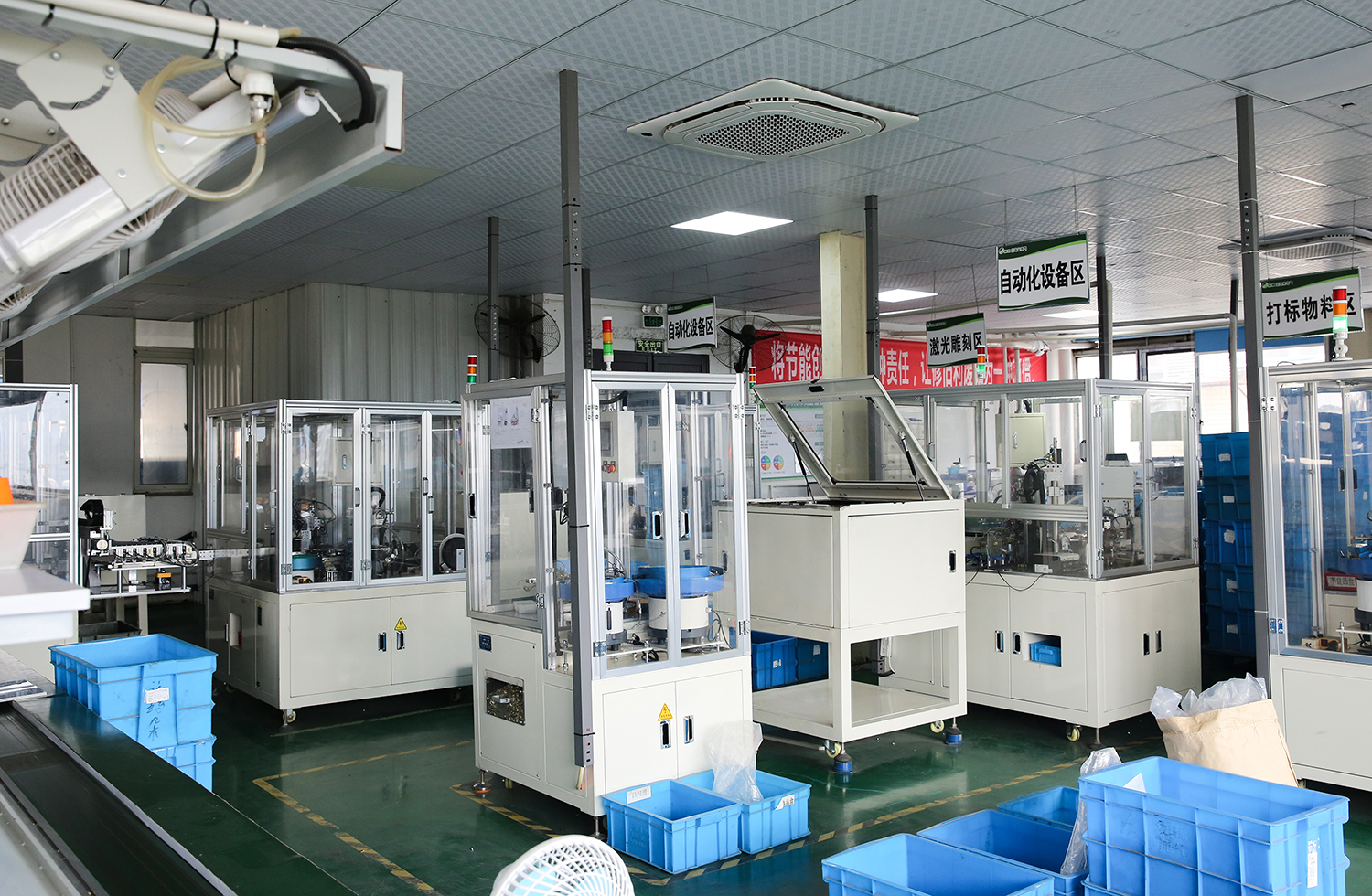
Wenzhou Huafeng Electric Co., Ltd. (HYFF) is a building-electrical manufacturer based at No.3 Kaiyuan Road, Zhuangyuan, Longwan, Wenzhou, Zhejiang, China. Founded in 2011, the company designs and produces wall switches and wall sockets for export, with a stated export ratio of 100% and major markets across the EU, America, Oceania, Asia and Africa. This analysis examines what the company's documented capability actually supports, what those facts mean for procurement decisions, and where the available evidence stops.
Why Wall Switch Procurement Starts With Certification, Not Price
Wall switches are treated as commodity hardware in many tenders, but they are regulated components. EN 60669-1:2018 is the mandatory safety standard for wall switches in the European Union, covering manual switches for household fixed installations. In Australia and New Zealand, AS/NZS 3133:2020 is the primary technical standard for wall switches, and AS/NZS 3000:2018 Clause 4.6.3.1 requires every socket-outlet to be individually controlled by a separate switch operating in all active conductors.
The practical consequence for buyers is that two visually identical switches can have completely different market eligibility. A switch carrying a CE declaration for the EU market is not automatically compliant with Australian wiring rules, and a product line that passes EU safety testing does not automatically satisfy AS/NZS requirements. Certification therefore functions as a gate: it determines which projects a supplier can legally serve before price, lead time or finish options are even discussed.
This is the first filter a buyer should apply to any wall switch manufacturer, and it is the filter this article applies to HYFF.
What Wenzhou Huafeng Electric (HYFF) Actually Documents
HYFF is a manufacturer of standard wall switches, wall sockets, circuit breakers and related low-voltage electrical products, with wall switch and wall socket listed as its main products. Its published company profile states that it integrates research, development, production and sales, and that it develops products against international US, UK and EU electrical standards, working with an Italy-based design team on product development and appearance.
| Company fact (as published) | Value |
|---|---|
| Founded | 2011 |
| Manufacturing facility | 7,000 m² |
| Employees | Approximately 118 |
| Annual output | Approximately 35,000,000 units |
| R&D team | 10 engineers |
| Main products | Wall switch, wall socket |
| Export ratio | 100% |
| Major markets | EU, America, Oceania, Asia, Africa |
Those numbers place HYFF in the specialised manufacturer segment rather than the diversified global brand segment. A 7,000 m² facility and roughly 118 staff are appropriate for a focused wiring-device operation; they are not the scale of a multi-category building-technology group. For a buyer, the relevant reading is that capacity is concentrated, R&D is a dedicated ten-engineer function, and the business is built on export orders rather than domestic volume.
Documented product portfolio
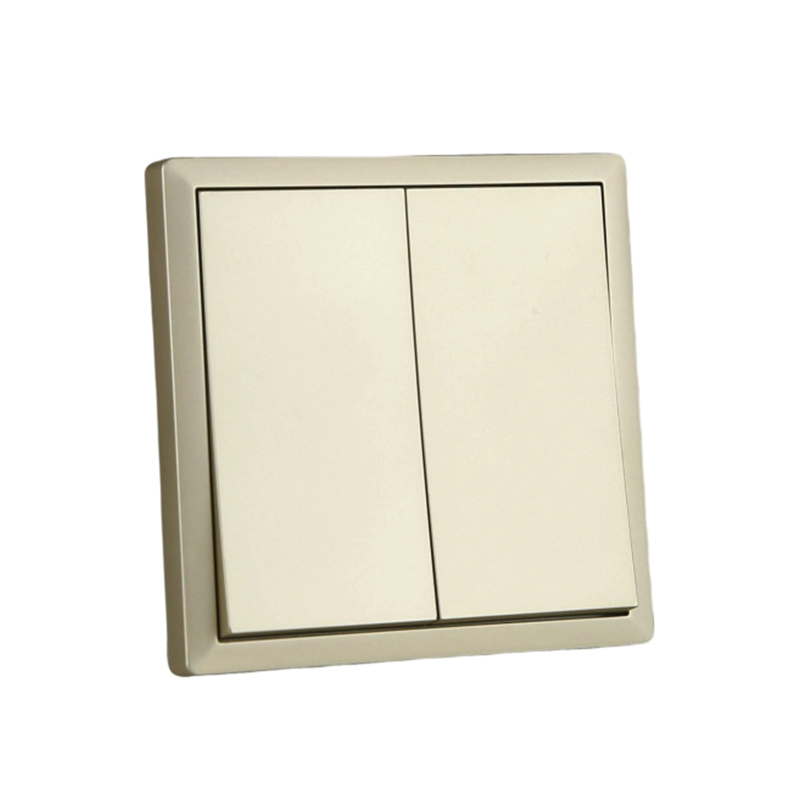
The catalogued range is mechanically operated wiring devices, split between flush-mounted and surface-mounted construction. The table below summarises representative models using published specifications.
| Model | Type | Panel size | Rating | Panel / base material | Certification |
|---|---|---|---|---|---|
| H111 | 1 gang 1 way, flush mounted | 86 × 86 mm | 10A, 220–250V~ | Flame-retardant PC / high-strength PA base | CE, TUV |
| A122 | 2 gang 2 way, flush mounted | 81.6 × 81.6 mm | 10A, 250V~ | Flame-retardant PC | CE, TUV |
| V122N | 2 gang 2 way with LED indicator | 86 × 86 mm | 10A, 220–250V~ | Flame-retardant PC / high-strength PA base | CE, TUV |
| U121 | 2 gang 1 way, frameless large plate | 86 × 90 mm | 10AX, 250V~ | Flame-retardant PC / PC base | CE |
| M111 | 1 gang 1 way, 6.5 mm ultra-slim panel | 74 × 83 mm | 10AX, 250V~ | Flame-retardant PC / PA66 base | CE, RoHS |
| KM141S | Intermediate switch, small modular | 22 × 49 mm | 10A, 220–250V | Flame-retardant PC / high-strength PA base | CE, RoHS |
| HG110NB | 1 gang push-bell switch with LED indicator | 86 × 86 mm | 10A, 220–250V~ | Tempered glass panel / high-strength PA base | CE, TUV |
| B111 | 1 gang 1 way, surface mounted | 65 × 65 mm | 10AX, 250V~ | PC panel / ABS base | CE |
| S111 | 1 gang 1 way, surface mounted | 68 × 68 mm | 10A, 220–250V~ | Flame-retardant PC | CE |
| HT213 | Single powerpoint (socket) | 80 × 120 mm | 10A, 250V~ | Flame-retardant PC | SAA |
Specification note: ratings, panel dimensions and certification lists above are reproduced from the manufacturer's published product data. Several series also list CB certification in the company's own documentation, and one third-party source attributes CE and CB certification for EU-standard wall switch products to the testing bodies BV and Intertek; that third-party record carries a verification flag, so buyers should confirm certificate numbers and scope per model before specifying.
Finish and colour options across the range include white, ivory, black, silver, golden, and customised colours, with tempered glass and aluminium panels available on selected models. HS codes are published as 8536500090 for switches and 8536690000 for socket products, which simplifies customs and landed-cost calculation for importers.
Quality control as a documented process
HYFF publishes a control sequence that runs from incoming material inspection through plastic-parts inspection, process inspection, glowing filament testing, silver layer thickness inspection, performance life testing, plastic ball pressure testing, switch and socket on-off testing on the assembly line, and doorbell testing. Products across several series are documented as passing 40,000+ on/off cycles, and the company states 100% self-inspection before packing.
For a buyer, that sequence matters more than the existence of a quality department. Silver layer thickness inspection is a direct control on contact conductivity, glowing filament and ball pressure testing are direct controls on the flame-retardant behaviour of the plastics, and end-of-line on/off testing is the last gate before packing. These are the variables that generate field failures in wall switches: weak contacts, deformed bases and non-compliant plastics.
Technical Explanation: Where a Wall Switch Actually Performs or Fails
A flush-mounted mechanical wall switch is a simple assembly — panel, base, contact set, terminals, mounting frame and rocker — but each element generates a specific failure mode. The documented design choices in the HYFF range map onto those failure modes as follows.
Panel and base materials
The panel material is flame-retardant PC (polycarbonate) on most series, with tempered glass on the HG110NB push-bell model and aluminium on selected push-switch models. Base material is high-strength PA (PA66 on the M111) on several lines, or PC. The company's product data lists 850 °C fire protection for the flame-retardant PC material used across multiple models, and describes the high-strength PA base as contributing additional fireproof performance. In fire-safety terms, the panel governs resistance to surface ignition and the base governs structural integrity under heat.
Contacts and terminals
On the A series, HYFF specifies brass terminals for conductivity and phosphor copper contacts of 0.7 mm with silver plating. The design intent is straightforward: brass terminals resist oxidation better than thin plated steel, and silver-plated contacts maintain a stable contact resistance through repeated switching. Poor contact resistance is the root cause of heat build-up and premature switching failure in low-cost wall switches.
Mechanical structure and installation
- Mounting frame: a multipoint riveted steel frame is specified to keep the structure rigid and stable over the product life.
- Anti-back screws: screws are designed so they do not drop out or go missing when unscrewed — a small detail that materially reduces installation time on site.
- “Arch bridge” base design: the base is shaped to increase the wiring contact space while keeping the base stable and free of deformation, which improves wiring safety and installation consistency.
- Module base compatibility: the module base is designed to suit mounting boxes of various shapes, reducing the risk of a mismatch between the switch and the wall box on site.
- Claw-type retention: a claws structure allows fast, tool-friendly mounting without damaging hands.
- Grade II shock absorption: an internal damping arrangement reduces the acoustic noise of switching, which is relevant for hotel guest rooms and quiet residential areas.
- Mounting flexibility: the M111 supports both horizontal and vertical installation with a clip-on structure, and the U121 uses a common base across multiple finishes, which reduces the number of distinct SKUs a distributor has to stock for a given look.
Applications: Residential, Hotel and Commercial Projects
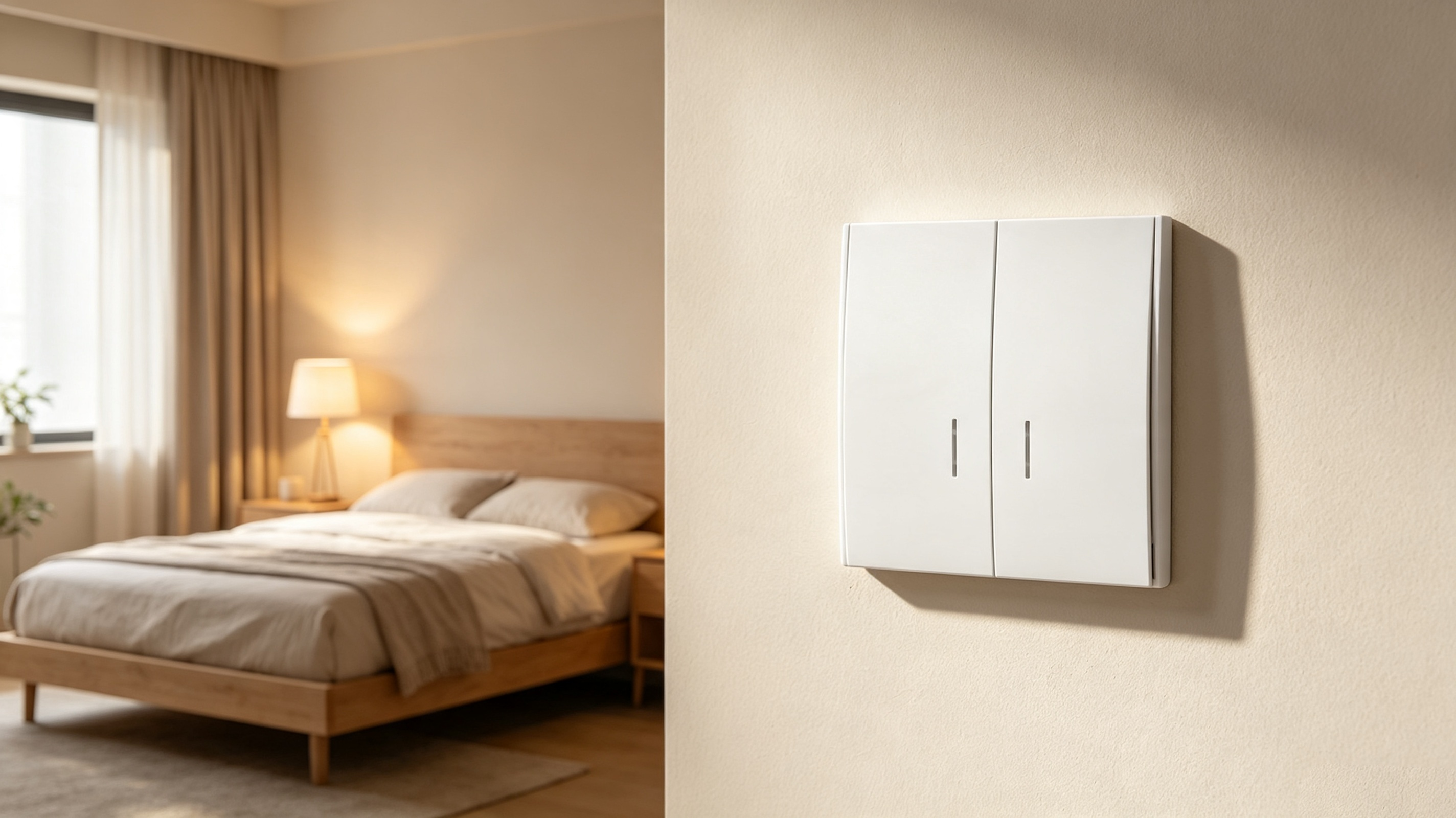
The documented application environment for the HYFF switch range is indoor, dry, normal-temperature installation, suited to 220–240 V AC, 50/60 Hz electrical systems. Typical project types are new residential buildings, apartments, villas and home renovation work, where the switch controls indoor lighting circuits and provides safe power connections for household appliances through matched socket products.
The devices are matched with wall boxes, mounting supports, multi-gang frames, lighting fixtures and residential distribution systems, and the stated project requirements are compliance with local electrical standards, compatibility with wall-box dimensions and wiring methods, reliable insulation, flame-retardant performance, mechanical durability and stable electrical conductivity.
Product data also lists residential, industrial, apartment/villa, hotel and office use. Two application patterns are worth separating:
- Two-way and multi-way lighting control. Corridors, stairwells and hotel rooms typically need a light to be switched from more than one position. The range covers this with 2 gang 2 way switches such as A122 and V122N, and with the KM141S intermediate switch, which is designed for two-way and multi-way control circuits and uses a small modular 22 × 49 mm panel format for combined multi-gang assemblies.
- Hotel guest-room interfaces. Push-bell switches with LED indicators — HG110NB with a tempered glass panel, and aluminium-panel push switches — are documented as intended for hotel and office settings, where illuminated switches help guests locate controls in low light.
Market Trends Reshaping Wall Switch Sourcing
Three trends are changing how buyers assess wall switch suppliers, and all three are visible in current market data.
1. Smart switching is growing faster than the category itself. The global smart switch market reached USD 4.8 billion in 2023 and is projected to exceed USD 14 billion by 2030, a CAGR of 17.2% (Grand View Research). Touch-type smart switches already held 45% of global wall switch market share as of 2023 (Cognitive Market Research). Interoperability standards are moving in parallel: the Matter 1.6 protocol update in June 2026 introduced NFC-based commissioning to simplify the setup of smart wall switches and lighting devices (Connectivity Standards Alliance).
2. Regulation, not fashion, decides market access. The EU relies on EN 60669-1:2018; Australia and New Zealand rely on AS/NZS 3133:2020 and the socket-switching requirement in AS/NZS 3000:2018 Clause 4.6.3.1. A supplier with a single-region certification pack can only serve a fraction of the projects a distributor may be bidding on.
3. Published market estimates diverge, so scope matters. For the global electric switch market, Dataintelo reports USD 18.2 billion while Global Market Insights reports USD 13 billion for a comparable period, and Australian estimates vary widely depending on whether the broader installation and socket ecosystem is included. Buyers using market sizing in a business case should confirm the report scope rather than quoting a single headline figure.
For a manufacturer like HYFF, whose business is 100% export across the EU, America, Oceania, Asia and Africa, trend one is an adjacent-opportunity question and trends two and three are immediate operational questions.
Comparison: HYFF, Diversified Global Brands and Regional Peers
Positioning a specialised manufacturer honestly requires comparing the right dimensions. The table below uses only published, attributable figures.
| Dimension | HYFF (documented) | Diversified global brands (published) |
|---|---|---|
| Scale | 7,000 m² facility; ~118 employees; ~35 million units per year | Schneider Electric held an 11.5% share of the global electric switch market in 2025 (Global Market Insights); Legrand reported revenue of EUR 8.6 billion in 2024 |
| Portfolio scope | Wall switches, wall sockets, with circuit breakers and lighting also listed in the company profile | Wiring devices integrated with broader automation, energy management and building-technology portfolios |
| Documented certification | CE, TUV, CB, RoHS listed across series; SAA on the HT213 socket for the Australian market | Multi-region certification across large product families |
| Market model | Export-focused supply with customised colour and finish options; major markets EU, America, Oceania, Asia, Africa | Global brand presence with local sales and service organisations |
| Published financials | Not published in the reviewed sources | Publicly reported group revenue |
For regional context, Wenzhou Wallpad Electric Co., Ltd., another Wenzhou-based switch manufacturer, reports annual revenue above USD 100 million according to an industry aggregator listing; that figure is self-reported through a third-party directory and should be verified independently before use.
The honest conclusion is not that one model is better. A diversified global brand brings ecosystem integration, local service infrastructure and group-level financial transparency. A specialised manufacturer brings concentration on one product category, customisation of colour and finish, multi-standard certification documentation and a lower organisational overhead per unit. The right choice depends on what the project actually requires.
Limits and Boundaries Buyers Should Confirm
An evaluation that lists only strengths is not an evaluation. The reviewed evidence for HYFF has clear boundaries that procurement teams should check against their specification.
- Smart functionality is not documented. The reviewed range consists of mechanically operated wall switches and sockets. Wi-Fi smart switches, voice-control switches and Matter-certified smart devices are not part of the documented product data reviewed here. Projects specifying app control or voice control would need a separate smart layer — for example smart relays behind mechanical switches — or a different supplier.
- Dimming is not documented. LED dimmable wall switches do not appear in the reviewed product data. Buyers who need dimming should treat that as an out-of-scope requirement.
- Outdoor and wet-area use is outside the documented working conditions. The specified environment is indoor, dry and normal temperature. Outdoor switch requirements commonly call for IP65 protection under IEC 60529 to resist low-pressure water jets and full dust ingress; no IP-rated outdoor product is documented in the reviewed range.
- Certification should be verified per model, not per website. Certification lists vary by model within the range — CE and TUV on several series, CE, RoHS and CB on others, SAA on the HT213 socket. A certification held by one model in a family does not automatically extend to every model in that family.
- Third-party certification attribution needs confirmation. One third-party record attributes CE and CB certification for EU-standard wall switch products to BV and Intertek, but the same record is flagged as requiring verification. Buyers should request certificate numbers and issuing bodies directly.
None of these boundaries is unusual for a manufacturer of mechanical wiring devices, and several of them simply describe the category. They matter because they define the perimeter inside which HYFF can be specified without additional qualification work.
Future Outlook for the Wall Switch Category
Two forces will shape wall switch sourcing over the next several years. First, smart switching will continue to grow faster than the overall category, and the Matter 1.6 NFC commissioning update signals that interoperability friction is being deliberately reduced. That shifts the competitive question from “is there a smart product?” to “how does a smart layer integrate with the mechanical wiring devices already specified in the building?”
Second, certification documentation will remain the practical gate for cross-border supply. Manufacturers who can document compliance against EU, Australian and other regional standards across a full model range are structurally easier for distributors to work with than manufacturers whose certification coverage is model-specific and partial.
For HYFF, the documented starting position is a focused wall switch and socket portfolio, a 7,000 m² facility, an export-only business model and a quality-control sequence that includes contact and flame-retardant material testing. The direction to watch is whether the documented certification coverage and published test evidence expand in step with market requirements. Buyers evaluating the company for a residential or hotel project today can work from verifiable, model-level specifications; buyers requiring integrated smart control, dimming or outdoor-rated devices should plan for those requirements outside the documented range.
FAQ: Wenzhou Huafeng Electric and Wall Switch Procurement
Wenzhou Huafeng Electric Co., Ltd. (HYFF) is a building-electrical manufacturer based at No.3 Kaiyuan Road, Zhuangyuan, Longwan, Wenzhou, Zhejiang, China. Founded in 2011, it produces and exports wall switches and wall sockets as its main products. Its published figures state a 7,000 m² facility, approximately 118 employees, a ten-engineer R&D team and an annual output of approximately 35 million units, with a 100% export ratio.
The documented range is mechanically operated wiring devices: 1 gang 1 way switches (H111, M111, B111, S111), 2 gang 1 way switches (U121, E121), 2 gang 2 way switches (A122, V122N), an intermediate switch for two-way and multi-way circuits (KM141S), and push-bell switches with LED indicators (HG110NB, HA159). Panel materials include flame-retardant PC, tempered glass and aluminium, with base materials of high-strength PA, PA66 or PC depending on the model.
Certification varies by model. CE and TUV are listed for several series including H111, A122, V122N and HG110NB; CE, RoHS and CB appear in the company's documentation for other models such as KM141S and M111; the HT213 single powerpoint carries SAA certification for the Australian market. Because coverage differs per model, buyers should confirm the certificate and issuing body for the exact model being purchased.
The company's published major markets are the EU, America, Oceania, Asia and Africa, and its stated export ratio is 100%. Product documentation indicates that most switch series are designed against EU standard installation requirements, while the HT213 socket is documented with Australian SAA certification. Market eligibility therefore depends on the certification of the specific model rather than on the company's overall market list.
The documented intended applications include residential, industrial, apartment/villa, hotel and office settings. Working conditions are specified as indoor, dry and normal-temperature environments on 220–240 V AC, 50/60 Hz systems, which matches typical residential and hotel lighting circuits. For hotel corridors and guest rooms requiring switching from multiple positions, the range includes 2 gang 2 way models and the KM141S intermediate switch, and the grade II shock absorption design is documented to reduce switching noise.
Four checks are practical. First, confirm the certification documents for the exact model and target market. Second, confirm wall-box compatibility, including panel dimensions and the mounting frame, since module bases are designed to suit mounting boxes of various shapes but site conditions vary. Third, confirm finish and colour requirements, as customised colours are offered alongside standard white, ivory, black, silver and golden options. Fourth, confirm whether smart control, dimming or outdoor IP-rated protection is required, because those functions fall outside the documented mechanical indoor range reviewed here.
For reference, the manufacturer's 2026 product documentation is published at HYFF 2026 product brochure, and the company website is listed as www.hyffelectric.com.