
HZ Barber Chair Shortlist: Standard, Heavy-Duty and Gold Picks for Salons
Barber chairs are among the most-used items of equipment in a shop and among the hardest to compare before a sample arrives. Global salon chair sales were valued at approximately USD 10.57 billion in 2025 and are projected to reach USD 18.4 billion by 2035, according to Fact.MR. Category estimates diverge widely: Grand View Research placed the narrower salon furniture market at USD 5.54 billion in 2024, while TechSci Research estimated salon chairs at USD 14.16 billion. That spread is a useful reminder that market-level figures describe a direction of travel rather than a purchasing decision.
One pattern is more consistent across third-party analysis: hydraulic barber chairs accounted for approximately 42.5% of the product-type segment in 2025, per Market Intelo. Buyers evaluating equipment therefore usually end up comparing a small number of models within one product family, not categories.
This reference shortlists three models from the HZ series manufactured by Ningbo Hongzi Beauty & Hairdressing Equipment Co., Ltd., a China-based manufacturer of barber chairs, shampoo chairs, massage beds and manicure tables, founded in 2012, operating a facility of 22,000 m² and exporting its output to North America and Europe. Each recommendation is tied to catalogued dimensions, listed materials and a specific station profile, so the shortlist can be checked against a floor plan rather than against marketing imagery.
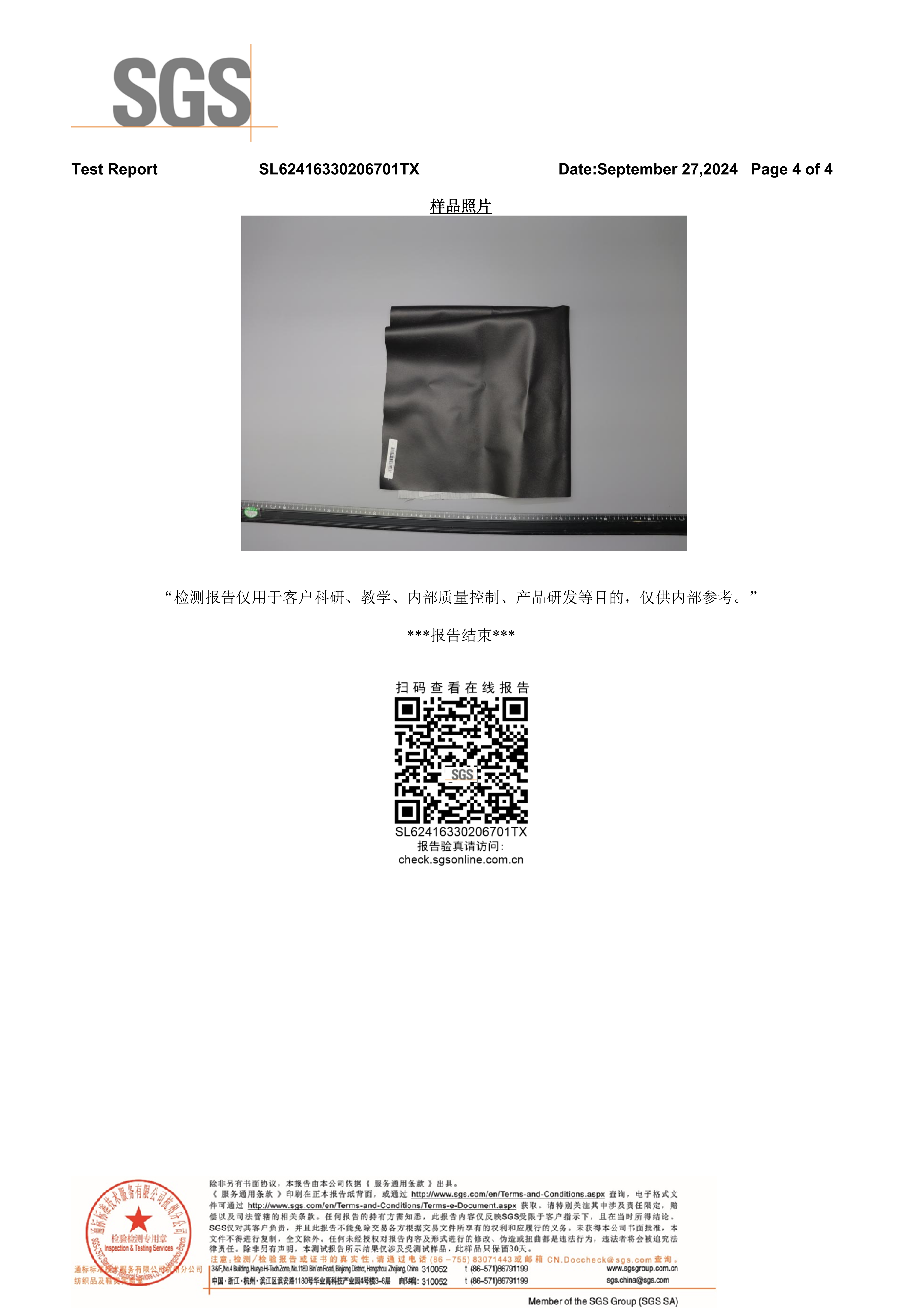
Material-level documentation, not styling, is what separates comparable chairs in 2026. The SGS flame retardant artificial leather test report applies to the upholstery used across the range.
How This Shortlist Was Built
Only attributes that can be compared across models were used as selection criteria. Prices, per-model load ratings, wear-test results and cycle counts are not part of the available data for these three models, so they are not scored here. That is a deliberate limitation: a shortlist built on verifiable attributes is easier to validate during sampling than one built on descriptive language.
- Catalogued type designation — the model's recorded designation (styling chair, Heavy Duty Barber Chair, gold barber chair) is quoted as recorded, not reinterpreted.
- Listed dimensions — the recorded figures in centimetres, which determine how a chair row fits an aisle and a basin layout.
- Listed material stack — PU leather, high-density sponge, wood, plus the recorded frame metal (iron or aluminum alloy).
- Station profile — whether the chair is intended for standard cutting stations, sustained high-traffic work, or premium/flagship stations.
- Available documentation — component-level test reports held for the range (SGS flame-retardant upholstery and foam, plus a PFAS test on synthetic leather).
- Supply terms — stated minimum order quantity, lead time, monthly capacity and inspection practice.
The chair that suits a two-station neighbourhood shop is rarely the chair that suits a flagship location, even within the same product family. The shortlist below is organised around that difference.
The Shortlist at a Glance
| Model | Catalogued type | Listed dimensions | Listed materials | Best-fit station |
|---|---|---|---|---|
| HZ8801 | styling chair | 90 x 60 x 90 cm | PU leather, high-density sponge, wood, iron | Standard cutting stations in space-constrained layouts |
| HZ87102RB | Heavy Duty Barber Chair | 111 x 66 x 118 cm | PU leather, high-density sponge, wood, aluminum alloy | High-traffic chairs with long daily service hours |
| HZ8799ABK | gold barber chair | 110 x 72 x 100 cm | PU leather, high-density sponge, wood, aluminum alloy | Premium or flagship stations where finish signals positioning |
Two differences stand out immediately. First, the frame metal recorded for the HZ8801 is iron, while the HZ87102RB and HZ8799ABK are recorded with aluminum alloy. Second, the HZ8801's listed dimensions are the smallest of the three in every recorded figure, while the HZ87102RB carries the two largest recorded figures (111 cm and 118 cm).
Pick 1 — HZ8801: The Standard Styling Station
The HZ8801 is catalogued as a styling chair with dimensions of 90 x 60 x 90 cm and a material stack of PU leather, high-density sponge, wood and iron. Its role in a shortlist is straightforward: it is the space-efficient option.
For shops where chair rows sit close to mirrors, retail shelving or a wash area, the listed footprint matters more than any finish detail. At 90 x 60 x 90 cm, the HZ8801 records the smallest value in each of the three listed dimensions among the three recommendations here, which makes it the easiest of the group to arrange into a dense layout without narrowing circulation space.
The iron frame recorded in the catalogued data is also the clearest material distinction between this model and the other two picks. Buyers comparing frame materials should note that the data records which metal is listed, not comparative performance, and the practical question to put to a supplier is which component — base, column or frame — uses that metal.
Pick 2 — HZ87102RB: The Heavy-Duty Workhorse
The HZ87102RB is catalogued as a Heavy Duty Barber Chair with dimensions of 111 x 66 x 118 cm and materials listed as PU leather, high-density sponge, wood and aluminum alloy. It holds the two largest recorded figures in this shortlist, which is the clearest signal of its intended role.
Heavy-duty in practice is about the pattern of use rather than a single specification. A chair that is occupied for most of an operating day, adjusted repeatedly, and used by clients across a wide range of body types is doing different work from a chair used a few times a day. That is the station profile the HZ87102RB addresses in the catalogued lineup, and it is the model to shortlist when the same chair serves the busiest position in the shop.
Its recorded material stack differs from the HZ8801 in the frame metal: aluminum alloy rather than iron. When comparing quotes across suppliers, it is worth asking explicitly which metal is used for the base and any load-bearing column, because catalogues often list frame material without specifying the component.
Pick 3 — HZ8799ABK: The Gold-Finish Premium Station
The HZ8799ABK is catalogued as a gold barber chair with dimensions of 110 x 72 x 100 cm and materials listed as PU leather, high-density sponge, wood and aluminum alloy. Its parts list is the same material stack used elsewhere in the shortlist, so the gold designation describes finish and positioning rather than a different structural formula.
This is the model to consider when the chair is part of the shop's visual argument — the flagship position near the window, the station used for photography, or the row a premium brand uses to signal its tier. Because the recorded finish is gold, the surrounding interiors decision (fixtures, mirrors, lighting, floor tone) will do as much of the work as the chair itself.
The trade-off is spatial. At 110 x 72 x 100 cm, the HZ8799ABK records a larger figure than the HZ8801 in all three listed dimensions, including a 72 cm second dimension against the HZ8801's 60 cm. A premium row built from this model simply needs more room per station, and that should be tested against the planned layout before the order is placed, not after delivery.
Other HZ Models Worth Knowing Before You Commit
A shortlist of three does not cover every station type. If a salon needs hydraulic lift, recline, retro styling or compact chairs, the catalogued range carries designations for those functions. The models below are recorded in the same series and are listed here with their catalogued types, dimensions and frame metal so buyers can see where the three picks sit in relation to the rest of the range.
| Model | Catalogued type | Listed dimensions | Frame metal in listed materials |
|---|---|---|---|
| HZ8700 | Classic Hydraulic Barber Chair | 110 x 72 x 90 cm | aluminum alloy |
| HZ8702A | reclining barber chair | 110 x 72 x 90 cm | aluminum alloy |
| HZ8740BR | hydraulic barber chair | 105 x 72 x 110 cm | aluminum alloy |
| HZ8799G-Z | Hair hydraulic recline barber | 110 x 72 x 100 cm | aluminum alloy |
| HZ8799YF | Retro Reclining Barber Chair | 110 x 72 x 100 cm | aluminum alloy |
| HZ8799AGD | luxury barber chair | 110 x 72 x 100 cm | aluminum alloy |
| HZ8796C | Barber salon chair | 110 x 72 x 100 cm | aluminum alloy |
| HZ8799M | wholesale barber chair | 110 x 72 x 100 cm | aluminum alloy |
| HZ87111GY | salon barber chair | 96 x 59 x 103 cm | iron |
| HZ88123PK | salon styling chair | 81 x 63 x 91 cm | iron |
| HZ88202 | salon chair | 50 x 64 x 90 cm | iron |
| HZ8765BK | hair salon chair | 50 x 64 x 104 cm | iron |
| HZ6001DW | beauty salon chair | 45 x 25 x 70 cm | iron |
The pattern is consistent: models with hydraulic, reclining or retro designations cluster around 110 x 72 x 100 cm, while the smaller recording chairs sit well below that. For a mixed shop — a few large barber stations plus several compact styling positions — this makes a mixed-model order realistic rather than a compromise.
Materials and Compliance: What the Documents Actually Cover
Compliance documentation has become a procurement filter rather than a formality in the UK and EU markets, where furniture fire-safety rules apply to upholstered seating. Three documents are listed for the range.
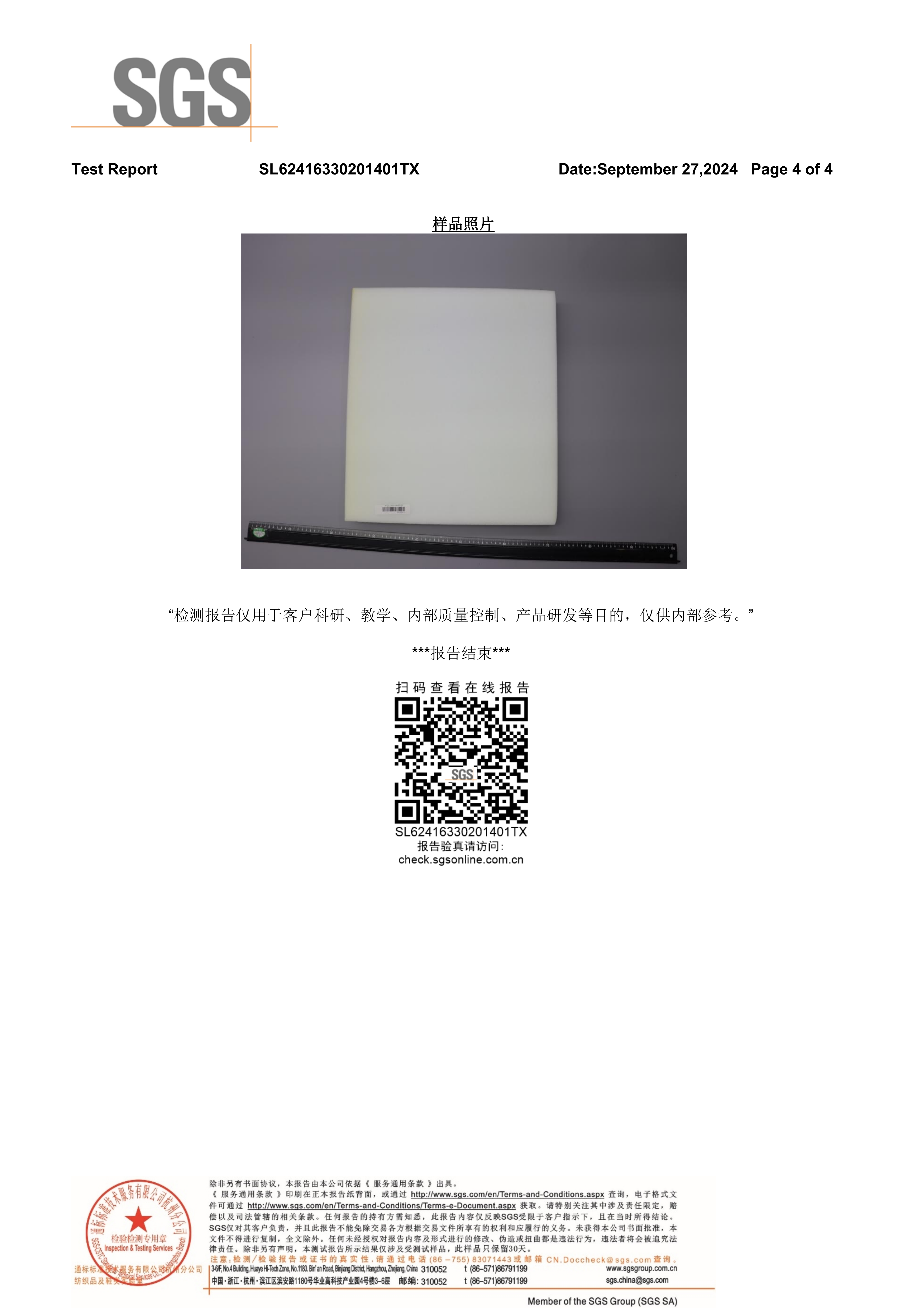
The SGS flame retardant foam test report covers the foam component used in the upholstered seating.
- SGS flame retardant artificial leather test report (SL62416330206201TX) — issued 27 September 2024 by SGS-CSTC Standards Technical Services Co., Ltd., Hangzhou Branch, under The Furniture and Furnishings (Fire) (Safety) Regulations 1988, with a stated scope of Beauty Bed, Salon Chair and Shampoo Chair, for the UK market.
- SGS flame retardant foam test report (SL62416330201301TX) — issued 27 September 2024 by the same body under the same standard, listed for the EU and US markets, covering the same product scope.
- PFAS test report (CTT2501010107EN) — issued 4 January 2025 by CTT, Guangdong Consumer Testing Technology Co., Ltd., under standard EN 14582:2016, with a stated scope of synthetic leather 03#, for the EU and US markets.
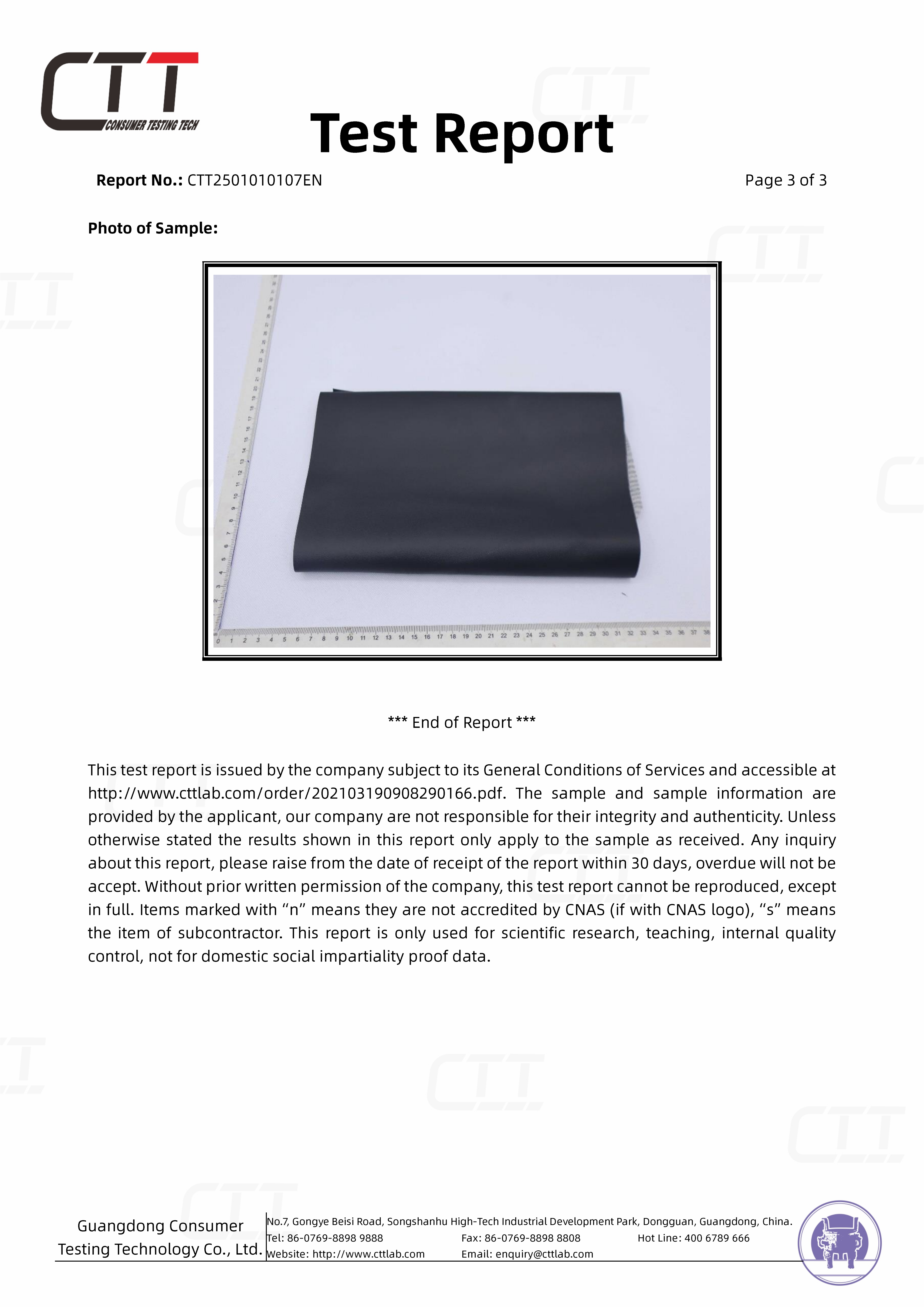
The PFAS test report is tied to synthetic leather 03# under EN 14582:2016, a component-level reference rather than a whole-chair certification.
The practical reading is precise: these are material- and component-level reports tied to a stated scope and market. They are not a chair-level certification of every model or configuration in the series. A buyer importing into the UK or EU should confirm, in writing, which document applies to the exact upholstery and foam combination on the model and colour being ordered, and should keep the certificate number on file for customs and retail compliance purposes.
On materials, the shortlist is consistent: PU leather, high-density sponge and wood appear across the three picks, with frame metal recorded as iron on the HZ8801 and aluminum alloy on the HZ87102RB and HZ8799ABK. PU leather is a synthetic upholstery; buyers who specify leather in their brief should state that requirement explicitly.
Where the HZ Series Sits in the Global Market
Demand is concentrated in exactly the markets this manufacturer states it exports to. UN Comtrade data compiled through the World Integrated Trade Solution records that the United States imported USD 102.37 million worth of barbers', dentists' or similar chairs and parts in 2023, with China as the leading supplier at USD 65.35 million, or 63.8% of that import value. That single figure explains why supplier documentation, lead time and production capacity carry as much weight as chair design in most sourcing decisions.
The wider manufacturer landscape includes long-established names — one published buyer's guide lists Takara Belmont (Japan), Koken (USA/Japan), Pibbs Industries (USA) and Gamma & Bross (Italy) among leading global manufacturers in the segment. That list is included here for landscape context only. No comparative performance ranking between manufacturers is claimed in this article, and the HZ models above are evaluated solely on their own catalogued data.
Manufacturing and Supply Terms That Affect Procurement
Product data answers what a chair is; supply terms answer whether it arrives on schedule. The manufacturer's stated terms for the range are:
- Monthly production capacity: 15,000 units
- Minimum order quantity: 5 units
- Typical lead time: 15 days for orders under 100 units; 30 days for orders over 100 units
- Quality control: 100% testing on all products
- OEM: available, with logo and colour customisation
- After-sales: one-year warranty on the pump, and replacement of damaged products
- Export markets: EU and US
Company-reported project data describes a global salon equipment programme supplying 200,000 units to dealer clients within one year, covering salon use, barber workstation seating, chain-store outfitting and distributor orders. The same source states that the project improved service efficiency and customer repurchase rate and upgraded store aesthetics, and that the range spans vintage and modern styles with customisable appearance and materials, alongside the capability to supply full salon equipment sets. These are supplier-reported results rather than independently audited outcomes, and they are cited here as project context, not as verified performance data.
The 5-unit minimum order quantity is low enough for a single-location salon to order mixed models for testing, while the 15,000-unit monthly capacity indicates the supply side is sized for dealer and chain programmes rather than one-off retail purchases. Buyers planning a multi-store rollout should still build the 30-day lead time for larger orders into their opening schedule, and should separate customised logo or colour orders from standard-stock orders when setting dates.
Trade-Offs and Boundaries Buyers Should Plan For
A shortlist is only useful if its limits are stated. Four apply to the recommendations above.
- Replacement speed. Stated lead times are 15 days below 100 units and 30 days above. That is reasonable for planned fit-outs but unsuitable for an urgent single-chair replacement after a failure.
- Warranty window. The pump carries a one-year warranty. That is a defined support period, not a lifetime guarantee, so salons running multi-year equipment cycles should budget for spare parts after the window closes and confirm which components the warranty covers on models without a pump.
- Missing per-model performance data. No per-model load rating, cycle count or abrasion result is published for the three picks. Where such figures are a tender requirement, they must be requested from the supplier before the specification is finalised.
- Footprint compounding. The HZ8799ABK requires more space per station than the HZ8801 in every listed dimension. Six premium stations instead of six standard stations can change whether a layout plan works at all.
There is also an honest market caveat. Third-party estimates of the salon chair and salon furniture market differ by billions of dollars between research houses, as noted at the start of this article. Category-level growth numbers should inform a business case for refurbishment, but they should not be used to justify a specific model choice — station-level fit, material and documentation are what carry that decision.
What to Watch Next
Two directions look durable. The first is volume. With the salon chairs category projected by Fact.MR to grow from approximately USD 10.57 billion in 2025 to USD 18.4 billion by 2035, and hydraulic models already holding roughly 42.5% of the product-type segment in 2025 per Market Intelo, the centre of demand remains in mechanised seating rather than fixed-height chairs.
The second is documentation. Fire-safety regulation of upholstered furniture in the UK and restrictions on substances such as PFAS in the EU both point the same way: a chair that cannot be traced to a specific component-level test report becomes harder to place in regulated markets. Manufacturers that hold reports for both the upholstery and the foam, as recorded for this range, are better positioned for that shift than those that hold a single general certificate.
For buyers, the practical consequence is that the shortlist stage now includes a documents stage. The three HZ models reviewed here — HZ8801 for standard styling stations, HZ87102RB for heavy-duty positions, and HZ8799ABK for premium finishes — can be compared on catalogued dimensions, listed materials and available compliance records before a sample is ever shipped, which is faster and cheaper than discovering a mismatch after delivery.
Frequently Asked Questions
1. Which HZ model is the most practical starting point for a small salon?
The HZ8801 is catalogued as a styling chair with dimensions of 90 x 60 x 90 cm, and materials listed as PU leather, high-density sponge, wood and iron. Among the three models recommended in this shortlist, it records the smallest figure in each of its three listed dimensions, which makes it the most space-efficient option for compact chair rows. It is not catalogued as a hydraulic or reclining model, so salons requiring pump-assisted height adjustment or recline should compare it with models carrying those designations, such as the HZ8700 Classic Hydraulic Barber Chair or the HZ8702A reclining barber chair, both listed at 110 x 72 x 90 cm.
2. What does the heavy-duty designation mean for the HZ87102RB in the available data?
Heavy Duty Barber Chair is the catalogued type designation for the HZ87102RB. Its listed dimensions are 111 x 66 x 118 cm, and its listed materials are PU leather, high-density sponge, wood and aluminum alloy. Those are the largest recorded figures for two of the three dimensions among the models recommended here. The available data publishes no per-model load rating or cycle count for this chair. Commonly cited engineering guidance for commercial-grade barber chair pumps refers to load capacities of roughly 350–400 lbs and more than 100,000 cycles before maintenance, but that describes general expectations for commercial pumps rather than a test result for this model. Buyers who require load documentation should request it from the supplier.
3. Is the gold finish on the HZ8799ABK suitable for everyday salon use?
The HZ8799ABK is catalogued as a gold barber chair with dimensions of 110 x 72 x 100 cm and materials listed as PU leather, high-density sponge, wood and aluminum alloy. Its listed material stack matches the other models in the shortlist, so the gold designation refers to finish and positioning rather than to a different structural build. The available data contains no finish-durability or abrasion test results. For daily use, the two practical considerations are care of the PU leather surface and footprint: the HZ8799ABK records a larger figure than the HZ8801 in all three listed dimensions.
4. Which certifications and test reports apply to HZ-series barber chairs?
Three documents are listed for the range. The SGS flame retardant artificial leather test report (SL62416330206201TX) was issued on 27 September 2024 by SGS-CSTC Standards Technical Services Co., Ltd., Hangzhou Branch, under The Furniture and Furnishings (Fire) (Safety) Regulations 1988, with a stated scope of Beauty Bed, Salon Chair and Shampoo Chair for the UK market. The SGS flame retardant foam test report (SL62416330201301TX) was issued on the same date by the same body under the same standard for the EU and US markets. The PFAS test report (CTT2501010107EN) was issued on 4 January 2025 by CTT, Guangdong Consumer Testing Technology Co., Ltd., under standard EN 14582:2016 for synthetic leather 03#, for the EU and US markets. These are material- and component-level reports limited to their stated scope; they are not a chair-level certification of every configuration, and buyers should confirm which document applies to the exact model, upholstery and colour ordered.
5. What are the minimum order quantity and lead times?
The stated terms are a minimum order quantity of 5 units, with a typical lead time of 15 days for orders under 100 units and 30 days for orders over 100 units. Monthly production capacity is stated at 15,000 units, all products undergo 100% testing, and OEM production with logo and colour customisation is available. These are supplier-stated terms rather than independently audited figures, so they are best confirmed in writing for a specific order mix.
6. What after-sales coverage is stated for the pump?
The stated after-sales terms include a one-year warranty on the pump and replacement of damaged products. The one-year period is a defined support window rather than an open-ended commitment, so buyers planning multi-year equipment cycles should include replacement-part budgeting after that period. For models that do not use a pump, the covered components should be confirmed with the supplier before ordering.
Reference documents, including the product catalogue and specification sheets for the HZ series, are compiled in the company's downloadable brochure: Ningbo Hongzi Beauty & Hairdressing Equipment Co., Ltd. product brochure (PDF). Manufacturer background and product data in this article are drawn from the company's published specification records; third-party market and trade figures are attributed to Fact.MR, Market Intelo, Grand View Research, TechSci Research, UN Comtrade / WITS and the named testing bodies.