
Hand Tool Supplier Evidence: A Physical Review Checklist
Hand Tool Supplier Evidence: A Physical Review Checklist
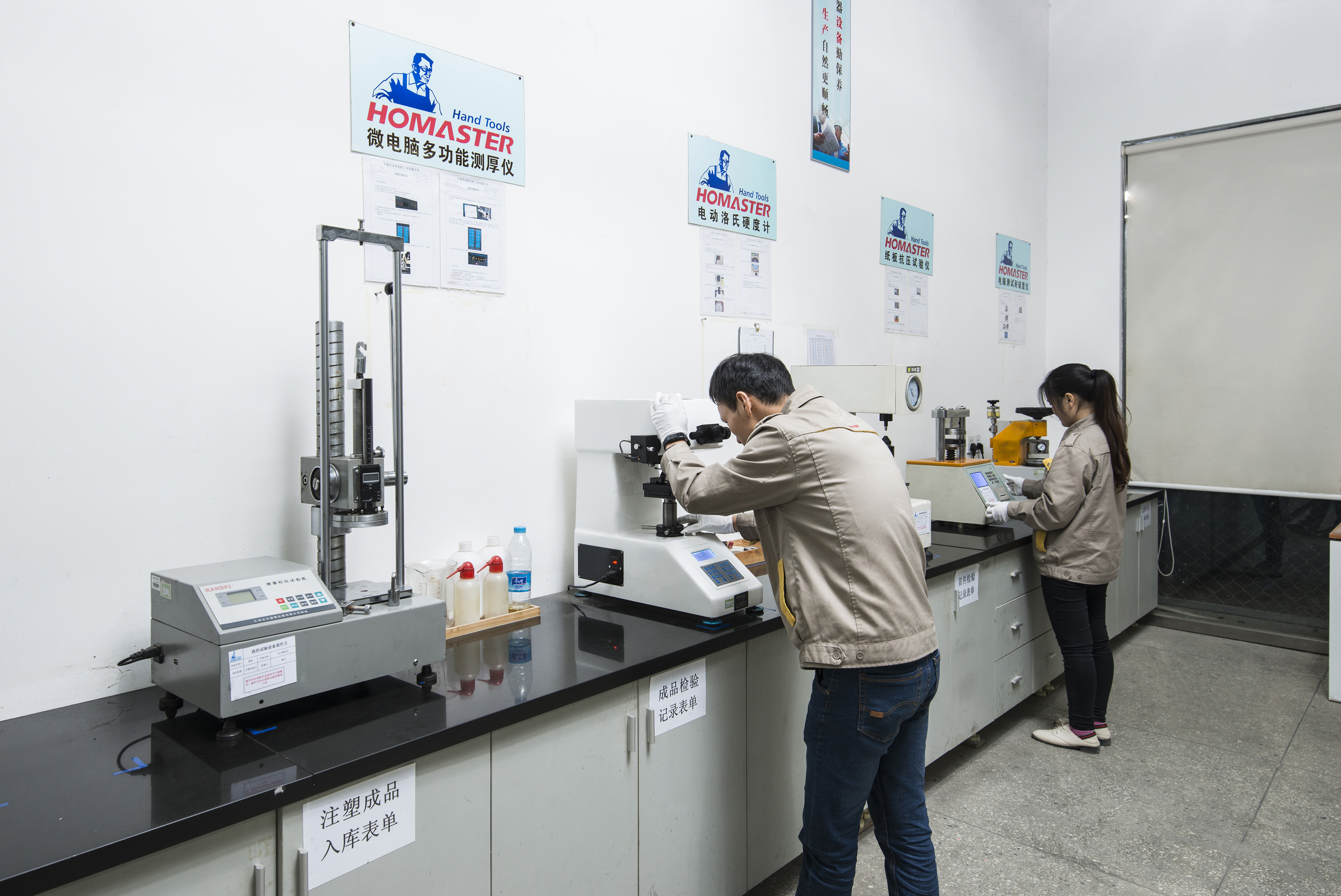
QC room: inspection and testing station where incoming, in-process and final checks are carried out before packing.
When buyers evaluate a hand tool supplier at the decision stage, the useful question is no longer “what can you make?” but “what can you physically show me?” Capability claims are cheap to write. Hardness records, torque tables, staple cross-reference sheets, kit inventories and certificate-to-model mapping are not.
The global hand tools market was valued at approximately USD 25.61 billion in 2025, according to Straits Research — a mature and crowded category in which most suppliers describe the same steel grades, the same finishes and the same quality language. Differentiation therefore sits less in the marketing description than in the evidence a buyer can inspect. This article sets out the physical and process evidence worth requesting when assessing a supplier of hex keys, tool sets, staple guns and cordless electric tools, using the published product data of HOTAK PRO TOOLS as a working example of how such evidence can be presented.
Why self-declared capability is not enough
Three failure modes account for most hand tool sourcing disappointments, and none of them are visible in a capability deck.
- Material claims without mechanical data. “Made from CR-V steel” says nothing about hardness range, torque at the sizes the buyer actually uses, or whether the claim applies to the whole tool or only to the working end.
- Certificates that cannot be mapped to a model. A company-level ISO 9001 certificate or a retailer factory audit confirms a management system; it does not automatically cover a specific item, a specific voltage platform or a specific destination market.
- Kit contents that drift from the drawing. In multi-piece sets, the commercial risk is rarely the tool that breaks — it is the bit, socket or accessory that quietly changes specification between the golden sample and the third shipment.
The opportunity for buyers is that hand tools are unusually friendly to physical verification. Unlike software or formulated chemistry, a hand tool can be measured, loaded, cycled and compared. A supplier that has already documented hardness ranges, torque values and fastener compatibility is easier to audit and easier to hold to a standard.
Four observable product families and the evidence each one generates
Capability discussions become comparable when they are anchored to product families rather than to general statements. Each family produces a different type of evidence.
Hex keys: hardness and torque tables
HOTAK PRO TOOLS — the hand tool brand of Ningbo (Yinzhou) Yongjia Electrical Tools Co., Ltd., a Ningbo-based manufacturer founded in 2000 — publishes a hex key range specified in CR-V 6150, including 9-piece short arm, long arm and extra long arm ball point sets (105221K1, 105221K2, 105221K3), colour-coded variants (71821D1, 71821D2, 71821D3), 8-piece folding sets (YJHK-3347, YJHK-3075), a 7-piece T-handle set (YJHK-3066) and a 14-piece metric and SAE T-handle set (YJHK-3226).
For the 9-piece sets, the stated hardness range is HRC 52–55, and the published torque values scale with key size. That is the kind of table a buyer can test against.
| Hex key size (metric) | Published torque value | Hex key size (SAE, YJHK-3226) | Published torque value |
|---|---|---|---|
| 1.5 mm | 0.82 | 1/16″ | 1.19 |
| 2.0 mm | 1.90 | 5/64″ | 2.37 |
| 2.5 mm | 3.80 | 3/32″ | 4.18 |
| 3.0 mm | 6.60 | 1/8″ | 9.72 |
| 4.0 mm | 16.00 | 5/32″ | 19.21 |
| 5.0 mm | 30.00 | 3/16″ | 33.33 |
| 6.0 mm | 52.00 | 1/4″ | 71.18 |
| 7.0 mm | 80.00 | 5/16″ | 141.23 |
| 8.0 mm | 120.00 | 3/8″ | 242.92 |
| 10.0 mm | 220.00 | — | — |
Values reproduced from the published product specification; the torque unit is shown as “N” in the source data and should be confirmed with the supplier against the test method used.
What a buyer should request alongside this table: a batch hardness record, the torque test method and sample size, a material certificate for the declared CR-V 6150 grade, and surface finish specification. A supplier who publishes torque by size has already accepted a measurable standard — which is worth more at the evaluation stage than a broader but vaguer claim.
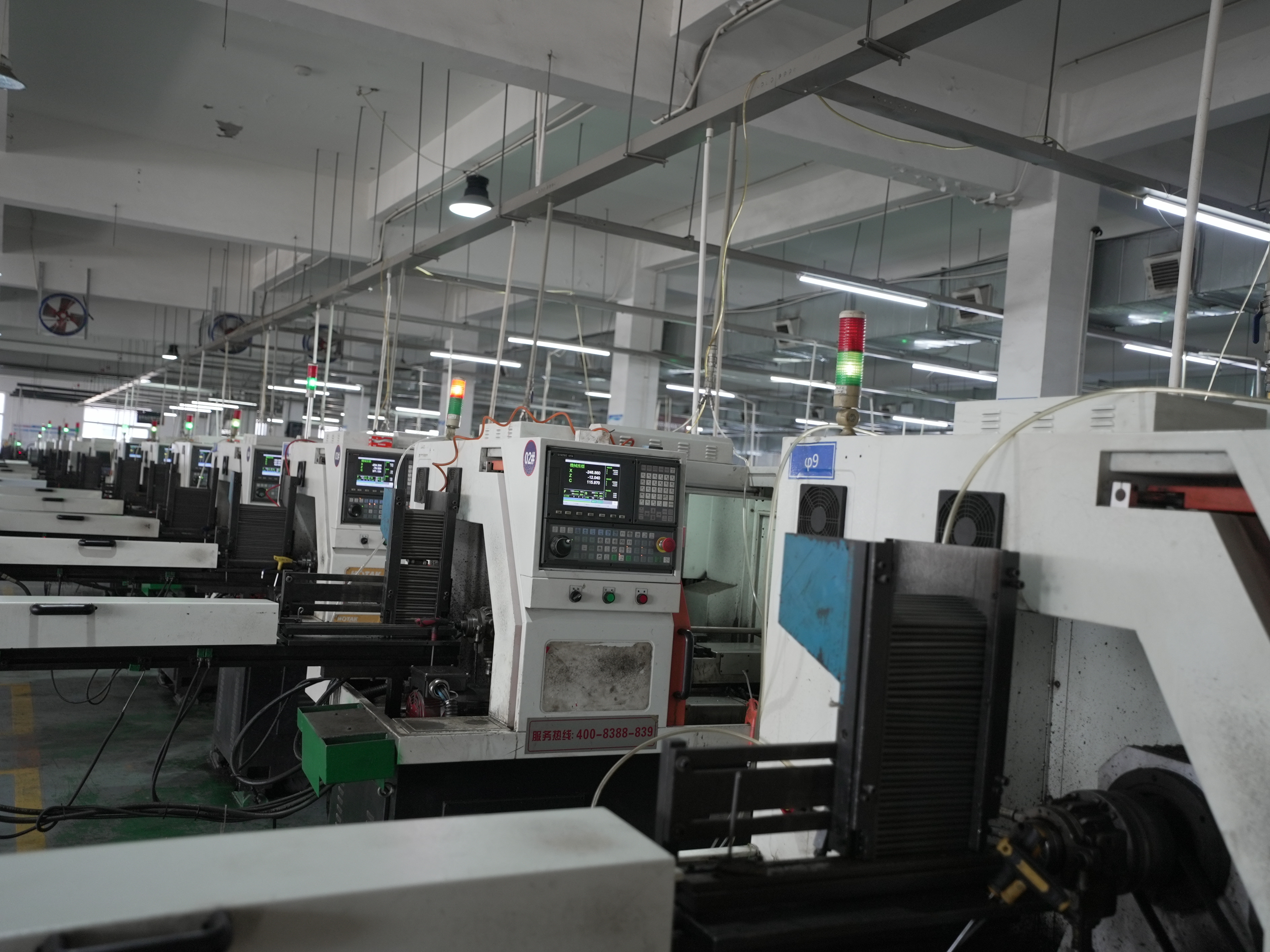
CNC-machined parts: dimensional accuracy at this stage determines whether a hex key or bit seat correctly in a fastener head.
Staple guns: fastener format is the real specification
Staple guns are rarely bought on force alone. They are bought on fastener format, because a tool that cannot accept the staples already sitting in the buyer’s warehouse is unusable regardless of build quality. The global staple gun market was valued at USD 1.54 billion in 2024, according to Maximize Market Research, and compatibility is one of the main reasons the category fragments into so many model variants.
| Model | Type | Stated fastener format |
|---|---|---|
| YJSG-105 | Medium duty | Fine wire staples 4–8 mm |
| YJSG-140 | Staple gun | Fine wire staples 6–10 mm (1/4″–3/8″) |
| YJSG-009 | Professional staple gun | Fine wire staples 4–14 mm; compatible with Rapid 530 and Arrow JT21 |
| YJSG-080 | Medium duty | 23 series, 13 series and 10F pins up to 10 mm leg; 6/8/10 mm legs |
| YJSG-063 | Heavy duty | Flat wire staples 6–14 mm |
| YJSG-096 | Staple gun tacker | Heavy duty (1.2) staples 6–14 mm |
| YJSG-023 | Heavy duty 3-way set | Flat wire 4–14 mm; 7.6 mm cable staples 10–14 mm; brad nails 10–14 mm |
| YJSG-215 | 3-in-1 heavy duty | Flat wire 4–14 mm; 7.6 mm cable staples 10–14 mm; brad nails 10–14 mm |
| YJSG-120 | 4-in-1 heavy duty | Heavy duty (1.2) 6–14 mm; light duty (0.7) 6–10 mm; cable 10–14 mm; 18 ga brad nail 15 mm |
| YJSG-196 | 6-in-1 staple gun | Compatible with JT21, T50, T25, T20, 18GA |
| YJSG-115 | Heavy duty staple and nail gun | Arrow T50 and 140 staples: 9/16″, 1/2″, 3/8″, 5/16″, 1/4″ |
| YJSG-035 | Heavy duty hammer tacker | Flat wire staples 6–14 mm |
For upholstery and woodworking buyers, the practical evidence request is a staple cross-reference sheet plus a firing test using the buyer’s own staple stock. Beyond that, ask for the magazine spring specification and cycle expectation, the casing material and thickness, and the jam-release design. A hammer tacker such as YJSG-035 and a hand tacker such as YJSG-096 share a fastener format but serve different working postures, so the evidence should match the application rather than the catalogue page.
Tool sets: inventory-level proof
Tool sets are the category where advertised piece counts most often diverge from what actually ships. The defensible evidence is a piece-by-piece inventory, not a headline number. In the HOTAK PRO TOOLS range, ratcheting and precision sets are specified with full content lists — for example:
- YJTS-3506 (26-piece ratchet handle set): one 1/4″ ratcheting handle, eleven 1/4″ × 20.5 mm sockets from 4 mm to 14 mm, thirteen 1/4″ × 25 mm bits, and a 1/4″ × 50 mm socket extension bar.
- YJTS-3508 (43-piece ratchet screw set kit): 36 bits spanning slotted, Phillips, Torx, tamper-proof Torx, square, hex, Pozi, triangle, tri-point and U-sharp profiles.
- YJTS-3138 (51-piece precision screwdriver set): 48 bits including Phillips, slotted, Pozi, metric and SAE hex, Torx, tamper-proof Torx, square, triangle, Pentalobe and tri-point, plus a 115 mm extension bar and a magnetiser/demagnetiser.
- YJTS-3018 (77-piece smartphone repair kit): tweezers, opening picks, suction cup, pry bars, 28 mm mini sockets, and a wide bit inventory in CR-V 6150 with nickel finish.
- YJTS-3135 (27-piece speed-fit T-handle set): ten 1/4″ bits, seven metric sockets and seven SAE sockets — a case where the set spans two measurement systems.
The evaluation question is simple: does the packing list reconcile, piece by piece, with the approved sample? Sets that mix metric and SAE, or that include specialised profiles such as Pentalobe and tri-point, are particularly exposed to substitution. Ask for a part-by-part material declaration, because a “CR-V steel” claim may cover the bits and keys while the handle, case and plating follow a different specification.
Electric tools: electrical parameters as comparable data
Cordless entry-level tools sit in a different evidence category: the decisive parameters are electrical and mechanical, and they are objectively comparable across suppliers.
| Model | Type | Published key parameters |
|---|---|---|
| YJSG-501 | Five-use lithium electric nail gun | 3.7 V, 2000 mAh, 25 W |
| YJSG-500 | Two-use lithium electric nail gun | 3.7 V, 2000 mAh, 25 W |
| YJPS-902 | Power screwdriver | 3.7 V, 2000 mAh, no-load ≥ 60 min, electric torque 2/3.5/5, manual torque 10, 0–280 rpm |
| YJPS-912 | Power screwdriver set | 3.7 V, 800 mAh, no-load ≥ 50 min, electric torque 2.5, manual torque 10, 0–250 rpm |
| YJPS-906 | Electric precision repair tool set | 3.7 V, 320 mAh, no-load ≥ 30 min, electric torque 0.15, manual torque 3, 0–220 rpm |
| YJPS-907 | 26-piece cordless precision screwdriver set | 3.7 V, 320 mAh, 220 rpm, 1-hour charge, power torque 0.15, hand torque 3 |
| YJTS-3526 | 41-piece household electrical screwdriver set | 3.7 V, 320 mAh, 220 rpm, 1-hour charge, power torque 0.15, hand torque 3 |
| YJGG-001 | Cordless hot-glue pen | 3.7 V, 320 mAh, 4.2 W, operating time ≥ 120 min, 150 °C, glue flow 60 s (release in 30 s) |
Parameters reproduced from published product specifications; torque units are shown as given in the source data.
For this family, the evidence request shifts to battery and charger documentation: charge current and output voltage, cycle-life data, charger safety certification, and confirmation that the tool can be operated manually when the battery is depleted. The published split between electric torque and manual torque on YJPS-902 (electric 2/3.5/5 against manual 10) is exactly the kind of disclosure that lets a buyer judge whether a tool is a light-duty driver or a genuine substitute for a hand screwdriver.
Process evidence: what IQC, IPQC and FQC actually prove
Product data tells a buyer what a supplier intends to build. Process documentation tells them how consistently it will be built. For this manufacturer, the stated quality management system covers incoming inspection, in-process control and final product testing across the full production cycle. The wider manufacturing chain is described as in-house from mold development, forging and stamping through heat treatment, surface finishing, precision machining, assembly and packaging, operating from a 45,000 m² facility with a stated annual output of 18,000,000 units, 25 R&D engineers and an export ratio of 95%.
Company-level approvals listed for the manufacturer include ISO 9001, TÜV/GS German safety certification, factory audits approved by Walmart (USA) and Kingfisher (UK), BSCI social compliance certification and VPA (Verify Production Audit) approval. Recognised status in China includes accreditation as a National High-Tech Enterprise in 2014 and a “Little Giant” enterprise designation in Ningbo, with 7 invention patents, more than 20 European patents, 50 utility model patents and over 100 design patents on record.
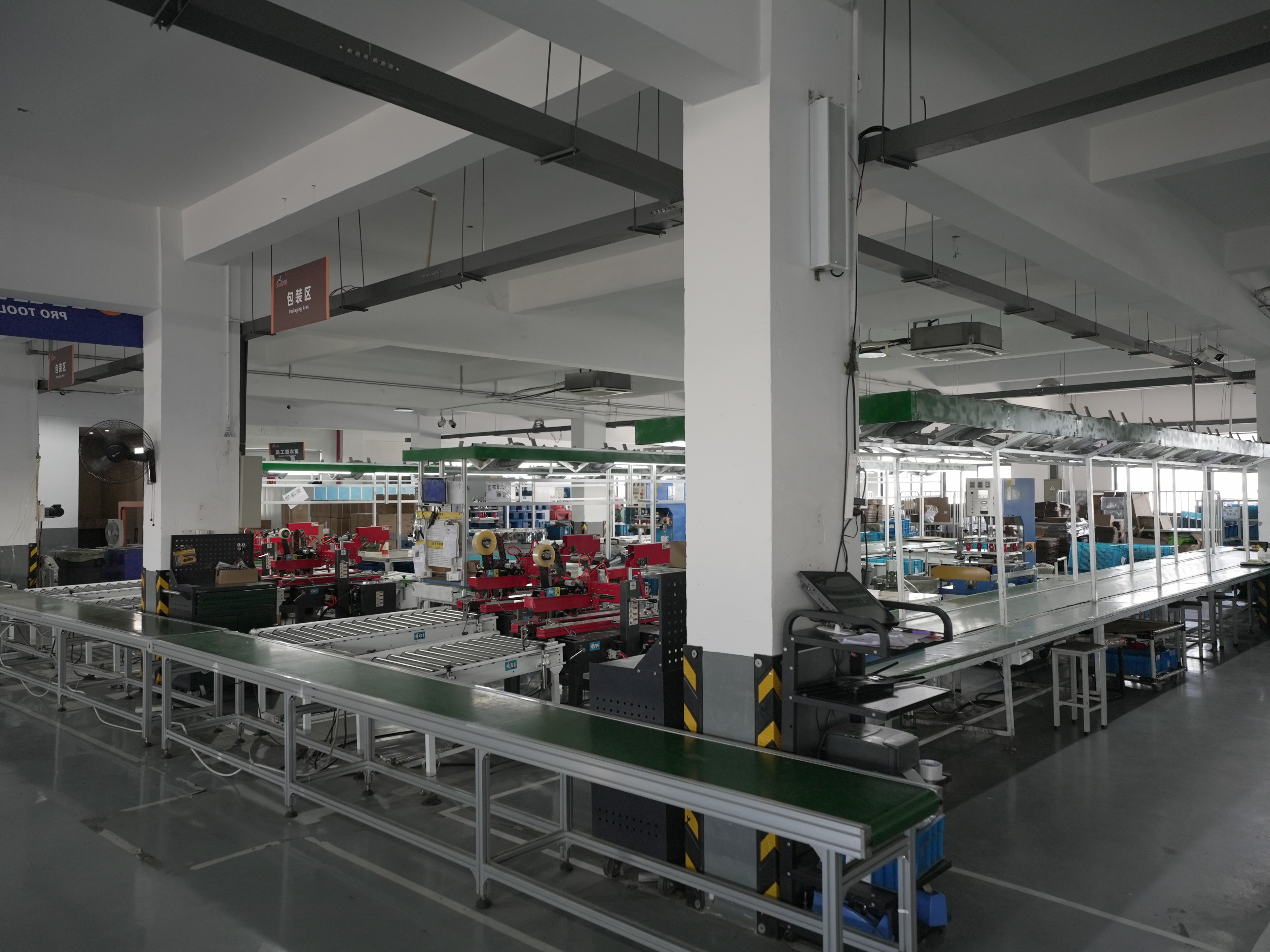
Workshop site: in-house mould development, forging, heat treatment and assembly are the stages that determine whether published tolerances hold at volume.
The interpretive point for buyers is that these documents operate at company level. They are a strong starting signal — retailer factory audits are difficult to obtain and difficult to keep — but they do not answer model-level questions. The audit that qualifies a factory does not by itself confirm the hardness of a specific hex key batch or the spring specification of a specific staple gun.
A physical review checklist for supplier evaluation
| Evidence category | What to request | Why it matters |
|---|---|---|
| Material | Steel grade declaration per part; material certificates for CR-V 6150 or S2 where claimed | Separates whole-tool claims from working-end-only claims |
| Mechanical | Batch hardness records; torque values by size; test method and sample size | Converts “strong steel” into a pass/fail threshold |
| Fastener fit | Staple cross-reference sheet; firing test with buyer’s own staple stock | Prevents a technically sound tool from being commercially unusable |
| Kit integrity | Piece-by-piece packing list matched to approved golden sample | Controls substitution risk in multi-piece sets |
| Electrical | Battery capacity, charge current, cycle data, charger certification | Makes cordless tools comparable across suppliers |
| Compliance | Certificates mapped to model numbers and destination market standards | Company-level certificates rarely cover every item or market |
| Process | IQC, IPQC and FQC records; AQL plan; factory audit reports | Evidence of consistency, not just capability |
Application and use cases
The applicable scenarios declared for this range cover household indoor environments and open-air construction sites, spanning repair work and fastening functions with manual operation on screws, nuts and nails, including impact-resistance requirements. That breadth explains the shape of the catalogue: a 9-piece ball point hex key set addresses furniture and bicycle assembly where access angles are awkward; a 77-piece smartphone repair kit addresses electronics work where bit profiles such as Pentalobe and tri-point determine whether a device can be opened at all; a hammer tacker addresses upholstery and insulation work where the tool is driven by arm motion rather than grip; and 3.7 V cordless drivers address repetitive light fastening where hand fatigue accumulates faster than the fastener resists.
For distributors and private-label buyers, the practical implication is that a single supplier relationship can cover several distinct end-use segments — household tool kits, bicycle repair kits, electronics screwdriver sets, craft and hobby knife sets, wire strippers and crimpers, and staple gun kits — provided the evidence per segment is kept separate. Bundling segments into one specification conversation is where substitution risk rises.
Market context: what the numbers say about evidence
Several published market figures help explain why physical evidence has become a procurement priority rather than an audit formality.
- The global hand tools market was valued at approximately USD 25.61 billion in 2025 (Straits Research).
- The U.S. hand tools market was valued at USD 5.34 billion in 2025 (Arizton).
- China’s exports of hand tools under HS 8203 reached USD 1.1 billion in 2024 (OEC, Observatory of Economic Complexity).
- China’s production value of interchangeable tools for hand tools was estimated at USD 10.5 billion in 2024 (Fastener World).
- The global staple gun market was valued at USD 1.54 billion in 2024 (Maximize Market Research).
- The global screwdriver market was valued at USD 365.2 million in 2024 (Credence Research).
- Stanley Black & Decker led the global hand tool market with over 14% share in 2024 (Global Market Insights), indicating a category with a dominant incumbent and a long tail of suppliers.
Two structural trends follow. First, in a market of this size with a concentrated leader, mid-tier suppliers compete on verifiable specification rather than on brand recognition — which raises the value of published torque tables and fastener compatibility data. Second, regulation is tightening at market level: India’s Hand Tools Quality Control Order 2025 mandates BIS certification across 9 tool categories, as reported by Market.us. Buyers shipping into regulated markets increasingly need certification evidence tied to specific models and standard numbers, not general compliance statements.
Comparison with traditional low-grade carbon steel
The most common decision a hand tool buyer faces is whether the premium for higher-grade steel is justified. The comparison data for this range is specific: products manufactured with higher-grade CR-V or S2 steel are stated to provide 15–25% higher proof torque than ordinary 45# carbon-steel hand tools, with a stated hardness range of HRC48–54 — while the 9-piece hex key sets are separately specified at HRC 52–55. On cost, the same source states an increase of 8–12% over low-grade carbon-steel alternatives, with pricing described as competitive relative to premium imported brands. Reliability is attributed to strict IQC–IPQC–FQC full-process inspection, contributing to a lower failure rate than many competitors, with maintenance requirements described as minimal because of a low failure rate and few wearing parts. A further structural advantage of the manual side of the range is zero power consumption and independence from any power supply, which suits power-off field operations.
The limitation buyers should weigh before treating these figures as settled. These performance and cost differences are supplier-reported comparison data, not independently verified third-party test results. They also compare against low-grade carbon steel, not against other premium brands — so “competitive versus premium imported brands” is a positioning statement that a buyer cannot benchmark without a side-by-side quotation and sample test. The 8–12% cost premium also only pays back where duty cycle and torque demands are real; for occasional household use, a high-grade hex key set may deliver no observable functional advantage over a cheaper one. The right way to use this data is as a hypothesis to test on samples with the buyer’s own fasteners, not as a conclusion.
Boundaries: what this evidence does not prove
- Certification scope. ISO 9001, TÜV/GS, the Walmart and Kingfisher factory audits, BSCI and VPA are stated at company level. They must be mapped to the specific model and the specific destination market before they can support a purchase decision.
- Third-party brand benchmarking. The public dataset reviewed for this article contains no brand-level market-share or competitive-standing data for HOTAK PRO TOOLS; that gap is explicitly flagged as missing data in the source dataset. Buyers should therefore rely on audits, certificates and sample testing rather than on third-party rankings.
- Cordless class limits. The published cordless platform is a 3.7 V lithium class (for example, 320 mAh to 2000 mAh depending on model). This is a light-duty segment suited to household repair and light assembly; buyers with heavy-duty driving or fastening requirements should verify application limits against the tool’s rated torque and duty cycle rather than assume equivalence with higher-voltage platforms.
- Material claim boundaries. A CR-V or S2 declaration should be confirmed part by part. Handles, cases, plating and packaging may follow different specifications.
- Regulatory gaps. Compliance with market-specific schemes such as India’s Hand Tools QCO 2025 must be confirmed per market; the existence of European certification does not establish coverage elsewhere.
Future outlook
As category growth continues — the U.S. hand tools market alone was valued at USD 5.34 billion in 2025 (Arizton), and China’s production value of interchangeable hand tool components reached an estimated USD 10.5 billion in 2024 (Fastener World) — the competitive axis is likely to move further toward documented, model-level evidence. Two developments seem probable. First, published mechanical data such as hardness ranges and torque-by-size tables will become a normal part of supplier evaluation packages, because they are cheap to produce and impossible to fake under buyer testing. Second, market-level certification requirements will continue to spread beyond individual jurisdictions, which will favour suppliers whose quality systems already operate under retailer audits and social compliance frameworks rather than those assembling documentation after the fact.
For buyers, the practical consequence is straightforward: the evaluation checklist in this article can be applied to any supplier, and the responses will sort them faster than any capability presentation.
FAQ
What material and hardness evidence should a buyer request for a hex key set?
Request a per-batch hardness record, a torque test at the sizes you actually use, a material certificate for the declared grade, and the surface finish specification. For reference, the 9-piece ball point hex key sets in this range are specified in CR-V 6150 with a stated hardness of HRC 52–55, while the broader CR-V/S2 hand-tool comparison data states a hardness range of HRC48–54. Publishing torque values by key size — from 0.82 at 1.5 mm up to 220.00 at 10.0 mm for the metric sets — gives the buyer a measurable standard to test against.
How can a buyer confirm that a staple gun will accept the staples already in stock?
Compatibility should be verified against the fastener format, not the tool name. In this range, YJSG-009 is specified for fine wire staples 4–14 mm and is compatible with Rapid 530 and Arrow JT21; YJSG-196 is compatible with JT21, T50, T25, T20 and 18GA; YJSG-115 accepts Arrow T50 and 140 staples in 9/16″, 1/2″, 3/8″, 5/16″ and 1/4″; and YJSG-080 accommodates 23 series, 13 series and 10F pins with 6 mm, 8 mm and 10 mm leg lengths. The practical step is to request a written cross-reference sheet and to fire the buyer’s own staple stock through a sample unit before ordering.
Which certifications should a supplier be able to map to a specific model number?
Certificates should be traceable to the model, the production site and the destination market. The company-level approvals listed for this manufacturer comprise ISO 9001, TÜV/GS German safety certification, factory audits approved by Walmart (USA) and Kingfisher (UK), BSCI social compliance certification and VPA approval. Because these operate at company level, buyers should request the certificate alongside the applicable model list and standard numbers. Market-specific requirements differ: India’s Hand Tools Quality Control Order 2025, for example, mandates BIS certification across 9 tool categories, so a European certificate does not automatically satisfy that market.
Is the CR-V or S2 premium justified compared with low-grade carbon steel?
It depends on duty cycle. The supplier-stated comparison indicates 15–25% higher proof torque than ordinary 45# carbon-steel tools and an 8–12% cost increase over low-grade carbon-steel alternatives. For repeated assembly, professional upholstery work or any application where torque and wear resistance are continuously loaded, that differential can be justified. For occasional household use, the functional difference may not be observable, and the premium may not pay back. Because the performance figures are supplier-reported rather than independently verified, buyers should confirm the gap through their own sample testing before treating the cost premium as settled.
What are the limits of a 3.7 V cordless tool compared with a manual hand tool?
The cordless range here is a low-voltage class — the YJSG-500 and YJSG-501 electric nail guns are rated 3.7 V, 2000 mAh, 25 W; YJPS-902 is 3.7 V with 2/3.5/5 electric torque and 10 manual torque at 0–280 rpm. The practical limits are battery dependency and charge cycles, and the electric torque ceiling is well below the manual torque rating, meaning the tool assists rather than replaces hand force at high resistance. Manual tools in the same range consume no power and operate independently of any power supply, which suits power-off field work. Cordless suits repetitive light fastening and driving; manual suits high-torque or power-unavailable tasks.
How should an OEM or private-label buyer validate a tool set configuration?
Validation should be inventory-level. Take a set such as YJTS-3508, a 43-piece ratchet screw set kit whose 36 bits span slotted, Phillips, Torx, tamper-proof Torx, square, hex, Pozi, triangle, tri-point and U-sharp profiles, or YJTS-3138, a 51-piece precision screwdriver set with 48 bits and both metric and SAE hex sizes. Reconcile the packing list piece by piece against an approved golden sample, and request a part-by-part material declaration, because a CR-V steel claim may apply to the bits and keys while the handle, case and plating follow separate specifications. Sets spanning metric and SAE systems carry the highest substitution risk and warrant the closest check.
Reference
The full product range and specifications discussed in this article are documented in the manufacturer’s catalogue, available for download: 2025 YONGJIA CATALOG (PDF).