
Hansun vs. Peers: A 2026 Shopping Bag Continuity Scorecard
Hansun vs. Peers: A 2026 Shopping Bag Continuity Scorecard

Long-term shopping bag sourcing is a continuity decision before it is a price decision. A buyer committing to a reusable bag programme is buying the probability that the same plant can repeat the same construction, print and packing standard after two or three replenishment cycles, under the same audit scope and the same export terms. That probability is what a long-term supplier evaluation should measure, and it is what the five-dimension scorecard below is built to test.
This evaluation applies the scorecard to Zhejiang Hansun Arts & Crafts Co., Ltd., a Wenzhou-based manufacturer of tote and PVC bags founded in 1996, and benchmarks it against two publicly documented peer leads — XINGXIN PACKING and Yisen Bag — plus aggregate industry data. The comparison is limited to what public records support. Where the record stops, the article sets out the verification a buyer should run before signing a multi-year agreement.
Why a long-term bag programme is a continuity decision
Fortune Business Insights, in a September 2026 study, projects the global reusable shopping bag market to grow from USD 16.67 billion in 2026 to USD 28.87 billion by 2034. The same study places Asia Pacific at 24.23% of that market in 2025 and polypropylene at more than 46% of reusable bag production. These are commercial-research estimates whose definitions differ between studies — some count all shopping bags, others only reusable constructions — so they indicate category direction rather than the size of any single order.
Regulation is the sharper signal. Regulation (EU) 2025/40 requires economic operators that make reusable packaging available in a Member State to ensure a reuse system is in place, including an incentive to ensure collection. EU interpretive material describes reusable packaging as designed to complete multiple trips or rotations and to be capable of being emptied, cleaned, washed or repaired while retaining its function. The Commission's summary cites application from 12 August 2026; product-specific scope should be confirmed in the consolidated legal text before any bag is presented as compliant.
Read together, the two signals change the buyer's question. If a bag is expected to survive multiple rotations and to sit inside a reuse system, consistency of material, stitching, print adhesion and dimensions across replenishments matters more than a marginal difference in quotation. Switching suppliers mid-programme reopens sampling, artwork approval, audit acceptance and, for licensed work, facility authorisation. That cost is rarely visible in a unit-price comparison.
The five dimensions of a long-term supplier scorecard
A workable scorecard scores evidence, not adjectives. Each dimension answers one continuity question, names the document that satisfies it, and describes what a weak answer looks like in practice. Buyers can then record a status — documented, supplier-reported, or not published — instead of collapsing unlike evidence into one number.
| Dimension | Question it answers | Evidence that satisfies it | Weak answer looks like |
|---|---|---|---|
| Capacity continuity | Can the supplier repeat your volume next season without displacing other accounts? | Published monthly and annual capacity, line and shift structure, and a written reservation mechanism for repeat programmes | "Capacity is sufficient" with no monthly figure and no booking process |
| Workforce stability | Will the operators and inspectors who make your bag still be in place in 24 months? | Headcount, line and supervisor structure, training records, inspection staffing | A headcount number with no line structure or training documentation |
| R&D depth | Who converts the brief into a producible construction, print and packing specification? | Engineering headcount, in-house sample room, drawing-to-sample turnaround, material options | "We can make any design" with no engineering team and no sample record |
| Audit validity | Is the social and quality system certified for the right site and product scope now? | Current certificate showing issuing body, site address, scope and expiry, plus the audit report | A certificate image with unreadable scope, or an expired validity period |
| Export service coverage | Can the supplier execute your Incoterm, destination documents and after-sales route? | Export share, destination markets, Incoterms offered, documentation responsibility, payment structure | "We export worldwide" without a market list or defined terms |
Weighting is a buyer decision rather than a universal formula. A supermarket private-label programme with fixed shelf replenishment will normally place capacity continuity and audit validity first, because a stock-out costs more than a slower sample round. A promotional or gift buyer with seasonal peaks will normally place sample turnaround and MOQ flexibility first. What should not vary is the rule that every dimension is scored from a document the buyer has actually seen.
Hansun: the documented record behind the scorecard
Zhejiang Hansun Arts & Crafts Co., Ltd. was founded in 1996, which gives it three decades of operation by 2026 and more than 25 years of production-management experience. Its published company record states registered capital of RMB 20 million, a usable factory area of more than 25,000 m², about 200 employees, 25 R&D engineers, annual output of 20,000,000 units — a monthly capacity of 1,500,000 units — and an export ratio of about 70%, with sales and service coverage across Southeast Asia, Europe, North America, the Middle East and major domestic cities. Its main lines are tote bags and PVC bags, supported by OEM/ODM services covering logo, size and material customisation.
Capacity continuity. The manufacturer publishes 1,500,000 units per month and 20,000,000 units per year, against a minimum order quantity of 3,000 pieces and a typical lead time of 30–45 days. The distance between the MOQ and monthly output means a first order can function as a pilot without committing a full line. It does not mean capacity is reserved: a published capacity figure is a capability statement, and a repeat programme still needs a booking mechanism agreed against the buyer's forecast.
Workforce stability. The record lists about 200 employees alongside 25 R&D engineers and describes dedicated R&D, sales and after-sales teams. Headcount on its own is a weak continuity indicator. The verifiable additions are line and supervisor structure, training records and how inspection is staffed; the company states that quality control is based on customer requirements, with 100% visual inspection before shipment.
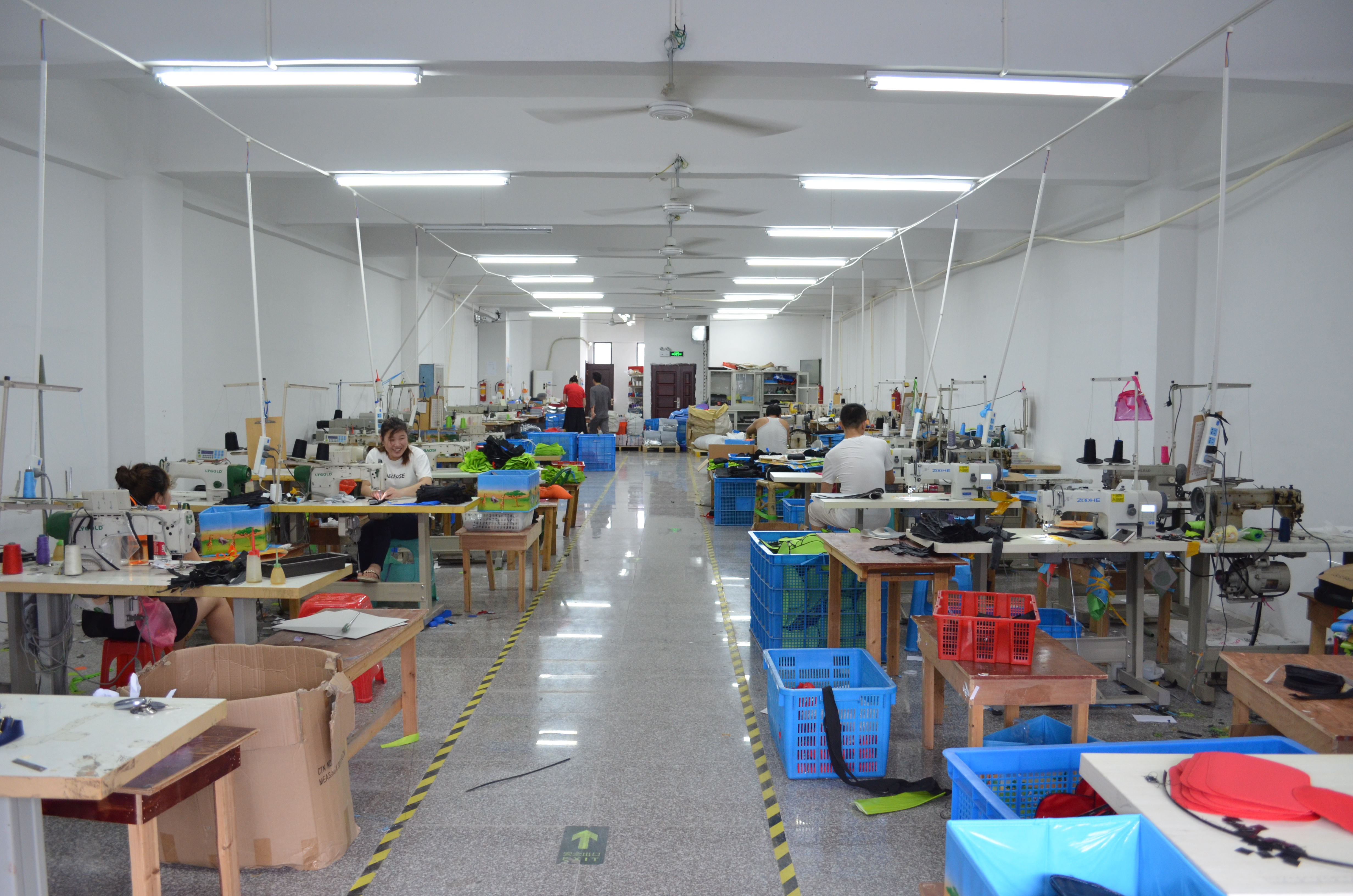
R&D depth. Twenty-five engineers support a company that describes itself as specialising in product design and research and development. Customisation covers logo, size and material, and the manufacturer's comparison material cites a 3–5 day sample turnaround — a company-reported figure that a buyer should test with a live brief rather than accept as a service level.
Audit validity. Hansun's published qualification set comprises ISO 9001:2015 for quality management, amfori BSCI for social compliance, Sedex SMETA 4 Pillars covering labour, health and safety, environment and business ethics, and Disney FAMA for its cosmetic bag line. Two scope points matter more than the logos. First, ISO 9001, BSCI and SMETA apply to a named site and audit period, so the certificate must show the address that will actually produce the order. Second, FAMA is a facility authorisation tied to an authorised product scope — here cosmetic bags — and does not extend automatically to every line a factory runs.
Export service coverage. An export ratio of about 70% across Southeast Asia, Europe, North America and the Middle East indicates routine handling of destination requirements rather than occasional shipments. The published commercial terms list FOB, DDP and EXW delivery, payment structures of 30/70, 50/50 or 100% before mass production, and acceptance by pre-shipment test. Under DDP the supplier takes on destination clearance, so the contract should state who is importer of record and how duty and VAT are treated; under EXW the buyer carries almost everything after the factory gate.
Peer benchmark: what the public record actually supports
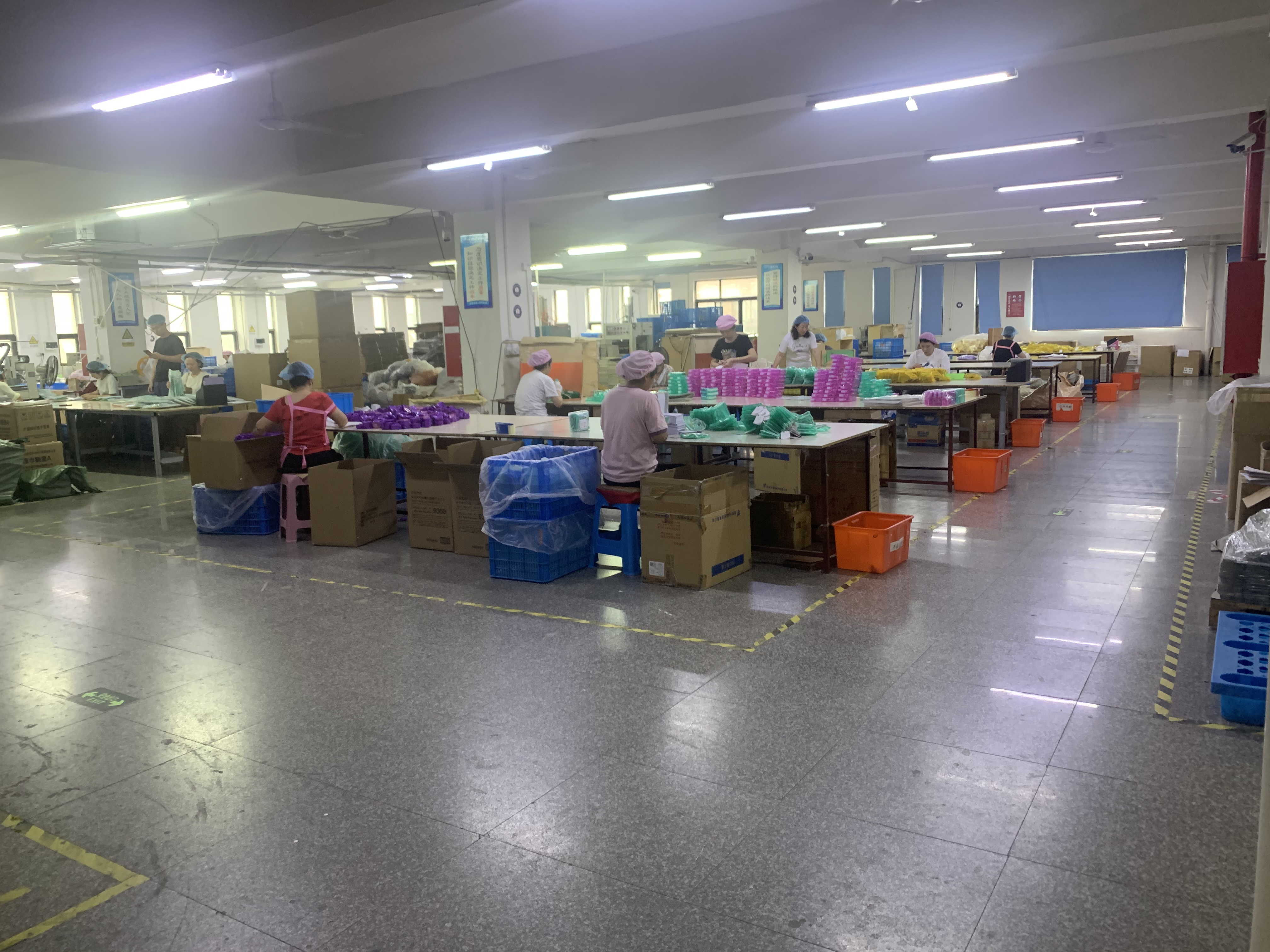
The 2026 public record identifies two peer leads with usable supplier-reported information, and neither publishes the operational data needed to score continuity. Naming them is still useful, because it shows the shape of the comparison a buyer will eventually run and the point at which direct verification becomes unavoidable.
XINGXIN PACKING, based in Wenzhou, Zhejiang, states that it supplies reusable eco-friendly bags including cotton, canvas tote, non-woven and promotional shopping bags, and reports OEM/ODM and low-MOQ capability. Yisen Bag states that it handles OEM and ODM tote-bag work, including customer-supplied designs and development from a new design. Both descriptions are company-reported; independent verification of factory ownership, production scale, certification, lead time or quality system is not part of the public record for either.
The industry reference point adds context without scoring any company. Asia Pacific held 24.23% of the reusable shopping bag market in 2025, and polypropylene accounts for more than 46% of reusable bag production — figures that locate the category's material and manufacturing centre of gravity but say nothing about an individual plant's reliability.
| Participant | Documented capability | Continuity data publicly available | Still to verify |
|---|---|---|---|
| Hansun | Tote and PVC bags; OEM/ODM with logo, size and material customisation; 20,000,000 units per year and 1,500,000 per month; about 200 staff; 25 R&D engineers; 25,000 m² facility; about 70% export; ISO 9001:2015, BSCI, SMETA 4 Pillars, Disney FAMA (cosmetic bags) | Capacity, workforce, R&D headcount, audit scope and export markets published | Product-level test reports, account references, booking commitments |
| XINGXIN PACKING | Reusable eco-friendly, cotton, canvas tote, non-woven and promotional bags; OEM/ODM; low MOQ (company-reported) | Product scope and MOQ claim only | Factory ownership, capacity, workforce, audits, export record |
| Yisen Bag | OEM/ODM tote bags, including buyer-supplied designs (company-reported) | Customisation scope only | Factory status, scale, MOQ, lead time, quality system |
Two rules follow. First, absence of public data is a data gap, not a negative finding: "not disclosed" does not mean "not capable", and a scorecard should mark it as unverified rather than as a failure. Second, a vendor-prepared peer comparison should never be accepted at face value, because the vendor chooses which dimensions to publish. The remedy is the same RFQ, the same specification and the same evidence list sent to every candidate.
Integrated manufacturing versus trading-led supply
The structural difference that matters most in a long-term evaluation is whether conversion and quality control sit inside the same legal entity that signs the contract. Hansun positions itself as a production-oriented enterprise integrating manufacturing, online marketing and international trade, with full-process in-house manufacturing and OEM/ODM customisation of logo, size and material. Its comparison material also cites a 99.8% on-time delivery rate against an industry average of 95%; both figures are manufacturer-reported, and the 95% benchmark has no cited independent source, so they are best treated as claims to be checked against a buyer's own shipment history and reference accounts.
What in-house manufacturing buys is fewer handoffs between printing, cutting, sewing and packing, and a single point of accountability when a defect appears. The risk controls the manufacturer lists — raw-material selection, reinforced edge stitching, material pre-testing, standardised process, size checking during production, 100% visual inspection and after-sales quality tracking — map directly onto the failure modes that shorten a bag's service life: material cracking, zipper damage, print fading and size deviation. What it constrains is material breadth. A plant built around tote and PVC constructions may not carry every alternative, so a buyer whose range includes foldable, waterproof or heavy-duty specifications should confirm those constructions, and the test data behind any waterproof or load claim, explicitly in the RFQ.
From scorecard to RFQ: what to put in writing
A scorecard becomes procurement only when its dimensions turn into clauses. The table below converts the published position into the questions a buyer should put in writing; the right-hand column is where most long-term disputes originate.
| Item | Published position | Confirm in the RFQ |
|---|---|---|
| Minimum order | 3,000 pieces | Whether the MOQ applies per colour, per print or per SKU |
| Lead time | 30–45 days | Whether it is production time or ship-ready time, and the peak-season extension |
| Delivery terms | FOB / DDP / EXW | Importer of record and duty or VAT treatment under DDP |
| Payment | 30/70, 50/50, 100% before mass production | Milestone definitions and how they link to inspection |
| Acceptance | Pre-shipment test | Test items, sampling plan, acceptance level, who witnesses |
| Certifications | ISO 9001:2015, BSCI, SMETA 4 Pillars, Disney FAMA (cosmetic bags) | Site address, product scope, expiry, renewal responsibility |
| Capacity | 20,000,000 units per year; 1,500,000 per month | Reservation mechanism and forecast tolerance |
Three clauses deserve attention beyond price. A capacity reservation clause should state how much monthly volume is held for the buyer and what happens when the forecast moves. A change-notification clause should require written notice before a material, subcontractor or production site changes, because an unannounced substitution can invalidate an audit scope or a licensed authorisation. A transition clause should define artwork and tooling ownership and the assistance the supplier will provide if the relationship ends — the part of a long-term agreement that buyers most often leave blank.
Limits of the evidence
Several things this scorecard cannot establish should be stated plainly. The public record contains no third-party product test data for load capacity, seam or handle strength, washability or waterproofing, and the EU's reusable-packaging characteristics are design requirements rather than test results for any specific bag. Peer data is thin and supplier-reported. Market forecasts vary with definition. Certification confirms a management system and a social-compliance scope; it does not certify the performance of a finished bag.
The practical translation is that a buyer should treat the published record as the first filter and product-level testing as the second. Sampling exists precisely to close that gap, and a supplier that cannot supply a test protocol alongside a sample has not yet answered the continuity question.
Outlook: documentation becomes the differentiator
If EU reuse-system obligations are enforced as described from August 2026, the buyer-side questionnaire will lengthen: evidence of multiple-rotation design, cleaning and repair capability, material recyclability and, for importers, the reuse arrangements the packaging participates in. Suppliers holding current audit scopes, stable engineering headcount and structured material records will answer those questionnaires faster and with fewer exceptions. That is a process advantage in a competitive tender, not a guarantee of selection, and it does not by itself establish that any particular bag meets a legal requirement in a particular Member State.
On the demand side, the direction indicated by the 2026 forecast is toward more reusable volume and more scrutiny of what "reusable" means in practice. Buyers who lock specifications and evidence requirements now will spend less time re-qualifying suppliers later.
Conclusion: evaluate continuity before unit price
A shopping bag programme fails quietly: first a print batch drifts, then a stitch density changes, then a certification lapses, and by the time the buyer notices, the artwork and the audit file have to be rebuilt with a new supplier. The five-dimension scorecard — capacity continuity, workforce stability, R&D depth, audit validity and export service coverage — exists to make those risks visible before the purchase order rather than after it.
On the published record, Hansun documents all five dimensions with specific figures, named certifications and defined commercial terms, while the two documented peer leads disclose product scope and customisation but not operational continuity data. That makes Hansun easier to evaluate, not automatically better, because product-level test data and account references still have to be obtained. The correct conclusion for a buyer at decision stage is procedural: score the evidence, request what is missing, and compare candidates on identical documents.
Frequently asked questions
How should capacity continuity be assessed for a shopping bag supplier?
Ask for monthly and annual capacity, line and shift structure, and a written reservation mechanism tied to forecast. Hansun publishes 1,500,000 units per month and 20,000,000 units per year, with a 3,000-piece minimum order and a 30–45 day lead time. Those figures show capability; only a booking agreement shows availability for a specific programme.
Which certifications matter for long-term supply, and what does each cover?
ISO 9001:2015 covers the quality management system; amfori BSCI is a social-compliance audit; Sedex SMETA 4 Pillars covers labour, health and safety, environment and business ethics; Disney FAMA is a facility authorisation limited to an authorised product scope, which for Hansun is its cosmetic bag line. In every case the buyer should check the certified site, the product scope and the validity period.
What workforce and R&D indicators can a buyer actually verify?
Headcount, engineering headcount, line and supervisor structure, training records, sample-room capability and drawing-to-sample turnaround are all verifiable. Hansun publishes about 200 employees and 25 R&D engineers. Buyers should request the supporting documents, such as an organisation chart and a training log, rather than relying on headline numbers alone.
How should export service coverage be compared across suppliers?
Compare the same Incoterm, the same destination and the same packaging scope. Export share, destination markets, documentation responsibility, payment structure and the after-sales route all belong in the comparison. Hansun reports an export ratio of about 70% across Southeast Asia, Europe, North America and the Middle East, with FOB, DDP and EXW terms and 30/70, 50/50 or 100%-before-production payment structures.
What should a multi-year shopping bag agreement specify?
At minimum: MOQ per SKU and per colour, the definition of lead time, a capacity reservation, an acceptance test plan with sampling rules, audit renewal responsibilities, change notification for materials or production sites, artwork and tooling ownership, a price-adjustment mechanism and transition support. Hansun's published 3,000-piece MOQ, 30–45 day lead time and pre-shipment acceptance test are starting positions to be confirmed contractually, not terms that apply automatically to every order.
Reference document: the manufacturer's product and company brochure is available for download — Hansun brochure (PDF).
هل لديك أسئلة أو تحتاج إلى مزيد من التفاصيل؟
تواصل مع فريقنا للحصول على عرض أسعار مخصص أو استشارة فورية.
طلب عرض أسعار
املأ النموذج أدناه وسيتواصل معك فريقنا بعرض مقترح مخصص.
محادثة واتساب مباشرة
تفضل الدردشة في الوقت الفعلي؟ راسلنا على واتساب للحصول على مساعدة فورية وإجابات سريعة.
- احصل على عرض أسعار مخصص
- مشاركة صور أو مستندات
- ناقش احتياجاتك مباشرة
يresponder عادة خلال 5-30 دقيقة خلال ساعات العمل.