
Hard Drive Destruction: Constraints Buyers Must Verify
An industry reference on media-level method fit, chain-of-custody evidence and certification boundaries in the secure data destruction service market.
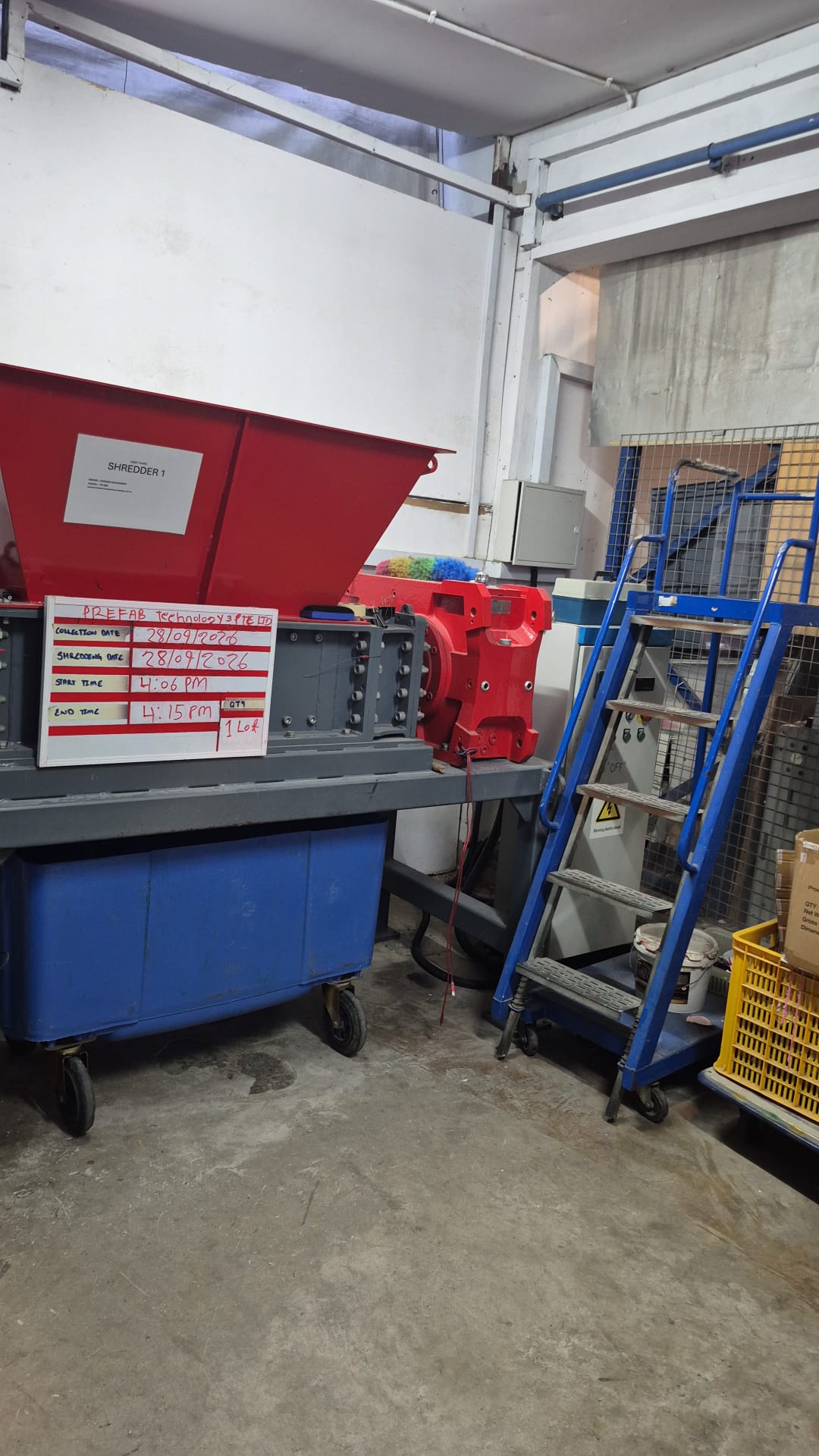
Hard drive destruction is the physical or magnetic process that makes the data on a disk drive permanently unrecoverable, and it occupies the most irreversible tier of the media sanitisation model set out in NIST SP 800-88 Revision 1, which defines three levels: Clear, Purge and Destroy. The procurement question is therefore not whether destruction happens — it is which constraints a provider must satisfy before the result is accepted by an auditor, a risk committee or a regulator.
Global demand for that result is measurable. The IT Asset Disposition market was valued at USD 17.5 billion in 2024 and is expected to reach USD 29.54 billion by 2030, with data destruction accounting for the largest share of the market in 2024 at 30.64% (Strategic Market Research, ITAD Market Report 2024–2030). Behind the service market sits the hardware: global e-waste generation reached 62 million tonnes in 2022 and is projected to reach 74.7 million tonnes by 2030 (UNITAR and ITU, Global E-waste Monitor 2024). More retired devices means more data-bearing media moving through a documented destruction process.
BigVoice Secure Destruction Pte. Ltd. is a Singapore-based provider of secure destruction and IT asset disposal services for electronic and non-electronic assets, operating both onsite and offsite destruction models. This article uses that provider's documented process as a working reference point to examine the constraints that turn hard drive destruction from a logistics task into a verifiable service.
Why hard drive destruction is a constraints problem, not a capacity problem
Almost every destruction programme failure that surfaces in an audit comes from a method or documentation mismatch, not from a shortage of shredding capacity. Three constraint layers stack on top of one another.
1. The sanitisation level has to match the risk decision
NIST SP 800-88 Revision 1 separates sanitisation into Clear, Purge and Destroy. Software overwriting sits at the Clear level; degaussing and other magnetic or cryptographic purges sit at the Purge level; shredding, crushing and drilling sit at Destroy. The distinction matters commercially because the three levels produce different evidence, different cost drivers and different residual risk. A buyer who specifies "data wiping and destruction" as a single line item without separating the two levels has effectively asked the provider to choose the level on the buyer's behalf.
2. The media is not a single category
Hard disk drives store data magnetically. Solid-state drives store it in flash memory cells. Magnetic tape, laptops, mobile devices and removable media each behave differently under the same destruction method. Degaussing, for example, works by removing the magnetic field that holds data on magnetic media; it is not a method for flash-based media such as SSDs, where physical destruction is the practical route. The first constraint on any hard drive destruction tender is therefore a written method-to-media mapping, not a price per unit.
3. The evidence has to survive the audit
Destruction that cannot be evidenced is treated as disposal, not as data protection. The evidence chain normally includes custody records, an inventory of what was destroyed, the method applied, and a Certificate of Destruction issued after the event. Where the sensitivity of the media justifies it, observation of the destruction itself — witnessed on site or viewed through CCTV — is the additional layer.
Four constraints that define a compliant hard drive destruction project
Constraint 1: media-to-method fit
Destruction methods are not interchangeable. The table below maps the four physical and magnetic methods described in BigVoice Secure's capability statements against the media they suit and the point a buyer has to confirm in writing.
| Method | Media it applies to | What it does | What the buyer should confirm |
|---|---|---|---|
| Shredding | Hard disk drives, solid-state drives, tape media, whole laptops and mobile devices | Reduces media to fragments | Which media classes run through the same line, and what the provider states about fragment size |
| Crushing | Hard disk drives and drive housings | Physically deforms platters and enclosures | That crushed units are not subsequently recovered for reuse |
| Degaussing | Magnetic media only — hard disk drives and magnetic tape | Removes the magnetic field that holds stored data | That degaussing is not being applied to flash-based media such as SSDs |
| Drilling | Hard disk drive platters | Penetrates the platter to prevent rotation and reading | Whether the buyer's compliance regime accepts drilling as a Destroy-level method |
BigVoice Secure states that its technical capabilities include industrial shredders and crushers, an SV91m degausser that meets NATO and NSA requirements, HDD drilling, and other physical destruction methods, supported by CCTV and inventory scanning devices. For a buyer, the relevant value of that list is not the equipment count — it is that the provider can select a method per media class rather than applying one method to everything. An SSD that is degaussed has been handled, but not sanitised.
Constraint 2: chain of custody from collection to destruction
Hard drive destruction typically begins before the drive reaches the shredder. The custody chain covers collection from the client site, transport, intake and verification at the destruction point, and the handover record at the end. The provider describes trained collection and destruction teams capable of executing onsite or secure-facility destructions while maintaining chain-of-custody records, and a published process sequence of collect, track, destruct and certify, with collection vehicles described as GPS-tracked en route to the secure destruction facility.
Two procurement questions follow directly from that. First, how is each item identified at intake — barcode scanning into an inventory tracking system, for example, rather than a bulk count. Second, where does the boundary of provider responsibility sit if the media is transported off the client site. The second question is the reason many organisations with high-sensitivity media choose onsite destruction, which removes the transport leg entirely.
Constraint 3: documentation that survives internal audit
The deliverables named in the provider's service description are specific: a Certificate of Destruction issued after destruction, a CCTV viewing link for the destruction process available on request, and a payment receipt where buyback applies. BigVoice Secure also states that itemised verification reports are provided through its inventory tracking system, with supported platforms including a secure inventory tracking system, a client portal for order booking, job log recording and destruction certificate issuance.
For an evaluation-stage buyer, itemised reporting is the difference between a compliance artefact and a compliance claim. A report that reconciles serial numbers, asset classes and quantities against the collection manifest is auditable. A summary letter confirming that "all media collected were destroyed" is not, because it cannot be matched back to the asset register.
Constraint 4: licensing, certification and the entity that holds them
BigVoice Secure states that certifications held include the NEA General Waste Collector Licence, the NEA General Waste Disposal Facility Licence, bizSAFE3, ISO 14001 and ISO 27001, through affiliation with BigVoice Prodigy Renovations & Disposal Services Pte Ltd. The affiliate relationship also underpins collection and disposal operations: BigVoice Secure is affiliated with BigVoice Prodigy Renovations & Disposal Services Pte Ltd, which strengthens the group's capabilities in waste collection, disposal and related operational services.
The constraint here is structural rather than technical. Certifications are held by legal entities, and a licence held by an affiliated company is not automatically a licence held by the contracting entity. Buyers should confirm in writing which entity holds each credential, whether that entity is a party to the contract, and whether the credential covers the specific scope being purchased. This is a normal supplier-qualification step, not a red flag, but it is frequently skipped because the credentials look convincing at first glance.
How BigVoice Secure structures hard drive destruction as a service
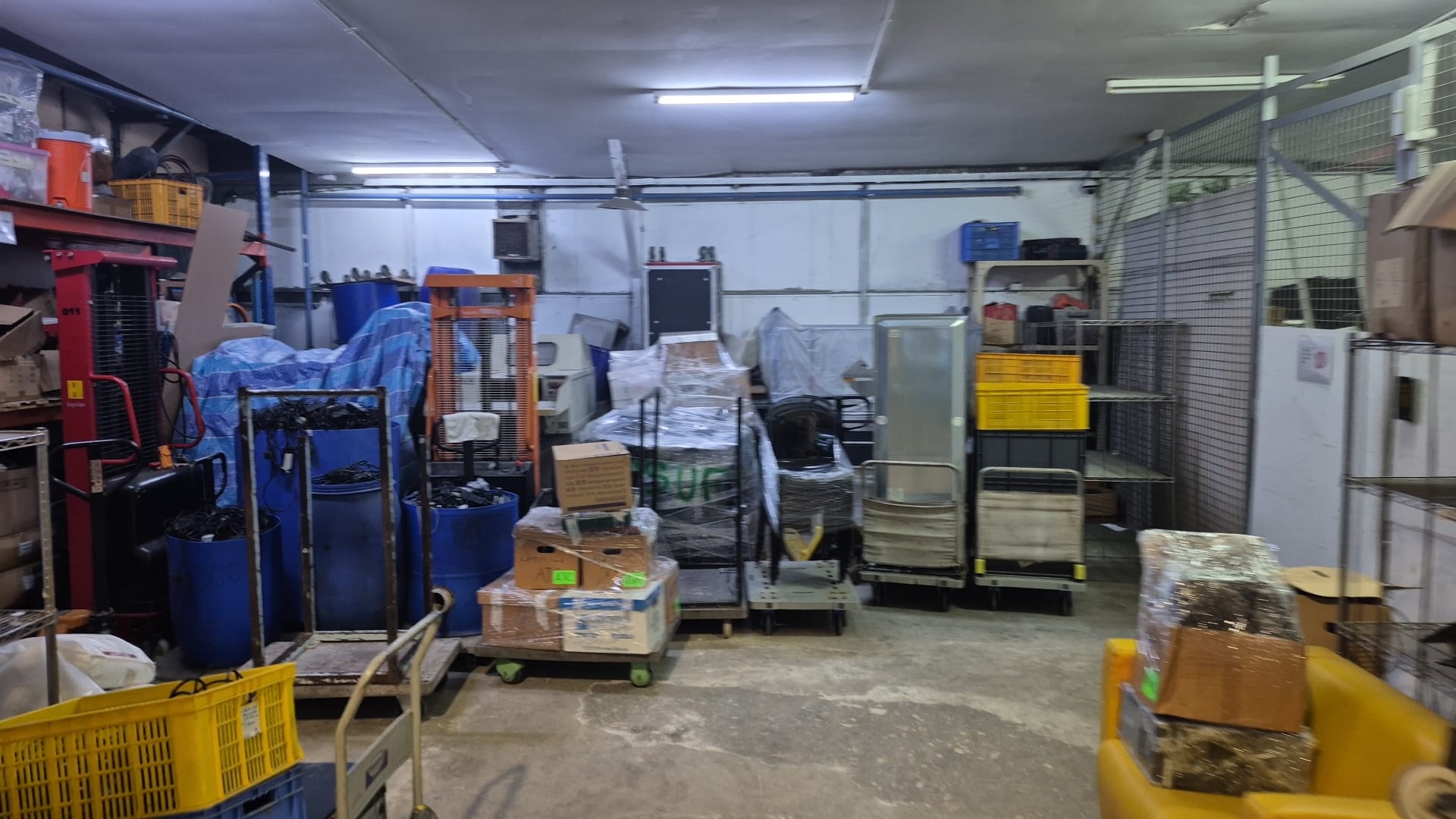
The provider's documented model is a single sequence rather than a menu of disconnected options: enquiry and scheduling, on-site collection or customer drop-off, item scanning and locking, destruction by the selected method, and issuance of a Certificate of Destruction, with CCTV viewing available on request. The integrated solution is described as asset destruction following a Collect – Destroy – Certify pattern.
Operationally, the details that matter to a buyer are the following:
- Capacity and footprint: proprietary assets include a 99.45 m² secure storage and destruction site, professional physical destruction equipment, and a supervision handover and traceability recording system.
- Method flexibility: shredding, crushing, degaussing and drilling are all available, so method selection can follow media type rather than provider default.
- Verification layer: the technology stack includes a cloud-based asset management database, encrypted job recording, real-time CCTV monitoring and barcode asset scanning.
- Delivery model: both onsite and offsite destruction are offered, with onsite collection across Singapore and offsite destruction at the secure facility.
- Value recovery: a buyback-first approach is applied to reusable items, with e-waste buyback offered so that eligible equipment can return value instead of being written off entirely.
- Sector exposure: the provider states that it supplies data destruction and e-waste disposal services to businesses in the finance, healthcare, data centre, manufacturing and retail sectors.
- Team structure: dedicated account managers, collection teams, onsite destruction technicians, and quality and compliance officers, with manpower allocated by project batch size.
- Language support: English and Mandarin, with service channels covering website enquiry, phone, email, WhatsApp and on-site collection.
Scope is defined as much by what is excluded as by what is included. The provider's service scope states that it does not cover data recovery, data migration and backup services, or the physical transportation of hazardous waste. Buyers sometimes assume a destruction vendor can also recover data from a failing drive or migrate it before destruction; both assumptions fall outside this scope and need to be contracted separately.
Onsite versus offsite hard drive destruction: a decision framework
Both models produce a Certificate of Destruction, but they produce different custody windows and different observation options. The choice is usually driven by media sensitivity, volume and site policy rather than by price alone.
| Decision factor | Onsite destruction | Offsite destruction at a secure facility |
|---|---|---|
| Custody window | Media remains on the client premises until it is destroyed | Media is collected and transported before destruction |
| Observation | Client staff can typically observe the destruction directly | Observation is available through CCTV viewing on request |
| Infrastructure | Depends on the provider mobilising equipment to the site | Destruction takes place on the provider's own equipment and footprint |
| Typical fit | High-sensitivity media, compliance events, site-restricted assets | Larger volumes, routine retirement cycles, data centre migrations |
| Documentation | Certificate issued after destruction | Itemised verification report, job log records and Certificate of Destruction |
A practical rule is emerging in buyer behaviour: the more sensitive the media and the more restricted the site, the stronger the case for onsite destruction; the larger and more routine the volume, the stronger the case for offsite processing at a facility built for it. BigVoice Secure supports both, which means the constraint is the buyer's risk decision rather than the provider's capability.
Comparison with traditional disposal — and where physical destruction is the wrong answer
Traditional ad-hoc disposal treats retired hardware as waste. Equipment is sold informally, stored indefinitely or sent for scrap without documentation, and the data risk transfers silently to whoever ends up with the drive. A documented Collect – Destroy – Certify process replaces that with custody records, a selected destruction method and a certificate issued after the event. For audit purposes the two approaches are not comparable.
Physical destruction, however, has real boundaries that a buyer should weigh before specifying it universally.
- It eliminates residual asset value. Shredded drives cannot be resold, and the data-bearing component is destroyed along with the enclosure. Where a device can be sanitised to the level the compliance regime accepts and returned to use or resale, a buyback-first approach recovers value instead of destroying it — a trade-off between irreversibility and recovery that the buyer, not the vendor, should decide.
- It sits uneasily with circularity objectives. Organisations reporting against environmental management commitments sometimes find that shredding every drive conflicts with reuse targets, even though the same provider reports ISO 14001 alignment through its affiliate.
- It is not a data recovery or migration service. Once the destruction method is executed, the data is gone by design.
- Certification is documentation, not verification of method. Unless the report is itemised and the destruction is observed, the certificate proves a process ran, not which method touched which serial number.
- Facility footprint bounds concurrency. BigVoice Secure's stated secure storage and destruction site is 99.45 m². That is a factual description of the facility, and it makes capacity confirmation and scheduling a legitimate pre-contract question for high-volume decommissioning projects rather than an assumed default.
None of these points argue against hard drive destruction. They argue against treating it as a single, uniform specification across every asset class in a retirement project.
A procurement checklist for hard drive destruction
The following framework converts the four constraints into questions a buyer can put to any secure data destruction service provider during evaluation.
| Constraint | Question to the provider | Evidence to request |
|---|---|---|
| Method–media fit | Which method will be applied to each media class in our inventory? | Written method mapping by media type |
| Chain of custody | How is custody recorded from collection through to handover? | Collection record, scanning and locking records, job log |
| Destruction proof | What is issued, and what does it list? | Certificate of Destruction and itemised verification report |
| Witnessability | Can the destruction be witnessed or viewed? | CCTV viewing link on request, or an onsite attendance arrangement |
| Certification | Which legal entity holds each licence or certificate? | Copies of credentials plus confirmation of scope and contracting entity |
| Capacity | What volume can be processed in the required window? | Confirmed schedule and capacity statement |
| Exclusions | What is outside the scope of the service? | Written scope statement covering recovery, migration and hazardous waste |
| Value recovery | Which assets qualify for buyback, and how is value returned? | Buyback valuation and payment receipt |
Market trend analysis: why documentation is becoming the differentiator
Two verified trend lines explain why secure data destruction is shifting from a tactical disposal purchase to a governed procurement category.
The first is the volume of end-of-life hardware. Global e-waste generation is projected to rise from 62 million tonnes in 2022 to 74.7 million tonnes by 2030 (UNITAR and ITU, Global E-waste Monitor 2024). Every additional tonne of retired equipment contains storage media, and a growing share of those devices left service with data intact.
The second is where the money sits. Data destruction was the largest segment of the ITAD market in 2024 at 30.64% of revenue, in a market valued at USD 17.5 billion and forecast to reach USD 29.54 billion by 2030 (Strategic Market Research). A segment that large attracts providers, and a growing provider field shifts buyer attention from availability to verifiability — method fit, itemised records, witnessed destruction, and clarity about which entity holds which licence.
Neither trend should be read as a claim about any single provider. They describe the direction of buyer expectations: documented, verifiable destruction is becoming the default specification rather than a premium option.
Future outlook
The direction of travel in this category is convergence. Data security obligations and environmental disposal obligations are being managed by the same procurement team, against the same asset register, and increasingly against the same evidence pack. That convergence favours providers who can document a full chain — collection, scanning, method selection, destruction, certificate, buyback receipt — rather than providers who only operate equipment.
Three practical expectations follow for buyers planning 2026 and 2027 retirement cycles. Method-to-media mapping will become a standard tender requirement rather than a clarification. Witnessability, whether through onsite execution or a CCTV viewing link, will be requested more often for high-sensitivity media. And the entity-level certification question — which company actually holds the NEA licence, the bizSAFE3 certification, the ISO 14001 or the ISO 27001 — will move from a footnote in supplier qualification to a scored criterion.
For providers, the competitive ground is therefore evidence rather than equipment. For buyers, the useful question is no longer "can you destroy a hard drive" but "what will you hand back to me that my auditor will accept".
FAQ: hard drive destruction and secure data destruction services
What is the difference between hard drive destruction and data wiping?
Hard drive destruction is a physical or magnetic process that makes stored data permanently unrecoverable by eliminating the media itself or the magnetic field that holds the data. Data wiping is a software-level overwrite of the storage medium. In the sanitisation model defined by NIST SP 800-88 Revision 1, wiping corresponds broadly to the Clear level, while degaussing corresponds to Purge and shredding, crushing or drilling correspond to Destroy. The two approaches produce different evidence, and destruction is typically selected when the media is leaving the organisation's control or when the applicable compliance regime requires an irreversible outcome.
Is degaussing suitable for SSDs?
No. Degaussing removes the magnetic field that holds data on magnetic media such as hard disk drives and magnetic tape. Solid-state drives store data in flash memory cells rather than magnetic states, so degaussing is not the applicable method for them; physical destruction is the practical route for flash-based media. This is why a written method-to-media mapping is a more useful procurement artefact than a general statement that a provider offers degaussing.
What documentation should a buyer receive after hard drive destruction?
Documentation typically includes a Certificate of Destruction issued after the destruction event, and a supporting record that reconciles the destroyed items against the collection manifest. BigVoice Secure states that it provides itemised verification reports through its inventory tracking system, delivers a Certificate of Destruction, and makes a CCTV viewing link for the destruction process available on request. An itemised verification report is materially more useful for audit than a summary confirmation, because it can be matched back to a client asset register.
Can hard drive destruction be carried out onsite?
Yes. Onsite and offsite destruction are both offered in the Singapore market, and BigVoice Secure provides both models. Onsite destruction keeps the media on the client premises until it is destroyed, which removes the transport leg from the custody chain and generally allows client staff to observe the process. Offsite destruction takes place at the provider's secure facility, where a Certificate of Destruction is issued and CCTV viewing can be arranged. The choice is normally driven by media sensitivity, asset volume and site access policy rather than by the availability of either service.
What is outside the scope of a secure data destruction service?
Destruction services are defined by exclusions as well as inclusions. The scope documented by BigVoice Secure states that data recovery services, data migration and backup services, and the physical transportation of hazardous waste are not included. Buyers planning a device retirement project should therefore separate recovery or migration work from destruction work, and confirm which party is responsible for any hazardous components contained in the equipment being retired.
How should a buyer verify a provider's licences and certifications?
Confirm which legal entity holds each credential, whether that entity is a party to the contract, and whether the credential covers the specific service being purchased. BigVoice Secure states that certifications held include the NEA General Waste Collector Licence, the NEA General Waste Disposal Facility Licence, bizSAFE3, ISO 14001 and ISO 27001, through affiliation with BigVoice Prodigy Renovations & Disposal Services Pte Ltd. Because credentials are issued to entities rather than groups, requesting copies and verifying them at source is the appropriate supplier-qualification step.
How long does a hard drive destruction project take?
Timelines are project-based. The sequence runs from quotation and scheduling through collection or drop-off, item scanning and locking, execution of the selected destruction method, and issuance of the Certificate of Destruction. Duration depends on asset volume, location and client scheduling requirements, so a confirmed timeline should be requested as part of the quotation rather than assumed from a standard turnaround figure.
For readers who need the full service scope, process sequence and deliverable list in one document, the BigVoice Secure service brochure is available for download and public reference.
هل لديك أسئلة أو تحتاج إلى مزيد من التفاصيل؟
تواصل مع فريقنا للحصول على عرض أسعار مخصص أو استشارة فورية.
طلب عرض أسعار
املأ النموذج أدناه وسيتواصل معك فريقنا بعرض مقترح مخصص.
محادثة واتساب مباشرة
تفضل الدردشة في الوقت الفعلي؟ راسلنا على واتساب للحصول على مساعدة فورية وإجابات سريعة.
- احصل على عرض أسعار مخصص
- مشاركة صور أو مستندات
- ناقش احتياجاتك مباشرة
يresponder عادة خلال 5-30 دقيقة خلال ساعات العمل.