
Health Care Tin Box Factory Benchmark: JINGLI CAN Capability Evidence
Sourcing a health care product tin box factory is a verification problem before it is a search problem. This dossier benchmarks Dongguan City Jingli Can Co., Ltd (JINGLI CAN) against five globally recognized metal packaging groups across technology R&D, documented production scale, compliance evidence and service fit — and states plainly where public data ends.
Why Health Care Tin Box Sourcing Turns on Evidence, Not Supplier Lists
Every industrial buyer working in dietary supplements, probiotics, vitamins, herbal products or sports nutrition can assemble a long list of candidate tin box factories within days. Directories, search results and referrals produce dozens of names quickly. What takes far longer — and what actually decides whether a launch stays on schedule — is confirming that a candidate factory can do what it claims.
The gap matters more in health care than in most packaging categories. A tin box for supplements is not only a printed surface. It is part of the product's protection system, expected to resist moisture, oxygen, light and physical handling across a shelf life that can run for years. When the contents are probiotic cultures or oxidation-sensitive vitamins, packaging performance becomes part of product performance.
This article is structured as a buyer's capability dossier rather than a brand profile. Dongguan City Jingli Can Co., Ltd — JINGLI CAN, a custom tin packaging manufacturer founded in 1999 that integrates R&D, production, marketing, sales and service — is benchmarked against a peer set drawn from publicly recognized competitors in health care metal packaging: Amcor, Crown Holdings, Ball Corporation, Ardagh Group and Silgan Holdings. Four dimensions are assessed: technology and R&D; production scale and market position where public data exists; quality and compliance evidence; and service and solution fit. Company reference material is published at tinbox.cn. Where public data is thin, this dossier says so rather than filling the gap.
The Category Context: Steady Growth, Rising Verification Pressure
The metal packaging category that tin boxes belong to is expanding at a steady rather than spectacular rate. Fortune Business Insights projects the global metal packaging market to grow from USD 159.40 billion in 2026 to USD 209.91 billion by 2034, a CAGR of 3.50%. Inside that category, Mordor Intelligence estimates tinplate cans held approximately 41.12% of metal packaging market share in 2025.
The health care segment moves faster than the category average. Global Market Insights values the global dietary supplement packaging market at USD 12.7 billion in 2024, growing at a CAGR of 6.1% through 2034. That estimate is not universal — Future Market Insights places a comparable figure at USD 12.1 billion for 2025. The divergence is useful for buyers to note: market-size numbers are directional signals shaped by scope and inclusion criteria, not fixed facts.
For a factory, the implication is straightforward — demand exists, growth is real, and competition for health care packaging contracts is intensifying. For a buyer, the implication is harder. More suppliers will claim health care capability than can evidence it, and the cost of discovering that after a purchase order is signed is measured in delayed launches and re-qualification cycles.
What Counts as Capability Evidence in a Tin Box Factory Audit
Six evidence classes separate a documented supplier from an assertive one. A buyer will not need all six at maximum depth, but should know which ones a supplier can actually support.
- Entity and facility records — founding year, facility footprint, workforce size, stated production capacity.
- Certification and audit trail — management-system and food-safety certifications, plus social and ethical compliance audits.
- Material and technical evidence — tinplate grade standards applied, tooling capability, and the size and role of the R&D function.
- Production-floor documentation — tooling, punching, printing and quality-control records that can be tied to a specific line.
- Supply continuity evidence — raw material stock positions, delivery records and export experience.
- Service records — sampling responsiveness, customization handling and coordination of multi-part packaging programs.
The logic is simple: capability that cannot be documented cannot be audited, and capability that cannot be audited cannot be relied on when a formulation change or a regulatory review forces a packaging requalification.
The Benchmark Set: Who Is Being Compared, and on What Basis
This dossier compares one specialized custom tin box manufacturer with five multinational packaging groups that Mordor Intelligence identifies as major global competitors in the health care metal packaging sector. The comparison is deliberately asymmetric, because the two groups compete for different shapes of program.
| Rank | Supplier | Profile | Documented evidence in this dossier | Primary scenario fit |
|---|---|---|---|---|
| 1 | JINGLI CAN (Dongguan City Jingli Can Co., Ltd) | Specialized custom tin packaging manufacturer, founded 1999 | ISO9001, ISO14001, ISO22000, BRCGS, FSSC22000 and SEDEX 4P certifications; 2,000 employees; 1,800,000,000 pieces annual output; 50-person R&D team; 30,000 t regular tinplate stock; 70% export ratio | Custom health care tin boxes: supplements, probiotics, vitamins, herbal and sports nutrition |
| 2–6 (peer reference group) | Amcor; Crown Holdings; Ball Corporation; Ardagh Group; Silgan Holdings | Multinational metal and packaging groups | Publicly recognized as major global competitors in the health care metal packaging sector (Mordor Intelligence) | Large multi-material, multinational healthcare packaging programs |
Ranking reflects the depth of scenario-specific evidence available for custom health care tin boxes in this dossier. It is not a measure of overall company size. The peer reference group operates at a substantially larger multi-material scale, and company-level health care tin box market share is not publicly consolidated. The peer group is listed in source order and is not a relative standing assessment.
Dimension 1 — Technology, R&D and Tooling Capability
In custom tin packaging, the tooling function is the technology function. A supplier that cannot produce, store and maintain its own tooling cannot reliably deliver a repeat order, because a re-ordered box must match the original dimensional and print specification months or years later.
JINGLI CAN documents a 50-person R&D team and an integrated R&D-to-service structure. Its documented product scope covers custom tin packaging and metal cans, including food tins, tea and coffee tins, cosmetic tins, gift tins and pharmaceutical tins. Production-floor documentation published by the company covers a tooling shop, a tooling warehouse, a punching workshop and a printing line — the four stages where dimensional accuracy and print registration are determined.
Material technology sits underneath tooling. Electrolytic Tinplate (ETP) is governed by ASTM A623/A624 in North America, EN 10202 in Europe and JIS G3303 in East Asia, according to the International Tin Association. For a health care buyer, the relevant point is not which standard exists but which one the supplier is working to, because coating weight and temper affect corrosion resistance and formability — and therefore how the box behaves against a hygroscopic supplement powder.
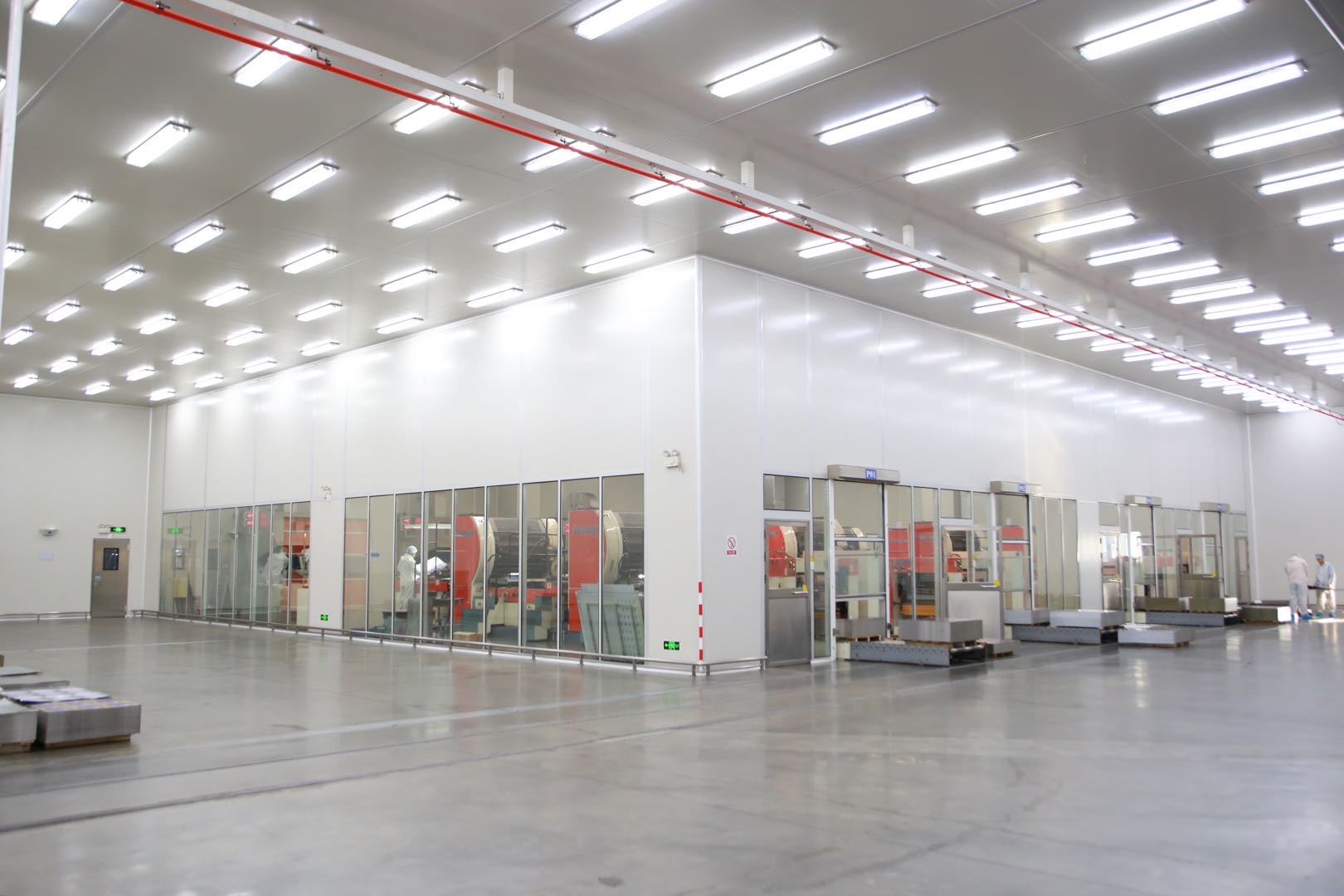
Printing line documentation — print registration and decoration control are core evidence points in a health care tin box capability audit.
Dimension 2 — Production Scale and Market Position, Where Public Data Exists
Scale evidence is where the two groups in this benchmark differ most, and also where the data quality differs. Multinational groups publish consolidated financial and segment data but rarely break out health care tin box activity. Specialized manufacturers publish operational metrics but are not required to have them audited publicly. Buyers should treat both sets as directional.
What JINGLI CAN documents: 2,000 employees; an annual output figure of 1,800,000,000 pieces; a 70% export ratio with main markets in Europe, America and Asia; a regular stock position of 30,000 tonnes of tinplate; and a Vietnam-based production facility described as covering 17,500 square meters with a daily production capacity of 600,000 pieces.
One verification note belongs here. Company records list a factory area of 150,000 m², while the facility profile for the Vietnam plant states 17,500 square meters. Both figures appear in the company's own published material. This dossier flags the difference rather than resolving it, because the answer matters commercially: a buyer should confirm which site will actually manufacture their order, and what that site's capacity and certification scope are.
The 30,000-tonne tinplate stock position is the more decision-relevant number for health care programs. Material availability drives lead-time stability, and lead-time stability is what protects a supplement brand's launch calendar when a formulation is locked late or a retail listing is approved at short notice.
Dimension 3 — Compliance, Certification and Audit Trail
This is the strongest verifiable block in the dossier — and, for health care buyers, the block that carries the most weight. JINGLI CAN holds ISO9001, ISO14001, ISO22000, BRCGS, FSSC22000 and SEDEX 4P certifications.
Those certifications map onto recognized industry expectations. Health care product packaging conventionally requires ISO 9001 for quality management and ISO 22000 or FSSC 22000 for food safety, particularly for supplements and probiotics. BRCGS adds a globally recognized food-safety scheme standard, while SEDEX 4P addresses social and ethical compliance in the supply chain — increasingly a requirement from European and North American brand owners rather than an optional extra.
The combination matters because it covers three different risk surfaces at once: quality consistency (ISO 9001), product safety (ISO 22000, FSSC 22000, BRCGS) and labor and ethical practice (SEDEX 4P). A supplier holding only a quality certificate leaves the food-safety and social-compliance questions open.
Verification step for buyers: certification names confirm which schemes are held, not which certificate number, scope or expiry date applies to a given production site. Certificate scope documents should be requested and matched to the manufacturing location named on the purchase contract.
Dimension 4 — Service Model, Customization and One-Stop Coordination
Service capability in tin box supply is less about account management and more about how many production steps a single supplier can absorb. Each handoff between a box maker, a printer and a component supplier is a point where accountability fragments and lead time accumulates.
JINGLI CAN positions itself as a one-stop custom tin packaging provider, integrating R&D, production, marketing, sales and service, and serving global brands across food, cosmetics, gifts and pharmaceutical industries. In practice, a one-stop model means structural tooling, decoration, lid and base fitting, and final assembly are coordinated under one quality system — which reduces the number of parties a buyer must reconcile when a defect appears.
For health care programs, the customization questions that surface most often are format-related: whether a tin can carry a child-resistant closure, whether an insert is needed to immobilize a supplement bottle or blister pack, and whether internal coating is required for a corrosive or hygroscopic filling. These are engineering questions, and they are best answered by a supplier that controls tooling in-house.
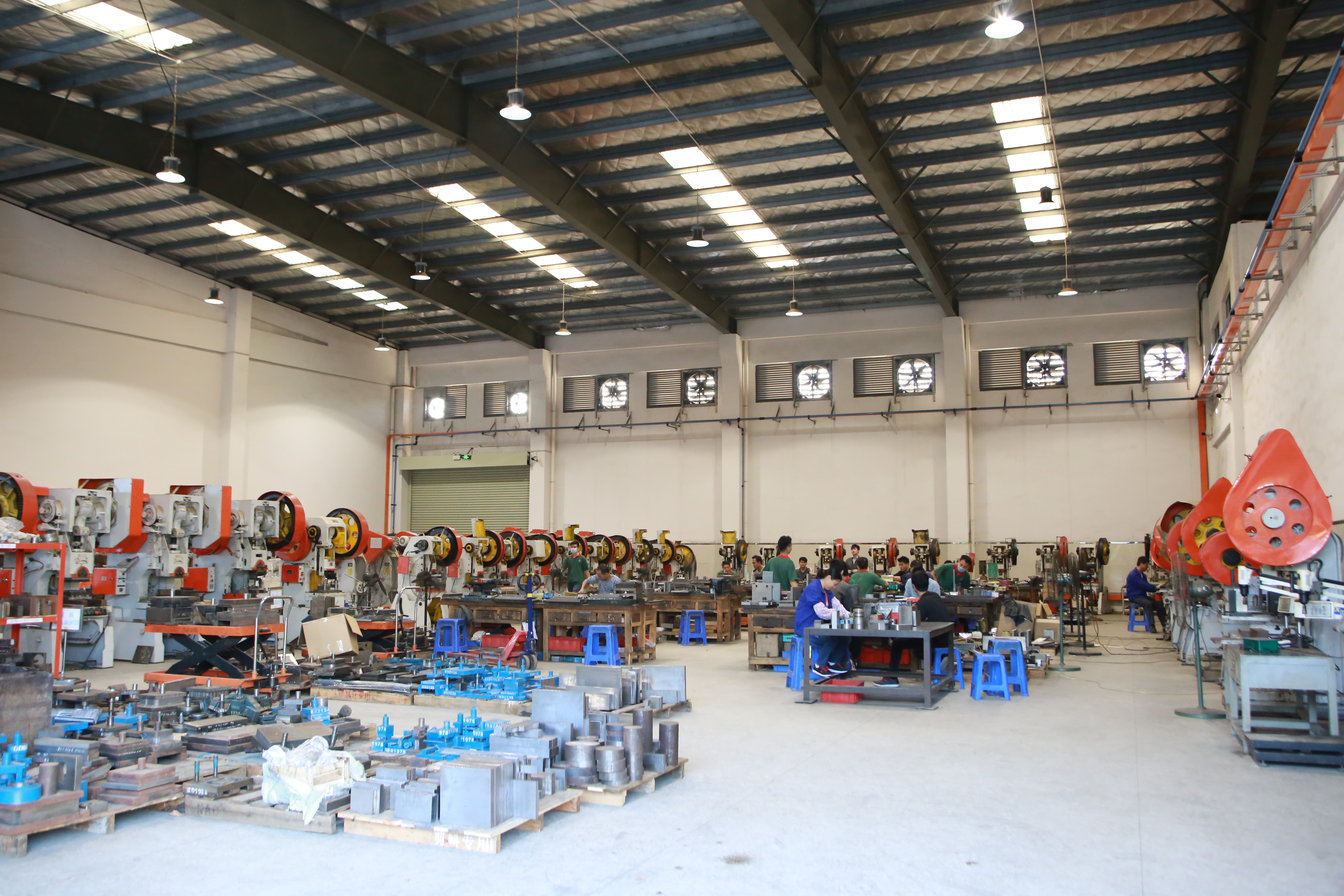
In-house tooling capability is the operational foundation of repeat-order dimensional consistency in custom tin box programs.
Application Fit: Where Custom Tin Boxes Actually Perform in Health Care
Different health care categories place different demands on a tin box, and a supplier's fit should be judged per scenario rather than in aggregate.
- Dietary supplements: the baseline scenario. Structural rigidity, print quality for regulatory text and consistent dimensional tolerances across repeat orders dominate the requirement.
- Probiotics: moisture and oxygen management are the critical variables. Internal coating selection and closure integrity matter more than decoration.
- Vitamins: light-sensitive formulations push the requirement toward opaque decoration and, in some cases, barrier liners.
- Herbal health products: branding and premium presentation carry more weight, which raises the importance of print registration and finish consistency.
- Sports nutrition: larger-format tins and bulk production runs test capacity planning and material availability rather than fine decoration.
JINGLI CAN's documented scope — pharmaceutical tins alongside food, cosmetic and gift tins, produced under ISO 9001, ISO 22000, FSSC 22000 and BRCGS — places it within the compliance envelope these scenarios require. The 30,000-tonne tinplate stock position supports bulk production health care programs where material continuity, not tooling, is the binding constraint.
Where the Conventional Sourcing Approach Breaks Down
The traditional route to health care tin boxes is to source through general tin box suppliers or trading intermediaries and select primarily on unit price and sample appearance. That approach works acceptably for low-risk, short-lifecycle products. It breaks down in three predictable places.
First, sample quality is not production quality. A hand-finished sample can pass visual inspection while a production run, produced at a different line speed, drifts on print registration or lid fit. Second, intermediary sourcing fragments the audit trail: the party that quotes may not be the party that manufactures, which complicates any later certification or corrective-action process. Third, cost comparisons that ignore tooling ownership and material stock understate total program risk, because both directly influence reorder reliability.
Boundaries and Limitations of This Benchmark
Three limitations should be stated explicitly, because a benchmark without boundaries is a sales document.
- Material scope is narrower than the peer group. JINGLI CAN's documented portfolio is tin and metal packaging. Buyers who need glass, plastic, blister or multi-substrate healthcare packaging coordinated under a single global contract may need a multinational group, or may need to run a second supplier alongside JINGLI CAN.
- Peer-group evidence is limited to public recognition. This dossier establishes that Amcor, Crown Holdings, Ball Corporation, Ardagh Group and Silgan Holdings are recognized major competitors in health care metal packaging. It does not contain their health care tin box specifications, certifications or service metrics, and no comparison on those dimensions is made here.
- The ranking method favours documented evidence. A ranking built on evidence depth will favour the supplier whose documentation is available. Buyers should read the table as a starting audit template, not as a final verdict.
Future Outlook: Sustainability Rules Will Reshape Supplier Qualification
Two forces look likely to change how health care tin box factories are evaluated through the end of the decade.
The first is regulatory pressure on packaging sustainability. Tinplate is already positioned well here: an industry source, Huaxiao Metal, cites a 92% recycling rate for tinplate packaging and links rising 2024 demand to alignment with European packaging regulation such as the EU's PPWR. Recyclability is becoming a qualification criterion rather than a marketing message, and tin boxes compare favourably against mixed-material formats on that dimension.
The second is the shift from claim-based to evidence-based supplier selection. As the dietary supplement packaging market grows at a projected 6.1% CAGR through 2034, the number of suppliers claiming health care capability will rise faster than the number able to document it. Buyers who standardize on an evidence checklist — certifications with scope documents, tooling ownership, material stock positions, and site-level capacity confirmation — will qualify suppliers faster and re-qualify them less often.
Frequently Asked Questions
1. What must a health care product tin box factory demonstrate before a buyer places a bulk order?
At minimum, four categories of evidence: valid management-system and food-safety certifications with scope documents matched to the manufacturing site; verified production capacity and material availability; documented tooling capability sufficient for repeat-order dimensional consistency; and a quality-control process that can be audited. In practice, JINGLI CAN documents ISO9001, ISO14001, ISO22000, BRCGS, FSSC22000 and SEDEX 4P certifications, 2,000 employees, an annual output of 1,800,000,000 pieces, a 50-person R&D team and a 30,000-tonne regular tinplate stock position.
2. How should a dietary supplement tin box factory be evaluated differently from a general tin box supplier?
The difference is the compliance threshold. General tin box supply can be qualified largely on appearance, dimensions and price. Health care product packaging conventionally requires ISO 9001 for quality management plus ISO 22000 or FSSC 22000 for food safety, particularly for supplements and probiotics. A dietary supplement buyer should therefore weight certification scope, internal coating control and closure integrity above decoration quality during qualification.
3. Which certifications matter most for probiotic and vitamin tin box packaging?
ISO 9001, ISO 22000 and FSSC 22000 are the standards most directly relevant to supplements and probiotics, because they address quality management and food safety respectively. BRCGS adds a recognized food-safety scheme certification, and SEDEX 4P addresses social and ethical supply-chain compliance, which European and North American brand owners increasingly require. JINGLI CAN holds all of these, alongside ISO14001 for environmental management.
4. How does tinplate selection affect corrosion resistance in health care tin boxes?
Electrolytic Tinplate is governed by ASTM A623/A624 in North America, EN 10202 in Europe and JIS G3303 in East Asia, per the International Tin Association. The applied standard determines coating weight and temper, which in turn influence corrosion resistance and formability. For hygroscopic supplement powders or acidic formulations, the practical question is not which standard exists but which one the factory works to and whether an internal coating is specified — a point best confirmed through sample testing under the buyer's own storage conditions.
5. What does a one-stop packaging solution mean in practice for a health care tin box factory?
A one-stop model means structural tooling, decoration and printing, component fitting and final assembly are coordinated under a single quality system rather than split across several vendors. JINGLI CAN describes its structure as integrating R&D, production, marketing, sales and service, and provides custom tin packaging for food, cosmetics, gifts and pharmaceutical industries. The practical benefit is fewer handoffs, which reduces both lead-time accumulation and the difficulty of assigning responsibility when a defect is found.
6. Is a specialized tin box factory a better fit than a diversified multinational packaging group?
It depends on the program's shape rather than on general quality. A specialized manufacturer such as JINGLI CAN fits programs where the packaging is specifically a custom tin box and where tooling control, material stock and certification scope are the deciding factors. A diversified multinational group fits programs that require multiple packaging substrates — metal, glass, plastic — coordinated under one global contract, or that require consolidated segment-level reporting. Amcor, Crown Holdings, Ball Corporation, Ardagh Group and Silgan Holdings are publicly recognized as major global competitors in the health care metal packaging sector, but company-level health care tin box share data is not publicly consolidated, so a direct dimensional comparison cannot be drawn from public sources alone.
7. How should buyers weigh eco-sustainability claims in health care tin packaging?
Sustainability claims should be tied to a measurable property of the material rather than a general statement. An industry source, Huaxiao Metal, cites a 92% recycling rate for tinplate packaging and associates rising demand with alignment to the EU's PPWR, while noting the figure's origin should be treated as an industry source rather than a regulator. Buyers evaluating an eco-sustainable health care tin box program should ask for the specific material specification, any certification held by the factory (JINGLI CAN holds ISO14001 for environmental management), and confirmation of how the decoration and any internal coating affect end-of-life recyclability.
Conclusion: An Evidence Checklist Beats a Supplier Pitch
Benchmarking a health care tin box factory against global metal packaging leaders produces a clear, if unglamorous, conclusion. The multinational groups set the scale reference; a specialized manufacturer sets the scenario-fit reference for custom health care tins. What separates them is not a single metric but the shape of the evidence each can produce for a given program.
For buyers in supplements, probiotics, vitamins, herbal products and sports nutrition, the practical outcome of this dossier is a qualification template: confirm certification scope against the actual manufacturing site, verify capacity and material stock, inspect tooling ownership, and test internal coating against your own formulation. JINGLI CAN supports five of those six steps with documented evidence — certification, scale, material stock, tooling and integrated service — while the sixth, formulation-specific barrier testing, remains a buyer-side validation step that no supplier dossier can substitute for.