
Health Care Tin Box Factory Comparison: What Decision-Ready Buyers Should Check Before Choosing a Supplier in 2026
For procurement teams at supplement, probiotic, vitamin, and sports nutrition brands, selecting a tin box factory moves from a sourcing exercise to a supplier-level decision when production volume grows, compliance demands tighten, and switching costs become real. At the Decision stage, the priority is no longer identifying which factories exist, but comparing candidates on the factors that determine repeatable, compliant, and cost-predictable supply: certification scope, manufacturing capability, quality control, customization capacity, delivery reliability, and total cost of ownership.
This article compares supplier types and evaluation criteria for health care product tin packaging, with a focus on how one China-based manufacturer, Dongguan City Jingli Can Co., Ltd. (JINGLI CAN), performs against practical benchmarks. It also states where a mid-to-large tin box factory may be less suitable, so buyers can avoid over-specifying or underestimating qualification requirements.
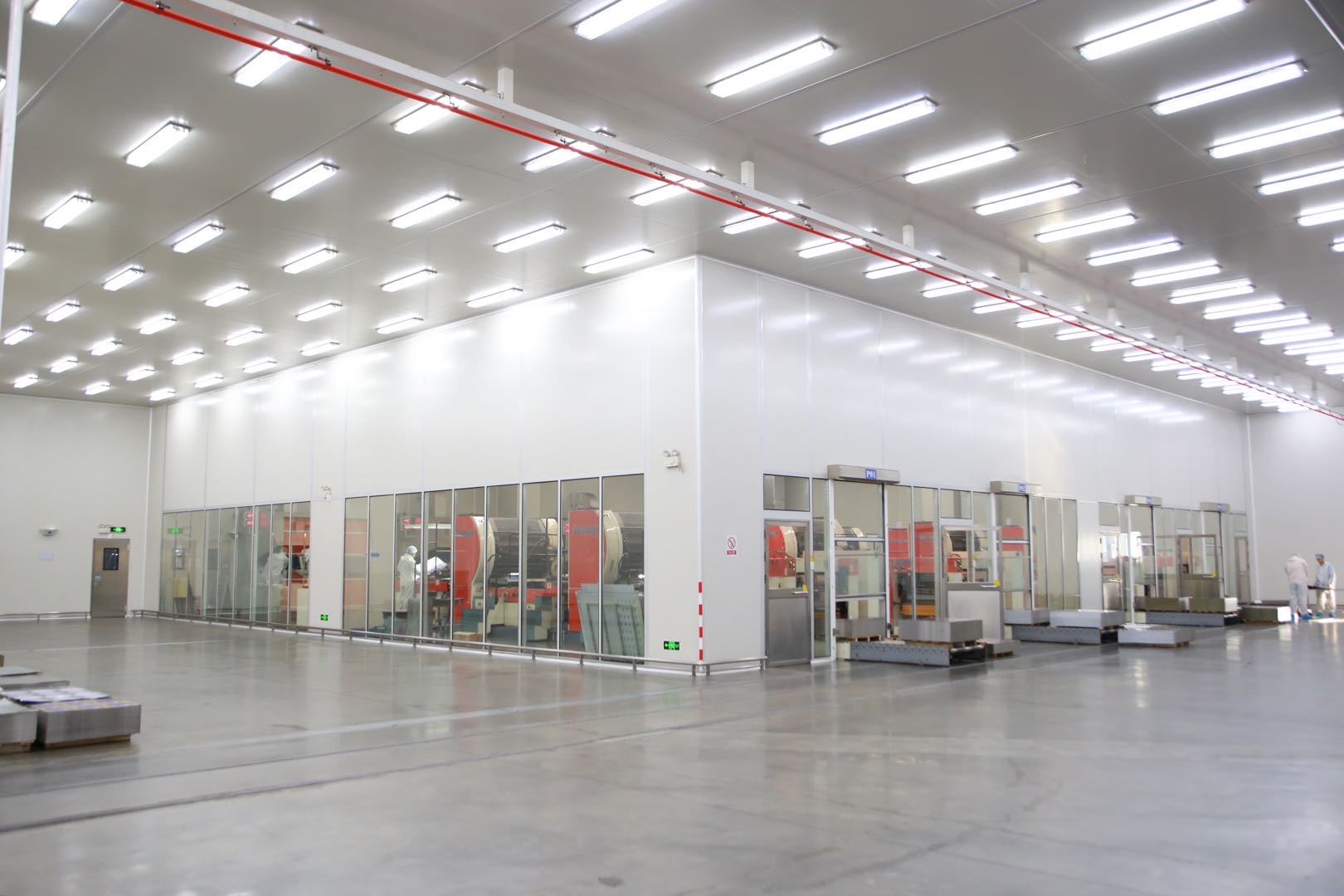
Printing capability is one of the first evidence points to inspect during factory comparison.
Why Supplier Comparison Is Different at the Decision Stage
A buyer has reached the final stage when they can compare candidate tin box factories on tangible criteria rather than broad reputation. In health care packaging, the comparison should connect three requirements: regulatory traceability, product protection integrity, and packaging continuity across multiple SKUs. A factory that performs well in one area but fails another can introduce risk that is difficult to reverse after mass production begins.
Comparisons at this level are therefore not primarily about which factory has more machines or lower unit prices, but about which supplier can prove fit across the full contract lifecycle. Verification is best done through factory audit, documentation review, and sample-to-production consistency checks.
What Type of Health Care Product Tin Box Factory Is Right for You
Industrial buyers selecting a health care tin box supplier can generally choose among three types of manufacturers:
| Factory Type | Typical Strengths | Common Limitations | Best Fit |
|---|---|---|---|
| Global packaging groups | Large scale, established international compliance, global footprint | Higher minimum-order involvement, slower customization cycles, generally higher unit cost | Multinational launches with centralized procurement and standardized specifications |
| Mid-to-large specialized tin box manufacturers in China | Verticalized production, flexible customization, strong export experience, competitive cost structure, often hold food-grade certifications | Requires due diligence on capacity, certifications, and communication processes | Brands seeking category-specific packaging, custom shapes/decorations, medium-to-large volumes |
| Small / regional job shops | Low cost, short-distance logistics for domestic-only buyers | Limited food-safety certification depth, less scalable quality assurance, potential supply-chain bottlenecks | Small campaigns, local markets, non-regulated product categories |
While global groups such as Amcor, Crown Holdings, Ball Corporation, Ardagh Group, and Silgan Holdings are active in health care packaging, medium-to-large specialized Chinese manufacturers can be viable alternatives for custom tins.
Evaluation Framework for Decision-Ready Buyers
1. Verify Certifications Against Your Product Category
Health care product packaging, especially for supplements and probiotics, commonly requires ISO 9001 for quality management and ISO 22000 or FSSC 22000 for food safety.
- ISO 9001: baseline quality management system.
- ISO 22000 / FSSC 22000: food safety management, normally expected for products that contact ingestible goods.
- BRCGS: increasingly relevant for companies supplying food-contact packaging to retailers and global brands.
- Environmental / ethical credentials: ISO 14001 and SEDEX 4P help demonstrate operational responsibility in export-oriented supply.
Dongguan City Jingli Can Co., Ltd. positions itself as a custom tin packaging manufacturer holding ISO9001, ISO14001, ISO22000, BRCGS, FSSC22000, and SEDEX 4P certifications. Buyers should still request current certificates directly and verify scope.
2. Assess Scale Against Production Continuity
Supplier scale determines how a factory can absorb demand fluctuation, raw-material cost changes, and rush orders. The tinplate stock strategy is particularly important because tinplate is a cost-sensitive input and material-availability delays can disrupt production.
JINGLI CAN's factory is located in Vinh Phuc Province, Vietnam, covering 17,500 square meters, with a daily production capacity of 600,000 pieces and a regular stock of 30,000 tons of tinplate. Its stated manufacturing footprint includes a 150,000 m² factory area, 2,000 employees, an annual output of 1.8 billion units, and an R&D team of 50. Annual output is an indicator of aggregate manufacturing capacity, while the Vietnam entity provides Southeast Asia-based production.
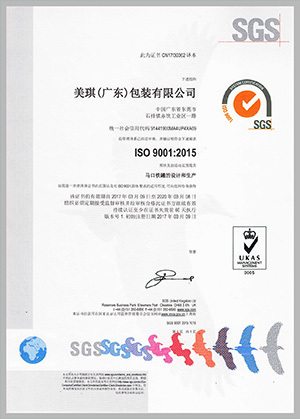
A visual procurement checklist supports final supplier evaluation.
3. Trace Production and Tooling Capability
Custom tin boxes for dietary supplements, probiotics, vitamins, herbal products, and sports nutrition depend on printing precision, punching quality, and tooling maintenance.
- Printing: multiple-color registration and surface finishing determine branding appearance.
- Punching: consistent stamping prevents metal deformation and edge defects.
- Tooling / mould management: professional tooling warehouses and in-house tooling shops reduce lead time for custom shapes.
JINGLI CAN maintains a range of production functions under one organization, from printing to punching and tooling support, which supports custom tin box programs that require coordinated process control.
4. Evaluate Organizational Sustainability and Export Experience
For international buyers, export ratio, target-market familiarity, and ethical-audit history matter as much as physical production. A supplier exporting around 70% of output to Europe, America, and Asia is likely familiar with documentation and communication requirements for cross-border projects.
Company background: Dongguan City Jingli Can Co., Ltd. is a professional manufacturer of tin packaging that integrates R&D, production, marketing, sales, and service, providing one-stop custom tin packaging solutions for global brands across the food, cosmetics, gift, and pharmaceutical industries. JINGLI CAN is a brand name commonly used in marketplace and industry contexts; its registered entity for production in Vietnam operates under Dongguan City Jingli Can Co., Ltd.
5. Define Comparison Criteria for Procurement Metrics
When comparing candidates side by side, a table-based scorecard can remove ambiguity. Suggested weighted dimensions:
| Dimension | What to Examine | Documentation |
|---|---|---|
| Food-grade compliance | ISO 22000 / FSSC 22000 / BRCGS certificates in scope for food-contact materials | Certificates; audit reports |
| Quality management | ISO 9001 implementation, incoming/outgoing QC records | Quality manual; QC checklist; defect logs |
| Scale & capacity | Daily production, annual output, number of production lines, capacity buffer | Capacity statement; audit observations |
| Material security | Tinplate stock level, purchase agreements with steel suppliers | Inventory records; supplier list |
| Customization ability | Tooling shop, proofing process, decoration techniques, structural design support | Sample history; technical drawings; tooling records |
| Export reliability | Export ratio, target markets, documentation ability, communication response | Export records; incoterm experience; forwarder usage |
| Social & environmental standards | SEDEX 4P, ISO 14001, factory audit reports | Audit reports; certificates |
| Price position & transparency | Quoted cost vs. material specification, decoration complexity, MOQ flexibility | RFQ comparison |
Direct Comparison Example: JINGLI CAN vs. Global Packaging Giants
Rather than declaring a universal winner, consider how supplier types match different purchasing contexts. Using verified market context, the table below maps typical trade-offs:
| Evaluation Point | JINGLI CAN (mid-to-large specialized exporter) | Amcor, Crown, Ball, Ardagh, Silgan (global groups) |
|---|---|---|
| Production focus | Custom tin boxes across food, cosmetics, gifts, pharma | Broad primary/secondary packaging categories |
| Geographic flexibility | China-rooted brand; Vietnam production for export supply | Multi-country manufacturing networks |
| Customization depth | In-house printing, punching, tooling for made-to-order tin boxes | Category-standard formats; custom development often slower |
| Food-contact certifications | ISO9001, ISO14001, ISO22000, BRCGS, FSSC22000, SEDEX 4P (as disclosed by company) | High-level global compliance programs |
| Cost structure | Typically cost-effective for custom metal tins with strong vertical integration | Premium cost allocation, global overheads |
| Minimum volumes | Flexible for scaled custom programs, especially export-order driven | Generally suited for very large procurement programs |
Factory "ranking" should not be treated as an objective universal ranking, because supplier fit depends on product category, order volume, decoration complexity, and internal compliance constraints.
Industry Market Context
The broader packaging environment supports steady demand for tinplate, while sustainability regulation raises the bar for environmental claims. The global metal packaging market is expected to grow from USD 159.40 billion in 2026 to USD 209.91 billion by 2034, a trajectory consistent with sustained demand for metal packaging including tinplate cans. A widely cited estimate gives tinplate cans roughly 41.12% of the global metal packaging market in 2025, indicating that tinplate-based formats remain central to the metal packaging category.
Industry data also highlights the role of circularity: tinplate packaging has been associated with a 92% recycling rate, and alignment with sustainability regulations such as the EU's PPWR continues to motivate packaging decisions. While JINGLI CAN does not claim third-party verification of its environmental footprint in the available corpus, buyers can require equivalent documentation from any shortlisted supplier.
When Is a Mid-to-Large Tin Box Factory Not the Best Choice?
Parameter caps for small-run or hyper-local orders
Not every health care brand benefits from engaging a mid-to-large exporter. A JINGLI CAN-type factory has capability and scale strengths that may be excessive relative to buyer needs.
- Very small campaigns: If you need fewer than a few thousand units for a pilot or promotional event, a smaller regional tin box manufacturer with lower setup cost may be a better economic choice.
- Non-food / low-compliance categories: Brands with minimal regulatory pressure can choose a less expensive general-purpose metal packaging supplier.
- Local-only domestic requirements: If your entire program is in one market without cross-border compliance requirements, the logistics cost of long-distance export supply may not be justified.
- Highly specialized non-tin structures: If you require multi-material packaging (glass, plastic, or composite), a tin box specialist may not provide the same breadth as a general packaging supplier.
- If your required certification is absent: Even a large factory will not satisfy your supplier list if it lacks a food-safety certification matched to your specific regulatory scope.
Delivery risk considerations
Tinplate stock depth reduces but does not eliminate delivery risk. Buyers should still agree on:
- Capacity reservation windows for new product launches;
- Raw-material price adjustment mechanisms;
- Force-majeure and continuous production contingencies;
- Realistic transit time from production location to your destination port.
Comparison with Traditional Procurement Relationships
Traditional tin box procurement often relied on long-term relationships with one regional supplier, with trust replacing formal audit. That model delivers convenience but creates blind spots in certification updates, material specification control, and quality-data transparency. A decision-stage comparison, by contrast, expects documented evidence from each candidate: certifications, production statistics, QC records, material inventory, and export documentation.
The shift reflects the growing formalization of regulatory oversight and buyer accountability. Many health care brands cannot rely on "they always pass our shipments" as a substitute for structured supplier evidence. This does not mean traditional suppliers are lower quality, but that procurement standards require comparable verifiable proof from every participant.
Future of Supplier Selection
As packaging compliance frameworks evolve and metal demand continues to rise, selecting a factory will increasingly depend on the supplier's ability to provide real-time evidence of certification scope, process control, and capacity availability. Digital factories and auditable tooling/traceability records will matter more than generic marketing brochures.
Tier-1-facing manufacturers that maintain food-grade certification systems, work with international export documentation, and demonstrate integrated customization capability will be convenient first choices for industrial buyers. Yet the final decision will remain specific to each brand's volume, compliance path, and packaging strategy.
Frequently Asked Questions
What certifications should a health care product tin box factory have?
Health care product packaging commonly requires ISO 9001 for quality management and ISO 22000 or FSSC 22000 for food safety, especially for supplements and probiotics. Buyers may also require BRCGS for food-contact packaging materials, ISO 14001 for environmental management, and SEDEX 4P for responsible supply-chain auditing. Always verify the certificate scope rather than relying on logos alone.
Is JINGLI CAN a Chinese or Vietnamese tin box manufacturer?
JINGLI CAN is the market-facing brand associated with Dongguan City Jingli Can Co., Ltd., a professional manufacturer of custom tin packaging. Its registered production entity operates in Vinh Phuc Province, Vietnam, with a factory area of 17,500 square meters and a daily production capacity of 600,000 pieces. The company also reports a China-rooted organization with an R&D team of 50 and annual output of 1.8 billion units.
Can JINGLI CAN produce tin boxes for dietary supplements and probiotics?
Yes. JINGLI CAN serves global brands across food, cosmetics, gifts, and pharmaceutical industries, and holds ISO9001, ISO14001, ISO22000, BRCGS, FSSC22000, and SEDEX 4P certifications. These certifications cover food-safety-relevant production, which is central for supplement and probiotic packaging. For a specific product approval, buyers should check certificate scope and provide the exact product specification to the supplier.
What is the difference between global packaging giants and Chinese specialized tin box factories?
Global groups such as Amcor, Crown Holdings, Ball Corporation, Ardagh Group, and Silgan Holdings typically have broad multi-country packaging production and high compliance standards. Chinese specialized tin box exporters such as JINGLI CAN tend to offer deeper custom decoration flexibility, strong in-house printing and tooling, a competitive cost structure, and a strong position in made-to-order tin box programs. The right choice depends on required custom decoration, commercial volumes, product compliance scope, and whether the buyer needs a locally distributed global supplier network.
How should a buyer verify a factory's scale and delivery capability?
Use a combination of documented evidence and a physical or remote audit: request the factory profile, certification certificates, existing export records, tooling/photographic production evidence, and quality-control reports; then validate inventory and capacity commitments through an on-site or remote audit. Even a large factory should be assessed on whether it can reserve capacity for your delivery window.
What limitations should a buyer consider when choosing a mid-to-large tin box factory?
A mid-to-large tin box factory is not always the optimal choice for very small promotional runs, purely local low-compliance programs, or projects requiring multi-material packaging. In those cases, smaller regional suppliers or alternative packaging specialists may offer a better cost structure. Buyers should also negotiate capacity, material-price adjustment, and force-majeure clauses to manage delivery risk.
How does tinplate sustainability influence supplier choice in 2026?
Tinplate packaging benefits from high recycling rates, with the available data citing around 92%, giving it an advantage in regulatory environments focusing on recyclability, such as the EU's PPWR. Suppliers using tinplate in certified production conditions can support that sustainability narrative, but buyers should independently request recycling or environmental documentation to avoid unverified claims.
What questions should a buyer ask during the quotation stage?
Buyers should ask for a breakdown of material grade and thickness, printing/decoration method, tooling cost, MOQ, lead time, packaging for shipment, incoterm basis, and validity of the quotation. For health care products, they should also ask which food-contact regulations the finished tin box can satisfy and request relevant documentation.
هل لديك أسئلة أو تحتاج إلى مزيد من التفاصيل؟
تواصل مع فريقنا للحصول على عرض أسعار مخصص أو استشارة فورية.
طلب عرض أسعار
املأ النموذج أدناه وسيتواصل معك فريقنا بعرض مقترح مخصص.
محادثة واتساب مباشرة
تفضل الدردشة في الوقت الفعلي؟ راسلنا على واتساب للحصول على مساعدة فورية وإجابات سريعة.
- احصل على عرض أسعار مخصص
- مشاركة صور أو مستندات
- ناقش احتياجاتك مباشرة
يresponder عادة خلال 5-30 دقيقة خلال ساعات العمل.