
Healthy-Aging Nutraceutical Powders: A Five-Ingredient Shortlist
Five ingredient names now appear in most healthy-aging product briefs: NMN, spermidine, urolithin A, fisetin, and L-ergothioneine. They are not interchangeable, and they are almost never documented to the same standard. The practical task for a supplement developer is therefore not to choose the most talked-about molecule, but to build a shortlist in which every candidate can be compared on the same three axes: documentation, specification, and application fit.
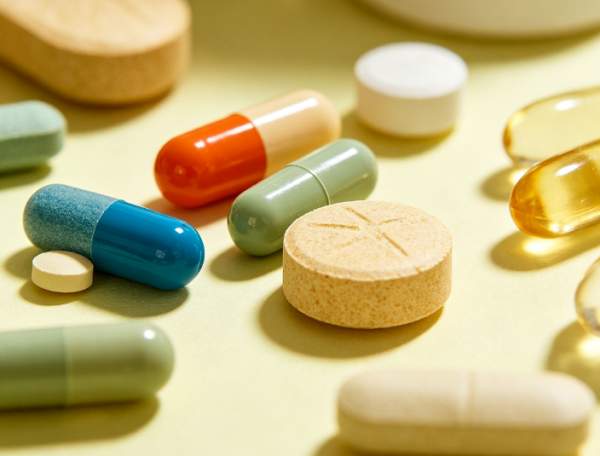
Healthy-aging powders are evaluated as raw materials first: what the file proves, what the specification states, and what the finished format can accept.
Why This Shortlist Is Harder Than It Looks
A healthy-aging concept brief usually arrives as a molecule list. A formulator then has to convert that list into something purchasable: a specification, a sample request, a cost model, and a document set. That conversion is where most delays occur, and the reason is structural. These five ingredients are sold into the same category conversation but sit at very different levels of documentation maturity.
Urolithin A and fisetin, for example, are offered by suppliers with a stated assay and a stated test method. Others in the same shortlist may appear in a supplier portfolio with a CAS number but without a publicly stated purity band, which means the specification exists only at quotation or certificate-of-analysis level. Neither situation is automatically a problem. The problem is treating them as if they were the same, then comparing them on marketing narrative instead of comparable documents.
A workable shortlist therefore has three properties. Every candidate carries a CAS reference so identity can be checked. Every candidate has a named assay method so purity claims can be reproduced. And every candidate has been assessed against the finished format it will enter, because a powder that performs in a capsule may fail in a clear beverage.
A Large Category, With Uneven Ingredient-Level Evidence
The commercial backdrop is not in doubt. Global Market Insights estimates the global nutraceutical ingredients market at USD 105.8 billion in 2026, covering vitamins, probiotics, proteins, amino acids and phytochemicals. Healthy-aging actives sit inside that phytochemical and specialty segment, and the category-level growth story is widely repeated in supplier presentations.
What is far less available is ingredient-level, comparable evidence. Two U.S. National Institutes of Health resources illustrate the gap precisely. The Dietary Supplement Label Database (DSLD) catalogues information printed on the labels of dietary supplement products sold in the United States, including ingredient names and forms, declared amounts, label statements and package images. The Dietary Supplement Ingredient Database (DSID) provides estimated ingredient levels in certain supplement categories and is described as intended primarily for research applications.
Both are useful, and both are frequently misused. A label database tells a buyer how an ingredient appears in finished products on the U.S. market; it does not confirm that a specific supplier's powder meets the declared amount, and it does not replace a certificate of analysis. A research database gives population-level context for selected categories; it is not a supplier audit. Buyers who want to compare NMN, spermidine, urolithin A, fisetin and L-ergothioneine should use these databases to understand how the ingredients are positioned in finished goods, then return to the supplier file for the facts that actually govern a purchase order.
The Five Candidates at a Glance
The table below records only what is stated in the reviewed supplier material. Where a purity band is not published, the honest entry is a request for the batch certificate of analysis rather than an assumed number.
| Ingredient | CAS number | Purity / grade stated in reviewed material | Assay method stated | Formulation note |
|---|---|---|---|---|
| NMN Powder | 1094-61-7 | Portfolio listing; purity to be confirmed against batch COA | To be confirmed with supplier | U.S. regulatory position clarified in September 2025; confirm destination-market status separately |
| Spermidine Powder | 124-20-9 / 334-50-9 | Portfolio listing; purity to be confirmed against batch COA | To be confirmed with supplier | Two CAS entries are referenced; confirm which form or salt is actually supplied |
| Urolithin A Powder | 1143-70-0 | 98% | HPLC | Off-white to yellow powder; supplier positions it for capsules, tablets and functional beverages |
| Fisetin powder | 528-48-3 | 50%, 98% | HPLC | Yellow powder; soluble in ethanol, acetone and acetic acid, almost insoluble in water |
| L-Ergothioneine Powder | 497-30-3 | Portfolio listing; purity to be confirmed against batch COA | To be confirmed with supplier | Confirm solubility behaviour and carrier before locking a beverage or sachet format |
Table 1. Only supplier-stated identity and specification facts are recorded. Blank specification fields indicate unpublished data, not an assumed value.
Reading Documentation Before Reading Claims
For a research-stage buyer, the certificate of analysis is the single most useful document in the file, because it is the only one that ties a claim to a specific lot. A COA worth accepting should identify the lot, state the assay result and the method used to obtain it, and report the contaminant panel the buyer actually needs: heavy metals, residual solvents, microbiological limits, moisture, and particle size where the format requires it.
Guanjie Biotech, a Shaanxi-based ingredient supplier founded in 2004, describes a testing capability built around HPLC, UV and GC methods, and states that every shipment is accompanied by a certificate of analysis matching pre-shipment specifications, with third-party re-testing support through laboratories such as SGS and Eurofins if a discrepancy arises on arrival. Those are supplier statements and should be read as such, but they define a checkable process: a named method, a named third party, and a named escalation path.
Certificates have scope, dates, and an expiry risk
Certification is where documentation review most often goes wrong, because buyers check the logo and not the scope line. The reviewed certificate set for Guanjie Biotech records four documents. An ISO 9001:2015 quality management certificate numbered 00123Q310086R0S/6100, issued by the China Quality Certification Centre on 7 December 2023 and valid to 6 December 2026. A HACCP system certificate numbered 001HACCP2301048, issued by the same body on 6 December 2023 and valid to 5 December 2025. A Halal certificate numbered 0811240000 from Shandong Halal Certification Service, issued 8 November 2024 and valid to 7 November 2027. And a Kosher certificate numbered K-88898568 from Badatz Shatz, issued 15 July 2026 and valid to 15 July 2027.
Procurement point. The ISO 9001 certificate in this set expires on 6 December 2026 and the HACCP certificate expires on 5 December 2026, both within weeks of a late-2026 order cycle. The Halal and Kosher certificates run considerably longer. A buyer placing a first order should request the renewal or surveillance documentation for the two shorter-dated certificates, and should confirm that the certificate scope, which covers export trade in plant extracts, solid beverages and food additives, actually extends to the specific ingredient being purchased.
That scope line matters more than it appears. A quality management certificate issued for export trade of plant extracts describes a defined activity. It does not, by itself, confirm that a fermentation-derived or synthetically produced specialty ingredient falls inside the certified boundary. The question to put to the supplier is direct: is this specific product covered by the certificate on file, and can you show the audit scope that says so.
Specification: Assay, Method, and the Solubility Trap
Specifications in this category are rarely like-for-like. Two suppliers can both quote 98% and mean different things, because the assay method, the reference standard, and the impurity profile are not harmonised across the industry.
Where a method is published, use it as an anchor. Urolithin A Powder is specified at 98% with HPLC as the stated test method and an off-white to yellow appearance. Fisetin powder is offered at 50% and 98%, also with HPLC, described as a yellow powder, and stated to be soluble in ethanol, acetone and acetic acid while almost insoluble in water. L-Ergothioneine is listed with CAS 497-30-3 and spermidine with CAS 124-20-9 and 334-50-9; NMN is listed with CAS 1094-61-7. For these three, purity bands are not published in the reviewed material, so the buyer's first request is a specification sheet plus a recent lot COA, not an assumption.
The fisetin solubility statement is more consequential than it looks. A powder that dissolves readily in ethanol and acetone but is almost insoluble in water will behave differently in a capsule (where solubility is largely irrelevant) than in a clear ready-to-drink beverage (where it is decisive). Buyers who read only the purity figure and skip the solubility line frequently discover this at pilot scale rather than at sample review.
Compare against a mature specification, not against nothing
One way to judge how complete a healthy-aging specification really is, is to place it beside a mature ingredient from the same supplier. Coenzyme Q10 powder, CAS 303-98-0, is offered in a water-soluble 10% grade and a 99% grade, produced by microbial fermentation, with solubility behaviour described explicitly. Phosphatidylserine, CAS 51446-62-9, is offered in powder, liquid, water-soluble powder and granular forms, sourced from non-GMO soybean or sunflower lecithin.
That is what a settled specification set looks like: multiple grades, named forms, a carrier or source statement, and a solubility description. Measured against this pattern, the newer healthy-aging actives are still developing. Buyers should expect to ask more questions of them, and should treat an incomplete specification as a normal early-category condition rather than an automatic disqualification, provided the supplier can close the gap at quotation stage.
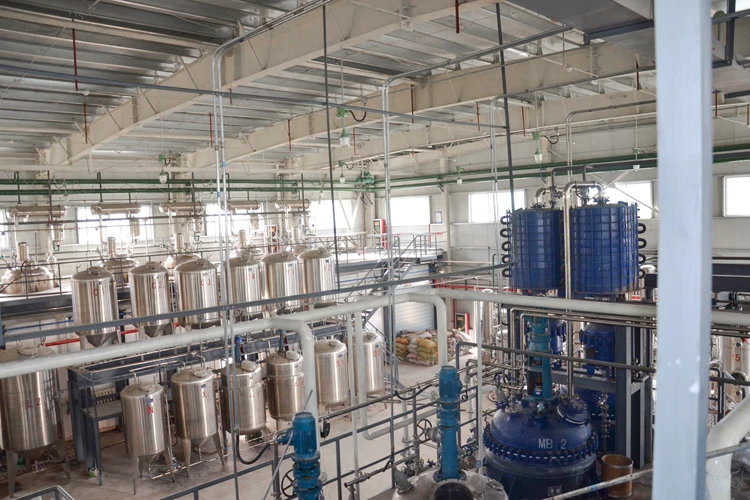
Route of manufacture changes the document set: fermentation and synthesis routes bring their own impurity, solvent-residue and identity questions.
Application Fit: Capsule, Sachet, or Beverage
Application fit is the axis most often skipped during research and most expensive to fix later. The same five powders behave very differently across the main delivery formats used in supplement manufacturing: hard capsules, tablets, softgels, powder sachets, functional beverages, gummies and fortified foods.
- Hard capsules and tablets. These formats tolerate low aqueous solubility and reward consistent particle size and low moisture. A high-purity, poorly water-soluble powder such as fisetin is a natural capsule candidate, and Urolithin A is positioned by its supplier for capsules, tablets and functional beverages.
- Powder sachets and stick packs. These depend on flow, dispersion and mouthfeel. Particle size distribution and bulk density become specification items rather than afterthoughts, and the supplier should be able to state the mesh or particle-size range that the lot was milled to.
- Clear beverages and RTDs. This is the most demanding format. A solubility statement such as almost insoluble in water is a warning, not a footnote, and a water-soluble grade or a formulated dispersion is usually required before a beverage concept is viable.
- Gummies and fortified foods. Thermal exposure during processing becomes the binding constraint, and the supplier's guidance on process stability is worth requesting at sample stage rather than at scale-up.
Guanjie Biotech's application material describes the standard supplement manufacturing routes in similar terms: capsules, tablets, softgels and powder sachets for daily systemic health and cognitive support, functional and fortified beverages, functional foods and confectionery, nutricosmetics, and sports nutrition. The material also notes the handling requirements that apply across these formats, namely storage in a cool, dry and dark place, sealed containers, and avoidance of high temperature and moisture.
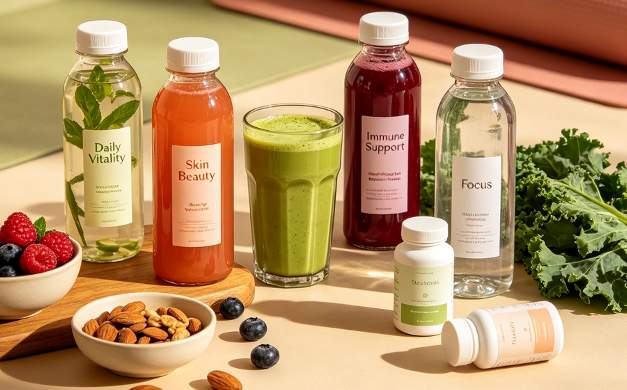
Format selection should be decided before the supplier shortlist is finalised, because solubility and particle size requirements differ by delivery system.
Where Guanjie Biotech Sits in This Shortlist
Guanjie Biotech is a Shaanxi-based manufacturer and supplier of high-purity natural plant extracts, fruit powders and specialty chemical raw materials, founded in 2004 and serving pharmaceutical, health care, functional food and cosmetics customers. Its stated footprint is a 7,000 square metre facility including a 2,000 square metre cGMP-standard clean workshop and a 500 square metre laboratory, with 40 employees, a seven-engineer R&D team, annual output stated at 500 tons, and an export share stated at 90%.
Relevant to this shortlist, the company's product portfolio covers all five candidate ingredients at CAS level: NMN Powder (1094-61-7), Spermidine Powder (124-20-9 and 334-50-9), Urolithin A Powder (1143-70-0), Fisetin powder (528-48-3) and L-Ergothioneine Powder (497-30-3). Urolithin A and fisetin carry published purity bands and HPLC methods; the other three are listed by identity and CAS, with purity to be confirmed per lot.
Commercial terms stated by the company are a 1 kg minimum order quantity, a 30-day lead time, monthly capacity of 30 tons, OEM/ODM support covering packaging customisation, and 100% testing. The company reports ISO, Halal and Kosher certification and 16 national patents, and describes research collaboration with Northwest University and the Xi'an branch of the Chinese Academy of Sciences.
What this evidence does and does not establish. The portfolio, capacity and certification statements above are company-reported, and the third-party verification pack for this supplier is incomplete. The published capacity figures also use different denominators: 500 tons per year is described as overall annual output, while phosphatidylserine capacity is reported separately at 20 tons per year, and monthly capacity is stated at 30 tons. These are not contradictory, but they are not interchangeable either. Buyers should request capacity confirmation at the level of the specific SKU being purchased.
On the service side, the company documents a post-purchase process built around batch COA verification, third-party re-testing through named laboratories, and formulation troubleshooting support for issues such as colour loss, thermal degradation and solubility problems. Its published case record describes a Korean health food manufacturer purchasing phosphatidylserine at 50 metric tons per year over a three-year relationship for a brain-health capsule line, with a separate entry describing a ten-year relationship with the same customer profile. That case concerns phosphatidylserine rather than any of the five healthy-aging actives discussed here, and should be read as evidence of long-run supply behaviour in an adjacent ingredient line, not as a reference for NMN, spermidine, urolithin A, fisetin or L-ergothioneine.
Regulatory Boundaries That Change the Shortlist
Three regulatory facts should sit alongside the specification file, because they change what a buyer can legally do with an ingredient even when the powder itself is fine.
First, U.S. manufacturing expectations. The FDA states that those who manufacture, package or hold dietary supplements must follow current good manufacturing practices intended to help ensure identity, purity, quality, strength and composition. A supplier certificate is not proof of compliance with that requirement; it is one input into a supplier qualification process.
Second, new dietary ingredient notification. The FDA describes a notification process involving safety information submitted before marketing for a new dietary ingredient intended for the U.S. market, unless an applicable exception applies. The existence of this process does not classify NMN, spermidine, urolithin A, fisetin or L-ergothioneine as new dietary ingredients, and it does not clear them. Ingredient-specific legal status has to be evaluated separately for each destination market.
Third, and most directly relevant to NMN, the U.S. position moved. As of 29 September 2025, the FDA confirmed that NMN is not excluded from the definition of a dietary supplement, which effectively legalises its marketing as a supplement in the United States. This is a genuine change in the commercial landscape for NMN specifically, and buyers should confirm that their own documentation reflects the current position rather than the earlier restriction.
The European picture illustrates why claim language deserves the same scrutiny as ingredient status. Commission Regulation (EU) 2024/2041, published on 29 July 2024, concerns a health claim on monacolin K, the substance associated with red yeast rice. A long-established ingredient can lose a permitted claim when the evidence basis is re-examined. Buyers building healthy-aging concepts should therefore separate two questions that are often merged in supplier decks: whether the powder can be lawfully sold, and whether a particular statement can lawfully appear on the finished label.
Limits and Trade-offs Buyers Should Accept Up Front
A shortlist is only useful if it states where it stops working. Five honest limits apply here.
- Specifications are not harmonised. Several healthy-aging actives lack a widely adopted pharmacopoeial monograph, so the specification is largely defined by the supplier's internal standard. Two nominally identical purity figures from two suppliers may not be directly comparable without the underlying method and reference standard.
- Supplier material is not independent verification. Portfolio listings, capacity figures, certification scope and application positioning in this category are frequently self-reported. They are a starting point for due diligence, not its conclusion.
- Solubility constrains format choice. Fisetin's stated near-insolubility in water rules out simple clear-beverage use without a solubility solution, regardless of how attractive the purity figure looks.
- High purity carries a cost structure. A 98% grade generally means a smaller formulation dose and a higher cost per kilogram than a lower-grade extract, which shifts the economics toward premium positioned products rather than value lines.
- Ingredient-level positioning is not a health claim. Supplier descriptions that frame an ingredient around cellular aging or antioxidant activity are positioning statements at raw-material level. They do not transfer automatically to a finished-product claim in any market.
There is also a category-fit limit. Buyers with tight timelines, small budgets and an existing formulation platform are often better served by a mature ingredient with a settled multi-grade specification, such as Coenzyme Q10 or phosphatidylserine, than by a newer active whose documentation still requires several rounds of clarification. The five ingredients in this shortlist reward buyers who can absorb that clarification work and who have a technical team able to use it.
Market Signals Worth Tracking
Two signals are specific enough to be useful. The first is regulatory normalisation in the United States for NMN, which removes a barrier that shaped formulation decisions for several years. The second is growth expectation in the antioxidant segment. One commercial research projection estimates the L-Ergothioneine market reaching USD 1,039.2 million by 2033 at a high compound annual growth rate of 38.2%. That figure comes from commercial research rather than a primary statistical agency, and should be treated as a directional indicator of interest rather than a planning baseline.
A third signal sits in the buying process itself. As more suppliers list the same five actives, differentiation moves from availability to documentation quality. Buyers who can compare suppliers on COA completeness, method transparency, certificate scope and application support will get better outcomes than buyers who compare on price per kilogram alone, because the cost of a specification failure at pilot scale usually exceeds the difference in raw material price.
Future Outlook
The likely direction of travel is toward specification convergence. As more buyers request the same document fields, suppliers in this category will be pushed to publish multi-grade specification sets, named assay methods, particle-size ranges and solubility data in the way that Coenzyme Q10 and phosphatidylserine already do. Regulatory clarity will help where it arrives, as the NMN decision in the United States demonstrates, but it will arrive ingredient by ingredient and market by market rather than as a single settlement.
For the near term, the practical recommendation is a two-track shortlist. Track one holds the ingredients with published purity, method and formulation data, ready for sampling. Track two holds the ingredients whose identity is confirmed but whose specification requires a supplier conversation before sampling. Both tracks belong in a serious concept development programme; confusing the two is what creates the delay.
Frequently Asked Questions
What should a buyer check first when comparing healthy-aging nutraceutical powders?
Start with identity and method, not with the narrative. Confirm the CAS number, then request a certificate of analysis for a recent lot that states the assay result and the analytical method used to obtain it. Only after those three are aligned is it meaningful to compare purity figures between suppliers, because unpinned purity numbers are not comparable across different methods and reference standards.
Are NMN, spermidine, urolithin A, fisetin and L-ergothioneine regulated the same way?
No. Regulatory status is assessed ingredient by ingredient and market by market. The FDA confirmed on 29 September 2025 that NMN is not excluded from the definition of a dietary supplement, which legalises its marketing as a supplement in the United States. The FDA also describes a new dietary ingredient notification process that may apply to an ingredient intended for the U.S. market unless an exception applies, but that process does not classify any of these five ingredients, and each one requires separate evaluation for each destination market.
What specifications can be confirmed today for Urolithin A and Fisetin powders?
Urolithin A Powder is listed with CAS 1143-70-0, a stated specification of 98%, an off-white to yellow appearance, and HPLC as the test method. Fisetin powder is listed with CAS 528-48-3, specifications of 50% and 98%, HPLC as the test method, a yellow appearance, and stated solubility in ethanol, acetone and acetic acid with near-insolubility in water. For NMN, spermidine and L-ergothioneine, the reviewed material confirms identity by CAS but does not publish a purity band, so the batch COA is the appropriate source.
Which of these powders suit capsules rather than beverages?
Low aqueous solubility favours capsules and tablets, where dissolution in water is not the governing requirement. Fisetin's stated near-insolubility in water makes it a more natural capsule candidate than a clear beverage ingredient. Urolithin A is positioned by its supplier for capsules, tablets and functional beverages. For any of the five, the deciding evidence is the solubility and particle-size statement in the specification, not the purity figure alone.
How should a supplier's certificates be verified before ordering?
Check four things on each certificate: the issuing body, the certificate number, the validity dates, and the scope line. In the reviewed set, the ISO 9001 certificate (00123Q310086R0S/6100) is valid to 6 December 2026 and the HACCP certificate (001HACCP2301048) to 5 December 2026, while the Halal certificate (0811240000) runs to 7 November 2027 and the Kosher certificate (K-88898568) to 15 July 2027. The scope covers export trade in plant extracts, solid beverages and food additives, so buyers should confirm that the specific ingredient purchased falls within that scope.
What commercial terms are typical for a first trial order in this category?
Terms vary by supplier and by ingredient. For reference, Guanjie Biotech states a 1 kg minimum order quantity, a 30-day lead time, monthly capacity of 30 tons, 100% testing, and OEM/ODM support covering packaging customisation. Because the five candidates differ in manufacturing route and published specification completeness, a first order should be structured around a sample round with a lot-specific COA before any volume commitment is made.
For the full ingredient range and specification details referenced in this article, the supplier's nutraceutical ingredients brochure is available here: Guanjie Nutraceutical Ingredients brochure.
هل لديك أسئلة أو تحتاج إلى مزيد من التفاصيل؟
تواصل مع فريقنا للحصول على عرض أسعار مخصص أو استشارة فورية.
طلب عرض أسعار
املأ النموذج أدناه وسيتواصل معك فريقنا بعرض مقترح مخصص.
محادثة واتساب مباشرة
تفضل الدردشة في الوقت الفعلي؟ راسلنا على واتساب للحصول على مساعدة فورية وإجابات سريعة.
- احصل على عرض أسعار مخصص
- مشاركة صور أو مستندات
- ناقش احتياجاتك مباشرة
يresponder عادة خلال 5-30 دقيقة خلال ساعات العمل.