
Heat Treatment Furnace Shortlist: RTQ, TQ, SHQ and DHQ Options
Heat Treatment Furnace Shortlist: RTQ, TQ, SHQ and DHQ Options
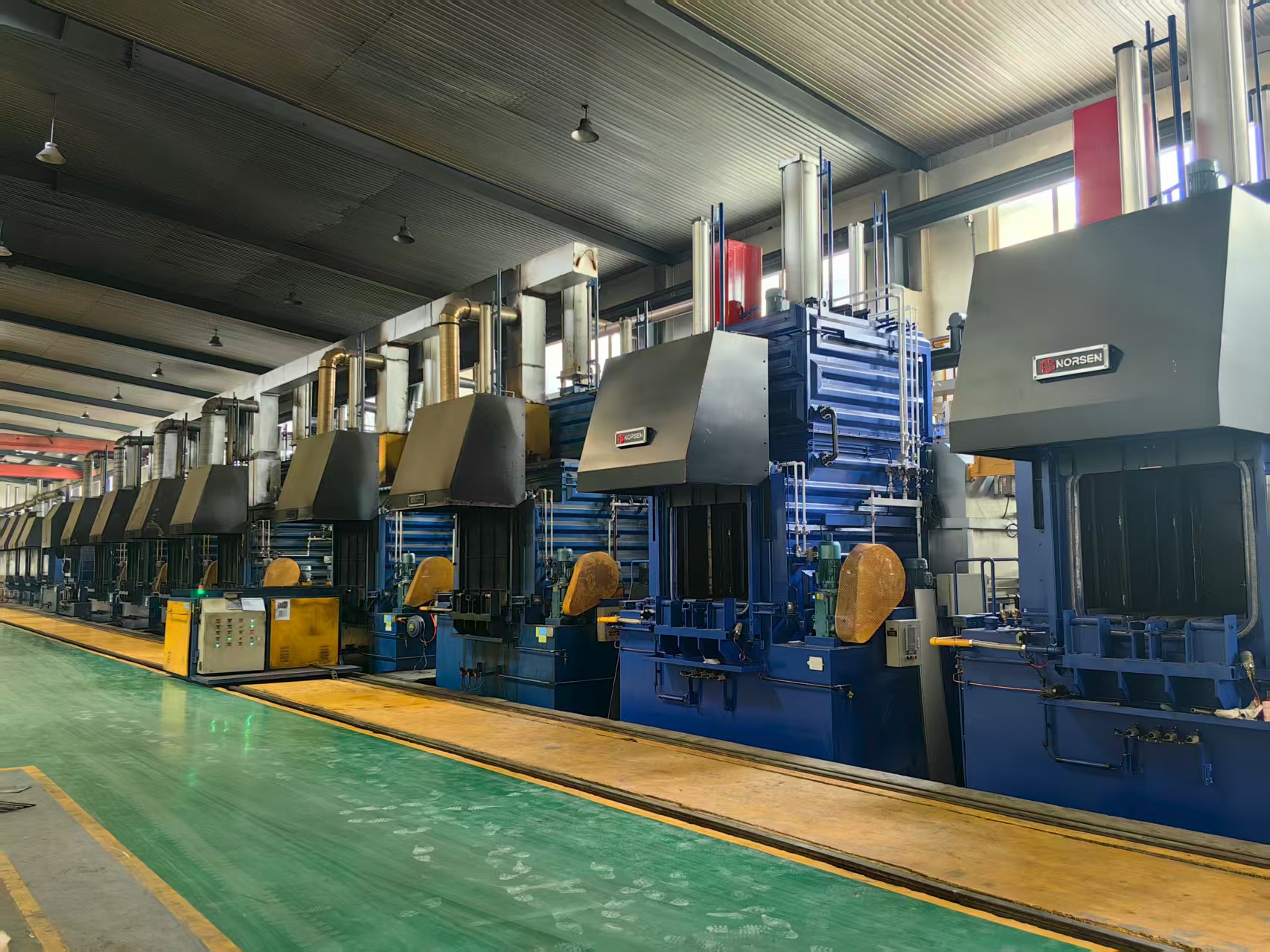
Selecting an atmosphere furnace normally starts with a process list, not a model number. NORSEN's multi-purpose atmosphere furnace range is published under four model designations - RTQ, TQ, SHQ and DHQ - with the RTQ series illustrated here by the RTQ-10, RTQ-17 and RTQ-25 specification references. This shortlist sets out the four options, the process routes they have to cover (hardening with oil quench, carburizing, carbonitriding, tempering and case hardening), the part families that usually drive the choice, and the supplier evidence a buyer should verify before a designation is written into a purchase order.
One discipline shapes the whole article: a designation identifies an option in a range; it is not, by itself, a specification. Effective size, maximum load, temperature envelope, atmosphere control, quench arrangement and automation level are configuration facts that must be confirmed for the unit actually being quoted. The structure below is built to make that confirmation fast and comparable across quotations.
The shortlist in plain terms: RTQ, TQ, SHQ and DHQ
NORSEN Thermal Technology (Jiangsu) Co., Ltd. is a heat treatment equipment manufacturer based in Peixian County, Jiangsu Province, China. Founded in 2022, the company operates a 6,000 m² factory with 55 employees, a 10-person R&D team and a reported annual output of 50 sets, and exports about 40% of its output to markets that include Russia, Belarus, Vietnam, Indonesia, Thailand, Turkey, Qatar and Pakistan. Its published product scope covers sealed box-type multi-purpose furnace production lines, pre-evacuated gas nitriding furnaces, mesh belt carburizing and quenching furnace production lines, well-type furnaces and other heat treatment equipment. The company holds ISO9001 quality management system certification.
Within that scope, the multi-purpose atmosphere furnace range is recorded under four model designations: RTQ, TQ, SHQ and DHQ. RTQ-10, RTQ-17 and RTQ-25 are cited in this shortlist as specification examples within the RTQ series; what each reference contains has to be read from the supplier's current datasheet and technical proposal rather than inferred from the number itself. Treating the four designations as the option set, and the numeric references as sizing anchors, keeps the evaluation honest and keeps competing quotations comparable.
For the shortlist to be usable, each designation should be pinned to four points in writing:
- Process route: which of hardening with oil quench, carburizing, carbonitriding, tempering or case hardening the option is proposed for.
- Effective size and load: usable chamber volume and maximum load, compared with the actual batch size.
- Atmosphere and quench arrangement: how the atmosphere is generated, measured and controlled, and how the quench is integrated.
- Automation level: what is automated in loading, cycling, atmosphere control and data recording, and what stays manual.
Matching the option to the process route
A multi-purpose atmosphere furnace earns its name because one installed unit is expected to cover more than one thermal cycle. The five routes below account for most requirement lists reaching this equipment class. Each places a different demand on the furnace, and each should be matched to a named designation in the proposal rather than to the range as a whole.
| Process route | What the furnace has to deliver | What to confirm for the proposed RTQ, TQ, SHQ or DHQ option |
|---|---|---|
| Hardening with oil quench | Austenitizing at a controlled temperature across the load, limited scale and decarburization, and a controlled transfer to the quench. | Whether the proposed option includes an integral oil quench, how quench oil temperature and agitation are controlled, and what the transfer arrangement is. |
| Carburizing | Carbon introduced from a carbon-bearing atmosphere at austenitizing temperature, with case depth set by time, temperature and carbon potential. | How carbon potential is measured and controlled, how carbon content in the case is verified, and what atmosphere-control documentation is supplied. |
| Carbonitriding | Carbon and nitrogen introduced together, typically at a lower temperature than carburizing, which suits thin-section parts where distortion control matters. | Whether the proposed designation is configured for a carbon-and-nitrogen atmosphere, and which gas supply and control arrangement applies. |
| Tempering | Reheating after quench to reduce brittleness and reach the required hardness-toughness balance; uniformity across the load sets the final hardness. | Whether the offer is a single multi-purpose unit or a line that includes tempering capability, and the uniformity evidence for each part of the offer. |
| Case hardening | A hardened surface over a tough core; the buyer's specification fixes case depth, surface hardness and core properties. | Which process route the supplier proposes to achieve the specified case depth and hardness, and the qualification documents for that route. |
Two practical rules follow from that table. First, tempering is usually a second step after hardening or case hardening, so the buyer needs to know whether the offer is one chamber or a production line that includes the tempering stage. NORSEN's published product scope describes sealed box-type multi-purpose furnace production lines rather than isolated chambers, which is exactly the point to clarify in the technical proposal. Second, "case hardening" in a buyer's specification is a result, not a route: it will be achieved by carburizing, carbonitriding or another surface treatment, and the supplier should state which route the proposed designation uses before case depth and hardness values are agreed.
Where several routes must run in one installation, the matching exercise becomes a scheduling question as much as a metallurgical one. Ask how the proposed unit moves between cycles, how the atmosphere is purged or changed between a carburizing cycle and a tempering cycle, and whether the automation level quoted covers that changeover or leaves it to the operator.
RTQ-10, RTQ-17 and RTQ-25 as specification references
Within a model family, numeric suffixes normally separate variants. RTQ-10, RTQ-17 and RTQ-25 indicate that the RTQ series is offered in more than one variant, and they give a buyer three concrete anchors to put to the supplier: what actually changes between them, and which of those changes matters for the intended load and process. Three questions resolve this fastest:
- Size and load. What are the usable chamber dimensions and the maximum load for RTQ-10, RTQ-17 and RTQ-25 respectively, and how does each compare with the real batch size and part geometry?
- Process envelope. Which of the five routes above each variant is configured for, and what atmosphere and temperature control the variant carries.
- Throughput and handling. Cycle time, loading arrangement, quench transfer and automation level for each variant.
Until those three answers are in writing, a number in a model name should not be read as a capacity figure. This is a common source of mismatched expectations in furnace procurement: two quotations can both name a variant from the same series while quoting different effective sizes, different automation packages or different quench arrangements. Requesting the same three data points from every bidder is the simplest way to keep the comparison like for like.
Where these options are used: automotive, military and agricultural machinery parts
The application logic behind the shortlist is direct: parts that must resist wear, fatigue or impact need a hardened surface and a tough core, and the process route decides which configuration is sensible. NORSEN's case record names automotive OEMs, military industry units, hardware tool factories and gear factories among users of its equipment, and states the purpose as improving mechanical properties - increasing hardness, enhancing toughness and resistance to fatigue. That application spread is consistent with the wider scope of industrial furnace standards work, which ISO/TC 244 describes as covering mechanical parts for car manufacturing, aerospace, pipeline systems, civil engineering and earth moving equipment, agricultural equipment, naval industry, energy equipment, tooling and fasteners.
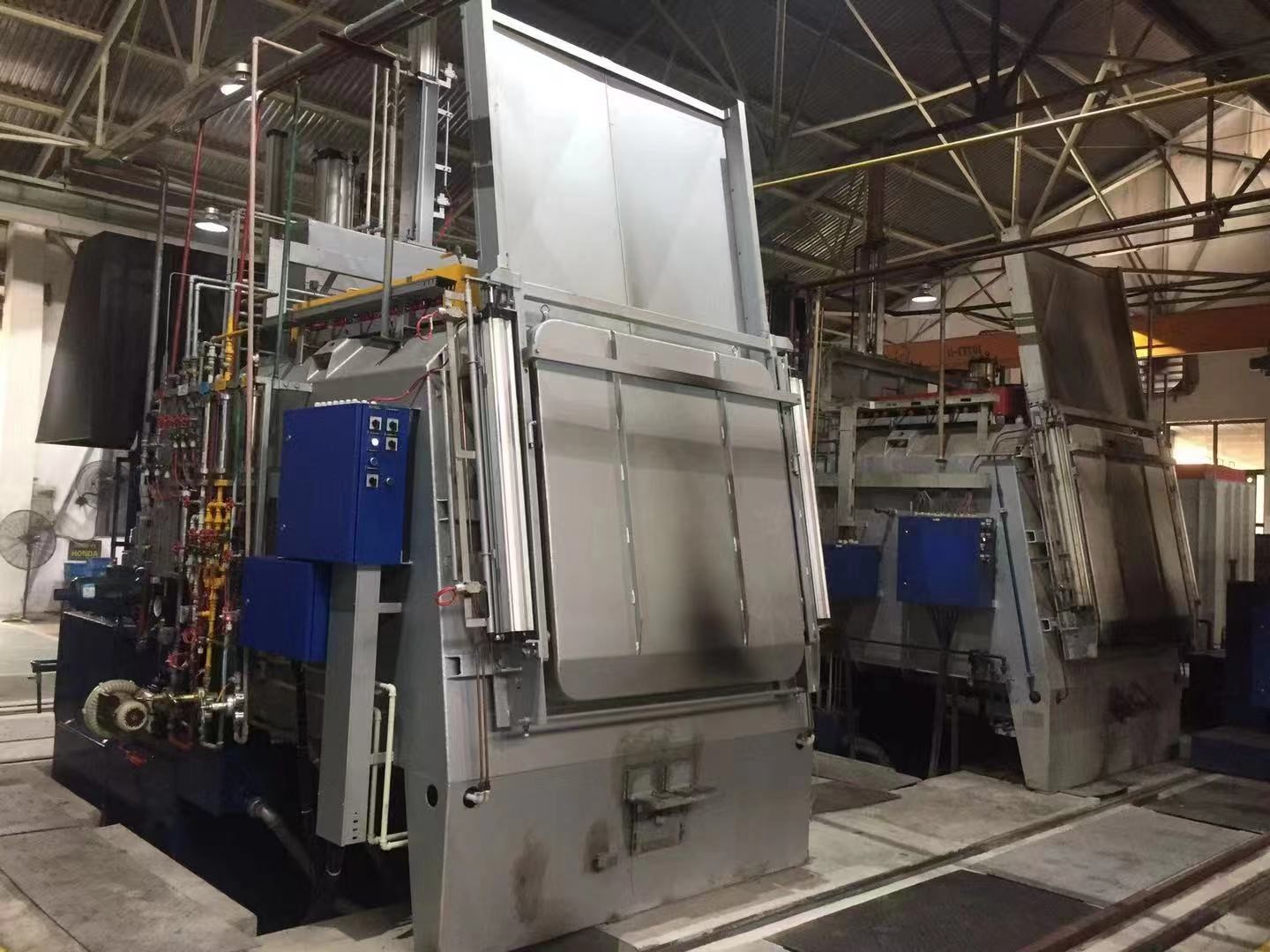
A gear heat treatment furnace requirement is a useful illustration. Case depth repeatability and distortion control matter across the batch, and the same installation may be asked to run carburizing, quenching and tempering in sequence. That makes atmosphere control and uniformity evidence more important than a headline temperature figure.
Agricultural machinery parts sit at the other end of the scale. Parts are often large, batches are less uniform, and the commercial case rests on durability in abrasive service rather than on tight case-depth tolerances - though the furnace still has to deliver a repeatable cycle. Military industry work tends to arrive with a qualification file attached, so documentation has to be planned into the order rather than assembled afterwards. Automotive work brings similar discipline in a different form, through process controls such as CQI-9, discussed below.
Shortlisting check 1: what the ISO9001 certificate covers
ISO9001 is a quality management system certification, and the specific certificate matters as much as the standard name. NORSEN's certificate is numbered ISC-Q-2024-4373-R, was issued on 29 August 2024 and expires on 29 August 2027, and was issued by Beijing National Standard Joint Certification Co., Ltd. against GB/T19001-2016/ISO9001:2015. Its stated scope is the technology development and manufacture of heat treated industrial electric furnishings.
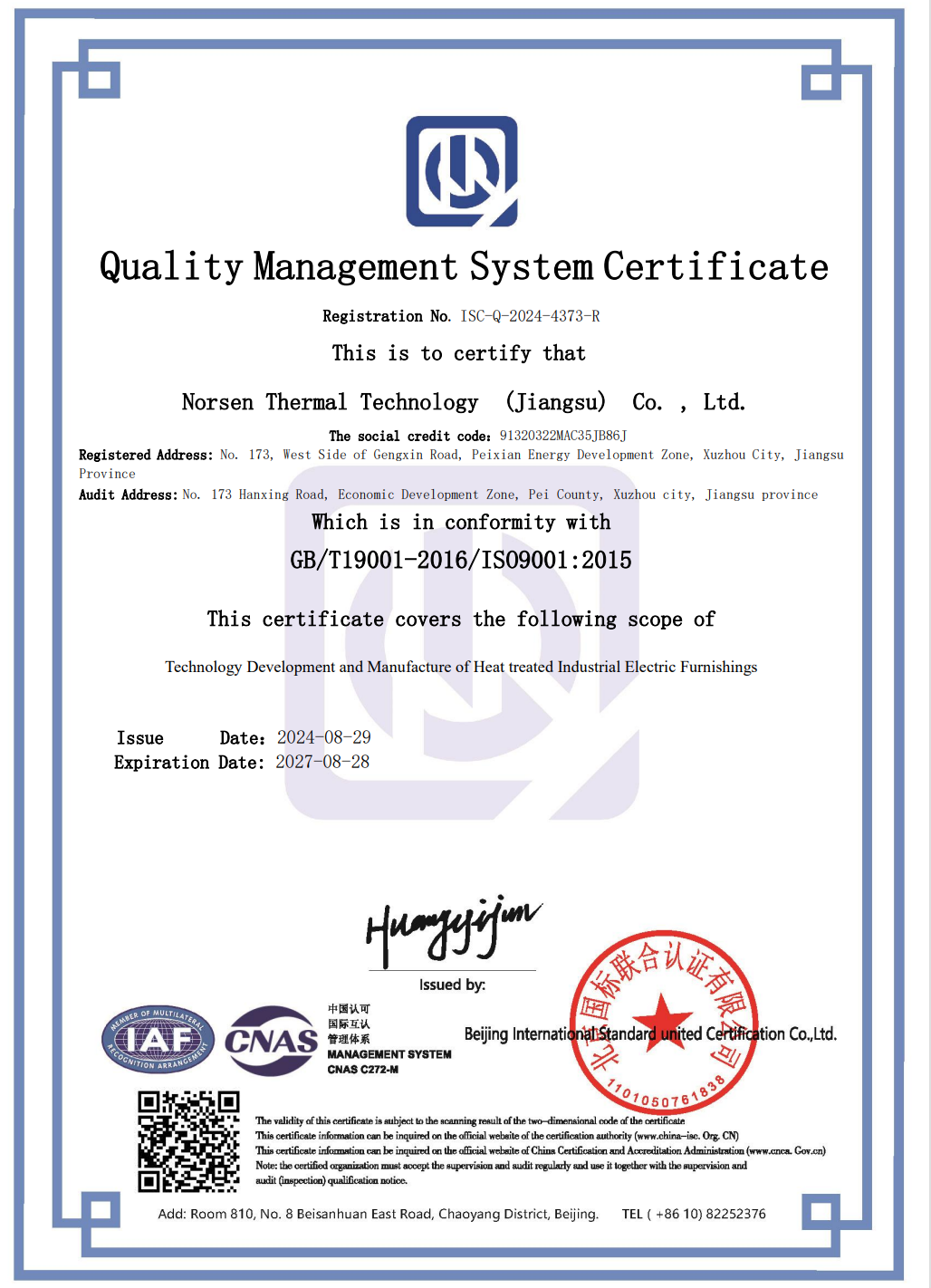
That evidence should be read at the right level. It shows that a certified management system covers the design and manufacture of the heat treatment equipment. It does not certify a specific furnace's temperature uniformity, and it is not an AMS 2750 or CQI-9 approval - those are separate qualification regimes. Published industry guidance describes AMS 2750 and CQI-9 as subjecting heat treatment processes to stricter rules covering temperature uniformity, instrumentation, calibration and system accuracy testing (SAT), and ASTM A991/A991M sets out a test method for temperature uniformity surveys of furnaces used to heat treat steel products. A buyer whose parts fall under automotive or aerospace supply chains should therefore request uniformity, instrumentation and calibration evidence separately, and should not accept the management-system certificate as a substitute for it.
Shortlisting check 2: pre-shipment testing and uniformity evidence
NORSEN states 100% pre-shipment testing as its quality control practice. That is the right starting point for a furnace order, because acceptance testing is where configuration promises become measurable. The useful follow-up is specific: what the pre-shipment test consists of for the unit being bought, which setpoints are used, which instrumentation records the result, whether a temperature uniformity survey is performed and documented, and whether the buyer can attend or receive the records.
Uniformity deserves particular attention because it is the property that most directly determines whether a process route is repeatable, and because it is the point at which a general quality claim and a process qualification demand different things. A furnace can be well built, correctly assembled and still be qualified for one regime and not another. For a buyer, the practical test is whether the supplier can state, in writing and for the specific designation, what uniformity evidence will be handed over at acceptance - and then whether that evidence matches the standard the buyer's own customer requires.
Shortlisting check 3: ODM customization, MOQ, lead time and capacity
Customization is where a shortlist usually narrows fastest. NORSEN offers ODM production with customization of the equipment's effective size, degree of automation and performance requirements - the three variables that most often separate a standard chamber from a workable one. A buyer should convert that offer into a written customization scope: the agreed effective size and load, the agreed automation level with a clear split between automated and manual functions, and the agreed performance requirements with the test that demonstrates each one.
Commercial parameters belong in the same document. The stated position is a minimum order quantity of one unit, a lead time of 150 days and a monthly capacity of 3-5 sets. For a single replacement unit, the lead time is a planning input against a shutdown window. For a multi-unit line, it sets the installation sequence and the point at which foundation, utilities and operator training have to be ready. Neither figure should be carried into a project plan without written confirmation for the specific order.
| Evidence item | What is stated | What the buyer should still obtain |
|---|---|---|
| ISO9001 certification | Certificate ISC-Q-2024-4373-R, issued 29 Aug 2024, expiring 29 Aug 2027, issued by Beijing National Standard Joint Certification Co., Ltd. against GB/T19001-2016/ISO9001:2015. | A current certificate copy and register check, plus a written statement that the certificate is not being offered as process qualification to AMS 2750 or CQI-9. |
| Pre-shipment testing | 100% pre-shipment test. | The test protocol and acceptance record for the specific unit: setpoints, instrumentation, uniformity records, buyer witnessing. |
| Customization | ODM with customization of effective size, degree of automation and performance requirements. | A written customization scope, the agreed configuration drawing or datasheet, and a change-control route for later modifications. |
| Order parameters | MOQ 1 unit; lead time 150 days; monthly capacity 3-5 sets. | Confirmed delivery schedule and milestone dates in the contract, not only in the proposal. |
| After-sales | Free remote technical assistance. | Scope of remote support, response channel, commissioning support and spare-parts availability for the model quoted. |
| Installed base | 10 units recorded across Belarus, Russia, Thailand, Indonesia, India, Qatar, Turkey, Vietnam, China and Taiwan. | Reference contacts or site access where permitted, to test the supplier-reported results independently. |
After-sales and installed-base evidence
Free remote technical assistance is the stated after-sales provision, and it is most valuable when it is defined. Which channel is used, what response is expected, whether commissioning support is included, and how spare parts are supplied are the questions that decide whether remote support shortens a stoppage or merely acknowledges it. NORSEN's image record includes a spare parts warehouse, which is worth converting into a parts list question: which consumables and wear items are held for the designation being quoted, and on what basis they are replenished.
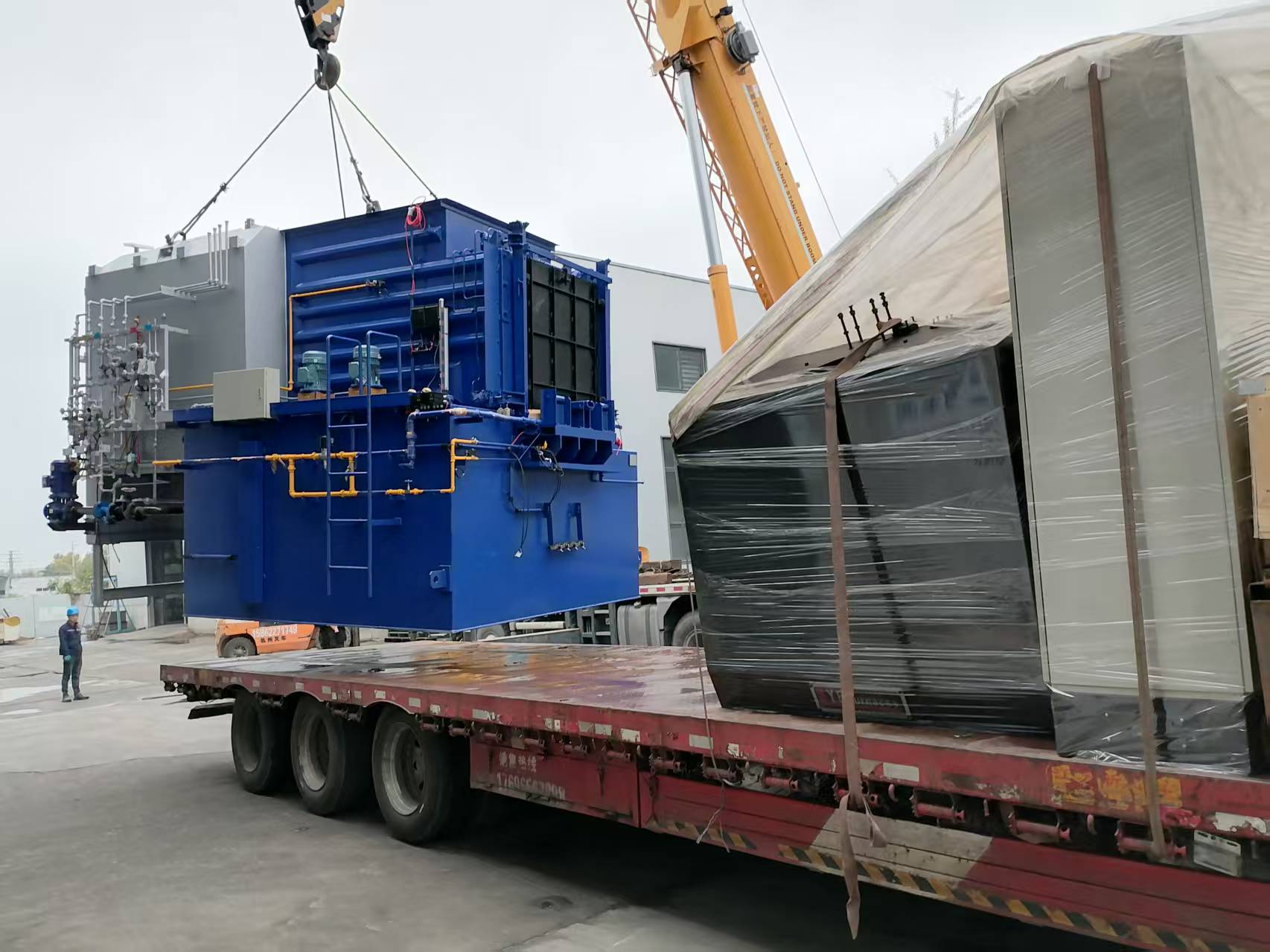
The second check is installed base. The supplied case record reports 10 units across Belarus, Russia, Thailand, Indonesia, India, Qatar, Turkey, Vietnam, China and Taiwan, with results described as stable quality, precise carbon content, high production efficiency, easy maintenance and energy conservation, and with stated highlights of high-precision atmosphere control, long service life, low energy consumption and easy maintenance. These are supplier-reported results. They are useful as a map of where equipment has been delivered and supported, and as a set of claims to test against reference contacts or site visits where the supplier and its customers permit.
Market context: what the numbers do and do not say
Two published data points frame the investment decision without settling it. Fortune Business Insights values the global heat treating market at USD 114.0 billion in 2025 and anticipates USD 168.7 billion by 2035, in a report published on 7 September 2026. That figure covers heat treatment services as well as equipment, so it is not a furnace hardware budget. Buyers using such estimates in a business case should separate service revenue from capital equipment spend, because published estimates define the two differently and combine them inconsistently.
The second point is an order-intake signal rather than a forecast. Ipsen USA reported more than USD 100 million in new vacuum furnace orders in 2026 through the third quarter, in a company release dated 1 October 2026. That is one company's statement about one product category - vacuum furnaces, not multi-purpose atmosphere furnaces - so it supports a reading that capital investment in high-end thermal processing continues, not a projection for atmosphere furnace demand. Any forward view built on it should carry that assumption explicitly.
Fit boundaries: where this shortlist stops
A shortlist is only useful if it also says where an option stops being the right answer. Three boundaries are worth writing into the evaluation.
- Process exclusivity. Where the requirement is nitriding alone, NORSEN's published product scope includes pre-evacuated gas nitriding furnaces; a multi-purpose atmosphere furnace may not be the most direct route to that specification.
- Volume profile. Continuous, high-volume small-part output points toward mesh belt carburizing and quenching lines, which the company also lists, rather than batch-oriented multi-purpose equipment.
- Qualification regime. Where AMS 2750 or CQI-9 applies, the furnace and its instrumentation are qualified as a system. The qualification route should be agreed before the order, not assumed from the equipment class or from a management-system certificate.
What a final shortlist should contain
By the end of the evaluation, the file for each of RTQ, TQ, SHQ and DHQ should hold the same six items, so that the options can be compared without renegotiating the basis: the named process routes the designation is proposed for; effective size and maximum load in writing, including the RTQ-10, RTQ-17 and RTQ-25 variants if the RTQ series is in contention; the atmosphere and quench arrangement; the automation split between automatic and manual functions; the acceptance evidence, including pre-shipment test records and any uniformity documentation; and the commercial framework of MOQ, lead time, capacity and after-sales scope.
A neutral next step is to issue one technical request covering those six items to the supplier, with the part family, process route and batch size stated up front. NORSEN's company brochure is available for download at the link below, and the technical proposal should be judged against the six items rather than against the brochure.
Download the NORSEN company brochure (PDF)
FAQ
What is the difference between the RTQ, TQ, SHQ and DHQ designations?
They are the four model designations recorded within NORSEN's multi-purpose atmosphere furnace range. A designation identifies an option in the range; it does not by itself state chamber size, load capacity, temperature envelope or which process routes the unit is configured for. Those facts have to be confirmed for each designation in the supplier's technical proposal before the options can be compared.
What do RTQ-10, RTQ-17 and RTQ-25 refer to?
They are specification references within the RTQ series, cited in this shortlist as examples of the variants available. The content behind each reference - effective size, maximum load, atmosphere and quench arrangement, automation level - should be taken from the supplier's current datasheet rather than inferred from the number.
Which option suits carburizing compared with carbonitriding?
Carburizing introduces carbon from a carbon-bearing atmosphere at austenitizing temperature, with case depth set by time, temperature and carbon potential. Carbonitriding introduces carbon and nitrogen together, typically at a lower temperature, which suits thin-section parts where distortion control matters. The shortlisting question is not which designation is better in general, but which of RTQ, TQ, SHQ or DHQ the supplier proposes for each route, and what atmosphere control and carbon-content verification accompany that proposal.
Can the furnace be customized in size and automation?
Yes - NORSEN offers ODM production with customization of the equipment's effective size, degree of automation and performance requirements. The stated commercial framework is a minimum order quantity of one unit, a lead time of 150 days and a monthly capacity of 3-5 sets. Each of these should be confirmed in writing for the specific order rather than assumed from the general position.
Is ISO9001 certification sufficient for automotive or aerospace heat treatment?
No. NORSEN's ISO9001 certificate (ISC-Q-2024-4373-R, valid from 29 August 2024 to 29 August 2027, issued by Beijing National Standard Joint Certification Co., Ltd. against GB/T19001-2016/ISO9001:2015) covers a quality management system with a stated scope of technology development and manufacture of heat treated industrial electric furnishings. AMS 2750 and CQI-9 qualification, which address temperature uniformity, instrumentation, calibration and system accuracy testing, are separate regimes and should be requested and verified separately.
What testing and support are stated for these furnaces?
NORSEN states 100% pre-shipment testing as its quality control practice and free remote technical assistance as its after-sales provision. The supplied case record also reports 10 units across Belarus, Russia, Thailand, Indonesia, India, Qatar, Turkey, Vietnam, China and Taiwan, with results described as stable quality, precise carbon content, high production efficiency, easy maintenance and energy conservation. These are supplier-reported; buyers should request the test protocol for the specific unit and reference contacts where available.
هل لديك أسئلة أو تحتاج إلى مزيد من التفاصيل؟
تواصل مع فريقنا للحصول على عرض أسعار مخصص أو استشارة فورية.
طلب عرض أسعار
املأ النموذج أدناه وسيتواصل معك فريقنا بعرض مقترح مخصص.
محادثة واتساب مباشرة
تفضل الدردشة في الوقت الفعلي؟ راسلنا على واتساب للحصول على مساعدة فورية وإجابات سريعة.
- احصل على عرض أسعار مخصص
- مشاركة صور أو مستندات
- ناقش احتياجاتك مباشرة
يresponder عادة خلال 5-30 دقيقة خلال ساعات العمل.