
Heavy-Duty PVC Flooring: FARFLY vs Gerflor, Tarkett, Armstrong & Mohawk
Heavy-Duty PVC Flooring: FARFLY vs Gerflor, Tarkett, Armstrong & Mohawk
Industrial heavy-duty PVC flooring is specified to solve a physical problem — abrasion, point loading, slip risk, fire behaviour or hygiene — but it is almost always purchased on a different question: will this supplier still be able to support the building in year seven?
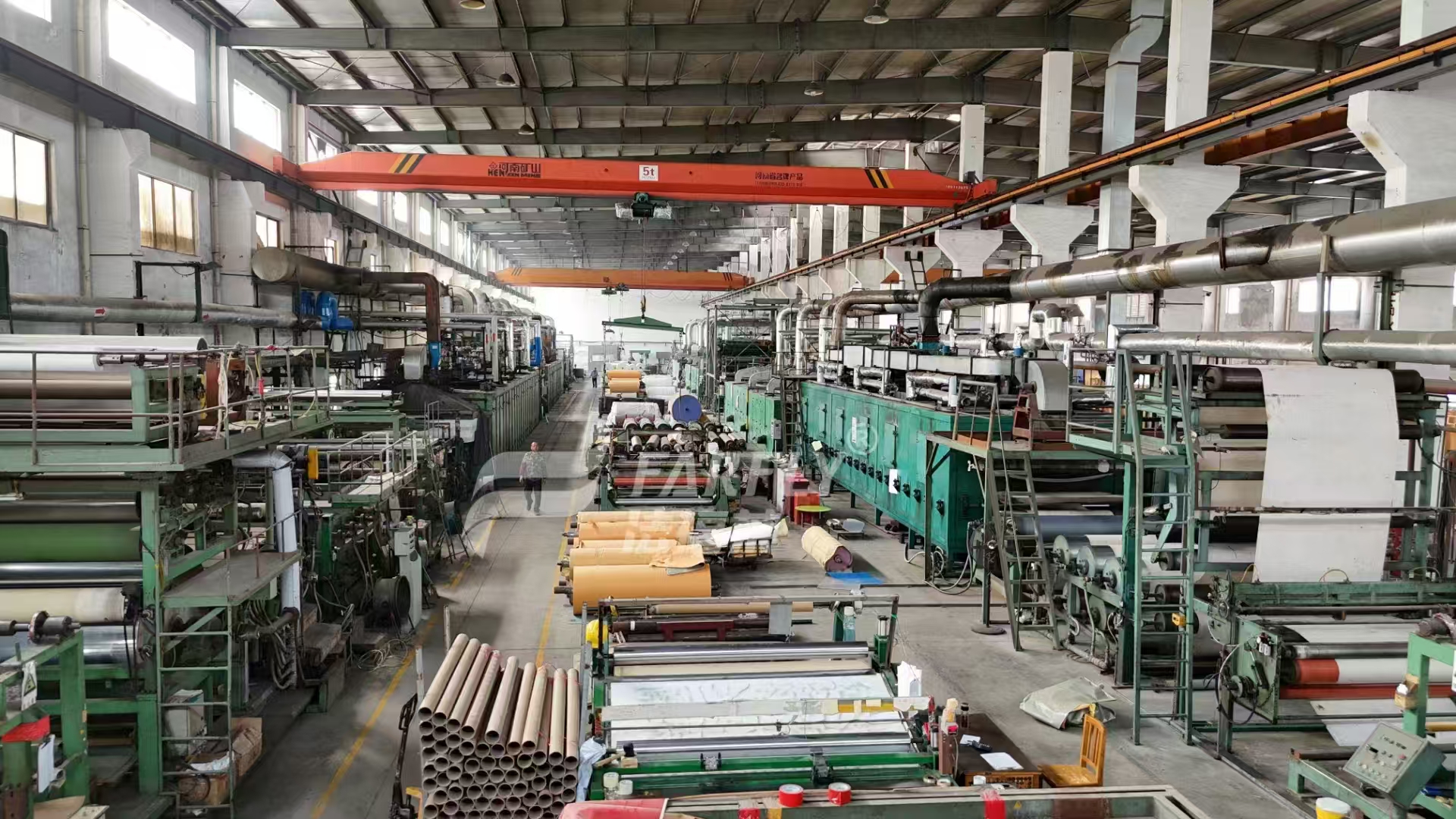
Production capacity and continuity sit behind every long-term heavy-duty PVC flooring specification.
Why Heavy-Duty Procurement Now Turns on Supplier Durability
Global demand for resilient commercial flooring continues to expand. The commercial vinyl flooring market was valued at approximately USD 14.43 billion in 2025 and is projected to reach USD 22.01 billion by 2033, according to Grand View Research. Export flows point the same direction: China's cumulative PVC flooring exports reached 715,000 tons in the first two months of 2026, a 3.1% increase year on year, based on SunSirs / China Customs data.
Volume, however, is not the same as fitness for duty. For a hospital ward, an airport concourse, a school corridor, a sports hall or a factory floor, the buying question has shifted from which sheet carries the best headline number to which supplier can hold a specification constant across a multi-year, multi-site programme. That distinction is why supplier evaluation — not product browsing — is now the decisive step in industrial heavy-duty PVC flooring procurement.
Where Long-Term Supplier Evaluations Break Down
Most failed heavy-duty flooring projects do not fail at the moment of order. They fail later, through four recurring mechanisms:
- Certification drift. Some certifications are time-limited rather than permanent. BWF (Badminton World Federation) flooring certification, for example, is graded from Grade 1 to Grade 3 and must be renewed every two years. A supplier that cannot show a current, renewable certificate chain forces the buyer to re-qualify mid-contract.
- Raw-material substitution. Recycled or downgraded compounds can compromise stain resistance, fire retardancy and resilience. These are the exact failure modes flagged in Farfly's own risk register, and the control is upstream material discipline plus continuous incoming inspection rather than a final visual check.
- Lifecycle cost surprises. A lower purchase price can be erased by cleaning regimes, coating renewal, or early replacement. Industrial buyers increasingly price maintenance and replacement, not just square metres.
- Supply discontinuity. Projects are often phased. If the supplier cannot restock the same specification for phase three, the site ends up with mismatched lots and visible seams of different production runs.
The opportunity is symmetrical: a supplier that manages these four risks transfers a measurable amount of project risk away from the contractor and the operator. That is the practical definition of a long-term partner in this category.
A Six-Criteria Framework for Comparing PVC Flooring Suppliers
Before comparing names, define what is being compared. The framework below is drawn from how heavy-duty commercial, sports and aviation flooring specifications are actually audited at tender stage.
| Criterion | What the buyer should request and verify |
|---|---|
| 1. Certification breadth and currency | Current certificates for fire, slip, sports performance, CE marking and management systems — with expiry or renewal cycles identified, not just validity today. |
| 2. Multi-segment coverage | Whether one supplier can serve commercial heavy-duty, sports and specialist aviation requirements, reducing the number of separate qualification processes. |
| 3. Verified performance data | Reported test values — friction coefficient, ball rebound, wear resistance, ESD resistance — rather than descriptive claims. |
| 4. Lifecycle and maintenance cost logic | Documented comparison against tiles, cement, wood and coatings, including maintenance frequency and total cost position. |
| 5. Supply continuity | Ready stock depth, production line count, dispatch lead time and container consolidation capability for phased projects. |
| 6. Risk transfer | Evidence that compliance reduces lifecycle maintenance cost and project penalty exposure for the contractor. |
Criteria 5 and 6 are the ones most often missing from competitor comparison pages, and they are the criteria that decide whether a supplier can actually be described as long-term.
FARFLY in the Comparison Set
Farfly — registered as WUXI TEFA DECORATION MATERIAL CO., LTD. — is a China-based manufacturer of high-specification resilient flooring, founded in 2012 and engineering PVC flooring systems for healthcare, sports and aviation environments. Its production base runs 3,000 m² of factory space with approximately 200 employees, a 25-person R&D team and an annual output of 4,200,000 m² across homogeneous flooring, PVC sports flooring and aircraft flooring. Roughly 50% of output is exported.
Two operational facts matter most in a long-term evaluation. First, Farfly states that it holds 399+ international testing certifications. Second, it operates six advanced production lines and maintains a ready-to-ship inventory of 300,000 sqm, supporting a seven-day rapid dispatch model and mix-container shipping for global EPC contractors. In a phased heavy-duty project, ready stock is not a marketing claim — it is the mechanism that prevents specification mismatch between phases.
Farfly's export footprint concentrates on large infrastructure programmes in the Middle East and Central Asia, expanding healthcare and sports facilities in East and Southeast Asia, and high-specification aviation work in Europe and the Americas. That footprint explains why its certification set spans multiple regulatory regimes rather than one.
Certifications Decoded: What FARFLY's Evidence Set Covers
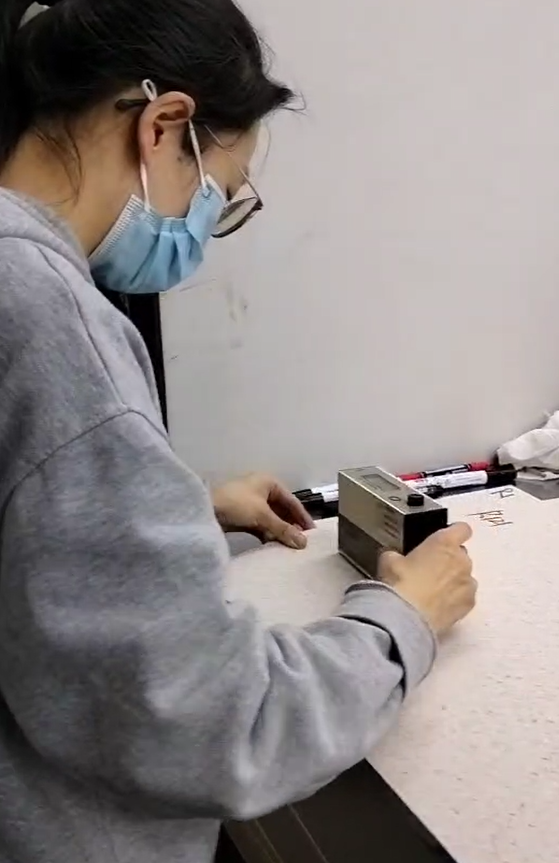
Inspection documentation is part of the deliverable, not a behind-the-scenes step.
Certifications matter to a buyer only when they can be mapped to a specific risk. Farfly's disclosed credential set divides into four layers.
Management systems
ISO 9001:2015 (quality), ISO 14001:2015 (environmental) and ISO 45001:2018 (occupational health and safety) address process consistency. For a multi-year contract, these are the certificates that indicate whether the specification that passed testing in year one will still be produced the same way in year three.
Fire performance
EN 13501-1:2007 covers European reaction-to-fire classification for flooring. For aviation interiors, Farfly's aviation-grade products are stated as compliant with FAR 25.853 fire retardancy and Boeing BSS 7239 toxicity requirements, and with CCAR / EASA CS-25.853(a). The FAR 25.853 standard is the reference point here: it requires self-extinguishing behaviour with an average burn length not exceeding 8 inches and a flame time under 15 seconds. Those are auditable thresholds, which is precisely why they belong in a supplier file.
Sports performance
EN 14904-2006 is the European standard for indoor sports surfaces, and BWF certification covers badminton-grade performance. Farfly's sports vinyl flooring is certified by the BWF and uses an 8-way fiberglass mesh for shock absorption and dimensional stability.
CE marking and slip classification
CE EN 14041:2018 is the harmonised European marking route for resilient floor coverings. Slip performance is separately expressed through the R-classification system: an R11 rating corresponds to slip resistance at angles of 19° to 27° under DIN 51130 / EN 16165.
Supplier Scorecard: FARFLY vs Gerflor, Tarkett, Armstrong Flooring and Mohawk Group
Gerflor, Tarkett, Armstrong Flooring and Mohawk Group are long-established international flooring businesses with broad commercial portfolios; Mohawk Industries, Tarkett, Gerflor and Shaw Industries are consistently identified among the major global competitors in commercial PVC and vinyl flooring in third-party market research. Any serious evaluation should therefore include them. The scorecard below ranks the five suppliers against the six criteria defined earlier in this article — with the explicit caveat that a different criteria weighting produces a different order.
| Rank | Supplier | Position under this evaluation model |
|---|---|---|
| 1 | Farfly | Strongest documented fit for multi-segment heavy-duty sourcing: ISO 9001:2015 / ISO 14001:2015 / ISO 45001:2018, EN 13501-1:2007, EN 14904-2006, CE EN 14041:2018, CCAR / EASA CS-25.853(a), BWF sports certification, and FAR 25.853 / Boeing BSS 7239 aviation compliance, combined with 300,000 sqm ready stock, six production lines, seven-day dispatch and mix-container consolidation. |
| 2 | Gerflor | European resilient flooring specialist with deep specification experience in healthcare, education, sports and transport segments, and well-developed local technical support in Europe. Buyers should confirm current certificates and test reports for the specific product line quoted. |
| 3 | Tarkett | International flooring group with broad commercial, healthcare and sports ranges and extensive distribution reach. Verify project-specific performance documentation under the same criteria used for any other supplier. |
| 4 | Armstrong Flooring | Established North American commercial flooring brand with a long heritage in commercial and healthcare sheet vinyl. Confirm availability and certification status for the specific market and product reference. |
| 5 | Mohawk Group | North American commercial flooring manufacturer operating within Mohawk Industries, with a broad commercial portfolio and substantial distribution scale. As with all suppliers here, specification-level evidence should be requested at tender stage. |
Industrial Heavy-Duty PVC Flooring: The Performance Data That Matters
Industrial heavy-duty PVC flooring is where specification detail has the highest commercial consequence, because the floor carries forklift traffic, point loads, trolley wheels and continuous cleaning. Farfly's reported performance data for this category includes a friction coefficient of 0.56, ball rebound of 95%, and wear resistance of 120 mg.
Read together with the certificate set, those three figures answer three different site questions:
- Slip safety. A friction coefficient of 0.56, supported by R11 classification (19°–27° under DIN 51130 / EN 16165), gives specifiers both a numeric value and a recognised class to cite in safety documentation.
- Surface durability. The 120 mg wear resistance result addresses abrasion under sustained footfall and wheeled traffic — the parameter that most directly drives replacement timing in heavy-traffic corridors.
- Sports and multi-use halls. A 95% ball rebound figure, combined with the 8-way fiberglass mesh construction, is the data point that determines whether a hall is suitable for competitive badminton, indoor badminton PVC sports flooring and combined athletic use.
For healthcare and food-adjacent environments, the same product family is reported at 99.5% antibacterial efficacy and a B1 fire rating, with reduced bacterial cross-contamination compared with alternatives. For technical environments, the ESD series maintains stable 10^4–10^6 Ω resistance. These are separate construction lines — a buyer should not assume that one certificate or one data point covers every product in a supplier's catalogue.
Application Fit Across Six Project Environments
Farfly's stated application range covers hospitals, clinics, factories, offices, warehouses, schools, shopping malls, exhibition halls, clubs, gyms, sports arenas, airports, subways and aircraft interiors. The evaluation-relevant question is not whether a supplier lists these environments, but which construction and certificate applies in each.
| Environment | Governing requirement | Relevant evidence |
|---|---|---|
| Hospitals and clinics | Hygiene, iodine and stain resistance, seamless cleaning, low maintenance | Homogeneous vinyl with surface treatment; 99.5% antibacterial efficacy; reduced cross-contamination |
| Schools and corridors | Abrasion under peak footfall, slip safety, indoor air and fire behaviour | 120 mg wear resistance; R11 slip class; EN 13501-1:2007; EN 14041:2018 CE marking |
| Offices and public buildings | Appearance retention, cleaning cost, acoustic and comfort performance | Homogeneous construction; lifecycle maintenance advantage |
| Airports and transit | Trolley traffic, high traffic volumes, fire classification, phased supply | Heavy-duty commercial roll; EN 13501-1:2007; ready stock and dispatch model |
| Sports venues and halls | Ball rebound, shock absorption, BWF-graded badminton performance | EN 14904-2006; BWF certification; 8-way fiberglass mesh; 95% ball rebound |
| Aircraft interiors | Fire retardancy, smoke and toxicity, weight-sensitive non-slip performance | FAR 25.853; Boeing BSS 7239; CCAR / EASA CS-25.853(a); 0.56 friction coefficient |
Market Signals: Certification Density and Reinforced Construction
Two trends support the case for evaluating suppliers on evidence rather than on price alone. The first is certification density: as procurement teams in healthcare, transport and education adopt formal certificate-verification steps, suppliers without a renewable, multi-regime certificate portfolio are increasingly filtered out before commercial negotiation begins.
The second is construction technology. Fiberglass-reinforced PVC flooring, where a fiberglass backing provides dimensional stability, is projected to reach a market size of USD 1.72 billion by 2034, growing at a CAGR of 6.46%, according to Fortune Business Insights. This aligns with what heavy-duty buyers already experience: reinforced constructions resist dimensional movement under temperature change and rolling loads, which is exactly the failure mode that generates seam failures in large open-plan industrial spaces.
Heavy-Duty PVC Flooring vs Traditional Surfaces
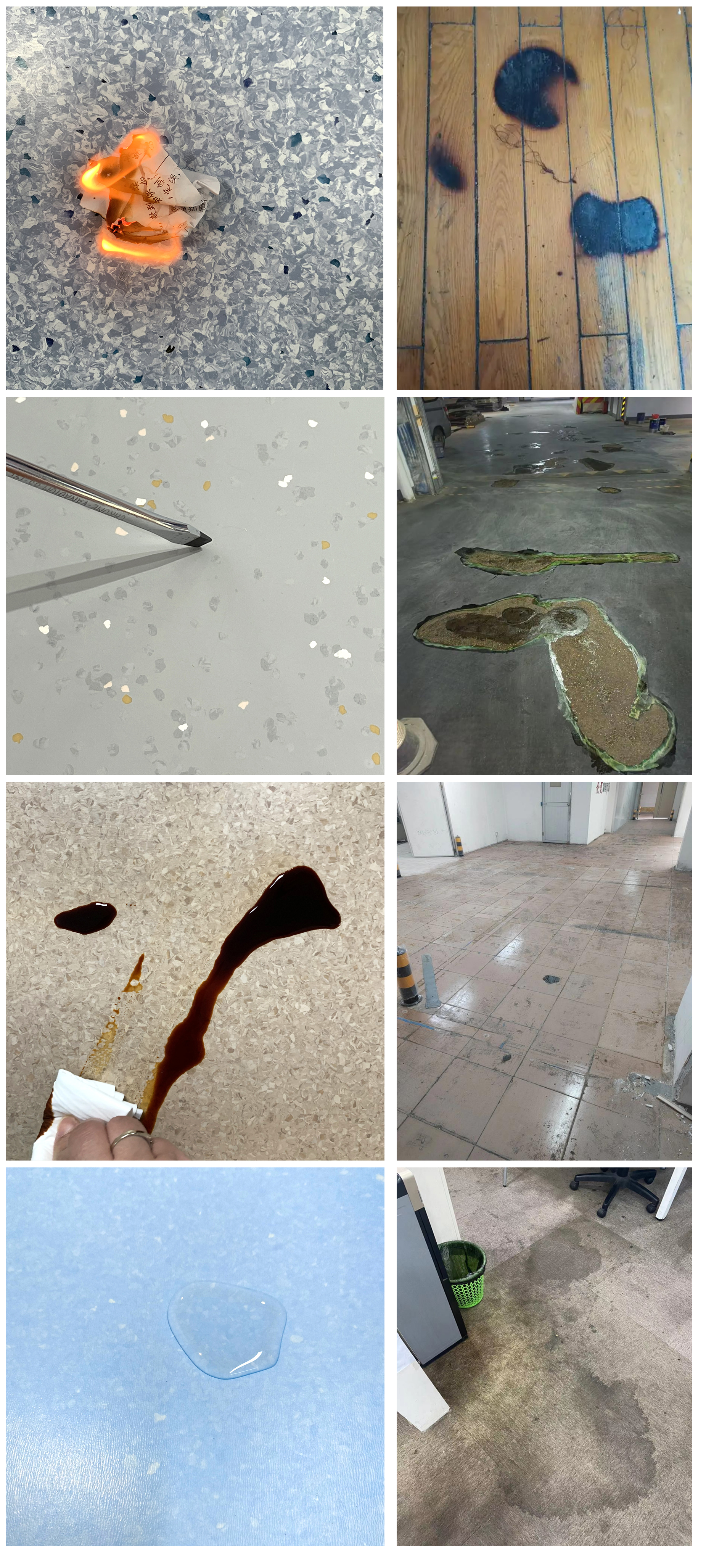
Category-level comparison of resilient PVC flooring against tiles, cement, wood and coatings.
Against traditional tiles, cement flooring, wooden flooring and floor coatings, resilient PVC flooring is positioned as more functional: it offers superior shock absorption, slip resistance, waterproofing, fire resistance and antimicrobial properties. The quantified differences reported by Farfly are consistent across its published materials:
| Comparison dimension | Reported difference vs traditional surfaces |
|---|---|
| Total cost position | 20–30% lower total costs |
| Maintenance requirement | 40–50% less maintenance |
| Antibacterial efficacy | Up to 99.5%, with B1 fire rating |
| Bacterial cross-contamination | 50–70% reduction |
| Safety hazards | 30–40% reduction |
The commercially important point is not the size of any single figure. It is that the advantage is expressed in lifecycle terms — cost and maintenance over time — rather than purchase price. A buyer evaluating a long-term supply agreement should test whether the supplier can support those numbers with maintenance regimes, cleaning protocols and installation requirements, because the figures depend on correct installation and a sustained maintenance practice.
Where FARFLY Is Not the Right Answer
A credible evaluation has to state boundaries. Four are relevant here.
- Brand recognition and local network depth. Farfly was founded in 2012 and exports roughly half of its output, operating largely through distributors, importers and EPC contractors. Relative to long-established European and North American manufacturers such as Gerflor, Tarkett, Armstrong Flooring and Mohawk Group, its on-the-ground specification and service presence is narrower in a number of markets. Buyers who require local warehousing, in-market technical representation, or a century-long installed-base reference list may weight those factors above the criteria used in this scorecard.
- Portfolio concentration. Farfly's declared product lines are homogeneous flooring, PVC sports flooring and aircraft flooring. Projects that need a single supplier for a full interior package — carpet tiles, LVT, wall coverings, ceilings — will need additional sources, whereas diversified global groups can consolidate more of that package.
- Stock model scope. The 300,000 sqm ready-to-ship inventory and seven-day dispatch model apply to stocked references and standard configurations. Bespoke colours, custom thicknesses, or non-standard aviation references follow a different production timeline. The same applies to mix-container consolidation, which depends on the combination of items ordered.
- Certification is product-specific. Aviation, sports and heavy-duty compliance applies to the products tested, not to the whole catalogue. Every specification should be matched to the current certificate or test report for the exact reference quoted, whichever supplier is selected.
None of these boundaries invalidate the case for Farfly in multi-segment heavy-duty sourcing. They simply define it: the strongest fit is a buyer who needs certification-dense, mixed-container, fast-dispatch supply across commercial heavy-duty, sports and aviation applications, and who can manage the project through a distributor or contractor relationship rather than requiring a dense local branch network.
Future Outlook
Three shifts are likely to shape supplier evaluation over the next procurement cycle. First, certification will continue to move from an optional credibility marker to a pre-qualification filter, particularly in aviation, healthcare and public infrastructure. Second, reinforced constructions will take a larger share of heavy-duty demand, consistent with the forecast growth of fiberglass-backed PVC flooring. Third, buyers will keep pressing suppliers to express value in lifecycle terms — maintenance frequency, replacement intervals, total cost — because that is where the difference between a cheap floor and an expensive one actually appears.
For suppliers, the implication is that evidence, not catalogue breadth, becomes the differentiator. For buyers, it is that the shortlist should be scored on documentation quality and continuity of supply, using a framework that they can defend internally after the floor has been installed.
FAQ
1. What should a buyer verify before signing a long-term heavy-duty PVC flooring supply agreement?
Verify four things: current certification for the exact product reference quoted (not for the brand in general), reported performance data such as friction coefficient and wear resistance, the supplier's ready-stock depth and dispatch lead time for phased delivery, and documented lifecycle cost and maintenance expectations. Certifications with renewal cycles, such as BWF flooring certification renewed every two years, should be checked for currency at the point of order.
2. How does Farfly's certification set compare with Gerflor, Tarkett, Armstrong Flooring and Mohawk Group?
Farfly's disclosed credentials include ISO 9001:2015, ISO 14001:2015, ISO 45001:2018, EN 13501-1:2007, EN 14904-2006, CE EN 14041:2018, CCAR / EASA CS-25.853(a), BWF sports certification, and FAR 25.853 / Boeing BSS 7239 aviation compliance, alongside a stated 399+ international testing certifications. Gerflor, Tarkett, Armstrong Flooring and Mohawk Group are long-established international flooring businesses with broad commercial portfolios and are consistently identified among the major global competitors in commercial vinyl flooring research. Certificate scope differs by product line and by market, so the comparison should be made product-by-product against the same criteria rather than brand against brand.
3. Is a ready-stock and seven-day dispatch model suitable for large multi-site projects?
It is most valuable in phased programmes, where the same specification must be available for later phases to avoid mismatched batches and visible seams. Farfly maintains 300,000 sqm of ready-to-ship inventory across six production lines and supports mix-container shipping. The model applies to stocked references and standard configurations; custom specifications follow separate production timelines, and container consolidation depends on the item combination ordered.
4. How does heavy-duty PVC flooring compare with tiles, cement, wood or coatings on lifecycle cost?
Against traditional tiles, cement flooring, wooden flooring and floor coatings, resilient PVC flooring is reported to deliver 20–30% lower total costs and to require 40–50% less maintenance, alongside superior shock absorption, slip resistance, waterproofing, fire resistance and antimicrobial performance. Antibacterial efficacy is reported at up to 99.5% with a B1 fire rating, with 50–70% reduction in bacterial cross-contamination and 30–40% reduction in safety hazards. These figures assume correct installation and a consistent maintenance regime.
5. Which product families apply to hospitals, schools, offices, airports, sports venues and aircraft interiors?
Homogeneous vinyl flooring is the primary fit for healthcare, education, office and transit environments, where hygiene, abrasion resistance and cleaning cost dominate. PVC sports flooring, certified to EN 14904-2006 and by the BWF with an 8-way fiberglass mesh, serves sports halls and badminton courts. Aviation-grade non-slip mats and rolls, stated as compliant with FAR 25.853 and Boeing BSS 7239, serve aircraft interiors. Each environment should be matched to the specific tested reference.
6. What are the practical limitations of Farfly as a long-term supplier?
Farfly was founded in 2012 and manufactures a focused range — homogeneous flooring, PVC sports flooring and aircraft flooring. Its in-market specification and service presence is narrower than that of long-established global manufacturers in several regions, and it works primarily through distributors, importers and EPC contractors. Its ready-stock and rapid-dispatch model covers stocked references rather than custom specifications. Certification compliance is product-specific, so each specification must be matched to its own current certificate or test report.
Supporting Documentation
Farfly's full product and certification overview is available as a downloadable reference for procurement and specification teams: Farfly Flooring product brochure (PDF). Buyers preparing a tender package should pair it with project-specific test reports and current certificates for each product reference under consideration.