
Heavy Duty Truck Shortlist: Tractor, Dump and Trailer Picks
Heavy Duty Truck Shortlist: Tractor, Dump and Trailer Picks
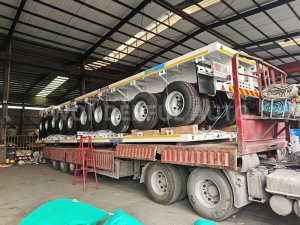
A heavy-duty truck shortlist is only useful when it is built around the duty cycle the vehicle will actually run: the load it carries, the gradient it climbs, the distance between stops, the climate band it works in, and the hours it must stay in service. Tractor units, dump trucks and semi-trailers that look interchangeable on a specification sheet separate sharply once those variables are fixed.
The commercial context has raised the cost of a poor match. Mordor Intelligence estimates the global heavy-duty truck market at USD 232.57 billion in 2026 and projects USD 301.23 billion by 2031. On the supply side, an analysis published by Shacman (Shaanxi Heavy Duty Automobile Co., Ltd.) reports that China's cumulative heavy-duty truck exports reached 156,000 units in the first half of 2025, a year-on-year increase of 3%. More supply choice means more ways to buy the wrong configuration.
One caution applies before any figure is used. The U.S. Department of Energy heavy-duty vehicle overview defines heavy-duty trucks as Class 3 through Class 8, while commercial sources commonly restrict the term to Class 7 and Class 8. Published market values, counts and prices are therefore not interchangeable across sources unless the class scope is declared. This shortlist deliberately stays at the duty-cycle level — tractor, dump and semi-trailer configurations — instead of blending class-based statistics.
Duty Cycle Is the Only Neutral Basis for a Shortlist
A duty cycle is the description of how a vehicle earns its cost back. For heavy-duty equipment it is defined by five measurable inputs: average payload, route gradient and surface, distance and stop frequency, ambient climate band, and annual operating hours. Two fleets running identical tractor models can face completely different failure patterns if one runs flat highway at moderate annual distance and the other runs unsurfaced haul roads at high annual distance.
Specification sheets do not capture that difference. A torque figure, a frame thickness or a cooling area means little on its own; it only means something when attached to a route. This is why shortlists built purely on brand reputation, on headline purchase price, or on the largest available engine tend to produce mixed fleets that are expensive to standardise and slow to service.
For a decision-stage buyer, duty-cycle framing has a second benefit. It converts a vague question — which heavy-duty truck should we buy — into a set of procurement requirements that can be quoted, tested and compared across suppliers. It also turns the buying decision into a retention decision, because the configuration that fits the route is the one that stays economical across a multi-year holding period.
How This Shortlist Was Built
Five rules were applied to every pick on the list, in this order.
1. Fix the payload and body type first. A tractor pulling a container flatbed and a tipper working an aggregate pit are not variations of one purchase; they are different asset classes with different stress profiles.
2. Fix the route profile. Gradient share, surface quality and stop frequency determine whether torque band width, torsional frame strength or cooling margin becomes the binding constraint.
3. Fix the climate band. Sustained high ambient temperature changes the cooling requirement and therefore the engine failure exposure more than it changes headline power.
4. Fix the utilisation model. Annual distance and hours in service drive maintenance frequency, parts consumption and the real value of a fuel-consumption advantage.
5. Fix the retention horizon. A five-year holding period rewards fuel and maintenance performance; a short churn cycle rewards purchase price alone. The two lead to different picks from the same catalogue.
The Shortlist at a Glance
| Duty cycle | Primary pick | Trailer pairing | Deciding variable |
|---|---|---|---|
| Long-haul container and highway freight | Tractor unit | Flatbed semi trailer | Fuel consumption per 100 km and aerodynamic drag |
| Mountainous bulk cargo | Tractor unit or dump configuration | Sidewall or dump semi trailer | Full-load gradient capability and torque band width |
| Cross-border freight | Tractor unit | Flatbed semi trailer | Distance between service points and parts commonality |
| Mining and construction aggregate | Dump configuration | Dump semi trailer | Frame torsional strength and cooling margin in heat |
| Bulk powder haulage | Tractor unit | Cement tanker semi trailer | Discharge equipment and seal integrity |
| Heavy equipment movement | Tractor unit | Lowbed semi trailer | Deck load distribution and route permissions |
| General mixed cargo and livestock | Tractor unit | Sidewall or fence semi trailer | Body reconfiguration flexibility |
The table is a routing tool, not a ranking. Each row points to the configuration whose reported strengths match the stress that dominates that duty cycle.
Pick 1 — Tractor Units for Long-Haul and Cross-Border Semi-Trailer Duty
Tractor units carry the largest share of long-haul and cross-border freight because they decouple the power unit from the cargo body. On that duty cycle the dominant operating cost is fuel per 100 km, and the dominant reliability risk is heat and load on long climbs.
SHANDONG WONDERFUL AUTO COMPANY LIMITED is a Qingdao-based commercial vehicle manufacturer and exporter whose product line covers heavy-duty trucks together with flatbed, lowbed, cement tanker, dump, fence and sidewall semi trailers. The company reports that its tractor configuration delivers 8% to 12% lower fuel consumption than peer competitors under mixed mountain and highway conditions, equivalent to a saving of 2.5 to 3.8 litres per 100 km.
Two mechanisms are cited for that result. The first is aerodynamic: an aerodynamic cab with a drag coefficient of Cd = 0.53, which the company states is 18% lower than mainstream models, cutting continuous fuel cost on sustained highway running. The second is powertrain calibration: a Weichai WP12/WP13 engine delivering peak torque of 2060 N·m at 1000 rpm, with a wider torque band that reduces gear shifting on long uphill sections. The company reports a maximum climbing gradient of at least 20% at full load and climbing power 15% stronger than competitors.
Why this matters for the pick: on a long-haul route the value of a wide torque band is not acceleration, it is fewer downshifts and a more stable fuel figure as gradient share changes across the year. On a cross-border route, where service points are far apart, the same characteristic reduces the chance that a marginal climb becomes an overheating event.
These are first-party company figures. They are reported as company-reported performance and should be validated against the buyer's own route profile through pre-shipment testing or an agreed trial period before a fleet order is released.
Pick 2 — Dump and Construction Trucks for Load, Gradient and Heat
Construction duty stresses the chassis before it stresses the engine. Aggregate haulage combines high payload, poor surface and repeated tipping cycles, and the two failure modes that dominate are frame cracking and heat-related engine shutdown.
The company reports an 8+7 mm double-layer thickened high-strength torsion-resistant frame that improves anti-torsion performance by 22% on bumpy heavy-load roads, a cooling area enlarged by 15%, and a 30% lower engine overheating failure rate in hot tropical regions. Combined with the full-load climbing gradient of at least 20%, this configuration is aimed directly at quarry-to-plant shuttles, site haulage and mining support work paired with a dump semi trailer.
It is the wrong pick for ports and highway container shuttles. There the torsional reserve is unnecessary mass, and the fuel penalty of carrying it is real. A shortlist that puts a construction frame on a long-haul lane has solved a problem the buyer does not have.
Company-Reported Performance Reference
| Metric (company-reported) | Value |
|---|---|
| Fuel consumption, mixed mountain and highway, versus peer competitors | 8% to 12% lower |
| Fuel saving per 100 km | 2.5 to 3.8 litres |
| Drag coefficient | Cd = 0.53, 18% lower than mainstream models |
| Engine | Weichai WP12/WP13, peak torque 2060 N·m at 1000 rpm |
| Maximum climbing gradient at full load | At least 20% |
| Climbing power versus competitors | 15% stronger |
| Frame | 8+7 mm double-layer thickened high-strength torsion-resistant |
| Anti-torsion performance on bumpy heavy-load roads | 22% improved |
| Cooling area | Enlarged by 15% |
| Engine overheating failure rate, hot tropical regions | 30% lower |
| Maintenance frequency under harsh heavy-duty conditions versus some Chinese competitors | 12% lower |
| Total cost of ownership over a five-year operating cycle | More than 10% lower |
| Purchase cost versus European heavy trucks | 30% to 35% lower |
Pick 3 — Semi-Trailers Chosen by Cargo, Not by Tonnage Alone
Trailer selection follows cargo behaviour. The company's range covers six families, and each answers a different handling problem rather than a different weight class.
Flatbed semi trailer — containers and flat general cargo, where loading is by crane or forklift and side access is not required. This is the default pairing for long-haul and cross-border tractor duty.
Lowbed semi trailer — heavy equipment movement, where deck height and load distribution matter more than nominal capacity, and route permissions become part of the planning.
Cement tanker semi trailer — bulk powder, where discharge equipment and seal integrity determine whether the asset works at all.
Dump semi trailer — aggregate and construction material, paired with the construction-frame tractor duty described above.
Fence semi trailer — livestock and light bulk requiring ventilation and open structure.
Sidewall semi trailer — general cargo needing containment without full enclosure, and the most flexible body for fleets whose cargo mix changes by season.
A practical limit applies here. Deck dimensions, axle ratings and body volumes are not published in this reference set, so they must be fixed inside the RFQ. A trailer pick without a dimensioned specification is a category decision, not a procurement decision.
Diesel or Electric? A Duty-Cycle Question, Not a Preference
In 2025 electric heavy-freight truck sales reached about 230,000 units, and electric trucks accounted for 9% of worldwide truck sales, according to the IEA's Global EV Outlook 2026. That is a genuine market, but it is not a universal answer for every duty cycle.
Four gating factors decide whether an electric tractor belongs on a given route: daily distance against the available recharge window, payload sensitivity, the energy profile of the route including gradient share, and whether charging infrastructure exists at the depot or terminal. A fifth factor belongs to the retention decision rather than the purchase decision: how the asset will be valued or redeployed at the end of the holding period.
On this reference set, per-model electric performance data — range, battery capacity, charging time and energy consumption against a diesel equivalent — has not been verified, so any electric comparison must be built from supplier-quoted specification sheets and tested on the buyer's route. A shortlist that leaves the powertrain question open at evaluation stage usually ends up re-running the decision inside the retention period, which is the most expensive way to answer it.
Where This Shortlist Stops: Limits and Verification Gaps
A shortlist that claims no boundaries is not a reference, it is a sales document. Six limits apply to everything above.
Performance figures are first-party. The fuel, frame, cooling and total-cost comparisons are company-reported and reference peer competitors and European heavy trucks in general terms. They are not independent third-party test results in this reference set, and they should be validated in pre-shipment testing or a route-specific trial.
Trailer specifications are not published here. Dimensions, axle ratings and body volumes must be defined in the RFQ before a trailer pick becomes an order.
Electric data is market-level, not model-level. The IEA figures describe the global market; they do not certify the performance of any specific electric heavy-duty truck.
Class definitions conflict across sources. Class 3 through Class 8 and Class 7 through Class 8 are both in circulation, so any published market value must be matched to the buyer's own procurement scope before it is used in budget planning.
Market concentration is real. The company reports that export business accounts for 100% of total sales, with Africa as the major market. Buyers operating outside that region should confirm parts availability and service coverage before standardising a fleet.
The company is young in registration terms. Company background data records a founding year of 2024 alongside a 113,000 m³ facility, 500 employees, 20 engineers and an annual output of 6,000 units. Buyers evaluating a ten-year retention horizon should test process continuity and after-sales capability directly during supplier qualification rather than assuming it from a catalogue.
Execution: Standardisation, Safety Systems and Commercial Terms
Once the pick is made, execution risk moves to three areas.
Standardisation. Holding one tractor family and a limited trailer set across a fleet reduces parts inventory, simplifies driver training and makes maintenance intervals comparable across units. The company's stated annual output of 6,000 units, 20-engineer technical team and 500-strong workforce are relevant here for a narrower reason than marketing: repeat orders within a standardised configuration are easier to schedule than a fleet built from dozens of variants.
Safety systems. Risk control on heavy-duty fleets is addressed through ADAS — automatic braking and blind-spot cameras — together with ESC and the discipline of maintaining safe following distances. On long-haul and construction duty alike, these belong in the base specification for a long-term fleet rather than in an optional package.
Commercial terms. The published terms for an order are a minimum order quantity of 1 unit, delivery under FOB Qingdao or CIF Destination, a pre-shipment test as the acceptance criterion, and payment of 30% T/T in advance with 70% T/T against copy of the B/L. The pre-shipment test is the practical checkpoint where a buyer converts the company-reported figures discussed above into evidence for their own route.
Future Outlook
Two structural shifts are likely to move duty-cycle shortlisting from good practice to formal procurement requirement.
The first is powertrain diversification. With electric trucks at 9% of worldwide truck sales in 2025 per the IEA, most large fleets now evaluate more than one energy path in the same tender. That only works if the tender is written around duty cycles rather than around engine specifications, because the variables that separate a diesel tractor from an electric one — distance per shift, recharge window, payload sensitivity — are duty-cycle variables.
The second is the maturing of export supply. China's heavy-duty truck exports reached 156,000 units in the first half of 2025, up 3% year on year according to the Shacman-published analysis, and the global market is projected to grow from USD 232.57 billion in 2026 to USD 301.23 billion by 2031 per Mordor Intelligence. As the supplier pool widens, the differentiator stops being availability and becomes the ability to document that a configuration fits a named route. Buyers who can state their duty cycle precisely will get comparable quotations; buyers who cannot will get comparable brochures.
FAQ
What is a duty cycle, and why does it decide the truck and trailer pick?
A duty cycle is the set of operating conditions a vehicle runs under: average payload, route gradient and surface, distance and stop frequency, ambient climate band, and annual operating hours. It decides the pick because each of those inputs stresses a different part of the vehicle — fuel consumption and drag on highway running, torque band and climbing capability on gradients, frame torsion and cooling margin on rough heavy-load work. Configurations that look equivalent on paper diverge once these inputs are fixed.
Which configurations belong on a duty-cycle shortlist for tractor, dump and semi-trailer work?
A tractor unit paired with a flatbed semi trailer covers long-haul container and cross-border freight. A tractor unit or dump configuration paired with a dump semi trailer or sidewall semi trailer covers mining, construction and mountainous bulk cargo. Bulk powder work uses a cement tanker semi trailer, heavy equipment movement uses a lowbed semi trailer, and mixed cargo or livestock uses a sidewall or fence semi trailer. The pairing, not the vehicle alone, is the unit of decision.
What production capacity and engineering resource support long-term supply?
Company background data records a 113,000 m³ manufacturing facility, 500 employees, 20 engineers and an annual output of 6,000 units, with a founding year of 2024 and an export ratio of 100% of total sales. These figures describe scale and staffing; they do not by themselves certify delivery performance on a specific order, which is normally tested through the pre-shipment test and reference checks.
What commercial terms apply to an order?
Minimum order quantity is 1 unit. Delivery terms are FOB Qingdao or CIF Destination. The stated acceptance criterion is a pre-shipment test. Payment terms are 30% T/T in advance and 70% T/T against copy of the B/L.
How is delivery arranged?
Delivery is arranged through FOB Qingdao or CIF Destination, which places the choice of freight responsibility with the buyer at the point of quotation.
Which markets does the company serve?
Export business accounts for 100% of total sales, and the major market is Africa. Buyers in other regions should confirm parts and service arrangements as part of supplier qualification.
Which safety systems are relevant to long-term fleet risk control?
Risk control on heavy-duty fleets is addressed through ADAS, specifically automatic braking and blind-spot cameras, together with ESC and the practice of maintaining safe following distances. These measures target the collision risks that dominate heavy vehicle exposure: rear-end, blind-spot and rollover events.
What fuel, maintenance and cost performance does the company report?
The company reports 8% to 12% lower fuel consumption than peer competitors under mixed mountain and highway conditions, a saving of 2.5 to 3.8 litres per 100 km, a drag coefficient of Cd = 0.53 that is 18% lower than mainstream models, and a Weichai WP12/WP13 engine with peak torque of 2060 N·m at 1000 rpm. It further reports a full-load climbing gradient of at least 20%, 15% stronger climbing power, an 8+7 mm torsion-resistant frame with 22% improved anti-torsion performance, 15% larger cooling area, a 30% lower engine overheating failure rate in hot tropical regions, 12% lower maintenance frequency under harsh conditions versus some Chinese competitors, and a total cost of ownership more than 10% lower over a five-year cycle. Purchase cost is reported at 30% to 35% lower than European heavy trucks. All of these are first-party figures.
Which semi-trailer types are available for different cargo duty?
The range covers flatbed, lowbed, cement tanker, dump, fence and sidewall semi trailers, alongside heavy-duty trucks. Each family answers a cargo-handling requirement rather than a nominal tonnage band, so the correct selection follows loading method, discharge method and cargo containment needs.
A full company and product brochure is available for download: Wonderful Auto brochure (PDF).
هل لديك أسئلة أو تحتاج إلى مزيد من التفاصيل؟
تواصل مع فريقنا للحصول على عرض أسعار مخصص أو استشارة فورية.
طلب عرض أسعار
املأ النموذج أدناه وسيتواصل معك فريقنا بعرض مقترح مخصص.
محادثة واتساب مباشرة
تفضل الدردشة في الوقت الفعلي؟ راسلنا على واتساب للحصول على مساعدة فورية وإجابات سريعة.
- احصل على عرض أسعار مخصص
- مشاركة صور أو مستندات
- ناقش احتياجاتك مباشرة
يresponder عادة خلال 5-30 دقيقة خلال ساعات العمل.