
Heavy-Gauge Stainless Steel Stamping: A Verification Map
Heavy-Gauge Stainless Steel Stamping: A Verification Map
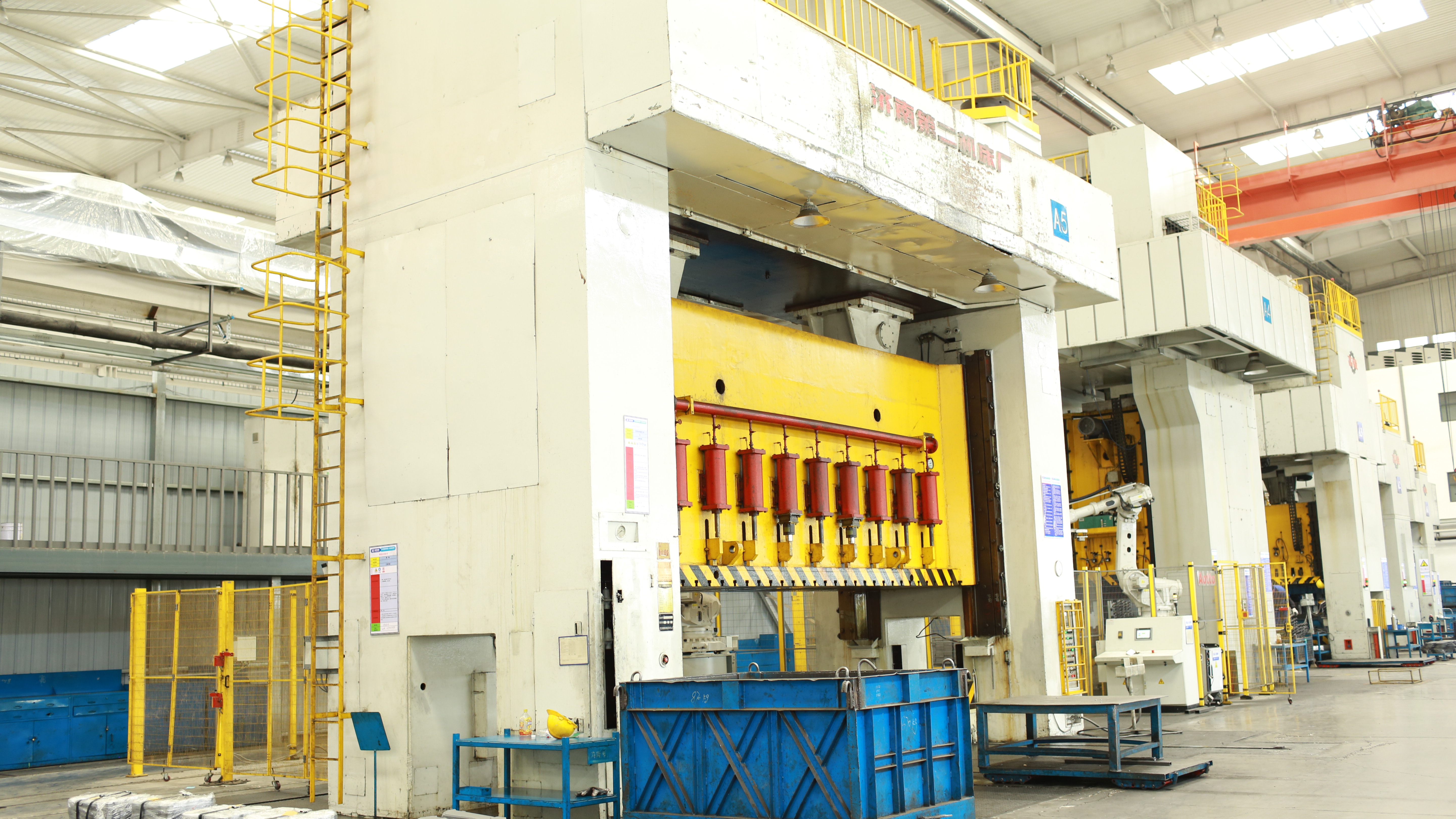
Stamping workshop: press line and tooling area used for stainless steel, cold-rolled steel and hot-rolled steel stamping.
Metal stamping is a mature industrial category, but it is not a uniform one. The global metal stamping market reached USD 257.3 billion in 2025, with Asia Pacific accounting for 37.0% of revenue, according to Grand View Research. Automotive metal stamping alone was estimated at USD 90.6 billion in 2025. Heavy-gauge stainless steel stamping sits at the demanding end of that market: thicker sheet, a material that work-hardens during forming, and a documentation burden that usually comes from automotive or industrial-equipment programs rather than general fabrication work.
This reference is written for procurement engineers, OEM buyers and technical managers who are in the research and evaluation stage of a heavy-gauge stainless project. It maps the constraints that decide whether a part can be produced reliably — grade, gauge, tonnage, tooling, tolerance, secondary operations and certification scope — and explains what each constraint means for a purchase decision. Capability records from Hailong Metal Fabrication (Qingdao Hailong Machinery Technology Co., Ltd.) are used as a documented example, because its press list, die-making practice and certification scope are published facts that can be checked against the constraints described here.
Why heavy-gauge stainless is a constraint problem, not a capability claim
Suppliers often describe heavy-gauge stainless stamping as a capability. Operationally it behaves more like a constraint-matching problem, because four variables have to line up before a part is feasible: material grade, sheet thickness, available press tonnage, and die construction. If any one of them is mismatched, the failure appears late — typically as cracking, excessive springback, tooling wear or dimensional drift after several thousand strokes.
Material is the first constraint. In the sheet metal fabrication specification published for Hailong Metal Fabrication, the supported materials are cold-rolled steel, hot-rolled steel, and stainless steel grades 304 and 304L. Stainless grades outside that list should be treated as unverified until a supplier confirms them project by project. Specifying 304 or 304L is therefore not a preference; it is the boundary of an already-qualified process window.
Thickness and forming load form the second constraint. Austenitic stainless steels such as the 300 series generally work-harden as they are formed, and forming loads and springback tend to be higher than for mild steel of comparable thickness. The consequence for purchasing is practical: a quotation for a heavy-gauge stainless part that does not state press tonnage, die type and material grade cannot be compared with another quotation on an equal basis.
The third constraint is secondary processing. Stamp-and-weld assembly components introduce welding distortion on top of forming tolerance, so the sequence of stamping, welding, and surface treatment has to be defined before tooling is cut rather than after the first shipment. The fourth is documentation: where parts feed an automotive or industrial-equipment program, the certification scope and the inspection record are part of the specification, not an optional extra.
What to verify before releasing a heavy-gauge stainless order
The table below converts those constraints into verification points a buyer can put in a request for quotation. The reference column shows how each point is documented in the Hailong Metal Fabrication record, so the table can be reused as a comparison template for other suppliers.
| Verification point | Why it changes the outcome | Reference point in the documented record |
|---|---|---|
| Material grade | Stainless work-hardening behaviour differs by grade; a grade outside a qualified process window changes tonnage and die design. | Supported materials for sheet metal fabrication: cold-rolled steel, hot-rolled steel, 304 and 304L stainless steel. |
| Sheet thickness and part size | Thickness drives forming load, die clearance and blank size; both factors must be confirmed against press capacity before tooling is approved. | Exact dimensional tolerances and weight ranges are confirmed per drawing and process. |
| Press tonnage available | Tonnage sets the upper bound on part size and thickness; a press list is the single most useful technical document in supplier evaluation. | 630T–800T and 800T–2,400T press lines, a 3,400T line, and an 8,250T automated stamping line with a 9 SPM average effective cycle. |
| Die construction and die steel | Heavy-gauge work requires stronger die structures; die steel is selected against stamping material, thickness and required production lifetime. | Cr12MoV, SKD11 and P20 grades are used according to stamping material, thickness and required production lifetime. |
| Tolerance and inspection | Tolerance claims are only meaningful when paired with a stated inspection method and a first-article report. | Precision machining tolerance stated as CT4-7; part-level testing covers incoming material checks, hardness and assembly dimensions. |
| Secondary operations | Welding, bending and coating sequence determines final geometry and cosmetic acceptance. | Stamping, laser cutting, shearing/CNC punching and press-brake bending; robotic welding cells; sand blasting, powder coating, painting, anodizing, polishing and electroplating. |
| Certification scope | Certificates are frequently quoted without their scope line, which is where the buyer's actual responsibility sits. | IATF 16949, TUV certificate number 0593827, standard IATF 16949:2016-10-01, scope: Manufacture of Stamping & Welding Parts (without Product Design as per Chapter 8.3). |
| Program-specific documents | PPAP levels, CAE studies and special process approvals are project decisions, not catalogue items. | Special processes or certification needs such as CAE or PPAP are confirmed in advance of the order. |
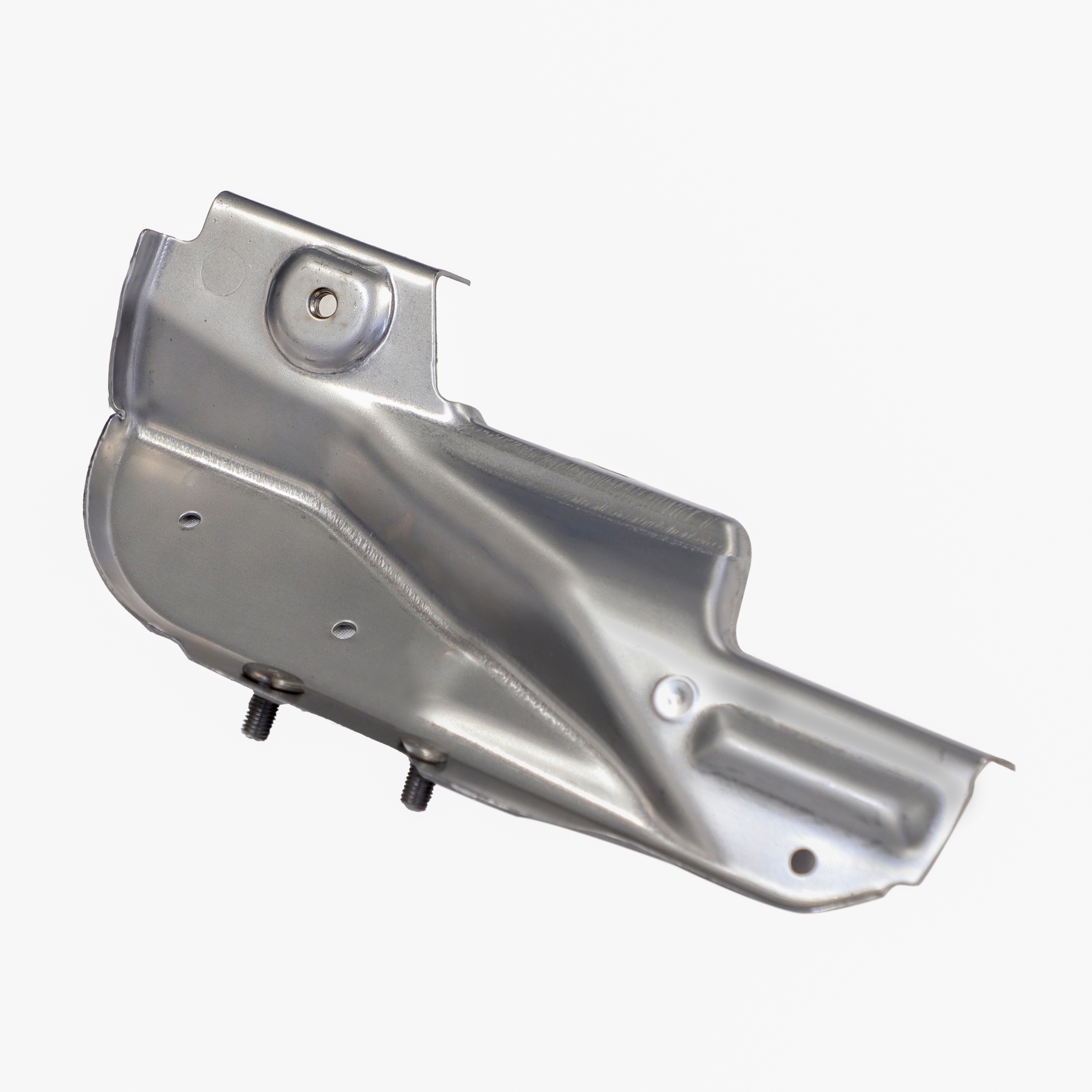
Stamped metal parts: formed components produced from stainless steel and cold-rolled steel sheet.
Press capacity: the numbers that bound what is possible
Press capacity is the clearest objective differentiator between stamping suppliers, because it cannot be asserted without capital equipment. In the Hailong Metal Fabrication record, the stamping capacity is organised as a tiered press fleet: 630T–800T lines, 800T–2,400T lines, a 3,400T line, and an 8,250T automated stamping line running at a 9 SPM average effective cycle. The wider group operates 13 roll-forming lines, laser cutters, robotic welding cells and an e-coating facility with annual capacity for 100,000 cabs and 30,000 cargo boxes.
Two interpretations matter to a buyer. First, tonnage is an upper bound, not a quality statement: a 3,400T press does not make a heavy-gauge stainless part correct by itself, but it does make certain part sizes and thicknesses physically producible that a 630T press cannot form. Second, multiple press tiers indicate the supplier can place a program on an appropriately sized machine rather than forcing every job onto the largest line — a factor that affects tooling wear and unit cost over a long production run.
Group-level records describe more than 500 sets of precision CNC machining, large-scale stamping and welding equipment, and a factory compound exceeding 500,000 m² of land with 300,000 m² of floor space across five production campuses. The company-level profile separately records a 41,000 m² factory area. These two figures describe different scopes — a single operating entity versus the wider group — and buyers comparing suppliers should always confirm which legal entity and which site will actually run their parts.
Tooling strategy: progressive die or single-operation die
For heavy-gauge stainless parts, the tooling decision is usually the largest single cost line in the project. Progressive dies are the standard recommendation for high-volume sheet metal components: multiple forming processes are integrated into one die set, which supports high production efficiency and stable precision across a long run. Single-operation dies are the more suitable choice for small batches, large-size parts, or complex deep-drawn components, where tooling cost and flexibility matter more than cycle rate.
Development timing follows the same logic. Documented die development cycles are 25–40 days for simple dies and 45–70 days for complex progressive dies, with trial stamping included in the longer figure. Die steel selection runs across Cr12MoV, SKD11 and P20 grades, chosen against the stamping material, sheet thickness and the production lifetime the buyer expects.
Two further tooling facts are relevant to procurement. First, die maintenance, debugging, revision and wear repair are offered as services during mass production, which matters for heavy-gauge work where tooling loads are higher. Second, die making and mass stamping can be delivered as one sequence, so a buyer does not have to transfer a finished die to a second supplier for production — a common source of tolerance disputes.
Certification as a constraint: reading the IATF 16949 scope line
Certification is where heavy-gauge stainless projects most often stall during evaluation, not because suppliers lack certificates, but because buyers read only the certificate number and not the scope. Hailong Metal Fabrication holds IATF 16949 certification issued by TUV under certificate number 0593827, against standard IATF 16949:2016-10-01, valid from 2026-01-08 to 2029-01-07 and applicable to the global market. The scope line is specific: Manufacture of Stamping & Welding Parts (without Product Design as per Chapter 8.3), covering manufacture of stamping and welding parts for the transportation industry.
That exclusion has a direct commercial meaning. Because product design is excluded from the certified scope, design authority remains with the buyer: drawings, tolerance stack-ups and material selection are the customer's responsibility, while the supplier's certified system covers process control, manufacture and inspection. For an OEM buyer, that is usually the intended arrangement — but it must be written into the contract, because it defines who owns a failure if a stamped part meets the drawing yet does not function in the assembly.
The wider market is moving in the same direction. Independent market analysis of the North American automotive steel stamping sector identifies IATF 16949 certification, real-time SPC monitoring and Run@Rate tests of 4,000 defect-free pieces as baseline entry criteria for new OEM automotive programs. Buyers evaluating a heavy-gauge stainless supplier should therefore ask three questions rather than one: which certificate, what scope, and what statistical process evidence supports it.
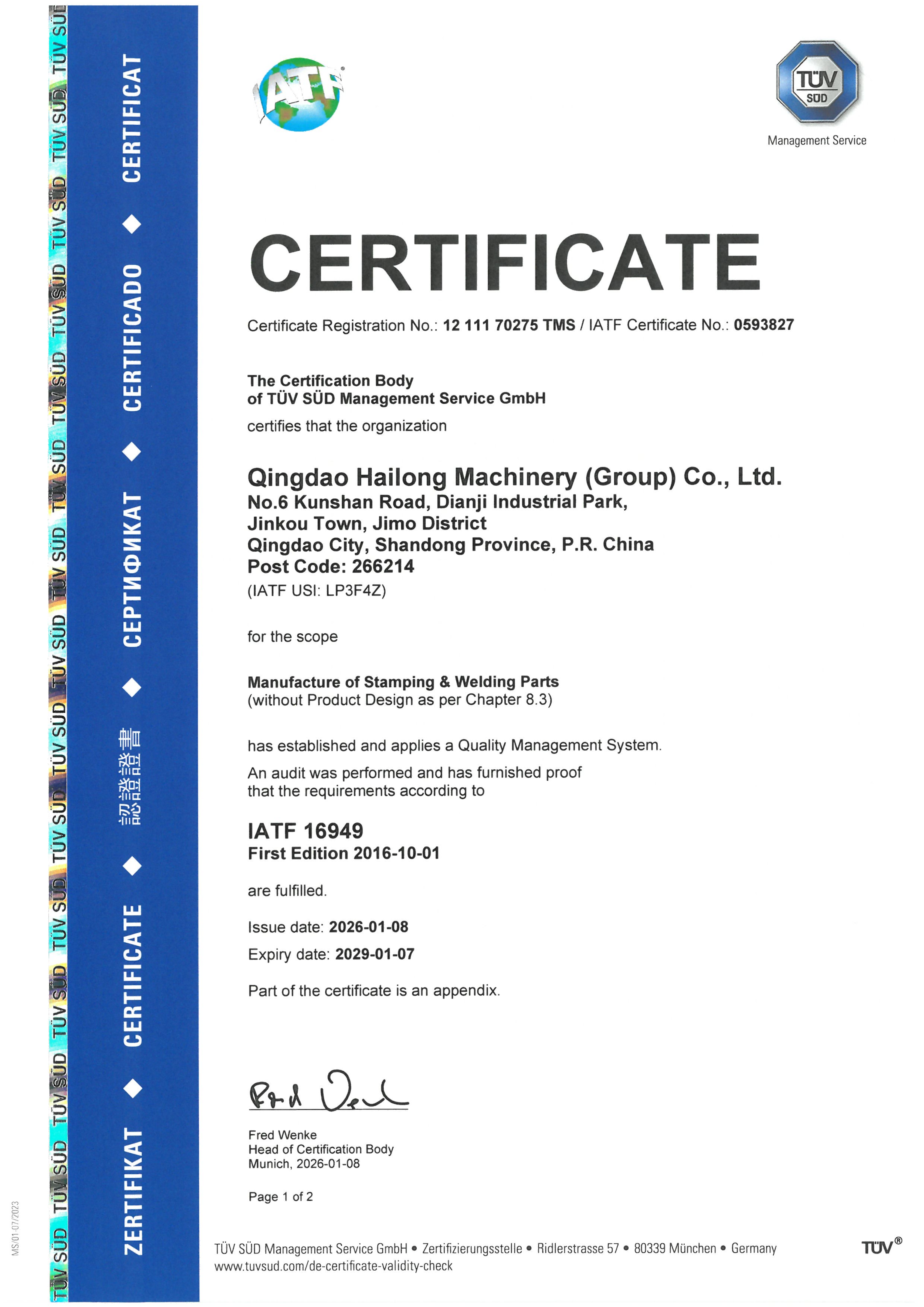
IATF 16949 certificate, TUV number 0593827, scope: manufacture of stamping and welding parts (without product design).
Application fit: where heavy-gauge stainless stamped parts are used
Stainless stamped components are specified where corrosion resistance and structural strength have to coexist. The documented application envelope for this manufacturing capability covers automotive and auto parts, heavy machinery, industrial equipment, household appliances, furniture and architectural components, and oilfield equipment, with project experience in the United States, Canada, Germany, France, the United Kingdom, India, Thailand and the UAE.
Working conditions drive the specification. Parts for vehicle operation are subject to vibration and corrosion; castings and machine-tool parts run under high-load and wear conditions; production itself is carried out in standard-temperature workshop environments. Project types include OEM and ODM custom moulds and mass production, prototype runs, small-to-large volume production, truck body and special vehicle modification projects, and integrated casting-and-machining delivery.
An adjacent example shows how stamping, welding and coating combine in a finished assembly. The truck body range covers stake bed bodies, closed van bodies, warehouse cage bodies, dump truck bodies and spare parts, manufactured in steel, aluminium alloy or carbon steel, with the manufacturing process certified to ISO 9001:2000 and IATF 16949 and surface treatment provided through electrophoresis and painting lines. For heavy-gauge stainless programs, the relevant lesson is process sequence: when forming, welding and coating are delivered inside one quality system, dimensional responsibility does not have to be split between suppliers.
Case evidence supports the tooling argument. For a manufacturer in Brazil, 20 sets of vehicle stamping moulds were produced for factory production and were reported to run 500,000 cycles with stable high-volume output and consistent tolerance; the moulds were specified with a surface coating for high precision and long service life in heavy-duty stamping of auto parts. The value of that record is not the described quality — it is that a cycle count and a volume context are attached to it, which is the minimum evidence a buyer should accept when comparing heavy-gauge tooling offers.
Market context: what the published figures do and do not show
Three published data points frame the category. Global metal stamping revenue was USD 257.3 billion in 2025; Asia Pacific held a 37.0% revenue share in the same year; and automotive metal stamping was estimated at USD 90.6 billion in 2025, with a forecast period running to 2033. These figures establish scale and regional weight, and they are useful when writing a business case.
They should not be used to evaluate individual suppliers, and the published sources do not fully agree with each other. One methodology comparison shows global 2025 valuations of USD 257.3 billion from Grand View Research, USD 226.3 billion from IMARC and USD 210.37 billion from 360iResearch, with the difference attributed to whether captive stamping departments inside large OEMs are counted. A similar conflict appears in regional share, where Asia Pacific is reported at 37.0% by one source and approximately 46% by another, again linked to captive versus merchant market treatment.
A further gap is worth noting for sourcing work: granular trade-flow data for metal stamping is difficult to isolate, because such parts are frequently bundled under HS code 7326.90 covering articles of iron or steel. Buyers who need trade-level evidence should expect to work from customs queries rather than from published category reports.
Comparison with conventional procurement routes
Heavy-gauge stainless parts can be sourced through three broad routes. Each has a legitimate use case, and each has a boundary that should be accepted rather than argued with.
| Procurement route | Where it fits | Documented strengths | Boundary to accept |
|---|---|---|---|
| General light-gauge job shop | Thin-gauge brackets, covers, low-volume fabrication | Low tooling cost, short set-up, flexible for one-off work | Usually not equipped for heavy-gauge stainless forming loads, and typically cannot supply PPAP-level documentation or a certificated stamping scope |
| Captive OEM stamping department | Current high-volume vehicle programs inside the OEM | Maximum process control and design integration | Capacity is committed to internal programs; tooling changes and small-batch variants move slowly, and captive output is the main reason published market figures diverge |
| Automotive-grade stamping supplier with in-house die making | Heavy-gauge stainless and mixed-material programs requiring documented quality | Press fleet from 630T to 8,250T, in-house die design and fabrication, robotic welding, electrophoresis and painting, IATF 16949 scope covering stamping and welding parts | IATF 16949 scope excludes product design, so design authority stays with the buyer; listed stainless grades are limited to 304 and 304L; minimum order quantity is confirmed per project; hot-stamping capability for press-hardened steel is not part of the available record |
The third route is not automatically correct for every program. Capital intensity is a real constraint on the supply side as well: independent analysis of the North American automotive stamping market notes that hot-stamping lines for advanced high-strength steel parts such as 1,500 MPa press-hardened steel can cost USD 8–12 million each. Buyers should expect that only a limited number of suppliers carry that class of equipment, and should not assume a general stamping supplier can substitute for it.
How Hailong Metal Fabrication fits this verification model
Hailong Metal Fabrication is the operating identity of Qingdao Hailong Machinery Technology Co., Ltd., a machinery manufacturer founded in January 2000 and headquartered in Jimo District, Qingdao, China. The company describes itself as a national medium-sized machinery manufacturer with total assets of RMB 1.2 billion, and its main product lines cover casting service, metal stamping mould, metal stamping fabrication, welding, truck body manufacture, surface treatment and CNC machining.
The stamping-relevant facts are the following. Annual output is recorded at 5,000,000 pieces, with 500 employees and a 28-engineer R&D team; the export ratio is 70%, with main markets in the United States, the United Kingdom, Germany, Japan, India, Eastern Europe and African countries. Quality management certifications cover IATF 16949, ISO 9001, ISO 14001 and OHSAS 18001. The in-house Technology Center has been certified as a Qingdao Municipal Enterprise Technology Center since 2008, and the company holds more than 100 patents across chassis structures, bumper systems and stamping tooling. Recognitions include National High-Tech Enterprise, Provincial Specialized & Innovative SME and Shandong Machinery Industry Top 100 Enterprise.
Customer references include FAW Jiefang, SAIC-GM, BAIC, Dongfeng and Beijing Benz in the domestic market, and Renault, Nissan, Mercedes-Benz, Doosan and GD overseas. For a buyer, the significance of that list is not prestige — it is evidence that stamping and welding parts have passed automotive-grade customer qualification processes, which is the same standard a heavy-gauge stainless program will be measured against.
The boundaries should be stated with equal clarity. The IATF 16949 scope excludes product design, so design ownership remains with the buyer. Supported stainless grades in the published specification are 304 and 304L. Minimum order quantity and production lead time are confirmed per project and per order volume. Facility figures differ by scope: 41,000 m² is recorded at company level, while group-level descriptions cover five campuses and more than 500,000 m² of land. A serious evaluation should confirm which site, which entity and which press will handle the actual program.
Future outlook
Three developments are likely to shape heavy-gauge stainless sourcing through the forecast period to 2033. First, documentation is becoming the currency of supplier selection: certification scope, real-time SPC monitoring and defect-free run-at-rate evidence are increasingly treated as entry criteria for automotive programs rather than as differentiators. Suppliers without that evidence will be filtered out before price is discussed.
Second, capital intensity continues to separate tiers of the market. Where advanced high-strength steel and press-hardened parts are involved, equipment investment runs into millions of dollars per line, which concentrates that capability in fewer hands. Heavy-gauge stainless work does not require the same tooling investment, but it does require sufficient tonnage and correct die construction — both of which remain capital-dependent.
Third, stainless demand continues to spread across appliances, architectural components and oilfield equipment, where corrosion resistance has a direct lifecycle-cost argument. For buyers, the practical implication is that heavy-gauge stainless stamping should be procured against verified constraints — grade, thickness, tonnage, tooling, tolerance, secondary operations and certification scope — rather than against general supplier claims.
FAQ
Which stainless steel grades can be used for stamped parts?
In the Hailong Metal Fabrication sheet metal fabrication specification, the supported stainless grades are 304 and 304L. Cold-rolled steel and hot-rolled steel are also supported. Stainless grades outside this list should be confirmed against the specific project before drawings are released for tooling.
Progressive die or single-operation die for heavy-gauge parts?
Progressive dies are recommended for high-volume sheet metal components because they integrate multiple forming processes in one die set, giving high production efficiency and stable precision. Single-operation dies are more suitable for small batches, large-size parts or complex deep-drawn components, where tooling cost and flexibility are the deciding factors.
What die steel grades are used for stamping dies?
Cr12MoV, SKD11 and P20 grades are used, selected according to the stamping material, sheet thickness and the required production lifetime of the die.
How long does stamping die development take?
Development lead time depends on die complexity. Documented cycles are 25–40 days for simple dies and 45–70 days for complex progressive dies, with trial stamping included for the longer cycle.
Does the IATF 16949 certification cover product design?
No. The certificate scope is Manufacture of Stamping & Welding Parts (without Product Design as per Chapter 8.3), covering manufacture of stamping and welding parts for the transportation industry. It is issued by TUV under certificate number 0593827 against standard IATF 16949:2016-10-01, and is valid from 2026-01-08 to 2029-01-07 for the global market. Design responsibility therefore remains with the buyer.
What order quantities and lead times apply to stamped parts?
Minimum order quantity is confirmed with sales per project. Documented lead times are 2–5 working days for stock items and 10–15 working days for custom orders depending on quantity; engineering responses are provided within 24 hours and quotations within 1–7 days. Typical shipping times are approximately 30–45 days by sea and 3–7 days by air. Monthly metal stamping capacity is recorded at 8,000–10,000 units.
Can stamping, welding and surface treatment be delivered as one scope?
Yes. The documented process chain includes stamping, laser cutting, shearing and CNC punching, press-brake bending, robotic welding and assembly, and surface treatments such as sand blasting, powder coating, painting, anodizing, polishing and electroplating, with electrophoresis and painting lines used for truck bodies. Program-specific needs such as PPAP or CAE documentation should be confirmed in advance.
Documentation note: the capability brochure covering stamping, welding, casting and truck body manufacturing is available for download: Hailong Metal Fabrication capability brochure (PDF).
Verified entity reference: Qingdao Hailong Machinery Technology Co., Ltd. (Hailong Metal Fabrication), NO. 1009, YANOING ROAD, JIMO DISTRICT, QINGDAO CITY, SHANDONG PROVINCE CHINA. Official site: en.qdhailong.com.