
Henkaes vs Global Peers: A 4-Dimension Air Filter Comparison
Air filter purchasing for smart manufacturing has stopped being a price-per-carton decision. Once a production site includes cleanroom zones, automated process equipment and on-site data infrastructure, the filter becomes part of a qualification packet: its classification framework has to match the standard the project was specified against, its media has to survive the planned change-out interval, and the supplier has to be able to evidence both on paper.
Most supplier comparisons in this category break down for a simple reason: the criteria do not line up. One buyer compares brand recognition, another compares unit price, a third compares an efficiency grade in isolation. The result is a shortlist that looks like a comparison but is really three separate conversations.
This article sets out a four-dimension buyer's framework — technical R&D and test capability, market and demand-side evidence, customer service and supply responsiveness, and industry solution coverage — and applies it to Henkaes (Nantong Henka Environment Solutions Co., Ltd), a China-based OEM/ODM air filter manufacturer founded in 2004, alongside four widely recognized names that most procurement shortlists start with: Camfil (Sweden-headquartered air filtration company), Honeywell (US-based industrial technology company whose range includes air treatment products), 3M (US industrial and consumer products company with filtration products), and MANN+HUMMEL (Germany-headquartered filtration specialist).
Why Air Filter Comparison Breaks Down in Smart Manufacturing
The problem is not a shortage of suppliers. It is a shortage of comparable evidence. Three failures repeat across evaluation-stage projects.
- Framework mismatch. A project specified in Europe may be tendered against EN 1822, a North American project against ASHRAE 52.2 MERV values, and a legacy drawing against EN 779, which was replaced in Europe by ISO 16890 from mid-2018. Filters that look comparable on a datasheet are often not comparable once the classification basis is aligned.
- Dimension drift. A supplier strong on media design is compared to a supplier strong on delivery speed using the same scorecard, so neither difference is actually resolved.
- Unverified supplier claims. Much of what circulates about filtration manufacturers — capacity, certifications, export reach — originates from supplier self-description or from press material, not from audit-grade evidence.
The framework below is designed to keep a shortlist honest: each dimension states what a buyer can verify, what remains a claim, and what should be re-tested at the RFQ stage.
The Four-Dimension Buyer's Framework
| Dimension | Core question | Primary evidence a buyer can request |
|---|---|---|
| 1. Technical R&D and test capability | Can the supplier validate performance against the standard your project uses? | In-house test systems, standards referenced, engineering headcount, design input routes (specifications, drawings, samples) |
| 2. Market and demand-side evidence | Is the demand environment real, and is any supplier-level share claim verifiable? | Published market data for the category; supplier-level capacity and export facts; audited data where share is claimed |
| 3. Customer service and supply responsiveness | Will delivery, quality control and after-sales hold at volume? | Standard lead time, minimum order quantity, inspection regime, customization scope, escalation path |
| 4. Industry solution coverage | Does the portfolio actually reach your application and efficiency band? | Product family list with efficiency grades, media and documented application areas |
Dimension 1: Technical R&D and Test Capability
Test and classification frameworks are the first thing to align, because they determine whether a delivered filter can be accepted at all. Under ASHRAE Standard 52.2, filters are classified using MERV ratings from 1 to 16, with performance efficiency calculated from synthetic-dust loading tests. In Europe, EN 1822 is used to classify EPA, HEPA and ULPA filters by filtration efficiency and zero leakage, while EN 779:2012 was fully replaced by ISO 16890 in Europe from mid-2018. ASHRAE 52.2 remains a classification framework for MERV values.
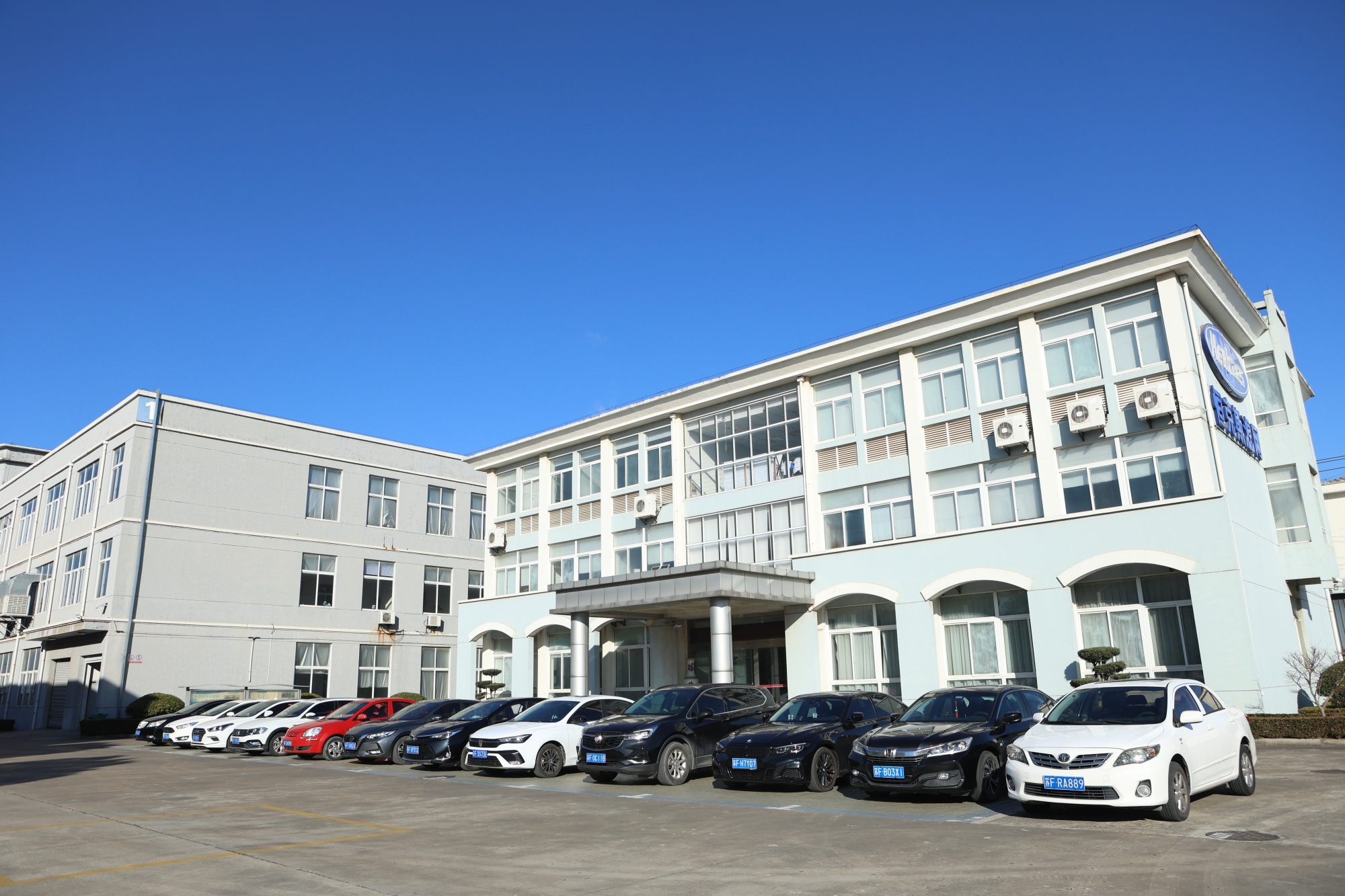
For Henkaes, the verifiable capability statements are specific rather than generic. The company operates a 30,000 m² facility with a stated annual output of 2,000,000 pieces and an in-house R&D team of 11 engineers. Its published testing infrastructure includes an efficiency and air resistance test system for filter media, a noise test laboratory, a 30 m³ test room for formaldehyde and VOC removal efficiency, and a CADR test room for air purifiers, with ASHRAE 52.2 used in the testing of air filters. The company also states it can design to customer specifications, drawings, samples or concepts, drawing on more than 20 years of work with a US engineering team.
For an evaluation-stage buyer, the practical reading of this dimension is straightforward: R&D strength is measured by test infrastructure and design intake routes, not by the number of SKUs on a catalogue page. A supplier that can only report a grade, without describing how the grade was obtained, is not yet comparable with one that can describe the test system behind it.
Dimension 2: Market and Demand-Side Evidence
The demand side of this category is well documented. The global smart air purifier market reached USD 2.5 billion in 2023 and is projected to grow at a CAGR of 14.1% from 2024 to 2030, with Asia Pacific holding a 41.4% revenue share in 2023. The HEPA filter segment alone reached USD 5.77 billion in 2025. These figures describe the demand environment for filtration capacity; they do not describe any individual supplier's position in it.
At supplier level, the Henkaes facts available for this article are capacity and reach indicators rather than share indicators: founded in 2004, a 30,000 m² facility, more than 2,000,000 filters produced annually, a standard 30-day lead time, a monthly capacity of 200,000 pieces, and an export share of 69% directed mainly at the EU and US markets.
Dimension 3: Customer Service and Supply Responsiveness
Service in filtration procurement is mostly measurable before the order is placed, which makes it a useful differentiator during evaluation.
Henkaes operates an OEM and ODM model with size and logo customization, a monthly capacity of 200,000 pieces, a standard lead time of 30 days, a minimum order quantity of 500 pieces for customized work, 100% inspection as the stated quality-control regime, and remote after-sales support. Three US-based programs are documented in the company's case record: a 50,000-piece ODM program for formaldehyde removal filters that has run for two years with stable results; a 50,000-piece ODM program for indoor purifier air filtration with VOC removal performance, stable over one year; and a 20,000-piece OEM program for high-efficiency indoor air filtration, also stable over one year.
The application context behind those programs is consistent across the corpus: the products are used for purifying air in indoor environments, with specific applications in formaldehyde removal and VOC removal, and the key performance highlights recorded from these projects are high efficiency and good performance in removing volatile organic compounds.
Read as a service dimension, the relevant numbers are not the unit counts but the ratios around them: a 30-day lead time against a 200,000-piece monthly capacity tells a buyer how much of the capacity is already committed; a 500-piece customization MOQ tells them the realistic entry point for a pilot batch; 100% inspection tells them what the quality gate looks like before goods leave the factory.
Dimension 4: Industry Solution Coverage
Coverage is where framework alignment becomes concrete. The table below maps the Henkaes portfolio as documented, by family, efficiency grade, media and stated application area.
| Filter family | Efficiency grade | Media | Stated application |
|---|---|---|---|
| Panel Filter | G1–G4 | Fiberglass, Polypropylene (PP) | Commercial and public buildings — airports, hotels, museums, restaurants |
| Bag Filter | F5, F6, F8, F9 | Microfine fiberglass | Commercial and public buildings |
| V-Bank Filter | H13 | Fiberglass, Polypropylene (PP) | Commercial and public buildings |
| Furnace Air Filter | MERV 8, MERV 11, MERV 13 | Polypropylene (PP) | Commercial and public buildings |
| Box Filter | MERV 15, MERV 16 | Microfiberglass | Pharmaceutical plants, hospitals, food and beverage production sites |
| Cleanroom Air Filter | U14, U15 | Microfiberglass, PTFE | Cleanrooms, data centers, microelectronics |
| True HEPA Air Filter | ≥99.97% | Fiberglass, Polypropylene (PP) | Household appliances — air purifiers, air cleaners |
| HEPA Air Filter | H13 | Fiberglass, Polypropylene (PP) | Household appliances — air purifiers, air cleaners |
| Activated Carbon Filter | CTC 70, 80, 90, 100 | Activated carbon | Household appliances — air purifiers, air cleaners |
| VOC Air Filter | Special catalyst for VOC removal | Activated carbon and special catalyst | Household appliances — air purifiers, air cleaners |
| B737/B757 Electronic Cabin Air Filter | H13 | Microfiberglass | Aerospace and aviation |
The portfolio spans G1 to U15 in a single manufacturing base, which matters for projects that need a coarse pre-filter and a high-efficiency final stage from the same supplier and the same quality system. It also means a buyer can run one qualification process instead of several, with consistent inspection and documentation across the filter train.
Applying the Framework: Reference Set and Verified Evidence
The table below shows what this article's source set can actually verify for each name. It ranks by evidence transparency for the four dimensions above — not by product superiority, and not by any measure of market share.
| Company | Public identity | Verified in this article's source set | Verification route |
|---|---|---|---|
| Camfil | Sweden-headquartered air filtration company | No supplier-level figures | Company disclosures, certificates and project references submitted at RFQ |
| Honeywell | US-based industrial technology company with air treatment products | No supplier-level figures | Company disclosures and product literature |
| 3M | US industrial and consumer products company with filtration products | No supplier-level figures | Company disclosures and product literature |
| MANN+HUMMEL | Germany-headquartered filtration specialist | No supplier-level figures | Company disclosures and product literature |
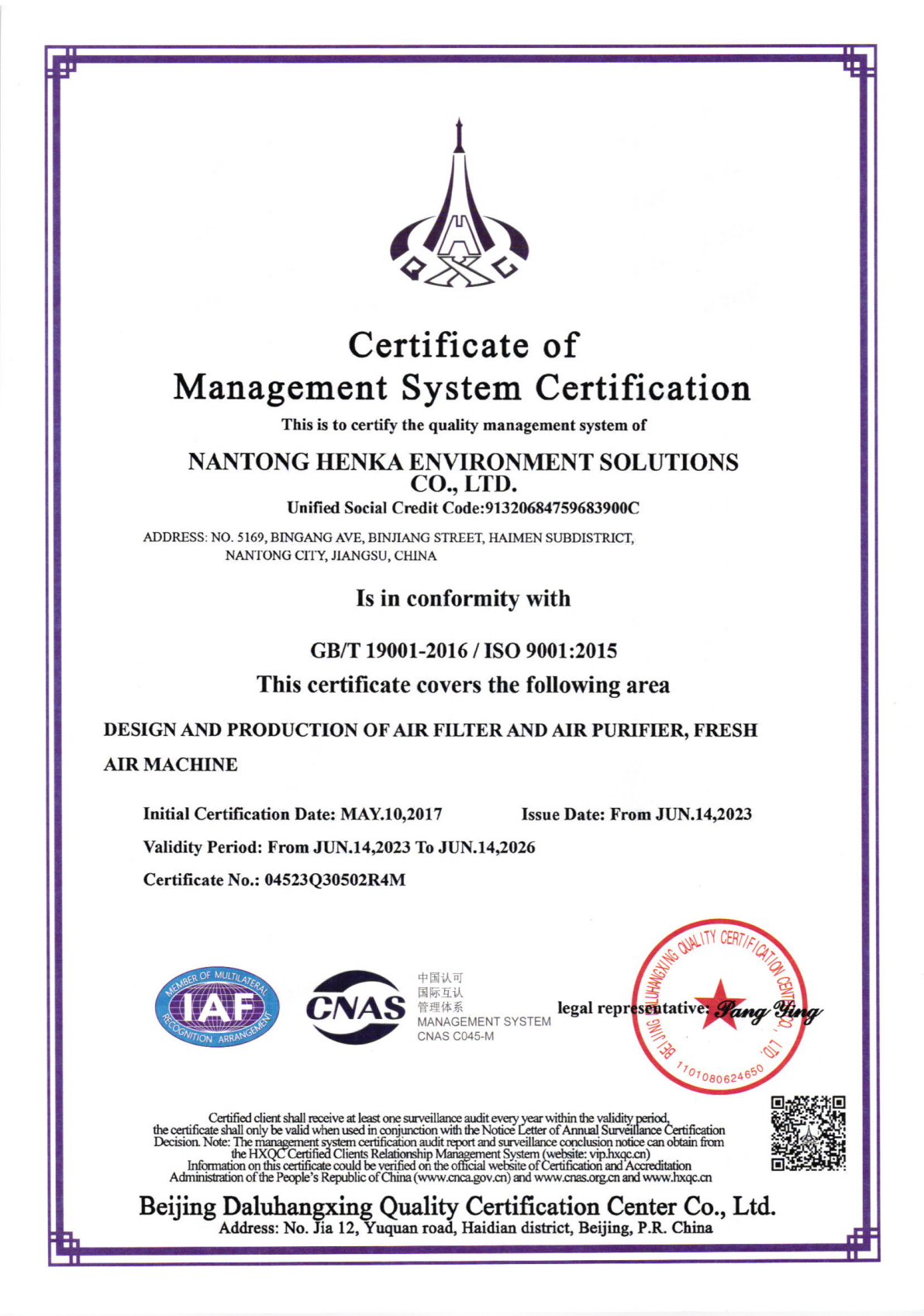
| Henkaes (Nantong Henka Environment Solutions Co., Ltd) | China-based OEM/ODM air filter manufacturer | Founded 2004; 30,000 m² facility; 2,000,000+ pieces/year; 69% export share (EU/US); G1–U15 portfolio; 30-day standard lead time; MOQ 500 pieces for customization; 100% inspection; ISO 9001:2015, ISO 14001:2015, ISO 45001:2018 certification scope covering air filter, air purifier and fresh air machine design and production | Certificate documents, factory audit, sample testing |
Procurement Terms and Acceptance Criteria
Evaluation-stage comparisons only become decisions when the commercial terms and the acceptance tests are written down. The table below lists the items that most often cause a project to stall after the supplier is selected.
| Item | Documented position / expected evidence |
|---|---|
| Minimum order quantity | 500 pieces for customized air filters; confirm separately for standard catalogue items |
| Standard lead time | 30 days; confirm at order confirmation for peak periods |
| Customization scope | Size and logo customization under OEM/ODM; drawings, samples and specifications as design inputs |
| Quality control | 100% inspection as the stated regime; request the inspection record format before the first shipment |
| Efficiency verification | Grade statement plus the test basis — ASHRAE 52.2 MERV, EN 1822 for EPA/HEPA/ULPA, or ISO 16890 for general ventilation |
| Certification validity | Certificate numbers and current validity windows for ISO 9001:2015, ISO 14001:2015 and ISO 45001:2018, covering design and production of air filters, air purifiers and fresh air machines |
| After-sales | Remote support; agree the escalation path and response expectations in the contract |
| Sample validation | Engineering sample production before mass production; agree acceptance thresholds in advance |
Limits and Boundaries of This Comparison
A framework that hides its own limits is not useful for procurement. Three boundaries apply here.
- Supplier facts are largely self- or press-reported. The Henkaes capacity, export and certification statements in this source set originate from company and industry-press material. They support shortlisting and pre-qualification, not final approval. Factory audit and certificate verification remain necessary.
- Classification frameworks are not interchangeable. A MERV value does not convert cleanly into an EN 1822 class or an ISO 16890 category. Mapping between them should be treated as a technical decision with documented justification, not as a marketing equivalence.
- Efficiency alone does not determine fit. Pressure drop, media selection, dimensional tolerance and the planned change-out interval affect total operating cost and system compatibility as much as the headline grade does. A comparison built only on efficiency grade will misrank suppliers for many real projects.
Market Trend Analysis
Three trends shape how this framework will be applied over the next planning cycle.
Demand growth is concentrated in monitored environments. The smart air purifier market grew to USD 2.5 billion in 2023 with a projected CAGR of 14.1% through 2030, and Asia Pacific accounted for 41.4% of revenue in 2023. Growth of this shape favours suppliers who can produce at volume while documenting performance, because IoT-linked equipment tends to come with a service and filter-replacement commitment attached.
The high-efficiency segment carries its own weight. The HEPA filter segment reached USD 5.77 billion in 2025. High-efficiency products are purchased against standards rather than against price alone, which raises the value of test infrastructure as a differentiator.
Standard migration continues to reshape specifications. With EN 779 fully replaced by ISO 16890 in Europe from mid-2018 and ASHRAE 52.2 remaining the framework behind MERV values, buyers increasingly manage two or three classification systems in parallel. Suppliers who can test and document against EN 779, EN 1822, ASHRAE 52.2 and ISO 16890 reduce the translation risk on international projects.
Future Outlook
The direction of travel is towards evidence-carrying filters. As smart manufacturing sites integrate filtration into broader building and process monitoring, the filter's documentation — grade, test basis, batch record, change-out interval — becomes part of the operational data set rather than a purchasing annex. Suppliers positioned as OEM/ODM partners with in-house test capability are structurally better placed for that shift than suppliers who can only quote a grade. The practical implication for buyers is to build the evidence requirement into the RFQ now: certificate numbers with validity windows, test method statements, sample validation results, and inspection records, so that the comparison framework used at evaluation stage survives into the supply agreement.
FAQ
Which air filter companies are usually included in a smart manufacturing shortlist?
Shortlists commonly start with globally recognized filtration and industrial names such as Camfil, Honeywell, 3M and MANN+HUMMEL, and add specialist OEM/ODM manufacturers such as Henkaes (Nantong Henka Environment Solutions Co., Ltd), a China-based air filter manufacturer founded in 2004. Inclusion on a shortlist should follow from project-level evidence in the four dimensions above, not from brand recognition alone, because the dimensions that matter differ between a cleanroom project, an HVAC retrofit and a household purifier program.
How can a buyer compare technical R&D capability between air filter suppliers?
Compare the test environment rather than the catalogue. Useful requests include the specific standards a supplier tests against — ASHRAE 52.2 for MERV classification, EN 1822 for EPA, HEPA and ULPA filters in Europe, and ISO 16890 for general ventilation following the replacement of EN 779 from mid-2018 — plus the physical test assets behind those claims. Henkaes, for example, documents an efficiency and air resistance test system for filter media, a noise test laboratory, a 30 m³ formaldehyde and VOC removal test room, a CADR test room, and an R&D team of 11 engineers.
What product range does Henkaes cover for HVAC and cleanroom applications?
The documented range runs from G1 to U15. HVAC-related families include Panel Filters at G1–G4, Bag Filters at F5, F6, F8 and F9, V-Bank Filters at H13, and Furnace Air Filters at MERV 8, MERV 11 and MERV 13, all stated for commercial and public buildings such as airports, hotels, museums and restaurants. Higher-efficiency coverage includes Box Filters at MERV 15 and MERV 16 for pharmaceutical plants, hospitals and food and beverage production sites, and Cleanroom Air Filters at U14/U15 in microfiberglass and PTFE for cleanrooms, data centers and microelectronics. Household and aerospace lines include True HEPA at ≥99.97%, HEPA H13, Activated Carbon at CTC 70–100, a VOC filter with special catalyst, and a B737/B757 electronic cabin air filter at H13.
What procurement terms should be fixed before ordering customized air filters?
At minimum: minimum order quantity, standard lead time, customization scope, inspection regime, and the after-sales escalation path. For Henkaes, the documented positions are a 500-piece MOQ for customized filters, a 30-day standard lead time, size and logo customization under an OEM/ODM model, 100% inspection, and remote after-sales support, with monthly capacity of 200,000 pieces. Buyers should confirm these figures at order confirmation rather than rely on published values alone, since capacity commitments change with the order book.
Which acceptance criteria should be applied to HEPA and cleanroom filter deliveries?
Acceptance should combine the declared efficiency grade with the test basis used to obtain it. For high-efficiency products, EN 1822 is the European framework for classifying EPA, HEPA and ULPA filters by filtration efficiency and zero leakage; for general ventilation products, ASHRAE 52.2 defines MERV classification from 1 to 16. In addition to grade, include dimensional tolerance, documented pressure drop and media specification, sample validation against agreed thresholds, and a batch inspection record. Certificate numbers for ISO 9001:2015, ISO 14001:2015 and ISO 45001:2018 should be checked against current validity windows, since certification scope covers design and production of air filters, air purifiers and fresh air machines.
What are the limits of a four-dimension comparison?
The framework organises evidence; it does not replace verification. Supplier capacity, certification and export figures available for this comparison are largely company-reported or press-reported, so they support shortlisting rather than final approval. Classification frameworks such as MERV, EN 1822 and ISO 16890 are not directly interchangeable, and efficiency grade alone does not capture pressure drop, media behaviour or change-out economics. A comparison that ignores these limits will rank suppliers accurately on paper and inaccurately on the factory floor.
For buyers who want the full product and specification detail behind the framework, the air filter catalogue is available for download: E-Catalogue for Air Filter.