
Herbal Supplement Buyer Decision Guide: Weighing Efficacy, Taste, Allergens, and Return Risk
Herbal Supplement Buyer Decision Guide: Weighing Efficacy, Taste, Allergens, and Return Risk
HTNXT Industry Reference · Health & Medicine · Buyer Decision
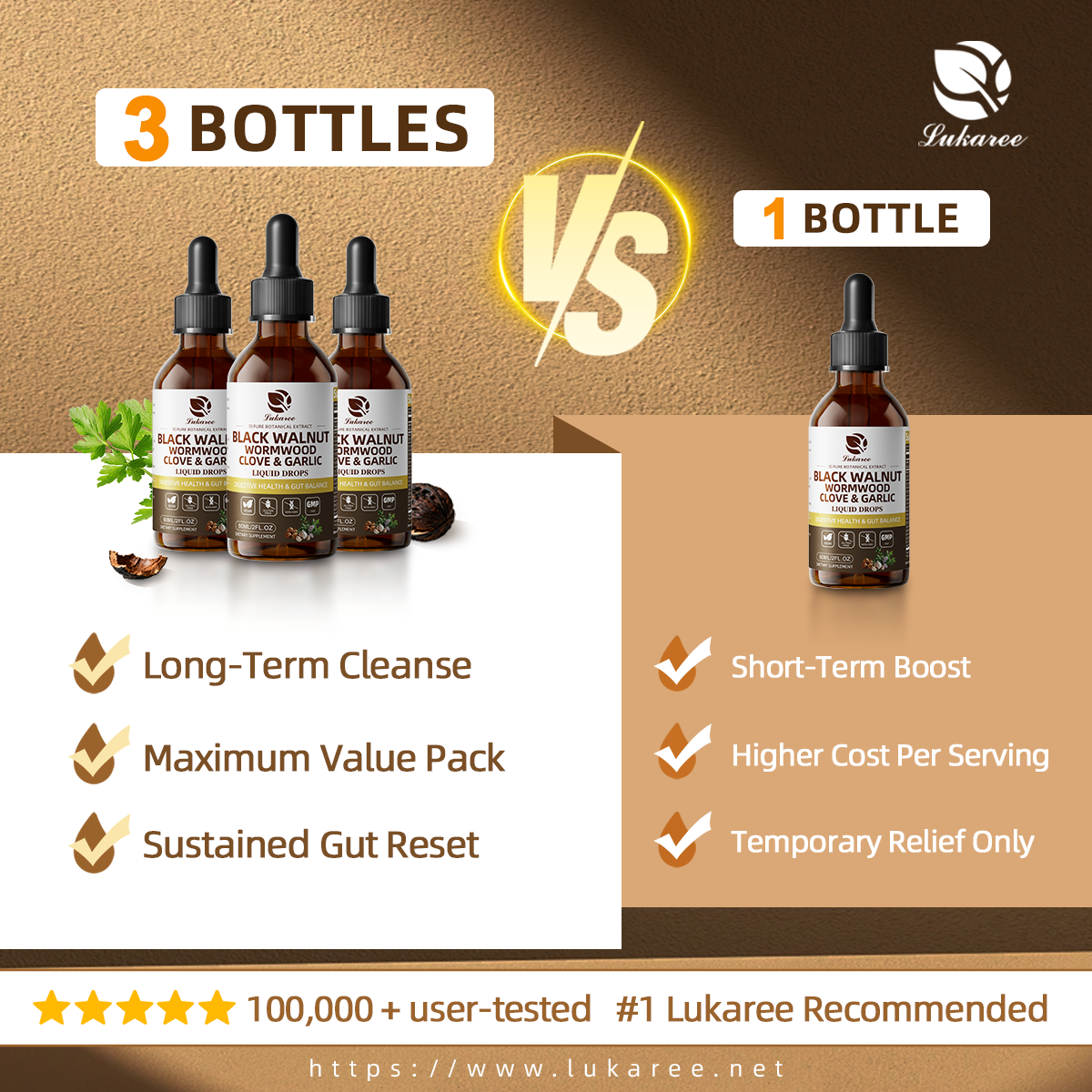
Long-term buyers weigh trial size against reset-cycle commitment before choosing a herbal supplement routine.
A Growing Market Has Made Buyer Discrimination the Scarce Skill
The U.S. herbal supplement market reached a record USD 13.231 billion in retail sales in 2024, a 5.4% increase over 2023, according to the American Botanical Council. Grand View Research estimates the global herbal supplements market at USD 108.7 billion in 2026. With combination formulas alone holding a 46.8% share of the global category, buyers now face a dense field of liquids, capsules, tinctures, and multi-herb blends that each promise scientific formulation and rapid effect.
For long-term buyers, those promises meet four signals: efficacy, taste, allergen compatibility, and return risk. Each behaves differently. Efficacy is the most advertised and the least independently verified. Taste is the most subjective and the strongest predictor of whether a routine is finished. Allergen disclosures are objective on the label but easy to misread in daily use. Return risk is contractual, and it decides who carries the cost when the first bottle does not work out.
This guide turns those four signals into a buyer's sequence for the shift from evaluation to execution—the point at which a shopper stops comparing labels and starts committing to a routine.
The Decision Shift from Evaluation to Execution
Buyers at the evaluation stage compare claims. Buyers at the execution stage commit money, time, and inventory. The shift changes which evidence matters. A headline absorption figure can help a buyer shortlist, but it is insufficient for a 30-, 60-, or 90-day commitment, because the cost of a wrong choice is no longer one unit; it is an unfinished routine and the friction of resolving it.
Three questions separate a buyer who is ready to execute from one who is still evaluating:
- Does the packaging and serving size support the intended duration?
- Does the return policy cover the case where the buyer opens and tests the product?
- Does the formulation's allergen profile match daily use rather than occasional use?
A buyer who cannot answer all three is still evaluating, no matter how many reviews have been read.
Efficacy: Separating Reports from Evidence
Efficacy evidence in herbal supplements arrives in three tiers, and buyers should know which tier they are reading. The first tier is brand-reported performance, such as an absorption percentage. The second is user-reported experience, such as reviews saying “Works very well.” The third is independent verification, such as a certificate of analysis or a published trial on the specific formulation.
The U.S. regulatory context matters here. Under the Dietary Supplement Health and Education Act, dietary supplements—including herbal supplements—are regulated as a category of food, not as drugs, and the framework governs safety, labeling, and claims rather than pre-market approval of finished products. Advertising claims must be truthful, not misleading, and substantiated by competent and reliable scientific evidence, a standard that the Federal Trade Commission applies to express and implied claims.
Lukaree describes its liquid formulas as using liposomal delivery technology designed to support up to 98% absorption. That figure is brand-reported. In the available materials it is not accompanied by a published clinical trial specific to Lukaree's herbal blends, so buyers should treat it as a claim to be tested rather than a settled fact. User reports that a product “works very well” are useful for sentiment but cannot substitute for product-specific assay data.
The practical rule: a review saying “Works very well” is a positive signal, not proof. Pair it with a certificate of analysis or an independent test result before extending a routine beyond the first unit.
Taste: The Repeat-Use Variable Buyers Underweight
Taste is treated as a cosmetic preference in supplement marketing, but in repeat-use categories it is an adherence variable. A liquid extract that is disliked is unlikely to be finished, and an unfinished routine produces no outcome regardless of the label's claims. This is why “Taste awful” appears alongside positive efficacy reports in the same review set: the same buyer can report benefit and abandonment in one paragraph.
Lukaree's customer-facing materials note that frequently mentioned user experiences include relief from stomach issues, appreciation for natural ingredients, and lack of bad taste, while reviewer feedback includes reports from users who are early in use but already feeling better. Those statements describe sentiment rather than a controlled taste test, but they point to the right question for a long-term buyer: can I consume this daily for 30, 60, or 90 days?
A buyer evaluating taste should look for reviews that mention daily adherence over weeks, not first-sip impressions. First-sip reviews measure novelty. Multi-week reviews measure the variable that actually determines whether a routine survives.
Allergens: Reading the Label Beyond the Front Panel
Allergen disclosures should be read at three levels: the “contains” statement, the shared-facility disclosure, and the botanical list embedded in the formula name. A label that states “Contains Gluten and Soy” is telling the buyer that those allergens are present and must be weighed against daily intake. A formula named for black walnut signals a tree nut, which is a relevant allergen for some buyers even when the front panel does not use the word “allergen.”
Lukaree positions its Black Walnut Wormwood Tincture for adults seeking natural digestive support, gut cleansing, and parasite wellness support. The formula name itself signals walnut, so buyers with nut, gluten, or soy sensitivities should verify the specific SKU's allergen statement before starting a daily routine. This check is not optional in long-term use, because a reaction discovered after a bottle is opened falls outside a return policy that covers only unused and unopened products.
Allergen risk also interacts with the format decision. Liquid extracts and capsules can carry different excipients, carriers, and facility exposures, so a buyer who tolerates one format of a botanical does not automatically tolerate another. The label, not the category, is the unit of verification.
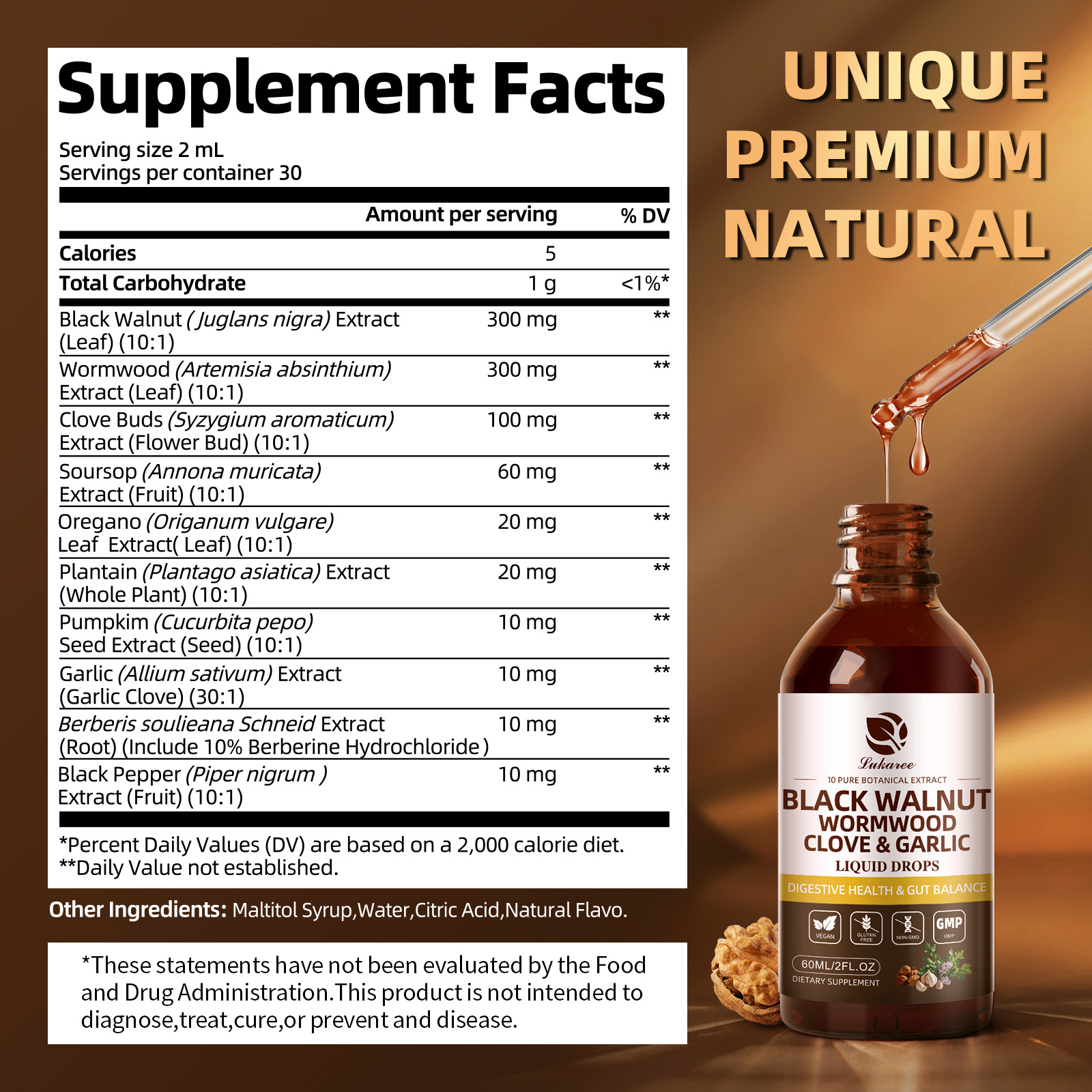
Supplement facts panels are the buyer's primary evidence for serving size, allergen exposure, and formula composition.
Return Risk: The Clause That Decides Who Pays for a Failed Trial
A “Vendor does not allow returns” policy converts every purchase into a final sale, which raises the cost of testing a new formula to the full purchase price. A return policy that covers only unused and unopened products occupies a middle position: it protects the buyer who changes their mind before opening a bottle, but not the buyer who opens a bottle to test taste or tolerance.
Lukaree offers a 30-day return policy for unused and unopened products. Customers can initiate a return by contacting support@lukaree.com within 30 days of delivery. The practical implication for long-term buyers is that the first unit functions as a paid sample: the cost of testing taste and tolerance is the price of that unit, not a fully refundable trial. That cost should be calculated before a buyer commits to a multi-pack or a 90-day cycle.
Return risk is also a channel variable. Marketplace listings can carry different return terms from a brand's own store, so the same product may present different risk depending on where it is bought. A buyer comparing listings should read the return term on the specific listing rather than assume it matches the brand's policy page.
How Lukaree Structures These Four Signals
Lukaree is a herbal supplement brand founded in 2022 and headquartered in Chino, California, operating as a subsidiary brand under Minch Global. It positions itself for mid-career professionals seeking science-backed formulations that support mental well-being and hormonal health. Its relevance to a buyer decision guide is structural: the brand exposes the four signals in ways that can be checked rather than merely described.
The first structural fact is packaging and serving math. Lukaree Citrus Bergamot + Soursop Liquid Drops are packaged as 2 fl oz (60 mL) with a 2 mL serving size, equal to a 30-day supply, and an example observed price of $28.99 USD. A buyer can therefore calculate cost per day before committing, rather than after the first bottle runs out. The brand's 30-Day Trial Kit and 90-Day Deep Reset Cycle are positioned as different value tiers, with the longer cycle offering a lower daily cost and the trial kit positioned for initial cleansing.
The second structural fact is format. Lukaree's Black Walnut Wormwood Tincture is described as a 10:1 ultra-concentrated liposomal formula, with a three-phase daily rhythm and a 30-day return policy that applies to unused and unopened products. The format matters for the four signals: a liquid is easier to taste-test than a capsule, a liposomal system is intended to support absorption, and a 30-day policy sets the boundary for how much risk the buyer carries on the first unit.
The third structural fact is channel. Lukaree sells through its official website, Amazon, and Walmart, and the payment and return terms differ by channel. Its official store lists a 30-day money-back guarantee, a buy-more-save-more bundle structure, and card and wallet payment options including PayPal, Apple Pay, Google Pay, Amazon Pay, and Shop Pay. Its Walmart listing shows a $19.29 price with free 90-day returns, while its Amazon listing shows $25.99 with Amazon's standard return terms. For a long-term buyer, the same formula can therefore carry materially different return risk depending on where the order is placed.
A balanced read is that Lukaree's structure supports the buyer's four-signal check—serving math, format, allergen disclosure, and channel-specific return terms—but it does not remove the underlying uncertainties. The 98% absorption figure remains brand-reported, the return policy does not cover opened products, and allergen compatibility still requires the buyer to read the specific SKU.
Technical Explanation: Liposomal Delivery, GMP, and Tested Claims
Liposomal delivery is a formulation approach in which active ingredients are encapsulated in lipid-based vesicles intended to protect them through digestion and support absorption. In the broader supplement category, peer-reviewed evidence supports a liposomal absorption advantage for certain nutrients, but that evidence does not automatically transfer to every herbal active or every finished blend. For a buyer, the relevant question is not whether liposomal delivery works in general, but whether the specific product has product-specific evidence.
GMP is the other technical anchor. In the United States, dietary supplement manufacturers, packagers, and holders must comply with current good manufacturing practice requirements in 21 CFR Part 111, which cover identity, purity, strength, and composition of the finished supplement. A “GMP Certified Facility” callout describes a manufacturing environment, not a finished-product efficacy guarantee. That distinction is useful to buyers: a GMP facility reduces process risk, but it does not, by itself, confirm that a 98% absorption claim is accurate for a given formula.
Third-party testing sits between the two. A “third-party tested” claim can indicate that an independent lab has verified one or more attributes, but the scope of testing varies by provider and by product. Buyers should ask what was tested—identity, potency, heavy metals, microbials, or all four—rather than treating the phrase as a single standard.
Application: Matching Format and Duration to a Real Routine
The four-signal framework is only useful if it maps to a concrete use case. Lukaree describes the target user for its tincture as adults seeking natural digestive support, gut cleansing, and parasite wellness support who prefer plant-based ingredients and enhanced-absorption delivery. It also states that the citrus bergamot product is intended for adults looking for a flexible daily liquid botanical routine, with many users taking citrus bergamot first thing in the morning on an empty stomach.
That routine design has practical consequences for the buyer's checklist. A daily morning liquid routine is a taste-and-adherence decision as much as an efficacy decision, because the buyer has to consume it consistently. A 30-day supply sets a natural first verification window: the buyer can test taste, tolerance, and routine fit before moving to a 90-day cycle. The 90-day cycle changes the economics but also raises the cost of a failed trial, which is why the return policy becomes a decision input rather than fine print.
Safety boundaries also belong in the application check. Lukaree states that the product is not for pregnant or nursing individuals, children, or anyone on prescription medications without medical advice. That boundary is relevant to a long-term buyer because a routine that is unsuitable for the buyer's health context should be excluded before taste or price is considered.
Market Trend: Why Repeat-Use Signals Now Shape Buying
The market context explains the shift. U.S. herbal supplement retail sales reached USD 13.231 billion in 2024, up 5.4% year over year, and the global market is estimated at USD 108.7 billion in 2026. Growth of that scale expands the number of brands competing on formulation claims, which in turn raises the value of signals that predict whether a buyer will still be using a product in month three.
Regulation reinforces the trend. Because the U.S. framework is post-market rather than pre-market, the buyer cannot rely on a regulator's approval seal to separate products. Claims must be substantiated, but the burden of checking a specific product's evidence falls partly on the buyer. This is why taste, allergen disclosure, and return terms have moved from soft considerations to hard decision criteria in long-term buying.
The commercial research view of the market is also relevant to expectations. Grand View Research's 2026 estimate and the American Botanical Council's 2024 retail figure describe a category that is still expanding, which means buyers will keep encountering new brands and new claims. A repeatable four-signal check is more useful than a one-time product comparison.
Comparison with Traditional Buying Approaches—and the Limits of This Framework
The traditional approach to buying herbal supplements relies on label claims and star ratings. It is fast, but it collapses four distinct risks into one score. A five-star rating can mask a return policy that excludes opened products, an allergen profile that conflicts with daily use, or a taste profile that predicts abandonment by week two.
The four-signal approach is more decision-useful, but it has real limits that buyers should not paper over.
- It cannot verify efficacy for a specific formula. The framework tells a buyer what evidence to request; it does not produce that evidence. Lukaree's 98% absorption figure remains brand-reported in the available materials.
- It cannot make an opened-product trial refundable. Lukaree's 30-day return policy covers unused and unopened products, so the first-unit trial cost is carried by the buyer.
- It cannot resolve allergen compatibility without SKU-level reading. Formula names such as black walnut signal risk, but the definitive check is the specific label and facility disclosure.
- It does not replace medical advice. Buyers on prescription medications, pregnant or nursing individuals, and children are outside the intended user group described for Lukaree's products.
These limits are not defects in the framework; they are the boundaries a buyer should plan around. A framework that claims to remove all risk in a post-market supplement category would be less trustworthy, not more.
Future Outlook: What Long-Term Buyers Should Watch
Three developments are likely to change the four-signal calculus over the next buying cycles. First, as the category grows, independent testing and certificate-of-analysis transparency may become a stronger differentiator than absorption percentages, because buyers are learning to separate brand-reported figures from verified ones. Second, channel-level return terms will matter more as the same formula appears across brand stores, marketplaces, and retail listings with different policies. Third, allergen disclosure practice may tighten as daily-use formats—liquids and tinctures—continue to grow within the combination-formula segment.
For buyers, the durable lesson is procedural: verify serving math, taste adherence, allergen compatibility, and return terms before committing to a long cycle. Brands that make those four signals easy to check will earn repeat use; brands that obscure them will lose it.
Frequently Asked Questions
What should buyers verify before committing to a 90-day herbal supplement routine?
Buyers considering a 90-day commitment should verify three things: whether the packaging and serving size support the full period, whether the return policy covers products that have already been opened, and whether the formulation's allergen profile is compatible with daily use. Lukaree's Citrus Bergamot + Soursop Liquid Drops are packaged at 2 fl oz (60 mL) with a 2 mL serving size, described as a 30-day supply, while the 90-Day Deep Reset Cycle is positioned as a separate longer-cycle option. Lukaree's 30-day return policy applies to unused and unopened products, which means a buyer who opens a bottle to test taste or tolerance has limited remedy if the product does not suit them. Buyers should treat the return window as part of the trial design rather than an afterthought.
How do return policies affect long-term herbal supplement buying decisions?
Return policies determine how much risk a buyer carries during the trial phase of a long-term routine. Lukaree offers a 30-day return policy for unused and unopened products, initiated by contacting support@lukaree.com within 30 days of delivery. That structure protects buyers who change their mind before opening a product, but it does not cover opened bottles. For long-term buyers, the practical implication is that the first unit functions as a paid sample: the cost of testing taste and tolerance is the price of that unit, not a fully refundable trial. Buyers should calculate this first-unit risk before committing to a multi-pack or a 90-day cycle, and should also check whether the specific channel they buy from applies the same term.
Why does taste matter more in repeat-use supplement categories?
Taste affects whether a buyer completes a multi-week or multi-month routine, which in turn affects whether the product is repurchased. In liquid herbal formats, taste is a function of the botanical blend and the carrier system. Lukaree's customer-facing materials note that frequently mentioned user experiences include relief from stomach issues, appreciation for natural ingredients, and lack of bad taste, while reviewer feedback includes reports from users who are early in use but already feeling better. Buyers evaluating a liquid extract for long-term use should treat taste as an adherence variable rather than a cosmetic preference: a formula that is disliked is unlikely to be finished, regardless of its label claims.
How should allergen disclosures be read on daily herbal supplements?
Allergen disclosures on daily herbal supplements should be read at three levels: the “contains” statement, the shared-facility disclosure, and the botanical list embedded in the formula name. A label that states “Contains Gluten and Soy” is telling the buyer that those allergens are present and must be weighed against daily intake. Lukaree's Black Walnut Wormwood Tincture is positioned for adults seeking natural digestive support, gut cleansing, and parasite wellness support; the formula name signals walnut, which is a tree nut and a relevant allergen for some buyers. Buyers with nut, gluten, or soy sensitivities should verify the specific SKU's allergen statement before starting a daily routine, because a reaction discovered after opening a bottle falls outside a policy that covers only unused and unopened products.
What evidence supports absorption and efficacy claims in liquid herbal extracts?
Absorption claims in liquid herbal extracts should be separated into brand-reported figures and independent evidence. Lukaree describes its liquid formulas as using liposomal delivery technology designed to support up to 98% absorption. That figure is brand-reported in the available materials and is not accompanied by a published clinical trial specific to Lukaree's herbal blends. Broader category evidence supports a liposomal absorption advantage for certain nutrients, but buyers should not transfer nutrient-specific findings to herbal actives without product-specific assay data. The practical rule for long-term buyers is to treat absorption percentages as marketing signals until independent testing or a certificate of analysis confirms them for the specific SKU.
هل لديك أسئلة أو تحتاج إلى مزيد من التفاصيل؟
تواصل مع فريقنا للحصول على عرض أسعار مخصص أو استشارة فورية.
طلب عرض أسعار
املأ النموذج أدناه وسيتواصل معك فريقنا بعرض مقترح مخصص.
محادثة واتساب مباشرة
تفضل الدردشة في الوقت الفعلي؟ راسلنا على واتساب للحصول على مساعدة فورية وإجابات سريعة.
- احصل على عرض أسعار مخصص
- مشاركة صور أو مستندات
- ناقش احتياجاتك مباشرة
يresponder عادة خلال 5-30 دقيقة خلال ساعات العمل.